Month: October 2022

  • Monday sell-off: Another ASX 300 director goes on a bargain share-buying spree

    Three people in a corporate office pour over a tablet, ready to invest.Three people in a corporate office pour over a tablet, ready to invest.

    The PolyNovo Ltd (ASX: PNV) share price is coming under pressure today as the S&P/ASX 300 Index (ASX: XKO) faces another sea of red.

    At the time of writing, the PolyNovo share price has slid 5.7% to last change hands at $1.65 apiece.

    Meanwhile, the ASX 300 index has slipped by 1.6% to 6,640 points.

    But one PolyNovo director is seeing this weakness as an opportunity to pick up more shares. Let’s take a look.

    PolyNovo chair pounces

    Through an ASX release, we learned that PolyNovo chair David Williams has been on a share-buying spree today.

    He’s indirectly purchased 115,000 PolyNovo shares on-market at an average price of $1.7231, splashing nearly $200,000 in the process.

    Today’s purchase takes Williams’ total shareholding to 24.7 million PolyNovo shares, which are worth around $41 million at current prices. He owns roughly 3.7% of the company.

    This isn’t the first time Williams has picked up PolyNovo shares this year. He went on a major buying spree in May and June, indirectly acquiring roughly 5.7 million PolyNovo shares on-market. He did so across 18 transactions, scooping up PolyNovo shares at average prices ranging from $0.87 to $1.27. 

    These moves have since proven to be savvy, with the PolyNovo share price sitting comfortably above these levels today.

    Williams is a long-serving member of PolyNovo’s board, having first been appointed in 2014. He is also chair of fellow ASX healthcare share Medical Developments International Ltd (ASX: MVP), in which he owns 10.7 million shares.

    Recent trading update

    Today’s director buying is hot on the heels of a first-quarter trading update from PolyNovo last week.

    The company achieved its first-ever $5 million sales month, raking in $5.4 million in September. Across the first quarter, the company achieved record September quarter sales of $12.5 million, up 73% from $7.2 million in the prior corresponding period (pcp).

    PolyNovo noted that growth accelerated in the US, delivering record quarterly sales of $10.4 million, up 71% from the pcp. Meanwhile, rest of world sales grew by 84% to $2.1 million.

    PolyNovo share price snapshot

    Despite today’s slump, PolyNovo is one of the rare ASX 300 shares sitting in the green this year. 

    The PolyNovo share price has gained 8% in the year to date. But zooming in to the last six months, PolyNovo shares have shot the lights out with a 57% gain.

    The last month also tells a positive tale, with the PolyNovo share price racing 17% higher.

    PolyNovo shares fell out of the S&P/ASX 200 Index (ASX: XJO) in the June rebalance earlier this year. The ASX 300 healthcare company currently commands a market capitalisation of around $1.1 billion.

    The post Monday sell-off: Another ASX 300 director goes on a bargain share-buying spree appeared first on The Motley Fool Australia.

    .

    More reading

    Motley Fool contributor Cathryn Goh has no position in any of the stocks mentioned. The Motley Fool Australia’s parent company Motley Fool Holdings Inc. has positions in and has recommended Medical Developments International Limited and POLYNOVO FPO. The Motley Fool Australia has recommended Medical Developments International Limited. The Motley Fool has a disclosure policy. This article contains general investment advice only (under AFSL 400691). Authorised by Scott Phillips.

    from The Motley Fool Australia https://ift.tt/71NXTkx

  • Guess which ASX biotech share just rocketed 56% on new Alzheimer’s drug trial results

    a biomedical researcher sits at his desk with his hand on his chin, thinking and giving a small smile with a microscope next to him and an array of test tubes and beackers behind him on shelves in a well-lit bright office.a biomedical researcher sits at his desk with his hand on his chin, thinking and giving a small smile with a microscope next to him and an array of test tubes and beackers behind him on shelves in a well-lit bright office.

    The S&P/ASX 200 Index (ASX: XJO) is down 1.69% today, but one ASX biotech share is bucking the trend.

    The Actinogen Medical Ltd (ASX: ACW) share price soared 56% in early trade before pulling back. The company’s share price is up 30% at the time of writing and is currently trading at 12.5 cents.

    Let’s take a look at why this biotechnology company is having a good day.

    Trial results

    Actinogen shares are exploding today on the back of news on an Alzheimers Disease (AD) clinical trial.

    The company advised of positive phase 2a clinical data from an AD biomarker study.

    Xanamem had a therapeutic impact on patients with a biomarker-positive blood profile.

    Xanamem is the company’s drug candidate to treat Alzheimer’s disease.

    Patients who had elevated blood pTau showed a “clinically significant Xanamem effect on the CDR-SB endpoint”.

    CDR-CB is a well known primary endpoint for trials in patients with early-stage AD, Actinogen said.

    Actinogen highlighted that this means using this endpoint in future trials will be “straightforward and uncontroversial”.

    Commenting on the news, CEO and managing director Dr Steven Gourlay said:

    Xanamem has the potential to be a novel daily oral therapy for Alzheimer’s Disease and other conditions that could be safely used alone or in combination with other therapies.

    The results affirm our confidence in the upcoming clinical trials that will confirm if Xanamem can make a significant improvement in the lives of patients and their families living with serious neurological and psychiatric conditions.

    Actinogen share price snapshot

    The Actinogen Medical share price has climbed 14% in the past year, while it has fallen 22% year to date.

    For perspective, the ASX 200 has fallen nearly 9% in the past year and 10.5% in 2022.

    This ASX biotech share has a market capitalisation of more than $224 million based on the current share price.

    The post Guess which ASX biotech share just rocketed 56% on new Alzheimer’s drug trial results appeared first on The Motley Fool Australia.

    .

    More reading

    Motley Fool contributor Monica O’Shea has no position in any of the stocks mentioned. The Motley Fool Australia’s parent company Motley Fool Holdings Inc. has no position in any of the stocks mentioned. The Motley Fool Australia has no position in any of the stocks mentioned. The Motley Fool has a disclosure policy. This article contains general investment advice only (under AFSL 400691). Authorised by Scott Phillips.

    from The Motley Fool Australia https://ift.tt/7dLQzfu

  • Up 14% in 2 weeks, has the Santos share price reached its top?

    an oil refinery worker checks her laptop computer in front of a backdrop of oil refinery infrastructure. The woman has a serious look on her face.

    an oil refinery worker checks her laptop computer in front of a backdrop of oil refinery infrastructure. The woman has a serious look on her face.

    The Santos Ltd (ASX: STO) share price is down 1% today amid wider selling action which sees the S&P/ASX 200 Index (ASX: XJO) down 1.54% at this same time.

    Despite today’s dip, Santos remains up an impressive 13.8% since the closing bell on 28 September.

    With those kinds of gains already banked, has the Santos share price reached its top?

    What are ASX energy investors considering?

    The Santos share price has received some welcome tailwinds in 2022 from rising oil and gas prices.

    While oil prices are down from multi-year highs set earlier this year, Brent is currently trading for US$97.46 per barrel, up from US$88.86 last Monday.

    A good part of that lift is due to the latest production cuts announced by the Organization of Petroleum Exporting Countries and its allies (OPEC+) last week. That announcement sent the Santos share price marching higher.

    As we reported on Thursday, the cartel agreed to reduce their combined oil production by two million barrels per day (mbpd). The supply cut, the biggest in two years, commences in November.

    However, many analysts don’t see much further upside to oil prices in the year ahead. A stagnation could also stall the strong performance we’ve seen from the Santos share price.

    Morgan Stanley, for example, forecasts Brent crude oil will be trading for US$100 per barrel in early 2023. While that’s significantly above the US$84 per barrel Brent was fetching at the end of September, it’s not much above current levels.

    According to Morgan Stanley (courtesy of Livewire):

    This quota reduction is somewhat at odds with global crude oil inventories that are already low, and mostly still trending lower. OPEC+ also mentioned a need to put a floor under prices in order to support investment levels, which it continues to argue are woefully too low.

    CEO of Longview Economics Chris Watling is decidedly bearish on the outlook for oil prices in 2023.

    “Despite the size of the cut, the oil price rally has been relatively muted, with WTI [West Texas Intermediate crude] currently trading at around its 50-day moving average,” he said in Livewire.

    Watling continued:

    Arguably the key reason is that, in reality, about half of the announced cut will actually be delivered. Only five OPEC+ members are at their production quota level… Every other OPEC+ member is already producing well below their quota and will not have to implement cuts… As such, based on the allocation of cuts to each member, the maximum cut is likely to be 1.1 mbpd.

    Longview Economics also sees “significant supply surpluses” eventuating in 2023. “If our recession view is correct, global oil demand will likely fall faster than supply,” Watling said. “Overall, therefore, the outlook for oil prices remains bearish in 2023.”

    That outlook also suggests the Santos share price may be approaching a medium-term top.

    Santos share price longer-term

    Taking a longer-term view, the Santos share price has gained 87% over the past five years. That compares to a 15% gain posted by the ASX 200 over the same period.

    The post Up 14% in 2 weeks, has the Santos share price reached its top? appeared first on The Motley Fool Australia.

    .

    More reading

    Motley Fool contributor Bernd Struben has no position in any of the stocks mentioned. The Motley Fool Australia’s parent company Motley Fool Holdings Inc. has no position in any of the stocks mentioned. The Motley Fool Australia has no position in any of the stocks mentioned. The Motley Fool has a disclosure policy. This article contains general investment advice only (under AFSL 400691). Authorised by Scott Phillips.

    from The Motley Fool Australia https://ift.tt/k9LgcUO

  • 3 US stocks that could be worth $1 trillion by 2030

    This article was originally published on Fool.com. All figures quoted in US dollars unless otherwise stated.

    Three businesspeople leap high with the CBD in the background.

    This article was originally published on Fool.com. All figures quoted in US dollars unless otherwise stated.

    Only a handful of companies have reached the trillion dollars in value mark, but that number will likely grow in coming years. As I set out to find companies that could reach a trillion-dollar valuation, I had a few requirements. The companies must have an extremely large addressable market, must have an identifiable moat to build on, and be growing and profitable today. 

    The three stocks that stood out to me are Taiwan Semiconductor (NYSE: TSM), Disney (NYSE: DIS), and Adobe (NASDAQ: ADBE)

    Taiwan Semiconductor Manufacturing

    There’s one chip manufacturer that’s more important than any other in the world today, and that’s Taiwan Semiconductor Manufacturing. The company is a third-party manufacturer for chip leaders like Apple (NASDAQ: AAPL)Nvidia (NASDAQ: NVDA), and dozens of other companies designing their own chips. 

    Designing a great chip is great, but someone has to make the chip, and that’s where Taiwan Semiconductor comes in. 

    You can see in the chart below that the company is now trading at just 13.2 times earnings, and has grown revenue and net income by 91.5% and 140.4% respectively in the last three years. 

    Chart showing Taiwan Semiconductor's market cap falling, and revenue and net income rising, since 2020.

    TSM Market Cap data by YCharts

    What’s fascinating about the company’s place in chip manufacturing is that there’s no clear competitor at the bleeding edge of manufacturing. Intel (NASDAQ: INTC) is years behind, GlobalFoundries (NASDAQ: GFS) is much smaller, and AMD (NASDAQ: AMD) has a more integrated business model. For chip companies that don’t own fabrication facilities, Taiwan Semiconductor is still the go-to manufacturer if you’re designing at the cutting edge. 

    Given the company’s strong strategic position, technology, growth, and profitability, I think this could be the first of these companies to reach $1 trillion in value. 

    Disney

    The last five years haven’t been quite as smooth sailing at Disney. The company has seen cable connections decline, streaming has been an enormous investment, and the pandemic had a huge effect on both theaters and theme parks. But Disney is positioned for a decade of growth. 

    Chart showing Disney's market cap falling, revenue rising slightly, and net income dropping slightly since 2020.

    DIS Market Cap data by YCharts

    Disney now technically has more subscribers than Netflix (NASDAQ: NFLX) when you add together Disney+, ESPN+, and Hulu. So, it’s a leader in next-generation media distribution.

    Investors haven’t liked the money being spent on streaming, but the payoff may be getting better very soon. Disney announced an advertising tier, but instead of offering a lower-cost version of Disney+ with ads, it is keeping the same $8 per month price but adding advertising, increasing the price to $11 per month if you want no ads.

    Disney’s ability to create compelling content and then monetize it through what I call a waterfall of businesses — from the theater to streaming to merchandise to theme parks — is unmatched in media. The company needs to do well to reach a $1 trillion valuation by 2030, but I think it can get there. 

    Adobe

    Adobe has long made valuable software for designers, but it’s now poised to become the operating system of the design and programming community if it can complete the acquisition of Figma. 

    You can see below that Adobe’s business of licensing software to creators has been a growth machine over the last decade. But it’s creating tools that people use to create assets, not a platform they’re using to collaborate on. That’s why the acquisition of Figma is a big deal. 

    Chart showing Adobe's revenue rising steeply, its net income rising, and its PE ratio falling since 2014.

    ADBE Revenue (TTM) data by YCharts

    You can see above that Adobe currently trades for 28.5 times trailing earnings, and Figma should help with future growth. But for Adobe to become a $1 trillion company, it needs to lean into Figma’s multi-user platform to become a real juggernaut. I think it can do that, pulling not only graphic designers but programmers, project managers, and many more into the Figma ecosystem. Don’t be surprised if products like Photoshop and Illustrator become add-ons to Figma, not the other way around. 

    Now that Adobe has a potential platform solution, the sky is the limit for the company’s value. That’s why I think this could be a $1 trillion company by the end of the decade. 

    Thinking big

    There’s no guarantee any of these companies will reach the heights of a $1 trillion company, but they all have the foundation needed to get there. If management thinks big, these stocks could be trading near the most valuable companies in the world. 

    This article was originally published on Fool.com. All figures quoted in US dollars unless otherwise stated.

    The post 3 US stocks that could be worth $1 trillion by 2030 appeared first on The Motley Fool Australia.

    .

    More reading

    Travis Hoium has positions in Apple and Walt Disney. The Motley Fool Australia’s parent company Motley Fool Holdings Inc. has positions in and has recommended Adobe Inc., Advanced Micro Devices, Apple, Intel, Nvidia, Taiwan Semiconductor Manufacturing, and Walt Disney. The Motley Fool Australia’s parent company Motley Fool Holdings Inc. has recommended the following options: long January 2023 $57.50 calls on Intel, long January 2024 $145 calls on Walt Disney, long January 2024 $420 calls on Adobe Inc., long January 2025 $45 calls on Intel, long March 2023 $120 calls on Apple, short January 2023 $57.50 puts on Intel, short January 2024 $155 calls on Walt Disney, short January 2024 $430 calls on Adobe Inc., short January 2025 $45 puts on Intel, and short March 2023 $130 calls on Apple. The Motley Fool Australia has recommended Adobe Inc., Apple, Nvidia, and Walt Disney. The Motley Fool has a disclosure policy. This article contains general investment advice only (under AFSL 400691). Authorised by Scott Phillips.

    This article was originally published on Fool.com. All figures quoted in US dollars unless otherwise stated.


    from The Motley Fool Australia https://ift.tt/PKilvGU
  • Fortescue share price shrugs off ASX 200 rout to leap higher on Monday

    Happy woman miner with her thumb up signalling Wyloo's commitment to back IGO's takeover of Western Areas nickelHappy woman miner with her thumb up signalling Wyloo's commitment to back IGO's takeover of Western Areas nickel

    The Fortescue Metals Group Limited (ASX: FMG) share price is well and truly in the green on Monday despite the broader market’s suffering.

    The S&P/ASX 200 Index (ASX: XJO) is down 1.52% at the time of writing following a tough Friday on Wall Street.

    Fortunately, the Fortescue share price isn’t partaking in the market’s tumble. Instead, it’s up 1.96%, trading at $17.65.

    So, what might be buoying the ASX 200 iron ore giant above a sea of red today? Let’s take a look.

    Fortescue share price leads the ASX 200

    The Fortescue share price is outperforming, along with many of the company’s peers in the S&P/ASX 200 Materials Index (ASX: XMJ).

    The iron ore favourite is leading the ASX 200 at the time of writing. In second position is Sims Ltd (ASX: SGM) shares, posting a 1.48% gain, while Iluka Resources Limited (ASX: ILU) stock is the index’s third-best performer, gaining 1.39%.

    It comes as little surprise, then, that the materials sector is one of the ASX 200’s best-performing sectors today. It’s fallen 0.98% right now.

    Meanwhile, the broader market appears to be taking its lead from Wall Street, which tumbled amid the release of strong employment data on Friday. Such strength will likely see the Federal Reserve continue hiking rates.

    The Dow Jones Industrial Average Index (DJX: .DJI) fell 2.1% in the final session of last week. Meanwhile the S&P 500 Index (SP: .INX) plunged 2.8% and the Nasdaq Composite Index (NASDAQ: .IXIC) tumbled 3.8%.

    Sadly, the Fortescue share price still has a way to go before it reaches the green for 2022. The stock has dumped 10% since the start of this year.

    Though, it’s still 18% higher than it was this time last year.

    Meanwhile, the ASX 200 has fallen 12% year to date and 9% over the last 12 months.

    The post Fortescue share price shrugs off ASX 200 rout to leap higher on Monday appeared first on The Motley Fool Australia.

    .

    More reading

    Motley Fool contributor Brooke Cooper has no position in any of the stocks mentioned. The Motley Fool Australia’s parent company Motley Fool Holdings Inc. has no position in any of the stocks mentioned. The Motley Fool Australia has no position in any of the stocks mentioned. The Motley Fool has a disclosure policy. This article contains general investment advice only (under AFSL 400691). Authorised by Scott Phillips.

    from The Motley Fool Australia https://ift.tt/V8q7mhG

  • Core Lithium share price rebounds higher after lithium mine officially opens

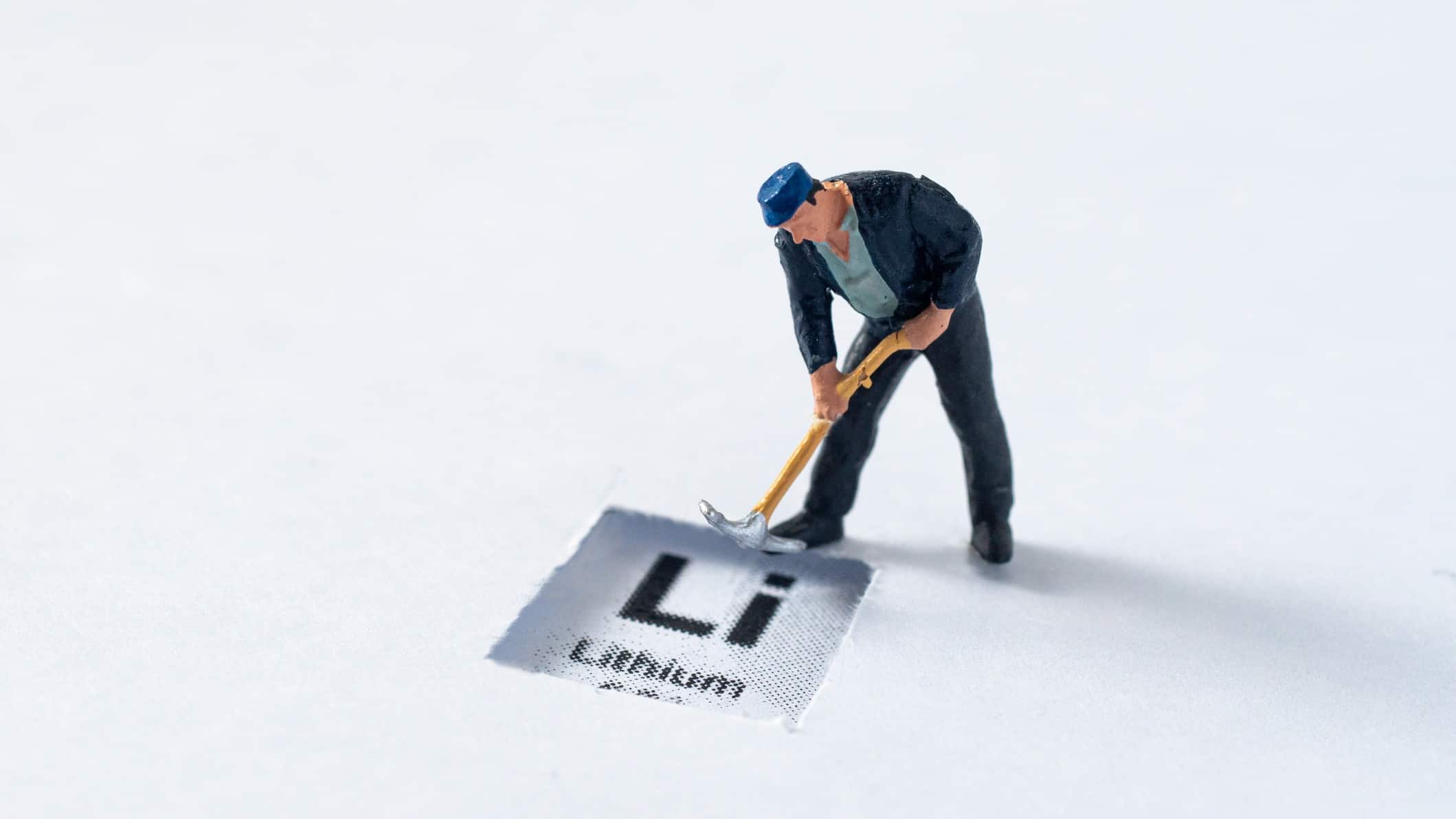
    a miniature moulded model of a man bent over with a pick working stands behind a sign that has lithium's scientific abbreviation 'Li' with the word lithium underneath it against a sparse bland background.

    a miniature moulded model of a man bent over with a pick working stands behind a sign that has lithium's scientific abbreviation 'Li' with the word lithium underneath it against a sparse bland background.

    After trading in the red for much of the day, the Core Lithium Ltd (ASX: CXO) share price has rebounded this afternoon.

    At the time of writing, the lithium miner’s shares are up 1% to $1.16.

    This compares favourably to the ASX 200 index and its 1.6% decline.

    Why is the Core Lithium share price lifting?

    Investors have been buying the company’s shares today after it officially transitioned from being a lithium developer to a lithium miner.

    According to the release, the Finniss Lithium mine has officially opened today. This makes it the first operating mine in the Northern Territory and Australia’s only lithium mine outside Western Australia.

    This is great news for shareholders given the sky high prices that fellow lithium miners Allkem Ltd (ASX: AKE) and Pilbara Minerals Ltd (ASX: PLS) have been reporting in recent months.

    The release explains that the Finniss mine was formally opened by the Minister for Mining and Industry, with Core Lithium’s CEO, Chair, and members of the board also in attendance.

    Management notes that this means that the company is on target to export Direct Shipping Ore (DSO) lithium by the end of this year. This follows the first sale of spodumene DSO product announced earlier this month.

    Core Lithium’s CEO, Gareth Manderson, commented:

    Core is bringing production online at a time of high lithium prices, strong global demand and constrained supply. The Core team has done a fantastic job quickly transitioning from discovery and exploration to construction and shortly supply of high-grade lithium concentrate to a global market in just six years.

    The first four years of production from the Finniss Lithium project is already secured with approximately 80% sold to offtake partners, including Ganfeng Lithium and Sichuan Yahua who have provided tremendous support during our development phase.

    The post Core Lithium share price rebounds higher after lithium mine officially opens appeared first on The Motley Fool Australia.

    .

    More reading

    from The Motley Fool Australia https://ift.tt/TgHSfnk

  • What are experts predicting will be the best-performing ASX sectors in Q2 FY23?

    A woman sits in her home with chin resting on her hand and looking at her laptop computer with some reflection with an assortment of books and documents on her table.A woman sits in her home with chin resting on her hand and looking at her laptop computer with some reflection with an assortment of books and documents on her table.

    Looking across the 2022 calendar year, the best-performing ASX sectors are energy and utilities.

    Energy, by far, has been the standout given the macroeconomic and geopolitical forces at play. Europe now faces potential challenges ahead in its struggles with retail energy prices and overall supply.

    Adding to the pressure has been surging inflation and the sharpest increase in policy interest rates in decades.

    Central banks certainly have a dynamic battle on their hands, trying to balance the economy and asset prices with this interplay of interest rates and inflation.

    Alas, equities have taken an absolute beating in 2022, particularly those shares tied to companies with weaker balance sheets and unprofitable earnings.

    At the time of writing, the benchmark S&P/ASX 200 Index (ASX: XJO) is down 1.58% on the day at 6,655 points. The index has collapsed more than 10% this year to date.

    Segments to look for in Q2?

    Whilst the market continues to price in a potential decrease in corporate earnings this year, energy shares continue to rally.

    However, energy is one sector portfolio manager at Bell Asset Management Ned Bell is avoiding in the current climate. Bell cited a lack of “franchise strength” in the energy investment case, The Australian Financial Review (AFR) reports.

    Instead, he prefers exposure to technology, healthcare, and consumer segments and believes these remain the growth areas looking ahead.

    Bell’s Global Equities is down 18.3% this year to date, with the portfolio manager “[admitting] he’s made some mistakes”, the AFR reports.

    Meanwhile, Goldman Sachs Asset Management echoed Bell’s posture in its monthly newsletter, ‘Change of Season’.

    Covering themes such as inflation, rates and recession risk, and a “changing world order”, Goldman Sachs asset managers still believe in “long-term secular growth themes, such as technology and environmental sustainability”.

    Companies in technology, healthcare, and environmental sustainability have been “the most sensitive to expectations that rates will keep rising,” the newsletter said. “[B]ut we have not witnessed a broad-based deterioration of fundamentals.”

    It added:

    In our view, the pullback offers investors the opportunity to gain exposure at more reasonable prices. An inflationary environment also encourages businesses to invest in technology, and tech companies offering innovative products tend to exert considerable pricing power, allowing them to pass on input costs to customers.

    The case for commodities

    In contrast, portfolio managers at the world’s oldest hedge fund, Man Group Limited, believe that commodities “are a crucial part of multi-asset portfolios”.

    “This is even more true if indeed we enter a prolonged period of high and volatile inflation, as per our expectation,” the Group noted in September 21 note.

    “Furthermore, they provide attractive diversification benefits, albeit least in period of deflation,” it added.

    In this view, there appears to be selective opportunities in just about all sectors right now, according to various sources.

    One theme remains consistent amongst all commentary though – quality business models and rigorous analysis of company fundamentals.

    Returns for each of the major sectors mentioned above are plotted for this year to date below. Energy, in dark blue, remains the clear winner.

    TradingView Chart

    The post What are experts predicting will be the best-performing ASX sectors in Q2 FY23? appeared first on The Motley Fool Australia.

    .

    More reading

    Motley Fool contributor Zach Bristow has no position in any of the stocks mentioned. The Motley Fool Australia’s parent company Motley Fool Holdings Inc. has no position in any of the stocks mentioned. The Motley Fool Australia has no position in any of the stocks mentioned. The Motley Fool has a disclosure policy. This article contains general investment advice only (under AFSL 400691). Authorised by Scott Phillips.

    from The Motley Fool Australia https://ift.tt/i0zEbcn

  • This ASX 300 company just upped its earnings guidance. Could it be in for a takeover bid?

    A man with long hair and tattoos holds out an EFTPOS payment machine from behind a shop counter.A man with long hair and tattoos holds out an EFTPOS payment machine from behind a shop counter.

    Shares in S&P/ASX 300 Index (ASX: XKO) payment provider Tyro Payments Ltd (ASX: TYR) are dodging the worst of today’s carnage. It comes after the stock upped its financial year 2023 (FY23) guidance amid takeover whispers.

    The company’s CEO Jon Davey outlined a “difficult but necessary” cost cutting program, expected to allow the company to post greater earnings than previously projected.

    Meanwhile, big banks and private equity are rumoured to be eyeing off the fintech.

    Shares in the ASX 300 company are currently swapping hands for $1.47 apiece. That’s 1.01% lower than the Tyro share price’s previous close. For context, the ASX 300 is down 1.72% right now.

    ASX 300 fintech ups guidance amid cost cutting spree

    ASX 300 favourite Tyro Payments is in the spotlight today. It comes as the company ups its guidance and provided an update on the fiscal year so far.

    Tyro is embarking on an $11 million cost reduction program, expected to deliver $5 million of savings this financial year.

    As a result, the company believes its earnings before interest, tax, depreciation, and amortisation (EBITDA) will come in at between $28 million and $34 million in FY23.

    Meanwhile, its guided transaction value has been lifted from $2 billion to $42 billion. Finally, its gross profit guidance has been upped by $6 million to $181 million.

    Tyro also revealed it had processed around $10.4 billion worth of transactions in the first quarter – a 59% year-on-year improvement. It also received $32.7 million of merchant loan originations over the period – a 116% increase.

    Commenting on the ASX 300 company’s performance and cost cutting program, Davey said:

    All our operating metrics are either in line with, or exceeding, expectations which, together with our new cost reduction program, gives us the confidence to lift guidance for FY23.

    This program is targeted at reducing costs in non-revenue generating parts of the business without impacting our customer experience or product delivery timeline.

    To cut costs, Tyro will be reducing staff numbers, changing its mix of permanent employees and contractors in technology, and reducing expenses.

    The company also confirmed it will deliver its new digital onboarding platform in November, its Tyro Pro terminal in December, and its Tyro Go reader in January.

    Could Tyro Payments face another takeover bid?

    Additionally, one of the big four banks is rumoured to be sizing up Tyro, The Australian reported last week. The unnamed bank could hope that snapping up the fintech will bolster its payment technology offerings.

    However, a bid from private equity has been tipped as more likely, according to the masthead.

    Some shareholders are said to be willing to hand their stake over for $1.50 apiece. Meanwhile, Morgan Stanley reportedly believes an offer of $2 to $2.50 would value Tyro fairly in comparison to its peers.  

    The ASX 300 company rejected a $1.27 per share bid put forward by private equity last month.

    The post This ASX 300 company just upped its earnings guidance. Could it be in for a takeover bid? appeared first on The Motley Fool Australia.

    .

    More reading

    Motley Fool contributor Brooke Cooper has no position in any of the stocks mentioned. The Motley Fool Australia’s parent company Motley Fool Holdings Inc. has positions in and has recommended Tyro Payments. The Motley Fool Australia has recommended Tyro Payments. The Motley Fool has a disclosure policy. This article contains general investment advice only (under AFSL 400691). Authorised by Scott Phillips.

    from The Motley Fool Australia https://ift.tt/O6zTmfv

  • Why did this ASX 200 CEO just sell $25 million worth of his company’s shares?

    Calculator on top of Australian 4100 notes and next to Australian gold coins.

    Calculator on top of Australian 4100 notes and next to Australian gold coins.

    The Johns Lyng Group Ltd (ASX: JLG) share price has been the worst performer on the ASX 200 index on Monday.

    In afternoon trade, the building services company’s shares are down 10% to $5.94.

    Why is the Johns Lyng share price sinking?

    As well being caught up in a broad market selloff, the Johns Lyng share price is being sold off today following some major insider selling.

    According to the release, the company’s managing director and CEO, Scott Didier, has sold 4 million shares in the company.

    While no financial details have been released on the sale, it is worth noting that a couple of trades of 2 million shares were made this morning at $6.25 per share. Based on this sale price, Mr Didier received a total consideration of $25 million for his shares.

    Why the sale?

    Insider selling rarely goes down well with the market. After all, if you were confident that your shares were going to increase in value, you would surely hold onto them.

    However, there is a legitimate reason for this insider selling. The release notes:

    Following JLG’s acquisition of Reconstruction Experts (RE), effective 1 January 2022, and Mr Didier’s appointment to Group CEO, Mr Didier now co-resides between Melbourne and Denver Colorado, the headquarters of the RE business, to oversee and manage the growth of JLG in the USA. This share sale has been undertaken to fund Mr Didier’s relocation and living expenses, including the acquisition of a family home in Denver Colorado, along with certain tax liabilities.

    The company also highlights that Didier remains a significant shareholder, with this sale representing just ~7.5% of his holding. As a result, the CEO still has 49,314,825 shares, which represents a 19% stake in the company.

    Mr Didier also informed the company that he remains a committed leader and shareholder. He commented

    I remain incredibly proud of what JLG does every day in Australia and now in the US. The continued flood events in Australia and with events such as Hurricane Ian in Florida have demonstrated what a critical role we play in the catastrophe management chain now globally. We have been honoured to support Australian communities to rebuild following natural disasters and are proud to be able to continue this contribution.

    Trading update

    Not even a positive trading update has been able to keep the Johns Lyng share price from sinking today.

    It revealed that it continues to expect FY 2023 sales of $1,030.9 million and EBITDA of $105.3 million. This represents a 27.4% and 43.3% increase, respectively, over the prior corresponding period.

    The post Why did this ASX 200 CEO just sell $25 million worth of his company’s shares? appeared first on The Motley Fool Australia.

    .

    More reading

    Motley Fool contributor James Mickleboro has no position in any of the stocks mentioned. The Motley Fool Australia’s parent company Motley Fool Holdings Inc. has positions in and has recommended Johns Lyng Group Limited. The Motley Fool Australia has recommended Johns Lyng Group Limited. The Motley Fool has a disclosure policy. This article contains general investment advice only (under AFSL 400691). Authorised by Scott Phillips.

    from The Motley Fool Australia https://ift.tt/wgaP3Us

  • Why is everyone talking about ASX cannabis shares all of a sudden?

    An older farmer wearing a checkered shirt and a straw hat stands in a green field of cannabis plants growing up to waist level as he smiles while thinking about the outlook for ASX cannabis shares in FY23

    An older farmer wearing a checkered shirt and a straw hat stands in a green field of cannabis plants growing up to waist level as he smiles while thinking about the outlook for ASX cannabis shares in FY23

    ASX cannabis shares have leapt back onto investor radars and are likely to grab more media headlines in the weeks ahead.

    While all three are deep in the red today amid wider selling action that sees the All Ordinaries Index (ASX: XAO) down 1.4%, that extra attention could offer some tailwinds for cannabis stocks like Cann Group Ltd (ASX: CAN), Incannex Healthcare Ltd (ASX: IHL) and Creso Pharma Ltd (ASX: CPH).

    Though if you’re looking for information about ASX cannabis share Creso Pharma in the future, you may need to look up Melodiol Global Health Limited instead.

    In a release this morning, Creso management announced their intention to seek shareholder approval for rebranding the company name at a future general meeting. Management said the new name represented “the global ambitions of the organisation”.

    So, why are ASX cannabis shares moving back into the spotlight?

    How Biden could rekindle ASX cannabis shares

    Since cannabis shares first began trading on the ASX and international exchanges, moves by US state governments and the vacillating prospects for legalisation by the federal government have alternately pushed them higher and lower.

    Numerous US states have legalised medicinal and recreational marijuana in recent years. But cannabis has remained classified as a Schedule I substance under the federal Controlled Substances Act. That defines it as having a high potential for abuse, with no currently accepted medical applications.

    But US president Joe Biden is following through with an election promise. Biden has said he will pardon everyone convicted of simple marijuana possession under federal law.

    Here’s what the president tweeted on Friday:

    As I’ve said before, no one should be in jail just for using or possessing marijuana. Today, I’m taking steps to end our failed approach. Allow me to lay them out.

    First: I’m pardoning all prior federal offenses of simple marijuana possession… Second: I’m calling on governors to pardon simple state marijuana possession offenses. Just as no one should be in a federal prison solely for possessing marijuana, no one should be in a local jail or state prison for that reason, either.

    Biden also called on the US Attorney General “to initiate the process of reviewing how marijuana is scheduled under federal law”. He noted it was currently classified “at the same level as heroin – and more serious than fentanyl. It makes no sense.”

    This US pot ETF surged on the news

    While ASX cannabis shares aren’t moving higher on Biden’s legalisation push today, marijuana-focused exchange-traded fund (EFT) AdvisorShares Pure US Cannabis ETF (NYSEARCA: MSOS) leapt 41% higher in 30 minutes after the word hit the wires last week.

    Though investors should take note that even if the US legalises marijuana on a federal level, not every cannabis share trading on the ASX will benefit. But companies with a significant footprint in US markets or the ability to expand into those markets, like Creso, could find some new opportunities ahead.

    The post Why is everyone talking about ASX cannabis shares all of a sudden? appeared first on The Motley Fool Australia.

    .

    More reading

    Motley Fool contributor Bernd Struben has no position in any of the stocks mentioned. The Motley Fool Australia’s parent company Motley Fool Holdings Inc. has no position in any of the stocks mentioned. The Motley Fool Australia has no position in any of the stocks mentioned. The Motley Fool has a disclosure policy. This article contains general investment advice only (under AFSL 400691). Authorised by Scott Phillips.

    from The Motley Fool Australia https://ift.tt/khFdCV1