
Month: October 2022

  • The Qantas share price has just capped off a stellar first quarter. What’s next?

    A woman sits crossed legged on seats at an airport holding her ticket and smiling.A woman sits crossed legged on seats at an airport holding her ticket and smiling.

    The Qantas Airways Limited (ASX: QAN) share price staged a remarkable recovery in the quarter just gone by.

    From the closing bell on 30 June through to the end of trade on 30 September, shares in the flying kangaroo soared 12.3%.

    That’s particularly impressive given the S&P/ASX 200 Index (ASX: XJO) fell 1.4% over the quarter.

    The Qantas share price is up 5.4% so far in October, and is currently trading at $5.29.

    So, what can ASX 200 investors expect next from the airline?

    Tackling rising costs

    If you think filling up the family car is costing you a bundle these days, take a gander at what Qantas is shelling out for jet fuel.

    As The Motley Fool reported recently, the airline is forecasting a $5 billion fuel bill for FY23. That’s up 60% from FY19.

    But that won’t necessarily have a negative impact on the Qantas share price.

    The company is tackling rising fuel and other costs via a number of initiatives. That includes reducing its number of flights, with domestic capacity recently cut by another 10%. That means fuller flights, which may not be the best news for passengers. But it should enable Qantas to recoup the cost of higher jet fuel costs.

    While international capacity is likely to remain significantly below pre-pandemic levels over the coming year, domestic capacity is forecast to reach 95% of pre-pandemic levels in the current half and 106% of those levels in the second half of FY23.

    A premium on the Qantas share price ‘is warranted

    Tony Paterno, senior investment adviser at Ord Minnett, has a bullish outlook for the Qantas share price.

    According to Paterno (courtesy of The Bull), “Our positive view of QAN is supported by a favourable Australian industry structure that should lead to market share gains.”

    Paterno added:

    Given its superior domestic market structure and share, a restructured and more variable cost base, a strong balance sheet and potential upside from the loyalty program, we believe a premium for Qantas is warranted.

    Indeed, the loyalty program has the potential to help support the Qantas share price.

    The airline forecasts FY23 underlying earnings before interest and tax (EBIT) from its loyalty division will lift to between $425 million and $450 million.

    The post The Qantas share price has just capped off a stellar first quarter. What’s next? appeared first on The Motley Fool Australia.

    .

    More reading

    Motley Fool contributor Bernd Struben has no position in any of the stocks mentioned. The Motley Fool Australia’s parent company Motley Fool Holdings Inc. has no position in any of the stocks mentioned. The Motley Fool Australia has no position in any of the stocks mentioned. The Motley Fool has a disclosure policy. This article contains general investment advice only (under AFSL 400691). Authorised by Scott Phillips.

    from The Motley Fool Australia https://ift.tt/bmd54vs
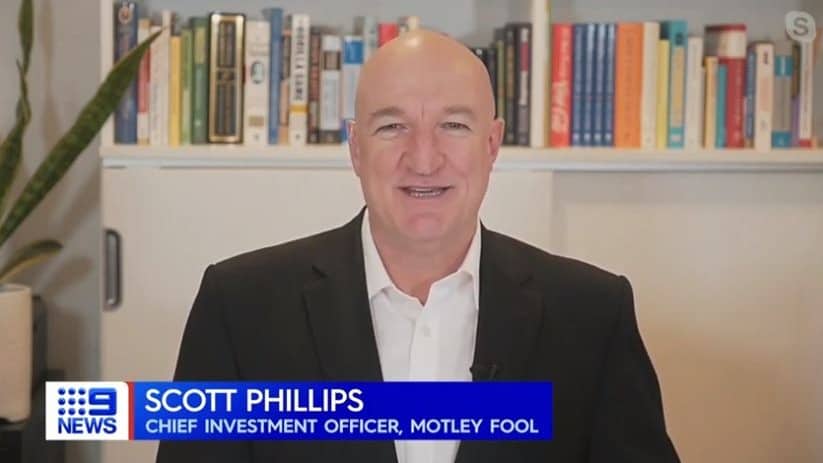
  • A calmer day on the ASX and good news for savers. Scott Phillips on Nine’s Late News

    Scott Phillips on Nine's Late News, 9 September 2022Scott Phillips on Nine's Late News, 9 September 2022

    Motley Fool Australia Chief Investment Officer Scott Phillips joined Tracy Vo for Nine’s Late News on Thursday night to discuss a calmer day for the ASX, a smaller, but welcome, trade balance, what savers should be looking out for, and what to expect from the US market. 

    [youtube https://www.youtube.com/watch?v=xerfApf2CP0?feature=oembed&w=500&h=281]

    The post A calmer day on the ASX and good news for savers. Scott Phillips on Nine’s Late News appeared first on The Motley Fool Australia.

    .

    More reading

    Motley Fool contributor Scott Phillips has no position in any of the stocks mentioned. The Motley Fool Australia’s parent company Motley Fool Holdings Inc. has no position in any of the stocks mentioned. The Motley Fool Australia has no position in any of the stocks mentioned. The Motley Fool has a disclosure policy. This article contains general investment advice only (under AFSL 400691). Authorised by Scott Phillips.

    from The Motley Fool Australia https://ift.tt/3CTHwFh

  • If you’d bought $2,000 of NAB shares at the end of FY22, here’s how much you’d have now

    a young boy dressed in a business suit and wearing thick black glasses peers straight ahead while sitting at a heavy wooden desk with an old-fashioned calculator and adding machine while holding a pen over a large ledger book.a young boy dressed in a business suit and wearing thick black glasses peers straight ahead while sitting at a heavy wooden desk with an old-fashioned calculator and adding machine while holding a pen over a large ledger book.

    The National Australia Bank Ltd (ASX: NAB) share price posted a decent performance in the first quarter of financial year 2023.

    Indeed, investors who bought into the S&P/ASX 200 Index (ASX: XJO) big four bank at the end of June would be better off for it.  

    The NAB share price outperformed the market over the three months ended 30 September, closing last month at $28.81.

    Meanwhile, the ASX 200 slumped 1.43% and the S&P/ASX 200 Financials Index (ASX: XFJ) lifted 0.66%.

    So, if one were to have snapped up $2,000 worth of NAB shares at the end of financial year 2022, how much would their investment be worth now? Keep reading to find out.

    NAB shares gained 5.2% in the September quarter

    If you bought NAB shares at the end of financial year 2022, pat yourself on the back.

    A $2,000 investment at the end of June likely would have seen an investor with 73 NAB shares valued at $27.39 each.

    Such a parcel would have been worth $2,103 at the end of September, marking a 5.15% return on investment.

    And while I would love to also factor dividends into the equation, I unfortunately cannot.

    The bank hasn’t declared a payout since its 73-cent interim dividend, for which the stock traded ex-dividend in May.

    Though, patient investors will likely be rewarded with a dividend offering when the company releases its full-year earnings in November.

    Interestingly, NAB shares gained 5% in the September quarter without the bank releasing all that much news.

    The only price-sensitive announcement from the bank over the period was its third-quarter trading update.

    That saw it posting an unaudited statutory net profit of $1.85 billion and a $1.8 billion quarterly cash profit.

    Right now, the NAB share price is 2% higher than it was at the start of 2022. It has also lifted 7% since this time last year.

    For comparison, the ASX 200 has slumped almost 11% year to date and 6% over the last 12 months.

    The post If you’d bought $2,000 of NAB shares at the end of FY22, here’s how much you’d have now appeared first on The Motley Fool Australia.

    .

    More reading

    Motley Fool contributor Brooke Cooper has no position in any of the stocks mentioned. The Motley Fool Australia’s parent company Motley Fool Holdings Inc. has no position in any of the stocks mentioned. The Motley Fool Australia has no position in any of the stocks mentioned. The Motley Fool has a disclosure policy. This article contains general investment advice only (under AFSL 400691). Authorised by Scott Phillips.

    from The Motley Fool Australia https://ift.tt/L5y4UJY

  • Why Warren Buffett thinks it’s a mistake to dump your stocks in a bear market

    This article was originally published on Fool.com. All figures quoted in US dollars unless otherwise stated.

    Model bear in front of falling line graph, cheap stocks, cheap ASX shares

    This article was originally published on Fool.com. All figures quoted in US dollars unless otherwise stated.

    The S&P 500 is down 24% this year, and the stock market hasn’t been a great place to be holding your money of late. Investors have been dumping stocks left and right, with many quality companies seeing their valuations plummet as interest rate increases and rising inflation have made people second-guess their investments.

    But before you follow suit and decide to dump all of your stocks and hold cash or pivot to bonds, you should consider Warren Buffett’s advice, and why getting out of the stock market right now could be a costly mistake.

    Buffett believes it’s always favorable to remain invested

    Warren Buffett isn’t a fan of economic projections, or what he refers to as “dancing” in and out of stocks based solely on economic outlooks. And in a Berkshire Hathaway shareholder meeting in 2015, he said that “we think any company that has an economist has one employee too many.”

    Buffett is an investor who has remained invested for decades, all the while experiencing the effects of inflation, recessions, wars, and no shortage of crashes along the way. He believes that “the risks of being out of the game are huge compared to the risks of being in it.” And the game he’s referring to — investing — is favorable in the long run. Another popular investor, Peter Lynch, agrees with that notion, saying that “people who exit the stock market to avoid a decline are odds-on favorites to miss the next rally.”

    Given that the stock market has always recovered from every decline, history should serve as an important reminder to investors that there’s always light at the end of the tunnel. 

    Investors should focus on fundamentals rather than forecasts

    The key takeaway for investors is to invest in businesses that will do well in the long run, and to not worry about economic projections or what the experts think will happen. There are too many variables to factor in regarding where the economy may go, and the simpler option is to focus on a business itself.

    One example of a company that could make for a great long-term investment is drugmaker AbbVie (NYSE: ABBV), which has solid financials and a path to more growth. Revenue of $56.2 billion last year was 72% higher than the $32.8 billion the company generated in 2018. Profits during that time doubled to $11.5 billion. And over the trailing 12 months, the company has generated free cash flow of more than $22 billion.

    AbbVie’s acquisition of Botox-maker Allergan a few years ago has diversified its business; Botox cosmetic sales rose 19% in its most recent quarter (ended June 30). Its high-growth products Skyrizi and Rinvoq both generated sales growth in excess of 50% during the quarter and should make up for declines in revenue from top-selling drug Humira, which begins losing exclusivity as early as next year.

    Combined with its high-yielding dividend that pays 4.2%, AbbVie is the type of stock that you might expect to perform well in the long run, regardless of the economic situation. Its financials are strong, and the business is well-diversified.

    Another stock with strong fundamentals to consider is Adobe (NASDAQ: ADBE). The tech company sells popular software products, including photo-editing program Adobe Photoshop, on a recurring subscription basis. Its products are top of the line and essential to many professionals involved in web design and photography.

    However, the stock recently nosedived after announcing lacklustre earnings numbers where sales rose by 13% to $4.4 billion. That’s modest growth for a company that earlier this year commanded a hefty price-to-earnings multiple of more than 50 (now it’s down to less than 30). Last month, it also announced a seemingly expensive $20 billion acquisition of Figma, a company that focuses on creating web applications for collaborating on web design projects.

    With Adobe’s stock now near 52-week lows, it could present an attractive buying opportunity for investors. The company may have carved out a new growth avenue for its business, focusing more on collaboration — while also becoming a cheaper investment. Adobe has generated more than $7 billion in free cash flow over the trailing 12 months, and it is in a solid position to pursue more opportunities as they come up. In the long run, this can be another great stock to buy and hold.

    Buying and holding could pay off, now more than ever

    AbbVie and Adobe are just two examples of promising growth stocks to own for the long haul, but there are many other options out there that investors can load up on today. While there could still be declines in the months ahead for stocks, there’s also the possibility of an eventual rally that could make holding on to your investments a great decision.

    As long as you don’t need to take the money out, keeping it invested in stocks with strong fundamentals could be a move you thank yourself for later on.   

    This article was originally published on Fool.com. All figures quoted in US dollars unless otherwise stated.

    The post Why Warren Buffett thinks it’s a mistake to dump your stocks in a bear market appeared first on The Motley Fool Australia.

    .

    More reading

    David Jagielski has no position in any of the stocks mentioned. The Motley Fool Australia’s parent company Motley Fool Holdings Inc. has positions in and has recommended Adobe Inc. The Motley Fool Australia’s parent company Motley Fool Holdings Inc. has recommended the following options: long January 2024 $420 calls on Adobe Inc. and short January 2024 $430 calls on Adobe Inc. The Motley Fool Australia has recommended Adobe Inc. The Motley Fool has a disclosure policy. This article contains general investment advice only (under AFSL 400691). Authorised by Scott Phillips.

    This article was originally published on Fool.com. All figures quoted in US dollars unless otherwise stated.

    from The Motley Fool Australia https://ift.tt/8MWJbeu

  • The CSL share price had a strong first quarter. What’s next?

    A CSL scientist looking through a telescope in a labA CSL scientist looking through a telescope in a lab

    The CSL Limited (ASX: CSL) share price managed to regain strength and claw back some losses during the first quarter of FY 2023. It gained almost 6% from the close on June 30 to $285.02 at the end of September.

    The share continues in a long-term uptrend after bottoming on 15 February at $243 apiece. At the time of writing on Friday morning, it is at $291.06.

    Stepping back, CSL has traded in a sideways channel since peaking in February 2020, while the All Ordinaries Index (ASX: XAO) has been cyclical, as seen below.

    It is also up by just 1% in the past 12 months.

    TradingView Chart

    What’s next for CSL?

    Investors continue to rally the CSL share price from its February 2022 bottom despite a few blips along the way.

    As such, analysts continue to see value in the share on a forward-looking basis. According to Refinitiv Eikon data, 13 out of 16 analysts rate the biotech giant as a buy right now, with the other three saying to hold.

    The consensus price target from this list is $318.93, suggesting a return potential of almost 10% at the time of writing.

    CSL is also forecast to trade on a dividend yield of 1.4% for the next 12 months, slightly behind the GICS Industry Health Care Industry median forward yield of 2.02%.

    In addition, CSL trades at 40.7 times price-to-earnings (P/E) ratio, in line with the peer median’s P/E of 39 times.

    However, it’s trading at a discount compared to fellow industry ASX healthcare heavyweights Cochlear Limited (ASX: COH) and Ramsay Health Care Limited (ASX: RHC). They are priced at 46 times P/E and 51 times P/E, respectively.

    The share is also priced at 6.6 times the price-to-book (P/B) value – above the industry median of 2.8 times — and delivered a return on equity (ROE) of 19.65% in FY 2022. However, at the lofty 6.6 times P/B multiple, the ROE to investors is 2.97%.

    Point is, from what the market data suggests, it appears to be the status quo for CSL at the time being.

    This corroborates what we’re seeing on the CSL share price chart as well, with price action remaining relatively neutral of late.

    For instance, CSL is valued in line with the industry across several multiples, and trades at a premium to others.

    What does this mean for the CSL share price?

    Analyst price targets are bullish but with the consensus estimate of just 10% of upside potential, while the forward dividend yield is below the industry average.

    Furthermore, equity markets are currently experiencing a large drawdown from the highs of 2021, and there’s no telling when the market rout will end.

    With these points in mind, the biotech giant has some work to do before investors rapidly change their minds about the CSL share price.

    The post The CSL share price had a strong first quarter. What’s next? appeared first on The Motley Fool Australia.

    .

    More reading

    Motley Fool contributor Zach Bristow has no position in any of the stocks mentioned. The Motley Fool Australia’s parent company Motley Fool Holdings Inc. has positions in and has recommended CSL Ltd. The Motley Fool Australia has no position in any of the stocks mentioned. The Motley Fool has a disclosure policy. This article contains general investment advice only (under AFSL 400691). Authorised by Scott Phillips.

    from The Motley Fool Australia https://ift.tt/8mBvU7f

  • October could be a big month for the Telstra share price

    A group of people of all ages, size and colour line up against a brick wall using their devices.

    A group of people of all ages, size and colour line up against a brick wall using their devices.The Telstra Corporation Ltd (ASX: TLS) share price was a relatively decent performer in September.

    Although the telco giant’s shares fell 3% during the month, this was notably better than the ASX 200 index and its 7% decline.

    What lies ahead for the Telstra share price in October?

    It looks set to be a very eventful month for the Telstra share price in October.

    That’s because next week Australia’s largest telco will be inviting shareholders to vote on the proposed corporate restructure at a scheme meeting on the same day as its annual general meeting.

    It is also worth noting that a trading update is likely to be provided to investors the same day. The market will no doubt be keen to see if Telstra is still performing in line with its FY 2023 guidance.

    What is the corporate restructure?

    Telstra’s corporate restructure is a key component of its T25 strategy.

    The company notes that it is an important next step in Telstra’s drive to increase focus on its customer and infrastructure businesses, increase transparency of the assets in these businesses, and create greater flexibility and optionality to realise value from its fixed infrastructure assets over time.

    If shareholders approve the restructure, it will see the establishment of Telstra Group Limited as the head entity of the Telstra group.

    After which, the aim is to eventually have InfraCo Fixed (physical network infrastructure assets), InfraCo Towers (physical mobile tower assets), ServeCo (customer service and products), and Telstra international below it.

    From there, Telstra has a number of options. This includes selling some of its assets or demerging them into separate ASX listings. The latter is being seen as the likely option for the InfraCo Fixed business.

    Are Telstra’s shares a buy this month?

    The team at Morgans is positive on the Telstra share price ahead of the scheme meeting.

    In fact, the broker believes that this meeting could be the key to unlocking value for shareholders. It commented:

    After a major turnaround, TLS has emerged in good shape with strong earnings momentum and a strong balance sheet. In late CY22 shareholders vote on Telstra’s legal restructure, which opens the door for value to be released. TLS currently trades on ~7x EV/EBITDA. However some of TLS’s high quality long life assets like InfraCo are worth substantially more, in our view. We don’t think this is in the price so see it as value generating for TLS shareholders. This, free option, combined with likely reputational damage to its closest peer, following a major cybersecurity incident, means TLS looks well placed for the year ahead.

    Morgans has an add rating and $4.60 price target on the company’s shares.

    The post October could be a big month for the Telstra share price appeared first on The Motley Fool Australia.

    .

    More reading

    Motley Fool contributor James Mickleboro has no position in any of the stocks mentioned. The Motley Fool Australia’s parent company Motley Fool Holdings Inc. has no position in any of the stocks mentioned. The Motley Fool Australia has positions in and has recommended Telstra Corporation Limited. The Motley Fool has a disclosure policy. This article contains general investment advice only (under AFSL 400691). Authorised by Scott Phillips.

    from The Motley Fool Australia https://ift.tt/A8XaDEJ

  • Charging up: Here are the 3 top performing ASX lithium shares of Q1

    three young children weariing business suits, helmets and old fashioned aviator goggles wear aeroplane wings on their backs and jump with one arm outstretched into the air in an arid, sandy landscape.three young children weariing business suits, helmets and old fashioned aviator goggles wear aeroplane wings on their backs and jump with one arm outstretched into the air in an arid, sandy landscape.

    ASX lithium shares were in the spotlight in the September quarter amid predictions demand for the battery-making material could skyrocket in the near future.

    In fact, a recent report from the Australian Government tipped the nation’s exports of the commodity to increase more than tenfold from 2020-21 to 2022-23, coming in at $13.8 billion this financial year.

    That’s expected to be driven by surging lithium prices. Those invested in ASX lithium shares likely jumped for joy when they learnt the government expects lithium hydroxide to trade at US$51,510 a tonne next year.

    But some stocks involved with the material performed better than others last quarter. Indeed, one ASX lithium stock saw its value triple over the three months ended 30 September.

    For context, the benchmark All Ordinaries Index (ASX: XAO) slumped 1% in that time.

    Keep reading to find out which ASX lithium shares topped all others last quarter.

    A quick note; only shares with market capitalisations of at least $100 million were considered for inclusion.

    3 ASX lithium shares outperforming all others in Q1

    The biggest gains of any ASX lithium share last quarter were posted by the Anson Resources Ltd (ASX: ASN) share price. It surged a whopping 210.5% to finish September at 29.5 cents.

    However, that’s a long way down from the all-time high of 47.5 cents it posted last month.

    Like many of its gains last quarter, that surge came on the back of news of the company’s flagship Paradox Lithium Project in Utah. A definitive feasibility study completed at the project in early September confirmed its “outstanding economics” and future potential.

    Anson Resources was joined in the green by S&P/ASX 200 Index (ASX: XJO) lithium share Pilbara Minerals Ltd (ASX: PLS). The Pilbara Minerals share price launched 99% last quarter to close September at $4.56.

    The major news from the lithium giant during that time was of its maiden profit. The company posted a $561.8 million after-tax profit for financial year 2022 in August.

    And finally, the third best-performing ASX lithium share of the September quarter was Global Lithium Resources Ltd (ASX: GL1). The company’s share price rocketed 90% to $2.20 over the period.

    That saw the stock a whopping 1,000% higher than the company’s initial public offering (IPO) asking price of 20 cents. It floated on the ASX in May 2021.

    Much of the news from the company last quarter regarded its 80%-owned Manna Lithium Project in Western Australia. The project’s mineral resource estimate is expected to be updated this quarter.

    The Global Lithium Resources share price also gained 19% when Mineral Resources Limited (ASX: MIN) upped its stake in the company to 8% last month.

    The post Charging up: Here are the 3 top performing ASX lithium shares of Q1 appeared first on The Motley Fool Australia.

    .

    More reading

    Motley Fool contributor Brooke Cooper has no position in any of the stocks mentioned. The Motley Fool Australia’s parent company Motley Fool Holdings Inc. has no position in any of the stocks mentioned. The Motley Fool Australia has no position in any of the stocks mentioned. The Motley Fool has a disclosure policy. This article contains general investment advice only (under AFSL 400691). Authorised by Scott Phillips.

    from The Motley Fool Australia https://ift.tt/VQfT4Z7

  • Is CBA the best ASX 200 bank share to buy for dividend income?

    Young woman using computer laptop with hand on chin thinking about question, pensive expression.Young woman using computer laptop with hand on chin thinking about question, pensive expression.

    Commonwealth Bank of Australia (ASX: CBA) shares have long been held in high regard by investors looking for dividend income. It’s one of many S&P/ASX 200 Index (ASX: XJO) bank shares.

    The composition of Australia’s economy means that banks (and miners) play a big part in the ASX 200.

    CBA is the biggest but there are many others, including National Australia Bank Ltd (ASX: NAB), Westpac Banking Corp (ASX: WBC), Australia and New Zealand Banking Group Ltd (ASX: ANZ), Bank of Queensland Limited (ASX: BOQ), Suncorp Group Ltd (ASX: SUN), Macquarie Group Ltd (ASX: MQG) and Bendigo and Adelaide Bank Ltd (ASX: BEN).

    There are plenty of banks to choose from.

    Positives about CBA shares

    CBA is often viewed as the highest-quality bank in Australia. It was strong during the COVID-19 locked-down years of 2020 and 2021.

    It kept paying a dividend to shareholders.

    The big ASX 200 bank paid an annual dividend of $2.98 per share in FY20, $3.50 per share in FY21 and $3.85 per share in FY22. But, it’s still below the annual dividend per share that was paid in FY19 of $4.31.

    It has demonstrated good growth in the most recent result. FY22 saw its pre-provision profit (excluding one-off items) rise by 3.1% to $13.2 billion. The cash net profit after tax (NPAT) rose 11% to $9.6 billion.

    Part of the FY22 growth came from the fact that its business lending grew by 13.6% (1.3x faster than the overall banking system), and business deposits increased by 15.1% (1.4x the overall banking system).

    CBA has a goal to build Australia’s leading business bank. Its strategy is centred around the “quality of its customer relationships and being their main financial institution”.

    How does CBA compare to other ASX 200 bank shares?

    According to CommSec, CBA is predicted to pay an annual dividend per share of $4.19 in FY23. That would be an increase of 8.8% compared to FY22.

    However, the grossed-up dividend yield is only expected to be 6.2%. Why? Because it has a relatively high price-to-earnings (P/E) ratio. That explains what multiple of earnings the share price is trading at. The higher it is, the more ‘expensive’ it can seem.

    CBA is predicted (by CommSec) to generate $5.58 of earnings per share (EPS) in FY23, which means the CBA share price is valued at 17x FY23’s estimated earnings.

    Let’s have a look at the other banks’ grossed-up dividend yields and P/E ratios for FY23, according to CommSec, so these are forward projections.

    NAB’s FY23 predicted yield is 7.7% with a forward P/E ratio of under 13.

    Westpac’s FY23 predicted yield is 8.7% with a forward P/E ratio of 11.1.

    ANZ’s FY23 predicted yield is 8.75% with a forward P/E ratio of 11.4.

    BOQ’s FY23 predicted yield is 10% with a forward P/E ratio of under 10.

    Bendigo Bank’s FY23 predicted yield is 9.25% with a forward P/E ratio of 10.

    Suncorp’s FY23 predicted yield is 9.4% with a forward P/E ratio of 11.

    Macquarie’s FY23 predicted yield is 4.5% with a forward P/E ratio of 15.

    My verdict

    CBA shares have been a solid idea for dividend income for many years. I think that will continue for the foreseeable future. If I were a long-term shareholder, I’d be happy to keep holding for the dividend income.

    However, if I were looking at all of the ASX 200 bank shares and choosing to buy something, its high valuation and lower yield would put me off.

    Only part of Macquarie is a bank, the rest of the business is a global investment bank – I like its growth and diversification.

    But, in terms of domestic banks, I would pick NAB out of the big four because of the experienced management and turnaround strategy.

    BOQ is doing a number of things to try to improve and grow the business (such as digitalisation), but it also has the biggest expected yield and the lowest P/E ratio, so it would be my non-big-four bank pick.

    The post Is CBA the best ASX 200 bank share to buy for dividend income? appeared first on The Motley Fool Australia.

    .

    More reading

    Motley Fool contributor Tristan Harrison has no position in any of the stocks mentioned. The Motley Fool Australia’s parent company Motley Fool Holdings Inc. has no position in any of the stocks mentioned. The Motley Fool Australia has positions in and has recommended Bendigo and Adelaide Bank Limited. The Motley Fool Australia has recommended Macquarie Group Limited and Westpac Banking Corporation. The Motley Fool has a disclosure policy. This article contains general investment advice only (under AFSL 400691). Authorised by Scott Phillips.

    from The Motley Fool Australia https://ift.tt/szUqx7F

  • Allkem share price higher on Sal de Vida lithium project update

    A man wearing a suit holds his arms aloft with a smile on his face is attached to a large lithium battery with green charging symbols on it.

    A man wearing a suit holds his arms aloft with a smile on his face is attached to a large lithium battery with green charging symbols on it.

    The Allkem Ltd (ASX: AKE) share price is on the move on Friday morning.

    At the time of writing, the lithium miner’s shares are up 3% to $14.76.

    Why is the Allkem share price rising?

    The catalyst for the rise in the Allkem share price on Friday has been the release of an announcement relating to the company’s Sal de Vida project.

    According to the release, Allkem and the International Finance Corporation (IFC) have agreed a non-binding term sheet for a project financing facility for the Sal de Vida Project in the Catamarca Province of Argentina.

    IFC has proposed a US$200 million project finance facility to support Allkem’s development of Sal de Vida stage one. The release notes that IFC’s environmental and social performance requirements are globally recognised and will complement the ESG standards already adopted at Sal de Vida by Allkem.

    Subject to finalisation of commercial terms and other key outstanding items, including final board approval, the facility is expected to be in place by late 2022.

    Sal de Vida stage one

    The Sal de Vida stage one project is designed to produce 15ktpa of predominately battery grade lithium carbonate. A feasibility study earlier this year estimated that the capital expenditure would be US$271 million and cash operating costs would be US$3,612 per tonne.

    Stage one project economics include pre-tax net present value of US$1.23 billion at a 10% discount rate, pre-tax internal rate of return of 50%, and a payback period of 1.75 years from the start of commercial production. Construction commenced in January.

    Allkem’s managing director and CEO, Martin Perez de Solay, said:

    We are already in a strong financial position to self-fund the Sal de Vida project however we saw an opportunity to further improve the financing structure for Sal de Vida and partner with IFC, an institution with decades of experience providing finance and sustainable business solutions in the mining space. Sal de Vida is expected to generate significant economy-wide benefits that will improve the fiscal outlook, economic performance and social outcomes at national, regional and local community levels.

    The post Allkem share price higher on Sal de Vida lithium project update appeared first on The Motley Fool Australia.

    .

    More reading

    Motley Fool contributor James Mickleboro has positions in Allkem Limited. The Motley Fool Australia’s parent company Motley Fool Holdings Inc. has no position in any of the stocks mentioned. The Motley Fool Australia has no position in any of the stocks mentioned. The Motley Fool has a disclosure policy. This article contains general investment advice only (under AFSL 400691). Authorised by Scott Phillips.

    from The Motley Fool Australia https://ift.tt/oRNjgmF

  • Why Tesla stock fell today

    This article was originally published on Fool.com. All figures quoted in US dollars unless otherwise stated.

    Blue Model Y Tesla vehicle

    This article was originally published on Fool.com. All figures quoted in US dollars unless otherwise stated.

    What happened

    On an only modestly red day for the stock market, with major indices all down just a fraction of a percent each, shares of automotive stocks are getting hurt more than most. Tic-tac-toe, three in a row, shares of Ford Motor Company (NYSE: F), Tesla (NASDAQ: TSLA), and Nio (NYSE: NIO) are down 2%, 1.9%, and 5.9%, respectively.

    Each of the three ran into a fender bender of modestly bad news today.    

    So what

    In the case of electric vehicle (EV) specialists Tesla and Nio, it’s basically Wall Street to blame for today’s declines. Granted, yesterday’s announcement that Elon Musk has apparently decided he will buy Twitter after all is probably still having an effect on Tesla stock — but there’s new news, too.

    Specifically, this morning, Japan’s Mizuho bank lowered its price target on Tesla stock, citing “logistics challenges” that prevented the company from hitting its targeted delivery number for the last quarter. Although Tesla did still grow its deliveries 42% year over year, and grew its production numbers 54%, the miss necessitates a price target cut to $370 per share, says Mizuho today in a note covered by StreetInsider.  

    Similarly, Mizuho cut its price target on China’s Nio by about 5%, to $40 a share, citing — surprise! — “softer SepQ deliveries” and consequently lower expected earnings in the quarter. Indeed, across the EV industry, Mizuho says getting the needed parts to build EVs, and getting transportation to deliver them where they’re going, remains “a challenge.” Long term, Mizuho is still a supporter of both Tesla and Nio stocks and maintains buy ratings on both companies.  

    Mizuho just isn’t sure the stocks will go up as much as it previously hoped they might.

    Now what

    Now, what about Ford — which, for all its electric ambitions, still remains today primarily a maker of SUVs and trucks powered by the venerable internal combustion engine? Well, earlier this week, as you probably heard, Ford reported a 9% decline in sales for September — and an 18% decline in trucks. The company blames parts shortages for sidelining as many as 45,000 vehicles that remain only half-built because they don’t have the parts needed to complete them.  

    For that matter, even Ford’s small but growing electric operation is apparently not immune from the problems plaguing its competitors. Last night, Ford announced that it’s raising the price of its base model F-150 Lightning electric pickup truck by $5,000 — not because it wants to, but because it has to, in order to absorb the costs of “supply chain constraints, rising material costs and other market factors.” 

    After this hike and the first round of price increases, announced less than two months ago, the price of the F-150 Lightning is now up an astounding 30% over its originally announced base price of just under $40,000 last year.

    Now, from one perspective, Ford charging more money for a truck might be considered a good thing — more money for Ford, right? But if all the extra money coming in one door immediately goes out another to pay Ford’s suppliers, then there’s really no net gain for the company or the stock. To the contrary, as Ford F-150 Lightning prices rapidly run up from “It’s a bargain!” territory to “Hmm, maybe I should just buy a Rivian truck” levels, the good publicity and sales advantages Ford initially enjoyed from introducing the Lightning are already starting to evaporate.

    Granted, at a lowly 4.3 times trailing earnings, I still think Ford stock looks cheap enough to buy. But based on today’s bad news, I can’t blame other investors for deciding Ford might actually need to get a little bit cheaper. 

    This article was originally published on Fool.com. All figures quoted in US dollars unless otherwise stated.

    The post Why Tesla stock fell today appeared first on The Motley Fool Australia.

    .

    More reading

    Rich Smith has no position in any of the stocks mentioned. The Motley Fool Australia’s parent company Motley Fool Holdings Inc. has positions in and has recommended Nio Inc., Tesla, and Twitter. The Motley Fool Australia has no position in any of the stocks mentioned. The Motley Fool has a disclosure policy. This article contains general investment advice only (under AFSL 400691). Authorised by Scott Phillips.

    This article was originally published on Fool.com. All figures quoted in US dollars unless otherwise stated.

    from The Motley Fool Australia https://ift.tt/fkBxeXt