Day: 7 December 2022

  • Why Friday could be D-day for ASX dividend shares and franking credits

    a group of people in business attire gather around a computer in an office environment with expressions of concern as they try to nut out the answer to a challenge they are facing.a group of people in business attire gather around a computer in an office environment with expressions of concern as they try to nut out the answer to a challenge they are facing.

    Veteran fund manager Geoff Wilson, the chair of Wilson Asset Management, has made a final plea to investors imploring them to oppose proposed tax changes affecting ASX dividend shares and franking arrangements.

    Earlier this year, the federal Labor government proposed legislation that would stop companies from paying franked special dividends funded via capital raisings.

    The legislation also seeks to stop companies from paying fully franked dividends to participating shareholders as part of an off-market share buyback.

    The legislation has been open for public comment in recent months.

    Submissions regarding the capital raisings and franking component of the legislation closed on 5 October. Submissions regarding the off-market share buybacks component close this Friday.

    Wilson has vehemently opposed the changes, saying the cost could ‘could run into the billions’.

    What did Wilson say to shareholders?

    In a letter to shareholders of his listed management companies (LICs) yesterday, Wilson said the proposed new rules carry “significant unintended consequences”.

    He encouraged investors to submit their views to the federal treasury department.

    He even offered them a template to use if they can’t find their own words. It contains some of the fund manager’s key points of disagreement.

    The template states the proposed changes to franking credits “undermine a system that has supported Australian companies and investors through more than three decades of economic stability and growth”.

    It says the system “has encouraged Australian companies to invest in and pay corporate tax in Australia and emboldened Australians to invest locally”.

    Changes could see franking ‘dismantled beyond repair’

    Wilson said the changes were “poorly constructed” and he wanted to work with the government:

    We are eager to work with the current government on behalf of our shareholders to prevent the unintended consequences of these changes to the Australian franking system before it, and its enormous benefits, are dismantled piece by piece beyond repair.

    We are currently preparing our submission, which we look forward to sharing with you when it is complete.

    Shareholders were given a link to Wilson Asset Management’s submission regarding the proposed changes to franking credits and capital raisings.

    Why is the government doing this?

    The Federal Treasurer, Jim Chalmers, reckons the new rules are “a very minor measure”.

    He says it simply closes a loophole used by companies to pay out excess franking credits on their books.

    The central argument is that franking credits should only apply to dividends from realised profits.

    The S&P/ASX All Ordinaries Index (ASX: XAO) closed down 0.86% on Wednesday.

    The post Why Friday could be D-day for ASX dividend shares and franking credits appeared first on The Motley Fool Australia.

    FREE Beginners Investing Guide

    Despite what some people may say – we believe investing in shares doesn’t have to be overwhelming or complicated…

    For over a decade, we’ve been helping everyday Aussies get started on their journey.

    And to help even more people cut through some of the confusion “experts’” seem to want to perpetuate – we’ve created a brand-new “how to” guide.

    Yes, Claim my FREE copy!
    *Returns as of November 7 2022

    (function() {
    function setButtonColorDefaults(param, property, defaultValue) {
    if( !param || !param.includes(‘#’)) {
    var button = document.getElementsByClassName(“pitch-snippet”)[0].getElementsByClassName(“pitch-button”)[0];
    button.style[property] = defaultValue;
    }
    }

    setButtonColorDefaults(“#0095C8”, ‘background’, ‘#5FA85D’);
    setButtonColorDefaults(“#0095C8”, ‘border-color’, ‘#43A24A’);
    setButtonColorDefaults(“#fff”, ‘color’, ‘#fff’);
    })()

    More reading

    The Motley Fool has a disclosure policy. This article contains general investment advice only (under AFSL 400691). Authorised by Scott Phillips.

    from The Motley Fool Australia https://ift.tt/OEbsg5J

  • Is investing $5 a day in ASX dividend shares enough to fund a generous passive income for life?

    top asx shares to buy in summer or to retire represented by piggy bank on sunny beach

    top asx shares to buy in summer or to retire represented by piggy bank on sunny beach

    Is investing $5 a day in ASX dividend shares enough to fund a generous passive income for life? That’s a harder question to answer than might first appear.

    Let’s start at the beginning. ASX shares can indeed provide passive income. This comes in the form of dividend payments and franking credits.

    ASX dividend shares usually dole out their dividend payments every six months. These payments are not guaranteed and are decided upon by the company in advance.

    It’s not uncommon to see a company raise its dividends over time, but it’s also not unusual to see a company’s dividends fall if it is going through a tough time.

    But how long would an investor have to invest $5 a day to fund a generous passive income?

    Can $5 a day get you generous passive income?

    Well, $5 a day equates to $35 a week, or $1,825 a year.

    Let’s make some assumptions. We’ll start with an ASX share with a 4% dividend yield. That means that $100 invested gets an investor $4 per year in dividend payments.

    4% seems like a happy ASX medium to use. Commonwealth Bank of Australia (ASX: CBA) is currently offering a dividend yield of 3.62%, and National Australia Bank Ltd (ASX: NAB), 4.91%. BHP Group Ltd (ASX: BHP) has a trailing yield of 9.9% right now, whereas Woolworths Group Ltd (ASX: WOW) is sitting at 2.68%. So 4% looks like a fair averge.

    We’ll use a compound annual return rate of 7.94% for our investments. That’s the annual return, including dividend income that the S&P/ASX 200 Index (ASX: JXO) has delivered on average since August 2001.

    If if an investor invests $5 a day for 10 years, compounded monthly, and reinvests all dividends received, they will end up with $27,628 at the end of that period. At a 4% yield, that would give our investor an annual passive income of approximately $1,105. Nothing to turn one’s nose up against, but hardly ‘generous’.

    But, what about after 20 years? Or 30?

    Well after two decades, our investor will have a total of $86,648 in capital, providing $3,466 in income. After 30, that would rise to $213,426, with $8,537 in income.

    If an investor started doing this when they were 20, by the time they reached a retirement age of 65 (so after 45 years), they would have a lump sum of $723,001, providing an annual income stream of $28,920. That’s getting a lot more generous.

    The post Is investing $5 a day in ASX dividend shares enough to fund a generous passive income for life? appeared first on The Motley Fool Australia.

    You beat inflation buying stocks that pay the biggest dividends right? Sorry, you could be falling into a “dividend trap”…

    Mammoth dividend yields may look good on the surface… But just because a company is writing big cheques now, doesn’t mean it’ll always be the case. Right now “dividend traps” are ready to catch unwary investors as they race to income stocks to fight inflation.

    This FREE report reveals three stocks not only boasting sustainable dividends but also have strong potential for massive long term returns…

    Learn more about our Top 3 Dividend Stocks report
    *Returns as of December 1 2022

    (function() {
    function setButtonColorDefaults(param, property, defaultValue) {
    if( !param || !param.includes(‘#’)) {
    var button = document.getElementsByClassName(“pitch-snippet”)[0].getElementsByClassName(“pitch-button”)[0];
    button.style[property] = defaultValue;
    }
    }

    setButtonColorDefaults(“#0095C8”, ‘background’, ‘#5FA85D’);
    setButtonColorDefaults(“#0095C8”, ‘border-color’, ‘#43A24A’);
    setButtonColorDefaults(“#fff”, ‘color’, ‘#fff’);
    })()

    More reading

    Motley Fool contributor Sebastian Bowen has positions in National Australia Bank. The Motley Fool Australia’s parent company Motley Fool Holdings Inc. has no position in any of the stocks mentioned. The Motley Fool Australia has no position in any of the stocks mentioned. The Motley Fool has a disclosure policy. This article contains general investment advice only (under AFSL 400691). Authorised by Scott Phillips.

    from The Motley Fool Australia https://ift.tt/TauB259

  • Here are the top 10 ASX 200 shares today

    A mum and little girl leap and dance in their living room with joy.A mum and little girl leap and dance in their living room with joy.

    The S&P/ASX 200 Index (ASX: XJO) spent a second consecutive day in the red on Wednesday. The index closed today’s trade 0.85% lower at 7,229.4 points.

    And once again, it was the tech sector leading the market’s tumble. The S&P/ASX 200 Information Index (ASX: XIJ) dropped 3.3% today following a rough night for the tech-heavy NASDAQ index.

    The Nasdaq Composite Index (NASDAQ: .IXIC) dropped 2% while most of Australia slept.

    The S&P/ASX 200 Energy Index (ASX: XEJ) also weighed heavily today, falling 2% as oil prices hit their lowest point of the year so far.

    The Brent crude oil price slumped 4% to US$79.35 a barrel overnight while the US Nymex crude oil price fell 3.5% to US$74.25 a barrel.

    But not all was dire on the market today. Miners had a good day’s trade, with the S&P/ASX 200 Materials Index (ASX: XMJ) lifting 0.2%.

    It was the only gainer, however, with 10 of the ASX 200’s 11 sectors closing lower. But which stock outperformed all others to post Wednesday’s biggest gain? Keep reading to find out.

    Top 10 ASX 200 shares countdown

    The best performing ASX 200 share today was none other than coal stock Coronado Global Resources Inc (ASX: CRN). It posted a 3% gain despite no word from the company.

    Though, as my Fool colleague James reports, Macquarie tipped the stock to gain nearly 50% earlier this week.

    Today’s biggest gains were made by these shares:

    ASX-listed company Share price Price change
    Coronado Global Resources Inc (ASX: CRN) $2.06 3%
    Champion Iron Ltd (ASX: CIA) $7.10 2.75%
    Kelsian Group Ltd (ASX: KLS) $5.53 2.41%
    NIB Holdings Limited (ASX: NHF) $7.23 2.41%
    Fortescue Metals Group Limited (ASX: FMG) $21.17 2.27%
    Pilbara Minerals Ltd (ASX: PLS) $4.71 2.17%
    QBE Insurance Group Ltd (ASX: QBE) $13.24 1.92%
    Insurance Australia Group Ltd (ASX: IAG) $4.86 1.89%
    Eagers Automotive Ltd (ASX: APE) $11.85 1.8%
    Magellan Financial Group Ltd (ASX: MFG) $9.36 1.74%

    Our top 10 shares countdown is a recurring end-of-day summary to let you know which companies were making big moves on the day. Check in at Fool.com.au after the weekday market closes to see which stocks make the countdown.

    The post Here are the top 10 ASX 200 shares today appeared first on The Motley Fool Australia.

    Wondering where you should invest $1,000 right now?

    When investing expert Scott Phillips has a stock tip, it can pay to listen. After all, the flagship Motley Fool Share Advisor newsletter he has run for over ten years has provided thousands of paying members with stock picks that have doubled, tripled or even more.*

    Scott just revealed what he believes could be the ‘five best ASX stocks’ for investors to buy right now. These stocks are trading at near dirt-cheap prices and Scott thinks they could be great buys right now

    See The 5 Stocks
    *Returns as of December 1 2022

    (function() {
    function setButtonColorDefaults(param, property, defaultValue) {
    if( !param || !param.includes(‘#’)) {
    var button = document.getElementsByClassName(“pitch-snippet”)[0].getElementsByClassName(“pitch-button”)[0];
    button.style[property] = defaultValue;
    }
    }

    setButtonColorDefaults(“#0095C8”, ‘background’, ‘#5FA85D’);
    setButtonColorDefaults(“#0095C8”, ‘border-color’, ‘#43A24A’);
    setButtonColorDefaults(“#fff”, ‘color’, ‘#fff’);
    })()

    More reading

    Motley Fool contributor Brooke Cooper has no position in any of the stocks mentioned. The Motley Fool Australia’s parent company Motley Fool Holdings Inc. has no position in any of the stocks mentioned. The Motley Fool Australia has positions in and has recommended Insurance Australia Group. The Motley Fool Australia has recommended Macquarie Group and Nib Holdings Limited. The Motley Fool has a disclosure policy. This article contains general investment advice only (under AFSL 400691). Authorised by Scott Phillips.

    from The Motley Fool Australia https://ift.tt/kzeBlOE

  • Qantas share price trades at ‘unwarranted’ discount and could soon take off: Morgans

    A smiling woman looks at her phone as she walks with her suitcase inside an airport.

    A smiling woman looks at her phone as she walks with her suitcase inside an airport.The Qantas Airways Limited (ASX: QAN) share price avoided the market selloff on Wednesday.

    The airline operator’s shares finished the day 1.5% higher at $6.27. This compares favourably to the ASX 200 index, which closed the day 0.85% lower.

    Following today’s gain, its shares are now up 22% over the last 12 months.

    Why did the Qantas share price take off?

    Investors were buying the airline’s shares on Wednesday after the company was the subject of a bullish broker note out of Morgans.

    According to the note, the broker has initiated coverage on the company with an add rating and $8.50 price target.

    Based on the current Qantas share price, this implies potential upside of almost 36% for investors over the next 12 months. That’s despite its shares trading within a few cents of their 52-week high.

    ‘Unwarranted’ discount

    Morgans believes that the Qantas share price is trading at an “unwarranted” discount given the significant improvements in its earnings. It said:

    The discount being applied to QAN is unwarranted, in our view. Solid value exists in QAN given we expect further EBITDA growth over FY24/25 and think pent-up demand to travel will underpin a healthy demand environment for some time.

    The broker highlights that its shares are trading just over 6x forward earnings, which is a big discount to historical averages. The broker explained:

    QAN is trading on an FY23F EV/EBITDA and PE of 2.9x/6.3x, which is a ~24%/30% discount to its historical 5-year pre-COVID average multiples of ~3.8x/9.0x, despite having structurally higher earnings, a much stronger balance sheet, a better domestic market position, a higher returning International business and more diversification (stronger Loyalty/Freight earnings). QAN’s balance sheet strength also positions it extremely well for its upcoming “EBIT-accretive” fleet reinvestment, whilst leaving significant headroom for further capital management.

    All in all, Morgans appears to believe that Qantas’ shares still have plenty of room to ascend into the clouds from here.

    The post Qantas share price trades at ‘unwarranted’ discount and could soon take off: Morgans appeared first on The Motley Fool Australia.

    Wondering where you should invest $1,000 right now?

    When investing expert Scott Phillips has a stock tip, it can pay to listen. After all, the flagship Motley Fool Share Advisor newsletter he has run for over ten years has provided thousands of paying members with stock picks that have doubled, tripled or even more.*

    Scott just revealed what he believes could be the ‘five best ASX stocks’ for investors to buy right now. These stocks are trading at near dirt-cheap prices and Scott thinks they could be great buys right now

    See The 5 Stocks
    *Returns as of December 1 2022

    (function() {
    function setButtonColorDefaults(param, property, defaultValue) {
    if( !param || !param.includes(‘#’)) {
    var button = document.getElementsByClassName(“pitch-snippet”)[0].getElementsByClassName(“pitch-button”)[0];
    button.style[property] = defaultValue;
    }
    }

    setButtonColorDefaults(“#0095C8”, ‘background’, ‘#5FA85D’);
    setButtonColorDefaults(“#0095C8”, ‘border-color’, ‘#43A24A’);
    setButtonColorDefaults(“#fff”, ‘color’, ‘#fff’);
    })()

    More reading

    Motley Fool contributor James Mickleboro has no position in any of the stocks mentioned. The Motley Fool Australia’s parent company Motley Fool Holdings Inc. has no position in any of the stocks mentioned. The Motley Fool Australia has no position in any of the stocks mentioned. The Motley Fool has a disclosure policy. This article contains general investment advice only (under AFSL 400691). Authorised by Scott Phillips.

    from The Motley Fool Australia https://ift.tt/EsJC1lo

  • How I’d take advantage of a potential stock market crash in 2023

    A man sits cross-legged in a zen pose on top of his desk as papers fly around his head, keeping calm amid the volatility.A man sits cross-legged in a zen pose on top of his desk as papers fly around his head, keeping calm amid the volatility.

    If you’ve been concerned about a stock market crash in 2022, you aren’t alone.

    With inflation running at the highest levels since 1987 this year, the Reserve Bank of Australia has raised interest rates for eight consecutive months since May. Yesterday’s rate hike brought the official cash rate to 3.10%.

    That’s put pressure on stocks as higher interest rates translate to higher cash deposits and government bond yields, both of which carry less risk. Many stocks are also dealing with debt payments, with higher rates increasing their costs.

    Fortunately, a full blown stock market crash didn’t eventuate. But there were times it sure looked like it was about to.

    From late April through late June, the S&P/ASX 200 Index (ASX: XJO) fell by more than 15%.

    But this turned out to be little more than a correction. Rather than capitulate, investors saw it as a buying opportunity.

    Today the ASX 200 is up more than 12% from the 20 June lows.

    Could the stock market crash in 2023?

    We’re certainly not hoping for a stock market crash next year. Or any year.

    And judging by the resilience of the ASX 200 this year, the index could well surprise to the upside in 2023.

    But there are some headwinds from 2022 that will carry over into the new year.

    As RBA governor Philip Lowe pointed out yesterday, inflation is likely to remain above the central bank’s target rate into 2024. And he indicated that additional rate hikes will be coming in 2023.

    Lowe also said the Aussie economy remains in strong shape, but he expects a slowdown next year. Should higher rates slow growth into the negative, the resulting recession could be the trigger for a stock market crash.

    Commenting on the outlook for United States equity markets if the American economy is hit by a recession, David Bailin, chief investment officer at Citi Global Wealth said (quoted by Bloomberg):

    Markets have never bottomed before a recession has begun. If there is in fact going to be a recession next year, if we are going to see a period of unemployment rising in the country, then we would expect that markets would have to settle down from where they are today over the course of the next several months.

    Then there’s Russia’s ongoing war with Ukraine. We hope to see a peaceful end to the conflict in 2023. But hopes aside, things could go the other way, with the war escalating and drawing in NATO allies. That too could see the stock market crash.

    How I’d take advantage

    Firstly, don’t go losing sleep worrying about a stock market crash in 2023.

    And don’t panic sell your shares or stop looking for long-term investment opportunities to grow your wealth.

    The future, by definition, is unknown.

    The ASX 200 is quite likely to see some big moves lower next year, as well as some big moves higher.

    But looking back on 2023 in a decade, history would indicate that any retrace, even a full blown share market crash, will likely be little more than a dip in the price charts.

    With that said, the most opportune time to buy shares is when they’ve just sold off heavily.

    Now, timing the market perfectly is essentially impossible. But getting in even near the lows on either end of a stock market crash would offer the chance to buy a range of quality stocks at an extreme discount.

    That’s why I’m planning to increase my cash holdings over the coming months, to make sure I have plenty of powder dry to take advantage of any outsized market falls.

    Not that I won’t keep an eye out for choice investment opportunities in the meantime. If you know where to look, there are always some promising potential ASX shares to help grow your wealth.

    The post How I’d take advantage of a potential stock market crash in 2023 appeared first on The Motley Fool Australia.

    So, you’ve decided to get started in the stock market?

    When you’re first getting into the stock market, the sheer number of stocks you can choose from may seem overwhelming.

    But it doesn’t have to be that way…

    Which is why we hand picked our ‘Starter Stocks’ to help make it as easy as possible for you to begin building your portfolio.

    Do you have these cornerstone stocks in your portfolio?

    See The 5 Stocks
    *Returns as of December 1 2022

    (function() {
    function setButtonColorDefaults(param, property, defaultValue) {
    if( !param || !param.includes(‘#’)) {
    var button = document.getElementsByClassName(“pitch-snippet”)[0].getElementsByClassName(“pitch-button”)[0];
    button.style[property] = defaultValue;
    }
    }

    setButtonColorDefaults(“#0095C8”, ‘background’, ‘#5FA85D’);
    setButtonColorDefaults(“#0095C8”, ‘border-color’, ‘#43A24A’);
    setButtonColorDefaults(“#fff”, ‘color’, ‘#fff’);
    })()

    More reading

    Citigroup is an advertising partner of The Ascent, a Motley Fool company. Motley Fool contributor Bernd Struben has no position in any of the stocks mentioned. The Motley Fool Australia’s parent company Motley Fool Holdings Inc. has no position in any of the stocks mentioned. The Motley Fool Australia has no position in any of the stocks mentioned. The Motley Fool has a disclosure policy. This article contains general investment advice only (under AFSL 400691). Authorised by Scott Phillips.

    from The Motley Fool Australia https://ift.tt/yIScwE0

  • Why have 100,000 new investors been buying Fortescue shares over the past 3 years?

    happy mining worker fortescue share pricehappy mining worker fortescue share price

    The Fortescue Metals Group Limited (ASX: FMG) share price is up 1.7% today to $21.05.

    The stock is up 27% over the past month amid the iron ore price spiking by almost exactly the same degree.

    Among the big ASX iron ore shares, Fortescue has been the main beneficiary of the commodity price uplift. This is because it is a pure-play iron ore miner.

    But that’s not the company’s future. And this is why Fortescue’s shareholder register has more than doubled over the past three years, according to founder and executive chair Andrew Forrest AO.

    Why are ASX investors ploughing funds into Fortescue shares?

    At the annual general meeting (AGM) last month, Forrest said investors were buying into Fortescue’s green energy future. He said:

    In the last three long COVID years, so much has happened!

    The reformation of our company has led us from our 80,000 shareholders growing to 180,000 and climbing.

    So many people now believe that a mining company can also be the most climate responsible company in the world.

    Forrest reckons Fortescue can have a “more profitable future” under its new structure as a global green energy and resources company.

    He said Fortescue was “stepping beyond fossil fuels, diversifying, driving a new and stronger, more profitable future and using ourselves as an example to defeat Climate change”.

    Unpinning that goal was the founding of a subsidiary business, Fortescue Future Industries (FFI) in 2020.

    Fortescue Future Industries has two goals — decarbonise Fortescue’s metals business and grow a global portfolio of critical mineral mines as well as renewable energygreen hydrogen, and green ammonia projects.

    What’s the latest on decarbonisation?

    In September, Fortescue announced it plans to spend US$6.2 billion (A$9 billion) to get this done by 2030.

    It’s a big spend, but Forrest argues the benefits will be swift and fast. There will be about US$3 billion in savings along the way which will reduce the net cost to US$3.2 billion by 2030, he says.

    At the AGM, Forrest said:

    We are the first major heavy industrial company to have a fully costed and funded plan to eliminate fossil fuels and reach real zero. … Real zero means no oil, gas or diesel and no offsets.

    When fully implemented, we will save three million tonnes of CO2 poison going into the environment per annum.

    One decarbonisation measure is introducing zero-emissions green mining haul trucks from 2025.

    Forrest said: “Our truck haulage currently consumes around 200 million litres of diesel per year and accounts for 26 per cent of our Scope 1 and 2 emissions – so as of 2025, whack! We’re going to make a huge difference.”

    What’s the latest on FFI green projects?

    Fortescue Future Industries CEO Mark Hutchinson gave shareholders an update at the AGM, saying:

    In the past year, we have seen great progress on a number of these projects that will come online over the next decade.

    In the short term, we will focus on prioritising the projects that will ensure our time, our resources, and our funds deliver the outcomes we, our customers, and our shareholders expect.

    Our focus now is razor sharp on project delivery.

    He highlighted a number of developments over the year:

    • An agreement with the Kenyan Government to develop a green ammonia and fertiliser facility by 2025. It will provide affordable green fertiliser to the domestic market, thereby creating food security
    • FFI is working with Incitec Pivot Ltd (ASX: IPL) to convert their existing ammonia production facility on Gibson Island in Queensland into a green ammonia plant using renewable energy
    • Construction has begun on Fortescue’s Green Energy Manufacturing Centre (GEM) at Gladstone in Queensland. This will be the world’s largest electrolyser facility, with the first electrolyser to be manufactured in 2023. GEM will also manufacture wind turbines and solar panels. Hutchinson said this will create “new revenue streams … and [deliver] significant returns for our shareholders”
    • In the US, FFI has established a Technology Hub in Colorado. There’s a potential 10-year partnership with the US Department of Energy’s National Renewable Energy Laboratory in the works
    • A global strategic collaboration deal with energy infrastructure developer Tree Energy Solutions. They want to speed up the development of a green hydrogen import facility in Germany.

    Hutchinson said the work Fortescue and FFI had already done in sourcing critical minerals around the world means FFI can now focus on “building out the demand side, where we are already in a very strong position”.

    He concluded:

    I’ve just spent a couple of weeks travelling internationally – we are seeing significant global demand for the green hydrogen and green energy we will produce, and for the technology that we are developing.

    This is evident through the discussions we are having on several offtake agreements with companies around the world …

    How is the transformation impacting the Fortescue share price?

    Over the COVID years, Fortescue has ramped up activities through FFI. In that time, the Fortescue share price has increased in value by 120%.

    The stock has gone from a trough price of about $9.60 after the 2020 market crash to where it is today.

    The post Why have 100,000 new investors been buying Fortescue shares over the past 3 years? appeared first on The Motley Fool Australia.

    FREE Investing Guide for Beginners

    Despite what some people may say – we believe investing in shares doesn’t have to be overwhelming or complicated…

    For over a decade, we’ve been helping everyday Aussies get started on their journey.

    And to help even more people cut through some of the confusion “experts’” seem to want to perpetuate – we’ve created a brand-new “how to” guide.

    Yes, Claim my FREE copy!
    *Returns as of November 7 2022

    (function() {
    function setButtonColorDefaults(param, property, defaultValue) {
    if( !param || !param.includes(‘#’)) {
    var button = document.getElementsByClassName(“pitch-snippet”)[0].getElementsByClassName(“pitch-button”)[0];
    button.style[property] = defaultValue;
    }
    }

    setButtonColorDefaults(“#0095C8”, ‘background’, ‘#5FA85D’);
    setButtonColorDefaults(“#0095C8”, ‘border-color’, ‘#43A24A’);
    setButtonColorDefaults(“#fff”, ‘color’, ‘#fff’);
    })()

    More reading

    Motley Fool contributor Bronwyn Allen has positions in Fortescue Metals Group. The Motley Fool Australia’s parent company Motley Fool Holdings Inc. has no position in any of the stocks mentioned. The Motley Fool Australia has no position in any of the stocks mentioned. The Motley Fool has a disclosure policy. This article contains general investment advice only (under AFSL 400691). Authorised by Scott Phillips.

    from The Motley Fool Australia https://ift.tt/6ra798W

  • Here are the 3 most heavily traded ASX 200 shares on Wednesday

    An office worker and his desk covered in yellow post-it notes

    An office worker and his desk covered in yellow post-it notes

    The S&P/ASX 200 Index (ASX: XJO) is having yet another poor showing so far this Wednesday. After dipping in both Monday and Tuesday’s sessions, the index is again in the red today, with the ASX 200 currently down by another 0.47% to just over 7,256 points. 

    But let’s not let that get us down. So instead, let’s check out the shares that are presently at the top of the ASX 200’s share trading volume charts, according to investing.com.

    The 3 most traded ASX 200 shares by volume this Wednesday

    Core Lithium Ltd (ASX: CXO)

    Once again, ASX 200 lithium share Core Lithium makes the cut of the most traded shares. So far today, a sizeable 15.01 million Core Lithium shares have been bought and sold on the ASX. There has been no news or announcements out of the company today.

    So we can probably look to the Core Lithium share price to explain this volume and why Core Lithium shares have been volatile today. The lithium producer was in the red for most of the trading day, dipping as low as $1.26 a share.

    But investors seem to have had a change of heart, with the company now trading at $1.30 a share, the same as yesterday’s closing price. It’s this bouncing around that is the likely explanation for this high volume today.

    Santos Ltd (ASX: STO)

    In a rarer appearance, our next ASX 200 share is oil and gas giant Santos. This Wednesday has seen a notable 16.67 million Santos shares find a new ASX home thus far. This could be a consequence of the announcement Santos made today.

    As we covered earlier, the company has revealed a new, simplified capital management framework that targets higher shareholder returns “through the commodity price cycle”. That hasn’t stopped the Santos share price from going backwards by 0.48% to $7.215 a share in late afternoon trading though.

    Pilbara Minerals Ltd (ASX: PLS)

    Our final and most traded share today is another regular on this list in ASX 200 lithium share Pilbara Minerals. This Wednesday has seen a whopping 19.94 million Pilbara shares bought and sold. There’s been no news out of Pilbara today.

    But the company has bucked the trends of the broader market and posted a healthy share price gain at this point of the trading day. At present, Pilbara shares are up a pleasing 2.06% at $4.705 a share. That’s despite a dip into red territory around midday.

    This gain is probably why Pilbara is topping today’s volume charts.

    The post Here are the 3 most heavily traded ASX 200 shares on Wednesday appeared first on The Motley Fool Australia.

    Wondering where you should invest $1,000 right now?

    When investing expert Scott Phillips has a stock tip, it can pay to listen. After all, the flagship Motley Fool Share Advisor newsletter he has run for over ten years has provided thousands of paying members with stock picks that have doubled, tripled or even more.*

    Scott just revealed what he believes could be the ‘five best ASX stocks’ for investors to buy right now. These stocks are trading at near dirt-cheap prices and Scott thinks they could be great buys right now

    See The 5 Stocks
    *Returns as of December 1 2022

    (function() {
    function setButtonColorDefaults(param, property, defaultValue) {
    if( !param || !param.includes(‘#’)) {
    var button = document.getElementsByClassName(“pitch-snippet”)[0].getElementsByClassName(“pitch-button”)[0];
    button.style[property] = defaultValue;
    }
    }

    setButtonColorDefaults(“#0095C8”, ‘background’, ‘#5FA85D’);
    setButtonColorDefaults(“#0095C8”, ‘border-color’, ‘#43A24A’);
    setButtonColorDefaults(“#fff”, ‘color’, ‘#fff’);
    })()

    More reading

    Motley Fool contributor Sebastian Bowen has no position in any of the stocks mentioned. The Motley Fool Australia’s parent company Motley Fool Holdings Inc. has no position in any of the stocks mentioned. The Motley Fool Australia has no position in any of the stocks mentioned. The Motley Fool has a disclosure policy. This article contains general investment advice only (under AFSL 400691). Authorised by Scott Phillips.

    from The Motley Fool Australia https://ift.tt/jrsfmKo

  • Where will BHP shares be in 5 years?

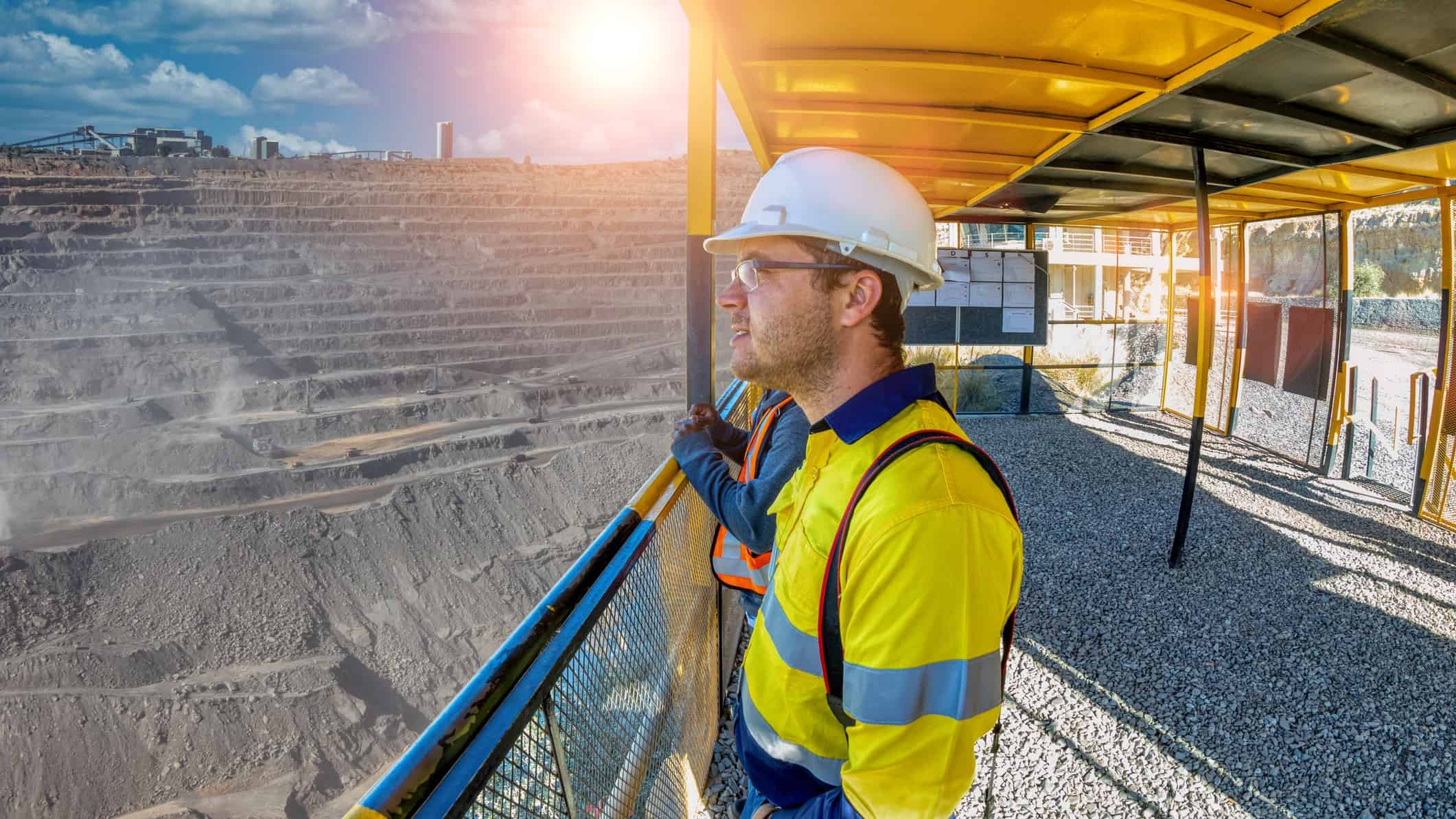
    A mining worker wearing a white hardhat and a high vis vest stands on a platform overlooking a huge mine, thinking about what comes next.

    A mining worker wearing a white hardhat and a high vis vest stands on a platform overlooking a huge mine, thinking about what comes next.

    The BHP Group Ltd (ASX: BHP) share price is the biggest influence on the S&P/ASX 200 Index (ASX: XJO) because of its very large market capitalisation. Certainly, its future performance will play an important part in what happens with the ASX 200.

    The last 12 months — and, indeed, the past five years — have been a volatile period for the business.

    Despite dropping below US$37 multiple times this year, the BHP share price has risen 17% this year to almost $47.

    Over the past five years, the mining giant has seen a rise of more than 70%. So what could the next five years look like?

    Current commodity portfolio

    The company’s commodity portfolio has shifted throughout the years. The divestment of South32 Ltd (ASX: S32) changed how the business was positioned. Also this year, BHP divested its petroleum business to Woodside Energy Group Ltd (ASX: WDS).

    It currently has a portfolio of commodities with operational projects, as well as one that it’s working on.

    BHP’s current production comes from iron ore, copper, metallurgical coal, energy coal, and nickel.

    The company says that it’s “actively managing its portfolio for long-term value creation through the cycle”. It’s looking to maximise value from iron ore and metallurgical coal (used to make steel).

    BHP is increasing its exposure to ‘future facing’ commodities. Copper is needed for electrification, along with nickel.

    The company is also working on a potash project called Jansen. This could be the biggest change for the business over the next five years and could influence the BHP share price.

    Potash plans

    BHP says that the Jansen project has the expansion potential to support up to a century of production. The project is based in Canada, which is described as a “stable mining jurisdiction”.

    For readers who don’t know, potash is a type of fertiliser that is described as “low emission, biosphere friendly and positively leveraged to decarbonisation”.

    BHP thinks it will be attractive because there could be “reliable base demand leveraged by population growth and higher living standards”.

    The Jansen stage one project cost is US$5.7 billion, with this spending ramping up between FY22 to FY26.

    The company pointed out that Jansen has “structural competitive advantages” as it uses more efficient, larger, and more automated equipment compared to competitors. Jansen could end up having an impressive profit margin profile.

    Other commodities

    Meantime, BHP is generating a lot of profit from iron ore. While it has virtually no control over the iron ore price, the company is working on scaling its operations and improving its infrastructure to uplift capacity. For example, its ‘port debottlenecking project ’ is expected to be completed in 2024 and this investment could support throughput of more than 300mt per annum.

    The mining giant is also hoping to buy the OZ Minerals Limited (ASX: OZL) business at a price of $28.25 per share. While this was a premium of almost 50% to the last trading day prior to the BHP proposal, the deal is expected to add value.

    Buying OZ Minerals would also increase exposure to copper and nickel, which are important for decarbonsation and electrification.

    For BHP, there are “attractive synergies” with the creation of a large South Australian copper basin, with how close OZ Minerals’ Carrapateena and Prominent Hill are to BHP’s existing Olympic Dam asset and Oak Dam development resource. OZ Minerals also has substantial growth projects for copper and nickel.

    Foolish takeaway

    It’s almost impossible to say what commodity prices or the BHP share price will be in five years. But, the company could have a much larger focus on non-iron resources which are focused on decarbonisation. Of particular interest in 2027 could be the prospects of Jansen’s potash production.

    The post Where will BHP shares be in 5 years? appeared first on The Motley Fool Australia.

    Wondering where you should invest $1,000 right now?

    When investing expert Scott Phillips has a stock tip, it can pay to listen. After all, the flagship Motley Fool Share Advisor newsletter he has run for over ten years has provided thousands of paying members with stock picks that have doubled, tripled or even more.*

    Scott just revealed what he believes could be the ‘five best ASX stocks’ for investors to buy right now. These stocks are trading at near dirt-cheap prices and Scott thinks they could be great buys right now

    See The 5 Stocks
    *Returns as of December 1 2022

    (function() {
    function setButtonColorDefaults(param, property, defaultValue) {
    if( !param || !param.includes(‘#’)) {
    var button = document.getElementsByClassName(“pitch-snippet”)[0].getElementsByClassName(“pitch-button”)[0];
    button.style[property] = defaultValue;
    }
    }

    setButtonColorDefaults(“#0095C8”, ‘background’, ‘#5FA85D’);
    setButtonColorDefaults(“#0095C8”, ‘border-color’, ‘#43A24A’);
    setButtonColorDefaults(“#fff”, ‘color’, ‘#fff’);
    })()

    More reading

    Motley Fool contributor Tristan Harrison has no position in any of the stocks mentioned. The Motley Fool Australia’s parent company Motley Fool Holdings Inc. has no position in any of the stocks mentioned. The Motley Fool Australia has no position in any of the stocks mentioned. The Motley Fool has a disclosure policy. This article contains general investment advice only (under AFSL 400691). Authorised by Scott Phillips.

    from The Motley Fool Australia https://ift.tt/csCuEyX

  • Why is the BrainChip share price crumbling 7% on Wednesday?

    A young man clasps his hand to his head with his eyes closed and a pained expression on his face as he clasps a laptop computer in front of him, seemingly learning of bad news or a poor investment.

    A young man clasps his hand to his head with his eyes closed and a pained expression on his face as he clasps a laptop computer in front of him, seemingly learning of bad news or a poor investment.

    It’s been a pretty disappointing day for ASX shares this Wednesday so far. At the time of writing, the All Ordinaries Index (ASX: XAO) has slipped by 0.61%. But that’s nothing compared to the carnage we are seeing with the BrainChip Holdings Ltd (ASX: BRN) share price

    Brainchip shares are having a clanger today. The ASX artificial intelligence share has lost a painful 7.06% at the time of writing. That puts the company’s share price down to 63.2 cents.

    That’s a bit better than what was happening this morning though. Just before midday, the Brainchip share price fell to an intraday low of just 62 cents, which was a fall of almost 9% at that time.

    So what’s going so wrong for Brainchip shares today? Well, it doesn’t look like it has anything to do with the company itself. Brainchip has released no ASX news or announcements today.

    To be fair, we did hear news earlier this week that Brainchip CEO Sean Hehir has been selling Brainchip shares recently. But that was a few days ago, so it doesn’t look like this is relevant today.

    Why is the Brainchip share price getting crushed?

    It looks like Brainchip shares are getting caught up in the general sell-off we have seen in tech shares this Wednesday. Tech is one of the worst-performing sectors on the ASX right now.

    Companies like Megaport Ltd (ASX: MP1), TechnologyOne Ltd (ASX: TNE), and Pro Medicus Ltd (ASX: PME) are all down between 4-6% at present. As are leading tech shares like WiseTech Global Ltd (ASX: WTC) and Altium Limited (ASX: ALU).

    With these kinds of numbers, it was always going to be hard for Brainchip shares to do well today.

    Additionally, Brainchip is also one of the ASX’s most short-sold shares right now, as my Fool colleague James recently reported. When a company has a high short-seller interest, it can dampen investor enthusiasm as well.

    So the stars seem to have aligned for a rough day for the Brainchip share price this Wednesday.

    The post Why is the BrainChip share price crumbling 7% on Wednesday? appeared first on The Motley Fool Australia.

    Turn the market pullback to your advantage today

    The recent market pullback in stocks has been eye watering…

    But there is a silver lining because historically, some millionaires are made in bear markets.

    And when investors can find world-class stocks at severe discounts you have to wonder…

    Have you got these four ‘pullback stocks’ in your portfolio?

    See The 4 Stocks
    *Returns as of December 1 2022

    (function() {
    function setButtonColorDefaults(param, property, defaultValue) {
    if( !param || !param.includes(‘#’)) {
    var button = document.getElementsByClassName(“pitch-snippet”)[0].getElementsByClassName(“pitch-button”)[0];
    button.style[property] = defaultValue;
    }
    }

    setButtonColorDefaults(“#0095C8”, ‘background’, ‘#5FA85D’);
    setButtonColorDefaults(“#0095C8”, ‘border-color’, ‘#43A24A’);
    setButtonColorDefaults(“#fff”, ‘color’, ‘#fff’);
    })()

    More reading

    Motley Fool contributor Sebastian Bowen has no position in any of the stocks mentioned. The Motley Fool Australia’s parent company Motley Fool Holdings Inc. has positions in and has recommended Altium, Megaport, Pro Medicus, and WiseTech Global. The Motley Fool Australia has positions in and has recommended Pro Medicus and WiseTech Global. The Motley Fool Australia has recommended Megaport and Technology One. The Motley Fool has a disclosure policy. This article contains general investment advice only (under AFSL 400691). Authorised by Scott Phillips.

    from The Motley Fool Australia https://ift.tt/mrUaSVl

  • As 2 experts predict the stock market is yet to bottom, here are 4 things every investor can do now to prepare for the worst

    A young couple sits at their kitchen table looking at documents with a laptop open in front of them while they consider the state of their investments.A young couple sits at their kitchen table looking at documents with a laptop open in front of them while they consider the state of their investments.

    1) So much for the so-called Santa Rally…

    In Wednesday’s trade, the ASX 200 has followed United States markets lower as a host of Wall Street executives warn of tougher times ahead.

    Goldman Sachs’ CEO David Solomon said a US recession in 2023 is a possibility and that it should be no surprise that job cuts could be on the table.

    JPMorgan Chase’s Jamie Dimon, in between having yet another dig at cryptocurrencies, likening them to pet rocks, warned of a mild to hard US recession next year.

    Bank of America CEO Brian Moynihan said the bank has slowed hiring.

    And Morgan Stanley said it will reduce its global workforce by about 2,000.

    “We have not yet seen the bottom on equity prices,” said Lauren Goodwin, portfolio strategist at New York Life Investments on Bloomberg. “While this phase of equity market volatility is likely to end in the next few months, earnings have not yet adapted to a recessionary environment.”

    The big US investment banks are about 10,000 miles away from the home of the ASX, but the old saying “when Wall Street sneezes, the ASX catches a cold” usually rings true. 

    2) For a change, the stock market moved in response to the upcoming economic slowdown – something that will impact corporate earnings – rather than the move in bond yields, which in turn reflect future interest rate expectations.

    Although there are the inevitable outliers, consensus is that central banks will be finished raising interest rates at or before the middle of next year. 

    In other words, the heavy lifting on interest rates has already been done. Next up is estimating the impact it will have on corporate profitability.

    You could argue/guess that most of the coming economic slowdown is already priced into many stocks. I’ve repeatedly used the example of high-quality retailer JB Hi-Fi Limited (ASX: JBH), which trades on a valuation that is expecting “bad things” ahead. 

    3) The stock market looks forward, with discretionary consumer stocks like JB Hi-Fi likely to move higher before earnings have bottomed for this economic cycle.

    As to where they will bottom – and the bottom could still be higher than current levels of profits – is the great unknown.

    As to when they will bottom, the pundits are queuing up to take a guess.

    Over in the US, quoted on Bloomberg, David Bailin, chief investment officer at Citi Global Wealth, said markets have never bottomed before a recession has begun. “If there is in fact going to be a recession next year, if we are going to see a period of unemployment rising in the country, then we would expect that markets would have to settle down from where they are today over the course of the next several months.”

    Back in Australia, Bell Potter’s Richard Coppleson said on Livewire the bear market is not over yet. The worst is likely still ahead of us.

    Coppleson said we could see a lot of market pain at the start of the year, with a low in mid-March 2023. 

    “The patterns of the past suggest we’re coming close to the end of the current rate rise cycle and the bear market. If March 2023 becomes the final market low, and the start of the bull market run, investors may find opportunities there. They’ll need to have a strong stomach though. The evidence for a change will take time to appear. Bear markets don’t last forever after all.”

    Writing in its November 2022 monthly report, the 1851 Emerging Companies Fund believes we will not see a hard landing for the consumer during 2023, and in a contrarian bet, has been progressively increasing its weighting to the retail sector.

    “Our expectation is better days lie ahead for the Australian small cap market and we are progressively rotating the portfolio to take advantage as we enter 2023.”

    They are definitely getting in ahead of the game… which is the game when it comes to stock picking.

    4) So what’s an investor to do?

    I’d suggest four things…

    1. Keep a healthy cash balance. These days you get paid for waiting. Plus, it helps you sleep well at night. I’m quite cashed up having recently received funds from a company that was bought out, I have more to come from my Nearmap Ltd (ASX: NEA) shares (also acquired), plus even more to come from my MSL Solutions Ltd (ASX: MSL) shares (in the process of being acquired).
    2. Don’t sell out of any existing positions just because you think markets might tumble further between now and March 2023. Jumping in and out of the market only makes money for your broker. You’ll very likely get the timing very wrong.
    3. Keep adding to existing positions – or take out starter positions in new holdings – if you think are well placed to weather an economic slowdown, and trade on modest valuations. Easier said than done but hey, that’s investing.
    4. There’s unlikely to be a time when you should go “all in” on a stock or indeed into the market. But you can certainly look to put more money to work should the market fall another say 10% to 20% from here. The problem is, when it happens, that’s hard to stomach, because inevitably, you can’t pick the bottom, and new money invested in the market can quickly be in the red. 

    The time to commit to such a course of action is now, when things are relatively calm. Something like, if the markets fell by say 20% from here, committing to invest at least 50% of your cash balance into stocks. It’ll be scary, but in five years time, it’ll very likely look a brilliant move.

    The post As 2 experts predict the stock market is yet to bottom, here are 4 things every investor can do now to prepare for the worst appeared first on The Motley Fool Australia.

    Despite what the ‘experts’ may say…

    You may have heard some ‘experts’ tell you stock picking is best left to the ‘big boys’. That everyday investors should stay away if we know what’s good for us.

    However, for anyone who loves the idea of proving these ‘experts’ dead wrong, then you may want to check this out… In fact…

    I think 5 years from now, you’ll probably wish you’d grabbed these stocks.

    Get all the details here.

    See The 5 Stocks
    *Returns as of December 1 2022

    (function() {
    function setButtonColorDefaults(param, property, defaultValue) {
    if( !param || !param.includes(‘#’)) {
    var button = document.getElementsByClassName(“pitch-snippet”)[0].getElementsByClassName(“pitch-button”)[0];
    button.style[property] = defaultValue;
    }
    }

    setButtonColorDefaults(“#0095C8”, ‘background’, ‘#5FA85D’);
    setButtonColorDefaults(“#0095C8”, ‘border-color’, ‘#43A24A’);
    setButtonColorDefaults(“#fff”, ‘color’, ‘#fff’);
    })()

    More reading

    JPMorgan Chase is an advertising partner of The Ascent, a Motley Fool company. Citigroup is an advertising partner of The Ascent, a Motley Fool company. Bank of America is an advertising partner of The Ascent, a Motley Fool company. Motley Fool contributor Bruce Jackson has positions in Msl Solutions and Nearmap. The Motley Fool Australia’s parent company Motley Fool Holdings Inc. has positions in and has recommended JPMorgan Chase and Nearmap. The Motley Fool Australia has recommended Jb Hi-Fi. The Motley Fool has a disclosure policy. This article contains general investment advice only (under AFSL 400691). Authorised by Scott Phillips.

    from The Motley Fool Australia https://ift.tt/sfURxBi