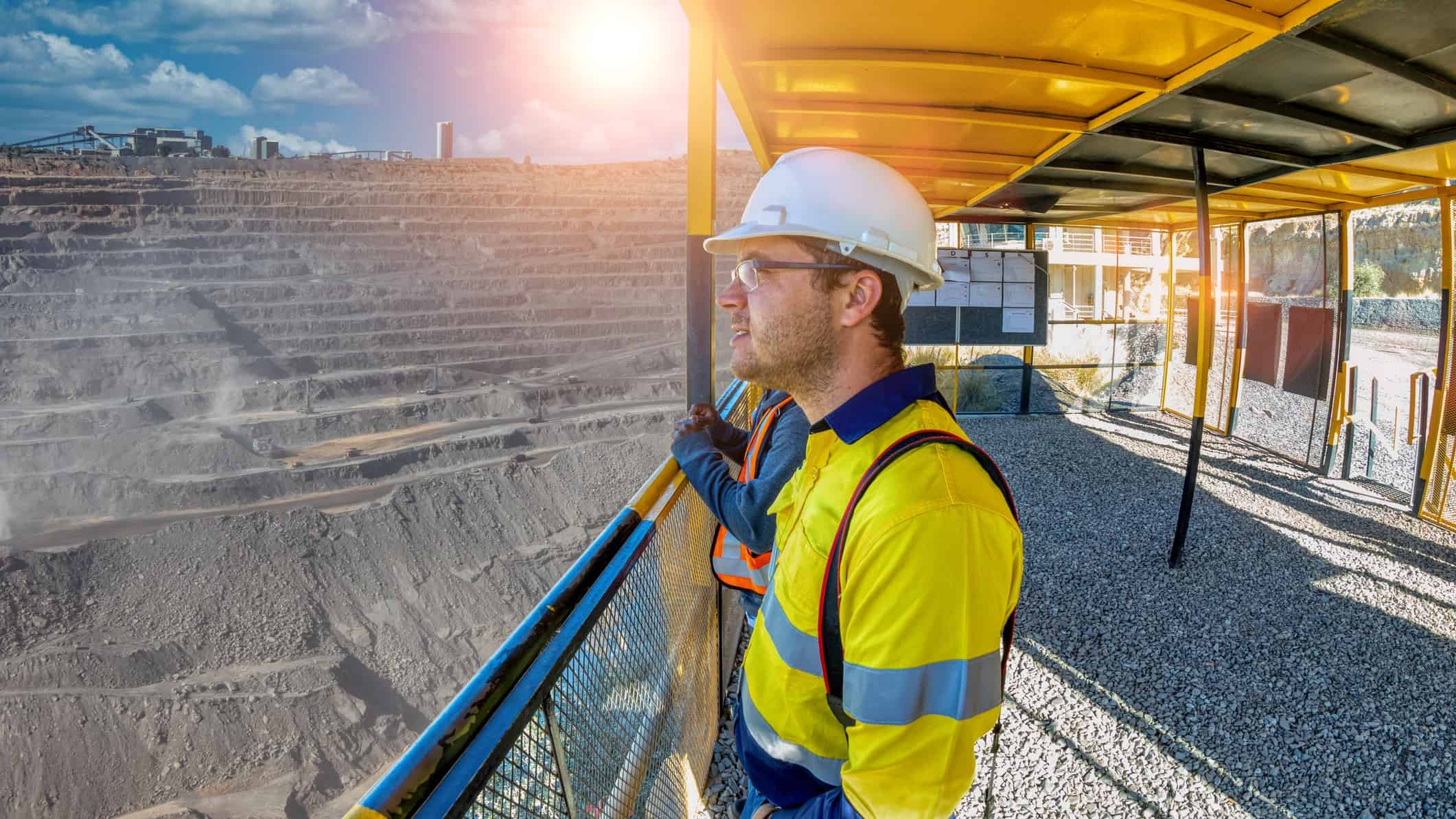
The BHP Group Ltd (ASX: BHP) share price is the biggest influence on the S&P/ASX 200 Index (ASX: XJO) because of its very large market capitalisation. Certainly, its future performance will play an important part in what happens with the ASX 200.
The last 12 months — and, indeed, the past five years — have been a volatile period for the business.
Despite dropping below US$37 multiple times this year, the BHP share price has risen 17% this year to almost $47.
Over the past five years, the mining giant has seen a rise of more than 70%. So what could the next five years look like?
Current commodity portfolio
The companyâs commodity portfolio has shifted throughout the years. The divestment of South32 Ltd (ASX: S32) changed how the business was positioned. Also this year, BHP divested its petroleum business to Woodside Energy Group Ltd (ASX: WDS).
It currently has a portfolio of commodities with operational projects, as well as one that itâs working on.
BHPâs current production comes from iron ore, copper, metallurgical coal, energy coal, and nickel.
The company says that itâs âactively managing its portfolio for long-term value creation through the cycleâ. Itâs looking to maximise value from iron ore and metallurgical coal (used to make steel).
BHP is increasing its exposure to âfuture facingâ commodities. Copper is needed for electrification, along with nickel.
The company is also working on a potash project called Jansen. This could be the biggest change for the business over the next five years and could influence the BHP share price.
Potash plans
BHP says that the Jansen project has the expansion potential to support up to a century of production. The project is based in Canada, which is described as a âstable mining jurisdictionâ.
For readers who donât know, potash is a type of fertiliser that is described as âlow emission, biosphere friendly and positively leveraged to decarbonisationâ.
BHP thinks it will be attractive because there could be âreliable base demand leveraged by population growth and higher living standardsâ.
The Jansen stage one project cost is US$5.7 billion, with this spending ramping up between FY22 to FY26.
The company pointed out that Jansen has âstructural competitive advantagesâ as it uses more efficient, larger, and more automated equipment compared to competitors. Jansen could end up having an impressive profit margin profile.
Other commodities
Meantime, BHP is generating a lot of profit from iron ore. While it has virtually no control over the iron ore price, the company is working on scaling its operations and improving its infrastructure to uplift capacity. For example, its âport debottlenecking project â is expected to be completed in 2024 and this investment could support throughput of more than 300mt per annum.
The mining giant is also hoping to buy the OZ Minerals Limited (ASX: OZL) business at a price of $28.25 per share. While this was a premium of almost 50% to the last trading day prior to the BHP proposal, the deal is expected to add value.
Buying OZ Minerals would also increase exposure to copper and nickel, which are important for decarbonsation and electrification.
For BHP, there are âattractive synergiesâ with the creation of a large South Australian copper basin, with how close OZ Mineralsâ Carrapateena and Prominent Hill are to BHPâs existing Olympic Dam asset and Oak Dam development resource. OZ Minerals also has substantial growth projects for copper and nickel.
Foolish takeaway
Itâs almost impossible to say what commodity prices or the BHP share price will be in five years. But, the company could have a much larger focus on non-iron resources which are focused on decarbonisation. Of particular interest in 2027 could be the prospects of Jansenâs potash production.
The post Where will BHP shares be in 5 years? appeared first on The Motley Fool Australia.
Wondering where you should invest $1,000 right now?
When investing expert Scott Phillips has a stock tip, it can pay to listen. After all, the flagship Motley Fool Share Advisor newsletter he has run for over ten years has provided thousands of paying members with stock picks that have doubled, tripled or even more.*
Scott just revealed what he believes could be the ‘five best ASX stocks’ for investors to buy right now. These stocks are trading at near dirt-cheap prices and Scott thinks they could be great buys right now
See The 5 Stocks
*Returns as of December 1 2022
(function() {
function setButtonColorDefaults(param, property, defaultValue) {
if( !param || !param.includes(‘#’)) {
var button = document.getElementsByClassName(“pitch-snippet”)[0].getElementsByClassName(“pitch-button”)[0];
button.style[property] = defaultValue;
}
}
setButtonColorDefaults(“#0095C8”, ‘background’, ‘#5FA85D’);
setButtonColorDefaults(“#0095C8”, ‘border-color’, ‘#43A24A’);
setButtonColorDefaults(“#fff”, ‘color’, ‘#fff’);
})()
More reading
- Iâd buy 1,000 shares of this ASX 200 stock for $800 in monthly passive income
- Is the SPDR S&P/ASX 200 Fund (STW) an ETF?
- ASX 200 tech shares deep in the red today. Here’s why
- ASX 200 correction: A once-in-a-lifetime chance for supercharged passive income!
- Why is the CSL share price in the spotlight on Wednesday?
Motley Fool contributor Tristan Harrison has no position in any of the stocks mentioned. The Motley Fool Australia’s parent company Motley Fool Holdings Inc. has no position in any of the stocks mentioned. The Motley Fool Australia has no position in any of the stocks mentioned. The Motley Fool has a disclosure policy. This article contains general investment advice only (under AFSL 400691). Authorised by Scott Phillips.
from The Motley Fool Australia https://ift.tt/csCuEyX
Leave a Reply