Day: 3 January 2023

  • The Zip share price crashed 88% in 2022. Can it recover in 2023?

    A man holds his head in his hands, despairing at the bad result he's reading on his computer.

    A man holds his head in his hands, despairing at the bad result he's reading on his computer.

    It certainly was a year to forget for the Zip Co Ltd (ASX: ZIP) share price and its shareholders.

    During the 12 months, the buy now pay later (BNPL) provider’s shares lost a whopping 88% of their value after falling from $4.33 to a lowly 51 cents.

    Why did the Zip share price crash?

    Investors were selling down the Zip share price last year amid broad weakness in the tech sector and concerns over the company’s future.

    The former was driven by aggressive interest rate hikes from central banks across the world to combat inflation. This put significant pressure on the valuations of tech shares and particularly loss-making ones.

    And boy, is Zip a loss-maker! In August, the company released its full year results and revealed a loss of $1.1 billion.

    While the majority of this loss was non-cash – an $821.1 million impairment of goodwill and intangibles – Zip still recorded an adjusted loss before income tax of $256.5 million for FY 2022.

    In addition, concerns that rising interest rates could cause bad debts to spike also weighed on its shares. And although Zip has adjusted its credit risk settings in an attempt to offset this, there are fears that it could stifle its growth.

    Particularly given the increasing competition in the BNPL market. This includes the arrival of tech giant Apple in the space with the launch of its BNPL service.

    Apple’s BNPL service works with any merchant that already supports Apple Pay and does not require a new payments terminal. Furthermore, consumers can use the service even if the merchant doesn’t actively offer BNPL.

    Will 2023 be better?

    The performance of the Zip share price over the next 12 months is likely to be impacted largely by the company’s profitability goals.

    Management is aiming for cash EBTDA profitability in FY 2024. If it can demonstrate that it is on track to achieve this, then it could bode well for the company’s shares.

    However, conversely, if the tough economic environment pushes back its profitability timeframe, it could have major consequences for the Zip share price. Particularly given its cash burn and high debt load.

    All in all, it certainly will be an interesting year for the company.

    The post The Zip share price crashed 88% in 2022. Can it recover in 2023? appeared first on The Motley Fool Australia.

    Wondering where you should invest $1,000 right now?

    When investing expert Scott Phillips has a stock tip, it can pay to listen. After all, the flagship Motley Fool Share Advisor newsletter he has run for over ten years has provided thousands of paying members with stock picks that have doubled, tripled or even more.*

    Scott just revealed what he believes could be the ‘five best ASX stocks’ for investors to buy right now. These stocks are trading at near dirt-cheap prices and Scott thinks they could be great buys right now…

    See The 5 Stocks
    *Returns as of December 1 2022

    (function() {
    function setButtonColorDefaults(param, property, defaultValue) {
    if( !param || !param.includes(‘#’)) {
    var button = document.getElementsByClassName(“pitch-snippet”)[0].getElementsByClassName(“pitch-button”)[0];
    button.style[property] = defaultValue;
    }
    }

    setButtonColorDefaults(“#43B02A”, ‘background’, ‘#5FA85D’);
    setButtonColorDefaults(“#43B02A”, ‘border-color’, ‘#43A24A’);
    setButtonColorDefaults(“#fff”, ‘color’, ‘#fff’);
    })()

    More reading

    Motley Fool contributor James Mickleboro has no position in any of the stocks mentioned. The Motley Fool Australia’s parent company Motley Fool Holdings Inc. has positions in and has recommended Zip Co. The Motley Fool Australia has no position in any of the stocks mentioned. The Motley Fool has a disclosure policy. This article contains general investment advice only (under AFSL 400691). Authorised by Scott Phillips.

    from The Motley Fool Australia https://ift.tt/SgrpOUb

  • Mach7 signs $17 million contract – share price jumps 20% at open

    A businessman leaps in the air outside a city building in the CBD.A businessman leaps in the air outside a city building in the CBD.

    The Mach7 Technologies Ltd (ASX: M7T) share price is off to the races on this first day of trading in 2023.

    Shares in the ASX listed medical imaging systems provider leapt more than 20% on open and are currently up 18.4% in morning trade.

    Here’s what’s piquing ASX investor interest today.

    What did the company report?

    The Mach7 share price is rocketing after the company announced it has inked a multi-year deal with a Total Contract Value (TCV) of approximately $16.7 million.

    The signed sales order comes from a new customer, Akumin Inc, a NASDAQ listed outpatient radiology service provider with a large footprint amongst United States’ hospitals, health systems and physician groups.

    The contract involves Mach7’s entire Enterprise Imaging Platform including its Vendor Neutral Archive (VNA), eUnity Diagnostic Viewer and Workflow Applications. Mach7 said this will enable it to provide true cloud-based, enterprise-wide imaging and informatics solutions.

    Payments for the $16.7 million 10-year capital contract will be staged annually across the life of the contract. $7.5 million of revenue is expected to be recognised in the 2023 financial year. Annual support fees are weighted to the second half of the contract term.

    Commenting on the largest customer contract in the company’s history, which is helping send the Mach7 share price sharply higher, CEO Mike Lampron said:

    Our vendor agnostic easily integrated product suite and migration services were key requirements for the massive data ingestion and consolidation associated with Akumin’s cloud-focused radiology ecosystem.

    This deal together with the recent sales order received from our new partner, Nuvodia increases our exposure to the fast-growing outpatient radiology market and demonstrates that our technology appeals to customers across the size spectrum.

    Mach7 share price snapshot

    The Mach7 share price went backwards in 2022, as you can see in the chart below. But longer-term investors are unlikely to be complaining, with shares up 211% over the past five years. For some context, the All Ordinaries Index (ASX: XAO) has gained 15% over that same period.

    The post Mach7 signs $17 million contract – share price jumps 20% at open appeared first on The Motley Fool Australia.

    Trillion-dollar wealth shifts: first the Internet … to Smartphones … Now this…

    Tech billionaire Mark Cuban believes the world’s first trillionaires are going to come from it…

    And just like the internet and smartphones before it, this technology is set to transform the world as we know it. It’s already changing the way you work, how you shop… and it’s even helping to save lives — Perhaps that’s why experts predict it could grow to a market defying US$17 trillion dollar opportunity?

    If you’re wondering what could be the engine room of the next bull market… You’ll need to see this…

    Learn more about our AI Boom report
    *Returns as of December 1 2022

    (function() {
    function setButtonColorDefaults(param, property, defaultValue) {
    if( !param || !param.includes(‘#’)) {
    var button = document.getElementsByClassName(“pitch-snippet”)[0].getElementsByClassName(“pitch-button”)[0];
    button.style[property] = defaultValue;
    }
    }

    setButtonColorDefaults(“#0095C8”, ‘background’, ‘#5FA85D’);
    setButtonColorDefaults(“#0095C8”, ‘border-color’, ‘#43A24A’);
    setButtonColorDefaults(“#fff”, ‘color’, ‘#fff’);
    })()

    More reading

    Motley Fool contributor Bernd Struben has no position in any of the stocks mentioned. The Motley Fool Australia’s parent company Motley Fool Holdings Inc. has positions in and has recommended Mach7 Technologies. The Motley Fool Australia has recommended Mach7 Technologies. The Motley Fool has a disclosure policy. This article contains general investment advice only (under AFSL 400691). Authorised by Scott Phillips.

    from The Motley Fool Australia https://ift.tt/LeZREz2

  • The Westpac share price smashed the other ASX 200 banks in 2022. What now?

    Bank building with the word bank on it.

    Bank building with the word bank on it.

    The Westpac Banking Corp (ASX: WBC) share price was a strong performer in 2022.

    Australia’s oldest bank’s shares rose a sizeable 9.4% during the 12 months.

    This compares favourably to the S&P/ASX 200 Index (ASX: XJO) and its 5.5% decline during the same period.

    It also means that it was the best-performing big four bank in 2022.

    Why did the Westpac share price smash the market?

    Investors were bidding the Westpac share price higher last year thanks to its much-improved outlook.

    This was driven by the Reserve Bank of Australia increasing the cash rate to combat inflation, which has boosted bank margins materially.

    For example, when Westpac released its FY 2022 results in November, it revealed a 5 basis points increase in its net interest margin (NIM) during the second half to 1.90%.

    However, that’s only the beginning of its NIM improvements, according to many analysts. In fact, Goldman Sachs highlights that “management’s guidance on its FY23 NIM trajectory was better than we had previously anticipated.” As a result, the broker now expects a NIM of 2.05% in FY 2023.

    What’s 2023 looking like for its shares?

    While a lot can happen in the space of 12 months, as things stand, Goldman Sachs believes it is onwards and upwards for the Westpac share price.

    So much so, the broker has a conviction buy rating and $27.60 price target on the bank’s shares.

    Its analysts believe Westpac and rival National Australia Bank Ltd (ASX: NAB) can provide double digit returns each year over the next three years. The broker explained:

    The major Australian banks have been in the midst of an EPS upgrade cycle, with 12-month forward EPS having increased by an average of 21% p.a. over the last two years. However, the outlook is now less optimistic, with 12-month forward EPS now only representing a c. 4% p.a. tailwind to share prices over the next three years. Despite this, the outlook for our two Buy stocks, WBC (on CL) and NAB, is better, and we highlight why we think double digit total shareholder returns remains achievable over the next three years.

    The post The Westpac share price smashed the other ASX 200 banks in 2022. What now? appeared first on The Motley Fool Australia.

    Wondering where you should invest $1,000 right now?

    When investing expert Scott Phillips has a stock tip, it can pay to listen. After all, the flagship Motley Fool Share Advisor newsletter he has run for over ten years has provided thousands of paying members with stock picks that have doubled, tripled or even more.*

    Scott just revealed what he believes could be the ‘five best ASX stocks’ for investors to buy right now. These stocks are trading at near dirt-cheap prices and Scott thinks they could be great buys right now…

    See The 5 Stocks
    *Returns as of December 1 2022

    (function() {
    function setButtonColorDefaults(param, property, defaultValue) {
    if( !param || !param.includes(‘#’)) {
    var button = document.getElementsByClassName(“pitch-snippet”)[0].getElementsByClassName(“pitch-button”)[0];
    button.style[property] = defaultValue;
    }
    }

    setButtonColorDefaults(“#43B02A”, ‘background’, ‘#5FA85D’);
    setButtonColorDefaults(“#43B02A”, ‘border-color’, ‘#43A24A’);
    setButtonColorDefaults(“#fff”, ‘color’, ‘#fff’);
    })()

    More reading

    Motley Fool contributor James Mickleboro has positions in Westpac Banking. The Motley Fool Australia’s parent company Motley Fool Holdings Inc. has no position in any of the stocks mentioned. The Motley Fool Australia has recommended Westpac Banking. The Motley Fool has a disclosure policy. This article contains general investment advice only (under AFSL 400691). Authorised by Scott Phillips.

    from The Motley Fool Australia https://ift.tt/RChnDlj

  • Here’s how I’d invest $5,000 in ASX 200 shares to earn a second income

    A young woman sits with her hand to her chin staring off to the side thinking about her investments.A young woman sits with her hand to her chin staring off to the side thinking about her investments.

    Last year was a crazy one for S&P/ASX 200 Index (ASX: XJO) shares. The index slumped 7% over the 12 months ended Friday despite soaring energy and mining shares.

    Meanwhile, stocks in other sectors – like retail and tech – suffered. The S&P/ASX 200 Consumer Discretionary Index (ASX: XDJ) tumbled 24% last year while the S&P/ASX 200 Information Technology Index (ASX: XIJ) plunged 36%.

    But I think the downturn may have provided an opportunity to build passive income. Here’s how I would invest $5,000 in ASX 200 dividend stocks if I were aiming for a second income stream.

    Is now a good time to buy ASX 200 shares for dividend income?

    Inflation, interest rate hikes, and major global events boosted some ASX 200 shares in 2022 while dragging others lower.

    Fortunately, the market’s long-term performance may sow hope in the hearts of investors. The ASX 200 has historically always returned to and surpassed its previous highs following a downturn.

    That means many of the market’s embattled sectors likely house some bargain shares right now.

    And there’s a further silver lining for investors hunting a second income. Falling share prices tend to drive dividend yields higher.

    Many companies’ dividends remained stable through 2022’s downturn, thereby potentially letting investors get a slice of the pie for less than they might’ve otherwise paid.

    Thus, I believe now could be a good time to shift through the rubble in search of quality ASX 200 dividend shares trading for cheap prices. By doing so, I believe I could turn $5,000 into a passive income stream through the power of compounding.

    Compounding returns

    There’s no shortage of ASX 200 shares currently trading with dividend yields of around 8% following a disastrous 2022.

    They include JB Hi-Fi Limited (ASX: JBH), Nine Entertainment Co Holdings Ltd (ASX: NEC), and Fletcher Building Limited (ASX: FBU), to name a few.

    An 8% dividend yield would see a $5,000 investment returning $400 over the next 12 months.

    That’s not exactly life-changing. However, I would aim to compound my dividends by reinvesting them in ASX 200 shares.

    By doing so, and assuming my yield stays the same, I could turn my initial investment into $10,795 in 10 years’ time. At that point, it would be capable of paying out around $864 each year.

    But the true magic comes later. In 30 years’ time, my figurative $5,000 investment – reinvested time and time again – could be worth $50,313. That, with an 8% yield, could return $4,025 annually.

    And that’s without considering share price growth or a consistent investment strategy.

    Choosing wisely

    The ultimate challenge I face in putting my strategy to work is to identify oversold buys in the current environment.

    While a high dividend yield might herald an oversold stock, it might also suggest a company isn’t spending its cash wisely, making its offerings unsustainable.

    Thus, I would pay particular attention to a company’s cash flow and balance sheet to help determine if it’s a buy right now.

    The post Here’s how I’d invest $5,000 in ASX 200 shares to earn a second income appeared first on The Motley Fool Australia.

    You beat inflation buying stocks that pay the biggest dividends right? Sorry, you could be falling into a ‘dividend trap’…

    Mammoth dividend yields may look good on the surface… But just because a company is writing big cheques now, doesn’t mean it’ll always be the case. Right now, ‘dividend traps’ are ready to catch unwary investors as they race to income stocks to fight inflation.

    This FREE report reveals 3 stocks not only boasting sustainable dividends but that also have strong potential for massive long term returns…

    See the 3 stocks
    *Returns as of December 1 2022

    (function() {
    function setButtonColorDefaults(param, property, defaultValue) {
    if( !param || !param.includes(‘#’)) {
    var button = document.getElementsByClassName(“pitch-snippet”)[0].getElementsByClassName(“pitch-button”)[0];
    button.style[property] = defaultValue;
    }
    }

    setButtonColorDefaults(“#0095C8”, ‘background’, ‘#5FA85D’);
    setButtonColorDefaults(“#0095C8”, ‘border-color’, ‘#43A24A’);
    setButtonColorDefaults(“#fff”, ‘color’, ‘#fff’);
    })()

    More reading

    Motley Fool contributor Brooke Cooper has no position in any of the stocks mentioned. The Motley Fool Australia’s parent company Motley Fool Holdings Inc. has no position in any of the stocks mentioned. The Motley Fool Australia has recommended Jb Hi-Fi and Nine Entertainment. The Motley Fool has a disclosure policy. This article contains general investment advice only (under AFSL 400691). Authorised by Scott Phillips.

    from The Motley Fool Australia https://ift.tt/uTDe25Q

  • 2 ASX ETFs that investors are using to bet on the future

    boy dressed as an eco warrior and holding a globe.boy dressed as an eco warrior and holding a globe.

    The ASX share market is full of interesting businesses. But, there are some compelling companies listed elsewhere around the world. We can get access to those with ASX exchange-traded funds (ETFs).

    Some ETFs like the Vanguard Australian Shares Index ETF (ASX: VAS) track an index with businesses that are spread across a variety of sectors, such as the S&P/ASX 300 Index (ASX: XKO).

    But, there are a growing number of ETFs that provide investors with access to a specific industry or theme.

    A report by Sharesies has identified which ETFs investors have been buying. While the Vanguard Australian Shares Index ETF was the most popular, I’m going to outline the next two most popular ETFs that were bought in November 2022 on the Sharesies platform.

    VanEck Global Clean Energy ETF (ASX: CLNE)

    The purpose of the ETF is to give investors exposure to 30 of the largest companies involved in “clean energy production and associated technology and equipment globally”, according to VanEck. These businesses are from both ‘developed’ and ‘developing’ markets.

    There are four main areas that this ASX ETF is invested in – independent power producers and energy traders (33% of the portfolio), electrical equipment (29.3%), semiconductors and semiconductor equipment (24.8%), and electric utilities (12.9%).

    In terms of geographic weighting, the US is the biggest allocation with 41%, but many countries have a weighting of more than 2.5%: Spain (10%), China (9.2%), Israel (7.5%), New Zealand (6.6%), Denmark (5.3%), Canada (4.6%), Japan (4.2%), Brazil (2.9%), and Austria (2.6%).

    At the end of November 2022, these were the ten biggest positions in the portfolio: Solaredge Technologies, Vestas Wind Systems, Sunrun, First Solar, Enphase Energy, EDP Renovaveis, Bloom Energy, Xinyi Solar, Chubu Electric Power, and Brookfield Renewable. Those positions make up around 48% of the total portfolio.

    This ASX ETF comes with an annual management fee of around 0.65%.

    BetaShares Climate Change Innovation ETF (ASX: ERTH)

    This investment provides a more diversified exposure to the fight against climate change. It’s invested in up to 100 global companies that make at least 50% of their revenue from “products and services that help to address climate change and other environmental problems through the reduction or avoidance of CO2 emissions”.

    Sectors covered within the ETF include clean energy providers, along with companies tackling “green transport, waste management, sustainable product development, and improved energy efficiency and storage”.

    Looking at the allocations, green energy gets the biggest allocation with 23.8% of the portfolio, followed by ‘enabling solutions’ (21.9%), green transportation (21.3%), sustainable products (21.1%), and water and waste improvements (11.9%).

    The portfolio is a bit more US-focused than the first one I outlined, with a weighting of 53.9% to the United States. Other weightings of more than 2% include China (8.6%), South Korea (6.2%), Denmark (5.1%), France (4.4%), Japan (3.5%), Spain (2.5%), Sweden (2.3%), and Germany (2.1%).

    The top holdings of this ASX ETF look very different from the VanEck one. Here are the biggest 10 positions: Trane Technologies, Enphase Energy, Eaton, Vestas Wind Systems, American Water Works, Ecolab, Samsung, Cie De Saint-Gobain, East Japan Railway, and BYD.

    This ETF comes with an annual management fee of 0.65%.

    The post 2 ASX ETFs that investors are using to bet on the future appeared first on The Motley Fool Australia.

    Record ETF surge sees global assets predicted to reach US$18 trillion

    Despite recent market volatility, ETFs are seeing a record breaking surge in popularity.

    Experts are predicting total global assets could reach an incredible US$18 trillion by 2026. Which means those who find the best ones today could be setting themselves — and their families — up for tomorrow.

    Discover our favourite ETFs we think investors should be buying right now.

    Click here to get all the details
    *Returns as of December 1 2022

    (function() {
    function setButtonColorDefaults(param, property, defaultValue) {
    if( !param || !param.includes(‘#’)) {
    var button = document.getElementsByClassName(“pitch-snippet”)[0].getElementsByClassName(“pitch-button”)[0];
    button.style[property] = defaultValue;
    }
    }

    setButtonColorDefaults(“#0095C8”, ‘background’, ‘#5FA85D’);
    setButtonColorDefaults(“#0095C8”, ‘border-color’, ‘#43A24A’);
    setButtonColorDefaults(“#fff”, ‘color’, ‘#fff’);
    })()

    More reading

    Motley Fool contributor Tristan Harrison has no position in any of the stocks mentioned. The Motley Fool Australia’s parent company Motley Fool Holdings Inc. has positions in and has recommended Brookfield Renewable. The Motley Fool Australia’s parent company Motley Fool Holdings Inc. has recommended Ecolab, First Solar, and SolarEdge Technologies. The Motley Fool Australia has no position in any of the stocks mentioned. The Motley Fool has a disclosure policy. This article contains general investment advice only (under AFSL 400691). Authorised by Scott Phillips.

    from The Motley Fool Australia https://ift.tt/xZdBo2O

  • Telstra shares fell short in 2022. Can they deliver in 2023?

    A cute little kid in a suit pulls a shocked face as he talks on his smartphone.

    A cute little kid in a suit pulls a shocked face as he talks on his smartphone.

    The Telstra Group Ltd (ASX: TLS) share price saw a negative return in 2022, falling by around 5.5%. When the dividends are added to the return, the picture looks a bit better for the telco.

    However, keep in mind that Telstra’s share price performance did beat the S&P/ASX 200 Index (ASX: XJO). The ASX 200 fell 7.25% over the year.

    So, while Telstra shares did drop, it managed to slightly outperform the ASX index.

    FY22 result revealed promise

    On a guidance basis, Telstra reported that its FY22 underlying earnings before interest, tax, depreciation and amortisation (EBITDA) grew by 8.4% to $7.3 billion, while free cash flow went up 5.9% to $4 billion. Total income was $22 billion (down 4.7%).

    In FY23, the business is expecting to deliver total income of between $23 billion to $25 billion, which would represent growth. Underlying EBITDA is expected to be between $7.8 billion to $8 billion, which would be a growth of between 6.8% to 9.6%.

    The above underlying EBITDA guidance includes a contribution from Digicel Pacific, which is a Pacific island-focused telco that Telstra bought during the year.

    Telstra’s board decided to increase the final FY22 dividend by 6.25% to 8.5 cents, which could signal that future increases are intended.

    Can Telstra shares deliver in 2023?

    Investors often like to judge a business by its ability to generate profit. The more profit it makes, the higher the valuation could go. The fact that Telstra is predicting underlying profit growth in FY23 is promising.

    If the ASX 200 hadn’t dropped by 7%, things may have been better for the Telstra share price. Higher interest rates were probably a key culprit for the decline. As billionaire Ray Dalio once said:

    It all comes down to interest rates. As an investor, all you’re doing is putting up a lump sum payment for a future cash flow.

    Commsec numbers suggest that Telstra is going to generate 17.1 cents of earnings per share (EPS) while paying a dividend per share of 17 cents in FY23. A higher dividend (up from 16.5 cents per share) could boost investor sentiment about Telstra shares.

    Plus, Telstra is on its journey of the T25 strategy which aims to cut costs, roll out 5G coverage, increase dividends and improve customer and employee satisfaction.

    One of the main boosts to Telstra’s earnings could be that it has announced it’s going to increase mobile prices in line with CPI inflation, which could be a sizeable boost to organic revenue.

    The post Telstra shares fell short in 2022. Can they deliver in 2023? appeared first on The Motley Fool Australia.

    FREE Guide for New Investors

    Despite what some people may say – we believe investing in shares doesn’t have to be overwhelming or complicated…

    For over a decade, we’ve been helping everyday Aussies get started on their journey.

    And to help even more people cut through some of the confusion “experts’” seem to want to perpetuate – we’ve created a brand-new “how to” guide.

    Yes, Claim my FREE copy!
    *Returns as of November 7 2022

    (function() {
    function setButtonColorDefaults(param, property, defaultValue) {
    if( !param || !param.includes(‘#’)) {
    var button = document.getElementsByClassName(“pitch-snippet”)[0].getElementsByClassName(“pitch-button”)[0];
    button.style[property] = defaultValue;
    }
    }

    setButtonColorDefaults(“#0095C8”, ‘background’, ‘#5FA85D’);
    setButtonColorDefaults(“#0095C8”, ‘border-color’, ‘#43A24A’);
    setButtonColorDefaults(“#fff”, ‘color’, ‘#fff’);
    })()

    More reading

    Motley Fool contributor Tristan Harrison has no position in any of the stocks mentioned. The Motley Fool Australia’s parent company Motley Fool Holdings Inc. has no position in any of the stocks mentioned. The Motley Fool Australia has positions in and has recommended Telstra Group. The Motley Fool has a disclosure policy. This article contains general investment advice only (under AFSL 400691). Authorised by Scott Phillips.

    from The Motley Fool Australia https://ift.tt/2CMsmhS

  • Morgans names 2 ASX 200 dividend shares to buy with 5%+ yields

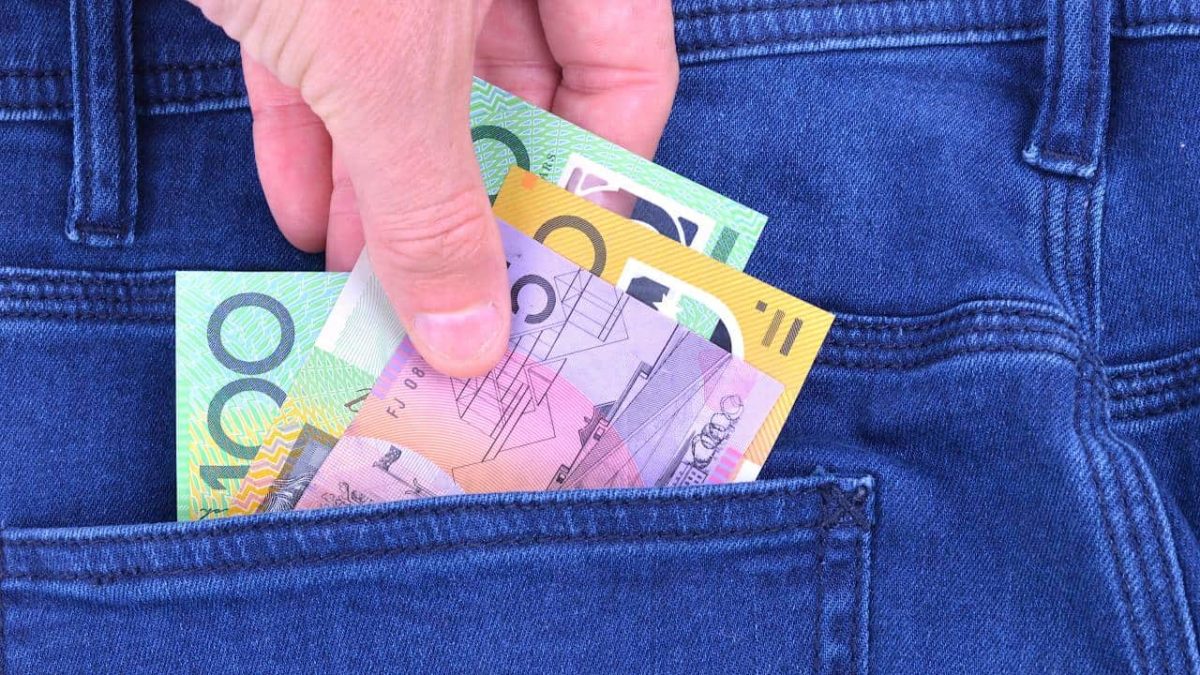
    Close-up photo of a back jean pocket with Australian dollar bills in it and a hand reaching in to collect the notes

    Close-up photo of a back jean pocket with Australian dollar bills in it and a hand reaching in to collect the notes

    If you’re looking for dividends for your income portfolio, then it could be a good idea to check out the two shares named below.

    These ASX 200 dividend shares have been rated as buys by analysts at Morgans. Here’s what the broker is saying about them:

    QBE Insurance Group Ltd (ASX: QBE)

    The first ASX 200 dividend share that Morgans has tipped as a buy is insurance giant QBE.

    The broker is feeling positive about the company’s outlook thanks to rising premiums and cost reductions. It explained:

    With strong rate increases still flowing through QBE’s insurance book, and further cost-out benefits to come, we expect QBE’s earnings profile to improve strongly over the next few years. The stock also has a robust balance sheet and remains relatively inexpensive overall trading on ~9.1x FY23F PE

    In respect to dividends, Morgans expects QBE to pay a 41.5 cents per share dividend in FY 2022 and then a 76.5 cents per share dividend in FY 2023. Based on the latest QBE share price of $13.43, this equates to yields of 3.1% and 5.7%, respectively.

    Morgans has an add rating and $14.93 price target on QBE’s shares.

    South32 Ltd (ASX: S32)

    Another ASX 200 dividend share that Morgans has named as a buy is South32.

    It is a mining giant with a diverse collection of operations providing exposure to a range of commodities including aluminium, copper, manganese, and nickel.

    Morgans remains positive on South32 despite its soft start to the financial year. The broker sees it as well-placed to benefit from China’s recovery from the pandemic and likes its portfolio transformation and strong balance sheet. Its analysts said:

    Slow start to the year but S32 remains in robust shape, with clear exposure to a recovery scenario for China growth. […] We expect S32 to continue transitioning its portfolio further towards base metals, with a strong balance sheet supporting potential for further M&A. We view S32 as a key large-cap (ex-iron ore) sector pick.

    As for dividends, Morgans is expecting South32 to pay fully franked dividends per share of 23 cents in FY 2023 and 21.6 cents in FY 2024. Based on the current South32 share price of $4.00, this will mean yields of 5.75% and 5.4%, respectively.

    The broker has an add rating and $5.30 price target on the miner’s shares.

    The post Morgans names 2 ASX 200 dividend shares to buy with 5%+ yields appeared first on The Motley Fool Australia.

    Why skyrocketing inflation doesn’t have to be the death of your savings…

    Goldman Sachs has revealed investors’ savings don’t have to go up in smoke because of skyrocketing inflation… Because in times of high inflation, dividend stocks can potentially beat the wider market.

    The investment bank’s research is based on stocks in the S&P 500 index going as far back as 1940.

    This FREE report reveals 3 stocks not only boasting inflation-fighting dividends but that also have strong potential for massive long term gains…

    See the 3 stocks
    *Returns as of December 1 2022

    (function() {
    function setButtonColorDefaults(param, property, defaultValue) {
    if( !param || !param.includes(‘#’)) {
    var button = document.getElementsByClassName(“pitch-snippet”)[0].getElementsByClassName(“pitch-button”)[0];
    button.style[property] = defaultValue;
    }
    }

    setButtonColorDefaults(“#0095C8”, ‘background’, ‘#5FA85D’);
    setButtonColorDefaults(“#0095C8”, ‘border-color’, ‘#43A24A’);
    setButtonColorDefaults(“#fff”, ‘color’, ‘#fff’);
    })()

    More reading

    Motley Fool contributor James Mickleboro has no position in any of the stocks mentioned. The Motley Fool Australia’s parent company Motley Fool Holdings Inc. has no position in any of the stocks mentioned. The Motley Fool Australia has no position in any of the stocks mentioned. The Motley Fool has a disclosure policy. This article contains general investment advice only (under AFSL 400691). Authorised by Scott Phillips.

    from The Motley Fool Australia https://ift.tt/1efLtPO

  • Bought $1,000 of AGL shares 10 years ago? Here’s how much dividend income you’ve received

    Happy woman holding $50 Australian notesHappy woman holding $50 Australian notes

    If you invested $1,000 in AGL Energy Limited (ASX: AGL) shares in early 2013, you might be disappointed in your investment so far. Fortunately, however, the company’s dividends have offset the worst of its stock’s performance.

    The energy provider’s share price has crumbled in recent years amid rising demand for greener power. AGL is Australia’s biggest greenhouse gas emitter. Thus, it’s been centre to such conversations – and it’s started a few of its own.

    The company’s initial proposal to spin off its dirtiest assets was dramatically scrapped last year, replaced with a $20 billion plan to ditch coal in favour of renewables.

    Its plan for a greener future, alongside the soaring energy sector, saw the AGL share price gain 28% last year. Zooming out, however, shows a bleaker picture.

    The AGL share price has crashed around 45% over the last decade. A $1,000 investment in the energy giant in early 2013 would likely have seen a buyer walk away with 68 shares, paying $14.57 apiece, and $9 change.

    Today, that parcel would be worth just $548.76. The AGL share price last traded at $8.07.

    For comparison, the S&P/ASX 200 Index (ASX: XJO) has gained 49% over the last 10 years.

    Have AGL’s dividends made up for its share price’s poor performance in that time? Let’s take a look.

    How much have AGL shares paid in dividends in 10 years?

    Here are all the dividends AGL has offered over the last decade:

    AGL dividends’ pay date Type Dividend amount
    September 2022 Final 10 cents
    March 2022 Interim 16 cents
    September 2021 Final 34 cents
    March 2021 Interim 31 cents
    March 2021 Special 10 cents
    September 2020 Final 51 cents
    March 2020 Interim 47 cents
    September 2019 Final 64 cents
    March 2019 Interim 55 cents
    September 2018 Final 63 cents
    March 2018 Interim 54 cents
    September 2017 Final 50 cents
    March 2017 Interim 41 cents
    September 2016 Final 36 cents
    March 2016 Interim 32 cents
    September 2015 Final 34 cents
    March 2015 Interim 30 cents
    September 2014 Final 33 cents
    April 2014 Interim 30 cents
    September 2013 Final 33 cents
    April 2013 Interim 30 cents
    Total:   $7.84

    While those invested in AGL shares haven’t realised much in the way of gains over the last decade, the company’s dividends have at least seen them break even.

    The company has paid out $7.84 per share in that time, meaning our figurative parcel would have yielded $533.12 in dividend income in that time.

    That leaves our imagined $1,000 purchase – considering both the AGL share price’s slump and the company’s offerings – with an 8.2% return on investment (ROI) over the last 10 years.

    Additionally, many of the ASX 200 giant’s dividends have been franked. That means they might have brought extra benefits for some investors at tax time.

    AGL shares are currently trading with a 3.2% dividend yield.

    The post Bought $1,000 of AGL shares 10 years ago? Here’s how much dividend income you’ve received appeared first on The Motley Fool Australia.

    You beat inflation buying stocks that pay the biggest dividends right? Sorry, you could be falling into a ‘dividend trap’…

    Mammoth dividend yields may look good on the surface… But just because a company is writing big cheques now, doesn’t mean it’ll always be the case. Right now, ‘dividend traps’ are ready to catch unwary investors as they race to income stocks to fight inflation.

    This FREE report reveals 3 stocks not only boasting sustainable dividends but that also have strong potential for massive long term returns…

    See the 3 stocks
    *Returns as of December 1 2022

    (function() {
    function setButtonColorDefaults(param, property, defaultValue) {
    if( !param || !param.includes(‘#’)) {
    var button = document.getElementsByClassName(“pitch-snippet”)[0].getElementsByClassName(“pitch-button”)[0];
    button.style[property] = defaultValue;
    }
    }

    setButtonColorDefaults(“#0095C8”, ‘background’, ‘#5FA85D’);
    setButtonColorDefaults(“#0095C8”, ‘border-color’, ‘#43A24A’);
    setButtonColorDefaults(“#fff”, ‘color’, ‘#fff’);
    })()

    More reading

    Motley Fool contributor Brooke Cooper has no position in any of the stocks mentioned. The Motley Fool Australia’s parent company Motley Fool Holdings Inc. has no position in any of the stocks mentioned. The Motley Fool Australia has no position in any of the stocks mentioned. The Motley Fool has a disclosure policy. This article contains general investment advice only (under AFSL 400691). Authorised by Scott Phillips.

    from The Motley Fool Australia https://ift.tt/u0D4mCi

  • Growth stock crash: is now the time to buy Xero shares?

    Young woman using computer laptop with hand on chin thinking about question, pensive expression.Young woman using computer laptop with hand on chin thinking about question, pensive expression.

    The Xero Limited (ASX: XRO) share price suffered heavily last year. It was one of the worst performers in the S&P/ASX 200 Index (ASX: XJO) in 2022. Xero shares dropped by 52% and the ASX 200 only fell by 7.25%.

    With such a significant decline, you’d think the cloud accounting software business saw a big turn in conditions. But, it didn’t. The company has continued to report double-digit growth, which I will outline later.

    However, the biggest impact on the Xero share price may have been rising interest rates. A wide range of ASX growth shares suffered major sell-offs last year.

    Why do interest rates matter for ASX growth stocks?

    Warren Buffett explained how interest rates affect things:

    The value of every business, the value of a farm, the value of an apartment house, the value of any economic asset, is 100% sensitive to interest rates because all you are doing in investing is transferring some money to somebody now in exchange for what you expect the stream of money to be, to come in over a period of time, and the higher interest rates are the less that present value is going to be. So every business by its nature…its intrinsic valuation is 100% sensitive to interest rates.

    Investors may have an idea of what a business may look like in five or ten years, and potentially the valuation. But, to figure out how much an ASX growth share is worth today, an investor can ‘discount’ that value back through the years until the investor gets to today’s value. The higher the interest rate, the higher the discount rate.

    So, with interest rates up so much, it is somewhat justified that the Xero share price is lower than it used to be. But, a decline of 50% may be too harsh.

    Xero shares continue to see underlying growth

    In the first half of FY23, the company reported that subscribers grew by 16% to around 3.5 million and the average revenue per user (ARPU) grew by 13% to $35.30. Operating revenue went up by 30% to $658.5 million and annualised monthly recurring revenue (AMRR) jumped 31% to $1.48 billion.

    All of those statistics are what I’d want to see from a leading business, particularly with a high gross profit margin of 87%.

    When a company has that strong of a gross profit margin, it means a vast majority of the new revenue that Xero generates can be turned into gross profit, which can then be spent on categories like software development, marketing, employees, and so on.

    The business keeps over 99% of its subscribers each year, showing that loyalty is exceptionally high. Xero is taking advantage by implementing price increases in New Zealand, Australia, and the UK, which can boost its revenue and hopefully the margins.

    In the long term, the business expects each of its major expense categories (eg marketing, and general administration) to be a smaller percentage of revenue. In other words, it’s expecting its profit margins to rise in the future.

    Is the Xero share price a buy?

    I think it is. There may be more volatility on the ASX in 2023, but there are few ASX businesses as high-quality as Xero in my opinion. It continues to grow its subscriber numbers globally, subscription prices are increasing and the business is still heavily focused on long-term growth. It’s a lot cheaper than it was before.

    The post Growth stock crash: is now the time to buy Xero shares? appeared first on The Motley Fool Australia.

    Wondering where you should invest $1,000 right now?

    When investing expert Scott Phillips has a stock tip, it can pay to listen. After all, the flagship Motley Fool Share Advisor newsletter he has run for over ten years has provided thousands of paying members with stock picks that have doubled, tripled or even more.*

    Scott just revealed what he believes could be the ‘five best ASX stocks’ for investors to buy right now. These stocks are trading at near dirt-cheap prices and Scott thinks they could be great buys right now…

    See The 5 Stocks
    *Returns as of December 1 2022

    (function() {
    function setButtonColorDefaults(param, property, defaultValue) {
    if( !param || !param.includes(‘#’)) {
    var button = document.getElementsByClassName(“pitch-snippet”)[0].getElementsByClassName(“pitch-button”)[0];
    button.style[property] = defaultValue;
    }
    }

    setButtonColorDefaults(“#0095C8”, ‘background’, ‘#5FA85D’);
    setButtonColorDefaults(“#0095C8”, ‘border-color’, ‘#43A24A’);
    setButtonColorDefaults(“#fff”, ‘color’, ‘#fff’);
    })()

    More reading

    Motley Fool contributor Tristan Harrison has no position in any of the stocks mentioned. The Motley Fool Australia’s parent company Motley Fool Holdings Inc. has positions in and has recommended Xero. The Motley Fool Australia has positions in and has recommended Xero. The Motley Fool has a disclosure policy. This article contains general investment advice only (under AFSL 400691). Authorised by Scott Phillips.

    from The Motley Fool Australia https://ift.tt/8uDhey2

  • 3 defining moments for Fortescue shares in 2022

    happy mining worker fortescue share price

    happy mining worker fortescue share priceFortescue Metals Group Limited (ASX: FMG) shares saw plenty of volatility during 2022. But, unlike many ASX growth shares, the ASX mining share managed to finish the year higher. It rose by 3.3%.

    This means that the iron ore ASX share managed to beat the return of the S&P/ASX 200 Index (ASX: XJO). The index fell by 7.25% over 2022.

    Plus, don’t forget that Fortescue paid a very large dividend in 2022. The business paid an FY22 dividend per share of $2.07. Excluding franking credits, the Fortescue dividend amounted to an additional 10.8% return.

    While the changes in the iron ore price may have had the biggest short-term impact on the Fortescue share price, the last price change is quickly forgotten as the next day of trading occurs.

    Here are three of the most significant announcements during the year.

    Decarbonisation plan announced

    The business revealed its US$6.2 billion plan to eliminate fossil fuel use within the business and achieve ‘real’ zero terrestrial emissions (scope 1 and 2) across its iron ore operations. The investment will “eliminate Fortescue’s fossil fuel risk profile and enable it to supply customers with a carbon free product.”

    Fortescue said that it expects to generate attractive economic returns from its investment arising from the operating cost savings due to cutting out diesel, natural gas and carbon offset purchases from its supply chain.

    The ASX mining share, by 2030, will avoid 3 million tonnes of CO2 emissions per year, with net operating costs savings of US$818 million per year, at the prevailing market prices of diesel, gas and Australian carbon credit units.

    Fortescue believes this will lead to a significant new green growth opportunity by producing a carbon-free iron ore product and through the commercialisation of decarbonisation technologies. This could be a useful boost for Fortescue shares.

    This will involve zero emission trucks, zero emission trains and zero emission drill rigs and excavators. Within the overall expenditure, it will spend billions on renewable energy, battery storage and infrastructure.

    E.ON

    At the end of March 2022, Fortescue revealed its biggest potential green hydrogen partnership. As a reminder, Fortescue is looking to create a global portfolio of locations that produce green hydrogen through Fortescue Future Industries (FFI) as a fuel source to replace fossil fuels in heavy machinery, boats and planes.

    E.ON, is one of Europe’s largest operators of energy networks and energy infrastructure, and a provider of innovative customer solutions for 50 million customers.

    Fortescue revealed that it’s aiming to deliver “up to five million tonnes per annum” of green hydrogen to Europe by 2030. The two businesses signed a memorandum of understanding, with binding elements between the parties.

    This deal could represent a third of FFI’s green hydrogen production by 2030. It could be generating meaningful earnings for the company, and potentially boost the Fortescue share price.

    WAE acquisition

    In January 2022, which seems like a very long time ago, Fortescue announced a sizeable acquisition. It bought Williams Advanced Engineering (WAE) for £164 million.

    Fortescue has been working with WAE since early 2021 to design and build a prototype battery system to power an electric mining haul truck.

    The deal provided Fortescue with “critical technology and expertise in high-performance battery systems and electrification”.

    In the 2021 calendar year, WAE generated revenue of around US$84 million, with customers in sectors such as premium automotive and motorsport.

    Fortescue wants WAE to become a major player in the growing global market for heavy mobile equipment and rail.

    If this goes well, it could be a boost for Fortescue shares.

    The post 3 defining moments for Fortescue shares in 2022 appeared first on The Motley Fool Australia.

    FREE Beginners Investing Guide

    Despite what some people may say – we believe investing in shares doesn’t have to be overwhelming or complicated…

    For over a decade, we’ve been helping everyday Aussies get started on their journey.

    And to help even more people cut through some of the confusion “experts’” seem to want to perpetuate – we’ve created a brand-new “how to” guide.

    Yes, Claim my FREE copy!
    *Returns as of November 7 2022

    (function() {
    function setButtonColorDefaults(param, property, defaultValue) {
    if( !param || !param.includes(‘#’)) {
    var button = document.getElementsByClassName(“pitch-snippet”)[0].getElementsByClassName(“pitch-button”)[0];
    button.style[property] = defaultValue;
    }
    }

    setButtonColorDefaults(“#0095C8”, ‘background’, ‘#5FA85D’);
    setButtonColorDefaults(“#0095C8”, ‘border-color’, ‘#43A24A’);
    setButtonColorDefaults(“#fff”, ‘color’, ‘#fff’);
    })()

    More reading

    Motley Fool contributor Tristan Harrison has positions in Fortescue Metals Group. The Motley Fool Australia’s parent company Motley Fool Holdings Inc. has no position in any of the stocks mentioned. The Motley Fool Australia has no position in any of the stocks mentioned. The Motley Fool has a disclosure policy. This article contains general investment advice only (under AFSL 400691). Authorised by Scott Phillips.

    from The Motley Fool Australia https://ift.tt/qCFb1K3