• Average superannuation balance at age 56 in Australia in FY27. How does yours compare?

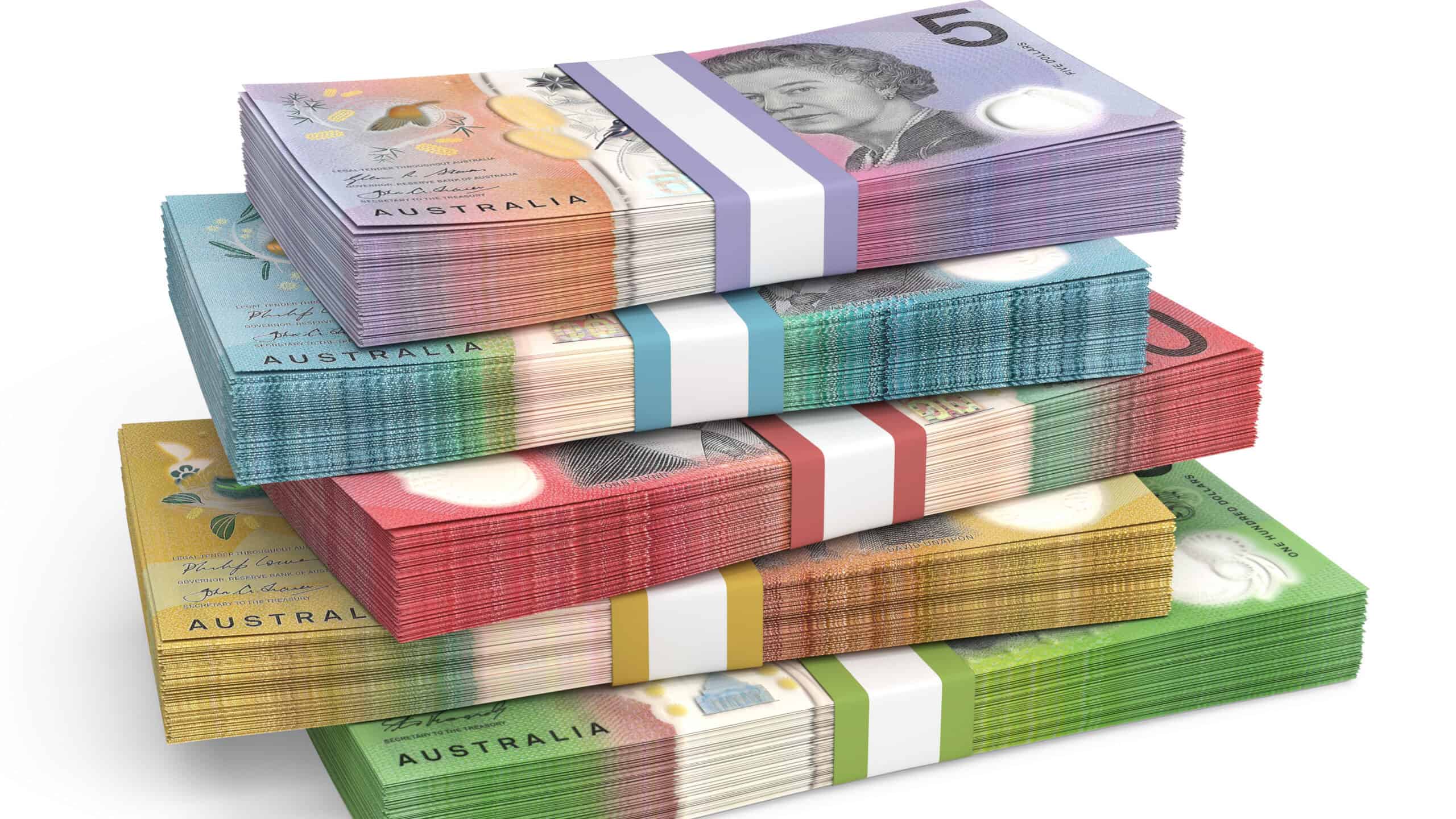
    Stacks of Australian dollar currency banknotes.

    You might know how much money you have stashed away in your superannuation, but how does it compare to other Aussies the same age as you?

    How else will you know if you have enough money to retire when the time comes?

    At age 56, many Aussies are approaching their final decade of working life. At this point, you’re just four years away from your preservation age (when you can access your super, provided you’ve stopped working), and nine years from full access, regardless of whether you’re still working.

    It’s an important life milestone, and how you manage your superannuation in your late 50s can determine the quality of life you live in retirement.

    Here’s a breakdown of the average superannuation balance for Australians aged 56.

    How does your balance stack up?

    The average superannuation balance for Australian men aged 56 in FY27

    There aren’t exact figures for the average balance at age 56, but the Association of Superannuation Funds of Australia (ASFA) has a rough guide.

    The data shows that the average Australian male aged 55 to 59 has around $319,743 in their superannuation.

    The average superannuation balance for Australian women aged 56 in FY27

    Women in the same age bracket have a lot less, most likely because women are more likely to take time out of the workforce or work reduced hours. The lower superannuation income then makes a significant difference over time, and the balances between men and women at age 56 are wide.

    The average balance for Australian women aged 55 to 59 is around $242,945. That’s a gap of around $77,000 compared to men the same age.

    How does your super balance stack up with men and women the same age as you?

    But not only that, is it actually enough?

    How much superannuation should I have by age 56 to afford a good retirement lifestyle?

    ASFA calculates that in order to live a comfortable retirement lifestyle, Australians will need around $630,000 each in their superannuation by age 67. Couples can get away with $730,000 combined.

    In order to reach that goal, ASFA expects that Australians earning around $100,000 per year should have close to $369,000 in their superannuation by age 56.

    That’s significantly higher than the average balances of both men and women around that age.

    What can I do to raise my balance in the next 5 to 10 years?

    If your balance is falling behind, it’s not too late to catch up. Even the smallest change can help boost compound growth over the next 5 to 10 years.

    The first thing you need to do is check that your super fund is performing well and that your investment strategy and risk profile are appropriate for your personal circumstances. 

    Also, consolidate your funds and double-check that your insurance coverage is necessary and the premiums are appropriate for you. 

    You can also add extra contributions wherever possible. Take advantage of concessional and non-concessional limits and any potential tax reduction that may come with it. Ask your spouse to add extra too. Couples can boost their combined super savings if the higher-income earner contributes after-tax funds to the lower-income earner’s account.

    You should also take advantage of any applicable government contributions that might help your personal circumstances. There is a downsizer contributions rule, a bring-forward rule, a government co-contribution rule, and many others.

    The post Average superannuation balance at age 56 in Australia in FY27. How does yours compare? appeared first on The Motley Fool Australia.

    Wondering where you should invest $1,000 right now?

    When investing expert Scott Phillips has a stock tip, it can pay to listen. After all, the flagship Motley Fool Share Advisor newsletter he has run for over ten years has provided thousands of paying members with stock picks that have doubled, tripled or even more.*

    Scott just revealed what he believes could be the ‘five best ASX stocks’ for investors to buy right now. We believe these stocks are trading at attractive prices and Scott thinks they could be great buys right now…

    * Returns as of 1 August 2026

    .custom-cta-button p {
    margin-bottom: 0 !important;
    }

    More reading

    Motley Fool contributor Samantha Menzies has no position in any of the stocks mentioned. The Motley Fool Australia’s parent company Motley Fool Holdings Inc. has no position in any of the stocks mentioned. The Motley Fool Australia has no position in any of the stocks mentioned. The Motley Fool has a disclosure policy. This article contains general investment advice only (under AFSL 400691). Authorised by Scott Phillips.


  • Here are the top 10 ASX 200 shares today

    3 children standing on podiums wearing Olympic medals.

    It was a wild and ultimately red session for the S&P/ASX 200 Index (ASX: XJO) and many ASX shares this Wednesday. After yesterday’s gains, investors were far more cautious today, with the ASX 200 spending time in both positive and negative territory. The bears won out, though, with the index closing at 8,727.7 points, down 0.092%.

    This disappointing midweek session for the Australian markets comes after a more upbeat morning on the US markets.

    The Dow Jones Industrial Average Index (DJX: .DJI) overcame some early jitters to finish 0.18% higher.

    The tech-heavy Nasdaq Composite Index (NASDAQ: .IXIC) was a little more decisive, rising 0.45%.

    But let’s return to the local markets now and examine how today’s trading conditions filtered down into the various ASX sectors this hump day.

    Winners and losers

    We had plenty of both winners and losers this Wednesday.

    Leading the latter were financial stocks. The S&P/ASX 200 Financials Index (ASX: XFJ) was left out in the cold today, plunging 0.59%.

    Mining shares had a rough one as well, with the S&P/ASX 200 Materials Index (ASX: XMJ) sinking 0.2%.

    Industrial stocks were also left out. The S&P/ASX 200 Industrials Index (ASX: XNJ) ended up retreating 0.17% this session.

    Next came communications shares, evidenced by the S&P/ASX 200 Communication Services Index (ASX: XTJ)’s 0.14% downgrade.

    Our last losers this Wednesday were utilities stocks. The S&P/ASX 200 Utilities Index (ASX: XUJ) ended up dipping 0.06%.

    Let’s get to the winners now.

    Leading the charge were healthcare shares, with the S&P/ASX 200 Healthcare Index (ASX: XHJ) roaring 1.09% higher.

    We can say the same for gold stocks. The All Ordinaries Gold Index (ASX: XGD) experienced a 0.94% surge.

    Real estate investment trusts (REITs) ran hot too, illustrated by the S&P/ASX 200 A-REIT Index (ASX: XPJ)’s 0.8% jump.

    Consumer discretionary shares were also in demand. The S&P/ASX 200 Consumer Discretionary Index (ASX: XDJ) lifted 0.47%.

    Energy stocks were next, with the S&P/ASX 200 Energy Index (ASX: XEJ) advancing 0.45% this hump day.

    Consumer staples shares held up well, too. The S&P/ASX 200 Consumer Staples Index (ASX: XSJ) had gained 0.11% by the closing bell.

    Finally, tech stocks only just got across the line, as you can see from the S&P/ASX 200 Information Technology Index (ASX: XIJ)’s 0.01% bump.

    Top 10 ASX 200 shares countdown

    This Wednesday’s winner was the real estate investment trust Arena REIT (ASX: ARF). Arena units soared 12.98% higher today to close at $2.35 each.

    This came after the REIT released a pleasing update regarding its childcare portfolio.

    Here’s how the other high flyers landed their planes:

    ASX-listed company Share price Price change
    Arena REIT (ASX: ARF) $2.35 12.98%
    Deep Yellow Ltd (ASX: DYL) $1.14 4.61%
    Domino’s Pizza Enterprises Ltd (ASX: DMP) $21.28 4.47%
    NextGen Energy (Canada) Ltd (ASX: NXG) $13.48 4.25%
    Weebit Nano Ltd (ASX: WBT) $3.56 4.09%
    Cleanaway Waste Management Ltd (ASX: CWY) $2.74 3.01%
    Telix Pharmaceuticals Ltd (ASX: TLX) $15.87 2.99%
    James Hardie Industries plc (ASX: JHX) $36.87 2.76%
    Silex Systems Ltd (ASX: SLX) $4.50 2.74%
    Capricorn Metals Ltd (ASX: CMM) $14.76 2.57%

    Our top 10 shares countdown is a recurring end-of-day summary that shows which companies made big moves on the day. Check in at Fool.com.au after the weekday market closes to see which stocks make the countdown.

    The post Here are the top 10 ASX 200 shares today appeared first on The Motley Fool Australia.

    Should you invest $1,000 in Arena REIT right now?

    Before you buy Arena REIT shares, consider this:

    Motley Fool investing expert Scott Phillips just revealed what he believes are the 5 best stocks for investors to buy right now… and Arena REIT wasn’t one of them.

    The online investing service he’s run for over a decade, Motley Fool Share Advisor, has provided thousands of paying members with stock picks that have doubled, tripled or even more.*

    And right now, Scott thinks there are 5 stocks that may be better buys…

    * Returns as of 1 August 2026

    .custom-cta-button p {
    margin-bottom: 0 !important;
    }

    More reading

    Motley Fool contributor Sebastian Bowen has no position in any of the stocks mentioned. The Motley Fool Australia’s parent company Motley Fool Holdings Inc. has positions in and has recommended Domino’s Pizza Enterprises and Telix Pharmaceuticals. The Motley Fool Australia has recommended Domino’s Pizza Enterprises and Telix Pharmaceuticals. The Motley Fool has a disclosure policy. This article contains general investment advice only (under AFSL 400691). Authorised by Scott Phillips.

  • Fortescue vs PLS Group: Which ASX mining share is the better buy?

    Two people wearing hard hats talking with each other at a mine site, with two workers in the background.

    Fortescue vs PLS Group shares: Which blue chip miner has more upside?

    When it comes to ASX-listed mining giants, Fortescue Ltd (ASX: FMG) and PLS Group Ltd (ASX: PLS) both stand out for investors seeking exposure to the resources sector. While both operate out of Western Australia and count as blue-chip names in their field, their businesses are shaped by very different commodities: iron ore for Fortescue, and lithium (with a dash of tantalum) for PLS Group. With both sectors facing different market dynamics, it’s worth digging into the numbers to see which share might offer more upside from here.

    The case for Fortescue

    Fortescue is one of the world’s major iron ore producers, operating extensive mines and infrastructure in the Pilbara. As of its company profile, Fortescue’s integrated operations cover multiple mining hubs, its own heavy haul rail, and port facilities at Port Hedland. It has long leveraged its scale to keep costs competitive, making it a key supplier to steelmakers worldwide.

    Notable points from Fortescue’s current stats:

    • Market cap of $49.85 billion, making it a heavyweight on the ASX.
    • P/E ratio of 12.08, notably lower than PLS Group’s.
    • A generous dividend yield of 6.67%, fully franked at 100%.
    • Earnings per share of $0.931, with a dividend per share of $1.08, suggesting strong cash return to investors (though dividend yields can fluctuate).

    One particularly attractive factor is the consistent, fully franked dividends Fortescue has paid, even as iron ore markets have gone through some turbulence.

    The case for PLS Group

    PLS Group, formerly Pilbara Minerals, is well known as a top lithium and tantalum miner. The company’s mainstay is the Pilgangoora project in the Pilbara—one of the largest hard-rock lithium-tantalum deposits globally. According to its most recent public description, the company’s reach now extends to Brazil through its Colina lithium project. PLS Group has made impressive strides from exploration to production in less than four years and is aggressively expanding its global footprint.

    The most eye-catching fundamentals for PLS Group:

    • Market cap of $12 billion, making it smaller than Fortescue but still a top ASX resource name.
    • A P/E ratio of 22.92, substantially higher than Fortescue’s.
    • Dividend yield of 1.35%, also fully franked.
    • EPS of $0.161 and dividend per share of $0.05.

    While its dividend is modest for now, PLS Group is clearly still focused on early-stage expansion in a sector (lithium) that’s pegged to major growth in battery and EV markets.

    Valuation comparison

    Presented side-by-side, here’s how the key stats stack up:

    Metric Fortescue PLS Group
    Market Cap $49.85 billion $12.00 billion
    P/E Ratio 12.08 22.92
    Dividend Yield 6.67% (100% franked) 1.35% (100% franked)
    Earnings per Share $0.931 $0.161

    Note: P/E ratios for both companies are based on reported figures, but if you do the math, Fortescue’s EPS and P/E are roughly consistent; likewise for PLS Group, though payout ratios differ. Both companies’ franked dividends are a plus for Australian investors.

    Fortescue trades at a P/E almost half of PLS Group’s, despite offering a substantially higher dividend yield. That reflects current market scepticism around iron ore pricing, but also perhaps optimism on lithium’s future for PLS Group.

    Recent share price momentum

    Comparing recent performance as at 5 October 2026:

    • Fortescue closed at $16.19, after a flat day, and has returned -21.5% year to date.
    • PLS Group closed at $3.72, up 0.5% that day, and is down -11.1% year to date.

    So both shares are in negative territory this year, but PLS Group has held up better, falling about half as much as Fortescue over 2026 so far.

    Which is the better buy?

    Looking at the fundamentals, Fortescue offers a much higher fully franked dividend yield and a far lower P/E ratio than PLS Group. That tells me the market sees more risk or less growth in old-school iron ore compared to the lithium sector, which is still brimming with hype and optimism. However, Fortescue’s ability to pay out substantial and consistent dividends, even while its share price is down more than 20% year to date, is hard to ignore for income-focused investors.

    PLS Group, in contrast, is delivering modest profits and a small, fully franked dividend, but it’s valued at almost double Fortescue’s earnings multiple. That’s a big vote of confidence in the future of battery materials, but with a dividend that’s more a gesture than a consistent income stream, and a share price that’s still down 11% year to date.

    If you’re looking for robust, income-driven returns and value, I’d lean toward Fortescue. If you’re happy to take on more volatility for the chance of outsized growth—should the lithium sector take off again—PLS Group is the pick. Personally, given the current data, my pick would be Fortescue for its combination of scale, franked dividends, and more appealing valuation, with the caveat that its upside rests on iron ore not staying depressed for too long. PLS Group could have more explosive upside if lithium surprises to the upside, but at today’s pricing, I think Fortescue’s risk-reward trade-off stands out more.

    The post Fortescue vs PLS Group: Which ASX mining share is the better buy? appeared first on The Motley Fool Australia.

    Should you invest $1,000 in Fortescue right now?

    Before you buy Fortescue shares, consider this:

    Motley Fool investing expert Scott Phillips just revealed what he believes are the 5 best stocks for investors to buy right now… and Fortescue wasn’t one of them.

    The online investing service he’s run for over a decade, Motley Fool Share Advisor, has provided thousands of paying members with stock picks that have doubled, tripled or even more.*

    And right now, Scott thinks there are 5 stocks that may be better buys…

    * Returns as of 1 August 2026

    .custom-cta-button p {
    margin-bottom: 0 !important;
    }

    More reading

    Motley Fool contributor Laura Stewart has no position in any of the stocks mentioned. The Motley Fool Australia’s parent company Motley Fool Holdings Inc. has no position in any of the stocks mentioned. The Motley Fool Australia has no position in any of the stocks mentioned. The Motley Fool has a disclosure policy. This article contains general investment advice only (under AFSL 400691). Authorised by Scott Phillips. This article was prepared with the assistance of Large Language Model (LLM) tools for the initial draft. Any content assisted by AI is subject to our robust human-in-the-loop quality control framework, involving thorough review, substantial editing, and fact-checking by our experienced writers and editors holding appropriate credentials. The Motley Fool Australia stands behind the work of our editorial team and takes ultimate responsibility for the content published by The Motley Fool Australia.