• Global miner Glencore has just joined the ASX. So what’s it worth?

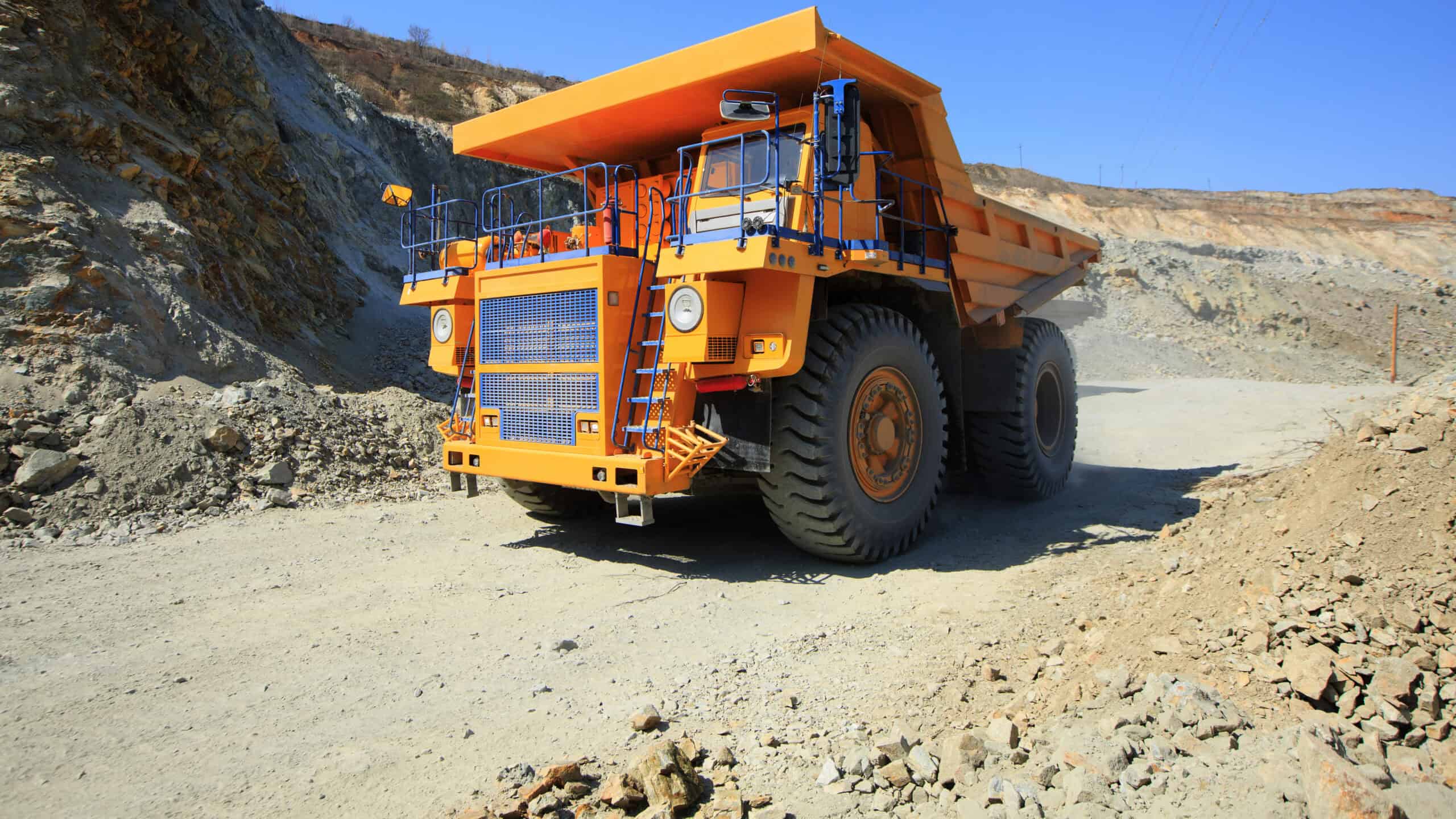
    Mining vehicle at a mine site.

    Global mining heavyweight Glencore Plc (ASX: GLC) has joined the ASX, with broker Canaccord Genuity weighing in on what the company’s shares are worth.

    The shares slipped shortly after beginning trade on the ASX, falling from $11.27 to $11.19, and well shy of CG’s price target for the company, which I’ll get to shortly.

    First, let’s have a look at the company itself.

    Major diversified miner with a difference

    Glencore is quite different from Australia’s two major miners, BHP Group Ltd (ASX: BHP) and Rio Tinto Ltd (ASX: RIO), in that it still has a large exposure to coal, and also has a commodity trading arm, which, according to CG, “has no direct equivalent among the ASX mining majors”.

    It also has negligible iron ore exposure while it does have a focus on copper.

    Given the size of the company, CG said it was likely to be included in the S&P/ASX 200 Index (ASX: XJO) in March next year, and could also be included in the S&P/ASX 100 Index (ASX: XTO) at that time, although that inclusion was more likely to come later in the year.

    CG said the listing on the ASX made strategic sense for Glencore, as it would make future acquisitions easier, broaden the company’s shareholder base, and “improve investor access in a market with deeper resources-sector expertise and greater appetite for mining sector exposure than the London Stock Exchange”.

    CG added:

    Overall, Glencore’s addition to the ASX will give investors greater choice within the resources sector, adding a global top-10 miner by market capitalisation with highly sought-after copper exposure and a distinctive earnings profile. Glencore combines a diversified global mining portfolio, spanning future-facing metals such as copper and zinc, as well as metallurgical and thermal coal, with one of the world’s largest commodity marketing businesses. Its Marketing arm trades physical commodities produced by both its own mines and third-party producers. That combination sets Glencore apart from the incumbent ASX major diversified miners, which lack comparable large-scale commodity trading businesses, have largely exited coal and remain materially exposed to iron ore.

    CG said copper was “comfortably” Glencore’s largest earnings contributor, accounting for 46% of its industrial earnings, excluding the marketing segment.

    CG added:

    Healthy production growth from the company’s base portfolio is forecast to lift copper’s share of group EBITDA to 54% by FY30. By then, Glencore expects to have established itself as a top-five global producer, with a projected first-quartile total cash cost position.

    CG said if Glencore executes well on its copper expansion plans, there was scope for material broker upgrades.

    CG itself has a price target of $12.90 on Glencore shares.

    The post Global miner Glencore has just joined the ASX. So what's it worth? appeared first on The Motley Fool Australia.

    More reading

    Motley Fool contributor Cameron England has no position in any of the stocks mentioned. The Motley Fool Australia’s parent company Motley Fool Holdings Inc. has no position in any of the stocks mentioned. The Motley Fool Australia has recommended BHP Group. The Motley Fool has a disclosure policy. This article contains general investment advice only (under AFSL 400691). Authorised by Scott Phillips.


  • Could the Macquarie share price reach $300 in 2027?

    Work colleagues discussing finance charts and graphs on a laptop computer and tablet in their office.

    Macquarie Group Ltd (ASX: MQG) has built an impressive business, with operations spanning financial markets around the world.

    And while its earnings can fluctuate from year to year, I think the longer-term growth opportunities remain attractive.

    But could that be enough to take the Macquarie share price to $300 in 2027?

    Let’s take a closer look.

    Why I like Macquarie

    One of the things I like about Macquarie is how many ways it has to make money.

    Its Australian banking operations provide exposure to mortgages, deposits, and business lending, while its asset management division invests in infrastructure and other assets around the world.

    Macquarie also has substantial operations in commodities and global markets, alongside an investment banking business that benefits from corporate transactions and capital raising activity.

    I think that combination gives Macquarie a positive growth profile.

    When financial markets are active and companies are investing, Macquarie can benefit from increased transaction activity and demand for its services.

    Meanwhile, its banking and asset management operations provide other sources of earnings.

    There are also long-term opportunities in infrastructure investment, particularly as countries expand their energy networks, transport systems, and digital infrastructure.

    Of course, Macquarie’s exposure to financial markets means profits can be uneven. Investment realisations and transaction activity can make a meaningful difference to annual results.

    But over a longer period, I think the company’s global reach and experience put it in a strong position to continue growing.

    What would it take to reach $300?

    The Macquarie share price is currently trading around $248.79.

    Reaching $300 would require a gain of approximately 21%, which I don’t think is unreasonable over the next couple of years, particularly when you look at its earnings outlook.

    Consensus forecasts point to earnings per share (EPS) of $13.37 in FY27, increasing to $13.93 in FY2, and $15.59 in FY29.

    That suggests relatively modest growth initially, followed by a stronger improvement in FY29. For me, that is an important distinction when considering the timing of a potential move to $300.

    At the target share price, Macquarie would trade on a P/E ratio of approximately 22 times FY27 earnings and 21.5 times FY28 earnings.

    Those are fairly substantial multiples for a business whose profits can fluctuate with financial market conditions.

    But the valuation becomes more reasonable when looking towards FY29. At $300, Macquarie would trade on approximately 19 times forecast FY29 earnings.

    I think that could be justified for a high-quality global financial services business with opportunities to keep growing into the 2030s.

    Is 2027 too soon?

    I certainly wouldn’t rule out Macquarie reaching $300 next year.

    Share prices often move ahead of earnings, particularly when investors expect a stronger period of profitability.

    But I think 2028 may be a more realistic timeframe.

    By then, Macquarie should be further along its expected earnings recovery, potentially making investors more comfortable paying a higher price for the shares.

    Foolish takeaway

    I think $300 is a realistic longer-term target for the Macquarie share price, with 2028 looking more achievable than 2027.

    I particularly like that the company has several avenues for growth, and I would be comfortable owning the shares well beyond either of those dates.

    At around $249, Macquarie remains a long-term buy for me. I’d be happy to give it time to work towards $300 and potentially much further.

    The post Could the Macquarie share price reach $300 in 2027? appeared first on The Motley Fool Australia.

    More reading

    Motley Fool contributor Grace Alvino has no position in any of the stocks mentioned. The Motley Fool Australia’s parent company Motley Fool Holdings Inc. has positions in and has recommended Macquarie Group. The Motley Fool Australia has recommended Macquarie Group. The Motley Fool has a disclosure policy. This article contains general investment advice only (under AFSL 400691). Authorised by Scott Phillips.

  • Up 42% in a year. How much higher can BHP shares go?

    Two young male miners wearing red hardhats stand inside a mine and shake hands.

    BHP Group Ltd (ASX: BHP) shares have fallen around 1% in Wednesday lunchtime trade.

    At the time of writing, the shares are changing hands for $60.92 a piece. They’re now up 33% for the year to date and 42% higher than 12 months ago.

    BHP earnt most of its annual gains through October 2025 to late-August this year, when it peaked at an all-time high of $67.67 a piece. But since then, the ASX mining shares have tumbled lower, down around 10% to the time of writing.

    Now many are questioning whether the mining giant’s shares can return to, or even surpass, the all-time high recorded two months ago.

    Or is the rally now over?

    Here’s what the experts think.

    Are BHP shares a buy, sell, or hold?

    Brokers and analysts are mostly neutral on the outlook for the miner’s shares over the next 12 months.

    Market Index data shows the majority have a hold rating on BHP, and the $61.50 average target price implies a 1% upside, at the time of writing.

    The data on TradingView is similar. The majority (12 out of 21) have a hold rating on the shares, although another six rate BHP as a strong buy, and three rate the shares a sell/strong sell.

    The average $62.45 target price implies a 3% upside at the time of writing.

    Fairmont Equities thinks that this mining giant could be an ASX 200 share to buy. The broker said it thinks commodities markets are still only in the early stages of a bull run, leaving BHP’s share price in a prime position to move higher. It said that the company should also benefit from constrained global supplies of copper.

    Morgan Stanley also recently renewed its buy rating on BHP shares, with a 12-month price target of $68.

    Elsewhere, Red Leaf Securities has a hold rating on the mining shares. The broker warns that a softer global growth outlook and uncertainty surrounding Chinese commodity demand limits the case for aggressively buying the stock right now.

    On the flip side, Catapult Wealth is much more bearish, with a sell rating on BHP shares. The broker said that the global miner delivered a strong FY26 result, but that it still sees an issue with its share price. After this year’s rally, there are concerns that BHP has now run too far ahead of true value.

    What could influence the miner’s share price over the next 12 months?

    I think there is still some potential ahead for BHP shares. 

    The company has recently faced headwinds from broad market weakness, higher oil prices, and ongoing disruptions to some of its operations.

    If we see a turnaround in any, or all, of these headwinds, then we could see BHP shares run higher.

    Last month, BHP was forced to suspend mining activities at its Escondida copper mine in Chile after a fatal accident. Under Chilean mining regulations, operations cannot restart following a fatal accident until safety inspectors have confirmed that conditions are safe. There is no indication when production might resume, but when it does, I expect a jump in investor interest.

    Meanwhile, higher oil prices and inflation concerns are creating broad market weakness. If conflict in the Middle East reaches some sort of resolution, and oil supply flows well through the region, it’ll certainly have a positive impact on BHP shares. 

    The post Up 42% in a year. How much higher can BHP shares go? appeared first on The Motley Fool Australia.

    More reading

    Motley Fool contributor Samantha Menzies has positions in BHP Group. The Motley Fool Australia’s parent company Motley Fool Holdings Inc. has no position in any of the stocks mentioned. The Motley Fool Australia has recommended BHP Group. The Motley Fool has a disclosure policy. This article contains general investment advice only (under AFSL 400691). Authorised by Scott Phillips.