
• Down 44%: Will you regret not buying Pro Medicus shares?

    A female scientist in a laboratory setting using a tablet to review data, with a male scientist working in the background.

    Pro Medicus Ltd (ASX: PME) shares have had a difficult year.

    The medical imaging technology company’s shares are down another 3% to around $160.76 on Wednesday, taking their decline over the past 12 months to approximately 44%.

    That is a significant fall for a business that has spent years delivering impressive growth.

    But could this be an opportunity investors look back on with regret?

    Why I remain positive on Pro Medicus shares

    One reason I have always liked Pro Medicus is the importance of its technology to modern healthcare.

    Its Visage imaging platform helps radiologists access and analyse medical images quickly, making it easier to manage increasingly complex workloads.

    As hospitals handle more scans and medical imaging technology becomes more sophisticated, I think the need for efficient software will only increase, especially with radiologists in short supply.

    Pro Medicus has already established a strong position in the United States, where it supplies some of the country’s leading healthcare institutions.

    But there is still plenty of room to expand. Management estimates that Pro Medicus has around 11% of the US market, leaving a substantial opportunity to win customers from competing systems.

    Its existing customer relationships are another strength. Replacing medical imaging software is a major undertaking for hospitals, which need reliable systems that integrate with their clinical operations.

    Pro Medicus demonstrated the strength of those relationships in FY26, renewing all six customer contracts that came up for renewal, with higher fees per transaction.

    For me, that provides encouraging evidence of the value customers place on its technology.

    Plenty of growth still to come

    The company’s latest financial results also suggest its underlying business continues to perform well. In FY26, revenue increased 22.9% to $261.7 million, while underlying net profit rose 24.1% to $144.7 million.

    I think that is an impressive result, particularly given the company’s already substantial profit margins.

    But what interests me more is the business Pro Medicus has secured for the coming years.

    During FY26, it announced 10 new contracts worth at least $407 million, including major agreements with US healthcare providers. As these contracts are implemented, they should make a growing contribution to revenue.

    There are also opportunities to expand beyond traditional radiology imaging. Pro Medicus has been making progress in cardiology and recently launched new digital pathology and AI-related reporting products.

    I think these developments could help the company win additional work from existing customers while opening up new markets.

    And with a debt-free balance sheet, Pro Medicus has the financial flexibility to keep investing in its technology.

    Foolish takeaway

    I think Pro Medicus shares could prove to be an excellent buy at current levels.

    There is still a premium valuation attached to the business, and I would be prepared for further share price swings.

    But looking five or ten years ahead, I believe Pro Medicus has a genuine opportunity to become a much larger healthcare technology company.

    At around $161, I would be happy to buy shares and give that growth story time to unfold.

    The post Down 44%: Will you regret not buying Pro Medicus shares? appeared first on The Motley Fool Australia.

    More reading

    Motley Fool contributor Grace Alvino has no position in any of the stocks mentioned. The Motley Fool Australia’s parent company Motley Fool Holdings Inc. has recommended Pro Medicus. The Motley Fool Australia has recommended Pro Medicus. The Motley Fool has a disclosure policy. This article contains general investment advice only (under AFSL 400691). Authorised by Scott Phillips.

  • Global miner Glencore has just joined the ASX. So what’s it worth?

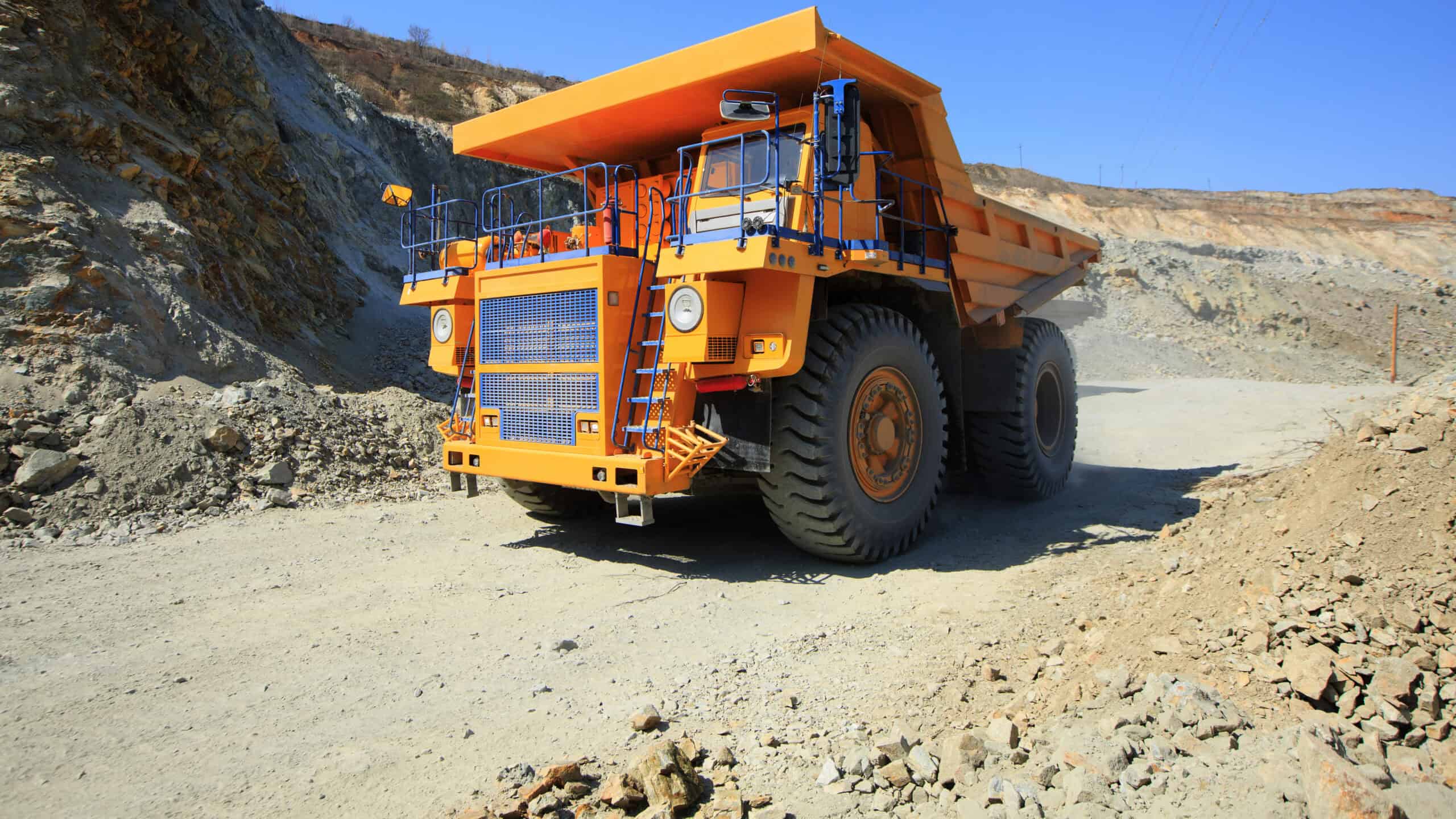
    Mining vehicle at a mine site.

    Global mining heavyweight Glencore Plc (ASX: GLC) has joined the ASX, with broker Canaccord Genuity weighing in on what the company’s shares are worth.

    The shares slipped shortly after beginning trade on the ASX, falling from $11.27 to $11.19, and well shy of CG’s price target for the company, which I’ll get to shortly.

    First, let’s have a look at the company itself.

    Major diversified miner with a difference

    Glencore is quite different from Australia’s two major miners, BHP Group Ltd (ASX: BHP) and Rio Tinto Ltd (ASX: RIO), in that it still has a large exposure to coal, and also has a commodity trading arm, which, according to CG, “has no direct equivalent among the ASX mining majors”.

    It also has negligible iron ore exposure while it does have a focus on copper.

    Given the size of the company, CG said it was likely to be included in the S&P/ASX 200 Index (ASX: XJO) in March next year, and could also be included in the S&P/ASX 100 Index (ASX: XTO) at that time, although that inclusion was more likely to come later in the year.

    CG said the listing on the ASX made strategic sense for Glencore, as it would make future acquisitions easier, broaden the company’s shareholder base, and “improve investor access in a market with deeper resources-sector expertise and greater appetite for mining sector exposure than the London Stock Exchange”.

    CG added:

    Overall, Glencore’s addition to the ASX will give investors greater choice within the resources sector, adding a global top-10 miner by market capitalisation with highly sought-after copper exposure and a distinctive earnings profile. Glencore combines a diversified global mining portfolio, spanning future-facing metals such as copper and zinc, as well as metallurgical and thermal coal, with one of the world’s largest commodity marketing businesses. Its Marketing arm trades physical commodities produced by both its own mines and third-party producers. That combination sets Glencore apart from the incumbent ASX major diversified miners, which lack comparable large-scale commodity trading businesses, have largely exited coal and remain materially exposed to iron ore.

    CG said copper was “comfortably” Glencore’s largest earnings contributor, accounting for 46% of its industrial earnings, excluding the marketing segment.

    CG added:

    Healthy production growth from the company’s base portfolio is forecast to lift copper’s share of group EBITDA to 54% by FY30. By then, Glencore expects to have established itself as a top-five global producer, with a projected first-quartile total cash cost position.

    CG said if Glencore executes well on its copper expansion plans, there was scope for material broker upgrades.

    CG itself has a price target of $12.90 on Glencore shares.

    The post Global miner Glencore has just joined the ASX. So what's it worth? appeared first on The Motley Fool Australia.

    More reading

    Motley Fool contributor Cameron England has no position in any of the stocks mentioned. The Motley Fool Australia’s parent company Motley Fool Holdings Inc. has no position in any of the stocks mentioned. The Motley Fool Australia has recommended BHP Group. The Motley Fool has a disclosure policy. This article contains general investment advice only (under AFSL 400691). Authorised by Scott Phillips.

  • Could the Macquarie share price reach $300 in 2027?

    Work colleagues discussing finance charts and graphs on a laptop computer and tablet in their office.

    Macquarie Group Ltd (ASX: MQG) has built an impressive business, with operations spanning financial markets around the world.

    And while its earnings can fluctuate from year to year, I think the longer-term growth opportunities remain attractive.

    But could that be enough to take the Macquarie share price to $300 in 2027?

    Let’s take a closer look.

    Why I like Macquarie

    One of the things I like about Macquarie is how many ways it has to make money.

    Its Australian banking operations provide exposure to mortgages, deposits, and business lending, while its asset management division invests in infrastructure and other assets around the world.

    Macquarie also has substantial operations in commodities and global markets, alongside an investment banking business that benefits from corporate transactions and capital raising activity.

    I think that combination gives Macquarie a positive growth profile.

    When financial markets are active and companies are investing, Macquarie can benefit from increased transaction activity and demand for its services.

    Meanwhile, its banking and asset management operations provide other sources of earnings.

    There are also long-term opportunities in infrastructure investment, particularly as countries expand their energy networks, transport systems, and digital infrastructure.

    Of course, Macquarie’s exposure to financial markets means profits can be uneven. Investment realisations and transaction activity can make a meaningful difference to annual results.

    But over a longer period, I think the company’s global reach and experience put it in a strong position to continue growing.

    What would it take to reach $300?

    The Macquarie share price is currently trading around $248.79.

    Reaching $300 would require a gain of approximately 21%, which I don’t think is unreasonable over the next couple of years, particularly when you look at its earnings outlook.

    Consensus forecasts point to earnings per share (EPS) of $13.37 in FY27, increasing to $13.93 in FY2, and $15.59 in FY29.

    That suggests relatively modest growth initially, followed by a stronger improvement in FY29. For me, that is an important distinction when considering the timing of a potential move to $300.

    At the target share price, Macquarie would trade on a P/E ratio of approximately 22 times FY27 earnings and 21.5 times FY28 earnings.

    Those are fairly substantial multiples for a business whose profits can fluctuate with financial market conditions.

    But the valuation becomes more reasonable when looking towards FY29. At $300, Macquarie would trade on approximately 19 times forecast FY29 earnings.

    I think that could be justified for a high-quality global financial services business with opportunities to keep growing into the 2030s.

    Is 2027 too soon?

    I certainly wouldn’t rule out Macquarie reaching $300 next year.

    Share prices often move ahead of earnings, particularly when investors expect a stronger period of profitability.

    But I think 2028 may be a more realistic timeframe.

    By then, Macquarie should be further along its expected earnings recovery, potentially making investors more comfortable paying a higher price for the shares.

    Foolish takeaway

    I think $300 is a realistic longer-term target for the Macquarie share price, with 2028 looking more achievable than 2027.

    I particularly like that the company has several avenues for growth, and I would be comfortable owning the shares well beyond either of those dates.

    At around $249, Macquarie remains a long-term buy for me. I’d be happy to give it time to work towards $300 and potentially much further.

    The post Could the Macquarie share price reach $300 in 2027? appeared first on The Motley Fool Australia.

    More reading

    Motley Fool contributor Grace Alvino has no position in any of the stocks mentioned. The Motley Fool Australia’s parent company Motley Fool Holdings Inc. has positions in and has recommended Macquarie Group. The Motley Fool Australia has recommended Macquarie Group. The Motley Fool has a disclosure policy. This article contains general investment advice only (under AFSL 400691). Authorised by Scott Phillips.