
• Should you buy, hold, or sell Wesfarmers shares?

    A young woman uses a laptop and calculator while working from home.

    Wesfarmers Ltd (ASX: WES) is the kind of ASX share that can be hard to judge.

    The business quality is obvious. The price is the harder part.

    So, should investors buy, hold, or sell Wesfarmers shares today?

    Why selling feels too harsh

    I would find it difficult to call Wesfarmers a sell.

    This is one of the strongest long-term operators on the ASX, and I think that still counts for a lot.

    Bunnings remains one of the best retail businesses in Australia. It has strong customer trust, a dominant market position, and a role in home improvement that is hard for rivals to replicate at scale.

    Kmart is also a much better business than it was many years ago. Its value focus has made it highly relevant at a time when households are watching spending more carefully.

    I also like that Wesfarmers keeps looking for ways to make the group stronger. Health, data, digital initiatives, OnePass, and other growth options may not transform the business overnight, but they give the company more ways to deepen customer relationships and reinvest over time.

    That is the part of Wesfarmers I find most appealing. It is not just a collection of retail brands. It is a management culture that has demonstrated a long-term ability to improve assets, make disciplined decisions, and allocate capital to better opportunities.

    Why buying aggressively is harder

    The issue is valuation. Wesfarmers shares are trading at around $91.67 at the time of writing, which is close to the upper end of their yearly range of $70.80 to $95.18.

    According to CommSec consensus estimates, Wesfarmers is expected to generate earnings per share of $2.55 in FY26 and $2.74 in FY27.

    That puts the stock on a price-to-earnings (P/E) ratio of around 36 times FY26 earnings and 33.5 times FY27 earnings.

    I can justify a premium for Wesfarmers. I have much more trouble justifying any price.

    At this level, investors are paying upfront for a lot of future success. That can work if Bunnings stays strong, Kmart keeps performing, the health division improves, and newer digital initiatives add value.

    But the starting point is important for future returns. When a high-quality company is priced this fully, even a good business can deliver more modest shareholder returns if earnings growth is only steady rather than exceptional.

    The forecast dividend yield also does not make the valuation look cheap. CommSec estimates dividends per share of $2.16 in FY26 and $2.33 in FY27, implying forward yields of around 2.4% and 2.5%.

    That income is attractive enough, but it is not the reason I would own Wesfarmers.

    My verdict

    My verdict is hold. If I already owned Wesfarmers shares, I would be happy to keep them. The company has too many strengths for me to want to step away just because the valuation looks full.

    For new money, I would be more patient. I could understand buying a small amount now for a long-term position, especially for investors who like building into quality companies over time.

    But I would prefer to buy more meaningfully during a pullback.

    Foolish Takeaway

    Wesfarmers remains one of the ASX businesses I would trust to keep improving over the long term.

    The company has strong brands, experienced management, and several areas where it can keep reinvesting for growth.

    The share price already reflects a lot of that quality. That is why I would hold Wesfarmers shares today. I would keep it high on my long-term watchlist, stay patient, and look for a better chance to buy more when the market offers one.

    The post Should you buy, hold, or sell Wesfarmers shares? appeared first on The Motley Fool Australia.

    Should you invest $1,000 in Wesfarmers right now?

    Before you buy Wesfarmers shares, consider this:

    Motley Fool investing expert Scott Phillips just revealed what he believes are the 5 best stocks for investors to buy right now… and Wesfarmers wasn’t one of them.

    The online investing service he’s run for over a decade, Motley Fool Share Advisor, has provided thousands of paying members with stock picks that have doubled, tripled or even more.*

    And right now, Scott thinks there are 5 stocks that may be better buys…

    * Returns as of 16 June 2026

    .custom-cta-button p {
    margin-bottom: 0 !important;
    }

    More reading

    Motley Fool contributor Grace Alvino has positions in Wesfarmers. The Motley Fool Australia’s parent company Motley Fool Holdings Inc. has positions in and has recommended Wesfarmers. The Motley Fool Australia has recommended Wesfarmers. The Motley Fool has a disclosure policy. This article contains general investment advice only (under AFSL 400691). Authorised by Scott Phillips.

  • Does Macquarie rate BHP shares a buy, hold or sell right now?

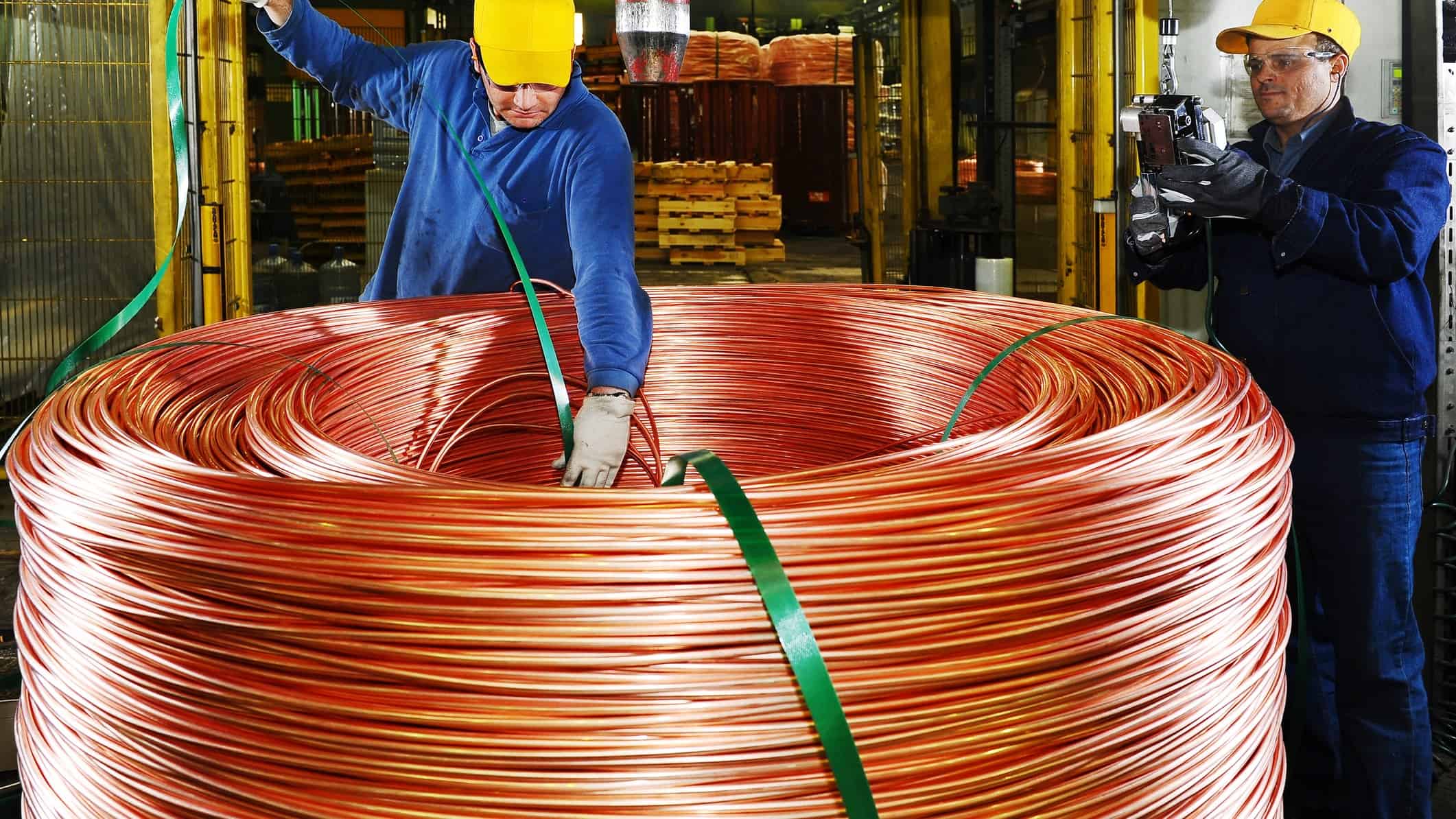
    Two workers working with a large copper coil in a factory.

    BHP Group Ltd (ASX: BHP) released its operational review for the past financial year this week, and it’s fair to say reaction from analysts has been muted, with the company guiding to a drop in copper production this year.

    Are BHP shares fully priced at the moment?

    BHP shares are up slightly more than 50% for the past 12 months, so given that strong result, it begs the question, do they have further to run?

    The team at Macquarie have run the ruler over the company and come up with a neutral recommendation on the stock, and a share price target we’ll get to shortly.

    First, let’s look at what BHP reported this week.

    Solid operational results

    The company said in a statement to the ASX that it had delivered record iron ore production over the year to the end of June, up 1% to 264.7 million tonnes.

    Copper, however, was 3% lower than the previous year at 1.95 million tonnes.

    BHP Chief Executive Officer Brandon Craig said it was a solid result.

    He added:

    For the second consecutive year, we produced around 2 Mt of copper and delivered record iron ore production, demonstrating the power of a disciplined operating system and world-class assets. We achieved this against a backdrop of stronger realised prices for both copper and iron ore, with copper prices around 35 per cent higher than a year ago. Cost control was particularly strong, with every asset expected to be within unit cost guidance despite headwinds from inflation, higher diesel prices and global supply chain disruptions.

    While Mr Craig said the company had several growth projects underway, BHP is actually guiding to lower copper output this year, with a forecast of 1,650,000 to 1,800,000 tonnes of copper.

    Iron ore is expected to stay largely flat at 260 to 272 million tonnes.

    Copper output has been impacted by a conveyor belt failure at the Carrapateena mine, impacting output at the company’s South Australian operations for up to eight weeks.

    Let’s see what the analysts think

    The Macquarie team said in their note to clients that much of BHP’s value proposition was built on copper growth, and that South Australia was a key part of that.

    They applauded the company’s record iron result however, in what they said had been a tough year.

    But Macquarie said with the risk of strikes looming and significant maintenance work scheduled, they expected it to be a “holding year” for the division.

    Macquarie has a 12-month price target of $55 on BHP shares compared to $59.14 at the time of writing. They are also predicting the dividend yield to stay steady on 3.4%.

    The post Does Macquarie rate BHP shares a buy, hold or sell right now? appeared first on The Motley Fool Australia.

    Should you invest $1,000 in BHP Group right now?

    Before you buy BHP Group shares, consider this:

    Motley Fool investing expert Scott Phillips just revealed what he believes are the 5 best stocks for investors to buy right now… and BHP Group wasn’t one of them.

    The online investing service he’s run for over a decade, Motley Fool Share Advisor, has provided thousands of paying members with stock picks that have doubled, tripled or even more.*

    And right now, Scott thinks there are 5 stocks that may be better buys…

    * Returns as of 16 June 2026

    .custom-cta-button p {
    margin-bottom: 0 !important;
    }

    More reading

    Motley Fool contributor Cameron England has no position in any of the stocks mentioned. The Motley Fool Australia’s parent company Motley Fool Holdings Inc. has positions in and has recommended Macquarie Group. The Motley Fool Australia has recommended BHP Group and Macquarie Group. The Motley Fool has a disclosure policy. This article contains general investment advice only (under AFSL 400691). Authorised by Scott Phillips.

  • How I would build an ASX portfolio with just 3 investments

    A man in his office leans back in his chair with his hands behind his head looking out his window at the city.

    A portfolio does not need dozens of holdings to cover a lot of ground.

    With three carefully chosen investments, I think an investor could gain exposure to global growth, dependable infrastructure, and a business with substantial room to expand.

    The key is giving each holding a clear job.

    Start with global quality

    I would make VanEck MSCI International Quality ETF (ASX: QUAL) the largest holding.

    This exchange-traded fund (ETF) provides exposure to international companies selected using measures such as profitability, balance sheet strength, and earnings stability.

    I like that approach because the global share market contains thousands of businesses, but they are not all equally attractive. A quality filter can direct more of the portfolio towards companies that have already shown an ability to generate strong returns without relying heavily on debt.

    These businesses may sell software, medicines, consumer products, industrial equipment, or financial services. What connects them is the financial strength that can support continued investment through changing economic conditions.

    International shares also give Australian investors access to industries and business models that are less prominent on the ASX.

    I would expect this holding to do most of the long-term compounding.

    Add dependable infrastructure

    The second investment would be APA Group (ASX: APA).

    APA owns and operates energy infrastructure, including pipelines and other assets that help move and store energy around Australia.

    I think infrastructure can bring a different rhythm to a portfolio. Demand is linked to essential services, while many assets are supported by long-term agreements or regulated arrangements.

    APA also pays dividends, which could provide some income while the wider portfolio continues growing.

    The energy system is changing, and APA will need to invest carefully as Australia moves towards a different mix of generation and storage. Debt, interest rates, regulation, and project returns all deserve attention.

    Even so, I like the idea of owning assets that remain deeply connected to how homes and businesses receive energy.

    Include a long-term growth share

    The final investment would be Xero Ltd (ASX: XRO).

    Xero has developed accounting software that sits close to the daily financial activity of small businesses. Customers can use the platform for invoicing, payroll, payments, reporting, tax, and cash flow management.

    That position gives Xero room to become more valuable to each customer over time.

    The company can add services, improve automation, and use data to help business owners make better decisions. Its opportunity in the United States also leaves plenty of space for expansion if execution remains strong.

    Xero shares can be volatile, and investors are often asked to pay a high valuation for future growth. I would therefore keep the allocation smaller than the global ETF holding.

    For a long investment horizon, I think the company has the potential to become a much larger financial platform.

    How I would split the money

    I would put around 50% of the portfolio into the QUAL ETF, 25% into APA Group, and 25% into Xero shares.

    That split would place most of the money in a diversified global holding while still leaving enough exposure to income and company-specific growth.

    The exact percentages could change with an investor’s age, income needs, and tolerance for volatility. Someone closer to retirement may prefer a larger infrastructure allocation, while a younger investor may lean further towards growth.

    Foolish Takeaway

    A three-investment portfolio places more responsibility on every holding, so I would choose each one carefully and resist the temptation to keep adding shares without a clear reason.

    This structure would give me access to established global businesses, essential Australian assets, and a company still building towards a much larger opportunity.

    It would remain simple enough to follow, while offering several ways for wealth to grow over the years ahead.

    The post How I would build an ASX portfolio with just 3 investments appeared first on The Motley Fool Australia.

    Should you invest $1,000 in Apa Group right now?

    Before you buy Apa Group shares, consider this:

    Motley Fool investing expert Scott Phillips just revealed what he believes are the 5 best stocks for investors to buy right now… and Apa Group wasn’t one of them.

    The online investing service he’s run for over a decade, Motley Fool Share Advisor, has provided thousands of paying members with stock picks that have doubled, tripled or even more.*

    And right now, Scott thinks there are 5 stocks that may be better buys…

    * Returns as of 16 June 2026

    .custom-cta-button p {
    margin-bottom: 0 !important;
    }

    More reading

    Motley Fool contributor Grace Alvino has no position in any of the stocks mentioned. The Motley Fool Australia’s parent company Motley Fool Holdings Inc. has positions in and has recommended Xero. The Motley Fool Australia has positions in and has recommended Apa Group and Xero. The Motley Fool has a disclosure policy. This article contains general investment advice only (under AFSL 400691). Authorised by Scott Phillips.

  • Volatility Traders Abandon VIX Bets as Stock Conviction Vanishes

  • Fed Chair Powell faces questions on risk to housing market as people struggle to pay mortgage and rent

  • Should Weakness in The J. M. Smucker Company’s (NYSE:SJM) Stock Be Seen As A Sign That Market Will Correct The Share Price Given Decent Financials?

  • AT&T quits Venezuela as US sanctions force it to defy Maduro