
• Here’s what brokers tip for BHP shares over the next 12 months

    An engineer takes a break on a staircase and looks out over a huge open pit coal mine as the sun rises in the background.

    BHP Group Ltd (ASX: BHP) shares are rising strongly on Friday, up 2.2% to $58.09 apiece.

    FY26 was a big year for the ‘Big Australian’.

    The BHP share price soared 62% in FY26 to finish at $59.40 on 30 June.

    BHP was one of the strongest performers for capital growth amongst the ASX 200 large-cap shares last year.

    The company benefited from a rotation into mining stocks, as well as an 18% rise in the copper price and a 7% increase in the iron ore price.

    While BHP is still a major iron ore producer, it is also now the world’s largest copper producer.

    Copper, essential for electrification, rose to a record US$6.60 per pound in May amid high demand due to the green energy transition.

    In 1H FY26, copper made up for more than half of BHP’s underlying earnings before interest, taxes, depreciation, and amortisation (EBITDA). 

    In its 3Q FY26 update, BHP said strong production at Escondida in Chile and Antamina in Peru meant it expected group production for full-year FY26 would be at the upper end of its guidance.

    There was mixed news relating to other parts of the business in FY26.

    In February, BHP announced a long-term silver streaming agreement with Wheaton Precious Metals Corp (NYSE: WPM).

    The miner received US$4.3 billion upfront, which strengthened the balance sheet, for a share of its silver from Antamina.

    But there was trouble at the Jansen potash project in Canada. In June, BHP revealed a US$2 billion estimated cost blow-out for Stage 2.

    The miner said it now expected Stage 2 to cost US$6.9 billion, up from the previous estimate of US$4.9 billion.

    Jansen Stage 1 remains on track for first production in FY27.

    In March, we learned that CEO Mike Henry would be stepping down on 1 July after six-and-a-half years at the helm.

    He was replaced by Brandon Craig, who has worked at BHP for 25 years and was formerly President of the Americas division.

    In May, BHP took back its crown as the ASX 200’s largest company by market cap from Commonwealth Bank of Australia (ASX: CBA).

    What do the experts think about BHP shares?

    Looking ahead to FY27, brokers have a mixed view on whether BHP shares are a buy, hold, or sell.

    They also offer a range of 12-month price targets on the ASX 200 mining share.

    Let’s start with some consensus views, then hear some explanations from individual analysts regarding their ratings.

    On the TradingView platform, there is a consensus neutral rating (equivalent to a hold call) from 20 analysts.

    Four analysts give BHP shares a strong buy rating, 13 say hold, two say sell, and one analyst has a strong sell rating.

    The 12-month share price targets among those 20 analysts range from $43.94 to $94.10.

    On the CommSec trading platform, 19 analysts provide a hold consensus rating.

    Four give the miner a strong buy rating, 14 say hold, and there is one strong sell recommendation.

    Who says buy, and why?

    Morgan Stanley maintained its buy rating on BHP shares with a 12-month price target of $67.50 yesterday.

    Deutche Bank also gives BHP shares a buy call, and raised its target from $50.25 to $52.19 earlier this month.  

    Blake Halligan from Catapult Wealth also has a buy rating on BHP shares and explains why:  

    The global miner holds dominant positions in iron ore and copper and is leveraged to increasing demand during the energy transition.

    Despite the Jansen impairment and the risk of industrial action at iron ore operations in the Pilbara region of Western Australia, near term earnings momentum remains strong.

    The balance sheet remains robust with low net debt, while a recent dividend yield above 3 per cent adds income appeal.

    Who has a hold call on BHP shares?

    Hold is the dominant rating among the experts today.

    Morgans reiterated its hold call on BHP shares yesterday, and increased its 12-month target from $54.90 to $59.80.

    Bank of America, which has a history of optimistic price targets on BHP shares, reiterated its hold rating on Wednesday and reduced its target from $70 to $65.

    Other analysts who reiterated hold calls but reduced their targets this week include Citi, from $66 to $63, and Jefferies, from $68 to $65.

    Meanwhile, Macquarie stayed at $55, and UBS remained at $60 per share.

    The most pessimistic target we found was $40.10, suggested by Barclays this week. This implies a potential 30% downside in FY27.

    On The Bull, Remo Greco from Sanlam Private Wealth explained why he has a hold rating on BHP shares:

    Several disappointing events have led us to downgrade BHP to a hold.

    Cost over-runs at its Jansen stage 2 potash project in Canada lifts the investment cost by about $US2 billion to $US6.9 billion. Possible industrial action, although averted in June, may re-ignite at the company’s iron ore operations in the Pilbara region of Western Australia.

    Any industrial action may impact stock performance.

    Longer term, we like BHP’s exposure to copper – the key metal of the future.

    James Bills from Shaw and Partners also has a hold rating and commented:  

    BHP remains a cornerstone of the Australian sharemarket, underpinned by its scale, diversified commodity exposure and strong balance sheet.

    While iron ore continues to drive earnings, BHP is increasingly leveraged to future-facing commodities, including copper, where demand is expected to increase significantly due to growth in data centres and electric vehicles.

    Despite near term volatility in commodity prices and sensitivity to global growth, the company’s disciplined capital management and strong cash generation support shareholder returns.

    Holding remains appropriate given its quality asset base and exposure to long term structural demand trends.

    Michael Gable from Fairmont Equities recommends holding BHP shares because “the commodities bull market is still in the early stages of the latest cycle”.

    Experts say there are five fundamentals driving this new commodities supercycle. Learn more about them here.

    The post Here’s what brokers tip for BHP shares over the next 12 months appeared first on The Motley Fool Australia.

    Should you invest $1,000 in BHP Group right now?

    Before you buy BHP Group shares, consider this:

    Motley Fool investing expert Scott Phillips just revealed what he believes are the 5 best stocks for investors to buy right now… and BHP Group wasn’t one of them.

    The online investing service he’s run for over a decade, Motley Fool Share Advisor, has provided thousands of paying members with stock picks that have doubled, tripled or even more.*

    And right now, Scott thinks there are 5 stocks that may be better buys…

    * Returns as of 16 June 2026

    .custom-cta-button p {
    margin-bottom: 0 !important;
    }

    More reading

    Citigroup is an advertising partner of Motley Fool Money. Bank of America is an advertising partner of Motley Fool Money. Motley Fool contributor Bronwyn Allen has positions in BHP Group. The Motley Fool Australia’s parent company Motley Fool Holdings Inc. has positions in and has recommended Jefferies Financial Group and Macquarie Group. The Motley Fool Australia’s parent company Motley Fool Holdings Inc. has recommended Barclays Plc. The Motley Fool Australia has recommended BHP Group and Macquarie Group. The Motley Fool has a disclosure policy. This article contains general investment advice only (under AFSL 400691). Authorised by Scott Phillips.

  • Why this ASX software stock is rocketing 13% today

    Man on a ladder drawing an increasing line on a chalk board, symbolising a rising share price.

    Bravura Solutions Ltd (ASX: BVS) shares have taken off on Friday after the financial software company delivered a better-than-expected FY26 earnings update.

    At the time of writing, the Bravura share price is up 13.17% to $2.32. By comparison, the S&P/ASX 300 Index (ASX: XKO) is currently sitting at 8,705 points, 0.1% higher.

    The rally comes after a fairly ordinary start to the year. Bravura shares remain down around 20% in 2026, although they are still 8% higher than this time last year.

    Here’s what the company is now forecasting.

    Bravura lifts its earnings outlook

    According to the release, Bravura now expects FY26 cash EBITDA of approximately $77 million.

    This is above its previous guidance range of $69 million to $73 million and has given the market something positive to work with.

    Revenue guidance has been left unchanged at $280 million to $285 million, while capital expenditure is still expected to be roughly $4 million.

    Bravura put the better result down to steady demand for project work and tighter control over costs.

    Management has used an average GBP/AUD exchange rate of 1.92 for the second half, compared with 1.95 in its previous guidance.

    The full-year result is due on 12 August, when investors will get a closer look at how the business finished FY26.

    Bravura’s recovery moves forward

    The earnings upgrade comes after a fairly unsettled period at Bravura.

    Former Chairman Matthew Quinn retired last year following tensions with L6 Holdings, which owns more than 20% of the company.

    L6 is controlled by Damien Leonard, who runs Pinetree Capital and is the son of Constellation Software founder Mark Leonard.

    Damien Leonard now sits on Bravura’s board as a Director.

    Bravura has also spent the past few years reshaping the business after its shares fell heavily in 2022.

    The company has spent the past few years cutting costs, reducing headcount, and simplifying the business. It has also placed more focus on its core wealth management software operations to improve margins and cash flow.

    Is the worst behind Bravura?

    The 13% jump suggests investors are warming to the progress Bravura is making.

    The company is producing stronger earnings, while lower costs are helping lift margins and supporting profitability.

    The share price is still well below where it traded before the 2022 collapse, so I think there is room for a further recovery if the company keeps improving.

    The August result will give investors a better idea of whether Bravura can carry this momentum into the new financial year.

    The post Why this ASX software stock is rocketing 13% today appeared first on The Motley Fool Australia.

    Should you invest $1,000 in Bravura Solutions right now?

    Before you buy Bravura Solutions shares, consider this:

    Motley Fool investing expert Scott Phillips just revealed what he believes are the 5 best stocks for investors to buy right now… and Bravura Solutions wasn’t one of them.

    The online investing service he’s run for over a decade, Motley Fool Share Advisor, has provided thousands of paying members with stock picks that have doubled, tripled or even more.*

    And right now, Scott thinks there are 5 stocks that may be better buys…

    * Returns as of 16 June 2026

    .custom-cta-button p {
    margin-bottom: 0 !important;
    }

    More reading

    Motley Fool contributor Aaron Teboneras has no position in any of the stocks mentioned. The Motley Fool Australia’s parent company Motley Fool Holdings Inc. has positions in and has recommended Bravura Solutions and Constellation Software. The Motley Fool Australia has no position in any of the stocks mentioned. The Motley Fool has a disclosure policy. This article contains general investment advice only (under AFSL 400691). Authorised by Scott Phillips.

  • How to give your kids a superannuation kickstart, with help from the government

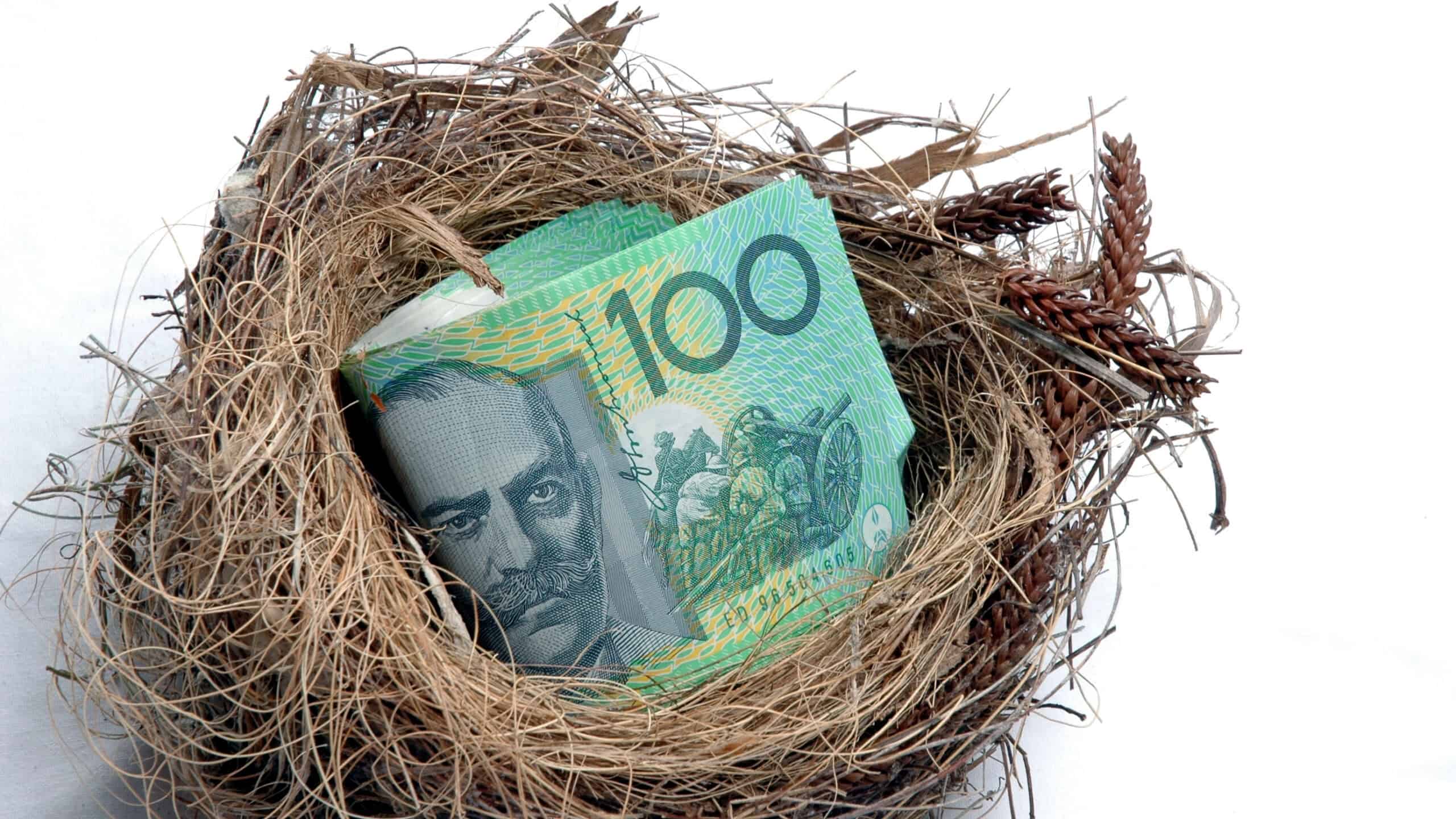
    A wad of $100 bills of Australian currency lies stashed in a bird's nest.

    Saving for their retirement is probably the last thing on your children’s minds when they first start working, but there is a good reason to get them signed up for a superannuation account early.

    Most younger teens are not automatically eligible for superannuation payments from their employer, as workers aged under 18 must work more than 30 hours per week to be eligible for super.

    This changes once they turn 18, when all workers must be paid 12% super regardless of the number of hours worked.

    Government money on the table for super

    But just because they don’t get paid super, doesn’t mean there isn’t a great reason to sign your children up for a super account.

    This is because, as low-income earners, they will likely be eligible for a super co-contribution from the government if they make an after-tax contribution themselves.

    There are some rules, including that, for 2026-27, they must earn less than $49,293 to receive the full $500 government contribution.

    There is also the 10% eligible income test, which states that 10% or more of your total income must come from either employment-related activities or carrying out a business.

    To be eligible for the full $500 contribution from the government, $1000 in non-concessional (after-tax) contributions must be made.

    Compound interest works its magic

    And while $500 might not sound like a lot, the impact on your child’s retirement savings could be huge.

    Using the government’s Moneysmart website, I have calculated that $500 deposited into a 15-year-old’s account will turn into $10,500 by the age of 60, assuming the initial deposit compounds at 7% per year.

    And remember, this is calculated assuming just one year of contributions.

    The Australian Taxation Office website says your children do not need to do anything to receive the payment, and can make smaller payments throughout the year.

    As they say:

    You don’t need to make your personal contributions as a single lump sum – you can make payments throughout the financial year. We use the total amount you have contributed for the year to calculate the co-contribution. Your super fund can tell you how to make personal contributions, and it will need your tax file number before it can accept them.

    The minimum contribution that can be made is $20, and the government has a calculator to help people figure out how much they will be paid.

    The post How to give your kids a superannuation kickstart, with help from the government appeared first on The Motley Fool Australia.

    Wondering where you should invest $1,000 right now?

    When investing expert Scott Phillips has a stock tip, it can pay to listen. After all, the flagship Motley Fool Share Advisor newsletter he has run for over ten years has provided thousands of paying members with stock picks that have doubled, tripled or even more.*

    Scott just revealed what he believes could be the ‘five best ASX stocks’ for investors to buy right now. We believe these stocks are trading at attractive prices and Scott thinks they could be great buys right now…

    * Returns as of 16 June 2026

    .custom-cta-button p {
    margin-bottom: 0 !important;
    }

    More reading

    Motley Fool contributor Cameron England has no position in any of the stocks mentioned. The Motley Fool Australia’s parent company Motley Fool Holdings Inc. has no position in any of the stocks mentioned. The Motley Fool Australia has no position in any of the stocks mentioned. The Motley Fool has a disclosure policy. This article contains general investment advice only (under AFSL 400691). Authorised by Scott Phillips.

  • Uber cuts 3,000 more jobs, shuts 45 offices over coronavirus pandemic: WSJ

  • Despite PPP aid, some small businesses are choosing to stay closed – here’s why

  • Stock market news live updates: Moderna coronavirus vaccine fuels rally; Uber braces for new layoffs

  • How Does The Supreme Cannabis Company, Inc. (TSE:FIRE) Affect Your Portfolio Volatility?