• 265,985 shares of this high-yield ASX dividend stock pays an income equal to the Age Pension

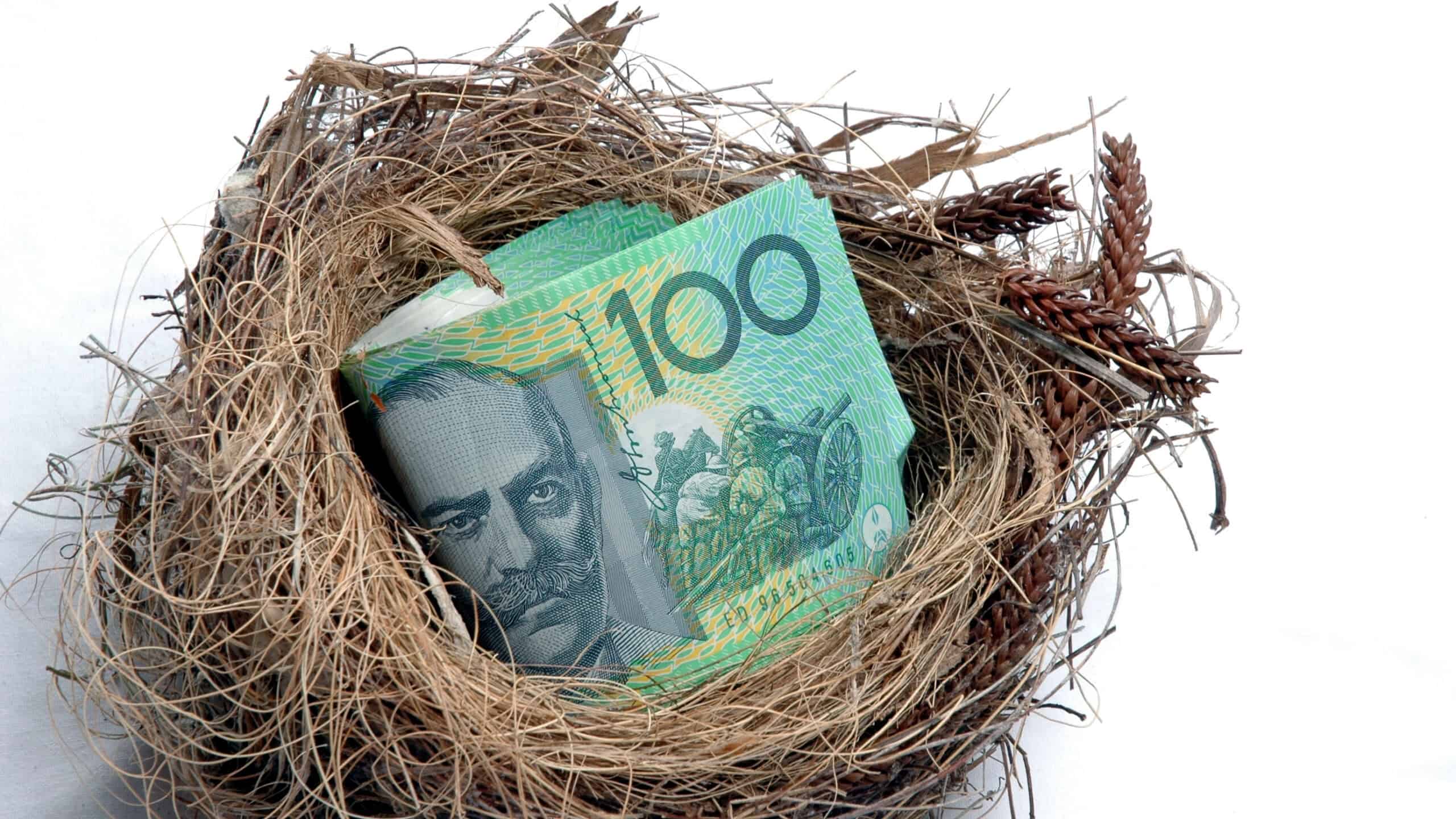
    A wad of $100 bills of Australian currency lies stashed in a bird's nest.

    I’d describe Rural Funds Group (ASX: RFF) as one of the most attractive high-yield ASX dividend stocks Aussies can buy. For me, it’s more appealing than the Age Pension.

    Rural Funds Group is a real estate investment trust (REIT) that owns hundreds of millions of dollars of farmland across Australia. Its farms are spread across a number of farming areas, including cattle, almonds, macadamias, vineyards and cropping.

    If I were thinking about an investment in retirement, owning farmland does sound appealing. Land always has value, it can produce something extremely essential to the population (food) and long-term inflation can be a useful tailwind to rental income.

    Just to clarify, Rural Funds itself isn’t a farming operator, it just leases its land to high-quality tenants.

    I think it offers a number of benefits for investors.

    Strong rental income credentials

    Rural Funds generates excellent rental income from tenants like Olam, JBS, Select Harvests Ltd (ASX: SHV), Stone Axe, Australian Agricultural Company Ltd (ASX: AAC) and Treasury Wine Estates Ltd (ASX: TWE). These businesses are among the leading operators nationally or even internationally.

    Pleasingly, most of its rental income is steadily growing, with most contracts either being linked to CPI inflation, or having fixed annual increases, plus market reviews. This steady growth can help increase distributions organically in the coming years.

    Additionally, I like that the rental income comes from a variety of areas, in different states and climate conditions.

    Finally, the business has a weighted average lease expiry (WALE) of approximately 13 years, giving investors clear rental stability and visibility.

    Why I think it’s more appealing than the Age Pension

    To get a huge amount of passive income, you’d need to buy a lot of Rural Funds shares. I think it’s important to have diversification when it comes to a dividend portfolio.

    But, I’d like to own Rural Funds shares because of the huge asset backing it would provide. That asset base can also climb in value over time, which can help boost our financial position.

    Rural Funds has been paying an annual distribution per unit of 11.73 cents amid the headwinds of higher interest rates. That translates into a distribution yield of 5.7%. That makes it a high-yield ASX dividend stock, in my view.  

    The Age Pension currently pays a maximum of around $31,200 for a single person, which is one of the most generous in the world.

    To receive that much from Rural Funds, an investor would need to own 265,985 Rural Funds shares.

    Again, I wouldn’t make Rural Funds my entire portfolio, though I’d be happy with exposure to this pleasing REIT as my ‘farm’ investment because of how passive it can be.

    It looks like a great time to invest because, at the time of writing, it’s trading at a discount of around 34% to its adjusted net asset value (NAV). In other words, we’re able to get exposure to these farms for a very cheap price.

    However, Rural Funds is not the only ASX share I’d buy for passive income today.

    The post 265,985 shares of this high-yield ASX dividend stock pays an income equal to the Age Pension appeared first on The Motley Fool Australia.

    Should you invest $1,000 in Rural Funds Group right now?

    Before you buy Rural Funds Group shares, consider this:

    Motley Fool investing expert Scott Phillips just revealed what he believes are the 5 best stocks for investors to buy right now… and Rural Funds Group wasn’t one of them.

    The online investing service he’s run for over a decade, Motley Fool Share Advisor, has provided thousands of paying members with stock picks that have doubled, tripled or even more.*

    And right now, Scott thinks there are 5 stocks that may be better buys…

    * Returns as of 16 June 2026

    .custom-cta-button p {
    margin-bottom: 0 !important;
    }

    More reading

    Motley Fool contributor Tristan Harrison has positions in Rural Funds Group. The Motley Fool Australia’s parent company Motley Fool Holdings Inc. has positions in and has recommended Treasury Wine Estates. The Motley Fool Australia has positions in and has recommended Rural Funds Group and Treasury Wine Estates. The Motley Fool has a disclosure policy. This article contains general investment advice only (under AFSL 400691). Authorised by Scott Phillips.


  • How much is needed in superannuation to target an $11,000 monthly passive income?

    Superannuation written on a jar with Australian dollar notes.

    The recent Australian federal budget changes appear to make superannuation the best way for Australians to invest for passive income.

    I think that’s true because superannuation has a lower tax rate compared to many individuals, trusts and companies. With the set-and-forget nature of superannuation, it makes it very easy to invest for the long-term with the retirement system.

    Receiving passive income is a very simple and laid-back strategy when it comes to investing in shares. However, when considering the passive income return, we need to remember that the focus should be on the net income, meaning the after-tax return. Full-time working Aussies that invest for passive income in their own name could lose a third of those payments to tax each year, which isn’t ideal.

    In my view, investing in superannuation is more appealing because of its lower tax rate in the accumulation phase compared to the typical individual’s tax rate for a full-time earner. It’s possible that the tax rate could be 0% in retirement.

    It should be said that every household’s tax situation is different, so let’s look at the targeted income level of $11,000 per month, without talking about tax for the rest of this article.

    How much is needed in superannuation for $11,000 of monthly passive income?

    Receiving $11,000 in dividends each month equates to an annual goal of $132,000 per year. I bet lots of Australians would like to receive that amount of dividends each year without needing to do ongoing work to get the money flowing into the bank account.

    I’d suggest Australian investors need to consider what types of investments they want to own and the yield that comes with it. In my view, ASX shares are the best pick for passive income, partially due to the likely franking credits that come attached to dividends from companies.

    A portfolio with a dividend yield of 6% could be half the size of a portfolio with a dividend yield of 3% and generate the same level of dividend income.

    For example, if a portfolio were approximately $2.2 million in size, it would generate approximately $132,000 of annual dividends with a 6% dividend yield. If a portfolio had a 3% dividend yield, it would need to be around $4.4 million in size to generate the same amount.

    Of course, other dividend yields would require different-sized portfolios to achieve targeted levels of passive income. For example, a 5% dividend yield would require a portfolio size of $2.6 million to reach $132,000 annually.

    The types of ASX dividend shares I’d want to buy

    If an Australian superannuation investor wants to unlock mid-to-higher dividend yields, then they’re in luck. The ASX share market gives access to great companies with franking credits, real estate investment trusts (REITs) with compelling payouts and attractive valuations, as well as listed investment companies (LICs) with a pleasing track record of rising dividends.

    Two of the businesses with a great track record of growing their payouts include investment house Washington H. Soul Pattinson and Co. Ltd (ASX: SOL) and Kmart and Bunnings owner Wesfarmers Ltd (ASX: WES). I believe these two businesses will be able to compound their payouts.

    I’m attracted to some mid-yielding names like Rural Funds Group (ASX: RFF), Centuria Industrial REIT (ASX: CIP), Australian Foundation Investment Co Ltd (ASX: AFI), Telstra Group Ltd (ASX: TLS) and WCM Quality Global Growth Fund (ASX: WCMQ).

    Finally, for a higher dividend yield, I’d look at names like MFF Capital Investments Ltd (ASX: MFF), WCM Global Ltd (ASX: WQG), Future Generation Global Ltd (ASX: FGG) and Future Generation Australia Ltd (ASX: FGX).

    The post How much is needed in superannuation to target an $11,000 monthly passive income? appeared first on The Motley Fool Australia.

    Should you invest $1,000 in Telstra Group right now?

    Before you buy Telstra Group shares, consider this:

    Motley Fool investing expert Scott Phillips just revealed what he believes are the 5 best stocks for investors to buy right now… and Telstra Group wasn’t one of them.

    The online investing service he’s run for over a decade, Motley Fool Share Advisor, has provided thousands of paying members with stock picks that have doubled, tripled or even more.*

    And right now, Scott thinks there are 5 stocks that may be better buys…

    * Returns as of 16 June 2026

    .custom-cta-button p {
    margin-bottom: 0 !important;
    }

    More reading

    Motley Fool contributor Tristan Harrison has positions in Future Generation Australia, Future Generation Global, Mff Capital Investments, Rural Funds Group, Washington H. Soul Pattinson and Company Limited, Wcm Global Growth, and Wcm Quality Global Growth Fund. The Motley Fool Australia’s parent company Motley Fool Holdings Inc. has positions in and has recommended Washington H. Soul Pattinson and Company Limited and Wesfarmers. The Motley Fool Australia has positions in and has recommended Mff Capital Investments, Rural Funds Group, Telstra Group, and Washington H. Soul Pattinson and Company Limited. The Motley Fool Australia has recommended Wesfarmers. The Motley Fool has a disclosure policy. This article contains general investment advice only (under AFSL 400691). Authorised by Scott Phillips.

  • How I’d build $50,000 of ASX passive income

    Happy young woman saving money in a piggy bank.

    Building $50,000 of passive income from ASX shares is a serious goal.

    It is not just about buying a few high-yield stocks and hoping the dividends arrive. I think it requires a portfolio that can produce cash, handle different market conditions, and keep enough growth in the mix so the income does not lose its value over time.

    If I were trying to build that kind of income stream, this is how I would approach it.

    I’d treat the portfolio like a cash-flow machine

    The first thing I would want is a portfolio built around businesses with a real reason to keep earning money.

    That could include companies providing essential services, owning infrastructure, leasing important properties, selling everyday products, or operating in sectors with repeat customer demand.

    I would be looking for cash flows with structure behind them.

    Telstra Group Ltd (ASX: TLS) is one example. Mobile connectivity is part of daily life for households and businesses. APA Group (ASX: APA) owns energy infrastructure that helps move gas and electricity through the economy. Transurban Group (ASX: TCL) owns toll roads that sit inside major transport networks.

    These are not identical income shares, and that is the point. I would want different cash-flow engines working together rather than relying too heavily on one sector.

    I’d avoid chasing the biggest yields

    A $50,000 income target can tempt investors toward the highest-yielding shares on the market.

    I would be careful with that.

    A very high yield can sometimes be a warning sign. It may reflect a falling share price, a stretched balance sheet, weak growth, or doubts about whether the dividend can be sustained.

    I think a portfolio yielding around 5% is a reasonable middle ground. At that level, an investor would need about $1 million invested to generate $50,000 a year in passive income.

    That is a large portfolio, but it is also a useful reminder. The real work is not only finding income shares, but also involves building the capital base first.

    I’d keep inflation in mind

    A $50,000 income stream sounds useful today, but inflation can change the picture over time.

    That is why I would want some dividend growth in the portfolio.

    The best passive income shares are not always the ones with the biggest starting yield. Sometimes a lower-yielding business with stronger growth can become more valuable over a decade, especially if it can lift earnings and dividends at stronger-than-average rates.

    For example, a portfolio could include a mix of higher-yield infrastructure and property shares alongside banks, supermarkets, packaging companies, telcos, and other businesses that may have scope to grow distributions over time.

    I would want the income stream to have some chance of rising, not simply standing still.

    Foolish takeaway

    Building $50,000 of ASX passive income is really about building a portfolio that can keep sending cash without becoming fragile.

    I would want useful businesses, varied sources of income, sensible yields, and enough growth to help protect purchasing power.

    At a 5% yield, the rough target is a $1 million portfolio. Getting there may take years of saving, investing, reinvesting, and patience. But once the machine is built, ASX shares can provide something very valuable: regular cash flow from real businesses, without needing to sell shares every time money is needed.

    The post How I’d build $50,000 of ASX passive income appeared first on The Motley Fool Australia.

    Should you invest $1,000 in Apa Group right now?

    Before you buy Apa Group shares, consider this:

    Motley Fool investing expert Scott Phillips just revealed what he believes are the 5 best stocks for investors to buy right now… and Apa Group wasn’t one of them.

    The online investing service he’s run for over a decade, Motley Fool Share Advisor, has provided thousands of paying members with stock picks that have doubled, tripled or even more.*

    And right now, Scott thinks there are 5 stocks that may be better buys…

    * Returns as of 16 June 2026

    .custom-cta-button p {
    margin-bottom: 0 !important;
    }

    More reading

    Motley Fool contributor Grace Alvino has positions in Transurban Group. The Motley Fool Australia’s parent company Motley Fool Holdings Inc. has positions in and has recommended Transurban Group. The Motley Fool Australia has positions in and has recommended Apa Group, Telstra Group, and Transurban Group. The Motley Fool has a disclosure policy. This article contains general investment advice only (under AFSL 400691). Authorised by Scott Phillips.