
• CBA vs Westpac shares: Which is the best buy?

    Corporate businesspeople group discussing strategies in professional indoors setting.

    Commonwealth Bank of Australia (ASX: CBA) and Westpac Banking Corp (ASX: WBC) are two of Australia’s biggest banks.

    Both offer exposure to the Australian economy, home lending, deposits, business banking, and dividends.

    But if I were choosing between them today, which one would I buy?

    Why CBA shares stand out

    CBA remains my preferred Australian bank because I think it has the strongest overall franchise.

    Its enormous customer base gives it relationships across everyday banking, mortgages, business banking, credit cards, payments, and investing.

    I particularly like the way CBA has invested in technology around those customers.

    The CommBank app has become an important part of how millions of Australians manage their finances, and the bank continues adding services that can make customers more likely to stay within its ecosystem.

    That technology investment can also help CBA operate more efficiently, make decisions faster, and improve areas such as fraud detection and customer service.

    Business banking gives me another reason to be positive.

    CBA has built a substantial position with Australian businesses, giving it another avenue for growth alongside its dominant retail banking operations. Business customers can use the bank for lending, deposits, payments, and other services as their companies develop.

    For me, CBA has several strong parts of the business working together, and I think that makes it a high-quality long-term holding.

    What about Westpac shares?

    Westpac is certainly not a bad bank.

    It has millions of customers, a huge deposit base, and one of Australia’s largest mortgage businesses. It is also investing to improve its technology and strengthen areas such as business banking.

    The shares also trade on a lower price-to-earnings ratio than CBA and offer a higher dividend yield.

    That could make Westpac more attractive to investors who place greater weight on income or who want to pay a lower multiple for a major bank.

    My hesitation comes from the growth outlook. I remain concerned about Westpac’s heavy exposure to Australian housing at a time when home lending growth could become more difficult. Recent weakness in mortgage applications has reinforced that concern for me.

    The bank is working to expand elsewhere, particularly in business banking, but I would like to see more progress before becoming more positive.

    A cheaper valuation can certainly improve the investment case. I still want to feel confident that the underlying business has enough ways to grow over the years ahead.

    Are CBA shares worth paying more for?

    CBA shares normally command a substantial premium over Westpac shares, and investors need to decide whether the quality of the business justifies paying more.

    I think it does. I would rather pay a higher price for the bank I believe has the stronger customer franchise, better technology, and more attractive long-term growth opportunities.

    Of course, CBA still needs to execute well. A premium valuation leaves less room for disappointment, and banking conditions can change quickly.

    But when I am investing with a long holding period, I tend to put more weight on the quality of the business than simply choosing whichever share looks cheaper.

    Foolish takeaway

    If I had to choose between CBA and Westpac shares today, I would buy CBA.

    Westpac offers a lower valuation and stronger prospective income, which may suit some investors.

    For me, though, CBA’s customer relationships, technology, and business banking position give it the stronger long-term investment case.

    The post CBA vs Westpac shares: Which is the best buy? appeared first on The Motley Fool Australia.

    Should you invest $1,000 in Commonwealth Bank Of Australia right now?

    Before you buy Commonwealth Bank Of Australia shares, consider this:

    Motley Fool investing expert Scott Phillips just revealed what he believes are the 5 best stocks for investors to buy right now… and Commonwealth Bank Of Australia wasn’t one of them.

    The online investing service he’s run for over a decade, Motley Fool Share Advisor, has provided thousands of paying members with stock picks that have doubled, tripled or even more.*

    And right now, Scott thinks there are 5 stocks that may be better buys…

    * Returns as of 1 August 2026

    .custom-cta-button p {
    margin-bottom: 0 !important;
    }

    More reading

    Motley Fool contributor Grace Alvino has positions in Commonwealth Bank Of Australia. The Motley Fool Australia’s parent company Motley Fool Holdings Inc. has no position in any of the stocks mentioned. The Motley Fool Australia has no position in any of the stocks mentioned. The Motley Fool has a disclosure policy. This article contains general investment advice only (under AFSL 400691). Authorised by Scott Phillips.

  • Everything you need to know about the Woolworths dividend

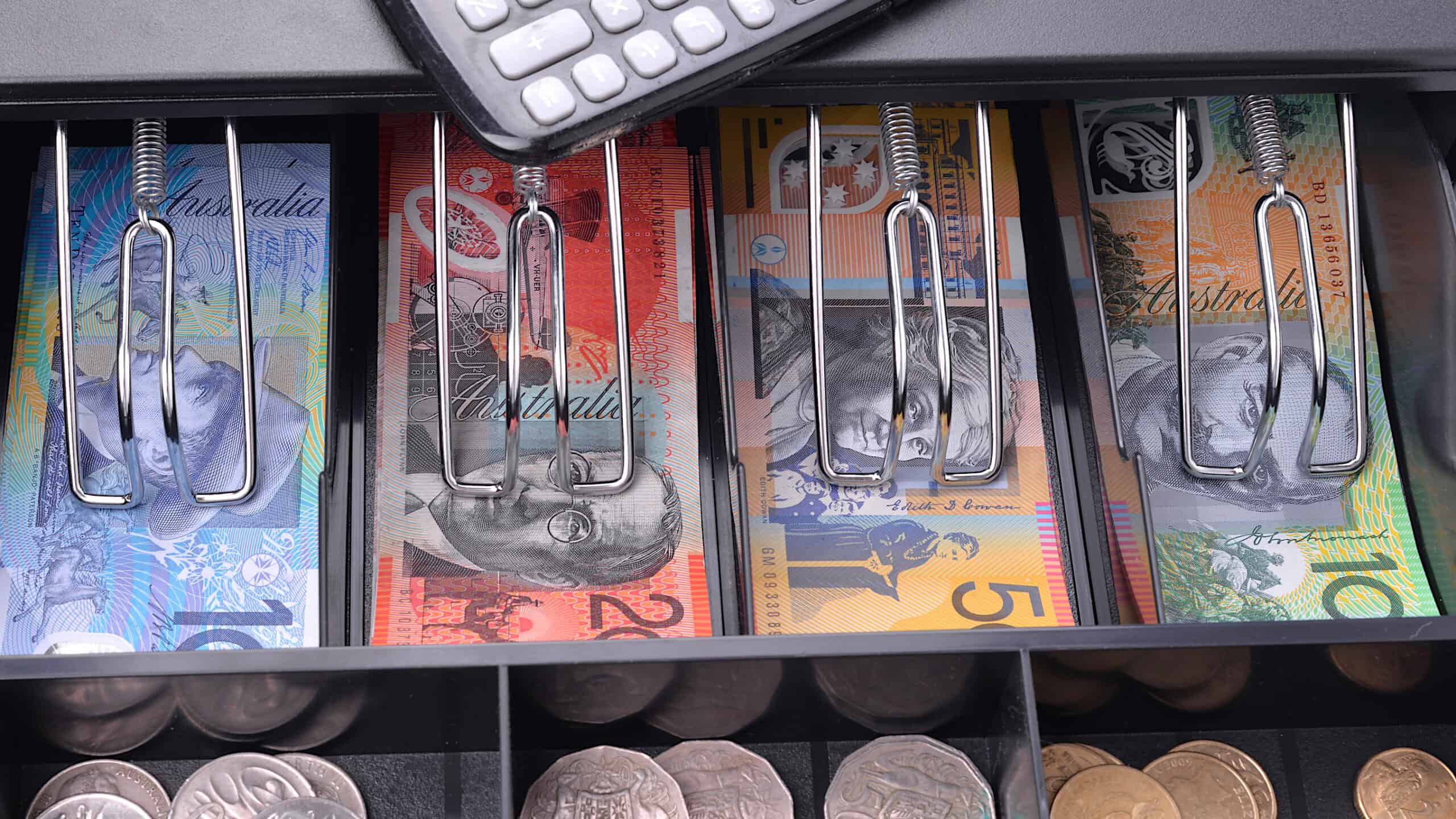
    Australian dollar notes and coins in a till.

    Every earnings season, it is the blue chips of the ASX that investors arguably look forward to hearing from the most. Even if an investor doesn’t own one of these shares themselves, what these companies have to say has ASX-wide implications, and even provides an insight into the health of the Australian economy itself. Woolworths Group Ltd (ASX: WOW) is one of those shares, and we heard about the company’s latest numbers, including the new Woolworths dividend, this morning.

    As my Fool colleague covered earlier, it was a strong set of numbers that the company had to show for itself. Woolworths revealed that it brought in $71.54 billion in revenues over the 12 months to 30 June, up 3.6% from the prior year.

    Earnings before interest, tax, depreciation and amortisation (EBITDA) before significant items was up an even healthier 6.7% to $6.09 billion. Meanwhile, Woolworths posted a net profit after tax (NPAT) and before significant items of $1.6 billion. That was up a pleasing 15.4%.

    But let’s talk about the new Woolworths dividend.

    Everything you need to know about the next Woolworths dividend

    Woolworths just revealed that its final dividend for 2026 will be worth 52 cents per share. That’s a 15.56% increase over the final dividend of 45 cents per share that investors enjoyed in 2025. Like almost every dividend that this company pays, this one will come with full franking credits attached.

    Together with the interim dividend of 45 cents per share (also fully franked), this final dividend takes Woolworths’ 2026 payouts to 97 cents per share, up 15.48% from the 84 cents per share that investors enjoyed over 2025. This represents a payout ratio of 74.1% from the $1.309 in earnings per share (EPS) that the company made over FY2026.

    If one doesn’t yet own Woolworths shares, but would like to receive this latest payout from the company, Woolworths has named 1 September as the ex-dividend date. That means investors will need to have Woolworths shares in their name by the end of August to be eligible to receive it.

    Anyone who buys Woolworths shares on or after 1 September will leave the right to receive the payout behind with the seller. Payment day will then roll around on 25 September next month.

    Woolworths is running its dividend reinvestment plan (DRP) for this latest dividend. That means investors who wish to receive additional Woolworths shares in lieu of a cash payment can nominate to do so by 3 September.

    Woolworths is currently trading with a trailing dividend yield of 2.21%. However, the company can now be assigned a forward yield of 2.38%.

    The post Everything you need to know about the Woolworths dividend appeared first on The Motley Fool Australia.

    Should you invest $1,000 in Woolworths Group right now?

    Before you buy Woolworths Group shares, consider this:

    Motley Fool investing expert Scott Phillips just revealed what he believes are the 5 best stocks for investors to buy right now… and Woolworths Group wasn’t one of them.

    The online investing service he’s run for over a decade, Motley Fool Share Advisor, has provided thousands of paying members with stock picks that have doubled, tripled or even more.*

    And right now, Scott thinks there are 5 stocks that may be better buys…

    * Returns as of 1 August 2026

    .custom-cta-button p {
    margin-bottom: 0 !important;
    }

    More reading

    Motley Fool contributor Sebastian Bowen has no position in any of the stocks mentioned. The Motley Fool Australia’s parent company Motley Fool Holdings Inc. has no position in any of the stocks mentioned. The Motley Fool Australia has no position in any of the stocks mentioned. The Motley Fool has a disclosure policy. This article contains general investment advice only (under AFSL 400691). Authorised by Scott Phillips.

  • Are DroneShield shares a buy, sell or hold following their half-year FY26 results today?

    A group of people gather around a computer screen in rapt attention, one man holds his hands to cover his mouth as if in nervous anticipation of what news may come.

    DroneShield Ltd (ASX: DRO) shares have crashed into the red in early morning trade as investors digest the company’s latest half-year FY26 update.

    At the time of writing, the counter-drone operators’ shares are down around 6% and trading at $1.83.

    The latest price movement means DroneShield shares are now down 45% for the year-to-date, and are 49% lower than 12 months ago.

    What’s the latest out of DroneShield?

    The ASX defence company revealed that for the six months ending 30th of June, revenue jumped 74% to a record $125.8 million. Recurring revenue also increased 229% to $11.5 million.

    But DroneShield also posted a statutory net loss after tax of $32.2 million, compared with a $2.1 million profit a year earlier. Underlying EBITDA also came in at a $12.4 million loss, compared with an $8 million profit posted in the first half of FY25.

    The counter-drone operator said that the company has been focused on expanding its product range and geographical footprint over the first half of FY26. The higher corresponding operating costs, higher staff numbers, and strategic software and hardware investments all contributed to the reported loss.

    Did the result meet market expectations?

    DroneShield’s $125.8 million revenue came in line with guidance expectations. But recurring revenue was a miss, at $11.5 million versus guidance of $14.2 million for the six-month period.

    Gross margin was in line with expectations at 60%, versus 65% in the prior corresponding period. 

    Clearly, investors aren’t thrilled with the result either, with many rushing to sell off their stake in the company.

    Are DroneShield shares a buy, sell or hold?

    The experts are divided in their outlook for DroneShield shares over the next 12 months. But after today’s results announcement, we may see some brokers and analysts revise their stance in the coming days.

    At the time of writing, Market Index data shows the majority of brokers have a sell rating on DroneShield shares. However, the $2.40 target price implies a potential 30% upside ahead, at the time of writing.

    TradingView data shows that of the four analysts, two have a strong buy rating and two have a sell/strong sell rating.

    The target prices also vary. The average target price of $2.13 implies a potential 18% upside over the next 12 months, at the time of writing. 

    But the minimum $1.60 target price implies a 11% downside at the time of writing. And the maximum $2.80 target price suggests DroneShield shares could rise another 55% over the next 12 months.

    The latest forecasts are a sharp revision from just one month ago. In late July, some experts were forecasting DroneShield shares to rally as high as $4.80 each. 

    The post Are DroneShield shares a buy, sell or hold following their half-year FY26 results today? appeared first on The Motley Fool Australia.

    Should you invest $1,000 in DroneShield right now?

    Before you buy DroneShield shares, consider this:

    Motley Fool investing expert Scott Phillips just revealed what he believes are the 5 best stocks for investors to buy right now… and DroneShield wasn’t one of them.

    The online investing service he’s run for over a decade, Motley Fool Share Advisor, has provided thousands of paying members with stock picks that have doubled, tripled or even more.*

    And right now, Scott thinks there are 5 stocks that may be better buys…

    * Returns as of 1 August 2026

    .custom-cta-button p {
    margin-bottom: 0 !important;
    }

    More reading

    Motley Fool contributor Samantha Menzies has no position in any of the stocks mentioned. The Motley Fool Australia’s parent company Motley Fool Holdings Inc. has positions in and has recommended DroneShield. The Motley Fool Australia has no position in any of the stocks mentioned. The Motley Fool has a disclosure policy. This article contains general investment advice only (under AFSL 400691). Authorised by Scott Phillips.