• Woodside shares soared, then stumbled. What’s next for investors?

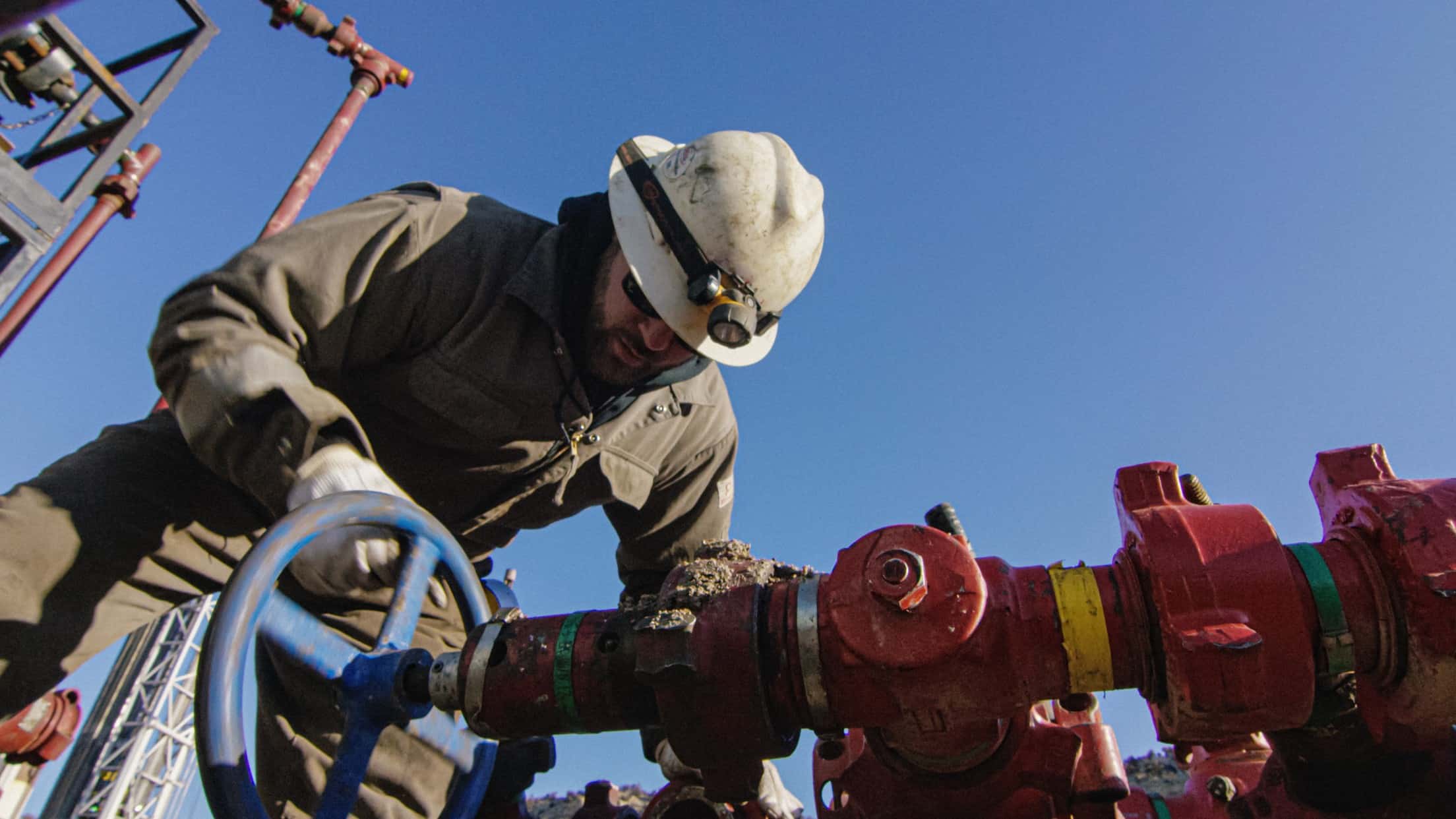
    Gas and oil worker working on pipeline equipment.

    Woodside Energy Group Ltd (ASX: WDS) shares have cooled sharply after one of their strongest starts to a year in recent memory. 

    The energy giant surged almost 50% during the first four months of 2026 as oil prices climbed amid escalating geopolitical tensions. Concerns over conflict in the Middle East and the temporary closure of the Strait of Hormuz sent crude prices higher, helping push Woodside shares above $35. 

    Since then, sentiment has shifted. Oil prices have retreated as shipping through the Strait resumed and hopes of a fragile peace agreement between Iran and the United States eased supply concerns. As a result, Woodside shares have fallen around 10% over the past month.

    Even so, the stock remains up about 18% year to date, and edged 0.5% higher to $28.01 in Monday morning trade.

    So, where do Woodside shares go from here?

    A business benefiting from higher energy prices

    Woodside remains one of Australia’s largest oil and gas producers, with a globally diversified portfolio of LNG and offshore energy assets.

    The company’s earnings remain closely tied to commodity prices, which means periods of elevated oil and gas prices can significantly boost profitability and shareholder returns.

    That was evident in Woodside’s March quarter update, released on 29 April. Operating revenue increased 7% from the previous quarter to US$3.26 billion, despite production falling 8% to 45.2 million barrels of oil equivalent (MMboe) due to severe weather in Western Australia.

    The production decline was more than offset by stronger commodity prices. Woodside’s average realised price rose 11% quarter on quarter to US$63 per barrel of oil equivalent, highlighting the company’s leverage to higher energy prices.

    Dividends remain a major attraction

    Another key reason many investors continue to favour Woodside shares is income.

    The company paid eligible shareholders a fully franked interim dividend of 83.5 cents per share in March. Combined with its fully franked final dividend of 81.8 cents per share, Woodside currently offers a trailing fully franked dividend yield of around 6%.

    For income-focused investors, that remains one of the stock’s biggest attractions, particularly if energy prices remain supportive over the medium term.

    What do brokers expect?

    Analyst sentiment remains cautious but constructive. TradingView data shows that most brokers currently rate Woodside shares as a hold, reflecting the uncertainty surrounding future oil prices after this year’s sharp volatility.

    Even so, the average broker price target sits at approximately $32.71, implying potential upside of nearly 17% from current levels. The most optimistic analyst believes Woodside shares could reach $45.41, representing upside of around 62%.

    At the other end of the spectrum, the most bearish forecast is $24.61, suggesting downside of roughly 12%.

    The wide range of price targets reflects just how dependent Woodside’s outlook remains on global energy markets.

    The risks ahead

    The biggest risk for Woodside remains the direction of oil and LNG prices. If geopolitical tensions continue to ease and global supply increases, commodity prices could come under further pressure, reducing earnings and cash flow.

    At the same time, global economic weakness could soften energy demand, while cost inflation and project execution risks remain ongoing challenges for large-scale LNG developments.

    However, if oil prices remain elevated or geopolitical risks flare up again, Woodside’s earnings could strengthen quickly.

    The post Woodside shares soared, then stumbled. What’s next for investors? appeared first on The Motley Fool Australia.

    Should you invest $1,000 in Woodside Energy Group Ltd right now?

    Before you buy Woodside Energy Group Ltd shares, consider this:

    Motley Fool investing expert Scott Phillips just revealed what he believes are the 5 best stocks for investors to buy right now… and Woodside Energy Group Ltd wasn’t one of them.

    The online investing service he’s run for over a decade, Motley Fool Share Advisor, has provided thousands of paying members with stock picks that have doubled, tripled or even more.*

    And right now, Scott thinks there are 5 stocks that may be better buys…

    * Returns as of 16 June 2026

    .custom-cta-button p {
    margin-bottom: 0 !important;
    }

    More reading

    Motley Fool contributor Marc Van Dinther has no position in any of the stocks mentioned. The Motley Fool Australia’s parent company Motley Fool Holdings Inc. has no position in any of the stocks mentioned. The Motley Fool Australia has no position in any of the stocks mentioned. The Motley Fool has a disclosure policy. This article contains general investment advice only (under AFSL 400691). Authorised by Scott Phillips.


  • Up 57%! 3 compelling reasons to still buy BHP shares today

    Red buy button on an Apple keyboard with a finger on it.

    BHP Group Ltd (ASX: BHP) shares are edging lower today. 

    Shares in the S&P/ASX 200 Index (ASX: XJO) mining giant closed on Friday trading for $60.50. In morning trade on Monday, shares are swapping hands for $60.45, down 0.1%.

    For some context, the ASX 200 is just about flat at this same time. 

    Longer term, BHP shares have strongly outperformed the 3% one-year gains posted by the benchmark index, with shares in the ASX 200 mining stock up 56.5% in 12 months.    

    And that’s not including the two fully-franked dividends, totalling $1.958 a share, that BHP paid to eligible stockholders over this period

    Adding appeal to passive income investors, BHP shares trade on a 3.3% fully-franked trailing dividend yield.

    And Catapult Wealth’s Blake Halligan believes the Aussie mining giant is well placed to deliver more outperformance in the months ahead (courtesy of The Bull). 

    Here’s why. 

    Should I buy BHP shares today?

    Citing the first reason he’s bullish on the ASX 200 mining stock, Halligan said, “The global miner holds dominant positions in iron ore and copper and is leveraged to increasing demand during the energy transition.”

    Addressing BHP’s recent, costly operational issues at its Canadian potash project, Halligan said:

    A review of the Jansen stage 2 potash project in Canada resulted in a cost blowout of about U$S2 billion to US$6.9 billion. Despite the Jansen impairment and the risk of industrial action at iron ore operations in the Pilbara region of Western Australia, near term earnings momentum remains strong.

    Despite that cost blowout, Halligan noted, “Elevated copper prices and strong iron ore prices supported performance in full year 2026.”

    Summarising the second and third reasons you might want to buy BHP shares today, Halligan concluded, “The balance sheet remains robust with low net debt, while a recent dividend yield above 3% adds income appeal. BHP offers cyclical upside and long-term growth exposure to copper.” 

    A slightly less bullish outlook on the ASX 200 mining stock

    Sanlam Private Wealth’s Remo Greco also analysed the outlook for the mining giant this week.

    And while he has a longer-term bullish outlook on the company, he issued a hold recommendation on BHP shares for now. 

    According to Greco:

    Several disappointing events have led us to downgrade BHP to a hold. Cost over-runs at its Jansen stage 2 potash project in Canada lifts the investment cost by about US$2 billion to US$6.9 billion.

    Possible industrial action, although averted in June, may re-ignite at the company’s iron ore operations in the Pilbara region of Western Australia. Any industrial action may impact stock performance.

    Longer term, we like BHP’s exposure to copper – the key metal of the future.

    The post Up 57%! 3 compelling reasons to still buy BHP shares today appeared first on The Motley Fool Australia.

    Should you invest $1,000 in BHP Group right now?

    Before you buy BHP Group shares, consider this:

    Motley Fool investing expert Scott Phillips just revealed what he believes are the 5 best stocks for investors to buy right now… and BHP Group wasn’t one of them.

    The online investing service he’s run for over a decade, Motley Fool Share Advisor, has provided thousands of paying members with stock picks that have doubled, tripled or even more.*

    And right now, Scott thinks there are 5 stocks that may be better buys…

    * Returns as of 16 June 2026

    .custom-cta-button p {
    margin-bottom: 0 !important;
    }

    More reading

    Motley Fool contributor Bernd Struben has no position in any of the stocks mentioned. The Motley Fool Australia’s parent company Motley Fool Holdings Inc. has no position in any of the stocks mentioned. The Motley Fool Australia has recommended BHP Group. The Motley Fool has a disclosure policy. This article contains general investment advice only (under AFSL 400691). Authorised by Scott Phillips.

  • Origin Energy sell-off continues, shares hit fresh 52-week low: Buy, sell or hold?

    A young man looks like he his thinking holding his hand to his chin and gazing off to the side amid a backdrop of hand drawn lightbulbs that are lit up on a chalkboard.

    Origin Energy Ltd (ASX: ORG) shares have slipped further into the red in early Monday morning trade.

    At the time of writing, the shares have fallen by around 1% to a fresh 52-week low of $10.30 each. 

    Today’s decline means the shares are now down around 9% year to date and over 11% below the trading levels seen this time last year. 

    For context, the S&P/ASX 200 Index (ASX: XJO) is up just over 1% for the year to date and 3% higher over the past 12 months.  

    Why is everyone selling their Origin Energy shares?

    Origin Energy was one of the strongest performers on the index in early 2026, but after the energy provider posted its March quarter update in late April, investors rushed to sell off their shares.

    The update, which covers Origin Energy’s Integrated Gas, Energy markets, and Octopus Energy segments, revealed declines across the board. The company also downgraded its FY26 EBITDA guidance. 

    The sell-off continued through May and June. Now, at the time of writing, Origin Energy shares have lost around 19% of their value since the announcement. 

    The share price has fallen around 7% in the first week of July alone.

    There haven’t been any price-sensitive updates out of the company recently to explain the sell-off. It looks like the ASX energy stock has come off the boil following lower realised LNG prices and a recent market-wide energy pricing review. 

    The Australian Energy Regulator (AER) and various state watchdogs have mandated that retailers pass on regulatory price cuts. But the adjustments have caused a significant restructure of how power bills are calculated. 

    This regulatory scrutiny of electricity pricing has raised concerns that retail margins could come under pressure. And investors are spooked.  

    The question now is whether it’s still a good idea to add Origin Energy shares to your portfolio, or whether you should sell up ahead of the next slump. 

    Are the energy shares a buy, sell, or hold now?

    It looks like the experts are also divided about the outlook for Origin Energy shares over the next 12 months.

    Market Index data shows brokers are split between a hold and a buy rating. But after the latest price crash, the $12.73 average target price still implies a potential 23% upside, at the time of writing.

    TradingView data shows something very similar. Out of 12 analysts, five have a hold rating, and five have a buy or strong buy rating. Another two analysts rate the energy stock as a sell or strong sell.

    But they do all agree an upside is ahead. 

    The average $12.15 target price implies a potential 18% upside at the time of writing. And some are tipping the shares to storm up to 30% higher to $13.40 a piece, over the next 12 months.

    With lower EBITDA expected for FY26, continued regulatory headwinds, and the potential for oil and LNG headwinds to continue trickling through into FY27, I think we could see even more downside ahead for Origin Energy shares this year.  

    The post Origin Energy sell-off continues, shares hit fresh 52-week low: Buy, sell or hold? appeared first on The Motley Fool Australia.

    Should you invest $1,000 in Origin Energy right now?

    Before you buy Origin Energy shares, consider this:

    Motley Fool investing expert Scott Phillips just revealed what he believes are the 5 best stocks for investors to buy right now… and Origin Energy wasn’t one of them.

    The online investing service he’s run for over a decade, Motley Fool Share Advisor, has provided thousands of paying members with stock picks that have doubled, tripled or even more.*

    And right now, Scott thinks there are 5 stocks that may be better buys…

    * Returns as of 16 June 2026

    .custom-cta-button p {
    margin-bottom: 0 !important;
    }

    More reading

    Motley Fool contributor Samantha Menzies has no position in any of the stocks mentioned. The Motley Fool Australia’s parent company Motley Fool Holdings Inc. has no position in any of the stocks mentioned. The Motley Fool Australia has no position in any of the stocks mentioned. The Motley Fool has a disclosure policy. This article contains general investment advice only (under AFSL 400691). Authorised by Scott Phillips.