• Beach Energy posts steady Q4 production and a resilient outlook

    Oil worker using a smartphone in front of an oil rig.

    The Beach Energy Ltd (ASX: BPT) share price is in focus today after the company reported quarterly production of 4.9 million barrels of oil equivalent (MMboe) and total revenue of $400 million for the June quarter.

    What did Beach Energy report?

    • Quarterly production of 4.9 MMboe, up 1% on the prior quarter
    • Quarterly sales volumes of 4.8 MMboe
    • Sales revenue of $400 million, down 5% on Q3 FY26
    • Average realised oil price rose 39% to $174 per barrel
    • Perth Basin production up 15%, Otway up 4%, Taranaki up 14%
    • Available liquidity of $983 million and net gearing of 10.6%

    What else do investors need to know?

    Beach Energy marked a record 18 months without a recordable injury, highlighting its operational safety focus. The company completed the successful sale of its operated interest in VIC/L35, providing an upfront cash injection of $70 million and a future gas production royalty.

    Oil prices provided a boost this quarter, but overall sales volumes were down 11% from Q3 mainly due to the timing of Cooper Basin oil shipments. A review of Beach’s capital management framework is underway, with an update expected at the full year results.

    What did Beach Energy management say?

    Brett Woods, Managing Director and Chief Executive Officer of Beach Energy, commented:

    Beach finished FY26 with strong operational momentum, delivering quarterly production of 4.9 MMboe while recording no recordable injuries and no Tier 1 or 2 process safety events in the quarter. Achieving a record 18 months recordable-injury free while safely executing major offshore activities, active drilling campaigns in the Cooper Basin and daily operations across all sites, is an exceptional outcome… Quarterly revenue of $400 million, supported by strong oil pricing and another LNG cargo, further strengthened Beach’s available liquidity to $983 million and a reduction in net gearing to 10.6%, providing financial flexibility.

    What’s next for Beach Energy?

    Looking ahead, Beach plans to prioritise higher-return growth opportunities, with a focus on the Western Flank oil campaign, further appraisal in the Perth Basin, and new exploration targets in Otway and the Taroom Trough. The company expects further improvements in Waitsia Gas Plant production in FY27 as technical issues are addressed.

    Investors can expect more detail with the full year FY26 results and FY27 guidance, scheduled for release on 6 August 2026.

    Beach Energy share price snapshot

    The Beach Energy share price has fallen 36% over the past 12 months, underperforming the S&P/ASX 200 Index (ASX: XJO), which is up a modest 1.35% over the same period.

    View Original Announcement

    The post Beach Energy posts steady Q4 production and a resilient outlook appeared first on The Motley Fool Australia.

    Should you invest $1,000 in Beach Energy right now?

    Before you buy Beach Energy shares, consider this:

    Motley Fool investing expert Scott Phillips just revealed what he believes are the 5 best stocks for investors to buy right now… and Beach Energy wasn’t one of them.

    The online investing service he’s run for over a decade, Motley Fool Share Advisor, has provided thousands of paying members with stock picks that have doubled, tripled or even more.*

    And right now, Scott thinks there are 5 stocks that may be better buys…

    * Returns as of 16 June 2026

    .custom-cta-button p {
    margin-bottom: 0 !important;
    }

    More reading

    Motley Fool contributor James Mickleboro has no position in any of the stocks mentioned. The Motley Fool Australia’s parent company Motley Fool Holdings Inc. has no position in any of the stocks mentioned. The Motley Fool Australia has no position in any of the stocks mentioned. The Motley Fool has a disclosure policy. This article contains general investment advice only (under AFSL 400691). Authorised by Scott Phillips. This article was prepared with the assistance of Large Language Model (LLM) tools for the initial summary of the company announcement. Any content assisted by AI is subject to our robust human-in-the-loop quality control framework, involving thorough review, substantial editing, and fact-checking by our experienced writers and editors holding appropriate credentials. The Motley Fool Australia stands behind the work of our editorial team and takes ultimate responsibility for the content published by The Motley Fool Australia.

  • Getting started with ASX ETFs? These 3 might be worth a look

    Woman using a pen on a digital stock market chart in an office.

    There’s a popular trend among investors looking for steady returns over the longer term to avoid investing in single stocks in favour of diversified exchange traded funds (ETFs).

    Recent data from ETF manager Global X shows that the Australian ETF market grew by 32.7% over the year to the end of June and that it is running at a five-year compound annual growth rate (CAGR) of 26.3% per annum.

    Global X says on its website:

    This growth was driven by $61.6 billion in net inflows over the past year, positive market movements, and unlisted funds converting into active ETFs. Investors poured $3.5 billion into Australian ETFs in June, but the end of the financial year month is seasonally a quieter one for the industry in terms of flows. The 2026 financial year was the best financial year ever for ETF net flows with the industry taking in $61.6 billion in FY26, up 48% from FY25. The industry has now attracted around $30 billion year-to-date (YTD) and remains on track to eclipse last year’s record $53 billion.

    The reasons for this growth are not surprising. Buying an ETF which tracks an index removes the work and potential stress involved in picking stocks, while still allowing investors to invest thematically if they wish.

    For those just getting started, here are three ETFs which keep it simple.

    Betashares Diversified All Growth ETF (ASX: DHHF)

    DHHF casts its net wide, offering exposure to about 8000 companies worldwide, with 35.1% in Australian equities, 41.5% in the US and the rest in developed and emerging markets.

    Betashares says on its website:

    DHHF will have a long-term exposure to 100% growth assets (shares). It is intended for use as a satellite through to standalone solution within a portfolio for investors seeking capital growth and income with a very high risk and return profile for that portion of their portfolio. A minimum investment timeframe of 5 years or more is suggested.

    DHHF has returned a compound 10.48% over the past five years and has a distribution yield of 2.1% over the past year.

    Vanguard Australian Shares Index ETF (ASX: VAS)

    Vanguard says VAS is Australia’s largest ETF, giving investors exposure to the top 300 companies listed on the ASX.

    It has a very low management fee of 0.07%, and investors can start off with as little as $200 if they invest through Vanguard itself.

    Vanguard says:

    The ETF provides low-cost, broadly diversified exposure to Australian companies and property trusts listed on the Australian Securities Exchange. It also offers potential long-term capital growth along with dividend income and franking credits.

    Unsurprisingly, VAS’ top five investments are the big four banks and BHP Group Ltd (ASX: BHP).

    Vanguard says $10,000 invested five years ago would now be worth $14,399.

    Vanguard MSCI Index International Shares ETF (ASX: VGS)

    The VGS ETF has a much wider remit than VAS, with exposure to about 1300 companies from developed countries, notably excluding Australia so it doesn’t double up with VAS.

    Vanguard says on its website:

    Investing internationally offers greater access to sectors such as technology and health care that aren’t as well represented in the Australian share market. The ETF provides exposure to many of the world’s largest companies listed in major developed countries. It offers low-cost access to a broadly diversified range of securities that allows investors to participate in the long-term growth potential of international economies outside Australia.

    The ETF’s largest holdings are in US tech companies including Nvidia, Apple, and Microsoft.

    Vanguard said $10,000 invested five years ago would now be worth $18,775.

    The management fee for VGS ETF is 0.18%.

    The post Getting started with ASX ETFs? These 3 might be worth a look appeared first on The Motley Fool Australia.

    Should you invest $1,000 in BetaShares Diversified All Growth ETF right now?

    Before you buy BetaShares Diversified All Growth ETF shares, consider this:

    Motley Fool investing expert Scott Phillips just revealed what he believes are the 5 best stocks for investors to buy right now… and BetaShares Diversified All Growth ETF wasn’t one of them.

    The online investing service he’s run for over a decade, Motley Fool Share Advisor, has provided thousands of paying members with stock picks that have doubled, tripled or even more.*

    And right now, Scott thinks there are 5 stocks that may be better buys…

    * Returns as of 16 June 2026

    .custom-cta-button p {
    margin-bottom: 0 !important;
    }

    More reading

    Motley Fool contributor Cameron England has no position in any of the stocks mentioned. The Motley Fool Australia’s parent company Motley Fool Holdings Inc. has positions in and has recommended Apple, Microsoft, and Nvidia. The Motley Fool Australia has recommended Apple, BHP Group, Microsoft, Nvidia, and Vanguard Australian Shares High Yield ETF. The Motley Fool has a disclosure policy. This article contains general investment advice only (under AFSL 400691). Authorised by Scott Phillips.

  • Lynas Rare Earths: June quarter earnings break records

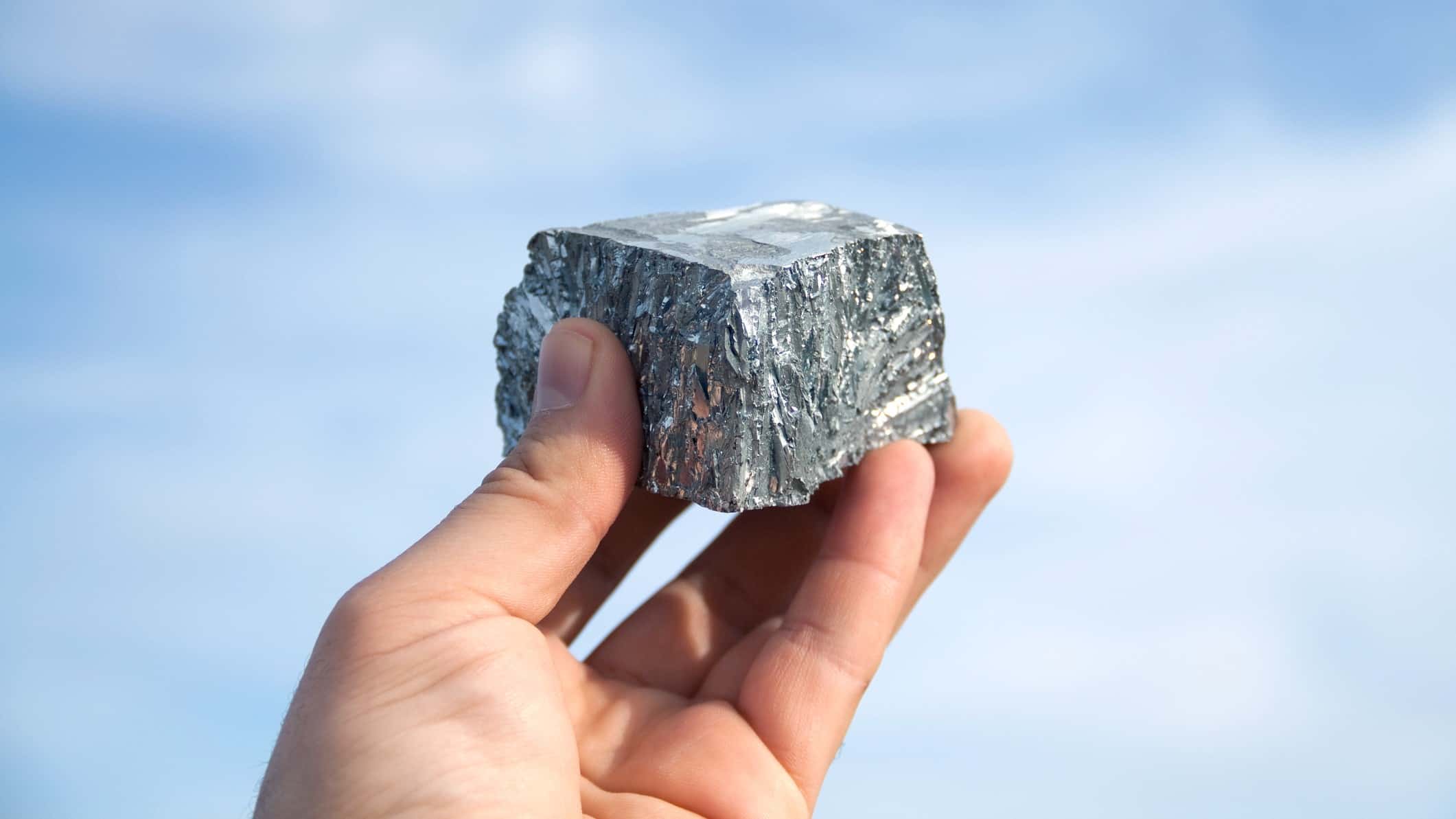
    A hand holding a lump of rare earths material against a blue sky.

    The Lynas Rare Earths Ltd (ASX: LYC) share price is in the spotlight after the company reported record quarterly sales revenue of A$288.9 million and closing cash of A$1.2 billion for the June 2026 quarter.

    What did Lynas Rare Earths report?

    • Quarterly gross sales revenue of A$288.9 million, up 70% year on year
    • Sales receipts reached A$297.1 million
    • Closing cash and short term deposits of A$1,209.1 million
    • Total Rare Earth Oxide (REO) production: 3,481 tonnes
    • Average selling price hit a record A$98.2 per kg
    • Cash payments for CAPEX, exploration, and development totalled A$27.8 million

    What else do investors need to know?

    Lynas delivered its highest quarterly revenue since Q4 FY22, buoyed by increased demand and higher prices for rare earth products, especially NdPr and heavy rare earths. The company ramped up production at its expanded Mt Weld processing plant and addressed bottlenecks at its Kalgoorlie facility.

    During the quarter, Lynas launched commercial production of Samarium oxide and progressed its HRE expansion project in Malaysia. The company also announced a long-term supply and investment partnership with JS Link, which includes supporting the construction of a rare earth magnet factory in Malaysia and supplying rare earth materials under an exclusive agreement until 2038.

    What did Lynas Rare Earths management say?

    Interim Chief Executive Officer Pol Le Roux said:

    I am pleased to present my first quarterly report to shareholders since commencing as interim Chief Executive Officer on 1 July 2026. The June quarter 2026 saw the continued focus on the efficient operation of our A$1.5 billion investment in new capacity which was completed as part of the Lynas 2025 growth initiative. This includes the ramp up of the expanded Mt Weld processing plant and addressing bottlenecks at the Kalgoorlie Rare Earths Processing Facility.

    What’s next for Lynas Rare Earths?

    Lynas continues to progress its expanded heavy rare earth processing facility in Malaysia, with production of Gadolinium targeted for early FY28. The company remains committed to its ‘Towards 2030’ growth strategy by partnering with global magnet makers and diversifying outside China supply chains.

    Management expects strong customer demand for new products like Samarium oxide, with first orders anticipated in Q1 FY27. Lynas is also focused on further improving ore recovery and scaling production capacity to support critical manufacturing industries worldwide.

    Lynas Rare Earths share price snapshot

    Over the past 12 months, Lynas Rare Earths shares have risen 58%, outperforming the S&P/ASX 200 Index (ASX: XJO), which has risen 1% over the same period.

    View Original Announcement

    The post Lynas Rare Earths: June quarter earnings break records appeared first on The Motley Fool Australia.

    Should you invest $1,000 in Lynas Rare Earths Ltd right now?

    Before you buy Lynas Rare Earths Ltd shares, consider this:

    Motley Fool investing expert Scott Phillips just revealed what he believes are the 5 best stocks for investors to buy right now… and Lynas Rare Earths Ltd wasn’t one of them.

    The online investing service he’s run for over a decade, Motley Fool Share Advisor, has provided thousands of paying members with stock picks that have doubled, tripled or even more.*

    And right now, Scott thinks there are 5 stocks that may be better buys…

    * Returns as of 16 June 2026

    .custom-cta-button p {
    margin-bottom: 0 !important;
    }

    More reading

    Motley Fool contributor Laura Stewart has no position in any of the stocks mentioned. The Motley Fool Australia’s parent company Motley Fool Holdings Inc. has recommended Lynas Rare Earths Ltd. The Motley Fool Australia has no position in any of the stocks mentioned. The Motley Fool has a disclosure policy. This article contains general investment advice only (under AFSL 400691). Authorised by Scott Phillips. This article was prepared with the assistance of Large Language Model (LLM) tools for the initial summary of the company announcement. Any content assisted by AI is subject to our robust human-in-the-loop quality control framework, involving thorough review, substantial editing, and fact-checking by our experienced writers and editors holding appropriate credentials. The Motley Fool Australia stands behind the work of our editorial team and takes ultimate responsibility for the content published by The Motley Fool Australia.