
• 6 ASX 200 shares scoring renewed buy calls this week

    A player kicks a soccer ball to score a goal while players from both teams watch on.

    S&P/ASX 200 Index (ASX: XJO) shares are down 0.7% to 8,703.9 points on Thursday.

    Meanwhile, brokers have maintained a positive view on several stocks this week.

    Let’s take a look.

    Zip Co Ltd (ASX: ZIP)

    The Zip share price is $1.97, down 12% despite no news from the company today.

    Over the past month, this ASX 200 financial share has fallen 22%.

    UBS renewed its buy rating on Zip shares today.

    The broker has a 12-month price target of $4.70.

    This suggests a potential 134% upside ahead.

    Insurance Australia Group Ltd (ASX: IAG)

    The IAG share price is $7.82, down 0.8% today.

    The ASX 200 insurance share has risen 3% over the past month.

    UBS reiterated its buy rating on IAG shares yesterday with a price target of $9.25.

    This implies potential capital gains of 18% ahead.

    BHP Group Ltd (ASX: BHP)

    The BHP share price is $61.02, down 1.7% on Thursday. 

    Over the past month, this ASX 200 mining share has tumbled 9%.

    Morgan Stanley reaffirmed its buy rating on BHP shares yesterday.

    The broker has a 12-month target of $68.

    This suggests a potential 11% upside ahead.

    Pro Medicus Ltd (ASX: PME)

    The Pro Medicus share price is $162.88, up 1% today. 

    This ASX 200 healthcare share has fallen 16% over the past month.

    Citi renewed its buy rating on Pro Medicus shares yesterday with a $225 target.

    This implies potential capital growth of 38% over the next year.

    Nickel Industries Ltd (ASX: NIC)

    The Nickel Industries share price is 82 cents, down 3% today. 

    Over the past month, this ASX 200 nickel share has fallen 8%.

    Bell Potter renewed its buy rating on Nickel Industries shares this week.

    The broker has a 12-month price target of $1.45.

    This suggests a potential 77% upside ahead.

    The broker said:

    NIC is one of the world’s largest listed nickel producers and offers exposure across a range of nickel products and markets.

    It has a track record of maintaining margins through low nickel prices, benefitting from its diversified product suite and margin exposure across an integrated value chain.

    Stockland Corp Ltd (ASX: SGP)

    The Stockland share price is $4.13, down 1.8% today. 

    Over the past month, this ASX 200 property share has fallen 13%.

    UBS renewed its buy rating on Stockland shares today.

    The broker has a 12-month price target of $5.12.

    This suggests a potential 24% upside ahead.

    The post 6 ASX 200 shares scoring renewed buy calls this week appeared first on The Motley Fool Australia.

    Wondering where you should invest $1,000 right now?

    When investing expert Scott Phillips has a stock tip, it can pay to listen. After all, the flagship Motley Fool Share Advisor newsletter he has run for over ten years has provided thousands of paying members with stock picks that have doubled, tripled or even more.*

    Scott just revealed what he believes could be the ‘five best ASX stocks’ for investors to buy right now. We believe these stocks are trading at attractive prices and Scott thinks they could be great buys right now…

    * Returns as of 1 August 2026

    .custom-cta-button p {
    margin-bottom: 0 !important;
    }

    More reading

    Citigroup is an advertising partner of Motley Fool Money. Motley Fool contributor Bronwyn Allen has positions in Zip Co. The Motley Fool Australia’s parent company Motley Fool Holdings Inc. has recommended Pro Medicus. The Motley Fool Australia has recommended BHP Group and Pro Medicus. The Motley Fool has a disclosure policy. This article contains general investment advice only (under AFSL 400691). Authorised by Scott Phillips.

  • Want to invest in AI? Here are the best ASX ETFs for 2027

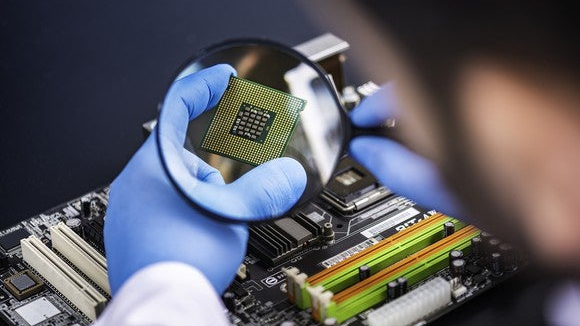
    Magnifying glass on semiconductor chip.

    If you ask any investor, whether Australian or not, what the flavour of the month on the markets is right now, I’m sure the vast majority would say ‘artificial intelligence (AI)‘. AI is arguably the talk of the world right now. With commentators singing from the potential benefits of this powerful technology, to the possible dangers, and back to how it might enrich us through various stocks or exchange-traded funds (ETFs).

    If you’re bullish on this technology, you might want to know which is the best way to put your money where your mouth is. So today, let’s go through what the best way to invest in AI might be here on the ASX.

    Right off the bat, you might see a thematic ASX ETF with ‘AI’ in its name as the best port of call. The Global X Artificial Intelligence ETF (ASX: GXAI) is a great example. A fund of this nature will certainly get you some of the world’s most prominent and dominant AI stocks. For example, some top holdings of GXAI include Palantir Technologies, SpaceX, Microsoft Corporation, Meta Platforms, and Tesla. Those are just some of this fund’s (current) 88 holdings.

    Another option might be the BetaShares NASDAQ 100 ETF (ASX: NDQ). Now, this ASX ETF doesn’t have AI in its name or in its mission statement. However, the index that it tracks, the NASDAQ 100, naturally contains most of the leading AI stocks on the US markets. AI leaders like NVIDIA, Alphabet, Micron Technologies, Advanced Micro Devices, and Apple are all amongst its largest holdings. As are Meta Platforms, Microsoft, SpaceX, Palantir and Tesla.

    Plus, you get some high-quality companies that aren’t necessarily AI leaders thrown in too. That includes Amazon, Walmart, and Netflix.

    Either (or both ) of these ASX ETFs would give an ASX investor plenty of exposure to artificial intelligence, all in one easy place.

    ASX AI ETFs? Think outside the box for a cheaper fee

    However, there is a cheaper option. See, neither of the two ASX ETFs named above are cheap, relatively speaking. The Global X Artificial Intelligence ETF charges an annual management fee of 0.57%. NDQ asks 0.48% per annum.

    In contrast, a market-wide US index fund, such as the iShares S&P 500 ETF (ASX: IVV) asks just 0.04% per annum. That’s a difference between paying $64 a year for every $10,000 invested and paying $4 a year for that same $10k. That may not sound like a lot, but it does add up if one is investing for long periods of time.

    Sure, the iShares S&P 500 ETF doesn’t invest in AI specifically. It is a lot more diversified than even the BetaShares Nasdaq 100 ETF. But it still offers significant exposure to many of the companies that are leading the AI race. Amongst its top holdings, you’ll find Nvidia, Apple, Microsoft, Alphabet, Meta Platforms, Micron Technology, Tesla, and AMD.

    To round up, all of these ASX ETFs will provide an investor with some level of exposure to some of the world’s best AI stocks. If you want the purest, most direct AI investment, then the Global X Artificial Intelligence ETF is your best bet. But less-picky investors may want to consider the far cheaper, yet still AI-centred S&P 500 ETF.

    The post Want to invest in AI? Here are the best ASX ETFs for 2027 appeared first on The Motley Fool Australia.

    Should you invest $1,000 in Global X Artificial Intelligence ETF right now?

    Before you buy Global X Artificial Intelligence ETF shares, consider this:

    Motley Fool investing expert Scott Phillips just revealed what he believes are the 5 best stocks for investors to buy right now… and Global X Artificial Intelligence ETF wasn’t one of them.

    The online investing service he’s run for over a decade, Motley Fool Share Advisor, has provided thousands of paying members with stock picks that have doubled, tripled or even more.*

    And right now, Scott thinks there are 5 stocks that may be better buys…

    * Returns as of 1 August 2026

    .custom-cta-button p {
    margin-bottom: 0 !important;
    }

    More reading

    Motley Fool contributor Sebastian Bowen has positions in Alphabet, Amazon, Apple, Meta Platforms, Microsoft, and Netflix. The Motley Fool Australia’s parent company Motley Fool Holdings Inc. has positions in and has recommended Alphabet, Amazon, Apple, BetaShares Nasdaq 100 ETF, Meta Platforms, Micron Technology, Microsoft, Netflix, Nvidia, Palantir Technologies, Tesla, Walmart, and iShares S&P 500 ETF. The Motley Fool Australia has positions in and has recommended BetaShares Nasdaq 100 ETF. The Motley Fool Australia has recommended Alphabet, Amazon, Apple, Meta Platforms, Microsoft, Netflix, Nvidia, and iShares S&P 500 ETF. The Motley Fool has a disclosure policy. This article contains general investment advice only (under AFSL 400691). Authorised by Scott Phillips.

  • CBA shares hit their lowest level since February. Could $140 be next?

    A woman holds her empty unzipped wallet upside down and dips her head to look under it to see if any money falls out of it.

    Just when it looked like CBA shares might find some support around $150, today has given shareholders another reason to worry.

    Commonwealth Bank of Australia (ASX: CBA) shares dropped to $147.41 during the session, taking them back to levels not seen since February.

    That put the stock just 43 cents above its 52-week low of $146.98, although buyers have since stepped back in.

    At the moment, CBA has recovered to $149.45, but it is still down 1.06%.

    September hasn’t been particularly kind, with the stock losing around 6% since the beginning of the month.

    And with another RBA interest rate decision coming up next Tuesday, there’s plenty for investors to think about.

    So, could $140 be the next stop?

    Why are CBA shares falling?

    Interest rates are back in the spotlight, and that’s not exactly what CBA shareholders want to hear right now.

    The RBA has already lifted rates three times this year, taking the cash rate to 4.35%.

    In its FY26 results, CBA reported that home loan applications fell 15% following May’s changes, while investor applications dropped 28%.

    That’s quite a slowdown for Australia’s largest mortgage lender, particularly when housing demand is such an important part of its business.

    CBA still expects housing credit growth of around 4% to 5% over the next 12 months, so it’s not all bad news.

    But there’s another issue investors need to consider.

    Despite the recent share price decline, CBA is still trading on a price-to-earnings (P/E) ratio of roughly 23x.

    Keep in mind, that’s a hefty price to pay with borrowing costs climbing and mortgage demand showing signs of slowing.

    Could $140 be next?

    The first level I’m watching is $146.98, which is CBA’s 52-week low and a price it came close to testing today.

    If that level gives way, $140 is only around 5% below today’s intraday low, so it’s not really a big move.

    And brokers aren’t exactly expecting a quick recovery either.

    According to TipRanks, 8 analysts have an average 12-month price target of $123.08, with forecasts ranging from $90 to $144.99.

    That implies an 18% downside from the current share price, although broker forecasts don’t always play out as expected.

    It’s worth remembering that CBA is still making plenty of money.

    The bank reported a record FY26 cash profit of $10.98 billion, up 7%, and paid shareholders $5.05 in fully franked dividends.

    Nonetheless, I think $140 is a realistic level to watch if CBA breaks below its February low.

    The post CBA shares hit their lowest level since February. Could $140 be next? appeared first on The Motley Fool Australia.

    Should you invest $1,000 in Commonwealth Bank Of Australia right now?

    Before you buy Commonwealth Bank Of Australia shares, consider this:

    Motley Fool investing expert Scott Phillips just revealed what he believes are the 5 best stocks for investors to buy right now… and Commonwealth Bank Of Australia wasn’t one of them.

    The online investing service he’s run for over a decade, Motley Fool Share Advisor, has provided thousands of paying members with stock picks that have doubled, tripled or even more.*

    And right now, Scott thinks there are 5 stocks that may be better buys…

    * Returns as of 1 August 2026

    .custom-cta-button p {
    margin-bottom: 0 !important;
    }

    More reading

    Motley Fool contributor Aaron Teboneras has no position in any of the stocks mentioned. The Motley Fool Australia’s parent company Motley Fool Holdings Inc. has no position in any of the stocks mentioned. The Motley Fool Australia has no position in any of the stocks mentioned. The Motley Fool has a disclosure policy. This article contains general investment advice only (under AFSL 400691). Authorised by Scott Phillips.

  • Is the Woolworths share price a buy?

  • Cloudflare Sees Uptick in Cyber Attacks as Internet Usage Increases

  • SpringWorks (SWTX): A Rare Cancer Biotech with Potentially >50% Upside. Recommending BUY.

  • Which markets or industries do you see perform best in the next decades (geographic vs. industry focus vs. cap size)? How do you build this into a strategy and portfolio to maximize expected risk-adjusted future returns?