• Want to retire early? Here’s where I’d put my money

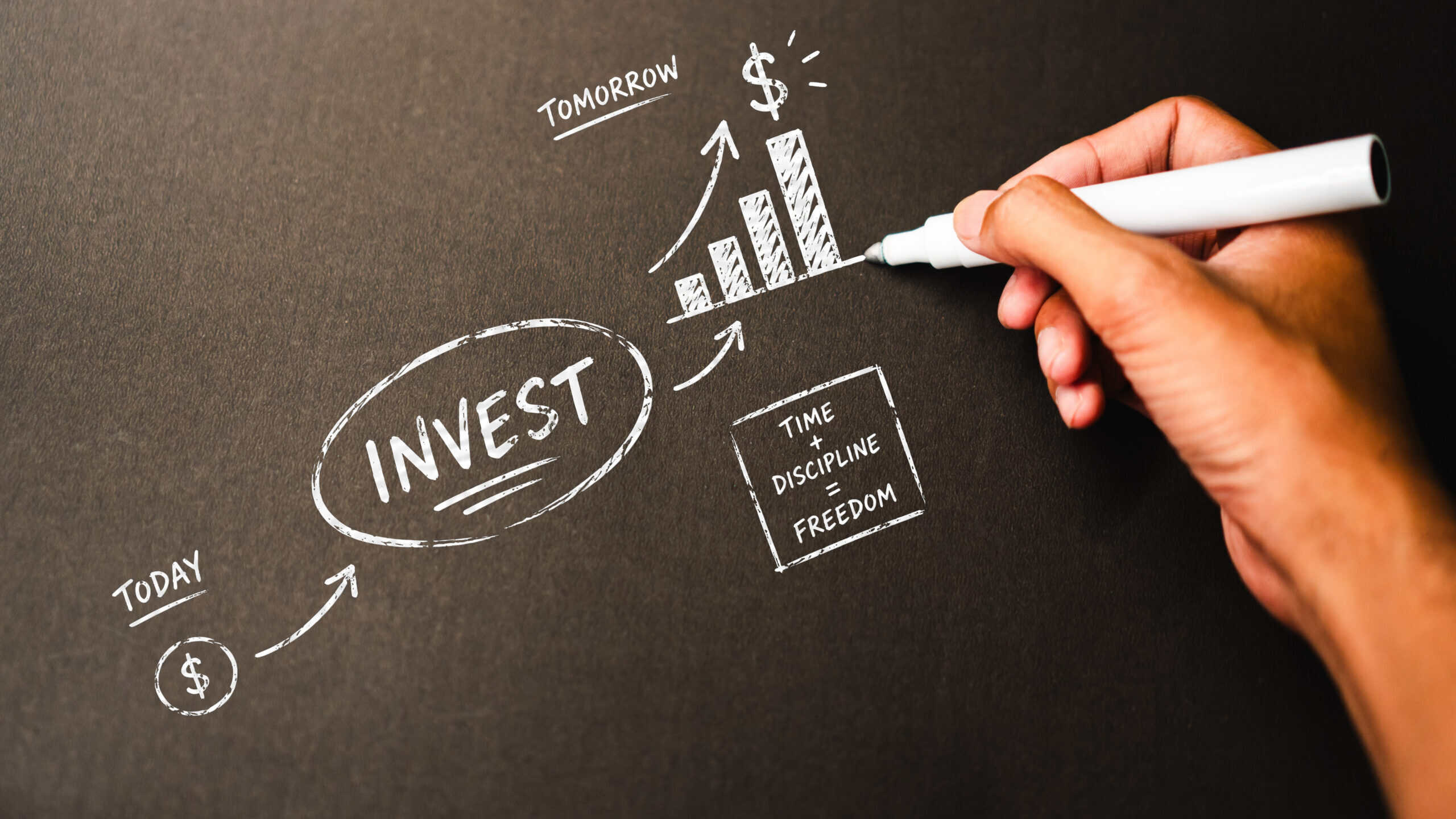
    Hand sketching investment growth concept chart with chalk on blackboard.

    The idea of working until 67 before finally enjoying retirement has never appealed to me.

    I’d much prefer to build enough wealth to retire earlier and spend more time doing the things I enjoy.

    And I think investing in the stock market is one of the best ways to get there.

    If I were putting together a portfolio specifically for early retirement, I’d focus on two things: ETFs and individual growth stocks.

    Nothing particularly complicated, but I think getting the balance right could make a big difference over time.

    Here’s how I’d approach it.

    I’d start with ETFs

    The first thing I’d do is build a decent position in ETFs.

    One that really interests me is the Vanguard Australian Shares High Yield ETF (ASX: VHY).

    It holds a diversified portfolio of Aussie companies selected for their generous dividend yields.

    And that’s something I’d want in a retirement portfolio.

    While I’m still working, I’d reinvest the distributions to buy more units and let compounding do its thing.

    Eventually, I’d like those distributions to provide a steady income stream to help cover my living expenses.

    I’d also add a growth-focused ETF with international exposure, so I’m not relying entirely on the Australian market.

    The idea would be to build a solid foundation that could continue growing while generating income along the way.

    I’d also back some growth stocks

    Now, while ETFs would make up a substantial part of my portfolio, I wouldn’t stop there.

    I’d also want exposure to individual companies that I believe have the potential to become much bigger businesses over the coming years.

    Two that interest me are WiseTech Global Ltd (ASX: WTC) and Ouster Inc (NASDAQ: OUST).

    WiseTech operates a global logistics software business through its CargoWise platform, which helps freight forwarders manage complex supply chains.

    Meanwhile, Ouster offers exposure to lidar technology, robotics, and physical AI.

    Its sensors and software help machines understand their surroundings, with applications across industrial automation, robotics, and smart infrastructure.

    Of course, these aren’t risk-free investments, and I wouldn’t be putting all my money into them.

    But I’d be happy allocating a portion of my portfolio to businesses I believe have plenty of room to grow.

    Time would be my biggest advantage

    One thing I wouldn’t do is buy shares and expect them to double in six months.

    That’s not how I’d look to build a retirement portfolio.

    I’d want at least a three-year investment horizon for my individual growth stocks, though I’d ideally hold them much longer.

    And with ETFs, I’d be looking at decades.

    I’d also keep investing regularly, especially when the market gives us opportunities to buy quality businesses at more attractive prices.

    Ultimately, I’d want a portfolio that combines dividend income with long-term capital growth.

    And if I keep investing over the years, I’d hope to retire early and work because I want to, not because I have to.

    The post Want to retire early? Here’s where I’d put my money appeared first on The Motley Fool Australia.

    Should you invest $1,000 in Vanguard Australian Shares High Yield ETF right now?

    Before you buy Vanguard Australian Shares High Yield ETF shares, consider this:

    Motley Fool investing expert Scott Phillips just revealed what he believes are the 5 best stocks for investors to buy right now… and Vanguard Australian Shares High Yield ETF wasn’t one of them.

    The online investing service he’s run for over a decade, Motley Fool Share Advisor, has provided thousands of paying members with stock picks that have doubled, tripled or even more.*

    And right now, Scott thinks there are 5 stocks that may be better buys…

    * Returns as of 1 August 2026

    .custom-cta-button p {
    margin-bottom: 0 !important;
    }

    More reading

    Motley Fool contributor Aaron Teboneras has no position in any of the stocks mentioned. The Motley Fool Australia’s parent company Motley Fool Holdings Inc. has positions in and has recommended WiseTech Global. The Motley Fool Australia has positions in and has recommended WiseTech Global. The Motley Fool Australia has recommended Vanguard Australian Shares High Yield ETF. The Motley Fool has a disclosure policy. This article contains general investment advice only (under AFSL 400691). Authorised by Scott Phillips.


  • Gifting money to your kids? How it could accidentally dent your Age Pension

    a Christmas present wrapped in one hundred dollar notes and finished with a big red bow

    The Age Pension is a fortnightly payment for Australians aged 67 or older. It’s designed as a financial safety net to help retirees cover basic living expenses.

    Not everyone is eligible though. Not only do you need to meet age requirements (67 years old), you also need to be an Australian resident who has lived here for at least 10 years, with at least five of those years in a single continuous period.

    You’re also subject to an asset and an income test, the results of which determine how much Age Pension you can get, if any. Centrelink assesses you under both tests then applies whichever gives the lowest rate of payment for your individual circumstances.

    The income test assesses all income pooled from all sources, including wages, superannuation, investment income, commission payments, and any other types of income including those from overseas.

    Meanwhile the asset test assesses everything you own, whether it’s in full, in part, or you have an interest in it. It does exclude the home you live in but includes any assets you hold overseas.

    How much can I earn and own?

    To receive the full Age Pension, single Australians can earn up to $226 per fortnight. Meanwhile, couples can earn up to $396 per fortnight.

    Meanwhile, the asset rules just changed. As of the 20th of September, in order to receive the full Age Pension, single homeowners can now own assets (including superannuation) up to a value of $333,000, and non-homeowners can own assets up to $600,000 in retirement.

    Again, a couple has a different threshold, and it’s not double the amount of one person. A couple combined can now own up to $499,000 in total if they own a property, or $766,000 if they don’t.

    But it’s still possible to earn something if you’re over these limits. A part payment is assessed on a sliding scale depending on your income and assets.

    The rules are strict. So it’s easy to see why so many retirees or soon-to-be-retirees try to reduce their income or assets by gifting off money to their kids to try to meet thresholds for the Age Pension.

    But that’s a huge no-no.

    Gifting money can backfire.

    Here’s why.

    Centrelink has strict rules to deter Australians from giving away money to influence their Age Pension eligibility.

    If you give away your income or assets, they may still count towards your income and asset tests. This also applies if you sell them for less than they’re worth.

    This includes selling or gifting property, a car, money, moving money into a trust, giving up control or a trust or company, forgiving a loan, donating money, or even refusing income to fall under the Age Pension limits.

    Gifting limits

    You can choose to give away any amount and as many gifts as you like. If the total value of your gifts is more than the value of the gifting-free area, your Age Pension payment may be affected.

    If you gift over the value of the gifting free areas, Centrelink will count the excess in your asset text and apply deeming and include it in your income test.

    This applies for five years from the date you make the gift.

    The value of the gifting free areas is the same whether you’re a single person or a couple. 

    You can gift up to $10,000 in one financial year and $30,000 over five financial years. The $30,000 can’t include more than $10,000 in a single financial year. This won’t affect your asset or income test, but any amount over this will be counted for the next five years.

    The post Gifting money to your kids? How it could accidentally dent your Age Pension appeared first on The Motley Fool Australia.

    Wondering where you should invest $1,000 right now?

    When investing expert Scott Phillips has a stock tip, it can pay to listen. After all, the flagship Motley Fool Share Advisor newsletter he has run for over ten years has provided thousands of paying members with stock picks that have doubled, tripled or even more.*

    Scott just revealed what he believes could be the ‘five best ASX stocks’ for investors to buy right now. We believe these stocks are trading at attractive prices and Scott thinks they could be great buys right now…

    * Returns as of 1 August 2026

    .custom-cta-button p {
    margin-bottom: 0 !important;
    }

    More reading

    Motley Fool contributor Samantha Menzies has no position in any of the stocks mentioned. The Motley Fool Australia’s parent company Motley Fool Holdings Inc. has no position in any of the stocks mentioned. The Motley Fool Australia has no position in any of the stocks mentioned. The Motley Fool has a disclosure policy. This article contains general investment advice only (under AFSL 400691). Authorised by Scott Phillips.

  • How much should I have in my superannuation at age 55?

    Australian dollar notes around a piggy bank.

    At age 55, you’re on the home stretch towards retirement. It’s vital that you’re on top of how much is in your superannuation and how it compares to what you need to quit work.

    At this age you’re just five years from your preservation age (when you can access your superannuation if you’ve retired), 10 years from accessing your superannuation regardless of whether you’ve stopped working or not, and 12 years away from the Age Pension (if eligible).

    It’s the final window to boost your superannuation and leverage compound growth. 

    You’ll want to ensure your super fund is performing well, and that you’re adding additional contributions wherever you can.

    You should start aiming to clear your debt, including your mortgage. It’s also potentially the time of start making structural life adjustments. These can make the transition to retirement much easier. 

    The downsizer contribution rule, for example, allows Australians aged 55 or older to contribute $300,000, or $600,000 for a couple, from the sale of their home into super.  

    That’s a great way to boost your balance before retirement.

    Here’s a breakdown of what you should have in your superannuation at age 55 to find out if you’re on track.

    The cost of retirement

    Most Australians aim for a comfortable retirement. That means enough money for a good-quality lifestyle and funds to pay for things like top-tier private health insurance, regular leisure activities, meals out, and potentially even some travel.

    The Association of Superannuation Funds of Australia (ASFA) calculates that a comfortable retirement will cost around $55,923 per year for singles and $78,566 for couples. 

    These figures assume you own your home outright and that you’ll receive a part Age Pension. That means additional mortgage or rental costs will be on top.

    How much do I need in my superannuation to afford a comfortable retirement?

    Again, ASFA has run the numbers. It’s estimated that single Australians will need around $630,000 in their superannuation at retirement, and couples will need around $730,000 to be able to finance a comfortable retirement lifestyle.

    The catch is that these figures are calculated on the assumption that you’ll be retiring at age 67. So if you want to stop working earlier, you’ll need to account for those extra years up to age 67. 

    If you don’t own your home outright you’ll also need to add mortgage payments or rent onto your balance.

    At age 55, how much superannuation is considered as ‘on track’?

    Assuming you have a $100,000 per year income and that you’re aiming for a $630,000 superannuation balance, at age 55 Australians should have around $348,000 in their superannuation.

    If your income is a little lower, around $75,000, you’ll need a bit more. A superannuation balance of around $367,000 at age 55 should still put you on track to reach the $630,000 goal within the next 12 years.

    How does your balance compare?

    The post How much should I have in my superannuation at age 55? appeared first on The Motley Fool Australia.

    Wondering where you should invest $1,000 right now?

    When investing expert Scott Phillips has a stock tip, it can pay to listen. After all, the flagship Motley Fool Share Advisor newsletter he has run for over ten years has provided thousands of paying members with stock picks that have doubled, tripled or even more.*

    Scott just revealed what he believes could be the ‘five best ASX stocks’ for investors to buy right now. We believe these stocks are trading at attractive prices and Scott thinks they could be great buys right now…

    * Returns as of 1 August 2026

    .custom-cta-button p {
    margin-bottom: 0 !important;
    }

    More reading

    Motley Fool contributor Samantha Menzies has no position in any of the stocks mentioned. The Motley Fool Australia’s parent company Motley Fool Holdings Inc. has no position in any of the stocks mentioned. The Motley Fool Australia has no position in any of the stocks mentioned. The Motley Fool has a disclosure policy. This article contains general investment advice only (under AFSL 400691). Authorised by Scott Phillips.