• Want to invest in AI? Here are the best ASX ETFs for 2027

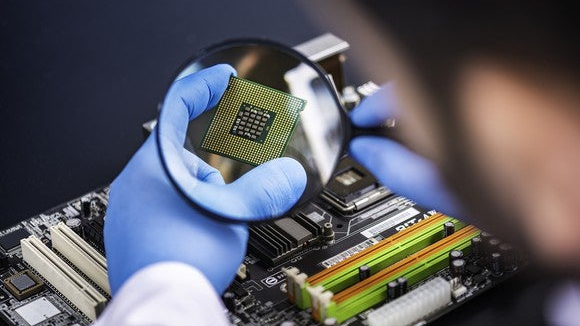
    Magnifying glass on semiconductor chip.

    If you ask any investor, whether Australian or not, what the flavour of the month on the markets is right now, I’m sure the vast majority would say ‘artificial intelligence (AI)‘. AI is arguably the talk of the world right now. With commentators singing from the potential benefits of this powerful technology, to the possible dangers, and back to how it might enrich us through various stocks or exchange-traded funds (ETFs).

    If you’re bullish on this technology, you might want to know which is the best way to put your money where your mouth is. So today, let’s go through what the best way to invest in AI might be here on the ASX.

    Right off the bat, you might see a thematic ASX ETF with ‘AI’ in its name as the best port of call. The Global X Artificial Intelligence ETF (ASX: GXAI) is a great example. A fund of this nature will certainly get you some of the world’s most prominent and dominant AI stocks. For example, some top holdings of GXAI include Palantir Technologies, SpaceX, Microsoft Corporation, Meta Platforms, and Tesla. Those are just some of this fund’s (current) 88 holdings.

    Another option might be the BetaShares NASDAQ 100 ETF (ASX: NDQ). Now, this ASX ETF doesn’t have AI in its name or in its mission statement. However, the index that it tracks, the NASDAQ 100, naturally contains most of the leading AI stocks on the US markets. AI leaders like NVIDIA, Alphabet, Micron Technologies, Advanced Micro Devices, and Apple are all amongst its largest holdings. As are Meta Platforms, Microsoft, SpaceX, Palantir and Tesla.

    Plus, you get some high-quality companies that aren’t necessarily AI leaders thrown in too. That includes Amazon, Walmart, and Netflix.

    Either (or both ) of these ASX ETFs would give an ASX investor plenty of exposure to artificial intelligence, all in one easy place.

    ASX AI ETFs? Think outside the box for a cheaper fee

    However, there is a cheaper option. See, neither of the two ASX ETFs named above are cheap, relatively speaking. The Global X Artificial Intelligence ETF charges an annual management fee of 0.57%. NDQ asks 0.48% per annum.

    In contrast, a market-wide US index fund, such as the iShares S&P 500 ETF (ASX: IVV) asks just 0.04% per annum. That’s a difference between paying $64 a year for every $10,000 invested and paying $4 a year for that same $10k. That may not sound like a lot, but it does add up if one is investing for long periods of time.

    Sure, the iShares S&P 500 ETF doesn’t invest in AI specifically. It is a lot more diversified than even the BetaShares Nasdaq 100 ETF. But it still offers significant exposure to many of the companies that are leading the AI race. Amongst its top holdings, you’ll find Nvidia, Apple, Microsoft, Alphabet, Meta Platforms, Micron Technology, Tesla, and AMD.

    To round up, all of these ASX ETFs will provide an investor with some level of exposure to some of the world’s best AI stocks. If you want the purest, most direct AI investment, then the Global X Artificial Intelligence ETF is your best bet. But less-picky investors may want to consider the far cheaper, yet still AI-centred S&P 500 ETF.

    The post Want to invest in AI? Here are the best ASX ETFs for 2027 appeared first on The Motley Fool Australia.

    Should you invest $1,000 in Global X Artificial Intelligence ETF right now?

    Before you buy Global X Artificial Intelligence ETF shares, consider this:

    Motley Fool investing expert Scott Phillips just revealed what he believes are the 5 best stocks for investors to buy right now… and Global X Artificial Intelligence ETF wasn’t one of them.

    The online investing service he’s run for over a decade, Motley Fool Share Advisor, has provided thousands of paying members with stock picks that have doubled, tripled or even more.*

    And right now, Scott thinks there are 5 stocks that may be better buys…

    * Returns as of 1 August 2026

    .custom-cta-button p {
    margin-bottom: 0 !important;
    }

    More reading

    Motley Fool contributor Sebastian Bowen has positions in Alphabet, Amazon, Apple, Meta Platforms, Microsoft, and Netflix. The Motley Fool Australia’s parent company Motley Fool Holdings Inc. has positions in and has recommended Alphabet, Amazon, Apple, BetaShares Nasdaq 100 ETF, Meta Platforms, Micron Technology, Microsoft, Netflix, Nvidia, Palantir Technologies, Tesla, Walmart, and iShares S&P 500 ETF. The Motley Fool Australia has positions in and has recommended BetaShares Nasdaq 100 ETF. The Motley Fool Australia has recommended Alphabet, Amazon, Apple, Meta Platforms, Microsoft, Netflix, Nvidia, and iShares S&P 500 ETF. The Motley Fool has a disclosure policy. This article contains general investment advice only (under AFSL 400691). Authorised by Scott Phillips.

  • CBA shares hit their lowest level since February. Could $140 be next?

    A woman holds her empty unzipped wallet upside down and dips her head to look under it to see if any money falls out of it.

    Just when it looked like CBA shares might find some support around $150, today has given shareholders another reason to worry.

    Commonwealth Bank of Australia (ASX: CBA) shares dropped to $147.41 during the session, taking them back to levels not seen since February.

    That put the stock just 43 cents above its 52-week low of $146.98, although buyers have since stepped back in.

    At the moment, CBA has recovered to $149.45, but it is still down 1.06%.

    September hasn’t been particularly kind, with the stock losing around 6% since the beginning of the month.

    And with another RBA interest rate decision coming up next Tuesday, there’s plenty for investors to think about.

    So, could $140 be the next stop?

    Why are CBA shares falling?

    Interest rates are back in the spotlight, and that’s not exactly what CBA shareholders want to hear right now.

    The RBA has already lifted rates three times this year, taking the cash rate to 4.35%.

    In its FY26 results, CBA reported that home loan applications fell 15% following May’s changes, while investor applications dropped 28%.

    That’s quite a slowdown for Australia’s largest mortgage lender, particularly when housing demand is such an important part of its business.

    CBA still expects housing credit growth of around 4% to 5% over the next 12 months, so it’s not all bad news.

    But there’s another issue investors need to consider.

    Despite the recent share price decline, CBA is still trading on a price-to-earnings (P/E) ratio of roughly 23x.

    Keep in mind, that’s a hefty price to pay with borrowing costs climbing and mortgage demand showing signs of slowing.

    Could $140 be next?

    The first level I’m watching is $146.98, which is CBA’s 52-week low and a price it came close to testing today.

    If that level gives way, $140 is only around 5% below today’s intraday low, so it’s not really a big move.

    And brokers aren’t exactly expecting a quick recovery either.

    According to TipRanks, 8 analysts have an average 12-month price target of $123.08, with forecasts ranging from $90 to $144.99.

    That implies an 18% downside from the current share price, although broker forecasts don’t always play out as expected.

    It’s worth remembering that CBA is still making plenty of money.

    The bank reported a record FY26 cash profit of $10.98 billion, up 7%, and paid shareholders $5.05 in fully franked dividends.

    Nonetheless, I think $140 is a realistic level to watch if CBA breaks below its February low.

    The post CBA shares hit their lowest level since February. Could $140 be next? appeared first on The Motley Fool Australia.

    Should you invest $1,000 in Commonwealth Bank Of Australia right now?

    Before you buy Commonwealth Bank Of Australia shares, consider this:

    Motley Fool investing expert Scott Phillips just revealed what he believes are the 5 best stocks for investors to buy right now… and Commonwealth Bank Of Australia wasn’t one of them.

    The online investing service he’s run for over a decade, Motley Fool Share Advisor, has provided thousands of paying members with stock picks that have doubled, tripled or even more.*

    And right now, Scott thinks there are 5 stocks that may be better buys…

    * Returns as of 1 August 2026

    .custom-cta-button p {
    margin-bottom: 0 !important;
    }

    More reading

    Motley Fool contributor Aaron Teboneras has no position in any of the stocks mentioned. The Motley Fool Australia’s parent company Motley Fool Holdings Inc. has no position in any of the stocks mentioned. The Motley Fool Australia has no position in any of the stocks mentioned. The Motley Fool has a disclosure policy. This article contains general investment advice only (under AFSL 400691). Authorised by Scott Phillips.

  • ASX 200 slides as investors head for the exits. Is there more pain to come?

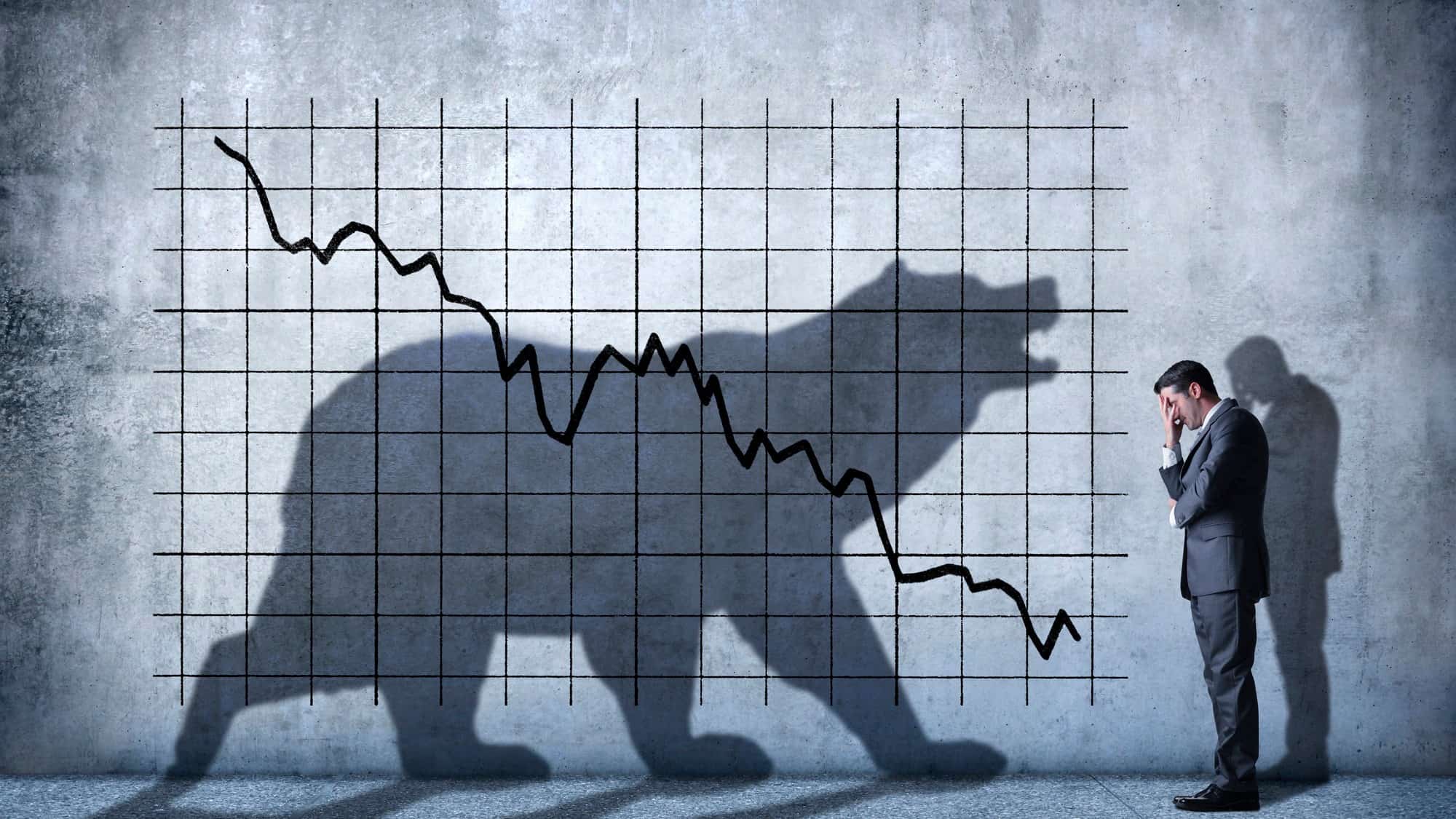
    A shadow bear faces a man against the backdrop of a falling share price.

    The S&P/ASX 200 Index (ASX: XJO) plunged below 8,650 points, shedding almost 120 points from Wednesday’s close.

    Buyers have since returned, but the benchmark remains down 0.69% at approximately 8,705 points in early afternoon trade.

    The selling has reached some of our biggest companies, leaving investors with little relief across several sectors.

    And with another interest rate decision approaching, the next few sessions could prove very important.

    So, is there more pain to come?

    Wall Street gives investors little to cheer about

    Aussie shares followed Wall Street lower after all 3 major US indices finished Wednesday’s session in negative territory.

    The Dow Jones Industrial Average Index (DJX: .DJI) declined 0.68%, while the S&P 500 Index (SP: .INX) slipped 0.75%.

    The tech-heavy Nasdaq Composite Index (NASDAQ: .IXIC) suffered the largest drop, falling 1.13%.

    According to Reuters, rising oil prices and US Treasury yields weighed on sentiment, with the 10-year yield climbing above 5.1%.

    That marked its highest level since 2007, as investors considered the possibility of further interest rate increases.

    Mining heavyweights take a hit

    Closer to home, BHP Group Ltd (ASX: BHP) has fallen 1.61% to $61.07 following an incident at its Escondida copper mine in Chile.

    A worker reportedly died during maintenance work yesterday, prompting BHP to suspend all operational activities at the site.

    The company hasn’t indicated when production will resume at the world’s largest copper mine.

    Rio Tinto Ltd (ASX: RIO), which holds a 30% stake in Escondida, is also trading lower, slipping 0.93% to $166.06.

    Banking shares aren’t providing much relief either.

    Commonwealth Bank of Australia (ASX: CBA) has declined 0.84% to $149.775, and Westpac Banking Corp (ASX: WBC) is down 1.32% to $34.30.

    Jobs data adds another twist

    Today’s employment figures have given investors something else to consider ahead of next week’s RBA meeting.

    The Australian Bureau of Statistics reported that unemployment rose to 4.6% in August, compared with 4.5% in July.

    Employment increased by 39,500 people, although all the growth came from part-time positions.

    Full-time employment declined by 6,300, while the participation rate increased to 67.1%.

    Higher unemployment shows the labour market is easing, which could give the RBA more reason to hold interest rates next week.

    The RBA will announce its next interest rate decision on Tuesday, 29th September.

    Can the ASX 200 hold 8,700 points?

    The immediate test is whether the benchmark can stay above 8,700 heading into today’s close.

    Another break below 8,650 would put this morning’s low back in focus.

    With the RBA’s decision on Tuesday and inflation figures due next Wednesday, I wouldn’t be surprised to see further volatility.

    The post ASX 200 slides as investors head for the exits. Is there more pain to come? appeared first on The Motley Fool Australia.

    Wondering where you should invest $1,000 right now?

    When investing expert Scott Phillips has a stock tip, it can pay to listen. After all, the flagship Motley Fool Share Advisor newsletter he has run for over ten years has provided thousands of paying members with stock picks that have doubled, tripled or even more.*

    Scott just revealed what he believes could be the ‘five best ASX stocks’ for investors to buy right now. We believe these stocks are trading at attractive prices and Scott thinks they could be great buys right now…

    * Returns as of 1 August 2026

    .custom-cta-button p {
    margin-bottom: 0 !important;
    }

    More reading

    Motley Fool contributor Aaron Teboneras has no position in any of the stocks mentioned. The Motley Fool Australia’s parent company Motley Fool Holdings Inc. has no position in any of the stocks mentioned. The Motley Fool Australia has recommended BHP Group. The Motley Fool has a disclosure policy. This article contains general investment advice only (under AFSL 400691). Authorised by Scott Phillips.

Sorry, but nothing was found. Please try a search with different keywords.