• The FY26 tax return deadline is around the corner. How can I minimise my tax?

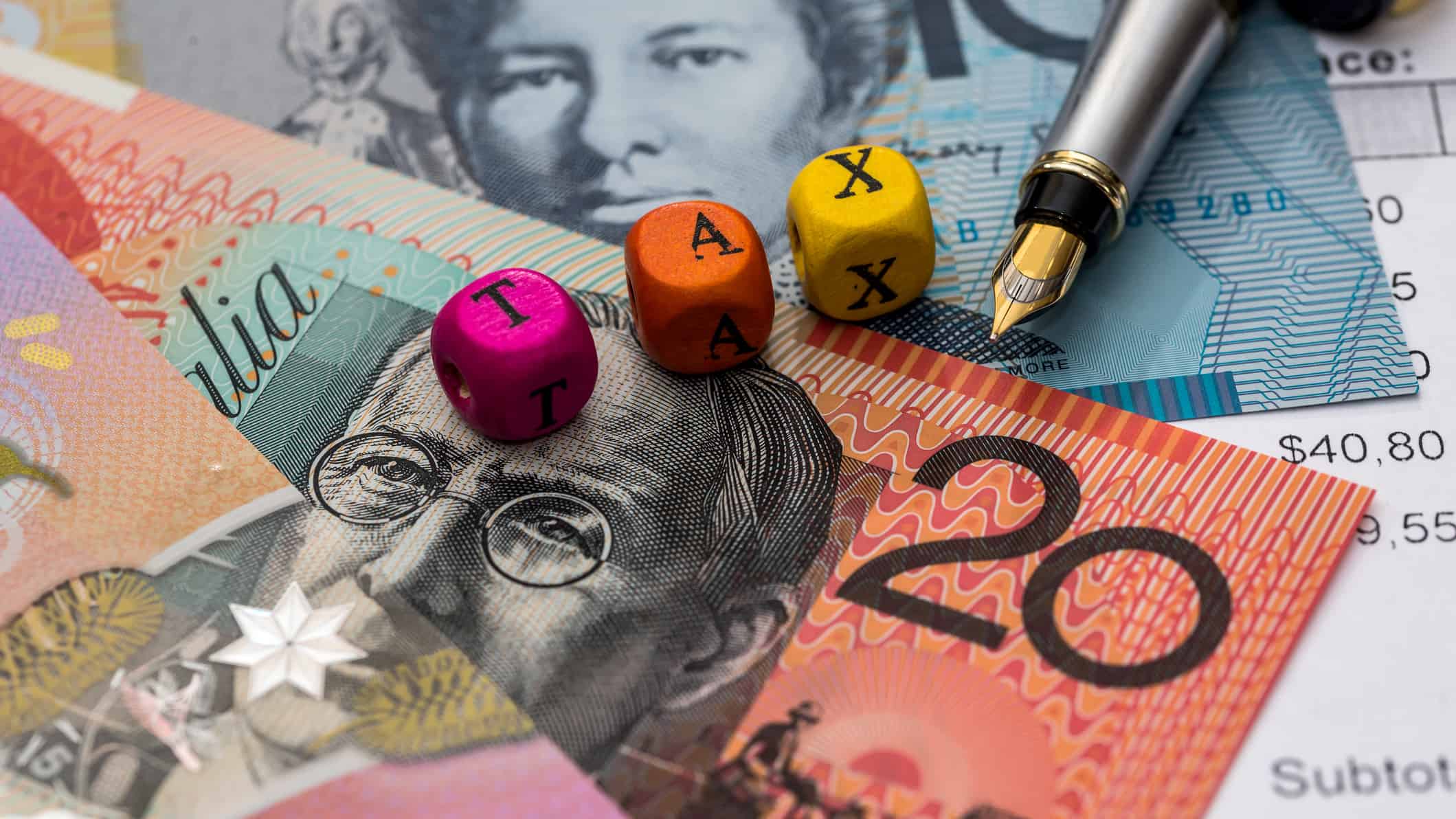
    Cubes with tax written on them on top of Australian dollar notes.

    With the FY26 tax return deadline fast approaching, many Australians are asking how they can legally minimise their tax.

    The good news is that you still have several options.

    The catch is that some of the most useful doors have already closed.

    The financial year ended on 30 June 2026, which means a handful of tax-planning moves for FY26 are now locked in.

    Plenty can still be done at lodgement time, however.

    When is the FY26 tax return deadline?

    If you lodge your own return, the deadline is 31 October 2026.

    Because that date falls on a weekend this year, the effective cut-off shifts to the next business day. Miss it, and the ATO can apply late-lodgement penalties.

    If you use a registered tax agent instead, you may have until 15 May 2027, although you must be on that agent’s books before 31 October to qualify for the extension.

    Any bill from a self-lodged return is generally due by 21 November 2026.

    Claim every deduction you are entitled to

    The simplest way to cut your tax is to claim everything you are owed.

    Work-related expenses are the most common deductions of all. These can include tools, uniforms, self-education and working-from-home costs.

    Investment expenses, such as certain adviser fees, may also be deductible.

    So can donations to registered charities made before 30 June.

    Good record-keeping is absolutely essential, because the ATO expects evidence for every claim you make.

    Use franking credits to lower your tax

    ASX dividend shares come with a valuable and often overlooked tax benefit.

    When a company like Commonwealth Bank of Australia (ASX: CBA) pays a fully franked dividend, it has already paid company tax on those profits.

    Each $100 of fully franked dividends carries around $43 in franking credits, which are applied directly against your tax bill.

    If those credits exceed the tax you owe, the difference is refunded to you in cash.

    For retirees on low marginal rates, that can mean a welcome refund each year.

    As a result, franking credits are one of the most powerful tax tools available to Australian investors.

    Don’t forget the capital gains discount

    Selling shares at a profit will trigger capital gains tax. But if you held the asset for more than 12 months, only half the gain is taxable.

    This 50% discount can dramatically reduce the tax you pay on a sale.

    Therefore, timing your disposals matters enormously, although the deadline of the 30th of June 2026 has come and past.  

    Super contributions and planning ahead

    Personal deductible super contributions can also reduce your tax.

    For FY26, the concessional contributions cap was $30,000.

    However, contributions had to reach your fund before 30 June 2026 to count toward the FY26 return.

    If you made one, be sure to lodge a notice of intent to claim it as a deduction.

    Looking ahead, the cap rose to $32,500 from 1 July 2026, which gives you more room to plan for next year well in advance.

    Foolish takeaway

    The FY26 tax return deadline is a hard stop, so it pays not to leave things late.

    Claim every deduction, use your franking credits, and apply the capital gains discount where you can.

    Together, these steps can meaningfully and legally lower your tax bill.

    The post The FY26 tax return deadline is around the corner. How can I minimise my tax? appeared first on The Motley Fool Australia.

    Should you invest $1,000 in Commonwealth Bank Of Australia right now?

    Before you buy Commonwealth Bank Of Australia shares, consider this:

    Motley Fool investing expert Scott Phillips just revealed what he believes are the 5 best stocks for investors to buy right now… and Commonwealth Bank Of Australia wasn’t one of them.

    The online investing service he’s run for over a decade, Motley Fool Share Advisor, has provided thousands of paying members with stock picks that have doubled, tripled or even more.*

    And right now, Scott thinks there are 5 stocks that may be better buys…

    * Returns as of 16 June 2026

    .custom-cta-button p {
    margin-bottom: 0 !important;
    }

    More reading

    Motley Fool contributor Mark Verhoeven has no position in any of the stocks mentioned. The Motley Fool Australia’s parent company Motley Fool Holdings Inc. has no position in any of the stocks mentioned. The Motley Fool Australia has no position in any of the stocks mentioned. The Motley Fool has a disclosure policy. This article contains general investment advice only (under AFSL 400691). Authorised by Scott Phillips.


  • Why these Betashares ETFs could be strong buy and hold investments

    Happy work colleagues give each other a fist pump.

    Buying an exchange-traded fund (ETF) is easy. Holding it through rising markets, falling markets, and changing headlines is usually the harder part.

    I think the best buy-and-hold ETFs make that decision easier by giving investors exposure they can remain confident in for years.

    For that reason, the three Betashares ETFs below would be high on my list.

    Betashares Global Shares ETF (ASX: BGBL)

    I would begin with a broad international holding. The BGBL ETF invests in approximately 1,000 stocks across more than 20 developed markets outside Australia. That gives investors access to many of the businesses shaping how the world spends, communicates, travels, receives healthcare, and adopts new technology.

    I like this fund because it does not require investors to predict which country or industry will lead the next decade.

    The United States represents a large part of the portfolio, but the ETF also reaches into Europe, Japan, Canada, and other developed markets. Its holdings span technology, healthcare, financial services, consumer goods, industrials, and more.

    That breadth allows the portfolio to change naturally as companies rise and fall in importance.

    There will be periods when international shares struggle or the Australian dollar weighs on returns. But over a long holding period, I think the BGBL ETF provides a straightforward way to participate in the growth of global businesses that are largely absent from the ASX.

    Betashares Australia 200 ETF (ASX: A200)

    Australian investors may already earn their income, own property, and hold superannuation assets locally. Even so, I think Australian shares can still deserve a place in a balanced portfolio.

    The A200 ETF owns 200 of the largest companies listed on the ASX.

    This gives investors exposure to the businesses financing Australian homes, supplying commodities to global markets, operating supermarkets, building infrastructure, providing healthcare, and paying many of the market’s largest dividends.

    The local market has a sizeable weighting towards banks and resources companies, so the A200 ETF will move with interest rates, commodity prices, and the health of the Australian economy. That concentration is one reason I would hold it alongside international shares rather than rely on it alone.

    For someone who wants broad local exposure without choosing between individual banks, miners, retailers, and healthcare companies, I think this fund is an attractive long-term holding.

    Betashares Global Quality Leaders ETF (ASX: QLTY)

    The final Betashares ETF takes a more selective approach.

    The QLTY ETF holds 150 global stocks outside Australia that rank highly on measures linked to quality, including profitability, balance sheet strength, and earnings stability.

    I see this as a way to lean a portfolio towards businesses that have already shown an ability to manage capital well.

    Strong companies can often keep investing when weaker competitors are forced to retreat. They may have loyal customers, healthier margins, lower debt, or products that remain in demand through changing economic conditions.

    A quality screen will not protect investors from every fall. These companies can still become expensive, disappoint the market, or struggle when investors favour more speculative areas.

    But for money I wanted to leave invested for many years, I would be comfortable placing greater weight on businesses with strong financial foundations.

    Foolish takeaway

    Buy-and-hold investing works best when the portfolio does not need constant repair.

    The BGBL ETF could provide broad access to global growth, the A200 ETF can keep investors connected to Australian earnings and dividends, while the QLTY ETF offers exposure to financially strong international businesses.

    Combined, I think this makes these Betashares ETFs great buy and hold options for Australian investors.

    The post Why these Betashares ETFs could be strong buy and hold investments appeared first on The Motley Fool Australia.

    Should you invest $1,000 in BetaShares Australia 200 ETF right now?

    Before you buy BetaShares Australia 200 ETF shares, consider this:

    Motley Fool investing expert Scott Phillips just revealed what he believes are the 5 best stocks for investors to buy right now… and BetaShares Australia 200 ETF wasn’t one of them.

    The online investing service he’s run for over a decade, Motley Fool Share Advisor, has provided thousands of paying members with stock picks that have doubled, tripled or even more.*

    And right now, Scott thinks there are 5 stocks that may be better buys…

    * Returns as of 16 June 2026

    .custom-cta-button p {
    margin-bottom: 0 !important;
    }

    More reading

    Motley Fool contributor Grace Alvino has no position in any of the stocks mentioned. The Motley Fool Australia’s parent company Motley Fool Holdings Inc. has no position in any of the stocks mentioned. The Motley Fool Australia has no position in any of the stocks mentioned. The Motley Fool has a disclosure policy. This article contains general investment advice only (under AFSL 400691). Authorised by Scott Phillips.

  • How much superannuation do I need to retire comfortably at age 63?

    Man holding out Australian dollar notes, symbolising dividends.

    The average age of retirement in Australia is 65. At this point, you can access your superannuation regardless of whether you’ve started work or not, and you’re just two years from potentially receiving the Age Pension.

    But just because age 65 is the average doesn’t mean you have to wait until then if you don’t want to.

    Perhaps you want to retire a little earlier at age 63? That’s predictably doable, but only if you have enough in your superannuation to support yourself.

    Let’s break down what retirement at age 63 might look like, and how much you’ll need to make it happen.

    What could a comfortable retirement look like?

    The Association of Superannuation Funds of Australia (ASFA) splits retirement into two broad categories: comfortable and modest.

    ASFA defines a comfortable retirement as one that gives retirees a good standard of living well beyond the age pension. It budgets for expenses beyond a modest retirement, including top-tier private health insurance and regular leisure activities. It allocates funds for home repairs or renovations, and perhaps even an annual holiday.

    Meanwhile, a modest retirement is defined as being able to cover expenses just slightly above what the full Centrelink Age Pension would provide from age 67.

    How much will a comfortable retirement cost?

    According to ASFA, a comfortable retirement is expected to cost around $55,923 per year for single Australians and roughly $78,566 per year for a couple living together.

    But the catch is that these figures assume you’ll be retiring at age 67, will need to fund roughly 10 years of retirement, will be eligible to receive a part Age Pension, own your home in full, and already have an emergency fund set aside.

    How much superannuation do I need to fund that?

    In order to fund a comfortable retirement, ASFA calculates that at age 67, single Australians will need around $630,000. Meanwhile, couples will need a superannuation balance of around $730,000.

    But, if I want to retire earlier at around age 63, how much extra will I need?

    If you’re planning to retire earlier, at age 63, you’ll need to factor in those four additional years.

    I’ve done a quick calculation using ASFA’s figures to work out the sum you actually need in your superannuation to be able to retire at age 63 and have the same lifestyle quality.

    At age 63, singles will need to have closer to $854,000 in their superannuation. 

    Meanwhile, couples will need a combined balance of around $1.05 million at age 63. 

    These figures assume you’ll need to fund the additional four years of retirement between the ages of 63 and 67.

    But remember, if you don’t own your home outright, you’ll also need to consider how you’ll pay your mortgage or rent, along with your other bills, and budget accordingly.

    How does your superannuation balance compare? Are you on track?

    The post How much superannuation do I need to retire comfortably at age 63? appeared first on The Motley Fool Australia.

    Wondering where you should invest $1,000 right now?

    When investing expert Scott Phillips has a stock tip, it can pay to listen. After all, the flagship Motley Fool Share Advisor newsletter he has run for over ten years has provided thousands of paying members with stock picks that have doubled, tripled or even more.*

    Scott just revealed what he believes could be the ‘five best ASX stocks’ for investors to buy right now. We believe these stocks are trading at attractive prices and Scott thinks they could be great buys right now…

    * Returns as of 16 June 2026

    .custom-cta-button p {
    margin-bottom: 0 !important;
    }

    More reading

    Motley Fool contributor Samantha Menzies has no position in any of the stocks mentioned. The Motley Fool Australia’s parent company Motley Fool Holdings Inc. has no position in any of the stocks mentioned. The Motley Fool Australia has no position in any of the stocks mentioned. The Motley Fool has a disclosure policy. This article contains general investment advice only (under AFSL 400691). Authorised by Scott Phillips.