• We All Might Be Flying in Planes Again Soon

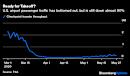
    We All Might Be Flying in Planes Again Soon(Bloomberg Opinion) — Covid-19 became a pandemic because airplane passengers carried the new coronavirus with them around the world. As that became clear, airlines grounded nearly all of their fleets, governments issued travel restrictions and mandatory quarantines, and tourist attractions and conferences closed down. With no reason to fly, a quick recovery for air travel seemed unlikely. Warren Buffett even dumped his airline stocks, claiming that the “world has changed.”Passengers also wouldn’t feel safe packed inside a metal tube for hours, would they?Happily for the industry, if not for the climate, the seemingly insurmountable barriers to air travel have begun to look less daunting. “We believe the worst is behind us, and we’re on the uptick,” American Airlines Group Inc.’s boss, Doug Parker, said after a surge in travel over the U.S. Memorial Day holiday weekend.Investors have taken notice. The Bloomberg Americas Airlines stocks index has rebounded by almost one-third from the mid-May low, and European carriers have made similar gains. Shares in German tour operator Tui AG have risen too.Such optimism feels jarring when airlines, American Airlines included, are poised to cut thousands of jobs. Most are still burning huge amounts of cash. Deutsche Lufthansa AG needs a 9 billion-euro ($10 billion) bailout, and Latam Airlines Group SA joined Latin American peer Avianca Holdings SA in filing for bankruptcy last week.But Parker is probably right to expect a continued recovery, at least on domestic and short-haul routes. This won’t be enough to put debt-laden airlines on a secure footing, and a full demand recovery probably won’t happen for a couple more years. But, right now, a desperate industry will take any good news it can get. The rigorous hygiene measures airlines have announced should go a long way toward restoring passenger confidence.  European budget carrier Ryanair Holdings Plc expects to operate at 40% of normal capacity from July, and the way bookings are shaping up suggests those planes will probably be at least half full. EasyJet Plc sees “encouraging” trends and notes that winter bookings are higher than usual for this time of year, although part of that may be because people have refund vouchers to use and are rebooking cancelled trips.  Ryanair’s extensive summer flight schedule had seemed premature a couple of weeks ago, but the travel restrictions that kept Europeans from moving around the continent are being relaxed. Starting in July, Spain is set to drop its requirement for international arrivals to quarantine for 14 days. Britain imposed a similar rule but is under immense pressure to abandon it. Travel between Europe and the U.S. will take longer to open up, but even here there are encouraging signs of political will to get people flying again.   A month ago, United Airlines Holdings Inc.’s chief executive officer, Scott Kirby, lamented that there wouldn’t be a recovery in flying until attractions like Disney World or the Paris museums were open again.Well, they will be soon. It’s already possible to visit the Acropolis in Athens and St Peter’s Basilica in Rome. Paris’s parks and museums are set to reopen from June. The French capital is usually swamped with tourists at this time of year, so there’s an incentive for travelers to get there first. Walt Disney World expects to reopen its Florida park from July, albeit with compulsory face masks and a ban on hugging your favorite Disney character.I’ve written before about how things like wearing masks and having to ask permission to use the toilet will make flying even less enjoyable. But these measures may make passengers feel safer. For example, while the gowns and other personal protective equipment issued to Emirates’ cabin crew are a little intimidating, they’re likely to put some nervous flyers at ease.As with SARS almost two decades ago, there are understandable concerns about catching coronavirus within the aircraft cabin, most likely from someone seated close by. The evidence isn’t comprehensive or conclusive, but so far there are surprisingly few documented cases of this happening with Covid-19. Airline industry body IATA says it knows of only one case where a person transmitted the virus to more than one person on board. Not surprisingly, plane manufacturers Airbus SE and Boeing Co. are intensively studying the subject. There are other plausible reasons why flying might be safer than you’d think: The air is filtered and frequently replenished from outside, seats act as somewhat of a barrier and passengers don’t move around the cabin much. Singing, yelling and talking loudly — contributors to so-called super-spreader infection events — are a big faux pas when you fly. Many passengers would still prefer the middle seat to be empty, but as I’ve written before, unless ticket prices rise, that would severely hamper airlines’ ability to break even.Of course, the longer someone’s on board, the greater the chance they’re exposed to potential infection. Hence, people may feel comfortable flying domestic and short-haul before they’re willing to fly halfway around the globe.Companies will probably take longer to get comfortable with the risk (and potential liability) of their employees flying for business. About half the corporate clients American Airlines surveyed still have a travel ban, though that’s down from two-thirds at the peak of the crisis. Millions of potential passengers have also lost their jobs and won’t feel able to splash out on holidays. And then there are the psychological scars from the prolonged lockdown. Being outside now feels a lot safer than being in any kind of confined space. A staycation in a local Airbnb might feel preferable to getting on a plane.For those willing to take the risk, and who can find adequate travel insurance, a rare opportunity awaits. Want to see Venice without the crowds? Now’s your chance.This column does not necessarily reflect the opinion of the editorial board or Bloomberg LP and its owners.Chris Bryant is a Bloomberg Opinion columnist covering industrial companies. He previously worked for the Financial Times.For more articles like this, please visit us at bloomberg.com/opinionSubscribe now to stay ahead with the most trusted business news source.©2020 Bloomberg L.P.

    from Yahoo Finance https://ift.tt/2XmhJXk

  • Pfizer Loses 6% On Disappointing Ibrance Breast Cancer Outcome

    Pfizer Loses 6% On Disappointing Ibrance Breast Cancer OutcomeShares in Pfizer Inc. (PFE) dropped 6% in after-market trading on Friday after the company reported a disappointing outcome for its Phase 3 PALLAS early breast cancer study.Following a preplanned efficacy and futility analysis, the independent Data Monitoring Committee determined that the trial of Ibrance (palbociclib) plus standard adjuvant endocrine therapy is unlikely to show a statistically significant improvement in the primary endpoint of invasive disease-free survival (iDFS).Patients receiving palbociclib in the study will be advised about next steps by their physicians and long-term follow up will proceed as planned, the company said, adding that no unexpected new safety signals were observed in patients receiving palbociclib.The PALLAS trial compared palbociclib plus standard adjuvant endocrine therapy to standard adjuvant endocrine therapy alone in women and men with hormone receptor-positive (HR+), human epidermal growth factor receptor 2-negative (HER2-) early (stage 2 and 3) breast cancer.“We are disappointed in this outcome. Breast cancer is a leading cause of death around the world and delaying or preventing the development of metastatic disease is a significant unmet need. PALLAS is a large study with many subgroups and we are actively collaborating to determine if there are patients who may benefit from adjuvant treatment with the palbociclib combination,” said Chris Boshoff of Pfizer Global Product Development.Meanwhile Pfizer CEO Albert Bourla moved to reassure investors, writing that the company’s growth projections are not reliant upon any individual pipeline opportunity. “We remain highly confident in our ability to deliver… a compound annual growth rate for revenues of at least 6% through 2025” he stated.The full results from the PALLAS study will be shared at a later date. Palbociclib is also being studied in patients with high-risk early breast cancer and results from the collaborative PENELOPE-B trial are expected later this year. In the US, Ibrance is already approved for adult patients with HR+, HER2- advanced or metastatic breast cancer.Shares in Pfizer are trading down 3% on a year-to-date basis, and analysts are evenly divided between hold and buy. This gives the stock a Moderate Buy Street consensus with an average price target of $42 (11% upside potential). (See Pfizer stock analysis on TipRanks).Related News: BioMarin Provides Positive Gene Therapy Update For Severe Hemophilia A Efgartigimod’s Positive Data Is Good News for Momenta’s Nipocalimab Novavax Seeks To Make 1 Billion Covid-19 Vaccine Doses More recent articles from Smarter Analyst: * Microsoft Informs Journalists Their Services Are No Longer Needed * Yext Earnings Preview: RBC Capital Bullish Into Print * U.S. Retail Giants From Apple To Amazon Curtail Business Due To Nationwide Riots * BioMarin Provides Positive Gene Therapy Update For Severe Hemophilia A

    from Yahoo Finance https://ift.tt/2BdEHHs

  • Forget cheap stocks. Why investors should watch ASX gold shares instead

    stacks of gold coins growing higher

    Investors have always sought the protection of gold in cases of recessions and financial crises. Gold was already off to a strong start in 2020 following geopolitical escalations between the US and China, and the US and Iran. The coronavirus pandemic further propped up gold prices to almost record all-time highs.

    This is why investors should be watching ASX gold shares instead of trying to pick ‘cheap’ stocks and dividend traps. 

    Tailwinds for gold 

    Safe-haven buying has been fuelled by the collapse of global equity markets in first quarter of the year. Central banks around the world have their printing machines running overtime in an attempt to cushion the economic repercussions of the coronavirus. Furthermore, interest rates were slashed by major global central banks, with the Reserve Bank of Australia cutting rates to 0.25% and the US Federal Reserve cutting interest rates to zero percent. Printing more money and raising debt should see fiat currencies get devalued. 

    Additionally, China’s decision to curb Hong Kong’s autonomy by pushing forward a controversial national security law and the likelihood of a strong US retaliation will continue to support stronger gold prices, in my opinion. As reported by the BBC, President Donald Trump has said that “this is a tragedy for Hong Kong … China has smothered Hong Kong’s freedom”. Rising tensions could put the US–China trade deal agreed in January at risk. 

    As economies around the world begin to restart economies by relaxing lockdown measures and allowing businesses to reopen, there is the risk of a ‘second wave’ of coronavirus infections. While global equities have rebounded and remain optimistic, a second wave could initiate another broad market sell-off. 

    ASX gold shares

    ASX gold miners are an excellent avenue to gain gold exposure without having to directly invest in the commodity. There are a broad range of gold miners that have differing growth and cost characteristics. 

    Northern Star Resources Ltd (ASX: NST) and Saracen Mineral Holdings Limited (ASX: SAR), for example, have typically been more growth orientated, favouring acquisitions and the expansion of their mining capabilities. Both miners are involved in the joint venture of the KCGM, the largest open pit mine in Australia and the 2nd highest producer of gold. These significant acquisitions have generated immediate revenue and continue to provide the businesses with additional exploration and reserve upside. While I would say Northern Star and Saracen are more volatile and risky investments, their ‘growth’ orientated business models have seen significant capital gains for their long-term investors. 

    Alternatively, Evolution Mining Ltd (ASX: EVN) and Newcrest Mining Limited (ASX: NCM) are more cost-focused with some of the lowest all-in sustaining costs. Evolution and Newcrest are well positioned to leverage off higher gold prices given their low production costs. 

    ASX gold shares are perfect for today’s uncertain and potentially dangerous climate. For investors looking for growth shares, check out our free report below.

    5 “Bounce Back” Stocks To Tame The Bear Market (FREE REPORT)

    Master investor Scott Phillips has sifted through the wreckage and identified the 5 stocks he thinks could bounce back the hardest once the coronavirus is contained.

    Given how far some of them have fallen, the upside potential could be enormous.

    The report is called 5 Stocks For Building Wealth after 50, and you can grab a copy for FREE for a limited time only.

    But you will have to hurry — history has shown the market could bounce significantly higher before the virus is contained, meaning the cheap prices on offer today might not last for long.

    See the 5 stocks

    More reading

    Motley Fool contributor Lina Lim has no position in any of the stocks mentioned. The Motley Fool Australia has no position in any of the stocks mentioned. We Fools may not all hold the same opinions, but we all believe that considering a diverse range of insights makes us better investors. The Motley Fool has a disclosure policy. This article contains general investment advice only (under AFSL 400691). Authorised by Scott Phillips.

    The post Forget cheap stocks. Why investors should watch ASX gold shares instead appeared first on Motley Fool Australia.

    from Motley Fool Australia https://ift.tt/2TWMOPj