
• Why NAB’s business banking edge makes it a buy at $39.30

    A man in a suit smiles at the yellow piggy bank he holds in his hand.

    National Australia Bank Ltd (ASX: NAB) shares are sitting at a price that has me looking again.

    The bank offers a solid dividend, a reasonable valuation, and an advantage that sets it apart from the rest of the big four.

    Here is why I would buy NAB shares today.

    The part of NAB I like most

    NAB has a leading position in Australian business banking. That gives it access to customer relationships that can stretch well beyond a single loan.

    A business may need transaction accounts, deposits, equipment finance, working capital, payment services, foreign exchange, and advice as it grows. The more of those needs NAB can handle, the deeper the relationship can become.

    That is a more interesting growth opportunity to me than competing aggressively for every available mortgage.

    Importantly, this focus has been successful. For the first half, NAB reported that its Business and Private Banking division grew lending balances by 4.6% during the six months to March 2026, while deposits increased by 5.9%.

    The bank has also been investing in digital tools that allow customers to complete simple tasks more quickly, leaving bankers with more time to work through complex financial needs.

    More than 80% of lending applications in the division were submitted digitally during the first half. I like that combination of better technology and relationship banking because it can improve efficiency without removing the personal support many business customers value.

    Does the NAB share price valuation stack up?

    NAB shares are trading around $39.30.

    Based on CommSec consensus estimates, the bank is expected to generate earnings per share of $2.43 in FY26 and $2.53 in FY27.

    That places the shares on price-to-earnings ratios of approximately 16.2 times FY26 earnings and 15.5 times FY27 earnings.

    I would call that reasonable rather than exceptionally cheap.

    The dividend strengthens the case. Forecast dividends per share of $1.70 in FY26 and $1.72 in FY27 imply dividend yields of around 4.3% and 4.4%, respectively.

    For investors eligible to benefit from franking credits, the after-tax income could be even more attractive.

    A simpler bank could be a better bank

    NAB is also trying to reduce the complexity that has accumulated across its operations.

    It had 27% fewer products in the first half than it did in FY22 and had decommissioned approximately 500 legacy applications since October 2023.

    Removing old systems and overlapping products can help the bank serve customers faster, lower operating costs, and introduce new technology more easily.

    The benefits may arrive gradually, but banking rewards small improvements made across millions of customer interactions. A smoother account opening process or faster lending decision can make a meaningful difference when repeated at scale.

    Foolish takeaway

    The major banks are often grouped together, but I think NAB’s business banking position gives it a distinct route to growth.

    Its customers can require a wide range of financial services as their businesses develop, creating opportunities for deeper relationships and greater revenue over time.

    At $39.30, investors are receiving a forecast yield above 4% while paying a valuation that I find reasonable for the quality of the franchise.

    NAB still needs to manage credit quality, competition, and its technology overhaul carefully. Even so, I think the balance between income, valuation, and long-term opportunity makes the shares a buy.

    The post Why NAB’s business banking edge makes it a buy at $39.30 appeared first on The Motley Fool Australia.

    Should you invest $1,000 in National Australia Bank right now?

    Before you buy National Australia Bank shares, consider this:

    Motley Fool investing expert Scott Phillips just revealed what he believes are the 5 best stocks for investors to buy right now… and National Australia Bank wasn’t one of them.

    The online investing service he’s run for over a decade, Motley Fool Share Advisor, has provided thousands of paying members with stock picks that have doubled, tripled or even more.*

    And right now, Scott thinks there are 5 stocks that may be better buys…

    * Returns as of 16 June 2026

    .custom-cta-button p {
    margin-bottom: 0 !important;
    }

    More reading

    Motley Fool contributor Grace Alvino has no position in any of the stocks mentioned. The Motley Fool Australia’s parent company Motley Fool Holdings Inc. has no position in any of the stocks mentioned. The Motley Fool Australia has no position in any of the stocks mentioned. The Motley Fool has a disclosure policy. This article contains general investment advice only (under AFSL 400691). Authorised by Scott Phillips.

  • Meeka Metals June 2026 quarter: Production edges up, strong outlook with underground focus

    Two miners examine things they have taken out the ground.

    The Meeka Metals Ltd (ASX: MEK) share price is in focus after the company reported June 2026 quarter gold production of 6,424 ounces, a slight improvement on the previous quarter but below expectations. Mine operating cash flow came in at $6.4 million, while cash at quarter end stood at $38 million.

    What did Meeka Metals report?

    • Gold production for the June quarter was 6,424oz (March quarter: 6,083oz)
    • Gold sales for the quarter totalled 6,242oz at an average price of $6,213/oz
    • Full-year FY26 gold production reached 56,400oz
    • Mine operating cash flow was $6.4m; net mine cash outflow of $11.1m after $17.5m in growth capital
    • Closing ore stockpiles increased to 25,414oz (806kt @ 1.0g/t Au)
    • Cash balance decreased to $38m as at 30 June 2026

    What else do investors need to know?

    The quarter saw the first contribution of higher-grade underground stope ore to the mill blend, with underground ore expected to make up 40% of the blend in the September quarter. Open pit mining continued to be affected by lower-than-expected contractor productivity, delaying access to high-grade open pit ore.

    As a result, Meeka Metals plans to end open pit mining in July 2026, preserving a significant in-ground open pit resource. The company invested $17.5 million in non-recurring growth projects this quarter, including underground development at Andy Well, equipment, and expansion of site infrastructure.

    What did Meeka Metals management say?

    Managing Director Tim Davidson said:

    It was another frustrating quarter from a production perspective and while the result fell short of expectations, the drivers are well understood and the corrective path is clear. Production is expected to improve in the September 2026 quarter as the operation transitions away from its reliance on open pit ore. Higher-grade underground production is ramping up and will make up an increasing proportion of the mill blend, lifting both head grade and recovered ounces. Cash is expected to grow through the September 2026 quarter on the back of this stronger gold production, as the higher-margin underground material flows through to the bottom line. Development of our second underground mine at Turnberry, commencing in September 2026 will further increase the availability of higher-grade underground ore for the processing plant.

    What’s next for Meeka Metals?

    Meeka expects gold production and operating cash flow to increase in the September quarter, driven by a greater proportion of higher-margin underground ore in the mill feed. The company is set to begin portal development on the second underground mine at Turnberry in September 2026, further boosting access to higher-grade ore.

    With the conclusion of open pit mining, management aims to reduce costs and focus on underground operations, positioning Meeka to benefit from improved grades and production stability.

    Meeka Metals share price snapshot

    Over the past 12 months, Meeka Metals shares have declined 34%, trailing the All Ordinaries Index (ASX: XAO), which is flat over the same period.

    View Original Announcement

    The post Meeka Metals June 2026 quarter: Production edges up, strong outlook with underground focus appeared first on The Motley Fool Australia.

    Should you invest $1,000 in Meeka Metals Ltd right now?

    Before you buy Meeka Metals Ltd shares, consider this:

    Motley Fool investing expert Scott Phillips just revealed what he believes are the 5 best stocks for investors to buy right now… and Meeka Metals Ltd wasn’t one of them.

    The online investing service he’s run for over a decade, Motley Fool Share Advisor, has provided thousands of paying members with stock picks that have doubled, tripled or even more.*

    And right now, Scott thinks there are 5 stocks that may be better buys…

    * Returns as of 16 June 2026

    .custom-cta-button p {
    margin-bottom: 0 !important;
    }

    More reading

    Motley Fool contributor Laura Stewart has no position in any of the stocks mentioned. The Motley Fool Australia’s parent company Motley Fool Holdings Inc. has no position in any of the stocks mentioned. The Motley Fool Australia has no position in any of the stocks mentioned. The Motley Fool has a disclosure policy. This article contains general investment advice only (under AFSL 400691). Authorised by Scott Phillips. This article was prepared with the assistance of Large Language Model (LLM) tools for the initial summary of the company announcement. Any content assisted by AI is subject to our robust human-in-the-loop quality control framework, involving thorough review, substantial editing, and fact-checking by our experienced writers and editors holding appropriate credentials. The Motley Fool Australia stands behind the work of our editorial team and takes ultimate responsibility for the content published by The Motley Fool Australia.

  • How much do I need in superannuation to receive $5000 per month in passive income?

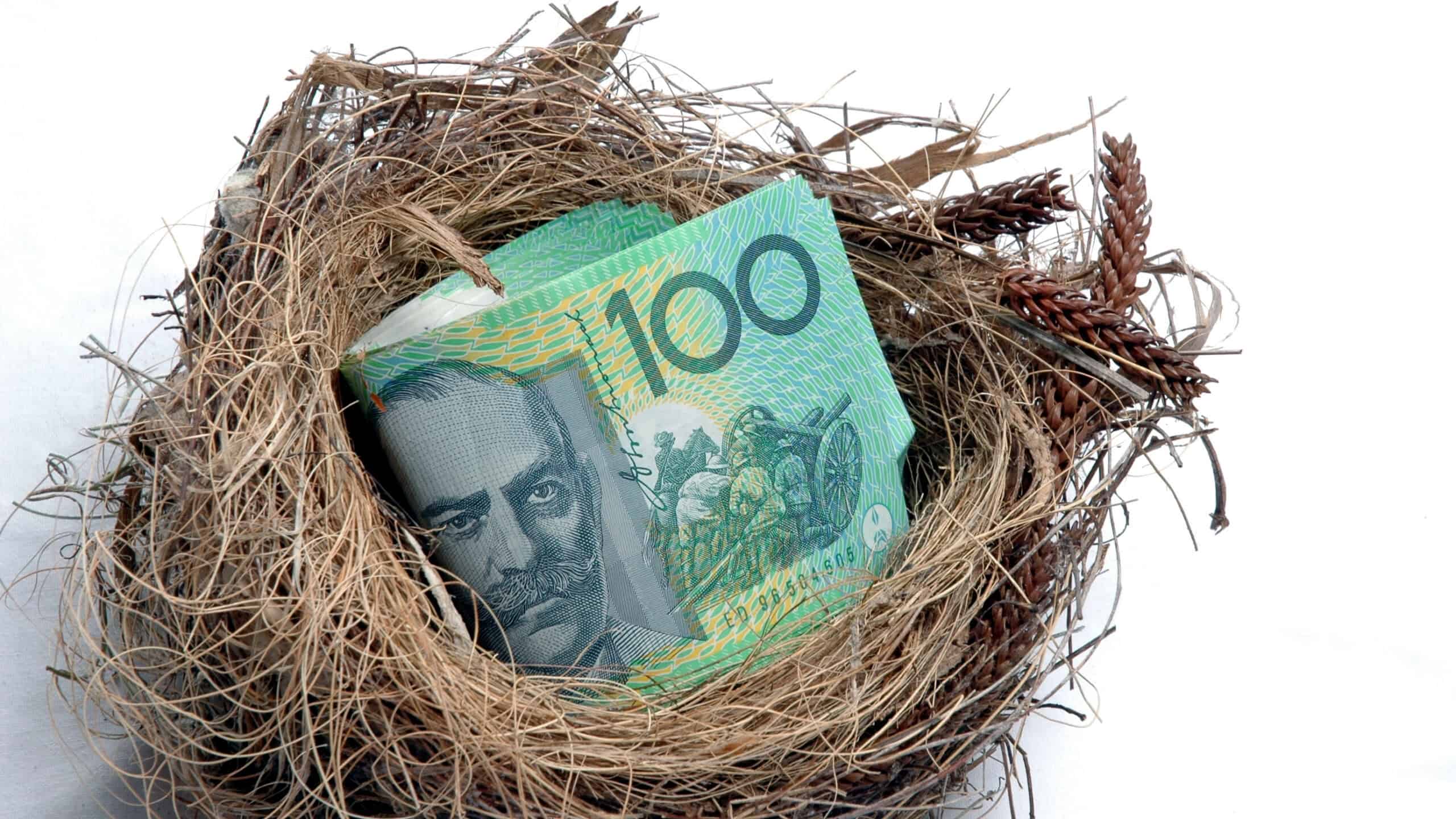
    A wad of $100 bills of Australian currency lies stashed in a bird's nest.

    Having a target when you’re putting away money for superannuation is a great way to stay on track and have some peace of mind about what you can expect from your super when you retire.

    Nothing is certain in the world of investing, but what is certain is that if you just leave it up to fate, you’re more likely to have a surprise on the downside.

    Time to do the sums on your superannuation

    So, how much money do you actually need? As much as possible is the obvious answer; however, most of us have to strike a balance between what we can put away for the future and what we need to fund our current lifestyle.

    A good yardstick for how much is needed is the figure published by the Association of Superannuation Funds of Australia (ASFA), which says that, for a comfortable retirement, singles need $55,923 per year and couples need $78,566 per year.

    These figures assume the retiree owns their own home and is therefore not paying rent or a mortgage.

    Looking at these figures, a $5000 per month superannuation income stream places a single retiree squarely in the comfortable zone, with a little buffer to play with.

    To hit the $5000 per month target in terms of investment returns, assuming no drawdown of capital, a retiree would need $857,142 in their super if they could achieve a dividend return of 7% per year, which I’d argue is doable.

    If that return were to drop to 5%, the amount needed in super would rise to $1.2 million, while it would drop to $600,000 if a 10% return could be achieved.

    So, how realistic is a 7% return?

    First, you have to take into account that retirees get the benefit of franking credits, meaning they are reimbursed for the tax paid by companies they own shares in.

    For example, Fortescue Ltd (ASX: FMG) is paying a trailing dividend of 6.46%. But when the franking credit is added back in, this rises to 9.23%.

    While high dividends cannot be assured over the longer term, it is possible to focus on companies or funds that specifically aim to return dividends rather than grow capital.

    One such is WAM Active Ltd (ASX: WAA), which recently announced a special dividend on top of its final dividend.

    The fund said in a statement to the ASX that this would bring its fully-franked dividend yield to 8.6% and its grossed-up dividend yield to 12.3%.

    There is also the S&P/ASX 200 Covered Call Complex ETF (ASX: AYLD), which uses a more complex strategy to deliver high yields, paying 9.64% over the past 12 months, albeit only franked at 15.3%.

    Infrastructure companies, which tend to plan for the long term, can also be consistent dividend payers, with gas pipeline company APA Group (ASX: APA) paying 5.63% and Dalrymple Bay Infrastructure Ltd (ASX: DBI) paying 4.56%.

    The post How much do I need in superannuation to receive $5000 per month in passive income? appeared first on The Motley Fool Australia.

    Should you invest $1,000 in Fortescue right now?

    Before you buy Fortescue shares, consider this:

    Motley Fool investing expert Scott Phillips just revealed what he believes are the 5 best stocks for investors to buy right now… and Fortescue wasn’t one of them.

    The online investing service he’s run for over a decade, Motley Fool Share Advisor, has provided thousands of paying members with stock picks that have doubled, tripled or even more.*

    And right now, Scott thinks there are 5 stocks that may be better buys…

    * Returns as of 16 June 2026

    .custom-cta-button p {
    margin-bottom: 0 !important;
    }

    More reading

    Motley Fool contributor Cameron England has no position in any of the stocks mentioned. The Motley Fool Australia’s parent company Motley Fool Holdings Inc. has no position in any of the stocks mentioned. The Motley Fool Australia has positions in and has recommended Apa Group. The Motley Fool has a disclosure policy. This article contains general investment advice only (under AFSL 400691). Authorised by Scott Phillips.

Sorry, but nothing was found. Please try a search with different keywords.