
• 3 ASX ETFs that have returned better than 80% over the past year

    Male hands holding Australian dollar banknotes, symbolising dividends.

    Exchange-traded funds (ETFs) can take a lot of the guesswork out of investing, allowing investors to pick a theme or index they’d like to track, then trusting in the ETF manager to build a portfolio which fits the bill.

    Index tracking ETFs, such as those that seek to replicate the performance of the S&P/ASX 200 Index (ASX: XJO), for example, are popular; however, if you’re looking for outsized gains, it can pay to look further afield into sectors that have strong economic tailwinds behind them.

    While past performance is no guarantee of future performance, let’s have a look at three such funds that have done well over the past year.

    Global X Hydrogen ETF (ASX: HGEN)

    This ETF is a relatively small one, with just $45 million in assets under management.

    The fund aims to invest in companies that stand to benefit from the advancement of the global hydrogen industry.

    The fund’s website adds:

    This includes companies involved in hydrogen production; the integration of hydrogen into energy systems; and the development/manufacturing of hydrogen fuel cells, electrolysers, and other technologies related to the utilisation of hydrogen as an energy source.

    The fund has returned 98.5% over the past year after falling back 5.2% over the past month.

    Global X Semiconductor ETF (ASX: SEMI)

    This fund “seeks to invest in companies that stand to potentially benefit from the broader adoption of tech-enabled devices that require semiconductors”.

    This is a much larger fund, with $1.1 billion in funds under management.

    Some of the fund’s top holdings include Micron Technolog, SK Hynix, Nvidia, and Intel.

    This fund has returned 136.4% over the past year and 83.5% year to date.

    Betashares Energy Transition Metals ETF (ASX: XMET)

    This fund aims to track an index providing exposure to global companies in the energy transition metals field – think metals such as lithium, copper, nickel, and graphite.

    The fund’s website says:

    The transition from fossil fuels to clean energy solutions is driving growth in a range of disruptive products and processes such as renewable energy generation, battery storage solutions, and electric vehicles, all of which are critically dependent on the select group of energy transition metals that XMET provides exposure to.

    The fund’s top holdings include PLS Group Ltd (ASX: PLS), BHP Group Ltd (ASX: BHP), and Lynas Rare Earths Ltd (ASX: LYC).

    This fund has returned 83.9% over the past year.

    The post 3 ASX ETFs that have returned better than 80% over the past year appeared first on The Motley Fool Australia.

    Should you invest $1,000 in Global X Hydrogen ETF right now?

    Before you buy Global X Hydrogen ETF shares, consider this:

    Motley Fool investing expert Scott Phillips just revealed what he believes are the 5 best stocks for investors to buy right now… and Global X Hydrogen ETF wasn’t one of them.

    The online investing service he’s run for over a decade, Motley Fool Share Advisor, has provided thousands of paying members with stock picks that have doubled, tripled or even more.*

    And right now, Scott thinks there are 5 stocks that may be better buys…

    * Returns as of 16 June 2026

    .custom-cta-button p {
    margin-bottom: 0 !important;
    }

    More reading

    Motley Fool contributor Cameron England has no position in any of the stocks mentioned. The Motley Fool Australia’s parent company Motley Fool Holdings Inc. has recommended Lynas Rare Earths Ltd. The Motley Fool Australia has recommended BHP Group. The Motley Fool has a disclosure policy. This article contains general investment advice only (under AFSL 400691). Authorised by Scott Phillips.

  • What did the market look like 10 years ago? Here’s what’s changed for the ASX 200

    Woman in business suit holds both hands out with a question mark above each hand.

    Look at the S&P/ASX 200 (ASX: XJO) today, and it appears reassuringly familiar.

    Banks and miners still dominate.

    Commonwealth Bank of Australia (ASX: CBA), BHP Group Ltd (ASX: BHP), and CSL Ltd (ASX: CSL) still sit near the top of the index, exactly as they did a decade ago.

    Yet almost every force that actually drives those companies has inverted since 2016.

    That contrast is worth exploring further

    The ASX 200 index has climbed, but not spectacularly

    In mid-2016 the ASX 200 sat around 5,200 points.

    Today it trades near 8,800.

    That is a capital gain of roughly 69% over ten years, or approximately 5.4% per annum before dividends.

    Including dividends and franking credits, the total return has been meaningfully better.

    Since inception, the index has returned approximately 8.53% per annum including dividends, compared to 4.17% excluding them.

    The interest rate environment has completely reversed

    This is the biggest change, and it explains most of the others.

    In 2016 the RBA was cutting.

    The cash rate sat at 1.75% in July that year before falling to 1.50%, a record low at the time.

    Money was cheap, and investors were being pushed out of cash and into shares in search of any yield at all.

    Today the RBA has hiked three times in 2026 alone, taking the cash rate to 4.35%, its highest level since 2011.

    Furthermore, Governor Michele Bullock told reporters after the June decision:

    Today’s decision does not rule out further tightening in monetary policy if that is what is required to bring inflation down.

    A decade ago, low rates inflated the valuations of anything with growth attached to it.

    Today, high rates are systematically deflating them.

    The commodities that move the market have changed

    In 2016 the market’s obsession was Chinese steel demand and the iron ore price, which had collapsed from above US$100 per tonne to below US$50.

    BHP had just slashed its dividend by nearly 75%, cutting it from US62 cents per share to US16 cents and abandoning its progressive dividend policy.

    The mood around the miners was bleak.

    Today the story is completely different.

    For the first time in BHP’s 136-year history, copper earnings exceeded iron ore contributions in the first half of FY26. This is driven by AI data centre construction, electric vehicles, and grid infrastructure investment.

    Moreover, BHP plans to grow copper-equivalent production at 3% to 4% per year through 2035.

    The commodity cycle did not necessarily recover, but rather it was replaced by a different one.

    Entire sectors did not exist

    Perhaps the most striking change is what was absent in 2016.

    The S&P/ASX All Technology Index (ASX: XTX) did not launch until February 2020.

    Artificial intelligence did not exist as an investable theme in any form. Lithium was a curiosity rather than an industry. Lastly, data centres were basic infrastructure, not a growth story.

    Every one of those has since become a defining feature of the market, and in several cases a source of both enormous gains and brutal losses.

    What has not changed for the ASX 200

    Financials and materials remain the two largest sectors on the ASX, exactly as they were in 2016.

    The big four banks still anchor the index.

    Australia is still, fundamentally, a market of banks and miners with a healthcare giant attached.

    For all the disruption of the past decade, the structural shape of the ASX has proven remarkably durable.

    Foolish takeaway

    The lesson from ten years of ASX 200 history is not that everything changes.

    It is that the drivers change while the names stay the same.

    An investor who bought BHP in 2016 was buying an iron ore business in a rate-cutting world. An investor buying BHP today is buying a copper business in a rate-hiking world.

    Same ticker, but an entirely different investment.

    The post What did the market look like 10 years ago? Here’s what’s changed for the ASX 200 appeared first on The Motley Fool Australia.

    Should you invest $1,000 in Commonwealth Bank Of Australia right now?

    Before you buy Commonwealth Bank Of Australia shares, consider this:

    Motley Fool investing expert Scott Phillips just revealed what he believes are the 5 best stocks for investors to buy right now… and Commonwealth Bank Of Australia wasn’t one of them.

    The online investing service he’s run for over a decade, Motley Fool Share Advisor, has provided thousands of paying members with stock picks that have doubled, tripled or even more.*

    And right now, Scott thinks there are 5 stocks that may be better buys…

    * Returns as of 16 June 2026

    .custom-cta-button p {
    margin-bottom: 0 !important;
    }

    More reading

    Motley Fool contributor Mark Verhoeven has no position in any of the stocks mentioned. The Motley Fool Australia’s parent company Motley Fool Holdings Inc. has positions in and has recommended CSL. The Motley Fool Australia has recommended BHP Group and CSL. The Motley Fool has a disclosure policy. This article contains general investment advice only (under AFSL 400691). Authorised by Scott Phillips.

  • SK Hynix IPOs in the US. Here’s what that means for ASX investors

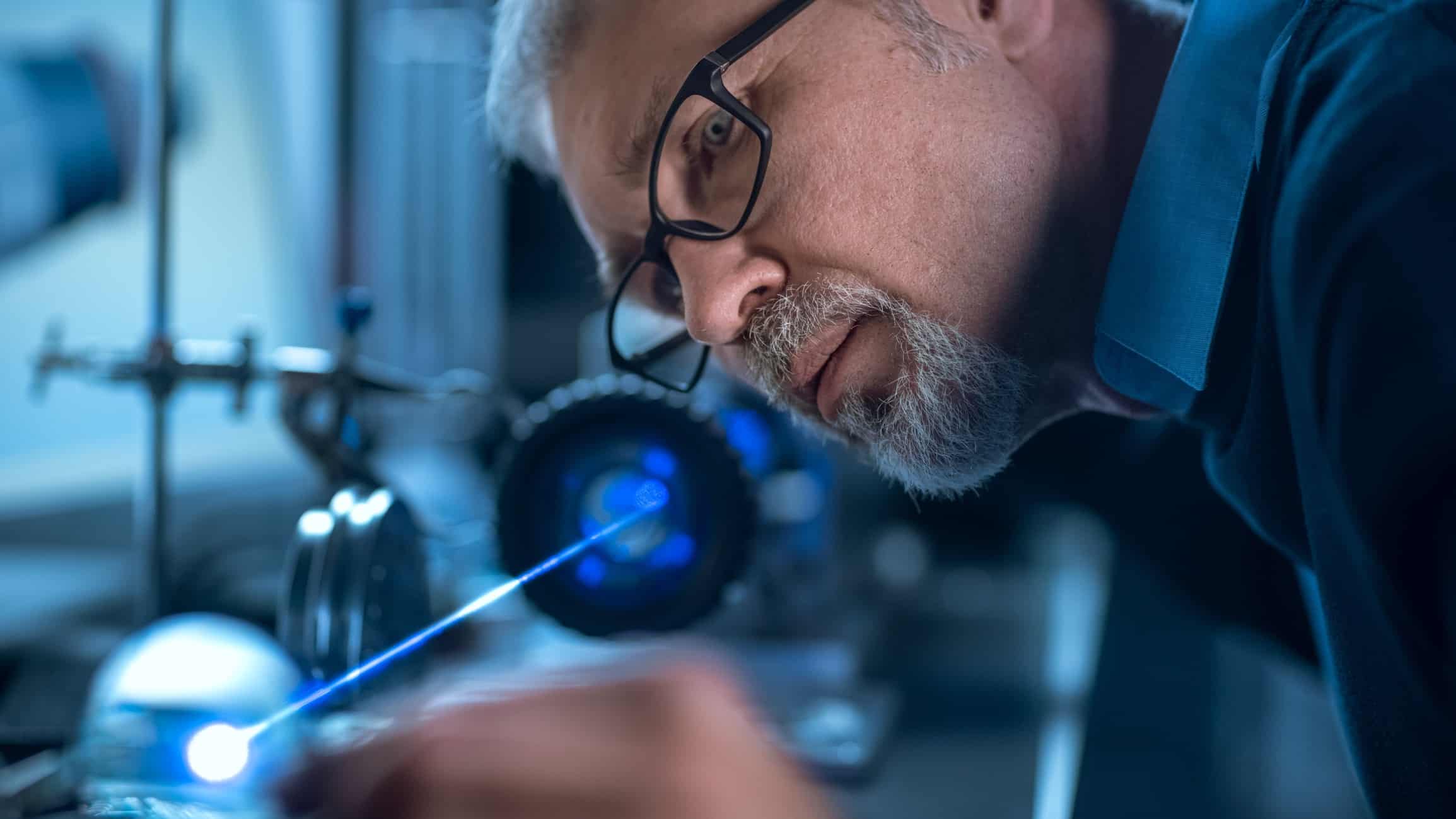
    A technical manufacturer checks his work in a high-tech lab with precision equipment in the background.

    The AI memory boom just produced one of the largest IPOs in stock market history.

    SK Hynix, the South Korean chipmaker that supplies the high-bandwidth memory sitting inside almost every Nvidia processor, sold 177.9 million American depositary shares at US$149 each on 9 July. The company raised approximately US$26.5 billion.

    The securities began trading on the Nasdaq on 10 July under the ticker SKHY, closing their first session up approximately 13% at US$168.

    That makes it the largest US listing ever by a foreign company, surpassing Alibaba’s US$25 billion debut in 2014.

    It is also the second-largest globally after SpaceX’s US$85.7 billion Nasdaq listing in June.

    Is this technically speaking a SK Hynix IPO?

    Despite the headlines, this was not technically an IPO.

    SK Hynix’s common shares have traded on the Korea Exchange for decades, and the company was already valued above US$1 trillion before the US listing.

    What happened last Friday was an American depositary share offering, creating a new US-traded security tied to an already-public business rather than floating a previously private company.

    SK Hynix did not become a public company through this offering. However, it made itself far easier for American and international investors to own.

    Why the AI memory story is important for ASX investors

    SK Hynix reported revenue of 97.1 trillion won, approximately US$64.1 billion, in 2025, a company record.

    Net income reached 42.9 trillion won, or approximately US$28.3 billion, implying a net profit margin of 44%.

    Its Korea-listed shares have risen more than 515% over the past twelve months as high-bandwidth memory became a critical bottleneck in AI infrastructure.

    The company captures approximately 56% of the global HBM market, according to its SEC filing.

    For ASX investors, that AI memory demand story connects directly to two ASX-listed funds and one Australian company.

    Global X Semiconductor ETF

    The most direct ASX exposure to SK Hynix is through the Global X Semiconductor ETF (ASX: SEMI).

    SK Hynix is already one of SEMI’s largest holdings, sitting alongside Micron, AMD, TSMC, and Nvidia.

    SEMI holds just 30 companies tracking the Solactive Global Semiconductor 30 Index, making it a concentrated, high-conviction way to own the semiconductor supply chain from the ASX.

    That concentration cuts both ways.

    The fund is heavily exposed to the memory cycle, which has historically been one of the most volatile in technology. The sector has periods of shortage-driven price surges followed by oversupply and collapsing margins.

    SK Hynix’s own capital expenditure plans, including two new fabrication complexes in South Korea, are examples of capacity expansion that have triggered previous downturns.

    Betashares Nasdaq 100 ETF

    The Betashares Nasdaq 100 ETF (ASX: NDQ) is the other route, though the connection is less immediate.

    SK Hynix’s Nasdaq listing raises the prospect of eventual Nasdaq-100 index inclusion. This would force every fund tracking that index, including NDQ, to buy SKHY.

    That is the same dynamic that played out with SpaceX’s fast-track inclusion earlier this month.

    NDQ holders should understand that index inclusion is not automatic and would depend on SK Hynix meeting the exchange’s eligibility criteria for foreign-domiciled ADRs.

    NextDC Ltd

    NextDC Ltd (ASX: NXT) is the Australian company most directly connected to the same underlying trend.

    The AI memory shortage driving SK Hynix’s extraordinary revenue growth exists because AI data centres are consuming HBM faster than manufacturers can produce it.

    NextDC builds and operates those data centres in Australia.

    Contracted utilisation surged 60% to 667MW in the March 2026 quarter alone, and the company’s forward order book is expected to generate contracted EBITDA in excess of A$1 billion.

    Every dollar of SK Hynix’s memory revenue reflects AI compute demand that must be housed somewhere, and in Australia, that increasingly means NextDC.

    Foolish takeaway for the SK Hynix IPO

    SK Hynix’s IPO is a landmark moment for the AI memory trade.

    For ASX investors, SEMI provides the most direct exposure, NDQ offers a potential future index-inclusion angle, and NextDC captures the same underlying AI infrastructure demand from the Australian side.

    But investors should remember that memory is a famously cyclical industry.

    A wave of AI companies rushing to IPO at peak valuations has historically been a signal worth treating with caution rather than enthusiasm.

    The post SK Hynix IPOs in the US. Here’s what that means for ASX investors appeared first on The Motley Fool Australia.

    Should you invest $1,000 in BetaShares Nasdaq 100 ETF right now?

    Before you buy BetaShares Nasdaq 100 ETF shares, consider this:

    Motley Fool investing expert Scott Phillips just revealed what he believes are the 5 best stocks for investors to buy right now… and BetaShares Nasdaq 100 ETF wasn’t one of them.

    The online investing service he’s run for over a decade, Motley Fool Share Advisor, has provided thousands of paying members with stock picks that have doubled, tripled or even more.*

    And right now, Scott thinks there are 5 stocks that may be better buys…

    * Returns as of 16 June 2026

    .custom-cta-button p {
    margin-bottom: 0 !important;
    }

    More reading

    Motley Fool contributor Mark Verhoeven has no position in any of the stocks mentioned. The Motley Fool Australia’s parent company Motley Fool Holdings Inc. has positions in and has recommended BetaShares Nasdaq 100 ETF. The Motley Fool Australia has positions in and has recommended BetaShares Nasdaq 100 ETF. The Motley Fool has a disclosure policy. This article contains general investment advice only (under AFSL 400691). Authorised by Scott Phillips.

  • NVDA | Will NVIDIA Get a Boost From New Gaming Laptops? March was a record quarter for digital spending on games.

  • Most Anticipated Earnings Releases for the trading week beginning May 11th, 2020

  • Mark Cuban’s Secret Shopper Study Finds That 96% of Dallas Businesses Don’t Comply With Reopening Guidelines. This is going to get bad.

  • Strategy Analysis