
• CSL shares are up 35% since early June. Is the recovery here to stay?

    A scientist examining test results.

    The turnaround in CSL Ltd (ASX: CSL) shares has been sharp.

    From the nine-year low struck on 3 June 2026, CSL has surged approximately 35% to $122.89.

    The question is not whether the bounce has happened. It clearly has.

    The question is what is driving it, whether those drivers are durable, and what the August FY26 result will need to show to confirm this is more than a sentiment swing.

    What has driven the 35% rebound in CSL shares

    The honest answer is that the recovery has been driven primarily by sector rotation and valuation recognition rather than new positive company-specific news.

    Healthcare was the worst-performing sector of all eleven ASX 200 market sectors in FY26. The S&P/ASX 200 Health Care Index (ASX: XHJ) fell 39% over twelve months to hit a nine-year low on 3 June.

    When a sector falls that far that fast, it tends to attract bargain-hunting institutional investors at the start of a new financial year. This is even more true when those same investors have just locked in large profits in resources and energy shares.

    The underlying business has not changed materially in the six weeks since 3 June.

    Management’s FY26 guidance of approximately US$15.2 billion in revenue and US$3.1 billion in NPATA on a constant currency basis remains unchanged.

    The operational challenges, including US immunoglobulin supply constraints and China albumin pricing pressure, remain the same.

    The case that the recovery is here to stay

    At the 3 June low of approximately $91, CSL was trading at approximately 11 times forecast FY26 earnings. This was a valuation not seen in more than fifteen years for a business of this quality.

    At $122.89, CSL trades at approximately 15.2 times forecast FY26 earnings, still a fraction of the 30 to 50 times multiple it commanded at its peak.

    Morgans retains a buy rating with a price target of $147.59, implying upside of approximately 20% from the current price.

    To support this thesis, management has also pointed to stronger Behring division revenue growth in the second half of FY26. Additionally, management expects moderately stronger-than-expected Seqirus vaccine performance.

    These are all early signs that the operating recovery is beginning.

    The case that it is just a temporary bounce

    The more cautious reading is equally legitimate.

    Eight of eighteen analysts covering CSL have a buy rating, while ten have a hold.

    That split reflects the uncertainty around today’s share price.

    Indeed, CSL has delivered a series of earnings disappointments over the past eighteen months. Each has been framed by management as temporary before proving more persistent than expected.

    The FY26 result, due on 19 August, will be the most important test of whether the recovery has earnings support or is simply a valuation-driven sentiment swing.

    If August delivers another round of guidance cuts, the 35% bounce could reverse quickly.

    What the August result needs to show for CSL shares

    Three things would confirm the recovery is real.

    First, Behring division revenue growth in the second half of FY26 that confirms rather than falls short of management’s guidance.

    Second, evidence that the immunoglobulin supply and pricing situation is moving in the right direction.

    Third, confidence from the new CEO, expected to be named before the result, that the operational challenges have a visible resolution path.

    If those three conditions are met on 19 August, CSL’s recovery from $91 to $122.89 will look like the early innings of something more sustained.

    If they are not, investors who bought the bounce may face a difficult reassessment.

    Foolish takeaway

    CSL shares are up 35% since early June to $122.89, but remain down 49% over twelve months.

    The recovery may be here to stay, reflecting an oversold valuation at the June lows.

    It may also partly be a rotation bounce, driven by institutional new-year rebalancing rather than company-specific positive news.

    The August FY26 result will separate those two explanations cleanly.

    Until then, the honest answer to whether the recovery is real is: we do not yet know.

    The post CSL shares are up 35% since early June. Is the recovery here to stay? appeared first on The Motley Fool Australia.

    Should you invest $1,000 in CSL right now?

    Before you buy CSL shares, consider this:

    Motley Fool investing expert Scott Phillips just revealed what he believes are the 5 best stocks for investors to buy right now… and CSL wasn’t one of them.

    The online investing service he’s run for over a decade, Motley Fool Share Advisor, has provided thousands of paying members with stock picks that have doubled, tripled or even more.*

    And right now, Scott thinks there are 5 stocks that may be better buys…

    * Returns as of 16 June 2026

    .custom-cta-button p {
    margin-bottom: 0 !important;
    }

    More reading

    Motley Fool contributor Mark Verhoeven has no position in any of the stocks mentioned. The Motley Fool Australia’s parent company Motley Fool Holdings Inc. has positions in and has recommended CSL. The Motley Fool Australia has recommended CSL. The Motley Fool has a disclosure policy. This article contains general investment advice only (under AFSL 400691). Authorised by Scott Phillips.

  • ASX consumer staples shares are quietly surging while the rest of the market stalls. Here is why.

    A couple in a supermarket laugh as they discuss which fruits and vegetables to buy

    The S&P/ASX 200 Index (ASX: XJO) has been choppy and directionless for several weeks.

    After the strong start to FY27 in the first week of July, the broader market has stalled around the 8,800 point level as investors weigh renewed Middle East tensions, rate uncertainty, and the approaching August reporting season.

    Beneath that flat headline, however, something interesting is happening.

    S&P/ASX 200 Consumer Staples (ASX: XSJ) shares are quietly surging. This sector has been one of the best-performing pockets of the ASX in recent sessions as investors rotate into defensive names ahead of earnings season volatility.

    Here are three ASX consumer staples shares benefiting from this upswing.

    Woolworths: resilience in a cautious consumer environment

    Woolworths Group Ltd (ASX: WOW) has been one of the quiet achievers of the past month.

    The company provides something most ASX shares cannot guarantee: recurring revenue regardless of economic conditions.

    Australians keep buying groceries, cleaning products, and personal care items through every cycle.

    This earnings visibility is what institutional investors rotate toward when uncertainty rises.

    Catapult Wealth’s Blake Halligan recently assessed Woolworths’ defensive credentials, noting:

    “Food retail sales were up 5.9% in the third quarter of 2026 when compared to the prior corresponding period.”

    Coles Group: consistent dividends and a reporting season catalyst

    Coles Group Ltd (ASX: COL) has been rising alongside Woolworths, benefiting from the same defensive rotation while adding its own catalyst.

    Brokers retained a positive view on Coles this week, following a period where the supermarket’s competitive positioning had been a source of investor uncertainty.

    Coles pays a consistent, partially franked dividend twice per year, giving income investors a meaningful yield alongside the stability of essential retail earnings.

    The approach of August reporting season adds a specific near-term catalyst.

    Coles’ FY26 full-year result will give investors the most current picture of how effectively management has navigated cost inflation, loyalty program investment, and competitive pricing pressure over the past twelve months.

    Bega Cheese: the defensive with a turnaround story

    Bega Cheese Ltd (ASX: BGA) is the least conventional of the three but arguably the most interesting from a value perspective.

    The company is Australia’s largest branded consumer dairy company, with a portfolio that includes Bega, Vegemite, and Farmers Union brands.

    Like Woolworths and Coles, Bega benefits from the essential nature of its product categories.

    But unlike the supermarkets, Bega carries an additional earnings recovery story on top of the defensive characteristics.

    The company has been navigating a difficult period of input cost inflation and margin compression over the past two years.

    Investors are buying after the company lifted its profit outlook. This has sent shares higher from growing confidence that the earnings recovery management has been guiding toward is beginning to materialise.

    The combination of an essential product portfolio, a recovering earnings trajectory, and a market environment rewarding defensives makes Bega one of the more interesting propositions in the sector right now.

    Why ASX consumer staples shares are having their moment

    The rotation into consumer staples reflects three specific forces converging in July 2026.

    First, investors who rode materials and healthcare to strong FY26 and early FY27 gains are taking profits and redeploying into lower-volatility names.

    Second, renewed Middle East escalation and its impact on oil prices is raising the spectre of further RBA rate hikes. This has historically favoured defensive sectors over rate-sensitive growth names.

    Third, August reporting season is six weeks away. Investors are positioning themselves into companies with more predictable earnings outcome.

    Consumer staples tick all three boxes: lower volatility, insulated from oil and rate sensitivity, and with relatively predictable earnings that reduce binary outcome risk.

    Foolish takeaway for ASX consumer staples shares

    Woolworths, Coles, and Bega Cheese are each different versions of the same defensive investment thesis.

    The broader market is stalling. Consumer staples are moving.

    For investors who want to reduce portfolio volatility heading into August reporting season while maintaining exposure to quality, income-producing businesses, the current rotation into consumer staples shares is worth paying attention to.

    The post ASX consumer staples shares are quietly surging while the rest of the market stalls. Here is why. appeared first on The Motley Fool Australia.

    Should you invest $1,000 in Woolworths Group right now?

    Before you buy Woolworths Group shares, consider this:

    Motley Fool investing expert Scott Phillips just revealed what he believes are the 5 best stocks for investors to buy right now… and Woolworths Group wasn’t one of them.

    The online investing service he’s run for over a decade, Motley Fool Share Advisor, has provided thousands of paying members with stock picks that have doubled, tripled or even more.*

    And right now, Scott thinks there are 5 stocks that may be better buys…

    * Returns as of 16 June 2026

    .custom-cta-button p {
    margin-bottom: 0 !important;
    }

    More reading

    Motley Fool contributor Mark Verhoeven has no position in any of the stocks mentioned. The Motley Fool Australia’s parent company Motley Fool Holdings Inc. has no position in any of the stocks mentioned. The Motley Fool Australia has no position in any of the stocks mentioned. The Motley Fool has a disclosure policy. This article contains general investment advice only (under AFSL 400691). Authorised by Scott Phillips.

  • Lithium prices are cooling. Here’s what that means for these ASX lithium shares

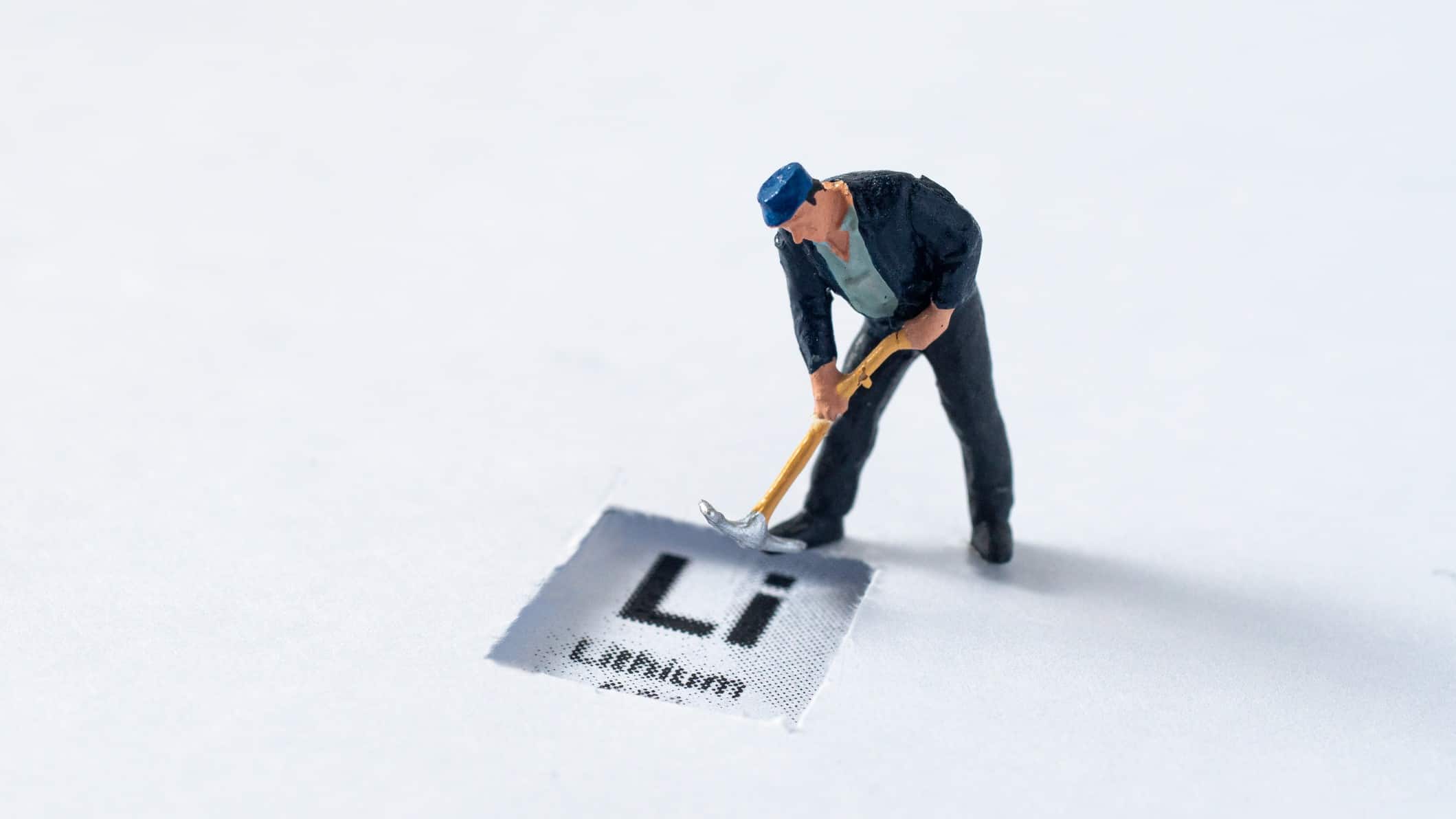
    A miniature moulded model of a man bent over with a pick stands behind a sign that has lithium's scientific abbreviation 'Li', with the word lithium underneath it against a sparse bland background.

    ASX lithium shares ran extraordinarily hard in FY26.

    Spodumene prices surged approximately 196% over the twelve months to June 2026. This powered ASX lithium producers to among the strongest returns in the market.

    Then came June.

    Spodumene prices fell by around 12% in June, triggering a sharp, rapid reversal across the sector.

    The question now is whether the cooling is temporary or the beginning of a more sustained retreat.

    PLS Group: The largest ASX lithium share takes the hardest hit

    PLS Group Ltd (ASX: PLS) has had the most dramatic ride of the three.

    PLS shares reached a two-and-a-half-year high of $6.38 in May before retreating significantly since then.

    The pullback reflects two forces operating at the same time.

    Softer lithium futures prices flowed directly through to earnings expectations, while investors who rode PLS from below $2 a year ago have been taking profits after an extraordinary run.

    Importantly, the underlying business remains solid.

    PLS reported underlying EBITDA surging 241% to $253 million in the first half of FY26. Encouragingly, EBITDA margins expanded from 17% to 41%.

    UBS downgraded PLS from buy to neutral with a $4.95 price target, reflecting the view that the easy gains from the initial recovery have been captured.

    Liontown: Ramp-up risk compounds the price fall

    Liontown Resources Ltd (ASX: LTR) carries the highest risk of the three because it is still ramping up its Kathleen Valley mine in Western Australia.

    A 12% fall in the spodumene price compounds operational risk rather than simply reducing a profit margin on an established operation.

    Liontown fell 30.2% in June to $1.69, the sharpest decline of the three.

    Despite the sell-off, the longer-term picture remains positive for believers in Kathleen Valley.

    UBS retained its buy rating on Liontown and raised its target to $2.20, citing the quality of the deposit and the improving ramp-up trajectory.

    The current share price sits comfortably below that target, implying meaningful upside if lithium prices stabilise and the ramp-up continues on track.

    IGO: Diversification provides some insulation

    IGO Ltd (ASX: IGO) is the most operationally diversified of the three ASX lithium shares.

    Lithium exposure is diversified through its share of Greenbushes and the Kwinana Lithium Hydroxide Refinery alongside nickel production from Nova.

    That diversification provides some insulation from the spodumene price cooling that hit pure-play producers hardest.

    IGO fell 23.1% in June to $7.37, a meaningful decline but less severe than Liontown’s.

    The Kwinana Refinery showed strong improvement in the most recent quarter.

    Production increased to 3,047 tonnes in Q3 FY26, up from 2,120 tonnes in Q2. This represented 51% of nameplate capacity, while Greenbushes delivered an EBITDA margin of 75% in the same period.

    IGO’s positive operational trajectory is important because it demonstrates the lithium division is improving regardless of short-term spodumene pricing.

    The bigger picture for ASX lithium shares

    The June pullback is a reminder that lithium stocks are commodity stocks.

    They are not immune to price cycles. A 12% monthly fall in spodumene is a direct headwind regardless of how strong the longer-term EV demand story is.

    UBS previously raised its lithium price forecast by 74%, forecasting spodumene reaching US$3,131 per tonne over the medium term, well above current levels.

    The structural demand drivers, including electric vehicle adoption and battery energy storage growth, have not changed.

    But until that demand shows up more consistently in the monthly price data, volatility will remain the defining feature of this sector.

    Foolish Takeaway

    Lithium prices cooled sharply in June, and PLS, Liontown, and IGO all paid the price.

    Each is still materially higher than twelve months ago, but June’s falls are a timely reminder that commodity leverage works in both directions.

    For investors who believe the long-term lithium demand story remains intact, the recent pullback may be creating a more attractive entry point than was available at May’s peaks for these ASX lithium shares.

    The post Lithium prices are cooling. Here’s what that means for these ASX lithium shares appeared first on The Motley Fool Australia.

    Should you invest $1,000 in Pls Group right now?

    Before you buy Pls Group shares, consider this:

    Motley Fool investing expert Scott Phillips just revealed what he believes are the 5 best stocks for investors to buy right now… and Pls Group wasn’t one of them.

    The online investing service he’s run for over a decade, Motley Fool Share Advisor, has provided thousands of paying members with stock picks that have doubled, tripled or even more.*

    And right now, Scott thinks there are 5 stocks that may be better buys…

    * Returns as of 16 June 2026

    .custom-cta-button p {
    margin-bottom: 0 !important;
    }

    More reading

    Motley Fool contributor Mark Verhoeven has no position in any of the stocks mentioned. The Motley Fool Australia’s parent company Motley Fool Holdings Inc. has no position in any of the stocks mentioned. The Motley Fool Australia has no position in any of the stocks mentioned. The Motley Fool has a disclosure policy. This article contains general investment advice only (under AFSL 400691). Authorised by Scott Phillips.

  • The ASX 200 blue chip shares I would buy with $5,000 after the market crash

  • The list of market resources pinned to the top of the sub has been updated!

  • Financial statement inaccuracy

  • PFE | Pfizer and German partner BioNTech SE said Tuesday they’ve begun delivering doses of their coronavirus vaccine to US candidates with trials in Germany already underway.