
• 3 quality ASX shares I’d buy (that aren’t CBA or Wesfarmers)

    A female ASX investor looks through a magnifying glass that enlarges her eye and holds her hand to her face with her mouth open as if looking at something of great interest or surprise.

    Commonwealth Bank of Australia (ASX: CBA) and Wesfarmers Ltd (ASX: WES) are often seen as two of the highest-quality shares on the ASX.

    I can understand why. Both have strong positions, long track records of success, and attract plenty of investor attention.

    But quality does not stop there. There are other ASX shares with durable customer relationships, strong market positions, and the ability to compound over time.

    If I were looking beyond CBA and Wesfarmers, these are three quality ASX shares I would consider buying.

    Reece Ltd (ASX: REH)

    Reece is one of those businesses that can look plain from a distance and more impressive up close.

    The company supplies plumbing, bathroom, heating, ventilation, air conditioning, and waterworks products to trade customers. That may not sound glamorous, but the business sits inside an important part of the economy.

    Plumbers and contractors need product availability, speed, reliability, and technical support. A delayed part can delay a job, upset a customer, and cost money. That gives a trusted supplier a meaningful role in the daily work of its customers.

    I think that is one of Reece’s strengths. It has spent decades building relationships, branch networks, systems, and product knowledge. Those things are hard to copy quickly.

    The US opportunity also makes the story more interesting. Reece has a much larger market to pursue, and success there could support growth for many years.

    Housing cycles will still affect demand, and international expansion is rarely smooth. But I like businesses that can keep improving through better service, better systems, and deeper customer relationships.

    Aristocrat Leisure Ltd (ASX: ALL)

    Aristocrat is another quality ASX share I would consider.

    The gaming company has built a global business around content, hardware, mathematics, design, and customer insight.

    It is easy to think of gaming as purely a consumer business, but I see Aristocrat as a product development company with valuable intellectual property. It has to keep refreshing its content pipeline, improving cabinets, understanding player behaviour, and helping customers earn returns from their floor space.

    It delivers on this by investing around 12% of revenue in R&D activities each year. And with Aristocrat consistently reporting a strong return on invested capital, this money isn’t being wasted.

    The balance sheet also gives Aristocrat flexibility. A strong financial position can support investment, acquisitions, and capital returns when conditions allow.

    Regulation and digital competition remain important risks. Still, I think Aristocrat’s track record, product engine, and global reach make it one of the more interesting quality businesses on the ASX.

    Hub24 Ltd (ASX: HUB)

    Hub24 is the wealth platform share I would include.

    Australia’s wealth management industry is still changing. Advisers need better tools, clients expect clearer reporting, and portfolios are becoming more personalised.

    Hub24 is one of the businesses helping that shift happen. Its platform gives advisers a way to manage administration, reporting, managed accounts, and investment portfolios more efficiently. That can make advice practices easier to run and help clients receive a better experience.

    I like that Hub24 is connected to a large pool of Australian wealth. Superannuation, retirement planning, intergenerational wealth transfer, and demand for advice can all support long-term platform growth.

    The business is exposed to market movements and competition, so valuation discipline is still important. But I think Hub24 has the type of usefulness that can support a high-quality growth story.

    Foolish takeaway

    CBA and Wesfarmers deserve their reputations, but they are not the only ASX shares with quality characteristics.

    That is why I like looking at businesses such as Reece, Aristocrat, and Hub24. They operate in very different markets, yet each has built a position that would be difficult to recreate quickly.

    For long-term investors, quality can show up in many forms. It can be a trade supplier with deep customer relationships, a gaming company with a strong product engine, or a wealth platform becoming more embedded in adviser workflows.

    Those are the kinds of strengths I think are worth paying attention to beyond the most familiar ASX names.

    The post 3 quality ASX shares I’d buy (that aren’t CBA or Wesfarmers) appeared first on The Motley Fool Australia.

    Should you invest $1,000 in Aristocrat Leisure right now?

    Before you buy Aristocrat Leisure shares, consider this:

    Motley Fool investing expert Scott Phillips just revealed what he believes are the 5 best stocks for investors to buy right now… and Aristocrat Leisure wasn’t one of them.

    The online investing service he’s run for over a decade, Motley Fool Share Advisor, has provided thousands of paying members with stock picks that have doubled, tripled or even more.*

    And right now, Scott thinks there are 5 stocks that may be better buys…

    * Returns as of 16 June 2026

    .custom-cta-button p {
    margin-bottom: 0 !important;
    }

    More reading

    Motley Fool contributor Grace Alvino has positions in Commonwealth Bank Of Australia, Hub24, and Wesfarmers. The Motley Fool Australia’s parent company Motley Fool Holdings Inc. has positions in and has recommended Hub24 and Wesfarmers. The Motley Fool Australia has recommended Hub24 and Wesfarmers. The Motley Fool has a disclosure policy. This article contains general investment advice only (under AFSL 400691). Authorised by Scott Phillips.

  • Are Fortescue shares a strong buy or a value trap?

    A man sitting at his dining table looks at his laptop and ponders the share price.

    Fortescue Ltd (ASX: FMG) shares have come under pressure recently.

    The iron ore miner is trading around $19.27 at the time of writing, down from its 52-week high of $23.38. The share price has also fallen by around 12% over the past month.

    That kind of pullback can make a high-profile share look tempting. Especially given that Fortescue has a long history of generating big cash flows when iron ore prices are strong.

    But investors may need to look beyond the first-year numbers before deciding whether this is a bargain.

    The valuation looks cheap at first

    On near-term forecasts, Fortescue does look reasonably priced.

    According to CommSec, consensus estimates point to earnings per share of $1.75 in FY26. Based on the current share price, that puts Fortescue on a price-to-earnings (P/E) ratio of about 11 times FY26 earnings.

    That is not demanding on the surface.

    The dividend also looks attractive. CommSec estimates dividends per share of $1.20 in FY26, implying a forward dividend yield of around 6.2%.

    For income-focused investors, that number may stand out. A 6%-plus yield from a major ASX mining share can look appealing, especially for investors who believe iron ore prices can remain supportive.

    But the real question is whether those numbers can last.

    The forecasts get tougher

    The issue is what happens after FY26.

    CommSec consensus estimates suggest Fortescue’s earnings per share could fall to $1.44 in FY27 and $1.04 in FY28. At the current share price, that would lift the P/E ratio to around 13.4 times FY27 earnings and 18.5 times FY28 earnings.

    That changes the picture.

    The share may look cheap on FY26 earnings, but it looks much less cheap if profits fall as expected over the following two years.

    The same applies to the dividend.

    CommSec estimates dividends per share of 95.3 cents in FY27 and 67.7 cents in FY28. That implies yields of roughly 4.9% and 3.5%, respectively, based on the current share price.

    A 6.2% forecast yield is attractive. A 3.5% yield from a highly cyclical iron ore miner is a different proposition.

    That is why I think Fortescue has some value trap characteristics at current levels.

    Why I’m cautious

    Fortescue remains a very successful company. It has built a world-class iron ore business and has rewarded shareholders well over time.

    But I think investors need to be careful when buying miners, mainly because the near-term yield looks high.

    Iron ore earnings can move quickly. Prices, demand from China, shipping costs, currency movements, and operating costs can all affect profits. If earnings are already expected to decline, investors need to be comfortable with the possibility that dividends may also become less generous.

    Fortescue is also spending heavily on future growth and energy ambitions. That may create opportunities, but it also adds another layer of execution risk.

    For me, the cleaner mining exposure remains BHP Group Ltd (ASX: BHP).

    BHP has broader commodity exposure, including copper, which I think has stronger long-term demand support from electrification, power grids, data centres, and energy infrastructure. It also has a larger and more diversified asset base.

    Fortescue may still perform well if iron ore prices stay higher than the market expects. But if I were choosing between the two, I would prefer BHP shares.

    Foolish Takeaway

    Fortescue shares may look cheap after their recent fall, especially on FY26 earnings and dividend forecasts.

    But the later-year estimates make me cautious. If earnings and dividends decline as expected, the valuation becomes less compelling, and the income appeal fades.

    That does not make Fortescue a poor business. It does mean the current setup looks less attractive than the headline numbers suggest.

    For investors wanting ASX mining exposure, I would avoid Fortescue shares for now and look more closely at BHP instead.

    The post Are Fortescue shares a strong buy or a value trap? appeared first on The Motley Fool Australia.

    Should you invest $1,000 in Fortescue right now?

    Before you buy Fortescue shares, consider this:

    Motley Fool investing expert Scott Phillips just revealed what he believes are the 5 best stocks for investors to buy right now… and Fortescue wasn’t one of them.

    The online investing service he’s run for over a decade, Motley Fool Share Advisor, has provided thousands of paying members with stock picks that have doubled, tripled or even more.*

    And right now, Scott thinks there are 5 stocks that may be better buys…

    * Returns as of 16 June 2026

    .custom-cta-button p {
    margin-bottom: 0 !important;
    }

    More reading

    Motley Fool contributor Grace Alvino has no position in any of the stocks mentioned. The Motley Fool Australia’s parent company Motley Fool Holdings Inc. has no position in any of the stocks mentioned. The Motley Fool Australia has recommended BHP Group. The Motley Fool has a disclosure policy. This article contains general investment advice only (under AFSL 400691). Authorised by Scott Phillips.

  • How much do I need in my superannuation to get $1000 per week in passive income?

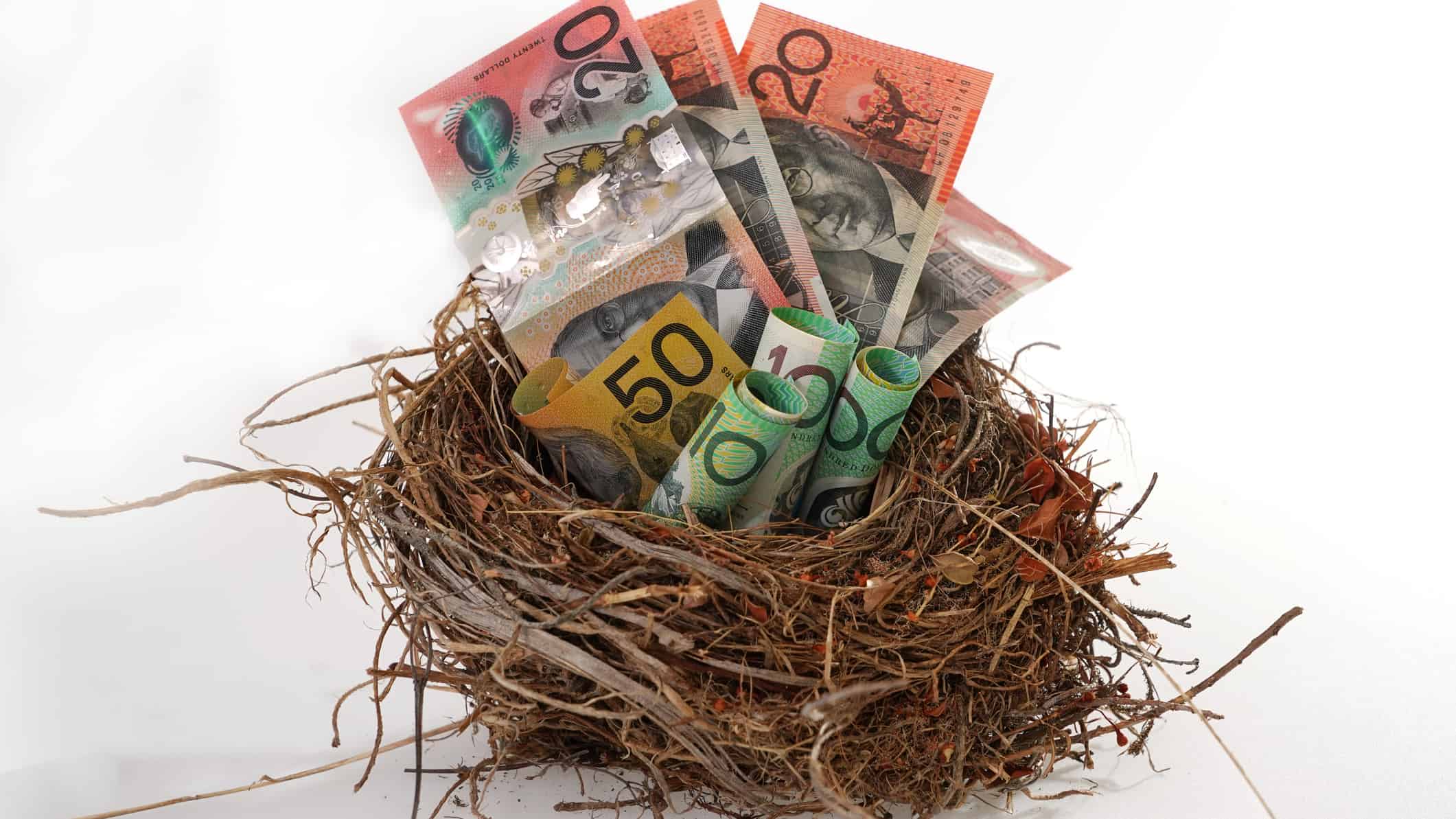
    Australian dollar notes in a nest, symbolising a nest egg.

    When it comes to superannuation, having a goal in mind for when you want to retire and what sort of income you’re aiming for is a great start.

    The sooner you start planning for retirement, the sooner you start to reap the benefits of compound interest and potentially tax-effective ways to save.

    Why $1000 a week?

    I’ve selected a figure of $1000 per week, or $52,000 per year, because it’s not far off the Association of Super Funds of Australia (ASFA) figure of $55,923 a year, which they say is needed for a single person who owns their own home to have a comfortable retirement.

    So what exactly do they mean by comfortable?

    This involves being able to afford top-level health insurance, a reasonable car, fast broadband, appropriate devices, regular leisure activities, an annual domestic trip, and an overseas holiday every 7 years.

    It’s not an abundant lifestyle, but it definitely fits the “comfortable” bill.

    So how much would you need in your superannuation to deliver an income stream to afford such a lifestyle?

    It all depends on the dividend yield you are receiving from your stocks.

    According to S&P Dow Jones, the S&P/ASX 200 Index (ASX: XJO) delivered an average trailing dividend yield of 4.15% from July 2011 to December 2024.

    But this includes plenty of companies that pay low or no dividends. It’s quite possible to aim for a portfolio which delivers a dividend yield of around 5%, while also including some companies which pay a lot more.

    In terms of companies that are in the ballpark, three to consider are APA Group (ASX: APA), Amcor Plc (ASX: AMC), and Regal Partners Ltd (ASX: RPL).

    For the first two, both companies are operating in markets where they have a dominant position and are unlikely to be disrupted in a hurry by new technology.

    Broker Morgans recently issued a research note on Amcor, which said the company will pay a dividend yield of 6.3% this year, then likely rise to 6.6% by FY28.

    Regarding gas pipeline operator APA, Jarden has forecast that they will increase their dividend from 58 cents this year to 60 cents by FY28, for a 6.5% dividend yield.

    Regal Partners, meanwhile, is expected to pay a dividend yield of 6.2% this year, rising to 7.6% by 2028, according to Bell Potter, which also predicts significant capital returns, with the company’s shares expected to increase to $4.70, up from $2.89.

    How much superannuation do you need?

    So, back to the calculations of how much super you’d actually need to generate $52,000 a year, the figure sits at $1.04 million if you’re working off a 5% dividend yield, and no drawdown of your nest egg.

    So what if you want to boost your super now?

    If you’re looking to maximise your superannuation contributions and potentially reduce your tax bill, it’s worth having a look at the amount of concessional contributions you have made and whether you can top that up.

    Concessional contributions are contributions made to superannuation from your before-tax salary, and include the super guarantee contributions made by your employer, which are 12% of your salary.

    Each financial year, you are allowed to make concessional contributions of up to $30,000. Extra contributions made beyond what your employer contributes can serve to reduce your tax load, as contributions are taxed at 15%. 

    In terms of figuring out how much extra you can put into your super in this way, it is possible to keep track of your concessional contributions by using the Australian Taxation Office’s online services.

    Your superannuation fund might also be able to show you where you stand with regard to concessional contributions.

    If you do put extra into your super and want it to be a concessional contribution, you also need to lodge a notice of intent to claim, which alerts your super fund that it is a concessional contribution, and they will take the 15% tax out as necessary.

    This is necessary as it is also possible to make non-concessional contributions of up to $130,000 per year.

    The post How much do I need in my superannuation to get $1000 per week in passive income? appeared first on The Motley Fool Australia.

    Should you invest $1,000 in Apa Group right now?

    Before you buy Apa Group shares, consider this:

    Motley Fool investing expert Scott Phillips just revealed what he believes are the 5 best stocks for investors to buy right now… and Apa Group wasn’t one of them.

    The online investing service he’s run for over a decade, Motley Fool Share Advisor, has provided thousands of paying members with stock picks that have doubled, tripled or even more.*

    And right now, Scott thinks there are 5 stocks that may be better buys…

    * Returns as of 16 June 2026

    .custom-cta-button p {
    margin-bottom: 0 !important;
    }

    More reading

    Motley Fool contributor Cameron England has no position in any of the stocks mentioned. The Motley Fool Australia’s parent company Motley Fool Holdings Inc. has no position in any of the stocks mentioned. The Motley Fool Australia has positions in and has recommended Amcor Plc and Apa Group. The Motley Fool has a disclosure policy. This article contains general investment advice only (under AFSL 400691). Authorised by Scott Phillips.