We've lost count of how many times insiders have accumulated shares in a company that goes on to improve markedly…
from Yahoo Finance https://ift.tt/31BEPMe
from Yahoo Finance https://ift.tt/2ZxePPw
On Thursday, Wedbush analyst Dan Ives raised his bull case price target for shares of Tesla to $2,000 from $1,500. While his base case was lifted from $1,000 to $1,250 (a street high), he maintains a neutral rating on the stock. The Final Round panel discusses the bullish call, and the road ahead for the electric automaker.
from Yahoo Finance https://ift.tt/38nEM81
We at Insider Monkey have gone over 821 13F filings that hedge funds and prominent investors are required to file by the SEC The 13F filings show the funds' and investors' portfolio positions as of March 31st, near the height of the coronavirus market crash. We are almost done with the second quarter. Investors decided […]
from Yahoo Finance https://ift.tt/3gcCXgK

Building a dividend share portfolio at the present time could be a means of generating a generous passive income over the coming years. Valuations across the share market are relatively attractive after the March market crash from the coronavirus, with many shares offering wide margins of safety.
Furthermore, a lack of appeal among other income-producing assets may increase demand for dividend shares in the long run. With stimulus packages rolled out in major economies, the growth prospects for many industries could improve significantly.
Due to the March market crash, it is possible to build a dividend share portfolio that contains companies with low valuations. Although investor sentiment rebounded sharply after the market’s crash, many companies continue to trade on valuations that are below their long-term averages. This may mean that they offer relatively high yields that produce a generous passive income.
It may also lead to impressive capital returns in the coming years. Buying shares when they trade at attractive prices has previously been a successful means of generating above-average total returns. As the share market gradually recovers, your portfolio’s value could rise. This may make it easier to generate a passive income in the long run.
A dividend share portfolio may offer significantly greater income prospects than other assets over the coming years. Interest rates have been relatively low for a number of years, and may now fail to rise rapidly as policymakers across the world seek to provide support to their economies. This may reduce demand for income-producing assets such as bonds and cash, which could push many income-seeking investors towards dividend shares.
Therefore, as well as offering a relatively high yield, dividend shares could become increasingly popular among investors. This may help to push their share prices higher, thereby leading to greater total returns for investors who hold them as part of a diversified portfolio.
Owning a dividend share portfolio may not produce high returns in the short run. The prospects for positive global economic growth have rapidly declined over the past few months, and risks such as a second wave of coronavirus may continue to weigh on the outlook for world GDP.
However, the global growth outlook could be positively impacted by fiscal and monetary policy stimulus taking place in major economies. After all, stimulus packages implemented in the global financial crisis had a positive impact on asset prices and economic activity.
Although this may not lead to instant gains for dividend share prices, over the long run it is likely to produce capital growth. Alongside the relatively high-income returns available on many dividend shares, the end result could be attractive total returns that make now the right time to start building a dividend share portfolio.
We hear it over and over from investors, “I wish I had bought Altium or Afterpay when they were first recommended by The Motley Fool. I’d be sitting on a gold mine!” And it’s true.
And while Altium and Afterpay have had a good run, we think these 5 other stocks are screaming buys. And you can buy them now for less than $5 a share!
*Extreme Opportunities returns as of June 5th 2020
More reading
Motley Fool contributor Peter Stephens has no position in any of the stocks mentioned. The Motley Fool Australia has no position in any of the stocks mentioned. We Fools may not all hold the same opinions, but we all believe that considering a diverse range of insights makes us better investors. The Motley Fool has a disclosure policy. This article contains general investment advice only (under AFSL 400691). Authorised by Scott Phillips.
The post The 3 reasons why I’d build a dividend share portfolio right now appeared first on Motley Fool Australia.
from Motley Fool Australia https://ift.tt/2VHmoBY
South Korea’s LG Chem Ltd plans to start producing batteries for Tesla Inc vehicles at a domestic factory this year after the U.S. electric carmaker raised orders to cope with demand, a person familiar with the matter said on Friday. “Tesla is asking not only LG Chem but other suppliers to increase supplies, as its cars are selling well,” the person told Reuters. A second person with knowledge of the situation also said LG Chem is converting some of its production in South Korea to produce batteries for Tesla.
from Yahoo Finance https://ift.tt/3eWTRQw
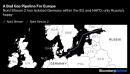
(Bloomberg Opinion) — U.S. President Donald Trump is furious at Germany for many reasons, not all of them fathomable. In phone conversations with Angela Merkel, he’s allegedly called the German chancellor “stupid” and denigrated her in “near-sadistic” tones. Though this be madness, as the Bard might say, there is — on rare occasions — method in it. One such case is Nord Stream 2.It is an almost-finished gas pipeline under the Baltic Sea between Russia and Germany, running right next to the original Nord Stream, which has been in operation since 2011. “We’re supposed to protect Germany from Russia, but Germany is paying Russia billions of dollars for energy coming from a pipeline,” Trump roared at a recent campaign rally. “Excuse me, how does that work?”As is his wont, the president thereby conflated many things. One of his grievances is that Germany has long been scrimping on its military spending, in effect free-riding on U.S. protection, for which he wants to punish his “delinquent” ally. Another is that the European Union, which he considers Germany’s marionette, allegedly takes advantage of the U.S. in business. Trump also wants to sell Europe more American liquefied natural gas (LNG).But Trump isn’t the only American trying to stop Nord Stream 2. In December, Congress aimed sanctions at a Swiss company that supplied the ships to lower the pipes into the water. This delayed the pipeline’s launch. Then Russia sent another vessel to finish the job. So this week a bipartisan group of Senators moved to widen the sanctions in order to kill Nord Stream 2 altogether.The problem is that if this new round becomes law, it will amount to an all-out economic assault on Europe. It could hit individuals and companies from many countries that are only tangential to the project — by underwriting insurance for the pipeline, say, or providing port services to the ships involved.Considering this an instance of illegal American extraterritoriality, the German government now plans to make the EU retaliate against the U.S. Trump, in the heat of America’s “silly season” leading up to November, could then strike back with new tariffs on German cars or a full-blown trade war. The transatlantic alliance, which was already frayed, is close to tearing.To me, this situation increasingly resembles “chicken,” a classic in game theory. The question is whether both sides are merely feigning recklessness (as the game assumes) or are already too far gone. And that applies just as much to the Germans. They like to play the reasonable side in transatlantic fights but deserve just as much blame as Trump and Congress for causing this mess.If Russia were a normal country, the German rationale for this pipeline might make sense. Europe will need more gas, especially to replace much dirtier coal and to supplement renewable sources of energy on the way to becoming carbon-neutral. And to get that gas, it makes sense to diversify — between Norwegian imports, American LNG or any other sort, including the Russian stuff. And piping it into Europe along the shortest route — through the Baltic — is efficient.But Russia is far from a normal country. It has for years been waging hybrid warfare in Europe, ranging from disinformation campaigns to aggression in Ukraine. At Germany’s urging, Russia recently extended a contract with Kiev to keep piping gas through Ukraine for several more years. But in the longer term, the new pipeline gives Russia dangerous geopolitical and strategic options.With two pipelines through the Baltic and another big one through the Black Sea, Russia could in the future cut all central and eastern European countries out of billions in transit fees. The country already controls almost 40% of the EU’s gas market even without Nord Stream 2. Once that goes online, the rest of Europe may become too dependent and therefore vulnerable to blackmail. When Trump calls Germany “a captive to Russia,” he has half a point.This is why Poland and the Baltic republics of Latvia, Lithuania and Estonia also oppose Nord Stream 2. As NATO’s eastern front line and former victims of invasion and aggression, they fear Russia more viscerally than Germans do nowadays. Psychologically, the Poles distrust any deal between Germany and Russia over their heads, because it reminds them of the Molotov-Ribbentrop Pact of 1939, which carved up their region between Nazi and Soviet spheres of influence.My question to the Germans, then, is why they have for years been deaf to these strategic concerns by their partners in NATO and the European Union, while coddling their own pro-Russian business lobbies and, of course, the Kremlin.German intransigence looks even more unsavory when considering who within Germany is most passionately in favor of the pipeline. Support for it skews sharply to the left, with its long tradition of anti-American and pro-Russian leanings. The most egregious example is Gerhard Schroeder, a Social Democrat who was Angela Merkel’s predecessor as chancellor. He’s always been buddies with Russian President Vladimir Putin. These days he also chairs the supervisory board of Nord Stream AG, which is owned by Gazprom PJSC and thus controlled by the Kremlin, as well as the board of Rosneft Oil Co PJSC, a Russian oil giant.This week, Schroeder testified to the Bundestag that Germany and Europe should prepare tough countermeasures against U.S. sanctions. He won support from The Left, a party that descends from the former regime in East Germany.Nord Stream 2 was and is a terrible idea. It’s a geopolitical project disguised as a private business deal. It has shown Germany to be an insensitive and naïve ally, and the U.S. to be a truculent one. It is now rending what little remains of their former relationship. If there is any way to leave these pipes buried and forgotten under the sea, all involved should discreetly and diplomatically search for it. Otherwise, this game of chicken will end the way it’s not supposed to.This column does not necessarily reflect the opinion of the editorial board or Bloomberg LP and its owners.Andreas Kluth is a columnist for Bloomberg Opinion. He was previously editor in chief of Handelsblatt Global and a writer for the Economist. He's the author of "Hannibal and Me." For more articles like this, please visit us at bloomberg.com/opinionSubscribe now to stay ahead with the most trusted business news source.©2020 Bloomberg L.P.
from Yahoo Finance https://ift.tt/3eWItnv