Author: therawinformant

  • How to Ride a Multi-Bagger Opportunity in Virgin Galactic Stock

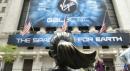
    How to Ride a Multi-Bagger Opportunity in Virgin Galactic StockThe industry is shooting for the stars. But when it comes to investing in Virgin Galactic (NYSE:SPCE) and SPCE stock, it's enough to stay tethered to the price chart as well as a smart risk-adjusted position in a sometimes hostile investing environment. Let me explain.Source: Tun Pichitanon / Shutterstock.com Space, it's the final frontier. And this week we got a bit closer to exploring those boundaries face-to-face than we've been in a long time. Tesla's (NASDAQ:TSLA) Elon Musk was expected to send two astronauts into orbit via his privately held SpaceX venture on Wednesday. It would have marked the first manned mission into space in more than nine years. However, Mother Nature scuttled the launch.For many stargazers watching from the sidelines should be rewarded Saturday when a second attempt is planned. But for those that want to participate on a whole other level and where "mission accomplished" can spell big-time profits, it's time to consider buying SPCE stock.InvestorPlace – Stock Market News, Stock Advice & Trading TipsSPCE stock is the publicly-traded version of Sir Richard Branson's Virgin Galactic. The venture's angle on the race to space is commercial tourism. And amid the skepticism and worries, there's stronger reasons to see shares as positioned for huge future success.To be clear, right this second, it isn't a risk asset that's going to be universally appealing. The company's lack of profitability among other metrics investors find useful, is certain to keep many looking the other way. Nevertheless, Virgin Galactic is positioned as the kind of investment that could eventually yield a multi-bagger return. But don't just take my word for it. * 7 Red-Hot Vaccine Stocks Racing to Develop a Coronavirus Cure InvestorPlace's Louis Navellier — a guy who knows a thing or two about finding massive ground floor investment opportunities — is on board with SPCE stock. A March recommendation has proven "early," but with his bullish thesis largely intact, today's investors are reasonably at an even stronger advantage. And Louis isn't the only pro bullish on Virgin Galactic.More recently, Matt McCall asked investors to look past the company's recent mixed earnings report and embrace shares as an "excellent spec play."Matt and his research team are upbeat on the stock's prospects after factoring in fine print within the quarterly press release. Those devilish details announced Virgin's Space Act Agreement with NASA to develop high-speed travel technologies that will be used right here on planet Earth. And that could be a very profitable win for the company regardless of what happens in the final frontier.Okay, but how about Richard Branson's sale of 2.6 million shares earlier this month? Top insider selling could be cause for investors to hit pause, instead of the buy button. That would be a mistake though. The sale, which netted in the neighborhood of $500 million and reduced the founder's stake by about 22%, is being used as a lifeline to support his other global and consumer driven businesses hurt by the novel coronavirus. All told, the headline fails to tell the whole story. SPCE Stock Weekly Chart Source: Charts by TradingViewSimilar to most growth stocks in their earliest phase of being introduced to investors, SPCE stock has seen euphoric highs backed by unsustainable optimism followed by "end of times" like bearish behavior. From Amazon (NASDAQ:AMZN) to Netflix (NASDAQ:NFLX) or Nvidia (NASDAQ:NVDA), it has happened to the very best of them.To be fair, the next part of those storied journeys, which delivered massive future returns, is the more difficult task to replicate. But SPCE stock is in position technically right now to begin its own launch higher.Shares are currently in the early stages of a building uptrend after this year's ride into the high heavens and crash back down to earth. What makes a purchase today more interesting is that the stock has pulled back fairly hard the past couple weeks from its own ubiquitous novel coronavirus bottom to form a new, but possibly questioned pivot low.The chart above details how last week's pivot undercut a low in April. It's certain to have raised a flag or two for some investors. More importantly, shares have now confirmed a new modestly lower low without failing the initial pattern on a closing basis. Along with a bullish stochastics crossover inside oversold levels, I'm optimistic of Virgin Galactic's chances for a sustainable rally from here.Today's forecast is calling for a price target that breaks above the 38% retracement level, which acted as resistance earlier this month. Specifically, I'm looking for shares to reclaim the 50% to possibly 62% levels in the second half of 2020.But don't expect an easy ride, even if the outlook proves correct. A rally is also very likely to remain bumpy, counterproductive at times and able to knock the best stop losses out of contention. With that in mind, one favored way to position for your own potential multi-bagger with vastly reduced and limited risk is the Oct $23 / $30 bull call spread for about $1.15. This also requires much less from SPCE stock.Disclosure: Investment accounts under Christopher Tyler's management do not currently own positions in securities mentioned in this article. The information offered is based upon Christopher Tyler's observations and strictly intended for educational purposes only; the use of which is the responsibility of the individual. For additional market insights and related musings, follow Chris on Twitter @Options_CAT and StockTwits. More From InvestorPlace * Top Stock Picker Reveals His Next 1,000% Winner * The Huge Story for 2020 & Beyond That You Aren't Hearing About * Revolutionary Tech Behind 5G Rollout Is Being Pioneered By This 1 Company * The 1 Stock All Retirees Must Own The post How to Ride a Multi-Bagger Opportunity in Virgin Galactic Stock appeared first on InvestorPlace.

    from Yahoo Finance https://ift.tt/2ZQlkyA

  • 31M have or plan to withdraw from retirement due to COVID-19: survey

    31M have or plan to withdraw from retirement due to COVID-19: surveyBankrate.com released a survey noting that 31 million Americans have or plan to tap into their retirement savings because of the COVID-19 pandemic. Joining The Final Round to discuss the survey further is Bankrate.com’s Chief Financial Analyst Greg McBride.

    from Yahoo Finance https://ift.tt/3cjLJrc

  • Alibaba Stock Bulls Shouldn’t Sweat Delisting

    Alibaba Stock Bulls Shouldn’t Sweat DelistingAlibaba (NYSE:BABA) stock investors just can't seem to catch a break. Between the trade war, the novel coronavirus and now fears over a potential U.S. delisting, the stock has been bombarded with negative headlines over and over.Source: Kevin Chen Photography / Shutterstock.com None of these headlines have anything directly to do with the company or its business. And it's likely none of them will ultimately have any impact on the company's long-term valuation.The Holding Foreign Companies Accountable Act requires all companies listed on U.S. exchanges to certify "they are not owned or controlled by a foreign government." In addition, these companies would be delisted if their auditors aren't certified by the Public Company Accounting Oversight Board after three consecutive years of inspection. And the bill specifies that companies can't simply delist from the Nasdaq or the NYSE and trade on the OTC market as a loophole.InvestorPlace – Stock Market News, Stock Advice & Trading Tips * 7 Red-Hot Biotech Stocks Racing to Develop a Coronavirus VaccineI am a Alibaba stock investor. I will also be the first to admit that the company most certainly operates under the influence of the Chinese government. But I don't see a potential U.S. delisting as a problem for several reasons. Delisting Alibaba Stock Is Likely a BluffIt's election year. There's a lot of anger in the world about Covid-19. Some people argue that China is rightfully to blame for allowing conditions in wet markets that are conducive to viral mutations. Others argue that blaming Chinese culture for the virus is judgmental and even racist. But between the virus, the trade war, and fraudulent U.S.-listed Chinese companies like Luckin Coffee (NASDAQ:LK), there's a lot of hostility toward China these days among U.S. voters.In other words, going after Chinese stocks is low-hanging fruit for politicians. Passing some financial crackdown law on Chinese companies is an easy way for politicians to appear "tough on China," whatever that means. Meanwhile, I doubt even President Donald Trump actually cares about protecting investors. I think he cares about winning the trade war, and this crackdown is his latest leverage. Delisting May Be DifficultLet's assume Congress passes the bill and regulators actually attempt to enforce it. It may be more difficult to gain access to Alibaba's accounting than it seems. Americans actually own shares of Alibaba Group Holding Corp, not Alibaba itself. Alibaba stock represents shares of a variable interest entity (VIE) that is headquartered in the Cayman Islands, not China. So the VIE is listed in the U.S., not Alibaba itself. See what I'm getting at?I'm sure the company has made sure the VIE's accounting as clean as a whistle. I'm not a lawyer or an accountant. But I could easily see how trying to access the company's accounting through the VIE could be difficult. It might even be virtually impossible.Alibaba launched a dual listing in Hong Kong just last year. That gives the company flexibility that other Chinese companies may not have.For example, if U.S. regulators ultimately delist Alibaba stock, it won't happen overnight. Investors may simply be able to transfer their shares to a U.S. broker that allows trading in Hong Kong stocks and covert to Hong Kong shares. They may also receive cash for their shares for a valuation roughly in-line with the company's Hong Kong valuation. Alibaba May Simply ComplyBut potentially the most likely outcome is that nothing at all happens to Alibaba stock. Alibaba CFO Maggie Wu recently told investors that the company has been an SEC filer since 2014. She said the company stands behind the integrity of its accounting."Alibaba's financial statements are prepared in accordance with U.S. GAAP and since our inception in 1999, we have been audited by PwC Hong Kong, PwC Hong Kong is the local affiliate of the worldwide PwC's firm, and its auditing standards are overseen by the PwC national office in the United States," Wu said.In fact, the company was reportedly investigated by the SEC back in 2016 for its accounting practices. Nothing major seemed to come to light as a result of that investigation.U.S. investors seem to assume all Chinese numbers are illegitimate. But if the company actually does want to comply and remain listed in the U.S., maybe the new law will finally help eliminate much of the valuation gap between it and Amazon.com (NASDAQ:AMZN).The delisting news has rattled Alibaba stock, even though the company keeps putting up one impressive quarter after another. Traders should expect more weakness in the near term until the market gets more clarity about the situation.However, at this point, the new compliance requirements could easily turn out to be as much of a blessing as a curse for Alibaba stock in the long term.Wayne Duggan has been a U.S. News & World Report Investing contributor since 2016 and is a staff writer at Benzinga, where he has written more than 7,000 articles. Mr. Duggan is the author of the book Beating Wall Street With Common Sense, which focuses on investing psychology and practical strategies to outperform the stock market. As of this writing, Wayne Duggan was long BABA. More From InvestorPlace * Top Stock Picker Reveals His Next 1,000% Winner * The Huge Story for 2020 & Beyond That You Aren't Hearing About * Revolutionary Tech Behind 5G Rollout Is Being Pioneered By This 1 Company * The 1 Stock All Retirees Must Own The post Alibaba Stock Bulls Shouldn't Sweat Delisting appeared first on InvestorPlace.

    from Yahoo Finance https://ift.tt/2MdXeG7

  • Wells Fargo Stock Is Too Cheap

    Wells Fargo Stock Is Too CheapWells Fargo (NYSE:WFC) is a tremendous bargain today. Wells Fargo stock, which was trading at $26.30 this afternoon, is selling for just 80% of its tangible book value per share (TBVPS) of $32.90.Source: Ken Wolter / Shutterstock.com To put it succinctly, that valuation is simply too low. Let's assume the very worst happens: somehow Wells Fargo will have to write off so many loans that its book value falls to its present stock price.First of all, that suggests that loans worth 17.3% of the whole company's shareholder value will be written off. Since its book value is now $182.7 billion, under that scenario, $31.5 billion of loans will go under. That means that the bank will have to assume that the loans will never be repaid and write them off as charge-offs. That seems almost impossible.InvestorPlace – Stock Market News, Stock Advice & Trading TipsEven during the financial crisis in 2008, Wells Fargo's book value did not decline. It actually increased from 2007 to 2008 and through 2009. So contemplating a 17.3% decline in the bank's book value seems almost absurd. But that is how the stock market is pricing WFC stock today.Another reason why the price today seems out of whack is that even in the last recession, the bank's stock price got down to about $12 per share. But its book value was $16.09 per share, according to Value Line Research. * 7 Red-Hot Vaccine Stocks Racing to Develop a Coronavirus Cure Wells Fargo stock did not change hands for 75% of the bank's book value for very long. When the economy started to improve, it quickly shot up to 100% of book value per share and then rose further.The economy is now starting to improve. The bank's stock price should soon start to reflect that reality. Based on Wells Fargo's present TBVPS of $32.09, the stock looks poised to gain about 22%. The Bank's Dividend Yield Implies a Potential Gain of 41%Wells Fargo pays an annual dividend of $2.04 per share. On April 28, it declared a quarterly dividend of 51 cents per share. Its dividend yield stands at 7.5%.But the company has not decided to cut its dividend. It has made no mention of doing so, even though it suspended its share buybacks.Analysts, on average, expect its earnings per share to come in at $1.43 this year. But that includes a whopping $3 billion reserve hit (equivalent to almost 73 cents per share) to the bank's earnings. However, if the bank does not take such a hit, it will have enough funds to cover its dividend. Its EPS for 2021 is expected to be $2.58, according to Seeking Alpha. So it will be able to cover its dividend next year.Therefore, I don't believe the bank will cut its dividend this quarter. Even if it does, I doubt whether its dividend will stay below its current level for very long.Therefore, based on Wells Fargo's historical dividend yield, at what price should the stock be trading? According to Seeking Alpha, its average dividend yield in the past four years was 3.49%.That indicates that the stock should be trading at $58.45 (i.e. $2.04 divided by 3.49%), not $26.30. But let's assume that the stock's current yield should be 50% higher than its historical level. After all, the economy will undergo a U-shaped recovery, and it will take awhile before the stock recovers.That implies the dividend yield now should be 5.5% or so (halfway between 3.5% and 7.5%). That means the stock should be at least $37 per share. That represents a gain of 41%. Merging the Two Implied Values for Wells Fargo StockAs we have seen, the true value for Wells' stock, based on its book value per share, should be $32.09. That's about 22% above today's price.Using a modified historical dividend yield approach, the stock is worth $37 per share, a gain of 41%.The average of these two target prices is $34.55 per share. So look for the shares to gain 31% over the next year or even earlier.One positive catalyst for the shares could be the June release of the company's stress tests by the Federal Reserve. I wrote about that in my earlier article, which was published last month. I don't believe the Federal Reserve is going to force the bank to cut its dividend to preserve capital.Therefore, Wells Fargo stock seems to provide conservative investors with a large margin of safety. That's especially true now because it sells for such a huge discount to its tangible book value.As of this writing, Mark Hake, CFA does not hold a position in any of the aforementioned securities. Mark Hake runs the Total Yield Value Guide which you can review here. More From InvestorPlace * Top Stock Picker Reveals His Next 1,000% Winner * The Huge Story for 2020 & Beyond That You Aren't Hearing About * Revolutionary Tech Behind 5G Rollout Is Being Pioneered By This 1 Company * The 1 Stock All Retirees Must Own The post Wells Fargo Stock Is Too Cheap appeared first on InvestorPlace.

    from Yahoo Finance https://ift.tt/2XOmuIj

  • Costco to bring back in-store food sampling

    Costco to bring back in-store food samplingYahoo Finance’s Brian Sozzi, Alexis Christoforous, and Heidi Chung break down the market action for Costco.

    from Yahoo Finance https://ift.tt/2XIrDBJ

  • Market Recap: Friday, May 29

    Market Recap: Friday, May 29Stocks closed at their highest levels since at least March, ending Friday’s volatile session mostly higher after President Donald Trump announced retaliatory measures against China that were less negative for markets as some had feared. Myles Udland, Sean Smith, Rick Newman, and Akiko Fujita discuss on The Final Round.

    from Yahoo Finance https://ift.tt/3ey1k88

  • 31M have or plan to withdraw from retirement due to COVID-19: survey

    31M have or plan to withdraw from retirement due to COVID-19: surveyBankrate.com released a survey noting that 31 million Americans have or plan to tap into their retirement savings because of the COVID-19 pandemic. Joining The Final Round to discuss the survey further is Bankrate.com’s Chief Financial Analyst Greg McBride.

    from Yahoo Finance https://ift.tt/3cjLJrc

  • ASX investors brace to ride the next wave of “irrational exuberance”

    hand about to burst bubble containing dollar sign, asx shares, over valued

    Better strap in and be prepared to ride the second wave of “irrational exuberance” fellow Fools!

    That’s the term used by former US Federal Reserve Alan Greenspan to describe the tech bubble at the turn of the century.

    We know how dramatically that bull market ended with overstretched valuation proving to be too much for share markets to withstand.

    The same questions are being asked now with the S&P/ASX 200 Index (Index:^AXJO) rebounding close to 30% in just two months from its COVID-19 lows.

    Tech bubble 2.0?

    US equities have jumped even harder and that’s largely due to the tech titans Facebook, Inc. (NASDAQ: FB), Amazon.com, Inc. (NASDAQ: AMZN), Apple Inc. (NASDAQ: AAPL), Netflix Inc (NASDAQ: NFLX) and Alphabet Inc (NASDAQ: GOOG).

    You can see the connection with irrational exuberance, especially when experts warn the US market is expensive no matter now you look at it.

    Oxford Economics is one ringing the warning bell as it believes US shares may be as much as 16% overvalued, according to Bloomberg.

    Shares overpriced on multi-levels

    The strategist for the forecasting and quantitative analysis firm, Daniel Grosvenor, even suggested that shorting the market is looking increasingly favourable.

    “The S&P 500 is expensive versus history on almost all the measures we consider,” Grosvenor said.

    Bloomberg reported that his measure of valuing companies by discounting the value of their future cashflows would still be 6% overvalued even with an assumption of a much higher terminal growth rate of 4%. The terminal growth rate assumption is usually set at CPI or a little less.

    Is the ASX in a bubble?

    Our market is also looking stretched. The ASX 200 is trading on a price-earnings multiple of around 17 times, or over 13% above its long-term average.

    Given that the earnings growth outlook is pretty weak as the global economy gradually recovers from the coronavirus shutdown, some would argue the market should be priced at a discount to its average – let alone a premium.

    These lofty valuations leave equities prone to a sharp sell-off when we hit the next storm cloud. I’ve listed a number of near-term thorny issues that could pop the bull party balloon here.

    It’s not valuation, stooped!

    But I don’t believe this isn’t the time to cut and run even as the valuation warning light flashes. This call isn’t based on irrational optimism either!

    Remember the words from famed economists John Maynard Keynes? The market can stay irrational longer than you can stay solvent.

    The tech wreck proved this. Greenspan’s warning of irrationality came in 1996 but the party didn’t stop till 2001. There have been a number of highly regarded fund managers who tried shorting the NASDAQ before the crash and they run out of money before they could collect on their bet.

    Foolish takeaway

    The thing is, valuations in themselves seldom spell the end of a bull run. We were struggling with this issue even before COVID-19, and if the pandemic didn’t happen, I believe the markets would have kept pushing to new record highs.

    Irrational or otherwise, this bull run feels to me like it still has legs in the short-term and that’s in no small part due to the record amount of stimulus injected into the global financial system.

    This doesn’t mean we won’t see a big correction, but unless something else pops out from left field, signs are pointing to more gains for the ASX over the coming weeks, if not a bit longer.

    As the market adage goes – the trend is your friend.

    Just don’t be the one holding the parcel when the music stops.

    5 “Bounce Back” Stocks To Tame The Bear Market (FREE REPORT)

    Master investor Scott Phillips has sifted through the wreckage and identified the 5 stocks he thinks could bounce back the hardest once the coronavirus is contained.

    Given how far some of them have fallen, the upside potential could be enormous.

    The report is called 5 Stocks For Building Wealth after 50, and you can grab a copy for FREE for a limited time only.

    But you will have to hurry — history has shown the market could bounce significantly higher before the virus is contained, meaning the cheap prices on offer today might not last for long.

    See the 5 stocks

    More reading

    John Mackey, CEO of Whole Foods Market, an Amazon subsidiary, is a member of The Motley Fool’s board of directors. Teresa Kersten, an employee of LinkedIn, a Microsoft subsidiary, is a member of The Motley Fool’s board of directors. Randi Zuckerberg, a former director of market development and spokeswoman for Facebook and sister to its CEO, Mark Zuckerberg, is a member of The Motley Fool’s board of directors.

    Brendon Lau has no position in any of the stocks mentioned. Connect with me on Twitter @brenlau.

    The Motley Fool Australia’s parent company Motley Fool Holdings Inc. owns shares of and recommends Amazon, Apple, Facebook, Microsoft, and Netflix and recommends the following options: long January 2021 $85 calls on Microsoft, short January 2021 $115 calls on Microsoft, short January 2022 $1940 calls on Amazon, and long January 2022 $1920 calls on Amazon. The Motley Fool Australia has recommended Amazon, Apple, Facebook, and Netflix. We Fools may not all hold the same opinions, but we all believe that considering a diverse range of insights makes us better investors. The Motley Fool has a disclosure policy. This article contains general investment advice only (under AFSL 400691). Authorised by Scott Phillips.

    The post ASX investors brace to ride the next wave of “irrational exuberance” appeared first on Motley Fool Australia.

    from Motley Fool Australia https://ift.tt/2At7vLC

  • Keep It Simple and Avoid Exxon Mobil Stock

    Keep It Simple and Avoid Exxon Mobil StockThe global economy is beginning to reopen, and that is very good news. Oil stocks were under pressure even before the pandemic hit, but things got worse as lockdowns began. Demand fell of a cliff, and even Exxon Mobil (NYSE:XOM) stock took a plunge.Source: Michael Gordon / Shutterstock.com At one point, Exxon Mobil stock was trading at levels not seen in 20 years.But, hope springs eternal. That hope is the only reason I can think of for investors to even consider buying Exxon Mobil stock today. Oil prices are rising. But it's hard to see prices moving to levels that would justify a long-term investment.InvestorPlace – Stock Market News, Stock Advice & Trading TipsIf you were brave enough to buy shares of Exxon Mobil on March 23, you've been rewarded with a nearly 40% gain. However, that gain can be chalked up to fishing in a barrel. While oil demand is likely to remain suppressed for some time, nobody expected prices to stay as low as they were.The questions seem to be how high will oil rise and how long will it take to get there? But if you're thinking of using rising oil as a reason to buy Exxon Mobil stock, you may want to reconsider. Don't Count on Oil to Save Exxon Mobil StockIf you look at the historical track of XOM stock with oil prices, a pattern emerges. When oil prices are low, there is a larger delta between the two prices. However, that delta narrows significantly the higher that crude prices go. * 7 Red-Hot Vaccine Stocks Racing to Develop a Coronavirus Cure So let's put it in simple terms. Crude prices have risen nearly 200% in the last month. In that same period of time, Exxon Mobil shares have climbed about 40%. And as of this writing, Exxon trades about 50% higher than the price of a barrel of oil.But if you look back to April 2019, when crude was trading around $65 per barrel, shares of XOM were around $80. It's a premium for sure, but much less than what you're getting today.But that's just one data point. Let's look at another. At the beginning of October 2018, crude oil was trading at around $76 per barrel. Investors could have snagged shares of Exxon Mobil stock for around $85. Do you see the point I'm trying to make?The conventional wisdom says that the rising price of crude is a tide that will lift all boats. And while that may be true on some levels, it has not been the case in terms of the price of Exxon Mobil stock. The Juice Isn't Worth the SqueezeBut wait you say, crude prices wouldn't have to rise that much higher for XOM stock to reach $60. And that would be a nice gain from its current level. Sure, all of that is true, but it's also relying on a lot of things to go right.JPMorgan Chase (NYSE:JPM) CEO Jamie Dimon recently predicted a "fairly rapid" recovery for the U.S. economy. But that is no guarantee that the price of oil is set to return to anything close to the kind of juice Exxon needs for growth. First of all, there is still a glut of oil on the market. Then you have to look at headwinds on the demand side.First, it's hard to estimate how many workers may decide that they want to continue working from home. And that number may increase if kids aren't allowed to go back to school in the fall.Second, business travel is likely to decline in the short term. And even for those companies that want to do business overseas, they may find that international destinations are not available. Will domestic travel be enough to overcome that? What about if airlines are required to enact strict social distancing protocols?And then there is the question of what demand will be for taking a cruise. All of these questions will have a profound effect on the direction of oil prices. And the futures market is saying not so fast. At the time of this writing, the highest price for crude on the futures market is the March 2021 contract which is currently at $35.93. The Bottom Line: It Costs Too Much to Get XOM WrongAt times investing can be very simple. In the case of Exxon Mobil stock, the fundamental question is, what is the cost of being wrong? Exxon recently froze its dividend. That in itself is not the problem. It's a prudent move in uncertain times. However, Exxon is borrowing money to pay for the existing dividend. That rarely works out well. And, even if oil does move higher, the cost of servicing the debt will be an additional anchor on stock prices.But once again ask yourself this question: Would a company freeze its dividend if it expected revenue to increase?Exxon Mobil has one of the lower debt-capital ratios in the oil industry. And unlike other oil stocks, there's little doubt that Exxon Mobil will live to fight another day. But even if you believe that the worst is over for Exxon Mobil stock, less bad is no reason to buy.If you're an investor that's looking for capital growth, you have probably missed your window. And now with a dividend freeze, I expect value investors will start looking for the door. If you're currently investing in the stock, I suggest you do the same.Chris Markoch is a freelance financial copywriter who has been covering the market for over five years. He has been writing for InvestorPlace since 2019. As of this writing, Chris Markoch did not hold a position in any of the aforementioned securities. More From InvestorPlace * Top Stock Picker Reveals His Next 1,000% Winner * The Huge Story for 2020 & Beyond That You Aren't Hearing About * Revolutionary Tech Behind 5G Rollout Is Being Pioneered By This 1 Company * The 1 Stock All Retirees Must Own The post Keep It Simple and Avoid Exxon Mobil Stock appeared first on InvestorPlace.

    from Yahoo Finance https://ift.tt/2BcrFdi