
Category: Stock Market

  • How has the Arafura share price gained 13% today?

    Miner looking at a tablet.

    Miner looking at a tablet.

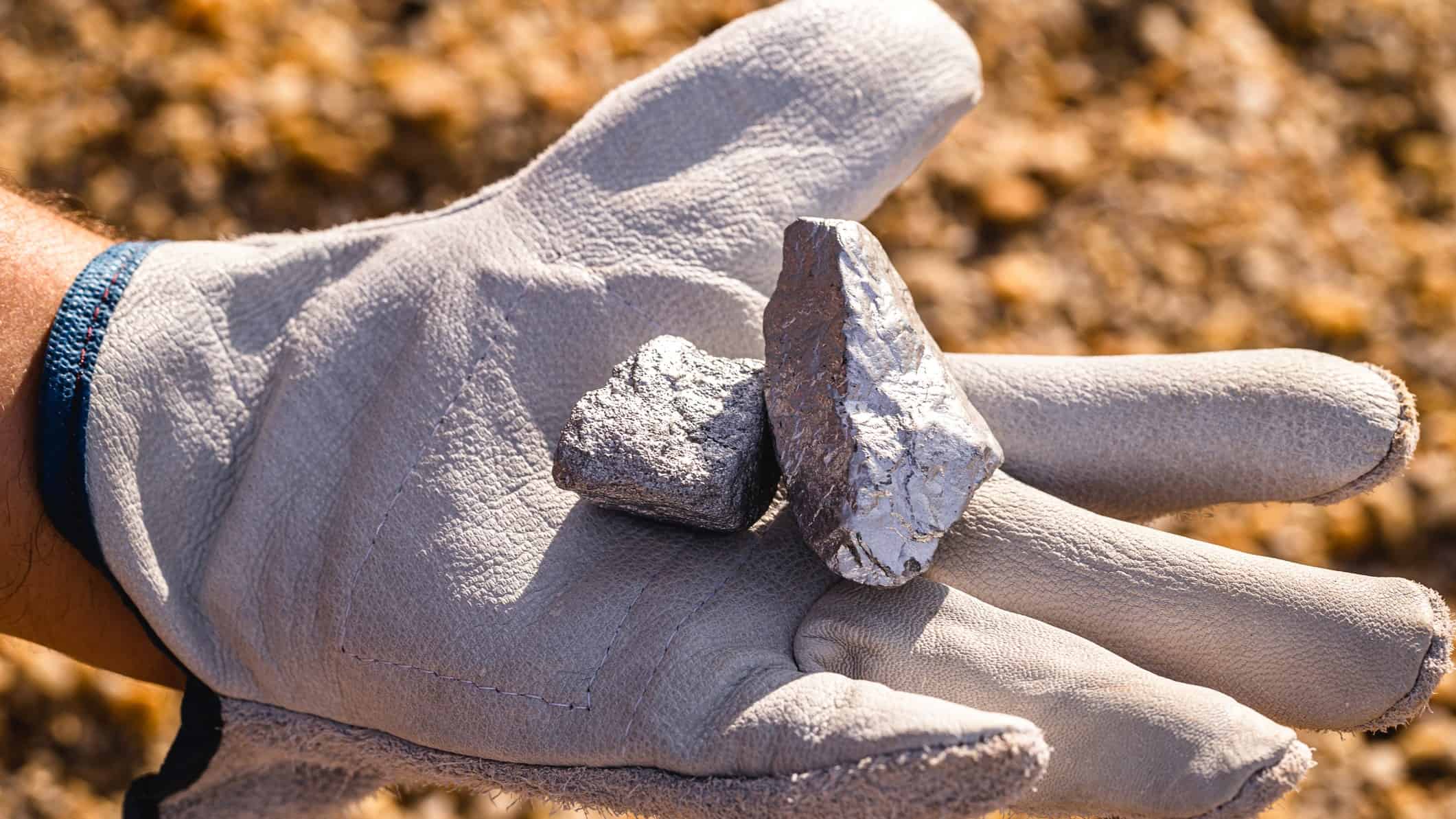
    It’s been a shaky start to this Tuesday’s trading for the All Ordinaries Index (ASX: XAO) and most ASX All Ords shares so far. At the time of writing, the All Ords has slipped by 0.07%. But let’s talk about what’s happening with the Arafura Rare Earths Ltd (ASX: ARU) share price.

    The Arafura share price is on fire today. The rare earths developer closed at 12 cents each yesterday afternoon. But this morning, Arafura climbed all the way up to 14.3 cents, a gain worth a stonking 13.6% at the time. Since then, the company has cooled off a little but is presently still up a healthy 8% at 13.5 cents apiece.

    So what on rare earth is going on here?

    How has this All Ords stock rocketed 13% today?

    Well, it seems to be a consequence of the announcement that the company made yesterday after market close.

    Arafura revealed that it has signed a new gas supply agreement. This agreement has been reached with the Mereenie joint venture, which is made up of Central Petroleum Limited (ASX: CTP), Cue Energy Resources Limited (ASX: CUE), Macquarie Mereenie and New Zealand Oil & Gas Ltd (ASX: NZO).

    Under the agreement, the joint venture will supply Arafura’s Nolans Project with up to 27.41 petajoules of natural gas for a three-year term, beginning in 2026. This term also has an option for a two-year extension.

    Macquarie Mereenie will supply most of the gas, contributing 13.7 petajoules. 6.85 petajoules will come from Central Petroleum, 4.8 from New Zealand Oil & Gas, and 2.06 from Cue Energy.

    This deal reportedly includes “take-or-pay provisions and fixed pricing, with allowances for escalation in line with the consumer price index”.

    It also hinges on a few conditions that are to be satisfied before 30 June 2024. These include the “execution of a gas transport agreement”, the “execution of a power purchase agreement”, approvals, permits and licenses being granted, and the “finalisation of debt financing”.

    Here’s some of what Arafura’s managing director Darryl Cuzzubbo had to say:

    We are pleased to confirm the terms of gas supply for Nolans. Ensuring access to local natural gas is a positive step in the development of this major project, which will see critical rare earth minerals from the Northern Territory delivered to customers around the world in support of energy transition initiatives.

    Arafura Rare Earths share price snapshot

    Despite today’s strong rise (investors evidently approve of today’s announcement), the Arafura share price has had a tough year.

    The company remains down almost 78% over the past 12 months, as well as down more than 20% in just 2024 to date.

    The shares are also a lot closer today to the 52-week low of 12 cents that we’ve seen just this week than its 52-week high of 70 cents a share.

    The post How has the Arafura share price gained 13% today? appeared first on The Motley Fool Australia.

    Wondering where you should invest $1,000 right now?

    When investing expert Scott Phillips has a stock tip, it can pay to listen. After all, the flagship Motley Fool Share Advisor newsletter he has run for over ten years has provided thousands of paying members with stock picks that have doubled, tripled or even more.*

    Scott just revealed what he believes could be the ‘five best ASX stocks’ for investors to buy right now. These stocks are trading at near dirt-cheap prices and Scott thinks they could be great buys right now…

    See The 5 Stocks
    *Returns as of 10 November 2023

    (function() {
    function setButtonColorDefaults(param, property, defaultValue) {
    if( !param || !param.includes(‘#’)) {
    var button = document.getElementsByClassName(“pitch-snippet”)[0].getElementsByClassName(“pitch-button”)[0];
    button.style[property] = defaultValue;
    }
    }

    setButtonColorDefaults(“#0095C8”, ‘background’, ‘#5FA85D’);
    setButtonColorDefaults(“#0095C8”, ‘border-color’, ‘#43A24A’);
    setButtonColorDefaults(“#fff”, ‘color’, ‘#fff’);
    })()

    More reading

    Motley Fool contributor Sebastian Bowen has no position in any of the stocks mentioned. The Motley Fool Australia’s parent company Motley Fool Holdings Inc. has no position in any of the stocks mentioned. The Motley Fool Australia has no position in any of the stocks mentioned. The Motley Fool has a disclosure policy. This article contains general investment advice only (under AFSL 400691). Authorised by Scott Phillips.

    from The Motley Fool Australia https://ift.tt/sFSYwNh

  • Challenger share price rockets 10% on half-year earnings

    Kid on a skateboard with cardboard wings soars along the road.Kid on a skateboard with cardboard wings soars along the road.

    The Challenger Ltd (ASX: CGF) share price ripped 10% higher in early trading and is the leading stock of the ASX 200 at the time of writing on Tuesday.

    It seems that ASX investors are receiving the investment manager’s FY24 half-year results with glee.

    The Challenger share price opened at $6.88 and quickly rose to a high of $7.23, up 9.88% on yesterday’s close. It is now trading at $7.10, up 7.9%.

    Let’s check out the report.

    Challenger share price leaps on news of 16% profit boost

    Here are the highlights for the six months ending 31 December 2023:

    • Normalised net profit before tax (NPBT) of $290 million, up 16% on the prior corresponding period (pcp) of 1H FY23
    • Statutory net profit after tax (NPAT) of $56 million, up 80% pcp
    • Total assets under management (AUM) $117 billion, up 18%
    • Normalised pre-tax return on equity (ROE) of 15%, up 270 basis points
    • Interim dividend 13 cents per share fully franked, up 8% pcp.

    What else happened in 1H FY24?

    Challenger said it is making significant progress in executing its growth strategy.

    Life book growth and strong funds management net inflows lifted the AUM by 18%.

    Its retirement income business, Challenger Life, recorded $5.3 billion in sales and a 330 basis-point increase in ROE.

    Challenger achieved a record in new business annuity sales of $1.9 billion, up 19% on last year.

    CEO Nick Hamilton said this demonstrated Challenger’s focus on driving more profitable, longer-duration
    business, with 90% of new business annuity sales for terms of two years or more.

    “This in turn is extending the tenor of our Life book, which will support higher, longer term profitability,” he said.

    The sales tenor averaged 8.9 years in 1H FY24 compared to 5.4 years in 1H FY23.

    Lifetime annuity sales also went up by 190% to $1.1 billion.

    What did Challenger management say?

    Hamilton commented that Challenger’s opportunity in the Australian retirement sector “is extraordinary”.

    Australia is now firmly focused on strengthening the retirement phase of superannuation. As more Australians live longer and retire in ever greater numbers, there will be more demand, across more channels for a broader range of retirement income solutions.

    Hamilton said Challenger has positioned itself to take advantage of this over the past two years.

    … our achievements in the first half of 2024 demonstrate that we are now delivering on that opportunity.

    In Life, we are driving growth across a broader range of channels, including deepening our relationships with superannuation funds.

    Our retirement partnership with Commonwealth Super Corporation and the launch of TelstraSuper’s lifetime pension, designed in partnership with Challenger, demonstrate our expertise in developing retirement and longevity solutions that address the specific needs of members in retirement.

    What’s next for Challenger?

    Challenger reaffirmed its FY24 normalised net profit before tax guidance of $555 million to $605 million.

    The company said it expects to reach the top half of that guidance.

    The guidance range excludes Challenger Bank, which has been sold.

    Challenger expects the sale to be completed in 2H FY24, subject to regulatory approvals.

    Challenger share price snapshot

    The Challenger share price is down by 2.2% over the past 12 months.

    This compares to a 2.7% increase for the S&P/ASX 200 Index (ASX: XJO).

    The post Challenger share price rockets 10% on half-year earnings appeared first on The Motley Fool Australia.

    Wondering where you should invest $1,000 right now?

    When investing expert Scott Phillips has a stock tip, it can pay to listen. After all, the flagship Motley Fool Share Advisor newsletter he has run for over ten years has provided thousands of paying members with stock picks that have doubled, tripled or even more.*

    Scott just revealed what he believes could be the ‘five best ASX stocks’ for investors to buy right now. These stocks are trading at near dirt-cheap prices and Scott thinks they could be great buys right now…

    See The 5 Stocks
    *Returns as of 10 November 2023

    (function() {
    function setButtonColorDefaults(param, property, defaultValue) {
    if( !param || !param.includes(‘#’)) {
    var button = document.getElementsByClassName(“pitch-snippet”)[0].getElementsByClassName(“pitch-button”)[0];
    button.style[property] = defaultValue;
    }
    }

    setButtonColorDefaults(“#0095C8”, ‘background’, ‘#5FA85D’);
    setButtonColorDefaults(“#0095C8”, ‘border-color’, ‘#43A24A’);
    setButtonColorDefaults(“#fff”, ‘color’, ‘#fff’);
    })()

    More reading

    Motley Fool contributor Bronwyn Allen has no position in any of the stocks mentioned. The Motley Fool Australia’s parent company Motley Fool Holdings Inc. has no position in any of the stocks mentioned. The Motley Fool Australia has recommended Challenger. The Motley Fool has a disclosure policy. This article contains general investment advice only (under AFSL 400691). Authorised by Scott Phillips.

    from The Motley Fool Australia https://ift.tt/8Gj1INr

  • CSL shares tumble despite first-half earnings beat

    A man slumps crankily over his morning coffee as it pours with rain outside.

    A man slumps crankily over his morning coffee as it pours with rain outside.

    CSL Ltd (ASX: CSL) shares are under pressure for a second day in a row.

    On Monday, investors were selling the biotechnology company’s shares following a major trial failure.

    Today, the selling has followed the release of CSL’s highly anticipated half-year results.

    How did CSL perform during the first half?

    CSL had a relatively strong six months, reporting double-digit revenue and profit growth in constant currency.

    The company posted an 11% increase in revenue to US$8.05 billion and a 13% jump in net profit after tax before amortisation (NPATA) to $2.06 billion.

    This allowed its board to increase CSL’s interim dividend by 12% to the equivalent of A$1.81 per share.

    It also allowed management to reaffirm its FY 2024 guidance. It continues to expect NPATA expected in the range of approximately US$2.9 billion to US$3.0 billion in constant currency, representing growth over FY 2023 of approximately 13% to 17%.

    Why are CSL shares falling?

    Interestingly, CSL shares are falling today despite the company’s result actually coming in slightly ahead of expectations for the half.

    According to FactSet, the market was expecting revenue of US$7.94 billion and net profit of US$1.84 billion. Whereas CSL reported a statutory net profit of US$1.9 billion and revenue of US$8.05 billion.

    It’s possible that the weakness has been driven by commentary around the outlook for the CSL Vifor business. Management warned:

    For CSL Vifor, we are operating within an evolving iron market. While there are challenges for near-term growth, we are well positioned for iron competition in the EU and further geographic expansion. Our focus remains on unlocking value by leveraging capabilities across the CSL group.

    This isn’t the sort of thing you want to hear 18 months after acquiring a business for A$16.7 billion.

    The post CSL shares tumble despite first-half earnings beat appeared first on The Motley Fool Australia.

    Wondering where you should invest $1,000 right now?

    When investing expert Scott Phillips has a stock tip, it can pay to listen. After all, the flagship Motley Fool Share Advisor newsletter he has run for over ten years has provided thousands of paying members with stock picks that have doubled, tripled or even more.*

    Scott just revealed what he believes could be the ‘five best ASX stocks’ for investors to buy right now. These stocks are trading at near dirt-cheap prices and Scott thinks they could be great buys right now…

    See The 5 Stocks
    *Returns as of 10 November 2023

    (function() {
    function setButtonColorDefaults(param, property, defaultValue) {
    if( !param || !param.includes(‘#’)) {
    var button = document.getElementsByClassName(“pitch-snippet”)[0].getElementsByClassName(“pitch-button”)[0];
    button.style[property] = defaultValue;
    }
    }

    setButtonColorDefaults(“#0095C8”, ‘background’, ‘#5FA85D’);
    setButtonColorDefaults(“#0095C8”, ‘border-color’, ‘#43A24A’);
    setButtonColorDefaults(“#fff”, ‘color’, ‘#fff’);
    })()

    More reading

    Motley Fool contributor James Mickleboro has positions in CSL. The Motley Fool Australia’s parent company Motley Fool Holdings Inc. has positions in and has recommended CSL. The Motley Fool Australia has recommended CSL. The Motley Fool has a disclosure policy. This article contains general investment advice only (under AFSL 400691). Authorised by Scott Phillips.

    from The Motley Fool Australia https://ift.tt/NxAqawG

  • Should you buy into an IPO or wait until shares start trading on the ASX?

    An arrow going upwards with a road sign saying 'IPO ahead'.

    An arrow going upwards with a road sign saying 'IPO ahead'.

    An initial price offering, or IPO, can be one of the most exciting events on the ASX. An ASX share debuting on the stock market for the very first time, finally giving investors the chance to own shares of a company that was previously unavailable to the public… what’s not to like?

    IPOs tend to happen multiple times a year on the ASX, although their frequency usually ebbs and flows alongside the fortunes of the markets themselves.

    But are IPOs really a good investment? Should investors participate in them? Or should they wait until the shares hit the markets and establish themselves before it’s worth picking some up?

    Today let’s discuss these concepts.

    What is an IPO?

    An IPO is the primary way a company that was previously privately owned can launch its shares for public trading on the stock exchange.

    This can benefit the company enormously, by unlocking additional capital and a wider investment base. In this way, companies often IPO to raise money for further expansion.

    The process is relatively simple. A large chunk of a company’s shares that were previously either owned by its management or founders, or by a small group of early investors, are diluted into new shares. Then, they are offered up for public exchange at a set price. When these shares begin trading on the markets, other investors can then buy them.

    Often, a company will offer some of these shares to investors before they begin public trading. That way, the investors that have been selected can trade their shares on the first day they hit the ASX boards.

    Some companies offer these shares to their own customers. Others just let anyone apply.

    But if you get the chance to do this, should you?

    Buying pre-IPO shares

    I tend to think that participating in an IPO is a bad idea for almost every investor. There are a couple of reasons why.

    Firstly, IPOs are usually set up to benefit the founders or previous owners of a company as much as possible. Possibly to the detriment of new investors. The pre-market prices that the shares will be offered to you at will almost certainly be set at an optimistic valuation.

    After all, why would an IPO hopeful undersell its potential to new investors? Not to mention deliberately handicap the amount of cash it could raise during the IPO.

    I’ve never seen an IPO take place where the company ludicrously undervalues its own stock. But I’ve seen many many where the newly listed shares drop in value fairly quickly upon IPO thanks to some overly optimistic accounting.

    Avoiding unnecessary volatility

    Secondly, IPO trading is notoriously volatile. When a company first begins stock market trading, you have a flurry of investors all trying to value something that hasn’t been valued in a public market before. This can lead to wild swings in an IPO share price, which can last for several days before settling down.

    If you’re a new investor whose already picked up shares, this stock volatility can be very offputting. Say a company that you’ve bought at IPO for $1 a share drops to 80 cents on its first day of trading. You might be influenced to think you’ve made a big mistake, and thus tempted to sell out immediately.

    All in all, I’ve seen far more investors get burned from an IPO than do well. Myself included. As such, I think it’s far better for anyone wanting to participate in an IPO to instead sit on the sidelines for at least a few days. Watch what happens, and make an investment when the shares are trading at a price that makes sense for you.

    It can be fun to participate in an IPO. But it can also be a wealth hazard more often than not.

    The post Should you buy into an IPO or wait until shares start trading on the ASX? appeared first on The Motley Fool Australia.

    Wondering where you should invest $1,000 right now?

    When investing expert Scott Phillips has a stock tip, it can pay to listen. After all, the flagship Motley Fool Share Advisor newsletter he has run for over ten years has provided thousands of paying members with stock picks that have doubled, tripled or even more.*

    Scott just revealed what he believes could be the ‘five best ASX stocks’ for investors to buy right now. These stocks are trading at near dirt-cheap prices and Scott thinks they could be great buys right now…

    See The 5 Stocks
    *Returns as of 10 November 2023

    (function() {
    function setButtonColorDefaults(param, property, defaultValue) {
    if( !param || !param.includes(‘#’)) {
    var button = document.getElementsByClassName(“pitch-snippet”)[0].getElementsByClassName(“pitch-button”)[0];
    button.style[property] = defaultValue;
    }
    }

    setButtonColorDefaults(“#0095C8”, ‘background’, ‘#5FA85D’);
    setButtonColorDefaults(“#0095C8”, ‘border-color’, ‘#43A24A’);
    setButtonColorDefaults(“#fff”, ‘color’, ‘#fff’);
    })()

    More reading

    Motley Fool contributor Sebastian Bowen has no position in any of the stocks mentioned. The Motley Fool Australia’s parent company Motley Fool Holdings Inc. has no position in any of the stocks mentioned. The Motley Fool Australia has no position in any of the stocks mentioned. The Motley Fool has a disclosure policy. This article contains general investment advice only (under AFSL 400691). Authorised by Scott Phillips.

    from The Motley Fool Australia https://ift.tt/yJcIiTD

  • Up 115% in a year, Temple & Webster share price soars again today on record revenue

    Two happy woman looking at a tablet.Two happy woman looking at a tablet.

    The Temple & Webster Group Ltd (ASX: TPW) share price is running hot today.

    Again.

    Shares in the online furniture and homewares retailer closed yesterday trading for $10.02. In early morning trade on Tuesday, shares are swapping hands for $10.65 up 6.3%.

    For some context, the All Ordinaries Index (ASX: XAO) is up 0.1% at this same time.

    This comes following the release of the company’s half-year results for the six months ending 31 December (H1 FY 2024).

    Here are the highlights.

    Temple & Webster share price leaps amid surging revenues

    • Record half-year revenue of $254 million, up 23% year on year
    • Earnings before interest, taxes, depreciation and amortisation (EBITDA) increased 3% from H1 FY 2023 to $7.5 million
    • The EBITDA margin of 2.9% came in at the top end of full-year guidance of 1% to 3%
    • Closing cash balance of $114 million and no debt as at 31 December

    What else happened during the half year?

    The company noted that the all-time high half-year revenue it achieved was driven by growth in both repeat and first-time customers. Second quarter revenue was up 40%, with management crediting a strong Black Friday-Cyber Monday sales period.

    The Temple & Webster share price also looks to be getting a boost with that momentum carrying into the second half of the financial year. From 1 January through to 11 February trading was up 35% year on year.

    In August, Temple & Webster outlined a strategy to target annual sales of at least $1 billion within three to five years.

    The six-month period saw the online retailer’s private label division launch 500 new products spanning all of its key categories.

    And after eight years as chief financial officer, Mark Tayler announced that he will be stepping down as CFO.

    What did management say?

    Commenting on the record half-year revenue sending the Temple & Webster share price leaping higher today, CEO Mark Coulter noted, “This was in the face of some of the toughest headwinds to our category we have ever seen due to the current economic conditions.”

    Coulter added:

    Pleasingly, our growth was driven by both first-time customers and repeat customers, which led to us crossing the 1 million Active Customer mark in February this year. This means that our amazing range, great value proposition and incredible service has resonated with 1 million Australians in the last 12 months…

    Our goal is to achieve scale as quickly as possible while remaining profitable, and our EBITDA result of $7.5 million for the first half of the year, even after costs associated with the above-the-line brand investment, gives us confidence to invest in growth to take further market share. The online market remains under-penetrated in Australia.

    What’s next for Temple & Webster?

    Looking at what may impact the Temple & Webster share price in the months ahead, the company cited its strong balance sheet strengthened “even after the additional brand investment and the buyback program”.

    Management said this opens the door to potentially pursue new opportunities, support its growth plans and “fund sensible capital management initiatives such as our ongoing share buy-back program”.

    The company reaffirmed its full FY 2024 EBITDA margin guidance of 1% to 3%.

    Temple & Webster share price snapshot

    With today’s intraday lift factored in, the Temple & Webster share price is up a whopping 115% over the past 12 months.

    The post Up 115% in a year, Temple & Webster share price soars again today on record revenue appeared first on The Motley Fool Australia.

    Wondering where you should invest $1,000 right now?

    When investing expert Scott Phillips has a stock tip, it can pay to listen. After all, the flagship Motley Fool Share Advisor newsletter he has run for over ten years has provided thousands of paying members with stock picks that have doubled, tripled or even more.*

    Scott just revealed what he believes could be the ‘five best ASX stocks’ for investors to buy right now. These stocks are trading at near dirt-cheap prices and Scott thinks they could be great buys right now…

    See The 5 Stocks
    *Returns as of 10 November 2023

    (function() {
    function setButtonColorDefaults(param, property, defaultValue) {
    if( !param || !param.includes(‘#’)) {
    var button = document.getElementsByClassName(“pitch-snippet”)[0].getElementsByClassName(“pitch-button”)[0];
    button.style[property] = defaultValue;
    }
    }

    setButtonColorDefaults(“#0095C8”, ‘background’, ‘#5FA85D’);
    setButtonColorDefaults(“#0095C8”, ‘border-color’, ‘#43A24A’);
    setButtonColorDefaults(“#fff”, ‘color’, ‘#fff’);
    })()

    More reading

    Motley Fool contributor Bernd Struben has no position in any of the stocks mentioned. The Motley Fool Australia’s parent company Motley Fool Holdings Inc. has positions in and has recommended Temple & Webster Group. The Motley Fool Australia has recommended Temple & Webster Group. The Motley Fool has a disclosure policy. This article contains general investment advice only (under AFSL 400691). Authorised by Scott Phillips.

    from The Motley Fool Australia https://ift.tt/I5iT4Sm

  • Breville share price crashes 13% on guidance miss

    A woman with a sad face looks to be receiving bad news on her phone as she holds it in her hands and looks down at it.

    A woman with a sad face looks to be receiving bad news on her phone as she holds it in her hands and looks down at it.The Breville Group Ltd (ASX: BRG) share price is having a day to forget on Tuesday.

    In morning trade, the appliance manufacturer’s shares are down 13% to $23.72.

    This follows the release of Breville’s half-year results before the market open.

    Breville share price sinks on half-year update

    Here’s how the company performed during the six months ended 31 December:

    • Revenue rose 2% to $905.8 million
    • Gross profit up 6.7% to $332 million
    • Earnings before interest, tax, depreciation and amortisation (EBITDA) up 12.2% to $159.2 million
    • EBIT up 8.2% to $131 million
    • Net profit after tax up 6.7% to $84 million
    • Fully franked dividends per share up 6.7% to 16 cents

    What happened during the half?

    During the half, Breville reported a 2% increase in revenue to $905.8 million. This reflects a modest 1.6% lift in Global Product sales to $782.8 million and a 4.6% increase in Distribution revenue to $123 million.

    Breville’s Global Product segment’s growth was held back by softer sales in the APAC and Americas regions, which offset strong revenue growth in the EMEA region. Management blamed its APAC weakness largely on the ANZ market, which overshadowed a strong half in Asia.

    Pleasingly, the company was able to optimise gross profit and contain operating expenses to deliver a 12.2% increase in EBITDA. And while its net profit after tax grew at a slower rate of 6.7% due to higher borrowing costs, management expects these to reduce in the second half of the year as net debt decreases.

    How does this compare to expectations?

    The company’s results were a touch mixed compared to expectations, which may explain some of the weakness in the Breville share price today.

    Goldman Sachs notes that Breville missed on the top line but beat consensus estimates on the bottom line. It said:

    BRG reported 1H24 this morning with group sales A$906mn (+2.0% YoY, -5% vs GSe and Visible Alpha consensus), and EBIT A$131mn (+8.2% YoY, 0% vs GSe and +2% Visible Alpha consensus). EPS of A$59 cents was -3% vs GSe.

    Outlook

    The company’s outlook commentary is likely to be the main reason why the Breville share price is tumbling today. Management warned:

    Macroeconomic and mean reversion headwinds are expected to continue through the second half. The Group will have new product launches in the second half and the continued regional rollout of products already launched. In this uncertain environment the Group will continue to focus on gross profit dollars while continuing to invest for medium-term growth.

    It expects this to lead to earnings before interest and tax (EBIT) growth of 5% to 7.5% for FY 2024.

    Goldman Sachs notes that this guidance is short of expectations. It said:

    FY24 EBIT growth guidance was given at +5.0% – +7.5% vs pcp, implying range of A$181mn to A$185mn, which is -5.7% vs -3.5% vs GSe

    The Breville share price remains up 13% over the last 12 months.

    The post Breville share price crashes 13% on guidance miss appeared first on The Motley Fool Australia.

    Wondering where you should invest $1,000 right now?

    When investing expert Scott Phillips has a stock tip, it can pay to listen. After all, the flagship Motley Fool Share Advisor newsletter he has run for over ten years has provided thousands of paying members with stock picks that have doubled, tripled or even more.*

    Scott just revealed what he believes could be the ‘five best ASX stocks’ for investors to buy right now. These stocks are trading at near dirt-cheap prices and Scott thinks they could be great buys right now…

    See The 5 Stocks
    *Returns as of 10 November 2023

    (function() {
    function setButtonColorDefaults(param, property, defaultValue) {
    if( !param || !param.includes(‘#’)) {
    var button = document.getElementsByClassName(“pitch-snippet”)[0].getElementsByClassName(“pitch-button”)[0];
    button.style[property] = defaultValue;
    }
    }

    setButtonColorDefaults(“#0095C8”, ‘background’, ‘#5FA85D’);
    setButtonColorDefaults(“#0095C8”, ‘border-color’, ‘#43A24A’);
    setButtonColorDefaults(“#fff”, ‘color’, ‘#fff’);
    })()

    More reading

    Motley Fool contributor James Mickleboro has no position in any of the stocks mentioned. The Motley Fool Australia’s parent company Motley Fool Holdings Inc. has positions in and has recommended Goldman Sachs Group. The Motley Fool Australia has no position in any of the stocks mentioned. The Motley Fool has a disclosure policy. This article contains general investment advice only (under AFSL 400691). Authorised by Scott Phillips.

    from The Motley Fool Australia https://ift.tt/pUiQs7m

  • Beginners: Here are 2 ASX dividend stocks to get your portfolio started!

    Man holding out $50 and $100 notes in his hands, symbolising ex dividend.Man holding out $50 and $100 notes in his hands, symbolising ex dividend.

    ASX dividend stocks can be a useful place to start for beginner investors because the good stocks can provide a mixture of capital growth and dividends.

    There are loads of different types of investments that people can choose to begin with – ASX blue-chip shares, ASX small-cap shares, international shares, exchange-traded funds (ETFs) and so on.

    I think it could be useful to start by looking at good companies that we regularly see in our lives.

    The two I’m going to mention are high-quality retailers that have impressive brands with plenty more growth potential.   

    Premier Investments Limited (ASX: PMV)

    This ASX dividend stock owns a number of different apparel brands including Smiggle, Peter Alexander, Portmans, Jay Jays, Jacqui E, Dotti and Just Jeans.

    The two brands I think investors should be excited by are Smiggle and Peter Alexander. When a business expands offshore from Australia, it leads to a much bigger potential population to sell products to.

    Smiggle products are sold in a number of different countries, including the United Kingdom, Ireland, New Zealand, Singapore, the US and Malaysia. It sells branded products for kids, like bags, pencil cases, lunch boxes and so on. In Australia, it has products related to the AFL, Spiderman, Mickey and Minnie Mouse, Barbie and Paw Patrol.

    In its FY23 result, it said it wanted to open dozens of new stores and it’s also expanding with wholesale partners, into places like Middle Eastern countries such as UAE, Qatar and others. Smiggle is also exploring potential new markets.

    If Premier Investments can keep expanding its footprint, online sales, revenue and profit over time, then dividends and the Premier Investments share price could keep benefiting.

    According to the estimate on Commsec, the ASX dividend stock could pay a grossed-up dividend yield of 6% in FY24 (which includes franking credits).

    Wesfarmers Ltd (ASX: WES)

    Wesfarmers is another high-quality retail business that has incredibly strong brands, including Bunnings, Kmart and Officeworks, which I’d call market leaders in their categories. Other sizeable businesses within Wesfarmers include Target, Catch and Priceline.

    This ASX dividend stock wants to grow its dividend (and profit) for shareholders over time, which is exactly what I’m suggesting is good for beginners.

    I’m a big fan of the company’s bolt-on acquisition strategy to grow its divisions. For example, in recent times it bought Beaumont Tiles for Bunnings, and it has acquired Silk Laser Australia and Instantscripts for the healthcare division.

    Wesfarmers’ decision to expand into healthcare shows its ability to focus on the long-term – ageing demographics are a very powerful tailwind for businesses involved.

    If Wesfarmers keeps re-investing in its great businesses, and acquiring new ones, it has an appealing outlook to keep performing.

    In FY24, the business is projected to pay an annual dividend per share of $1.90, according to Commsec, which would be a grossed-up dividend yield of 4.7% (including franking credits).

    The post Beginners: Here are 2 ASX dividend stocks to get your portfolio started! appeared first on The Motley Fool Australia.

    Wondering where you should invest $1,000 right now?

    When investing expert Scott Phillips has a stock tip, it can pay to listen. After all, the flagship Motley Fool Share Advisor newsletter he has run for over ten years has provided thousands of paying members with stock picks that have doubled, tripled or even more.*

    Scott just revealed what he believes could be the ‘five best ASX stocks’ for investors to buy right now. These stocks are trading at near dirt-cheap prices and Scott thinks they could be great buys right now…

    See The 5 Stocks
    *Returns as of 10 November 2023

    (function() {
    function setButtonColorDefaults(param, property, defaultValue) {
    if( !param || !param.includes(‘#’)) {
    var button = document.getElementsByClassName(“pitch-snippet”)[0].getElementsByClassName(“pitch-button”)[0];
    button.style[property] = defaultValue;
    }
    }

    setButtonColorDefaults(“#0095C8”, ‘background’, ‘#5FA85D’);
    setButtonColorDefaults(“#0095C8”, ‘border-color’, ‘#43A24A’);
    setButtonColorDefaults(“#fff”, ‘color’, ‘#fff’);
    })()

    More reading

    Motley Fool contributor Tristan Harrison has no position in any of the stocks mentioned. The Motley Fool Australia’s parent company Motley Fool Holdings Inc. has positions in and has recommended Wesfarmers. The Motley Fool Australia has positions in and has recommended Wesfarmers. The Motley Fool Australia has recommended Premier Investments. The Motley Fool has a disclosure policy. This article contains general investment advice only (under AFSL 400691). Authorised by Scott Phillips.

    from The Motley Fool Australia https://ift.tt/13tIJBW

  • Macquarie share price sinks on ‘substantially’ lower profits

    Young businesswoman sitting in kitchen and working on laptop.

    Young businesswoman sitting in kitchen and working on laptop.

    The Macquarie Group Ltd (ASX: MQG) share price is falling on Tuesday.

    In morning trade, the investment bank’s shares are down over 4% to $180.01.

    Why is the Macquarie share price falling?

    Investors have been selling the company’s shares today after it released an operational briefing for the third quarter of FY 2024.

    According to the release, financial year to date net profit after tax remains “substantially down” on the prior corresponding period.

    Management notes that this was due to the company cycling an exceptional quarterly result in the third quarter of FY 2023.

    How did its segments perform?

    Macquarie’s annuity-style businesses, Macquarie Asset Management (MAM) and Banking and Financial Services (BFS), reported a combined third quarter net profit contribution that was “down” on the prior corresponding period.

    This was mainly due to lower asset realisations in green investments in MAM and margin compression along with run off in the car loan portfolio, partially offset by volume growth across home loans and business lending in BFS.

    Macquarie’s markets-facing businesses, Commodities and Global Markets (CGM) and Macquarie Capital, reported a combined quarterly net profit contribution that was “substantially down” on the prior corresponding period. This was primarily due to exceptionally strong results in CGM in the prior corresponding period and lower fee and commission income, partially offset by investment-related income in Macquarie Capital.

    In other news, after 28 years with Macquarie and five years as Group Head, Nicholas O’Kane has decided to step down as Head of CGM and from Macquarie’s Executive Committee, effective 27 February 2024. O’Kane, the company’s highest earner, is pursuing opportunities outside Macquarie.

    Management commentary

    Macquarie Group’s Managing Director and Chief Executive Officer, Shemara Wikramanayake, was pleased with the company’s performance given the tough trading conditions. She said:

    Underlying client franchises were resilient in ongoing uncertain conditions with continued customer growth, fundraising and new business origination a feature across all of our businesses.

    Speaking about the company’s outlook, Wikramanayake adds:

    Macquarie remains well-positioned to deliver superior performance in the medium term with its diverse business mix across annuity-style and markets-facing businesses; deep expertise across diverse sectors in major markets with structural growth tailwinds; patient adjacent growth across new products and new markets; ongoing technology and regulatory spend to support the Group; a strong and conservative balance sheet; and a proven risk management framework and culture.

    The Macquarie share price is now down 6% over the last 12 months.

    The post Macquarie share price sinks on ‘substantially’ lower profits appeared first on The Motley Fool Australia.

    Wondering where you should invest $1,000 right now?

    When investing expert Scott Phillips has a stock tip, it can pay to listen. After all, the flagship Motley Fool Share Advisor newsletter he has run for over ten years has provided thousands of paying members with stock picks that have doubled, tripled or even more.*

    Scott just revealed what he believes could be the ‘five best ASX stocks’ for investors to buy right now. These stocks are trading at near dirt-cheap prices and Scott thinks they could be great buys right now…

    See The 5 Stocks
    *Returns as of 10 November 2023

    (function() {
    function setButtonColorDefaults(param, property, defaultValue) {
    if( !param || !param.includes(‘#’)) {
    var button = document.getElementsByClassName(“pitch-snippet”)[0].getElementsByClassName(“pitch-button”)[0];
    button.style[property] = defaultValue;
    }
    }

    setButtonColorDefaults(“#0095C8”, ‘background’, ‘#5FA85D’);
    setButtonColorDefaults(“#0095C8”, ‘border-color’, ‘#43A24A’);
    setButtonColorDefaults(“#fff”, ‘color’, ‘#fff’);
    })()

    More reading

    Motley Fool contributor James Mickleboro has no position in any of the stocks mentioned. The Motley Fool Australia’s parent company Motley Fool Holdings Inc. has positions in and has recommended Macquarie Group. The Motley Fool Australia has positions in and has recommended Macquarie Group. The Motley Fool has a disclosure policy. This article contains general investment advice only (under AFSL 400691). Authorised by Scott Phillips.

    from The Motley Fool Australia https://ift.tt/mgNpFxl

  • This ASX 200 mining stock is ‘undervalued’ and could rise 25%

    a mine worker holds his phone in one hand and a tablet in the other as he stands in front of heavy machinery at a mine site.

    a mine worker holds his phone in one hand and a tablet in the other as he stands in front of heavy machinery at a mine site.

    Lynas Rare Earths Ltd (ASX: LYC) shares could be in the bargain bin.

    That’s the view of analysts at Goldman Sachs, which believe the ASX 200 mining stock is undervalued at current levels.

    What is Goldman saying about this ASX 200 mining stock?

    Goldman has been looking at the rare earths market and has updated its supply/demand model to reflect Chinese production quotas and the latest electric vehicle (EV) and wind demand.

    While this has resulted in the broker reducing its rare earths price forecasts and Lynas’ earnings estimates, it still remains very positive.

    This is largely because it believes there will be deficits coming in the medium term. It explains:

    Our view of long run deficits and ex-China refining, metal and magnet bottlenecks underpins our unchanged long run NdPr price of ~US$83/kg (real $, from 2028), which we believe is the minimum price required to incentivize new refinery developments and expansions based on our economic assessments of the higher quality global rare earth deposits.

    In light of this, the broker has retained its conviction buy rating on the ASX 200 mining stock with a trimmed price target of $7.20. This implies potential upside of approximately 25% for investors from current levels.

    ‘Undervalued’

    Commenting on Lynas’ shares, the broker said:

    Undervalued: the stock is trading at ~0.75x NAV (A$7.65/sh) and pricing in ~US$65/kg NdPr vs. spot at ~US$55/kg and our long run US$83/kg (real $, from 2028) NdPr price forecast.

    The broker also highlights its strong production growth potential as a reason to buy. It said:

    NdPr ramp-up is underway with production to more than double from ~3.6ktpa in the Dec Q to ~9ktpa by end of CY24. While the current 2025 target implies more than doubling of production (from FY24 levels) to ~12ktpa at capex of ~A$1.8bn on our estimates, the high grade Mt Weld RE deposit (54.5Mt of ore @ 5.3% TREO and a reserve of 18.3Mt of ore @8.3% TREO with resource upside) could support further expansions beyond 12ktpa NdPr in our view.

    The post This ASX 200 mining stock is ‘undervalued’ and could rise 25% appeared first on The Motley Fool Australia.

    Wondering where you should invest $1,000 right now?

    When investing expert Scott Phillips has a stock tip, it can pay to listen. After all, the flagship Motley Fool Share Advisor newsletter he has run for over ten years has provided thousands of paying members with stock picks that have doubled, tripled or even more.*

    Scott just revealed what he believes could be the ‘five best ASX stocks’ for investors to buy right now. These stocks are trading at near dirt-cheap prices and Scott thinks they could be great buys right now…

    See The 5 Stocks
    *Returns as of 10 November 2023

    (function() {
    function setButtonColorDefaults(param, property, defaultValue) {
    if( !param || !param.includes(‘#’)) {
    var button = document.getElementsByClassName(“pitch-snippet”)[0].getElementsByClassName(“pitch-button”)[0];
    button.style[property] = defaultValue;
    }
    }

    setButtonColorDefaults(“#0095C8”, ‘background’, ‘#5FA85D’);
    setButtonColorDefaults(“#0095C8”, ‘border-color’, ‘#43A24A’);
    setButtonColorDefaults(“#fff”, ‘color’, ‘#fff’);
    })()

    More reading

    Motley Fool contributor James Mickleboro has no position in any of the stocks mentioned. The Motley Fool Australia’s parent company Motley Fool Holdings Inc. has positions in and has recommended Goldman Sachs Group. The Motley Fool Australia has no position in any of the stocks mentioned. The Motley Fool has a disclosure policy. This article contains general investment advice only (under AFSL 400691). Authorised by Scott Phillips.

    from The Motley Fool Australia https://ift.tt/cxDNHQF

  • With a 12% yield, I think this potentially undervalued ASX dividend stock is amazing

    shaver shop profit results share price rise represented by hands holding up various shaving device products against pink backgroundshaver shop profit results share price rise represented by hands holding up various shaving device products against pink background

    The ASX dividend stock Shaver Shop Group Ltd (ASX: SSG) has been paying investors a huge dividend yield. It’s predicted to keep doing so, which is one of the reasons I think it’s undervalued.

    This business is a specialist retailer of hair removal products for men and women. A number of the products that it sells are exclusive, which is useful for encouraging customers to come to Shaver Shop.

    Huge dividend yield expected

    The business trades on a low price/earnings (P/E) ratio, which helps it have a large dividend yield (combined with a generous dividend payout ratio).

    It has grown its dividend per share each year since 2017 when it first started paying cash to shareholders.

    In FY23 it paid an annual dividend per share of 10.2 cents, which translates into a grossed-up dividend yield of 12.1%.

    The estimate on Commsec suggests the business could pay an annual dividend per share of 10.3 cents in FY24 and 10.4 cents per share in FY25. The FY24 – this year’s – grossed-up dividend yield could be 12.25% and and FY25 could see a grossed-up dividend yield of 10.4%.

    Looking further ahead, the FY26 grossed-up dividend yield is forecast to be 13%, but that’s quite a long way away.

    Remember, these are all just forecasts. The level of the dividend is dictated by the profit generation of the ASX dividend stock and the board of directors’ discretion.

    How cheap is the ASX dividend stock?

    Shaver Shop’s earnings per share (EPS) are expected to fall in FY24, but it may only drop to 11.9 cents. That means Shaver Shop is valued at 10x FY24’s estimated earnings.

    I’d say that’s a very low P/E ratio considering this year may be the low point of Shaver Shop’s earnings during this earnings cycle.

    A business with a good earnings growth outlook should arguably trade on a higher P/E ratio because the valuation is meant to take into account longer-term profit generation potential, not just the current financial year. That’s why ASX growth shares normally trade on a higher earnings multiple than large ASX blue-chip shares that have limited long-term growth potential.

    It’s projected to grow EPS by 6.7% to 12.7 cents in FY25 and then rise another 7.9% in FY26 to 13.7 cents. Those are forward P/E ratios of 9.4 and 8.75, which looks really undervalued to me.

    I don’t know precisely what the earnings will be in the next few years, no-one does, but there are a number of factors that I think can help Shaver Shop’s earnings continue to climb higher.

    It can keep opening new stores across Australia and New Zealand, it can grow online sales, it can expand further in other beauty and wellness categories (such as oral care) and it could deliver higher profit margins from greater scale.

    The post With a 12% yield, I think this potentially undervalued ASX dividend stock is amazing appeared first on The Motley Fool Australia.

    Wondering where you should invest $1,000 right now?

    When investing expert Scott Phillips has a stock tip, it can pay to listen. After all, the flagship Motley Fool Share Advisor newsletter he has run for over ten years has provided thousands of paying members with stock picks that have doubled, tripled or even more.*

    Scott just revealed what he believes could be the ‘five best ASX stocks’ for investors to buy right now. These stocks are trading at near dirt-cheap prices and Scott thinks they could be great buys right now…

    See The 5 Stocks
    *Returns as of 10 November 2023

    (function() {
    function setButtonColorDefaults(param, property, defaultValue) {
    if( !param || !param.includes(‘#’)) {
    var button = document.getElementsByClassName(“pitch-snippet”)[0].getElementsByClassName(“pitch-button”)[0];
    button.style[property] = defaultValue;
    }
    }

    setButtonColorDefaults(“#0095C8”, ‘background’, ‘#5FA85D’);
    setButtonColorDefaults(“#0095C8”, ‘border-color’, ‘#43A24A’);
    setButtonColorDefaults(“#fff”, ‘color’, ‘#fff’);
    })()

    More reading

    Motley Fool contributor Tristan Harrison has no position in any of the stocks mentioned. The Motley Fool Australia’s parent company Motley Fool Holdings Inc. has no position in any of the stocks mentioned. The Motley Fool Australia has no position in any of the stocks mentioned. The Motley Fool has a disclosure policy. This article contains general investment advice only (under AFSL 400691). Authorised by Scott Phillips.

    from The Motley Fool Australia https://ift.tt/n5ZrA3x