Category: Stock Market

  • Warren Buffett meets AI: Is Berkshire Hathaway prepared for technological disruption?

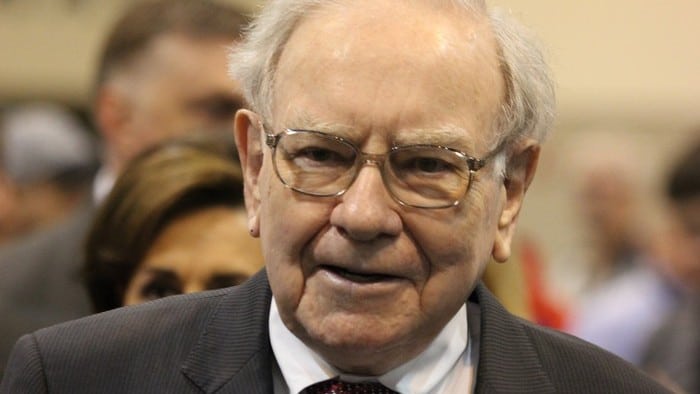
    Legendary share market investing expert and owner of Berkshire Hathaway Warren Buffett

    This article was originally published on Fool.com. All figures quoted in US dollars unless otherwise stated.

    Warren Buffett, the legendary investor and CEO of Berkshire Hathaway (NYSE: BRK.A) (NYSE: BRK.B), has built a reputation as a master of traditional value investing. His approach, which involves identifying undervalued companies with strong fundamentals and holding them for the long term, has proven successful for decades.

    However, as the world stands on the cusp of an artificial intelligence (AI) revolution, it’s worth examining whether Berkshire Hathaway’s stock portfolio is adequately prepared for the potential disruption.

    This analysis is rapidly becoming an urgent necessity, as AI is poised to enter a period of unprecedented, exponential growth. The convergence of advancements in computing power and the massive influx of capital, with tens of billions of dollars being invested in AI-capable data centers, is set to propel AI development forward at a breakneck pace in the next 18 months.

    Buffett has rarely been a fan of cutting-edge tech

    Buffett’s stance on cryptocurrencies, particularly Bitcoin, has been unequivocal. In 2018, he famously described Bitcoin as “probably rat poison squared” and expressed his belief that cryptocurrencies would “come to a bad ending.”

    While his skepticism toward Bitcoin may be warranted, it raises questions about his outlook on the broader technological landscape, including AI.

    The AI revolution promises to bring about profound changes across industries, with the potential for both direct and knock-on effects that prove to be disruptive. For instance, the insurance industry, a key area of focus for Berkshire Hathaway, could undergo substantial transformations as AI improves risk assessment and automates claims processing. It also faces disruptions from the advent of an array of autonomous vehicles.

    Moreover, the financial sector, which forms a significant portion of Berkshire Hathaway’s portfolio, may be particularly vulnerable to AI-driven disruption. As AI algorithms become more sophisticated, they could potentially replace human analysts and traders, creating both new opportunities and novel risks for the sector.

    Berkshire Hathaway’s significant exposure to the energy sector is another area of concern in the age of AI. For example, AI-driven advancements in renewable energy, smart grid technologies, and autonomous green vehicles, among others could significantly diminish the earnings power of traditional oil and gas companies by the decade’s end, negatively impacting the value of Berkshire Hathaway’s holdings in this sector.

    Berkshire Hathaway does have an AI hedge

    However, it’s important to note that Berkshire Hathaway’s stock portfolio does include potential AI hedges. The company’s substantial stake in Apple (NASDAQ: AAPL), which recently announced the advent of “Apple Intelligence,” could help mitigate the risks associated with widespread technological disruption.

    Apple’s ecosystem of AI-powered devices, services, and user experiences may help it navigate the changing landscape in the next stage of humanity. Still, the conglomerate’s lack of significant exposure to companies at the heart of the AI revolution is arguably another underappreciated risk factor.

    What’s the big picture?

    While Buffett’s value investing approach has stood the test of time, it’s crucial to consider whether it adequately accounts for the game-altering potential of the AI revolution. Traditional metrics, such as price-to-earnings ratios and book value, may not fully capture the disruptive impact of AI on industries and business models.

    For instance, companies that appear undervalued based on historical data may face unexpected challenges as AI reshapes the competitive landscape. Meanwhile, businesses at the forefront of AI could continue to experience ultra-rapid growth, despite their premium-laden valuations.

    Berkshire Hathaway’s stock portfolio doesn’t reflect this important dynamic. Instead, the conglomerate’s equity portfolio is crafted to leverage its massive positions in dividend-paying companies, thereby creating value for shareholders through compounding.

    This strategy has worked like a charm historically, thanks to the company’s size and long-term holding strategy. However, if these income streams are disrupted by unforeseen quantum leaps in innovation, Berkshire Hathaway’s core value-creation strategy may come under pressure.

    Key takeaways

    In ordinary times, contemplating such a drastic shift in the investing landscape would be an exercise in futility, unworthy of serious consideration. However, we are on the precipice of an unprecedented era, propelled forward by technological innovation’s relentless, exponential growth.

    This exponential progression is not a hypothetical or a distant possibility. It’s a stark reality that investors will have to grapple with in the imminent future. The rapid pace of change, fueled by a coming abundance of intelligence, is poised to reshape industries, disrupt traditional business models, and redefine the core tenants of portfolio construction. 

    This article was originally published on Fool.com. All figures quoted in US dollars unless otherwise stated.

    The post Warren Buffett meets AI: Is Berkshire Hathaway prepared for technological disruption? appeared first on The Motley Fool Australia.

    Should you invest $1,000 in Berkshire Hathaway Inc. right now?

    Before you buy Berkshire Hathaway Inc. shares, consider this:

    Motley Fool investing expert Scott Phillips just revealed what he believes are the 5 best stocks for investors to buy right now… and Berkshire Hathaway Inc. wasn’t one of them.

    The online investing service he’s run for over a decade, Motley Fool Share Advisor, has provided thousands of paying members with stock picks that have doubled, tripled or even more.*

    And right now, Scott thinks there are 5 stocks that may be better buys…

    See The 5 Stocks
    *Returns as of 5 May 2024

    More reading

    George Budwell has positions in Apple. The Motley Fool Australia’s parent company Motley Fool Holdings Inc. has positions in and has recommended Apple, Berkshire Hathaway, and Bitcoin. The Motley Fool Australia has recommended Apple and Berkshire Hathaway. The Motley Fool Australia has positions in and has recommended Bitcoin. The Motley Fool has a disclosure policy. This article contains general investment advice only (under AFSL 400691). Authorised by Scott Phillips.


  • Brickworks share price jumps on big Soul Patts news

    Yellow rising arrow on a brick wall with a man on a ladder.

    The Brickworks Limited (ASX: BKW) share price is up 0.6% in morning trading amid news related to Washington H. Soul Pattinson and Co. Ltd (ASX: SOL) (AKA Soul Patts). The Brickworks rise comes at the same time as the S&P/ASX 200 Index (ASX: XJO) being down 0.2%.  

    Brickworks and Soul Patts have been closely linked for decades due to their cross-ownership partnership. Soul Patts owns 43% of Brickworks and has been a shareholder since 1969.

    The purpose of that structure was, and still is, to deter corporate raiders. Brickworks benefits by owning approximately a quarter of the diversified investment house.

    The two businesses are becoming even closer after an appointment to the Brickworks board.

    New Brickworks director

    Brickworks has appointed Soul Patts CEO Todd Barlow to its board as a non-executive director.

    As such a substantial holder of Brickworks shares, Soul Patts has had two directors on the Brickworks board. Michael Millner recently retired from the Brickworks board of directors at the 2023 annual general meeting, so Barlow will become the second nominee director.

    Robert Millner has been the chair of Brickworks for 25 years and the chair of Soul Patts for 26 years.

    The appointment of Barlow to the board maintains the number of directors at seven after Michael Millner’s retirement. Barlow will also be a member of the remuneration and nomination committee.

    Barlow has been the CEO and managing director of Soul Patts since 2015, having previously been the managing director of Pitt Capital Partners for five years.

    Brickworks also announced that Malcolm Bundey, who has been a non-executive director since October 2019, has been appointed as the deputy chair of Brickworks effective today.

    Management comments

    The new Brickworks deputy chair, Malcolm Bundey, said:

    We are pleased to welcome Todd to the board of directors of Brickworks. The company looks forward to leveraging his deep experience to assist us in achieving performance objectives across our diversified portfolio of businesses.

    New Brickworks director Todd Barlow said:

    I look forward to continuing the long association Soul Patt’s has with Brickworks and assisting Brickworks to execute its strategy to deliver sustainable earnings growth and long-term value to shareholders.

    Barlow’s ownership of Brickworks shares

    Investors are able to learn how many shares a director has through ASX disclosures.

    The Brickworks ASX appendix 3X announcement showed Todd Barlow has a total of 2,000 Brickworks shares. This currently has a value of just over $53,000.

    Brickworks share price snapshot

    In the last 12 months, the Brickworks share price is up just over 1%, as shown on the chart below.

    The post Brickworks share price jumps on big Soul Patts news appeared first on The Motley Fool Australia.

    Wondering where you should invest $1,000 right now?

    When investing expert Scott Phillips has a stock tip, it can pay to listen. After all, the flagship Motley Fool Share Advisor newsletter he has run for over ten years has provided thousands of paying members with stock picks that have doubled, tripled or even more.*

    Scott just revealed what he believes could be the ‘five best ASX stocks’ for investors to buy right now. We believe these stocks are trading at attractive prices and Scott thinks they could be great buys right now…

    See The 5 Stocks
    *Returns as of 5 May 2024

    More reading

    Motley Fool contributor Tristan Harrison has positions in Brickworks and Washington H. Soul Pattinson and Company Limited. The Motley Fool Australia’s parent company Motley Fool Holdings Inc. has positions in and has recommended Brickworks and Washington H. Soul Pattinson and Company Limited. The Motley Fool Australia has positions in and has recommended Brickworks and Washington H. Soul Pattinson and Company Limited. The Motley Fool has a disclosure policy. This article contains general investment advice only (under AFSL 400691). Authorised by Scott Phillips.

  • Why is ASX 200 uranium stock Boss Energy flying higher on Friday?

    Emotional euphoric young woman giving high five to male partner, celebrating family achievement, getting bank loan approval, or financial or investing success.

    The S&P/ASX 200 Index (ASX: XJO) is down 0.3% in early trade today, but that’s not holding back ASX 200 uranium stock Boss Energy Ltd (ASX: BOE).

    Shares in the Aussie uranium producer closed yesterday trading at $4.08. At time of writing on Friday morning, shares are swapping hands for $4.22 apiece, up 3.5%.

    This comes following news that Boss Energy’s second uranium project has kicked off production.

    Here’s what’s happening.

    ASX 200 uranium stock lifts off on production milestone

    The Boss Energy share price is charging higher after the company announced that production has started at its Alta Mesa In-Situ Recovery (ISR) Central Processing Uranium Plant and Wellfields, located in the US state of Texas.

    The ASX 200 uranium stock owns 30% of the project. Its joint venture (JV) partner, enCore Energy Corp (NASDAQ: EU), owns the other 70%.

    The Alta Mesa Project comprises more than 200,000 acres, along with the central processing plant and wellfields. Boss Energy expects production at the project to ramp up to a steady-state rate of 1.5 million pounds per year.

    Today’s announcement comes just eight weeks after Boss Energy kicked off production at its 100%-owned Honeymoon project in South Australia. Honeymoon’s production is forecast to ramp up to 2.45 million pounds per year.

    Commenting on the milestone sending the ASX 200 uranium stock sharply higher today, Boss Energy managing director Duncan Craib said, “The start of production at the Alta Mesa Project is another key milestone in the implementation of our strategy to be a global uranium supplier with a diversified production base in tier-one locations.”

    Craib added:

    With operations now ramping up at both Honeymoon and Alta Mesa, we are on track to hit our combined nameplate production target of 3 million pounds of uranium per annum. Our timing could hardly be better given the increasingly tight supply and demand fundamentals in the uranium market.

    This highly favourable outlook was underpinned by US President Joe Biden’s recent signing of legislation to ban the importation of uranium products from Russia. This was a game-changing event for the uranium market and in particular for uranium projects in North America and Australia.

    Craib said that with the ASX 200 uranium stock ramping up production at Honeymoon and Alta Mesa and both projects enjoying strong growth prospects, Boss was “very well positioned to continue capitalising on this huge opportunity”.

    The post Why is ASX 200 uranium stock Boss Energy flying higher on Friday? appeared first on The Motley Fool Australia.

    Wondering where you should invest $1,000 right now?

    When investing expert Scott Phillips has a stock tip, it can pay to listen. After all, the flagship Motley Fool Share Advisor newsletter he has run for over ten years has provided thousands of paying members with stock picks that have doubled, tripled or even more.*

    Scott just revealed what he believes could be the ‘five best ASX stocks’ for investors to buy right now. We believe these stocks are trading at attractive prices and Scott thinks they could be great buys right now…

    See The 5 Stocks
    *Returns as of 5 May 2024

    More reading

    Motley Fool contributor Bernd Struben has no position in any of the stocks mentioned. The Motley Fool Australia’s parent company Motley Fool Holdings Inc. has no position in any of the stocks mentioned. The Motley Fool Australia has no position in any of the stocks mentioned. The Motley Fool has a disclosure policy. This article contains general investment advice only (under AFSL 400691). Authorised by Scott Phillips.

  • 2 ASX shares with strong cash flows

    Happy woman holding $50 Australian notes

    Investing in the stock market can feel like navigating a jungle – thrilling but sometimes overwhelming.

    However, there’s a trusty compass to help guide your way: strong cash flows. Companies with robust cash flows are like the steady heartbeats of the stock market, providing the lifeblood that fuels growth, innovation, and shareholder returns.

    In this article, we’ll introduce you to two ASX shares with impressive cash flows, making them prime candidates for your investment portfolio today.

    Whether you’re a seasoned investor or just starting, these cash flow champions are worth your attention. Let’s dive in and explore my two ASX stock picks below.

    Super Retail Group Ltd (ASX: SUL)

    Super Retail is a prominent retailing group in Australia and New Zealand, specialising in automotive, sports, and outdoor leisure products. The company operates several well-known brands, including Supercheap Auto, Rebel, BCF, and Macpac.

    Established in 1972, Super Retail has grown significantly, offering a diverse range of products to meet the needs of enthusiasts and professionals alike.

    The retailer generated cash flow from operations of $756 million over the last 12 months to December 2023. From here, the company paid for its capital expenditure of $155 million, which increased from $110 million in FY23 used to expand its store network in Supercheap Auto and Rebel in the main.

    This leaves the company with a free cash flow of approximately $600 million, sufficient to cover its lease payment obligations of around $220 million.

    Compared to its current market capitalisation of close to $3 billion, Super Retail offers a free cash flow yield of more than 13% even after considering the lease payments.

    Goldman Sachs also recognised this potential investment opportunity. As my colleague James highlighted, Goldman Sachs included Super Retail as one of its top dividend shares to buy. The broker said:

    We believe SUL will display resilience in a softer economic environment that is built upon its competitive advantage of high loyalty (~11.0m active members accounting for >75% of sales) and this will be further bolstered as the company launches the Rebel loyalty program and continues to build personalisation capabilities. Hence, we are Buy-rated on SUL.

    The Super Retail share price has fallen almost 23% from its all-time high of $17.11 in February 2024.

    NIB Holdings Limited (ASX: NHF)

    NIB is an Australian health insurer that provides health and medical insurance products to Australian and New Zealand residents, as well as international students and workers.

    Founded in 1952, NIB has expanded its services to include travel and life insurance. The company focuses on providing affordable and comprehensive coverage, leveraging digital platforms to enhance customer experience and accessibility.

    For the last 12 months to December 2023, NIB generated a cash flow from operations of $304.4 million, which has increased over the previous five years from $180 million in FY18.

    The company explained that policyholder growth across its businesses underscored its strong operating cash inflow. NIB Thrive and Midnight Health are growing at a healthy rate, more than offsetting a sluggish result from NIB Travel.

    From the operating cash flow, the company paid for property and other capital expenditures of around $50 million, leaving approximately $250 million as a free cash flow.

    Based on NIB’s current market price, its free cash flow represents around 7% of its current market capitalisation of $3.6 billion. This means that if you acquired the company as a whole today, it would generate about a 7% return in its cash flow, which isn’t too bad, in my view.

    Goldman Sachs sees further upside in the NIB share price due to NIB’s policyholder growth, diversified earnings streams, and valuation appeal, as my colleague Zach summarised.

    The NIB share price has dropped 14% over the last 12 months and is down just 0.4% year to date.

    The post 2 ASX shares with strong cash flows appeared first on The Motley Fool Australia.

    Wondering where you should invest $1,000 right now?

    When investing expert Scott Phillips has a stock tip, it can pay to listen. After all, the flagship Motley Fool Share Advisor newsletter he has run for over ten years has provided thousands of paying members with stock picks that have doubled, tripled or even more.*

    Scott just revealed what he believes could be the ‘five best ASX stocks’ for investors to buy right now. We believe these stocks are trading at attractive prices and Scott thinks they could be great buys right now…

    See The 5 Stocks
    *Returns as of 5 May 2024

    More reading

    Motley Fool contributor Kate Lee has no position in any of the stocks mentioned. The Motley Fool Australia’s parent company Motley Fool Holdings Inc. has positions in and has recommended Super Retail Group. The Motley Fool Australia has positions in and has recommended Super Retail Group. The Motley Fool has a disclosure policy. This article contains general investment advice only (under AFSL 400691). Authorised by Scott Phillips.

  • Telix Pharmaceuticals share price sinks on unexpected Nasdaq news

    Shot of a mature scientists working on a laptop in a lab.

    The Telix Pharmaceuticals Ltd (ASX: TLX) share price is taking a fall today.

    Shares in the S&P/ASX 200 Index (ASX: XJO) biopharmaceutical company closed on Tuesday trading for $16.46.

    Shares were frozen yesterday after the stock entered a trading halt pending additional details on the company’s proposed initial public offering (IPO) in the United States.

    With those details now out, shares are swapping hands for $16.13 apiece at the time of writing, down 2.0%.

    Here’s what ASX 200 investors are mulling over.

    ASX 200 biotech stock pulls out of Nasdaq IPO

    The Telix Pharmaceuticals share price is under pressure after the company announced that its Nasdaq listing is off the cards.

    The US listing has been in the works since early January. In May, Telix Pharmaceuticals chair Kevin McCann said the dual listing would enable the ASX 200 biotech stock “to better access the deep pool of specialist investors focused on biotechnology and radiopharmaceuticals in the US”.

    He added that the Nasdaq listing would give the company increased visibility which “will drive long-term value creation for shareholders”.

    On 6 June, the company confirmed its intent to list American Depositary Shares (ADSs) on the Nasdaq. The Telix Pharmaceuticals share price hit record highs on the day.

    Today the company said it opted to withdraw its proposed Nasdaq IPO at the terms provided under current market conditions, adding that the proposed discounts were not aligned with its duty to existing shareholders.

    Telix said its plan to list on the Nasdaq wasn’t based on the need to raise capital. And since it first announced its intent to file on 4 January, the company has achieved a number of commercially significant milestones with its medical products. That’s seen the Telix Pharmaceuticals share price soar more than 70% since 4 January.

    Commenting on the withdrawal from the Nasdaq IPO, Telix CEO Christian Behrenbruch said:

    While this is not our desired outcome Telix’s strategic objectives must align with our duty to existing shareholders. I’d like to thank my team for the personal commitment and incredibly long hours put into this IPO process.

    Telix Pharmaceuticals noted that its performance and prospects remain strong.

    “As a profitable, cash generative company, Telix retains sufficient earnings and balance sheet capacity to deliver on its key corporate objectives,” the company stated.

    Telix Pharmaceuticals share price snapshot

    The Telix Pharmaceuticals share price is up 61% so far in 2024.

    Long-term investors who bought shares five years ago will be sitting on eye-popping gains of 1,541%.

    The post Telix Pharmaceuticals share price sinks on unexpected Nasdaq news appeared first on The Motley Fool Australia.

    Wondering where you should invest $1,000 right now?

    When investing expert Scott Phillips has a stock tip, it can pay to listen. After all, the flagship Motley Fool Share Advisor newsletter he has run for over ten years has provided thousands of paying members with stock picks that have doubled, tripled or even more.*

    Scott just revealed what he believes could be the ‘five best ASX stocks’ for investors to buy right now. We believe these stocks are trading at attractive prices and Scott thinks they could be great buys right now…

    See The 5 Stocks
    *Returns as of 5 May 2024

    More reading

    Motley Fool contributor Bernd Struben has no position in any of the stocks mentioned. The Motley Fool Australia’s parent company Motley Fool Holdings Inc. has positions in and has recommended Telix Pharmaceuticals. The Motley Fool Australia has recommended Telix Pharmaceuticals. The Motley Fool has a disclosure policy. This article contains general investment advice only (under AFSL 400691). Authorised by Scott Phillips.

  • Why the best dividend days may be over for Fortescue shares

    two men in hard hats and high visibility jackets look together at a laptop screen that one of the men in holding at a mine site.

    Fortescue Ltd (ASX: FMG) shares have been known for huge dividend payouts in the last few years. The outlook for big dividends in the future is not strong, in my opinion.

    The ASX iron ore share took full advantage of the elevated iron ore price in FY21, leading to an annual dividend per share of $3.58.

    In FY22, the annual dividend per share was reduced to $2.07.

    Can the Fortescue dividend recover to above $3 per share? I don’t think it will, for a few different reasons.

    Increasing iron ore supply

    The key factor enabling Fortescue to generate such a large profit and pay a big dividend in FY21 was the strong iron ore price.

    Strong demand from China outstripped supply, leading to a higher commodity price.

    I’m not sure the supply and demand equation will work as strongly as it did in Fortescue’s favour in the future.

    The Chinese real estate sector is still struggling, so I don’t see this key iron ore user pushing up the iron ore price again like it did. India could be a big user of steel in the coming years, but it’s unlikely to be on the same scale as China.

    On the supply side, a significant increase in iron ore mining could be a headwind for the iron ore price. In Africa, Rio Tinto Ltd (ASX: RIO) is part of the huge Simandou iron ore project, and Fortescue Ltd (ASX: FMG) is working on a project in Gabon.

    Rio Tinto, Fortescue and BHP Group Ltd (ASX: BHP) all want to increase their production in Australia.

    Lower dividend payout ratio

    The Fortescue dividend payout ratio has been trending downwards, which means Fortescue is holding onto a larger proportion of its generated profit.

    In FY21, Fortescue had a dividend payout ratio of 80%, which fell to 75% in FY22 and then 65% in both FY23 and the first half of FY24. A lower payout ratio obviously means smaller dividends for owners of Fortescue shares.

    The business has an important reason to hold onto more of its cash – it has huge green energy ambitions related to green hydrogen, green ammonia, industrial batteries and more. It will need a lot of capital to realise its goals, even if it is successful at bringing on investment partners.

    Even if Fortescue were making big enough profits to pay a $3 per share dividend, I don’t think it would be that generous with its dividend in the future because of the capital requirements.

    Fortescue dividend projections

    The estimate on Commsec for the Fortescue dividend per share in FY24 is $2.02, followed by $1.50 in FY25 and then sinking to $1.08 per share in FY26.

    It’s possible the iron ore price may be stronger than expected in the medium term, as it was in FY21 and at the start of this year when it was above US$140 per tonne. But shareholders such as myself should be aware that the payout may not be as rewarding in the future.

    The post Why the best dividend days may be over for Fortescue shares appeared first on The Motley Fool Australia.

    Wondering where you should invest $1,000 right now?

    When investing expert Scott Phillips has a stock tip, it can pay to listen. After all, the flagship Motley Fool Share Advisor newsletter he has run for over ten years has provided thousands of paying members with stock picks that have doubled, tripled or even more.*

    Scott just revealed what he believes could be the ‘five best ASX stocks’ for investors to buy right now. We believe these stocks are trading at attractive prices and Scott thinks they could be great buys right now…

    See The 5 Stocks
    *Returns as of 5 May 2024

    More reading

    Motley Fool contributor Tristan Harrison has positions in Fortescue. The Motley Fool Australia’s parent company Motley Fool Holdings Inc. has no position in any of the stocks mentioned. The Motley Fool Australia has no position in any of the stocks mentioned. The Motley Fool has a disclosure policy. This article contains general investment advice only (under AFSL 400691). Authorised by Scott Phillips.

  • Up 80% in a year, this ASX All Ords stock is a ‘long way short’ of its true value

    a man wearing old fashioned aviator cap and goggles emerges from the top of a cannon pointed towards the sky. He is holding a phone and taking a selfie.

    Catapult Group International Ltd (ASX: CAT) has been a standout ASX All Ords stock in the last 12 months, surging 89% to $1.83 currently. This is an 81% advantage over the benchmark S&P/ASX 200 Index (ASX: XJO) in the past year.

    It has also been all green for the stock since trading began in January – up 32% year to date.

    Despite this impressive gain, many believe this ASX All Ords stock still has room to grow. Let me explain.

    What’s driving this ASX All Ords stock?

    Catapult’s growth has been driven by strong financial performance and strategic initiatives. For the financial year ending 31 March 2024, the ASX All Ords stock’s revenue reached a milestone of US$100 million, a 20% increase year over year.

    This growth reflects the strength of its software as a service (SaaS) strategy, which has been pivotal in attracting new customers and increasing the annualised contract value (ACV).

    Forager Funds Management has been optimistic about Catapult’s potential for a long time. In its latest report from May 2024, the firm noted that it hopes “…to be writing about Catapult for years to come. For many years, we have admired the opportunity ahead of this company.”

    The fund manager highlighted the ASX All Ord stock’s well-known athlete tracking vests, which are used in various major sports leagues worldwide.

    Any avid sports-watcher will be familiar with Catapult’s athlete tracking vests. You can see them through Pat Cummins’ whites on a summer day at the SCG or at a training session for every single NRL and AFL team in Australia.

    Forager also praised Catapult’s strategic vision under CEO Will Lopes. “When appointed in 2021, CEO Will Lopes didn’t do much to change the perception that shareholders would never see potential translate to profits”, it said.

    But three years later, it says Lopes was right, that Catapult “needed to spend more”, and “needed to spend first”. Forager believes he is the “right man” to do the job.

    The share price has reacted positively to the past few results announcements from Catapult but we still think it is a long way short of the company’s true value.

    What does Catapult’s future look like?

    The company’s FY 2024 results were a standout, with Forager noting over 40% of the revenue growth “translated to incremental profit”.

    “The growth should be similar in 2025 and management expects that incremental profitability to increase further”, it added.

    For FY 2025, the ASX All Ords stock’s management said in the last earnings that it aims to sustain strong ACV growth and high retention rates.

    The company plans to align with the Rule of 40 – a key valuation metric for SaaS companies – which combines revenue growth rate and profit margin. Catapult achieved a 43% rate last quarter, exceeding the 40% benchmark. It looks to maintain this next year.

    Foolish takeaway: ASX All Ords stock with growth

    Despite its substantial share price increase over the past year, this ASX All Ords stock’s strategic initiatives and financial performance suggest there is still considerable room for growth.

    The company’s focus on technology, customer retention, and profitability positions it well for continued success. Investors will be watching closely to see how Catapult executes its plans in FY25 and beyond, making it a compelling ASX All Ords stock to keep on your radar.

    The post Up 80% in a year, this ASX All Ords stock is a ‘long way short’ of its true value appeared first on The Motley Fool Australia.

    Wondering where you should invest $1,000 right now?

    When investing expert Scott Phillips has a stock tip, it can pay to listen. After all, the flagship Motley Fool Share Advisor newsletter he has run for over ten years has provided thousands of paying members with stock picks that have doubled, tripled or even more.*

    Scott just revealed what he believes could be the ‘five best ASX stocks’ for investors to buy right now. We believe these stocks are trading at attractive prices and Scott thinks they could be great buys right now…

    See The 5 Stocks
    *Returns as of 5 May 2024

    More reading

    Motley Fool contributor Zach Bristow has no position in any of the stocks mentioned. The Motley Fool Australia’s parent company Motley Fool Holdings Inc. has positions in and has recommended Catapult Group International. The Motley Fool Australia has recommended Catapult Group International. The Motley Fool has a disclosure policy. This article contains general investment advice only (under AFSL 400691). Authorised by Scott Phillips.

  • Nvidia stock is still a great buy — but when should investors sell shares?

    A man looking at his laptop and thinking.

    This article was originally published on Fool.com. All figures quoted in US dollars unless otherwise stated.

    The Nvidia (NASDAQ: NVDA) stock story keeps getting better, thanks primarily to the incredible demand for the company’s graphics processing units (GPUs) and related technology that enable artificial intelligence (AI) capabilities. It’s not too late to buy shares. Indeed, I just outlined 25 reasons to buy Nvidia stock now.

    But there’s a key question worth addressing that doesn’t get much attention: When should you consider selling shares of Nvidia stock?

    There are no “right” answers. Investors vary in terms of financial and personal factors. That said, below are three solid reasons for any investor to consider selling shares of Nvidia stock.

    1. When CEO Jensen Huang no longer leads the company

    Investors should consider selling at least some of their Nvidia shares when Huang no longer leads the company he co-founded in 1993. He reportedly turned 61 earlier this year and seems to love his work, so barring any health issues, he could be at Nvidia’s helm for a good number of years more. To say that Huang will be difficult to replace is an understatement.

    Nvidia is many years ahead of the competition in AI-enabling technology thanks to Huang’s foresight. Starting more than a decade ago, he began to steadily use profits from Nvidia’s once-core computer gaming business to position the company to be in the catbird seat when the “AI Age” truly arrived. And arrive it did in late 2022, when generative AI made a big splash on the tech scene with OpenAI’s release of its ChatGPT chatbot. Generative AI greatly expands the potential applications for AI.

    2. If and when the company’s GPUs seem to be losing their AI-enabling “gold standard” status

    A more exact (but too long) subheading is the above plus the following tacked on: “And if the company fails to develop whatever tech is knocking its GPUs from their lofty position.”

    Nvidia’s GPUs are by far the favored chips for speeding up the training of AI models and the running of AI applications in data centers. Estimates vary, but it’s widely projected that the company has more than a 90% share of the market for AI GPU chips for data centers, and more than an 80% share of the overall data center AI chip market.

    This is a fantastic market to control. Advanced Micro Devices CEO Lisa Su projects that the global data center AI chip market will reach $400 billion in revenue by 2027, which would equate to a compound annual growth rate (CAGR) of more than 72% from its estimated size of $45 billion in 2023.

    Nvidia’s data center business accounted for about 87% of its total revenue last quarter, and some greater (but unknown) percentage of its total profits. So, investors should consider selling shares if signs start pointing to the company’s tech being displaced as the gold standard for enabling AI processing in data centers.

    How will we know? What signs will there be?

    Other than staying abreast of the general space, there are two specific things investors can do. First, listen to Nvidia’s quarterly earnings calls. Besides being interesting, Huang and CFO Colette Kress are very forthright. Recordings of these calls are posted on Nvidia’s investor relations site, so you can listen at your leisure.

    Second, monitor Nvidia’s margins — gross, operating, and profit, with special attention to gross margin. A company’s margins will steadily decline when it’s losing its competitive advantages. The key word is “steadily.” Occasional short-term declines or ups and downs aren’t usually reason for concern.

    Below is Nvidia’s 10-year margin history. There are ups and downs, but the overall trend has been decisively up. This is a winner of a margin profile chart. (I used trailing-12-month margins for all three margin types because this smooths out some of the quarterly ups and downs. But you can also use quarterly data, as that might be easier.)

    Data by YCharts. Gross margin = gross profit/revenue. Operating margin = operating income/revenue. Profit margin = net income/revenue. Gross profit, operating income, net income, and revenue can all be found on a company’s quarterly income statements.

    3. To rebalance your investment portfolio

    Nvidia stock has performed amazingly well over the long term, and particularly since 2023. So, in the last year and a half, it has no doubt grown to account for a much larger percentage of many investors’ total portfolios.

    No matter how terrific a company, it’s risky to have too many of your eggs in one basket. That’s especially true with technology stocks, which tend to be inherently more volatile than stocks of companies in more stable industries.

    So, it makes good sense for investors to regularly — perhaps, quarterly or annually — rebalance their portfolio so no single stock becomes too large a holding relative to their total investments. “Too large” is highly subjective, so you’ll have to decide what percentage range you’re comfortable with. 

    This article was originally published on Fool.com. All figures quoted in US dollars unless otherwise stated.

    The post Nvidia stock is still a great buy — but when should investors sell shares? appeared first on The Motley Fool Australia.

    Should you invest $1,000 in Nvidia right now?

    Before you buy Nvidia shares, consider this:

    Motley Fool investing expert Scott Phillips just revealed what he believes are the 5 best stocks for investors to buy right now… and Nvidia wasn’t one of them.

    The online investing service he’s run for over a decade, Motley Fool Share Advisor, has provided thousands of paying members with stock picks that have doubled, tripled or even more.*

    And right now, Scott thinks there are 5 stocks that may be better buys…

    See The 5 Stocks
    *Returns as of 5 May 2024

    More reading

    Beth McKenna has positions in Nvidia. The Motley Fool Australia’s parent company Motley Fool Holdings Inc. has positions in and has recommended Advanced Micro Devices and Nvidia. The Motley Fool Australia has recommended Advanced Micro Devices and Nvidia. The Motley Fool has a disclosure policy. This article contains general investment advice only (under AFSL 400691). Authorised by Scott Phillips.

  • How much could a $10,000 investment in Woolworths shares become in one year?

    Man holding out Australian dollar notes, symbolising dividends.

    If you are lucky enough to have $10,000 burning a hole in your pocket, then it could be worth putting it to work in the share market.

    But would Woolworths Group Ltd (ASX: WOW) shares be a good option for these funds? Let’s see what an investment today could potentially turn into in one year.

    Investing $10,000 into Woolworths shares

    At present, the supermarket giant’s shares are changing hands for $32.50.

    This means that if you were to invest $10,000 (and a further $10), you would end up owning 308 Woolworths shares.

    Let’s now see what these shares could be worth this time next year.

    According to a recent note out of Goldman Sachs, its analysts believe that now could be a great time to invest in the retailer.

    In fact, your $10,000 investment could become worth significantly more if the broker is on the money with its recommendation.

    It currently has a conviction buy rating and $39.40 price target on Woolies shares. If they were to rise to that level, those 308 units would have a market value of $12,135.20. That’s over $2,000 more than your original investment.

    But wait, there’s more! Every six months, Woolworths shares a portion of its profits with shareholders in the form of dividends.

    Goldman is expecting the company to pay fully franked dividends of $1.08 per share in FY 2024 and then $1.14 per share in FY 2025.

    Let’s assume that this means dividends of $1.11 per share over the next 12 months (the final dividend of FY 2024 and the interim dividend of FY 2025). This would mean dividend income of $341.88 from those 308 shares.

    In total, this brings the total return on investment to approximately $2,650.

    Why invest?

    Goldman believes that Woolworths shares are being undervalued by the market. Particularly given its It explains:

    WOW is the largest supermarket chain in Australia with an additional presence in NZ, as well as selling general merchandise retail via Big W. We are Buy rated on the stock as we believe the business has among the highest consumer stickiness and loyalty among peers, and hence has strong ability to drive market share gains via its omni-channel advantage, as well as its ability to pass through any cost inflation to protect its margins, beyond market expectations. The stock is trading below its historical average (since 2018), and we see this as a value entry level for a high-quality and defensive stock.

    The post How much could a $10,000 investment in Woolworths shares become in one year? appeared first on The Motley Fool Australia.

    Should you invest $1,000 in Woolworths Group Limited right now?

    Before you buy Woolworths Group Limited shares, consider this:

    Motley Fool investing expert Scott Phillips just revealed what he believes are the 5 best stocks for investors to buy right now… and Woolworths Group Limited wasn’t one of them.

    The online investing service he’s run for over a decade, Motley Fool Share Advisor, has provided thousands of paying members with stock picks that have doubled, tripled or even more.*

    And right now, Scott thinks there are 5 stocks that may be better buys…

    See The 5 Stocks
    *Returns as of 5 May 2024

    More reading

    Motley Fool contributor James Mickleboro has no position in any of the stocks mentioned. The Motley Fool Australia’s parent company Motley Fool Holdings Inc. has positions in and has recommended Goldman Sachs Group. The Motley Fool Australia has no position in any of the stocks mentioned. The Motley Fool has a disclosure policy. This article contains general investment advice only (under AFSL 400691). Authorised by Scott Phillips.

  • Why Telstra and these excellent ASX dividend stocks could be buys

    A smartly-dressed businesswoman walks outside while making a trade on her mobile phone.

    If you’re wanting to build an income portfolio, then it could be worth considering the four ASX dividend stocks listed below.

    Here’s why analysts think these buy-rated shares could be excellent options for income investors right now:

    Coles Group Ltd (ASX: COL)

    The first ASX dividend stock that could be a buy is Coles. It is of course a supermarket giant with over 800 stores across the country. In addition, it has a liquor network comprising almost 1,000 stores across several brands.

    Morgans is a fan and has an add rating and $18.95 price target on its shares.

    As for income, the broker is forecasting fully franked dividends of 66 cents per share in FY 2024 and 69 cents per share in FY 2025. Based on the current Coles share price of $17.01, this will mean dividend yields of 3.9% and 4.1%, respectively.

    Telstra Group Ltd (ASX: TLS)

    Goldman Sachs is feeling positive on this telco giant and sees it as an ASX dividend stock to buy. Particularly given the low risk earnings and dividend growth that is expected in the coming years.

    The broker expects this to support the payment of fully franked dividends of 18 cents per share in FY 2024 and then 18.5 cents per share in FY 2025. Based on the current Telstra share price of $3.53, this equates to yields of 5.1% and 5.25%, respectively.

    Goldman has a buy rating and $4.25 price target on Telstra’s shares.

    Transurban Group (ASX: TCL)

    Analysts at Citi think that Transurban could be an ASX dividend stock to buy. It is a leading toll road operator, building and operating toll roads in Australia and North America. Among its portfolio are CityLink in Melbourne and the Eastern Distributor in Sydney.

    Citi currently has a buy rating and $15.50 price target on its shares.

    It is expecting dividends per share of 63.6 cents in FY 2024 and then 65.1 cents in FY 2025. Based on the current Transurban share price of $12.55, this will mean yields of 5.1% and 5.2%, respectively.

    Universal Store Holdings Ltd (ASX: UNI)

    A final ASX dividend stock that could be a buy is Universal Store. It is the youth fashion retailer behind the Universal Store, Perfect Stranger, Thrills, and Worship brands.

    Morgans is positive on the company, noting that “UNI’s focus on offering high quality, fashionable apparel in a well-presented store environment with high levels of service is paying off.”

    The broker expects this to underpin fully franked dividends per share of 26 cents in FY 2024 and then 29 cents in FY 2025. Based on the current Universal Store share price of $5.00, this will mean yields of 5.2% and 5.8%, respectively.

    Morgans has an add rating and $6.50 price target on its shares.

    The post Why Telstra and these excellent ASX dividend stocks could be buys appeared first on The Motley Fool Australia.

    Should you invest $1,000 in Coles Group Limited right now?

    Before you buy Coles Group Limited shares, consider this:

    Motley Fool investing expert Scott Phillips just revealed what he believes are the 5 best stocks for investors to buy right now… and Coles Group Limited wasn’t one of them.

    The online investing service he’s run for over a decade, Motley Fool Share Advisor, has provided thousands of paying members with stock picks that have doubled, tripled or even more.*

    And right now, Scott thinks there are 5 stocks that may be better buys…

    See The 5 Stocks
    *Returns as of 5 May 2024

    More reading

    Citigroup is an advertising partner of The Ascent, a Motley Fool company. Motley Fool contributor James Mickleboro has positions in Universal Store. The Motley Fool Australia’s parent company Motley Fool Holdings Inc. has positions in and has recommended Goldman Sachs Group and Transurban Group. The Motley Fool Australia has positions in and has recommended Coles Group and Telstra Group. The Motley Fool has a disclosure policy. This article contains general investment advice only (under AFSL 400691). Authorised by Scott Phillips.