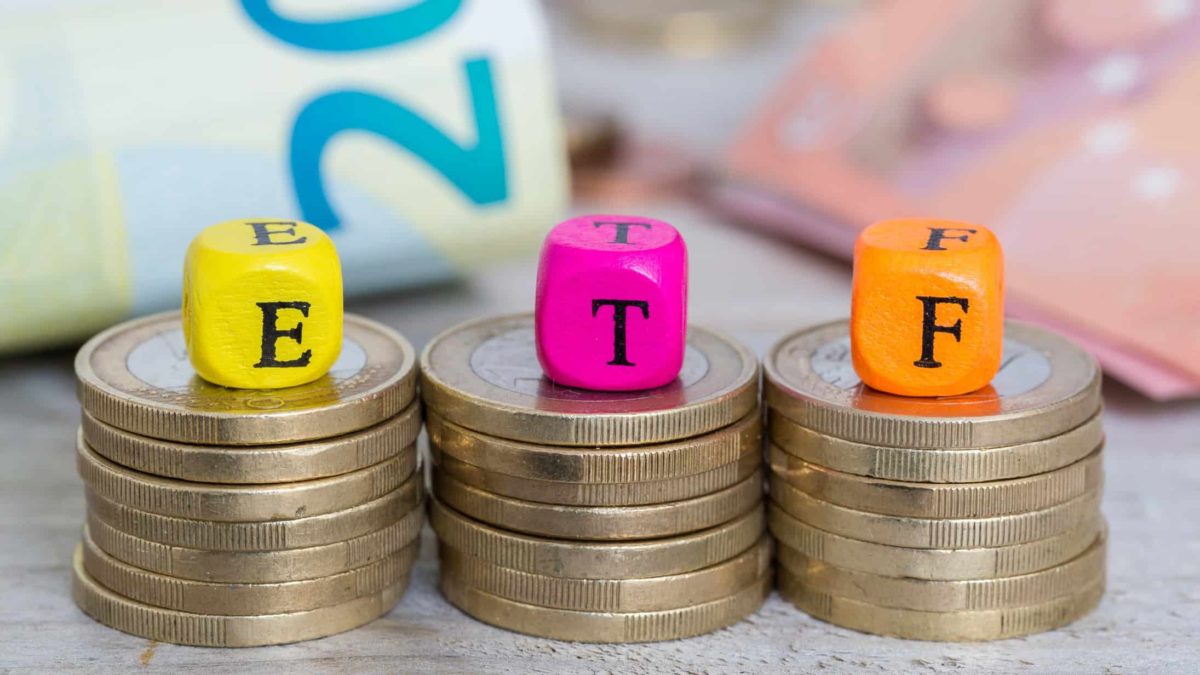
Exchange traded funds (ETFs) continue to grow in popularity with investors and it isn’t hard to see why.
They give investors easy and low cost access to a large number of different shares that they wouldnât ordinarily have access to. This can be a great way to build a diverse portfolio on a limited budget.
But which ETFs could be in the buy zone now? Two high quality options for investors to consider are listed below. Here’s what you need to know about them:
Betashares Global Sustainability Leaders ETFÂ (ASX: ETHI)
The first ETF for investors to consider is the increasingly popular Betashares Global Sustainability Leaders ETF. As you might have guessed from its name, this ETF gives investors exposure to large global stocks that have been identified as âClimate Leaders.â
To be included in the fund, a company needs to be of a high quality and, importantly, pass strict ESG screens and be identified as climate leaders.
Among the companies that have been given the tick of approval are the likes of Adobe, Apple, Home Depot, Nvidia, Toyota, and Visa.
Shaw and Partnersâ analyst Felicity Thomas is a fan of this ETF. She told Livewire earlier this year: âThis is one of my favourites, so itâs definitely a buy for me. I really like that they do positive carbon screening.”
Vanguard MSCI Index International Shares ETFÂ (ASX: VGS)
This is one of the most popular ETFs on the Australian share market with over $4 billion of funds under management.
But that’s not overly surprising given that the Vanguard MSCI Index International Shares ETF provides investors with exposure to ~1,500 of the worldâs largest listed companies. This makes it a great way for investors to instantly diversify their portfolio.
Among the companies youâll be owning a slice of with this ETF are global giants such as Apple, Johnson & Johnson, Nestle, Procter & Gamble, and Visa.
When investing expert Scott Phillips has a stock tip, it can pay to listen. After all, the flagship Motley Fool Share Advisor newsletter he has run for over ten years has provided thousands of paying members with stock picks that have doubled, tripled or even more.* Scott just revealed what he believes could be the “five best ASX stocks” for investors to buy right now. These stocks are trading at near dirt-cheap prices and Scott thinks they could be great buys right now
Motley Fool contributor James Mickleboro has no position in any of the stocks mentioned. The Motley Fool Australia’s parent company Motley Fool Holdings Inc. has positions in and has recommended Vanguard MSCI Index International Shares ETF. The Motley Fool Australia has recommended Vanguard MSCI Index International Shares ETF. The Motley Fool has a disclosure policy. This article contains general investment advice only (under AFSL 400691). Authorised by Scott Phillips.
from The Motley Fool Australia https://ift.tt/e8SH4f2
The S&P/ASX 200 Index (ASX: XJO) has had a difficult run so far this year, tumbling 11% against a backdrop of rising interest rates and soaring inflation.
There are two key ways investors can make money from the share market: capital growth (i.e., share price rises), and dividends.
So, with capital growth taking a back seat amidst the volatility, ASX dividend shares are well and truly in the spotlight.
We know Aussies love their dividends, especially when they are fully franked.
To kick things off, ASX car dealership group Peter Warren is currently sitting in fifth place.
After hitting the ASX boards last year, Peter Warren declared maiden dividends in FY22.
The group declared total dividends of 22 cents across the financial year, fully franked, with the final dividend of 13 cents set to be paid on 7 October.
Based on these dividends, Peter Warren shares are flashing a trailing dividend yield of 7.7%. Including franking credits, this yield jacks up to 11%.
Just edging out Peter Warren for fourth place is the nationâs largest entertainment retailer, JB Hi-Fi.
JB Hi-Fi grew its net profit after tax (NPAT) by 8% in FY22, which helped the ASX 200 retail share hike its annual dividends by 10% to $3.16, fully franked.
As a result, JB Hi-Fi shares are currently printing a trailing dividend yield of 7.7%. Throwing in franking credits dials up this yield to 11.1%.
JB Hi-Fiâs biggest rival Harvey Norman has pipped it at the post, starting off our podium finishers.
Harvey Norman delivered a marginal dip in profits in FY22. However, this didnât stop the ASX 200 retail share from raising its annual dividends by 7% to 37.5 cents, fully franked.
At current levels, this puts Harvey Norman shares on a chunky trailing dividend yield of 8.9%, which grosses up to 12.7%.
Harvey Norman is the only ASX retailer on this list that is yet to trade ex-dividend. Its fully franked final dividend of 17.5 cents will be on offer until 13 October, before shares turn ex-dividend the following day.
This final dividend alone equates to a dividend yield of 4.1%.
Taking out the silver medal is homewares and furnishings retailer, Adairs.
In FY22, the company struggled to match its record results from the prior year. Cycling strong comparisons, NPAT slid by 30% to $45 million.
While Adairs kept its final dividend steady, it slashed total FY22 dividends by 22% to 18 cents, fully franked.
Nonetheless, Adairs shares are spinning up an eye-catching trailing dividend yield of 9.9%, which is boosted to 14.1% with the addition of franking credits.
Overall, the companyâs sales backtracked by 6% to $622 million, while NPAT dropped by 13% to $41 million.
In its first year as a listed company, Best & Less declared annual dividends of 23 cents, fully franked.
This means that Best & Less shares are currently trading on a meaty trailing dividend yield of 10.3%. Including franking credits, this yield cranks up to an even meatier 14.8%.
A word of caution
Itâs important to note these are trailing dividend yields. As such, they reflect whatâs happened in the past.
And as weâre often reminded, past performance is not a reliable indicator of future performance.
This can be especially true in industries such as retail, which are often overly susceptible to the peaks and troughs of the economic cycle.
ASX shares can cut their dividend payments with little to no warning.
So, heed caution on taking trailing dividend yields at face value. Itâs also important to assess the sustainability of these yields into the future.
When investing expert Scott Phillips has a stock tip, it can pay to listen. After all, the flagship Motley Fool Share Advisor newsletter he has run for over ten years has provided thousands of paying members with stock picks that have doubled, tripled or even more.* Scott just revealed what he believes could be the “five best ASX stocks” for investors to buy right now. These stocks are trading at near dirt-cheap prices and Scott thinks they could be great buys right now
Motley Fool contributor Cathryn Goh has no position in any of the stocks mentioned. The Motley Fool Australia’s parent company Motley Fool Holdings Inc. has positions in and has recommended ADAIRS FPO and Harvey Norman Holdings Ltd. The Motley Fool Australia has positions in and has recommended ADAIRS FPO and Harvey Norman Holdings Ltd. The Motley Fool Australia has recommended JB Hi-Fi Limited. The Motley Fool has a disclosure policy. This article contains general investment advice only (under AFSL 400691). Authorised by Scott Phillips.
from The Motley Fool Australia https://ift.tt/fjtDiO4
The Motley Fool chats with fund managers so that you can get an insight into how the professionals think. In part one of this edition, we’re joined by Jesse Curtis, fund manager of the $4.1 billion Centuria Industrial REIT (ASX: CIP), Australia’s largest domestic pure-play industrial real estate investment trust. Today, Curtis explains how the REIT achieved revenue and dividend growth in FY22 and the impact of rising inflation and interest rates on the industrial and logistics sector moving forward.
The Motley Fool: CIP reported some solid FY22 results. The REIT increased total revenue by $44 million and bumped its dividend payout by 0.3 cents to 17.3 cents per share. How did you achieve that?
Jesse Curtis: The REIT produced a strong set of results in FY22. It comes down to the composition of this portfolio being only industrial assets that sit in urban infill markets that are land constrained and have access to a large population within a short drive time.
What that means is we own assets that are in high demand from tenants with limited competition in the market, leading to the ability to achieve strong rental growth. In owning these assets, we’ve been able to execute some great leasing across the portfolio. As well as our value add strategies.
The strong FY22 results are really a credit to our in-house management team. We’ve got a large team who focus on the industrial business, right across development, leasing and asset management. They’re out there every day, understanding our customers’ needs to get the best results for our investors.
MF: Data centres and cold storage facilities were among the big acquisitions for the REIT the last time we spoke in February 2021. What’s the outlook for data centres today?
JC: With the continuing digitalisation of the world, we’re also continuing to see significant demand from users of data centre space. Think about your mobile, your computer, or even your smart TV. Everything is now stored in the cloud. That’s created a large amount of tenant demand in the data centre market to store this data.
More specifically, on our Telstra Corporation Ltd (ASX: TLS) data centre, that asset has been linked to CPI rent review. So we’ve been able to benefit from higher indexations as a result of a higher inflationary environment. Which, in turn, delivers more revenue to the REIT.
About 20% of our total portfolio is linked to CPI rent reviews. And the balance are fixed indexations within our contract leases.
MF: And what’s the outlook for cold storage facilities?
JC: On the cold storage side, since the beginning of the pandemic we have seen the percentage of total retail sales made online in Australia increase by 50%. It’s gone from about 9% of total retail sales made online to about 15% today.
One of the biggest drivers of that has been groceries. And in particular, fresh food. Think back to the lockdowns, a lot of people adopted e-commerce to get their groceries delivered to their front door. This has resulted in needing much more storage space in order to store those fresh products. So, we’ve seen a continued uptick in the amount of space required. Again, from the increased tenant demand, resulting in higher rents and higher revenues.
MF: The CIP share price reached all-time highs on 31 December. And it was still close to those highs shortly before the RBA announced its first interest rate hike in 11 years on 4 May. Following that announcement shares fell sharply. What do you think spooked investors?
JC: Rising interest rates and prevailing inflation have resulted in stock price adjustments right across global equity markets. So, it’s not just an industrial theme, a REIT theme, or even an Australia theme. This has been an impact globally.
MF: How do you see this developing moving forward?
JC: I think our investors understand that property is a long-term play. A lot of people view property as an inflation hedge. So, when you get a higher inflation environment, you have more chance of keeping up with inflation or potentially even outperforming inflation with property backed assets.
If you think about where CIP is trading at its current price, we’re delivering a dividend yield of over 5%. And we think that’s very attractive given the strong fundamentals we’re seeing in the industrial market.
MF: What impact has the new inflationary environment had on your short-term outlook for the logistics space?
JC: In the short term, the outlook is increasing revenue from our inflation-linked leases. As I mentioned earlier, 20% of our portfolio is linked to CPI rent reviews.
What’s also going to happen in the short-term as inflation rises, is that it creates an environment where rents are also rising, at varying levels, across different markets. That provides really strong fundamentals for our re-leasing spreads as well.
We’ve been able to achieve 11% re-leasing spreads. What I mean by that is the difference between what the tenant was paying before their lease expired and what they’re now paying on a new lease. As a result of that, we’re seeing really strong rental growth in the market, and this is flowing through to the CIP portfolio.
MF: And have fast-rising inflation and interest rates changed your long-term outlook for industrial and logistics markets?
JC: In the longer term, the view on industrial and logistics markets is strong. Long-standing tailwinds such as the growth of e-commerce and occupiers increasing their inventory levels for supply chain resilience are providing a resilient stream of tenant demand. Couple this with limited land supply and near-zero vacancy in national industrial markets, and the outlook remains strong.
We take a very long-term view when we’re buying industrial real estate and have focused on infill markets which are set to perform the strongest from these trends. As such we’ve built a great portfolio that we believe will continue to drive very good value for our investors.
What’s also worth noting is that in a higher inflationary and interest rate environment, economic rents to build new industrial space become higher. And with the amount of demand we’re seeing coming into the logistics market, that provides further upward pressure on rents.
As an existing asset owner, CIP has a portfolio of assets valued at over $4 billion. For existing asset owners, like CIP, we’ll see the benefit of those rising rents because people are developing less space and when they do develop it is more expensive.
***
Tune in tomorrow for part two of our interview, where Centuria’s Jesse Curtis looks at the threats and opportunities for investors in listed industrial and logistics space in the year ahead.
(You can find out more about the Centuria Industrial REIT here.)
When investing expert Scott Phillips has a stock tip, it can pay to listen. After all, the flagship Motley Fool Share Advisor newsletter he has run for over ten years has provided thousands of paying members with stock picks that have doubled, tripled or even more.* Scott just revealed what he believes could be the “five best ASX stocks” for investors to buy right now. These stocks are trading at near dirt-cheap prices and Scott thinks they could be great buys right now
Motley Fool contributor Bernd Struben has no position in any of the stocks mentioned. The Motley Fool Australia’s parent company Motley Fool Holdings Inc. has no position in any of the stocks mentioned. The Motley Fool Australia has positions in and has recommended Telstra Corporation Limited. The Motley Fool has a disclosure policy. This article contains general investment advice only (under AFSL 400691). Authorised by Scott Phillips.
from The Motley Fool Australia https://ift.tt/PK0D5hT
This article was originally published on Fool.com. All figures quoted in US dollars unless otherwise stated.
What happened
Shares of Tesla, Inc.(NASDAQ: TSLA) jumped as much as 2.1% Monday after some news out of Germany this weekend. The stock gave up some of that gain, but remained up by 1.2% as of 12:50 p.m. ET today.
So what
A report from German automotive news outlet Automobilwoche this weekend said Tesla is focused on doubling its sales in Germany this year compared to 2021. If the electric-vehicle (EV) leader achieves that goal, it would surpass Toyota for market share in Europe’s largest economy.
Now what
Plans to grow sales in Germany don’t come as a surprise since Tesla continues to ramp up production at its new Gigafactory near Berlin. But the goal to double sales this year, moving it ahead of Toyota in overall German car sales, is aggressive. Through August, Tesla held an overall market share of only 1.5% in Germany.
That compares to an approximate market share of 6% for overall passenger vehicles in the U.S. this year. In its home market, Tesla sells about two-thirds of all battery EVs, according to Barron’s.
Tesla had been supplying German customers from its Shanghai factory prior to the opening of the German plant earlier this year. The company sold approximately 40,000 EVs in Germany last year. To hit 80,000 this year, Tesla would need to sell another 55,000 over the final four months of 2022. That volume would edge out Toyota’s estimated 75,000 vehicle sales in Germany this year.Â
Investors are pushing the stock higher today partly because that achievement would be great news for the progress in ramping up the German Gigafactory. Earlier this year, CEO Elon Musk said that factory, along with its new Texas plant, were burning cash and having to throttle back production due to supply chain constraints. Tesla investors would like nothing more than to find out the two new facilities are cranking out vehicles and contributing to higher profitability.
This article was originally published on Fool.com. All figures quoted in US dollars unless otherwise stated.
Before you consider Tesla, Inc., you’ll want to hear this.
Motley Fool Investing expert Scott Phillips just revealed what he believes are the 5 best stocks for investors to buy right now… and Tesla, Inc. wasn’t one of them.
The online investing service heâs run for over a decade, Motley Fool Share Advisor, has provided thousands of paying members with stock picks that have doubled, tripled or even more.* And right now, Scott thinks there are 5 stocks that are better buys.
Howard Smith has no position in any of the stocks mentioned. The Motley Fool Australia’s parent company Motley Fool Holdings Inc. has positions in and has recommended Tesla. The Motley Fool Australia has no position in any of the stocks mentioned. The Motley Fool has a disclosure policy. This article contains general investment advice only (under AFSL 400691). Authorised by Scott Phillips.
This article was originally published on Fool.com. All figures quoted in US dollars unless otherwise stated.
from The Motley Fool Australia https://ift.tt/R7X1BG2
The A2 Milk Company Ltd (ASX: A2M) share price is having a good month, gaining 13.5% over the past 30 days. But looking further back, the company has had a shocking few years.
A2 Milk shares have fallen 1% over five years despite hitting a record high of $20.05 in 2020. Thatâs compared to an 18% gain posted by the S&P/ASX 200 Index (ASX: XJO) over the last half-decade.
The A2 Milk share price last traded at $5.46.
But one top broker has tipped it to lift to as high as $6.60 â representing a potential 21% upside.
So, whatâs got some experts bullish, and others not so much, about the milk and baby formula favourite? Keep reading to find out.
Is now the time to snap up A2 Milk shares?
Expertsâ opinions are mixed regarding the future of the A2 Milk share price.
Some, like Goldman Sachs, are bearish. The broker has slapped the stock with a sell rating. Though, its $5.65 price target alludes to a potential 3.5% upside.
Others, including Wilsons investment advisor Peter Moran, arenât so sceptical, tipping the company as a hold.
Moran labelled the companyâs latest earnings âstrongâ but warned of âchallengingâ market conditions brought about by rising competition and Chinaâs falling birth rate, The Bull reports.
A2 Milkâs revenue lifted close to 20% year-over-year in financial year 2022, reaching NZ$1.4 billion. Its after-tax profits also rose 42% to around NZ$115 million. The company also announced a NZ$150 million on-market share buyback.
Capital Wealth portfolio manager Tim Haselum has also branded A2 Milk a hold, according to the publication. He says the companyâs share price already has notable upside factored in.
However, plenty of experts are bullish on the A2 Milk share price.
And finally, top broker Bell Potter has slapped A2 Milk shares with a buy rating and a $6.60 price target, representing a potential 21% upside, as my Fool colleague James reports.
The companyâs growing exports to China were behind much of the brokerâs positive outlook.
When investing expert Scott Phillips has a stock tip, it can pay to listen. After all, the flagship Motley Fool Share Advisor newsletter he has run for over ten years has provided thousands of paying members with stock picks that have doubled, tripled or even more.* Scott just revealed what he believes could be the “five best ASX stocks” for investors to buy right now. These stocks are trading at near dirt-cheap prices and Scott thinks they could be great buys right now
Motley Fool contributor Brooke Cooper has no position in any of the stocks mentioned. The Motley Fool Australia’s parent company Motley Fool Holdings Inc. has positions in and has recommended Goldman Sachs. The Motley Fool Australia has recommended A2 Milk. The Motley Fool has a disclosure policy. This article contains general investment advice only (under AFSL 400691). Authorised by Scott Phillips.
from The Motley Fool Australia https://ift.tt/o0qFZf1
ASX tech shares have been on a rollercoaster in 2022. Volatility has picked up this year as inflation increases and interest rates rise to try to calm down economic demand. But, with the share prices falling, itâs having an interesting effect on dividend yields.
Not only does a lower share price mean that the investment is cheaper, it also boosts the potential dividend yield for investors.
REA Group is invested in a number of local and international property sites. In Australia, it operates portals like realestate.com.au and realcommercial.com.au.
For example, if a business with a 4% dividend yield sees a 10% drop in the share price, then the dividend yield would become 4.4%.
So, with that in mind, letâs look at some of the ASX tech shares that do pay dividends but have seen a sell-off.
With both economic volatility and increased uncertainty about the property market, the REA Group share price has dropped almost 30% this year.
In FY22, the full-year dividend increased by 25% to $1.64 per share. At the current REA Group share price, it offers a trailing grossed-up dividend yield of 1.9%.
By FY24, the business could be paying a full-year dividend of 208.8 cents per share, according to CMC Markets. That would translate into a grossed-up dividend yield of 2.4%.
TechnologyOne is a large ASX tech company that develops and provides a global enterprise resource planning (ERP) solution. Itâs working hard on changing clients onto software-as-a-service (SaaS) contracts and services.
Since the beginning of 2022, the TechnologyOne share price has dropped by more than 12%.
In the FY22 half-year result, the business decided to grow its interim dividend by 10% to 4.2 cents per share. The trailing 12 months of dividends come to a grossed-up dividend yield of 1.6%.
By FY24, TechnologyOne could pay an annual dividend per share of 22 cents per share. That could equate to a grossed-up dividend yield of 2.5%.
Carsales claims to be the largest online automotive, motorcycle, and marine classifieds business in Australia. It has operations across the Asia Pacific region and interests in leading online automotive classifieds businesses in Brazil, South Korea, Malaysia, Indonesia, Thailand, and Mexico.
Since the start of 2022, the Carsales share price has dropped by more than 17%. Thatâs despite the ASX tech company seeing a lot of purchasing demand for vehicles.
In the FY22 result, Carsales announced that its final dividend per share would increase by 9% to 24.5 cents. That brought the full-year dividend to 50 cents per share, which was a rise of 5.25%.
By FY24, the business could be paying an annual dividend of 67.3 cents per share. This could translate into a grossed-up dividend yield of 4.7%.
When investing expert Scott Phillips has a stock tip, it can pay to listen. After all, the flagship Motley Fool Share Advisor newsletter he has run for over ten years has provided thousands of paying members with stock picks that have doubled, tripled or even more.* Scott just revealed what he believes could be the “five best ASX stocks” for investors to buy right now. These stocks are trading at near dirt-cheap prices and Scott thinks they could be great buys right now
Motley Fool contributor Tristan Harrison has no position in any of the stocks mentioned. The Motley Fool Australia’s parent company Motley Fool Holdings Inc. has no position in any of the stocks mentioned. The Motley Fool Australia has recommended REA Group Limited, TechnologyOne Limited, and carsales.com Limited. The Motley Fool has a disclosure policy. This article contains general investment advice only (under AFSL 400691). Authorised by Scott Phillips.
from The Motley Fool Australia https://ift.tt/o9rInPU
And, because Iâm awake, I thought Iâd do some writing.
As I contemplated what Iâd write about, I wondered what many people may assume about me being up at this time.
Maybe that I couldnât sleep, for worrying about recent stock market volatility.
Maybe that I was up watching US markets during their daytime.
Itâs nothing quite so⦠exciting.
Iâm awake early because my young bloke has been crook for the past few days, and he slept in our bed last night. The phrase âhuman windmillâ comes to mind and, well, it can be hard to sleep when thereâs so much tossing and turning!
Plus, heâs also going to be off school again today, so I might as well get some work done while I canâ¦
But it was those thoughts â that I might have markets on my mind â that prompted this piece.
See, neither of those things â worrying about volatility or âwatchingâ the markets â is something I do.
Surprised?
If youâre a regular reader, I hope not. If youâre newer here, you might wonder.
Arenât investors supposed to have three or four computer screens on their trading terminals?
And âmoney never sleepsâ, right?
Now, youâre smart people.
You know that by asking those rhetorical questions, the answer is clearly ânoâ.
But I want to explain why.
The truth is that I canât remember ever being kept awake by the stock market.
Donât get me wrong, these were very unpleasant periods, where portfolios were often deeply in the red.
They were painful, ugly times.
But I didnât lose any sleep.
No, Iâm not boasting.
Nor am I super-human (or super-Vulcan, for the Star Trek fans).
I was just lucky enough to have learned, early, about the historical truth of investing.
More importantly, I was lucky enough that I was able to internalise that truth, and make it the centre of gravity for my investing.
And I canât overstate how important that has been for me â or how important it could be for you.
See, the saying âthose who fail to learn from history are doomed to repeat itâ might be true in many aspects of life.
But I think itâs the opposite for investors.
The lesson of history on the stock market is that compound gains of around 9% per annum have been the norm.
And that patiently investing â saving, adding, and waiting â has been an extraordinary way to build seriously impressive long-term wealth.
9%, compounded over the 30 years to June 30, 2022, would have turned a hypothetical $10,000 investment in the ASX into $130,000.
(And, happily for my narrative, that includes all three crashes â dot.com, GFC and COVID â that I mentioned earlier.)
If weâre âdoomedâ to repeat those gains, bring it on!
Oh, in case youâre tempted to think âah, but the dot.com crash was worse in the USâ, youâre right. But $10,000 invested in US shares actually compounded at a faster rate than on the ASX over the past three decades, despite that!
But back to me.
When I started investing, I was able to learn and internalise that long-term history.
And to come to a place where I believe, as Mark Twain is quoted to have said, âhistory may not repeat, but it does rhymeâ.
Now, for those who are wringing their hands about what weâre facing, economically, let me be clear: no, I donât think itâs different this time.
I mean, we face different challenges, for sure.
Kinda.
This episode of high inflation might be new if youâre young, or havenât studied history.
But itâs a pretty good echo of the early 1980s.
This global instability?
Weâve had more episodes of it than you could count on two hands, over the past century, and yet the ASX has gained around 9% per annum over that time.
(Remember: two world wars, numerous regional wars and conflicts, a cold war, high oil prices, high inflation, terrorism and much more.)
Now, Iâm NOT saying we wonât have market volatility.
Iâm saying precisely the opposite.
Weâll have volatility â just as weâve had in the past.
But Iâm saying I think the worldâs stock markets will continue to deliver strong, long-term compound gains, despite that.
Why?
Because I donât think humanity has peaked.
I donât think weâll look back and say âYeah, 2021 was the best that democratic capitalism ever got⦠It was all downhill from there.â
I think our best days are ahead of us.
And I think that means history is likely to repeat⦠or at least rhyme.
And itâs why I donât get stressed â or lose sleep â about market volatility (or, less euphemistically, share price falls).
Because I have been taught to â and Iâve internalised the process of â zooming out.
In 1992 â the start year for the 30-year numbers I mentioned earlier â weâd just got out of recession.
Though we didnât know it at the time, five years later, weâd have the Asian Financial Crisis. Then three years after that, the dot.com crash, where the NASDAQ would lose some 85-odd percent of its value.
Who in their right mind would have invested in 1992?
Especially when you layer in a future that included terrorist attacks, wars in the Middle East and Afghanistan, a US housing collapse, the freezing of global credit markets and the worst pandemic in a century.
And theyâre just the big ones. Every week, someone was telling you what was about to go wrong. âItâs the big oneâ, theyâd say.
Sounds like a recipe for terrible returns.
And hereâs the thing.
Even if those doom-and-gloomers had been able to accurately predict every single one of those terrible social and economic issuesâ¦
⦠you still could have turned $10,000 into $130,000!
And that is the lesson Iâve internalised.
(By the way, Iâm not cherry-picking data â that average return holds pretty true over more than a century, with even more economic, social and geopolitical ructions during that time!)
The beauty of internalising that lesson?
Being able to zoom out means you donât sweat the small movements.
Or even the big ones.
The ASX lost 38% in a touch over a month in early 2020.
Thirty. Eight. Per. Cent.
It sucked.
But I didnât lose any sleep.
Why?
Because of the lessons of history, and my confidence in the long-term value creation of democratic capitalism.
In a world where people want to tell you, at every turn, how complex and difficult investing can be, I humbly disagree.
It is that simple.
I think the future is bright, not because there are no obstacles for us to climb, but despite the fact there are obstacles to climb.
It has always been thus.
And thatâs the lesson of economic and stock market history.
And thatâs why I donât lose any sleep.
Itâs also why I donât have four monitors with squiggly lines on them: because Iâm playing a different game.
Embracing the power of democratic capitalism means taking a big-picture view, not a minute-by-minute, heart-attack-inducing roller coaster ride of trying to guess short-term share price movements.
One last (related) thing: the shorter your chosen time horizon, the more stressful investing can be. But also, the less likely it is that those long-term forces will play out.
If youâre hoping for gains in a day, a week, a month or even a year, youâre taking a punt.
But also, I think youâre lowering your odds, perhaps meaningfully.
Because history also tells us that the longer your timeframe, the more likely you are to achieve results closer to that long-term average.
And donât forget: with lifespans continuing to lengthen, even a retiree has likely got decades of investing potential left, let alone someone in their 30s, 40s or 50s.
(If youâre 50, youâve been an adult for 32 years. And youâll probably live, on average, another 35 or 40 years. You have more investing time ahead of you than behind you!)
Me?
Iâm continuing to add money to my portfolio every month.
And Iâm investing that money with a multi-decade time horizon.
Which means that whatever happens today, tomorrow, this year or next year is all but irrelevant.
But which also means I expect that in 2052, weâll look back at 2022 and wish weâd all invested more money, today.
And that perspective is why I donât lose sleep thinking about my portfolio.
Now, if only I could find a way to stop a 9yo tossing and turning, I could go back to bedâ¦
(By the way, if you haven’t seen it, I recorded this video last week, when the US market fell. Different circumstances, but same theme. Have a look, if you haven’t already.)
When investing expert Scott Phillips has a stock tip, it can pay to listen. After all, the flagship Motley Fool Share Advisor newsletter he has run for over ten years has provided thousands of paying members with stock picks that have doubled, tripled or even more.* Scott just revealed what he believes could be the “five best ASX stocks” for investors to buy right now. These stocks are trading at near dirt-cheap prices and Scott thinks they could be great buys right now
Motley Fool contributor Scott Phillips has no position in any of the stocks mentioned. The Motley Fool Australia’s parent company Motley Fool Holdings Inc. has no position in any of the stocks mentioned. The Motley Fool Australia has no position in any of the stocks mentioned. The Motley Fool has a disclosure policy. This article contains general investment advice only (under AFSL 400691). Authorised by Scott Phillips.
from The Motley Fool Australia https://ift.tt/6RK7e5Y
Are Woodside Energy Group Ltd (ASX: WDS) shares an opportunity or have they run too far for S&P/ASX 200 Index(ASX: XJO) energy share investors to buy?
Since the beginning of 2022, Woodside shares have risen by more than 40%. But, since 26 August 2022, they have fallen by around 10%.
Itâs a bit of a mixed bag in terms of the share price, but itâs pretty clear that the company is firing on all cylinders in terms of its profitability.
Result recap
For investors that didnât see it, the company recently reported its 2022 half-year result. It showed that operating revenue increased by 132% to $5.8 billion.
The interim dividend per share was increased by 263% to US$1.09 per share.
Woodside benefited from a doubling of the price of oil to $96.4 per barrel of oil equivalent. It chose a fortunate time to merge with the oil and gas division of BHP Group Ltd (ASX: BHP), allowing it to substantially increase in size, adding to scale benefits, diversification and improving its financial stability.
What’s going on with energy prices?
Discussing the impact on energy markets around the world, such as the Russian invasion on Ukraine, Woodside CEO Meg OâNeill said:
The upheavals in global and Australian energy markets witnessed over the course of the past six months have shone a spotlight on the importance of gas in the worldâs energy mix and underscores our confidence in the longer-term demand outlook for gas, which makes up 70% of Woodsideâs portfolio.
Safe and reliable supplies of gas are not only critical to global energy security but will play a key role as our customers seek to decarbonise, alongside new energy sources such as hydrogen and ammonia that Woodside is investing in.
Is the Woodside share price an opportunity?
Despite the strong performance of energy prices this year, Plato Investment Management’s Dr Don Hamson picked the ASX 200 energy share as an opportunity and that it could pay attractive dividends in the coming years. Speaking to Livewireâs Ally Selby, he said:
I know it’s a bad thing, but it’s benefiting from the war in Ukraine because there’s a gas shortage and that’s going to continue. But even if you look out through those dynamics, we do think decarbonisation is going to be a big thing for the next 30 years, and gas is the interim step. And they’re very well placed with that.
I think after they pay their dividend, it’s going to be 13% geared. So, it’s actually very, very low. And it has a great yield – it’s on a yield of 9% gross dividends. So that’s one of our favourites.
Woodside has said that its strategy is to be a low-cost, lower-carbon energy provider. It is working on a number of initiatives including âhydrogen refuelling, carbon capture and storage and carbon to products technologies.â
Before you consider Woodside Petroleum Ltd, you’ll want to hear this.
Motley Fool Investing expert Scott Phillips just revealed what he believes are the 5 best stocks for investors to buy right now… and Woodside Petroleum Ltd wasn’t one of them.
The online investing service heâs run for over a decade, Motley Fool Share Advisor, has provided thousands of paying members with stock picks that have doubled, tripled or even more.* And right now, Scott thinks there are 5 stocks that are better buys.
Motley Fool contributor Tristan Harrison has no position in any of the stocks mentioned. The Motley Fool Australia’s parent company Motley Fool Holdings Inc. has no position in any of the stocks mentioned. The Motley Fool Australia has no position in any of the stocks mentioned. The Motley Fool has a disclosure policy. This article contains general investment advice only (under AFSL 400691). Authorised by Scott Phillips.
from The Motley Fool Australia https://ift.tt/nS75gvf
Yes, for many banks it’s an opportunity to increase their net interest margin. But it can also mean higher delinquencies as customers find it more difficult to make their repayments.
The big four banks are always popular but have limited growth opportunities, which is why many professionals stay away from them.
Instead, here’s a pair of finance stocks that experts are recommending as buy right now:
‘Undemanding’ PE ratio equals buying opportunity
Catapult Wealth portfolio manager Tim Haselum told The Bull that he likes the look of Bank of Queensland Limited (ASX: BOQ), despite some headwinds.
“We believe the banks are facing reducing loan volumes, but we aren’t concerned about impairments, as households appear to be in sound financial shape.”
Last year, the Bank of Queensland fully acquired ME Bank, which Haselum feels is a positive move.
“We like the ME Bank recovery story and see further synergies ahead,” he said.
“Potential net interest margin improvements amid the company’s undemanding price/earnings multiple presents a buying opportunity.”
BoQ shares have risen 6% since its 20 June trough. The stock is paying out a juicy 6.4% dividend yield.
“Although its analysts suspect that the bankâs revenue growth could slow if rising rates impact lending volumes, it expects cost synergies from the ME Bank acquisition to support earnings and dividend growth.”
This ASX share has been oversold for its risks
Pepper Money Ltd (ASX: PPM) specialises in lending to consumers with non-standard credit history.
With an economic downturn looming, perhaps this has scared off investors. The share price is down more than 28% for the year so far, while paying a 6.45% dividend yield.
Wilsons investment advisor Peter Moran reckons the risk has been overstated.
“While a general slowdown in the economy is a potential risk for lenders, we see this as being excessively priced in with the shares recently trading on 4.5 times earnings,” he said.
“We retain an overweight rating.”
Reporting season impressed Moran, despite the headwinds buffeting Pepper Money.
“This non-bank lender reported a pro-forma net profit after tax of $73.1 million in the 2022 first half, an 11% increase on the prior corresponding period,” he said.
“This was despite a 30 basis points fall in the net interest margin.”
The situation is expected to improve for the current period.
“We expect increasing interest rates should contribute to a partial recovery in margins during the second half.”
When investing expert Scott Phillips has a stock tip, it can pay to listen. After all, the flagship Motley Fool Share Advisor newsletter he has run for over ten years has provided thousands of paying members with stock picks that have doubled, tripled or even more.* Scott just revealed what he believes could be the “five best ASX stocks” for investors to buy right now. These stocks are trading at near dirt-cheap prices and Scott thinks they could be great buys right now
Motley Fool contributor Tony Yoo has no position in any of the stocks mentioned. The Motley Fool Australia’s parent company Motley Fool Holdings Inc. has no position in any of the stocks mentioned. The Motley Fool Australia has no position in any of the stocks mentioned. The Motley Fool has a disclosure policy. This article contains general investment advice only (under AFSL 400691). Authorised by Scott Phillips.
from The Motley Fool Australia https://ift.tt/41ta9GO
Revenue grew by 5% to $2.4 billion while earnings before interest, tax, and amortisation (EBITA) came in ahead of guidance at $157 million, up 30% from the prior year.
On the back of these results, NRW hiked its final dividend by 40%, with annual dividends growing by a similar amount to 12.5 cents.
Based on current prices, this puts NRW shares on a trailing dividend yield of 4.9%. Adding in franking credits boosts this yield to 7.0%.
Next up, fellow mining services company Macmahon will also see its shares turn ex-dividend tomorrow.
Macmahon is set to pay out an unfranked final dividend of 0.35 cents to eligible shareholders on 7 October.
While this dividend may appear small in absolute terms, the Macmahon share price is currently sitting at 15.5 cents.
So, after throwing in the companyâs interim dividend of 0.3 cents earlier in the year, Macmahon shares are sporting a trailing dividend yield of 4.2%.
FY22 was a year of growth for Macmahon, lifting revenue by 26% to $1.7 billion. This was primarily driven by the contribution from new project start-ups, inflation, and increased contract activity.
This revenue growth partially flowed through to earnings, with underlying net profit after tax (NPAT) increasing by 5% to $63 million.
The ASX All Ords share held its total dividends steady at 0.65 cents, in line with the prior year.
Rounding out this trio of ASX All Ords shares going ex-dividend on Wednesday is diagnostic imaging business Capital Health.
As of tomorrow, Capitol Health shares will no longer be trading with a fully franked final dividend of 0.5 cents, which will be paid on 21 October.
Capitol Health delivered revenue of $184 million in FY22, up 3% from the prior year. This was driven by organic growth, the acquisition of Womensâ Imaging, and three greenfield clinic openings.
These growth drivers were partially offset by COVID lockdowns, suspensions in elective surgery, and impacts from the omicron variant.
On the bottom line, statutory NPAT decreased 9% to $11 million.
Nonetheless, Capitol Health held its final and total dividends steady. The ASX All Ords share has declared fully franked interim and final dividends of 0.5 cents since 2019.
As a result, Capitol Health shares are currently flashing a trailing dividend yield of 3.0%. Including franking credits, this yield dials up to 4.3%.
When investing expert Scott Phillips has a stock tip, it can pay to listen. After all, the flagship Motley Fool Share Advisor newsletter he has run for over ten years has provided thousands of paying members with stock picks that have doubled, tripled or even more.* Scott just revealed what he believes could be the “five best ASX stocks” for investors to buy right now. These stocks are trading at near dirt-cheap prices and Scott thinks they could be great buys right now
Motley Fool contributor Cathryn Goh has no position in any of the stocks mentioned. The Motley Fool Australia’s parent company Motley Fool Holdings Inc. has no position in any of the stocks mentioned. The Motley Fool Australia has no position in any of the stocks mentioned. The Motley Fool has a disclosure policy. This article contains general investment advice only (under AFSL 400691). Authorised by Scott Phillips.
from The Motley Fool Australia https://ift.tt/2GQsMZk