Category: Stock Market

  • Here’s how the Woolworths share price stacked up in April

    A customer and shopper in Woolworths supermarket

    A customer and shopper in Woolworths supermarket

    The S&P/ASX 200 Index (ASX: XJO) ended up having a pretty wild month over April. Over the month just gone, the ASX 200 got fairly close to breaking its all-time high before retreating towards the end of the month. In the end, the index gave investors a loss of 0.86% over the month just gone. But let’s see how the Woolworths Group Ltd (ASX: WOW) share price went.

    As the largest consumer staples share on the ASX 200, many investors have an expectation of ‘safety’ for Woolworths shares. So it will be interesting to see how this grocery giant lived up to this reputation.

    So Woolies started April at a share price of $37.26. By the end of the month, the Woolworths share price had grown to $38.51. That’s a gain of 3.35%, a very healthy outperformance of the broader market. And that’s not including the interim dividend investors received last month either. Woolies paid out its dividend of 39 cents per share, fully franked, on 13 April. This would have added another couple of percentage points to shareholders’ April returns too.

    All in all, a relatively pleasing month for the Woolworths share price, you’d have to conclude.

    Is the Woolworths share price a buy or a sell in May?

    So now that April is under the old belt, and we’re now in May, many investors might be wondering if the Woolworths share price is a buy today.

    Well, let’s see what one ASX broker reckons.

    As my Fool colleague James covered just yesterday, broker Goldman Sachs is currently bullish on Woolies shares. This ASX broke currently rates Woolworths as a buy, with a 12-month share price target of $41.70. That would imply a further upside of almost 10% on current pricing over the next year.

    Goldman was impressed with Woolworths’ latest quarterly update, which saw the company report year-on-year sales growth of 9.7%. The broker also noted that Woolies “gained market share both from value and volume perspective during the quarter”. Goldman is also anticipating that Woolworths will lift its dividends in FY2023 as well to $1.18 per share.

    So more good news to come for Woolies if Goldman Sachs is to be believed.

    At the current Woolworths share price, this ASX 200 blue-chip has a market capitalisation of $46.14 billion, with a dividend yield of 2.47%

    The post Here’s how the Woolworths share price stacked up in April appeared first on The Motley Fool Australia.

    Should you invest $1,000 in Woolworths right now?

    Before you consider Woolworths, you’ll want to hear this.

    Motley Fool Investing expert Scott Phillips just revealed what he believes are the 5 best stocks for investors to buy right now… and Woolworths wasn’t one of them.

    The online investing service he’s run for over a decade, Motley Fool Share Advisor, has provided thousands of paying members with stock picks that have doubled, tripled or even more.* And right now, Scott thinks there are 5 stocks that are better buys.

    *Returns as of January 13th 2022

    More reading

    Motley Fool contributor Sebastian Bowen has no position in any of the stocks mentioned. The Motley Fool Australia’s parent company Motley Fool Holdings Inc. has no position in any of the stocks mentioned. The Motley Fool Australia has no position in any of the stocks mentioned. The Motley Fool has a disclosure policy. This article contains general investment advice only (under AFSL 400691). Authorised by Scott Phillips.

    from The Motley Fool Australia https://ift.tt/1u2vkip

  • Up 250% in a year, the Liontown share price surges 6% higher again today

    ASX share price rise represented by investor riding atop leaping lion

    ASX share price rise represented by investor riding atop leaping lion

    The Liontown Resources Limited (ASX: LTR) share price is leaping higher today, up 5.9%.

    Liontown shares closed yesterday trading for $1.36 and are currently worth $1.44.

    So, why are investors bidding up the price of the ASX lithium producer?

    Lithium shares in the spotlight

    It’s not just the Liontown share price that’s outperforming today.

    Many of the other top ASX lithium shares are charging higher too. Core Lithium Ltd (ASX: CXO) shares, for example, are up 6.7% at the time of writing while the Pilbara Minerals Ltd (ASX: PLS) share price is up 5%.

    With no fresh price-sensitive news out of the company, it looks like investors are broadly keen on the lithium space.

    And as a producer, Liontown is able to take advantage of the soaring spot prices for lithium. Those prices have surged some 500% over the past 12 months as demand for the lightweight, conductive metal used to power EV batteries has outpaced new supply.

    Liontown was said to be among the ASX lithium companies in “a very strong position” by David Franklyn, portfolio manager of the Argonaut Natural Resources Fund.

    According to Franklyn (courtesy of the Australian Financial Review)

    We look out for large companies that are in tier-one locations, have a large resource base, are in production and also have the ability to further grow production. The guys who maximise the benefit of those higher prices are the ones that are in production today and don’t have everything locked away in long-term contracts because you need to be able to sell near spot [prices].

    Liontown Resources counts among the Argonaut Natural Resources Fund’s top-3 ASX lithium share holdings.

    Liontown share price snapshot

    The Liontown share price is up an impressive 251% over the past 12 months, far outpacing the 4% gains posted by the All Ordinaries Index (ASX: XAO) in that same period.

    The ASX lithium share hit all-time closing highs of $2.12 on 4 April.

    The post Up 250% in a year, the Liontown share price surges 6% higher again today appeared first on The Motley Fool Australia.

    Should you invest $1,000 in Liontown right now?

    Before you consider Liontown, you’ll want to hear this.

    Motley Fool Investing expert Scott Phillips just revealed what he believes are the 5 best stocks for investors to buy right now… and Liontown wasn’t one of them.

    The online investing service he’s run for over a decade, Motley Fool Share Advisor, has provided thousands of paying members with stock picks that have doubled, tripled or even more.* And right now, Scott thinks there are 5 stocks that are better buys.

    *Returns as of January 13th 2022

    More reading

    The Motley Fool Australia’s parent company Motley Fool Holdings Inc. has no position in any of the stocks mentioned. The Motley Fool Australia has no position in any of the stocks mentioned. The Motley Fool has a disclosure policy. This article contains general investment advice only (under AFSL 400691). Authorised by Scott Phillips.

    from The Motley Fool Australia https://ift.tt/UiwoaTg

  • Is the Webjet share price now a buy amid ‘strong’ travel demand?

    Rising plane share price represented by a inclining line with a model plane at the end.

    Rising plane share price represented by a inclining line with a model plane at the end.

    The Webjet Limited (ASX: WEB) share price is an investment to consider as travel demand returns to the market.

    It has been a difficult period for Webjet since the onset of the COVID-19 pandemic. The Webjet share price is still down around 40% compared to the pre-COVID crash, though there are a significant amount of more shares on issue now after the capital raising.

    Travel demand returns

    Webjet is due to hand in its FY22 result on 19 May 2022. However, investors may have gotten an insight into travel demand from a recent update from Qantas Airways Limited (ASX: QAN).

    The airline said that domestic travel has returned to pre-COVID levels ahead of expectations. Qantas also said that there is “strong demand” for international travel, though some key markets are yet to open.

    Qantas said that leisure demand is “very strong”. Qantas and Jetstar both were operating at approximately 110% of pre-COVID capacity over the Easter school holidays. It also said that the rebound in travel for business purposes was “above expectations”. Small business travel was above pre-COVID levels and corporate travel was 85% of pre-COVID travel.

    The airline also noted that the removal of Australia’s pre-flight testing requirement and early opening of New Zealand’s borders provided tailwinds during April.

    Does this make the Webjet share price a buy?

    Webjet and Qantas are not the same business. Demand for one business may not equally translate into the same demand growth for the other business, Webjet may be seeing less (or more) demand than Qantas over the same period.

    However, Webjet investors may think that it’s useful to know about the conditions that Qantas is seeing.

    One of the most recent broker ratings on Webjet came from Citi. It currently rates Webjet as a buy, with a price target of $6.50. The operating leverage that Webjet has with its business model will help profitability as volume returns.

    The broker is expecting that Webjet can grow its market share, particularly as more people purchase their travel through online means.

    According to Citi, the Webjet share price is valued at 33 times FY23’s estimated earnings, implying profit will return in FY23.

    Ord Minnett has one of the most positive price targets, with a target of $7.51. That’s a potential upside of almost 30%.

    Webjet’s latest commentary

    Half a year ago, Webjet said that its WebBeds business had been profitable since July 2021, while the Webjet online travel agency (OTA) business returned to profitability in October 2021.

    Webjet said that it has expanded its geographic presence in the “key” North American market, added significant domestic inventory globally, and signed a range of new domestic and OTA customers, “resulting in a materially larger opportunity for growth than was targeted pre-COVID.”

    Webjet also said that it sees an opportunity to increase market share in the OTA business as consumers continue to shift to buying online and believes the innovations offered by ‘Trip Ninja’ technology will play a key role in growing its share of the international flights market.

    Webjet said that WebBeds is on track to be 20% more cost-efficient at scale.

    Webjet share price snapshot

    Since the start of 2022, the Webjet share price has climbed almost 10%.

    The post Is the Webjet share price now a buy amid ‘strong’ travel demand? appeared first on The Motley Fool Australia.

    Should you invest $1,000 in Webjet right now?

    Before you consider Webjet, you’ll want to hear this.

    Motley Fool Investing expert Scott Phillips just revealed what he believes are the 5 best stocks for investors to buy right now… and Webjet wasn’t one of them.

    The online investing service he’s run for over a decade, Motley Fool Share Advisor, has provided thousands of paying members with stock picks that have doubled, tripled or even more.* And right now, Scott thinks there are 5 stocks that are better buys.

    *Returns as of January 13th 2022

    More reading

    JPMorgan Chase is an advertising partner of The Ascent, a Motley Fool company. Citigroup is an advertising partner of The Ascent, a Motley Fool company. Motley Fool contributor Tristan Harrison has no position in any of the stocks mentioned. The Motley Fool Australia’s parent company Motley Fool Holdings Inc. has no position in any of the stocks mentioned. The Motley Fool Australia has recommended Webjet Ltd. The Motley Fool has a disclosure policy. This article contains general investment advice only (under AFSL 400691). Authorised by Scott Phillips.

    from The Motley Fool Australia https://ift.tt/inasBrl

  • Why did the Cobalt Blue share price come off the boil in April?

    a sad looking engineer or miner wearing a high visibility jacket and a hard hat stands alone with his head bowed and hand to his forehead as he speaks on a mobile telephone out front of what appears to be an on site work shed.a sad looking engineer or miner wearing a high visibility jacket and a hard hat stands alone with his head bowed and hand to his forehead as he speaks on a mobile telephone out front of what appears to be an on site work shed.

    The Cobalt Blue Holdings Ltd (ASX: COB) share price has taken a hit these past few weeks.

    After a strong start to 2022 – shares are up 60% this year to date – the Cobalt Blue share price swept 10% into the red during April.

    In the first part of this week, the shares fell another 12% between Friday’s close and Wednesday’s close. However, they have rebounded today and are currently up 6.67% at 80 cents.

    What’s been happening at Cobalt Blue?

    April was a fairly quiet month for the miner. Early on, investors bid up its share price amid an update to its Broken Hill Cobalt Project (BHCP), released the month earlier.

    By that time, Cobalt Blue had surged 79% in the month to April 5, propelled by a substantial lunge in the price of cobalt.

    These pricing strengths have extended into today’s market, holding the line at over $80,000 per tonne.

    “Cobalt futures were hovering above the $80,000 per tonne level in May, their highest since June 2018 and up 16% this year and around amid continued strong demand from the electric vehicle sector,” Trading Economics reports.

    On the supply side, cobalt production has been pushed to its limits as any nation producing electronics is a cobalt buyer. On top of that, mounting sanctions on Russia, which account for roughly 4% of the world’s cobalt production, for invading Ukraine intensified concerns over the commodity’s supply.

    Aside from that, the company was awarded a $15 million critical minerals accelerator initiative grant in late April, after a relatively quiet month.

    “The Broken Hill Cobalt Project has received a significant boost by being awarded $15 million via the Australian Government’s Critical Minerals Accelerator Initiative,” chairman Rob Baincardi said.

    “We applaud the Australian Government’s support in assisting mid-stage critical minerals projects overcome the substantial technical, regulatory and financial barriers for the establishment of greenfield projects such as the BHCP.”

    That announcement came a day after the company’s quarterly activities and cash flow report.

    Cobalt Blue share price snapshot

    The Cobalt Blue share price has soared 128% higher in the last 12 months of trade, although has struggled in more recent times.

    Over the past month, shares have slipped 20%, coming off a three-month high of $1.03 on 4 April.

    The post Why did the Cobalt Blue share price come off the boil in April? appeared first on The Motley Fool Australia.

    Should you invest $1,000 in Cobalt Blue right now?

    Before you consider Cobalt Blue, you’ll want to hear this.

    Motley Fool Investing expert Scott Phillips just revealed what he believes are the 5 best stocks for investors to buy right now… and Cobalt Blue wasn’t one of them.

    The online investing service he’s run for over a decade, Motley Fool Share Advisor, has provided thousands of paying members with stock picks that have doubled, tripled or even more.* And right now, Scott thinks there are 5 stocks that are better buys.

    *Returns as of January 13th 2022

    More reading

    Motley Fool contributor Zach Bristow has no position in any of the stocks mentioned. The Motley Fool Australia’s parent company Motley Fool Holdings Inc. has no position in any of the stocks mentioned. The Motley Fool Australia has no position in any of the stocks mentioned. The Motley Fool has a disclosure policy. This article contains general investment advice only (under AFSL 400691). Authorised by Scott Phillips.

    from The Motley Fool Australia https://ift.tt/dbDjNzs

  • ASX 200 midday update: NAB disappoints, Qantas announces acquisition

    A man analyses stockmarket graph on his computer.

    A man analyses stockmarket graph on his computer.

    At lunch on Thursday, the S&P/ASX 200 Index (ASX: XJO) has followed the lead of US markets and is pushing higher. The benchmark index is currently up 0.65% to 7,352.5 points.

    Here’s what is happening on the ASX 200 today:

    NAB half-year results disappoint

    The National Australia Bank Ltd (ASX: NAB) share price is in the red today after the bank’s half-year results disappointed. For the six months ended 31 March, NAB reported a 4.6% increase in revenue to $9,071 million and a 4.1% lift in cash earnings to $3,480 million. However, this was short of the market’s expectations. Furthermore, NAB has abandoned its cost base targets and now expects its operating expenses to increase by 2% to 3% in FY 2022.

    Janus Henderson shares crash

    Investors have been selling down the Janus Henderson Group (ASX: JHG) share price on Thursday after the fund manager’s quarterly update underwhelmed. Janus Henderson reported first quarter operating income of US$124.6 million. This was down 21% from the fourth quarter and 35.3% over the prior corresponding period.

    Qantas acquisition

    The Qantas Airways Limited (ASX: QAN) share price is falling today after the airline operator announced an agreement to acquire Alliance Aviation Services Ltd (ASX: AQZ). The company has offered one Qantas share per Alliance share. This represents a 35% premium to the $3.51 Alliance share price at yesterday’s close and values the fly-in, fly-out operator at an enterprise value of $919.2 million.

    Best and worst ASX 200 performers

    The best performer on the ASX 200 on Thursday has been the Imugene Limited (ASX: IMU) share price with a 7% gain. The biotech’s shares are rebounding after crashing to a 52-week low this week. Going the other way, the Janus Henderson share price is the worst performer with a 15% decline. This follows the fund manager’s aforementioned quarterly update.

    The post ASX 200 midday update: NAB disappoints, Qantas announces acquisition appeared first on The Motley Fool Australia.

    Wondering where you should invest $1,000 right now?

    When investing expert Scott Phillips has a stock tip, it can pay to listen. After all, the flagship Motley Fool Share Advisor newsletter he has run for over ten years has provided thousands of paying members with stock picks that have doubled, tripled or even more.*

    Scott just revealed what he believes could be the five best ASX stocks for investors to buy right now. These stocks are trading at near dirt-cheap prices and Scott thinks they could be great buys right now.

    *Returns as of January 12th 2022

    More reading

    Motley Fool contributor James Mickleboro has no position in any of the stocks mentioned. The Motley Fool Australia’s parent company Motley Fool Holdings Inc. has no position in any of the stocks mentioned. The Motley Fool Australia has no position in any of the stocks mentioned. The Motley Fool has a disclosure policy. This article contains general investment advice only (under AFSL 400691). Authorised by Scott Phillips.

    from The Motley Fool Australia https://ift.tt/qXA95S3

  • Here’s why the Magnis share price is charging higher today

    Group of six people in a modern office cheering at a computer screen. as the Magnis share price soars on promising battery test resultsGroup of six people in a modern office cheering at a computer screen. as the Magnis share price soars on promising battery test results

    The Magnis Energy Technologies Ltd (ASX: MNS) share price is getting a big lift today.

    Up almost 10% in early morning trade, Magnis shares are currently up 4.9%, trading for 43 cents.

    So, what’s driving investor interest in the ASX lithium-ion battery tech company today?

    ‘Truly remarkable’ battery test results announced

    The Magnis share price is surging after the company reported promising results for its CSPG (Coated Spherical Graphite) high-performing green anode materials.

    The green anode product was produced solely via mechanical processes, without chemical, acid, or thermal purification.

    The electrochemical battery performance of Magnis’ Nachu CSPG anode was tested and qualified using commercial graded Lithium-ion battery cells. The full cells have had more than 1,000 cycles and retain at least 90% of their initial capacity.

    Magnis said the results show “an excellent lifespan” for its Nachu CSPG anode material. It is now ready for the next step of commercialisation.

    Magnis produced ultra-high purity (+99%) natural flake graphite (NFG) concentrate from its wholly-owned Nachu Graphite Project in Tanzania without chemical purification. It said the unique characteristics of its Nachu NFG ore enabled it to produce ultra-high purity (+99.95%) CSPG anode product with a high yield.

    Commenting on the positive results, Magnis chairman Frank Poullas said:

    We are blessed with such an amazing resource. Being able to produce a high quality, high performing green anode product at +99.95% purity or above without any acid, chemicals or thermal purification while using mechanical processes only, is truly remarkable.

    Magnis share price snapshot

    Over the past 12 months, the Magnis share price has gained 26%. By comparison, the All Ordinaries Index (ASX: XAO) is up 4% since this time last year.

    For Magnis shareholders, 2022 has been tough with the battery tech company down 25% year-to-date.

    Magnis has a market capitalisation of $396 million with 965.8 million shares on issue.

    The post Here’s why the Magnis share price is charging higher today appeared first on The Motley Fool Australia.

    Should you invest $1,000 in Magnis right now?

    Before you consider Magnis, you’ll want to hear this.

    Motley Fool Investing expert Scott Phillips just revealed what he believes are the 5 best stocks for investors to buy right now… and Magnis wasn’t one of them.

    The online investing service he’s run for over a decade, Motley Fool Share Advisor, has provided thousands of paying members with stock picks that have doubled, tripled or even more.* And right now, Scott thinks there are 5 stocks that are better buys.

    *Returns as of January 13th 2022

    More reading

    The Motley Fool Australia’s parent company Motley Fool Holdings Inc. has no position in any of the stocks mentioned. The Motley Fool Australia has no position in any of the stocks mentioned. The Motley Fool has a disclosure policy. This article contains general investment advice only (under AFSL 400691). Authorised by Scott Phillips.

    from The Motley Fool Australia https://ift.tt/KLtzSWH

  • The Federal Reserve just raised interest rates — what does it mean to investors?

    This article was originally published on Fool.com. All figures quoted in US dollars unless otherwise stated.

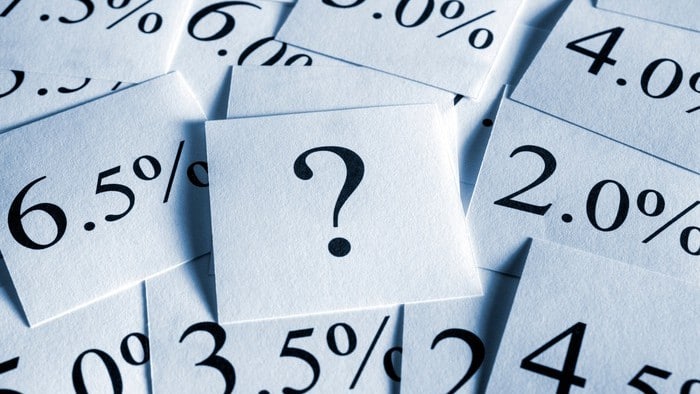
    Pieces of paper with percetage rates on them and a question mark.

    This article was originally published on Fool.com. All figures quoted in US dollars unless otherwise stated.

    As was widely anticipated, the Federal Open Market Committee (FOMC), which is the policy-making arm of the Federal Reserve, announced a 50-basis-point hike to the federal funds rate. Since a basis point is equal to 0.01 percentage points, this means that the benchmark rate has risen from a target range of 0.25%-0.50% to 0.75%-1.00%.

    If you didn’t fully understand that first paragraph or what it means to you, don’t worry. Here’s a rundown of what this rate hike means in simple terms, what it could mean for investors, and what to expect going forward.

    Here’s what the Fed’s rate hike means

    The Federal Open Market Committee has two main functions — to maximize employment and control inflation. And with the unemployment rate sitting at a low 3.6%, the clear goal of this move was to get inflation in check — after all, inflation is running at its highest rate in four decades, and many consumers are feeling the pain.

    Without getting too deep into the weeds on an economic discussion, the general idea is that higher interest rates help slow down economic activity. However, raising interest rates too fast can result in a major shock to the economy, so the Fed tends to raise rates incrementally (like it did today) to gradually slow down inflation closer to the Fed’s 2% target.

    For consumers, the important thing to know is that some interest rates that affect Americans are directly tied to the federal funds rate. For example, if you have a credit card, you can bet that its standard interest rate for purchases will rise by 0.50% in response to the Fed’s latest move. Adjustable-rate mortgages and HELOCs are other types of interest rates that typically move according to the benchmark.

    On the other hand, fixed-rate mortgage interest rates and auto loan rates, among others, are not directly tied to the Fed’s moves. After all, the average 30-year mortgage rate has already increased from 3.29% to 5.55% since the end of 2021, despite the FOMC only raising rates by 0.25% in that time. And for savers, the interest rates you get paid on savings deposits aren’t tied to benchmark rates either.

    What could it mean to investors?

    When it comes to the rate hike itself, the impact on your investments is likely to be minimal. This was a widely expected rate hike and was already priced into the market. Sure, if a company relies heavily on borrowed money that happens to be tied to the federal funds rate (like a credit line), it could have a bit of an impact on interest expense, but there’s a reason the stock market barely budged after the rate hike was announced — the market saw it coming.

    What to expect going forward

    Here’s the most important takeaway for investors. It’s not what the Fed just did that moves markets. It’s what the Fed is expected to do next.

    According to the CME Group‘s (NYSE: CME) FedWatch tool that analyzes futures markets, the current expectation is for another 75-basis-point rate hike when the FOMC meets in late June. By the December meeting, the current median expectation is for a federal funds rate of 3%-3.25%. And in a year from now, at next May’s meeting, the most likely scenario is currently seen as a target range of 3.5%-3.75%. If these expectations change significantly in the months leading up to future meetings, it could certainly have a big impact on markets.

    It’s also important to pay attention to commentary by Fed officials, particularly FOMC Chair Jerome Powell. His speeches have the ability to quickly alter the market’s expectations about future rate hikes.

    The bottom line is that this rate hike was widely expected, but there’s a wide range of potential outcomes going forward. It depends on how aggressive the FOMC wants to get, and how quickly inflation starts to cool off in response to rising interest rates.

    This article was originally published on Fool.com. All figures quoted in US dollars unless otherwise stated.

    The post The Federal Reserve just raised interest rates — what does it mean to investors? appeared first on The Motley Fool Australia.

    Wondering where you should invest $1,000 right now?

    When investing expert Scott Phillips has a stock tip, it can pay to listen. After all, the flagship Motley Fool Share Advisor newsletter he has run for over ten years has provided thousands of paying members with stock picks that have doubled, tripled or even more.*

    Scott just revealed what he believes could be the five best ASX stocks for investors to buy right now. These stocks are trading at near dirt-cheap prices and Scott thinks they could be great buys right now.

    *Returns as of January 12th 2022

    More reading

    The Motley Fool Australia’s parent company Motley Fool Holdings Inc. has no position in any of the stocks mentioned. The Motley Fool Australia has no position in any of the stocks mentioned. The Motley Fool has a disclosure policy. This article contains general investment advice only (under AFSL 400691). Authorised by Scott Phillips.

    This article was originally published on Fool.com. All figures quoted in US dollars unless otherwise stated.


    from The Motley Fool Australia https://ift.tt/s0P9xFG
  • Airtasker share price dives 6% as trading resumes

    The Airtasker Ltd (ASX: ART) share price is tumbling as the company returns to trade following a major acquisition.

    The outsourcing platform’s stock was put in the freezer yesterday as the company underwent a capital raise.

    The resulting funds will be put towards the acquisition and operation of OneFlare – Australia’s third largest local services platform.

    At the time of writing, the Airtasker share price is 50.5 cents, 0.98% lower than its previous close.

    However, earlier today it hit an intraday low of 48 cents – representing a 5.88% plunge.

    For context, the broader market is in the green on Thursday. Right now the All Ordinaries Index (ASX: XAO) and the S&P/ASX 200 Index (ASX: XJO) are up 0.7% and 0.57% respectively.

    Let’s take a closer look at what’s driving the Airtasker share price lower today.

    Airtasker share price falls on acqusition news

    Airtasker’s stock is out of the freezer and sliding lower as the market responds to news of its latest acquisition and capital raise.

    The company announced it had agreed to buy OneFlare for $9.8 million yesterday.

    $7.55 million of that will be paid via script, with new Airtasker shares issued at a price of 43 cents apiece.

    The company also underwent a $6.25 million private placement. That also saw new Airtasker shares offered for 43 cents each.

    The resulting cash will cover the remaining costs of the acquisition. It will also go towards the estimated financial year 2023 investment in Oneflare, as well as acquisition and placement costs.

    New shares issued under the placement and acquisition combined represent 7.7% of Airtasker’s pre-offer issued share capital.

    The company’s directors subscribed for around $3.55 million worth of shares under the placement. Their involvement is subject to future shareholder approval.

    On top of the placement, the company is planning to conduct a $1.2 million share purchase plan, issuing new shares for the same asking price.

    The Airtasker share price is currently 40% lower than it was at the start of 2022. It has also fallen 58% since this time last year.

    The post Airtasker share price dives 6% as trading resumes appeared first on The Motley Fool Australia.

    Should you invest $1,000 in Airtasker right now?

    Before you consider Airtasker, you’ll want to hear this.

    Motley Fool Investing expert Scott Phillips just revealed what he believes are the 5 best stocks for investors to buy right now… and Airtasker wasn’t one of them.

    The online investing service he’s run for over a decade, Motley Fool Share Advisor, has provided thousands of paying members with stock picks that have doubled, tripled or even more.* And right now, Scott thinks there are 5 stocks that are better buys.

    *Returns as of January 13th 2022

    More reading

    Motley Fool contributor Brooke Cooper has no position in any of the stocks mentioned. The Motley Fool Australia’s parent company Motley Fool Holdings Inc. has recommended Airtasker Limited. The Motley Fool Australia has no position in any of the stocks mentioned. The Motley Fool has a disclosure policy. This article contains general investment advice only (under AFSL 400691). Authorised by Scott Phillips.

    from The Motley Fool Australia https://ift.tt/rLIfn9F

  • Alliance share price rockets 24% on Qantas takeover news

    A woman reaches her arms to the sky as a plane flies overhead at sunset.A woman reaches her arms to the sky as a plane flies overhead at sunset.

    The Alliance Aviation Services Ltd (ASX: AQZ) share price is on cloud nine on Thursday morning amid its courtship by a much bigger player in the airline industry.

    At the time of writing, shares in Australia’s leading charter flight operator are commanding a $4.35 price tag, up 23.9%. In earlier trading, they hit a high of $4.48. The excitement among investors of Alliance is the byproduct of a $764.5 million bid from airline giant, Qantas Airways Limited (ASX: QAN).

    What is propelling the Alliance share price higher?

    Longer-term Alliance Aviation shareholders were aware of the interest from Qantas since February 2019. Back then, the largest airline operator in Australia took a 20% equity interest in Alliance as Qantas found itself being its largest customer.

    Today, Qantas has made it evident it wants to take that relationship one step further by acquiring Alliance. To do so, the kangaroo-bearing airline is willing to pay one Qantas share per Alliance share — equivalent to $4.75.

    The offer represents a 35% premium to the Alliance Aviation share price at the end of yesterday’s session. However, the market has not responded by bidding up Alliance shares to the full $4.75. This suggests some unsureness about whether the deal will proceed or if future dividend payments will reduce the payment.

    Notably, Alliance currently serves Virgin Airlines as a customer through its wet-leasing arrangement. However, if Qantas was to acquire the smaller company, this arrangement would be severed in favour of prioritising QantasLink flights.

    Catching a flight on the mining boom

    Amid the flying Alliance share price, Qantas made no secret that its interest is partly related to the growing resources sector. Highlighting this, Qantas CEO Alan Joyce said:

    The resources sector continues to grow and any new tender for airline services will be very competitive. It makes a lot of sense for us to combine with Alliance to improve the services we can offer, which is a positive for both airlines as well as the travelling public.

    As reported by ABC News, the Australian mining industry is witnessing conditions similar to that of the 2010 boom. An indicator of this was the record $3.17 billion of capital raised by the sector during Q4 2021.

    In light of today’s gain, the Alliance Aviation share price is now up 6% since the start of the year. Lastly, more details will be shared by the company as it progresses through the deal.

    Meanwhile, the Qantas share price is down 1.15% to $5.605 at the time of writing.

    The post Alliance share price rockets 24% on Qantas takeover news appeared first on The Motley Fool Australia.

    Should you invest $1,000 in Alliance Aviation Services right now?

    Before you consider Alliance Aviation Services, you’ll want to hear this.

    Motley Fool Investing expert Scott Phillips just revealed what he believes are the 5 best stocks for investors to buy right now… and Alliance Aviation Services wasn’t one of them.

    The online investing service he’s run for over a decade, Motley Fool Share Advisor, has provided thousands of paying members with stock picks that have doubled, tripled or even more.* And right now, Scott thinks there are 5 stocks that are better buys.

    *Returns as of January 13th 2022

    More reading

    Motley Fool contributor Mitchell Lawler has no position in any of the stocks mentioned. The Motley Fool Australia’s parent company Motley Fool Holdings Inc. has positions in and has recommended Alliance Aviation Services Ltd. The Motley Fool Australia has positions in and has recommended Alliance Aviation Services Ltd. The Motley Fool has a disclosure policy. This article contains general investment advice only (under AFSL 400691). Authorised by Scott Phillips.

    from The Motley Fool Australia https://ift.tt/uBdIM7F

  • Here’s all what you need to know about the latest NAB dividend

    Calculator next to money.Calculator next to money.

    The National Australia Bank Ltd. (ASX: NAB) share price is treading lower following the company’s half year results today.

    At the time of writing, the bank’s shares are down 1.08% to $32.09.

    For context, the S&P/ASX 200 Index (ASX: XJO) is 0.59% higher to 7,347.8 points during afternoon trade.

    What’s the latest on the NAB dividend?

    In the half year report for the 2022 financial year, NAB reported a robust performance across key metrics.

    In summary, revenue rose by 4.6% over the previous corresponding period to $9,071 million. This came off the back of pricing discipline and strong growth in lending and deposits, up 10% and 12% respectively.

    On the bottom line, cash earnings increased by 4.1% compared with H1 FY21 to $3,480 million.

    Based on the company’s optimism on the medium-term outlook, the board decided to ramp up its latest dividend.

    As such, the interim dividend has been declared at 73 cents apiece, up 22% from this time last year.

    It’s worth noting that the dividend is fully franked meaning investors will receive tax credits for this come tax time.

    Management noted that the dividend reflects a statutory payout ratio of 66.9% which is in line with its stated dividend policy.

    When can NAB shareholders expect payment?

    The NAB interim dividend will be paid to eligible shareholders in the next 2 months on 5 July.

    However, to be eligible, you’ll need to own NAB shares before the ex-dividend date which falls on Wednesday 11 May. This means if you want to secure the dividend, you will need to purchase NAB shares next Tuesday at the latest.

    In addition, investors can elect for the dividend reinvestment plan (DRP) which will add a portion of shares to their portfolio instead. This will be based on a 10-day volume-weighted average price from 18 May to 31 May.

    There is no DRP discount rate and the last election date for shareholders to opt in is on 13 May.

    The post Here’s all what you need to know about the latest NAB dividend appeared first on The Motley Fool Australia.

    Should you invest $1,000 in NAB right now?

    Before you consider NAB, you’ll want to hear this.

    Motley Fool Investing expert Scott Phillips just revealed what he believes are the 5 best stocks for investors to buy right now… and NAB wasn’t one of them.

    The online investing service he’s run for over a decade, Motley Fool Share Advisor, has provided thousands of paying members with stock picks that have doubled, tripled or even more.* And right now, Scott thinks there are 5 stocks that are better buys.

    *Returns as of January 13th 2022

    More reading

    Motley Fool contributor Aaron Teboneras has no position in any of the stocks mentioned. The Motley Fool Australia’s parent company Motley Fool Holdings Inc. has no position in any of the stocks mentioned. The Motley Fool Australia has no position in any of the stocks mentioned. The Motley Fool has a disclosure policy. This article contains general investment advice only (under AFSL 400691). Authorised by Scott Phillips.

    from The Motley Fool Australia https://ift.tt/bOtqxkl