
Category: Stock Market

  • With no savings at 50, I’d follow Warren Buffett’s method to build wealth

    A head shot of legendary investor Warren Buffett speaking into a microphone at an event.

    Warren Buffett is one of the world’s wealthiest people, despite giving away billions of dollars for philanthropy. Together with the late Charlie Munger, Warren Buffett made numerous wise investment decisions that built Berkshire Hathaway into the powerhouse that it is today.

    But, there’s much more to his long-term success than it may seem. We don’t need to make things complicated to do well over time.

    By following the Warren Buffett method, I believe it’s possible for many Australians to accumulate a substantial amount of wealth by retirement, if they save and invest (even if they’re 50 with no savings).

    Live a simple life

    Warren Buffett does not live a luxurious, flashy lifestyle. There are many examples from his life where he has lived frugally compared to what he could have spent. In other words, he has spent less than he has earned.

    He has lived in the same house for more than 60 years, and it’s not a mansion. If he were Australian, that would have saved a lot on stamp duty, selling agent fees, and moving costs.

    Another frugal choice Buffett has reportedly made is the types of cars he buys. He supposedly usually buys second-hand cars and keeps them for a long time. New cars usually decline in value quite quickly – it could be better to buy a second-hand car and invest the saved money.

    Spending less than you earn is a powerful financial strategy that creates financial flexibility in a household’s budget. Spending less also means requiring a smaller nest egg to sustain that level of spending in retirement.

    Don’t just focus on money

    There’s more to life than just making money, of course. It’s good to enjoy life between now and a financial target that takes years to reach. Also, being kind to people around you is important. He’s said a number of things on this topic, including these two:

    Keep in mind that the cleaning lady is as much a human being as the chairman.

    Decide what you would like your obituary to say and live the life to deserve it. Greatness does not come about through accumulating great amounts of money, great amounts of publicity or great power in government. When you help someone in any of thousands of ways, you help the world. Kindness is costless but also priceless. Whether you are religious or not, it’s hard to beat The Golden Rule as a guide to behaviour.

    Invest in what you understand

    I firmly believe that investing is a crucial component of building wealth over time. But, I believe it’s a good idea to only invest in assets that we can understand.

    If you don’t know why you’re buying something, then how are you supposed to know when to sell? What are the signs that a business is doing well? How will you know an investment thesis is playing out as expected? Will you understand if a downturn is a temporary dip or a permanent decline?

    Warren Buffett calls that type of investing staying in your circle of competence.

    I think being able to stay invested for the long term is important. But, crashes and setbacks do come along sometimes. I only want to invest in businesses/investments that I’d want to buy more of if there were a large market correction (or worse). That way, crashes are exciting opportunities rather than worrying events. It’s good to be greedy when markets are fearful.

    Choose investments that are likely to compound

    Ultimately, investing is about growing our money to be worth more than it is today. If we’re not spending it on essentials/enjoyment today, then we want to see it’s doing well over time.

    Compound interest is a very powerful financial tool, and we can utilise it by investing in growing businesses. Warren Buffett has shown the power of compound interest for Berkshire Hathaway over the decades.

    Over the long term, I’m expecting investments like Vanguard MSCI Index International Shares ETF (ASX: VGS), Washington H. Soul Pattinson and Co. Ltd (ASX: SOL), and VanEck MSCI International Quality ETF (ASX: QUAL) to grow in value.

    If a portfolio can grow by an average of (at least) 10% per year over the long term, then after 17 years (the pension age is 17 years away for a 50-year-old), someone who invests $1,000 per month could grow their nest egg to $486,500. Investing $2,000 per month would turn into $973,000!

    The post With no savings at 50, I’d follow Warren Buffett’s method to build wealth appeared first on The Motley Fool Australia.

    Wondering where you should invest $1,000 right now?

    When investing expert Scott Phillips has a stock tip, it can pay to listen. After all, the flagship Motley Fool Share Advisor newsletter he has run for over ten years has provided thousands of paying members with stock picks that have doubled, tripled or even more.*

    Scott just revealed what he believes could be the ‘five best ASX stocks’ for investors to buy right now. We believe these stocks are trading at attractive prices and Scott thinks they could be great buys right now…

    * Returns as of 18 November 2025

    .custom-cta-button p {
    margin-bottom: 0 !important;
    }

    More reading

    Motley Fool contributor Tristan Harrison has positions in VanEck Msci International Quality ETF and Washington H. Soul Pattinson and Company Limited. The Motley Fool Australia’s parent company Motley Fool Holdings Inc. has positions in and has recommended Berkshire Hathaway and Washington H. Soul Pattinson and Company Limited. The Motley Fool Australia has positions in and has recommended Washington H. Soul Pattinson and Company Limited. The Motley Fool Australia has recommended Berkshire Hathaway and Vanguard Msci Index International Shares ETF. The Motley Fool has a disclosure policy. This article contains general investment advice only (under AFSL 400691). Authorised by Scott Phillips.


  • If you’d invested $1,000 in Nvidia 10 years ago, here’s how much you’d have today

    Woman looks amazed and shocked as she looks at her laptop.

    This article was originally published on Fool.com. All figures quoted in US dollars unless otherwise stated.

    If you invest long enough, you’ll likely run into a “I wish I had invested in that sooner” scenario. Nowadays, many investors find themselves having that thought about Nvidia (NASDAQ: NVDA) — me included. And when you look at its performance over the past decade, it’s very easy to see why.

    In the past 10 years, Nvidia’s stock is up an eye-popping 22,420%, meaning a $1,000 investment made a decade ago would be worth over $225,000. Talk about a return on investment.

    NVDA data by YCharts

    Nvidia has been on the stock market since January 1999, but the bulk of its gains since then have come in the past few years, thanks to the ongoing artificial intelligence (AI) boom. For a while, Nvidia’s main business was supplying graphics cards for video games. However, the company realized that the same technology was useful for processing massive amounts of data, and it’s now arguably the most important supplier of computing power.

    If you’re interested in investing in Nvidia, it’s not too late. However, I wouldn’t expect its gains over the next decade to compare with those from this past decade. It still has long-term market-beating potential, but expecting the gains to replicate is asking a lot.

    This article was originally published on Fool.com. All figures quoted in US dollars unless otherwise stated.

    The post If you’d invested $1,000 in Nvidia 10 years ago, here’s how much you’d have today appeared first on The Motley Fool Australia.

    This article was originally published on Fool.com. All figures quoted in US dollars unless otherwise stated.

    Should you invest $1,000 in Nvidia right now?

    Before you buy Nvidia shares, consider this:

    Motley Fool investing expert Scott Phillips just revealed what he believes are the 5 best stocks for investors to buy right now… and Nvidia wasn’t one of them.

    The online investing service he’s run for over a decade, Motley Fool Share Advisor, has provided thousands of paying members with stock picks that have doubled, tripled or even more.*

    And right now, Scott thinks there are 5 stocks that may be better buys…

    * Returns as of 18 November 2025

    .custom-cta-button p { margin-bottom: 0 !important; }

    This article was originally published on Fool.com. All figures quoted in US dollars unless otherwise stated.

    More reading

    Stefon Walters has no position in any of the stocks mentioned. The Motley Fool Australia’s parent company Motley Fool Holdings Inc. has positions in and has recommended Nvidia. The Motley Fool Australia has recommended Nvidia. The Motley Fool has a disclosure policy. This article contains general investment advice only (under AFSL 400691). Authorised by Scott Phillips.

  • BHP, Macquarie, and Westpac: Naughty or nice? 3 popular ASX shares examined

    Three young people lie in the surf on a beach wearing santa hats.

    Popular doesn’t always mean good when it comes to returns and investing in ASX shares.

    So, let’s take a look at three very popular shares and see if they were naughty or nice to their shareholders this year.

    Here’s how they performed in 2025 compared to the market:

    BHP Group Ltd (ASX: BHP)

    Thanks partly to the booming copper price and the resilient iron ore price, BHP shares have comfortably outperformed the market in 2025.

    Year to date, the Big Australian’s shares have risen by a decent 14%. This compares favourably to 7% gain by the benchmark ASX 200 index during the same period.

    In addition, the mining giant has rewarded shareholders with two dividend this year. A fully franked interim dividend of approximately 79.1 cents per share and a fully franked final dividend of approximately 91.9 cents per share.

    This equates to a 4.2% dividend yield based on its starter price, which boosts the total annual return to 18%.

    Verdict: Nice

    Macquarie Group Ltd (ASX: MQG)

    Unfortunately for its shareholders, this investment bank’s shares have underperformed the market this year by some distance. This has been driven by its softening operational performance, which has weighed on investor sentiment.

    For example, the company recently released its half year results and reported a net profit of $1,655 million. While this was up 3% on the prior corresponding period, it was down a sizeable 21% on the second half of FY 2025. It was also short of consensus estimates for the six months.

    In light of this, year to date, Macquarie shares are down by approximately 7%. And while it has paid two dividends to shareholders in 2025, those aren’t enough for a positive total return this year.

    Verdict: Naughty

    Westpac Banking Corp (ASX: WBC)

    Westpac shares have been a great investment this year. Since the start of the year, the big four bank’s shares have risen approximately 20%.

    But it gets better. As with the ASX others, two fully franked dividends have been paid to shareholders in 2025. Westpac paid 76 cents per share in June and 77 cents per share earlier this month.

    These dividends equate to a yield on cost of 4.7%, which boosts the total return for the year to approximately 25%. This is significantly better than the performance of the ASX 200 index over the same period.

    Verdict: Nice

    The post BHP, Macquarie, and Westpac: Naughty or nice? 3 popular ASX shares examined appeared first on The Motley Fool Australia.

    Should you invest $1,000 in BHP Group right now?

    Before you buy BHP Group shares, consider this:

    Motley Fool investing expert Scott Phillips just revealed what he believes are the 5 best stocks for investors to buy right now… and BHP Group wasn’t one of them.

    The online investing service he’s run for over a decade, Motley Fool Share Advisor, has provided thousands of paying members with stock picks that have doubled, tripled or even more.*

    And right now, Scott thinks there are 5 stocks that may be better buys…

    * Returns as of 18 November 2025

    .custom-cta-button p {
    margin-bottom: 0 !important;
    }

    More reading

    Motley Fool contributor James Mickleboro has no position in any of the stocks mentioned. The Motley Fool Australia’s parent company Motley Fool Holdings Inc. has positions in and has recommended Macquarie Group. The Motley Fool Australia has positions in and has recommended Macquarie Group. The Motley Fool Australia has recommended BHP Group. The Motley Fool has a disclosure policy. This article contains general investment advice only (under AFSL 400691). Authorised by Scott Phillips.

  • The ASX ETFs to buy now and not look at until next Christmas

    man with dog on his lap looking at his phone in his home.

    I think that one of the most underrated investing strategies is doing less, not more.

    Instead of constantly checking prices, reacting to headlines, or second-guessing decisions, there’s a strong case for choosing a small number of high-quality exchange traded funds (ETFs), investing, and then getting on with life.

    If you are aiming to put money to work today with the intention of not looking at it again until next Christmas, these are three ASX ETFs that could be worth owning through whatever the market throws up over the next year and beyond.

    Betashares Nasdaq 100 ETF (ASX: NDQ)

    The Betashares Nasdaq 100 ETF gives investors exposure to 100 of the most innovative non-financial stocks listed on the famous Nasdaq exchange. While it is often associated with the biggest tech names, the portfolio is broader than many people realise.

    Alongside companies like Nvidia (NASDAQ: NVDA) and Microsoft (NASDAQ: MSFT), this fund also holds businesses such as Costco Wholesale (NASDAQ: COST), PepsiCo (NASDAQ: PEP), and Intuit (NASDAQ: INTU). These are companies with enormous scale, global reach, and strong competitive positions.

    If I had to single out one holding, it would be Nvidia. It has become a critical supplier to the artificial intelligence ecosystem, and its chips now sit at the centre of data centres, cloud infrastructure, and advanced computing. This ASX ETF gives exposure to that long-term growth story without relying on a single stock to get it right.

    Betashares Global Cash Flow Kings ETF (ASX: CFLO)

    The Betashares Global Cash Flow Kings ETF takes a very different approach to the Betashares Nasdaq 100 ETF. It looks for global stocks that generate consistently strong free cash flow. That cash generation can be used to reinvest in the business, reduce debt, or return money to shareholders.

    The portfolio includes names such as Alphabet (NASDAQ: GOOGL), ASML Holding (NASDAQ: ASML), Visa (NYSE: V), and Johnson & Johnson (NYSE: JNJ). These are businesses with entrenched positions in their industries and proven ability to turn sales into real cash.

    Alphabet stands out as a classic example. Its dominance in search and digital advertising continues to fund investment in cloud computing, artificial intelligence, and new platforms. This leaves it well-placed for growth over the next decade.

    The Betashares Global Cash Flow Kings ETF was recently recommended by analysts at Betashares.

    Betashares Cloud Computing ETF (ASX: CLDD)

    A third ASX ETF to buy could be the Betashares Cloud Computing ETF. It is a more targeted play on one of the most important shifts in the global economy. It invests in stocks that provide the infrastructure and software powering cloud-based services.

    Holdings include ServiceNow (NYSE: NOW), Shopify (NASDAQ: SHOP), and Snowflake (NYSE: SNOW). These businesses sit behind everything from enterprise workflows to online retail and data analytics.

    Given how the shift to the cloud still has a long way to go, this fund could be one to hold onto for the long term. It was also recently recommended by Betashares.

    The post The ASX ETFs to buy now and not look at until next Christmas appeared first on The Motley Fool Australia.

    Should you invest $1,000 in Betashares Global Cash Flow Kings ETF right now?

    Before you buy Betashares Global Cash Flow Kings ETF shares, consider this:

    Motley Fool investing expert Scott Phillips just revealed what he believes are the 5 best stocks for investors to buy right now… and Betashares Global Cash Flow Kings ETF wasn’t one of them.

    The online investing service he’s run for over a decade, Motley Fool Share Advisor, has provided thousands of paying members with stock picks that have doubled, tripled or even more.*

    And right now, Scott thinks there are 5 stocks that may be better buys…

    * Returns as of 18 November 2025

    .custom-cta-button p {
    margin-bottom: 0 !important;
    }

    More reading

    Motley Fool contributor James Mickleboro has positions in BetaShares Nasdaq 100 ETF. The Motley Fool Australia’s parent company Motley Fool Holdings Inc. has positions in and has recommended ASML, Alphabet, BetaShares Nasdaq 100 ETF, Costco Wholesale, Intuit, Microsoft, Nvidia, ServiceNow, Shopify, Snowflake, and Visa. The Motley Fool Australia’s parent company Motley Fool Holdings Inc. has recommended Johnson & Johnson and has recommended the following options: long January 2026 $395 calls on Microsoft and short January 2026 $405 calls on Microsoft. The Motley Fool Australia has positions in and has recommended BetaShares Nasdaq 100 ETF. The Motley Fool Australia has recommended ASML, Alphabet, Microsoft, Nvidia, ServiceNow, Shopify, and Visa. The Motley Fool has a disclosure policy. This article contains general investment advice only (under AFSL 400691). Authorised by Scott Phillips.

  • 2 ASX dividend shares raising dividends like clockwork!

    A man points at a paper as he holds an alarm clock, indicating the ex-dividend date is approaching.

    ASX dividend shares that are growing the payout year after year are very attractive for investors who want a high degree of confidence in how much passive income they’re going to receive each year.

    Dividend income is really appealing because of how little effort and further money we need to put in once we’ve made the investment. An investment property seems less appealing because of the possibility of various administrative tasks, repairs, tenants not paying and the (likely) debt that is necessary to buy the property.

    The two ASX dividend shares I’m going to talk about below are two of the ones I’m confident can continue paying dividends and hopefully deliver larger payouts. Normally, I’d highlight Washington H. Soul Pattinson and Co. Ltd (ASX: SOL) in an article like this, but there are other names I want to highlight.

    Rivco Australia Ltd (ASX: RIV)

    Rivco Australia, formerly called Duxton Water, owns a portfolio of water entitlements. Those can be leased on short-term or long-term leases.

    The company can deliver earnings from both the lease income and the potential rise of water entitlement values.

    This ASX dividend share has increased its payout every six months since 2017, which I’d describe as one of the more impressive growth streaks on the ASX. I love seeing dividends steadily rising over time, rather than trying to deliver maximum dividend income and risking a dividend reduction in future years.

    The last two dividend payments by the business equate to a grossed-up dividend yield of 7.6%, including franking credits.

    With a post-tax net asset value (NAV) of $1.58 and a pre-tax NAV of $1.75 as of November 2025, it’s trading at an attractively cheap price, in my opinion.

    Pinnacle Investment Management Group Ltd (ASX: PNI)

    Pinnacle is one of the most appealing businesses in the funds management industry, in my opinion.

    It has invested in a portfolio of funds management businesses such as Aikya, Antipodes, Coolabah, Firetrail, Five V, Hyperion, Langdon, Life Cycle, Metrics, Pacific Asset Management, Palisade, Plato, Resolution Capital, Solaris and Spheria.

    Why do these fund managers want to sell a minority stake of their business to get Pinnacle on board? Pinnacle can provide a number of services including seed funds under management (FUM), distribution and client services, fund administration, compliance, finance, legal, technology and other administrative services.

    Pinnacle is benefiting from the long-term organic capital growth of asset prices. Additionally, the fund managers have a collective record of delivering outperformance for their clients over the long-term, helping them retain FUM and attract new funds.

    The ASX dividend share has grown its dividend almost every year between FY17 and FY25, aside from 2020 when it maintained its payout. I think it’s likely the business will be able to continue growing its dividends thanks to the progress of its FUM growth.

    At its AGM, the company revealed that its total affiliate FUM had grown by 10% in the three months to September 2025 compared to June 2025. I think that bodes well for dividend growth in FY26.

    According to the forecast on CMC Markets, the business is projected to pay a dividend which equates to a grossed-up dividend yield of 5.4%, including franking credits.

    The post 2 ASX dividend shares raising dividends like clockwork! appeared first on The Motley Fool Australia.

    Should you invest $1,000 in Pinnacle Investment Management Group Limited right now?

    Before you buy Pinnacle Investment Management Group Limited shares, consider this:

    Motley Fool investing expert Scott Phillips just revealed what he believes are the 5 best stocks for investors to buy right now… and Pinnacle Investment Management Group Limited wasn’t one of them.

    The online investing service he’s run for over a decade, Motley Fool Share Advisor, has provided thousands of paying members with stock picks that have doubled, tripled or even more.*

    And right now, Scott thinks there are 5 stocks that may be better buys…

    * Returns as of 18 November 2025

    .custom-cta-button p {
    margin-bottom: 0 !important;
    }

    More reading

    Motley Fool contributor Tristan Harrison has positions in Pinnacle Investment Management Group, Rivco Australia, and Washington H. Soul Pattinson and Company Limited. The Motley Fool Australia’s parent company Motley Fool Holdings Inc. has positions in and has recommended Pinnacle Investment Management Group and Washington H. Soul Pattinson and Company Limited. The Motley Fool Australia has positions in and has recommended Pinnacle Investment Management Group and Washington H. Soul Pattinson and Company Limited. The Motley Fool has a disclosure policy. This article contains general investment advice only (under AFSL 400691). Authorised by Scott Phillips.

  • These popular ASX 200 shares are in the Boxing Day sales

    Smiling couple looking at a phone at a bargain opportunity.

    The market may be trading within sight of its record high, but that doesn’t mean that everything is overvalued.

    In fact, if you look hard enough, you will find a number of ASX shares that are trading at a deep discount to what analysts think they are worth.

    With that in mind, let’s take a look at two popular ASX 200 shares that are in the Boxing Day sales this year:

    James Hardie Industries plc (ASX: JHX)

    This building products giant’s shares could be on sale right now.

    Although the company has been dealing with a tough demand environment in North America, as higher interest rates and softer housing activity weighed on volumes, its most recent quarterly update signalled that conditions may be stabilising faster than expected.

    The team at Macquarie Group Ltd (ASX: MQG) thinks investors should be buying James Hardie’s shares while they are down in the dumps. It recently put an outperform rating and $41.70 price target on its shares. This implies potential upside of approximately 30% for investors.

    Commenting on its outperform rating on this ASX 200 share, the broker said:

    Outperform. Market conditions are tough, but stabilising – inventory concerns are fading. Focus now turns to rates and housing policy. An evolving AZEK integration story, a bottoming of markets, and valuation are in support of our thesis. Governance changes also seen as additive.

    Nextdc Ltd (ASX: NXT)

    While this data centre operator’s shares are not conventionally cheap, they are trading at a 25%+ discount to their 52-week high. This could be a compelling opportunity for investors to snap up shares in a high-quality company with significant long-term growth potential thanks to artificial intelligence (AI) boom.

    Morgans certainly thinks this is the case. It recently upgraded NextDC’s shares to a buy rating with a $19.00 price target. This suggests that upside of approximately 45% is possible from current levels.

    Commenting on the ASX 200 share, the broker said:

    NXT has announced that following recent customer contract wins, presumably including a large single customer contract win across multiple locations, its contracted utilisation has increased by 71MW to 316MW as at 1 December 2025. Further contract wins were, and remain in, our forecasts so this mostly underpins our expectations.

    However, we upgrade our capex assumptions and lift our FY27/28 EBITDA forecasts by 5%. Our target price remains $19 per share. The share price has declined ~19% in the last three months and given a ~40% differential between the current share price and our $19 target price we upgrade our recommendation to BUY from ACCUMULATE.

    The post These popular ASX 200 shares are in the Boxing Day sales appeared first on The Motley Fool Australia.

    Should you invest $1,000 in James Hardie Industries plc right now?

    Before you buy James Hardie Industries plc shares, consider this:

    Motley Fool investing expert Scott Phillips just revealed what he believes are the 5 best stocks for investors to buy right now… and James Hardie Industries plc wasn’t one of them.

    The online investing service he’s run for over a decade, Motley Fool Share Advisor, has provided thousands of paying members with stock picks that have doubled, tripled or even more.*

    And right now, Scott thinks there are 5 stocks that may be better buys…

    * Returns as of 18 November 2025

    .custom-cta-button p {
    margin-bottom: 0 !important;
    }

    More reading

    Motley Fool contributor James Mickleboro has positions in Nextdc. The Motley Fool Australia’s parent company Motley Fool Holdings Inc. has positions in and has recommended Macquarie Group. The Motley Fool Australia has positions in and has recommended Macquarie Group. The Motley Fool has a disclosure policy. This article contains general investment advice only (under AFSL 400691). Authorised by Scott Phillips.

  • Ranking the best “Magnificent Seven” stocks to buy for 2026. Here’s my no. 7

    A corporate team stands together and looks out the window.

    This article was originally published on Fool.com. All figures quoted in US dollars unless otherwise stated.


    The Magnificent Seven grouping of stocks has been one of the biggest stories on Wall Street. Coined by Bank of America analyst Michael Hartnett in 2023, this collection represents seven high-performing tech companies that are among the most influential in the U.S. The name was derived from a 1960 Western film of the same name.

    Collectively, these companies comprise 34% of the S&P 500, a remarkable percentage. Just let that sink in for a moment — out of 500 stocks, these seven account for a full one-third of the market capitalization of the index.

    That’s why the Magnificent Seven stocks are watched so closely — they have an outsize impact on the market, and they have been responsible for a lot of the market’s success. Over the course of a decade, from 2015 to 2024, these companies experienced a gain of nearly 700%.

    This is the first part of a seven-article series ranking the best Magnificent Seven stocks to buy for 2026, in reverse order. All of these companies are excellent stocks to buy, but in ranking them, only one can be in the ignominious seventh spot.

    As I’m looking at what to expect in the coming year, the smartphone giant Apple (NASDAQ: AAPL) is my seventh-rated Magnificent Seven stock to buy.

    About Apple stock

    Apple is a famed tech company that’s best known for its revolutionary smartphone, the iPhone. Apple’s iPhone provided internet access, phone service, texting, music, and access to Apple’s App Store via a touchscreen interface — something completely groundbreaking when the first models rolled out.

    Apple’s iPhone was unique compared to phones offered by Nokia, BlackBerry, and Motorola, and it changed the game for Apple stock. Shares jumped 133% in 2007, the year that the iPhone came out.

    Today, Apple still generates most of its revenue from iPhone sales, but it also manufactures personal computers, wearable devices, and tablets, and has a lucrative Services division that includes Apple Music, its streaming services, a payment network, and the App Store. For fiscal 2025, Apple had $416.1 billion in revenue, with half of that coming from iPhone sales.

    Net Sales by Category Fiscal 2024 (ended Sept. 28, 2024) Fiscal 2025 (ended Sept. 27, 2025) Percentage Change
    iPhone $201.18 billion $209.58 billion 4.17%
    Mac $29.98 billion $33.71 billion 12.44%
    iPad $26.69 billion $28.02 billion 4.98%
    Wearables, home, and accessories $37.0 billion $35.69 billion -3.54%
    Services $96.17 billion $109.16 billion 13.51%

    Source: Apple

    Investors surely would want to see brisker iPhone sales, but Apple’s flagship product has been hampered in China — sales in greater China fell 3.8% in 2025, as Apple has seen greater competition from Chinese-based companies that are now offering smartphones with 5G technology.

    Fortunately, however, Apple is getting a huge boost from its lucrative Services segment, which has a higher profit margin than divisions that rely on hardware development and manufacturing.

    Net Sales Fiscal 2025 Profit Margin
    Products $307.0 billion 36.7%
    Services $109.16 billion 75.4%

    Source: Apple.

    What to expect from Apple in 2026

    Apple has a market cap of around $4 trillion, making it at this writing the second-biggest company in the world by that measure. And the stock is up 8% this year.

    The company is involved in artificial intelligence (AI), although its efforts are not as noticeable as some others in the Magnificent Seven. It’s developing advanced M-series chips designed to run large AI models on its MacBooks, iPads, and Apple Vision Pro.

    The company’s strategy involves running AI programs on local devices rather than in cloud environments to maintain user privacy, although it does have a system — Private Cloud Compute — where data is processed in the cloud on secure Apple silicon servers but not stored or shared by Apple.

    The company is selling its iPhone 17, a new Apple Watch lineup, and the third-generation version of its AirPods, and is coming off a quarter where its earnings per share jumped 13% on a year-over-year basis.

    The company is ending 2025 in a great place — remember, this is not a bad company. It just has the bad luck of being at the bottom of the rankings of my Magnificent Seven stocks to buy for 2026. It’s not monetizing AI like some of its peers, unfortunately.

    But it’s still a strong buy in my books. You really can’t go wrong with any of the Magnificent Seven stocks. 

    This article was originally published on Fool.com. All figures quoted in US dollars unless otherwise stated.

    The post Ranking the best “Magnificent Seven” stocks to buy for 2026. Here’s my no. 7 appeared first on The Motley Fool Australia.

    This article was originally published on Fool.com. All figures quoted in US dollars unless otherwise stated.

    Should you invest $1,000 in Apple right now?

    Before you buy Apple shares, consider this:

    Motley Fool investing expert Scott Phillips just revealed what he believes are the 5 best stocks for investors to buy right now… and Apple wasn’t one of them.

    The online investing service he’s run for over a decade, Motley Fool Share Advisor, has provided thousands of paying members with stock picks that have doubled, tripled or even more.*

    And right now, Scott thinks there are 5 stocks that may be better buys…

    * Returns as of 18 November 2025

    .custom-cta-button p { margin-bottom: 0 !important; }

    This article was originally published on Fool.com. All figures quoted in US dollars unless otherwise stated.

    More reading

    Bank of America is an advertising partner of Motley Fool Money. Patrick Sanders has no position in any of the stocks mentioned. The Motley Fool Australia’s parent company Motley Fool Holdings Inc. has positions in and has recommended Apple. The Motley Fool Australia has recommended Apple and BlackBerry. The Motley Fool has a disclosure policy. This article contains general investment advice only (under AFSL 400691). Authorised by Scott Phillips.

  • If Santa brought me one ETF this Christmas, it’d be this one

    santa looks intently at his mobile phone with gloved finger raised and christmas tree in the background.

    If Santa offered to leave just one exchange traded fund (ETF) under the tree this Christmas, I wouldn’t ask for the hottest momentum play.

    I would want something built to last. Something that is designed to quietly compound through booms, busts, bubbles, and bear markets. That ETF would be the VanEck Morningstar Wide Moat ETF (ASX: MOAT).

    What is the MOAT ETF?

    The idea behind the VanEck Morningstar Wide Moat ETF is refreshingly simple, and it borrows heavily from the same philosophy Warren Buffett has used for decades.

    Rather than chasing whatever is popular, the ETF focuses on stocks with wide economic moats. These are sustainable competitive advantages that make it hard for rivals to steal market share or erode profits.

    These advantages can take many forms. They might be powerful brands, high switching costs, network effects, cost leadership, or regulatory barriers. What matters is that they allow a business to earn strong returns for long periods, even when the economic backdrop is challenging.

    What stocks does MOAT own?

    The VanEck Morningstar Wide Moat ETF’s portfolio is made up of US-listed stocks that are deemed to have sustainable competitive advantages and are trading at reasonable valuations.

    Its holdings change periodically, but today it includes businesses such as Applied Materials (NASDAQ: AMAT), Thermo Fisher Scientific (NYSE: TMO), Merck & Co. (NYSE: MRK), Amgen (NASDAQ: AMGN), United Parcel Service (NYSE: UPS), Salesforce (NYSE: CRM), Nike (NYSE: NKE), and Adobe (NASDAQ: ADBE).

    This mix is important. While technology is well represented, the fund is not a tech-only ETF. Healthcare, industrials, financials, and consumer brands all play a role. This diversification helps reduce the risk of relying on a single sector to drive returns.

    Adobe is a good example of the type of company the VanEck Morningstar Wide Moat ETF targets. Its creative and document software is deeply embedded in workflows around the world. Customers don’t switch away easily, pricing power is strong, and recurring revenues are highly predictable. That is exactly the kind of competitive edge the ETF is designed to capture.

    Strong performance

    Much like Warren Buffett has achieved with his similar investment philosophy, the VanEck Morningstar Wide Moat ETF has been a market beater over the past decade.

    During this time, the ETF has delivered total returns of more than 15% per annum, comfortably exceeding historical share market average returns.

    Why this would be my Christmas pick

    If Santa brought me the VanEck Morningstar Wide Moat ETF this Christmas, I wouldn’t unwrap it and start trading. I would tuck it away, reinvest distributions, and let time do the work.

    It certainly isn’t flashy, but it doesn’t need to be. An ETF built around competitive advantages and sensible valuations is the kind of gift that keeps paying off long after the Christmas decorations come down.

    The post If Santa brought me one ETF this Christmas, it’d be this one appeared first on The Motley Fool Australia.

    Should you invest $1,000 in VanEck Investments Limited – VanEck Vectors Morningstar Wide Moat ETF right now?

    Before you buy VanEck Investments Limited – VanEck Vectors Morningstar Wide Moat ETF shares, consider this:

    Motley Fool investing expert Scott Phillips just revealed what he believes are the 5 best stocks for investors to buy right now… and VanEck Investments Limited – VanEck Vectors Morningstar Wide Moat ETF wasn’t one of them.

    The online investing service he’s run for over a decade, Motley Fool Share Advisor, has provided thousands of paying members with stock picks that have doubled, tripled or even more.*

    And right now, Scott thinks there are 5 stocks that may be better buys…

    * Returns as of 18 November 2025

    .custom-cta-button p {
    margin-bottom: 0 !important;
    }

    More reading

    Motley Fool contributor James Mickleboro has positions in Nike and VanEck Morningstar Wide Moat ETF. The Motley Fool Australia’s parent company Motley Fool Holdings Inc. has positions in and has recommended Adobe, Amgen, Applied Materials, Merck, Nike, Salesforce, Thermo Fisher Scientific, and United Parcel Service. The Motley Fool Australia’s parent company Motley Fool Holdings Inc. has recommended the following options: long January 2028 $330 calls on Adobe and short January 2028 $340 calls on Adobe. The Motley Fool Australia has recommended Adobe, Nike, Salesforce, and VanEck Morningstar Wide Moat ETF. The Motley Fool has a disclosure policy. This article contains general investment advice only (under AFSL 400691). Authorised by Scott Phillips.
  • 5 amazing ASX 200 shares I want Santa to bring me for Christmas

    A young woman wearing a beanie as the snow falls around her smiles and opens a Christmas present in a box looking excited and smiling to represent the special dividend for Grange Resources shareholders announced today

    Christmas wish lists this year might include Labubus, PS5s, Dyson hairdryers, or something indulgent. But for long-term investors, the most exciting gifts don’t fit under the tree. They sit quietly in a portfolio and compound away for years.

    If Santa were taking stock tips this year, these are five ASX shares I would happily unwrap and hold well beyond the festive season.

    CSL Ltd (ASX: CSL)

    CSL is one of Australia’s highest quality companies. The biotech has a leadership position in plasma therapies, vaccines, and rare disease treatments. And while its share price has had a tough run recently due to temporary headwinds, the long-term demand drivers haven’t gone anywhere. Ageing populations, rising healthcare spending, and CSL’s deep research pipeline give it the hallmarks of an ASX share you can hold through multiple market cycles.

    Pro Medicus Ltd (ASX: PME)

    Pro Medicus is a perfect example of a high-quality ASX share compounder. Its Visage imaging platform is increasingly becoming the gold standard for major healthcare companies, particularly in the United States. It boasts strong pricing power, ultra-high margins, and a capital-light model. And though it may never look cheap on traditional metrics, its shares are trading well below recent highs. This could be a great buying opportunity for investors.

    REA Group Ltd (ASX: REA)

    Another ASX share I would want to find under the Christmas tree is REA Group. It owns one of Australia’s most powerful digital platforms, Realestate.com.au. This platform has become synonymous with property listings, giving the company enormous pricing power and recurring revenue. Even when housing markets cool, REA continues to monetise listings, data, and adjacent services. This could make it a great buy and hold pick.

    TechnologyOne Ltd (ASX: TNE)

    TechnologyOne has an exceptional long-term record of growth. Its enterprise software is mission-critical for government, education, and large organisations, which translates into sticky customers and highly predictable revenue. The shift to cloud-based subscriptions has further strengthened its earnings quality. And with the company expanding overseas, it looks well-placed to deliver on its goal of doubling in size every five years.

    WiseTech Global Ltd (ASX: WTC)

    Finally, WiseTech is building critical infrastructure for global trade, just in digital form. Its CargoWise platform is used by freight forwarders and logistics providers around the world, embedding the company deep into customer operations. Short-term controversies have weighed heavily on its shares, but the long-term thesis remains intact. Global trade isn’t getting simpler, and software that makes it more efficient is likely to be indispensable for decades.

    The post 5 amazing ASX 200 shares I want Santa to bring me for Christmas appeared first on The Motley Fool Australia.

    Should you invest $1,000 in CSL right now?

    Before you buy CSL shares, consider this:

    Motley Fool investing expert Scott Phillips just revealed what he believes are the 5 best stocks for investors to buy right now… and CSL wasn’t one of them.

    The online investing service he’s run for over a decade, Motley Fool Share Advisor, has provided thousands of paying members with stock picks that have doubled, tripled or even more.*

    And right now, Scott thinks there are 5 stocks that may be better buys…

    * Returns as of 18 November 2025

    .custom-cta-button p {
    margin-bottom: 0 !important;
    }

    More reading

    Motley Fool contributor James Mickleboro has positions in CSL, Pro Medicus, REA Group, Technology One, and WiseTech Global. The Motley Fool Australia’s parent company Motley Fool Holdings Inc. has positions in and has recommended CSL, Technology One, and WiseTech Global. The Motley Fool Australia’s parent company Motley Fool Holdings Inc. has recommended Pro Medicus. The Motley Fool Australia has positions in and has recommended WiseTech Global. The Motley Fool Australia has recommended CSL, Pro Medicus, and Technology One. The Motley Fool has a disclosure policy. This article contains general investment advice only (under AFSL 400691). Authorised by Scott Phillips.

  • I plan to invest $1,000s into these 2 ASX ETFs in 2026

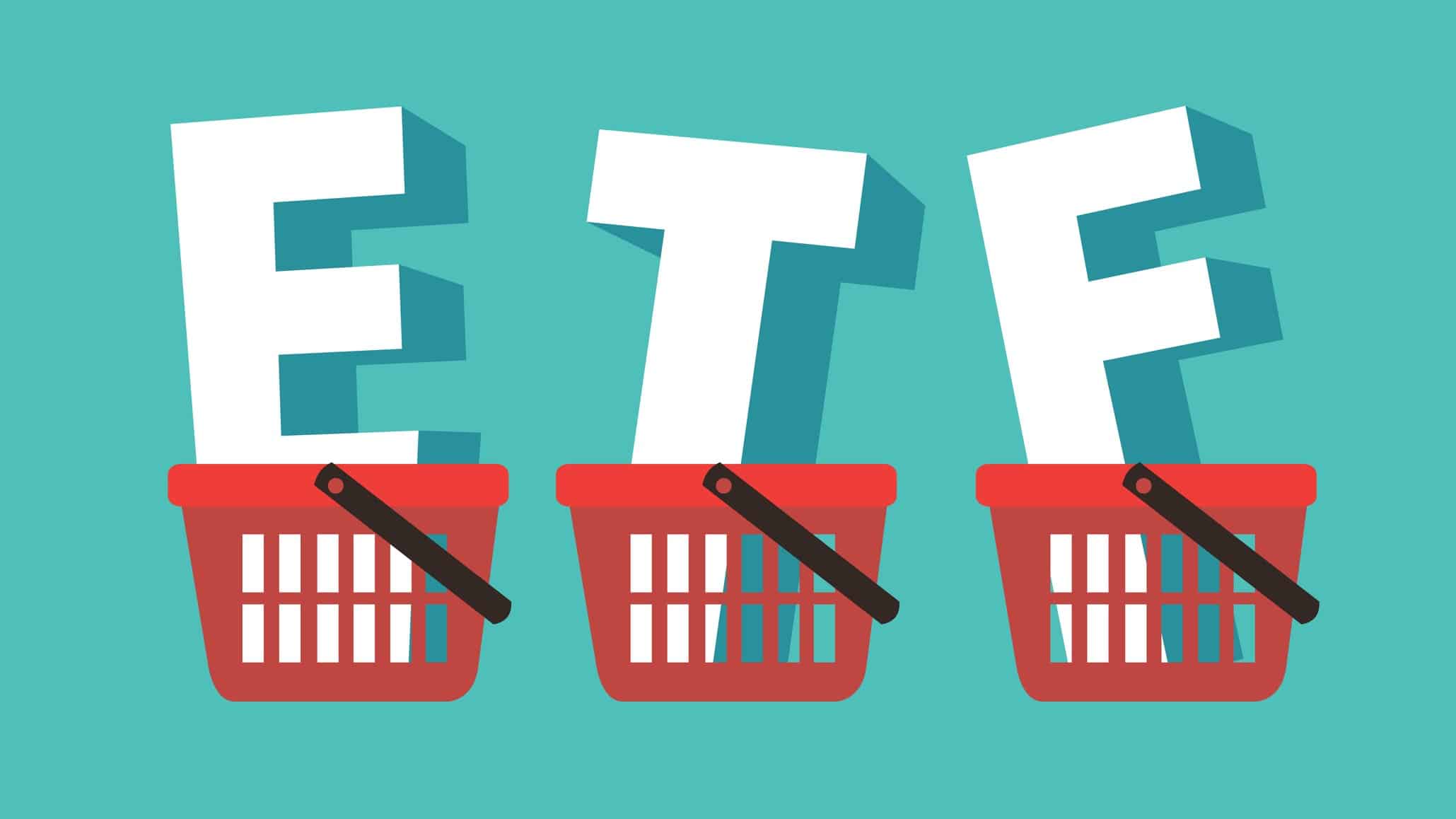
    ETF written in white and in shopping baskets.

    Sometimes I’m not sure what I’m going to invest in each month because it depends on what looks like good value at the time. However, there are a couple of ASX-listed exchange-traded funds (ETFs) that I know I want to buy more of next year.

    As Australians, it’s easy for us to have a home bias and just invest in companies listed on the ASX. But, the ASX only accounts for 2% of the global share market.

    We’d be missing out if we didn’t look at opportunities listed elsewhere. It’d be like trying to find the best students at a large school and only considering one class.

    I’m looking forward to buying more of the two ASX ETFs below in 2026, for both the potential returns and the diversification.

    VanEck MSCI International Quality ETF (ASX: QUAL)

    Gaining exposure to thousands of businesses isn’t necessarily a bad thing, but I think just owning the best ones could help long-term returns.

    From what I’ve seen, the best companies tend to keep winning over time and also generate above-average margins.

    The QUAL ETF owns a portfolio of 300 of the highest-quality businesses from around the world. Pleasingly, its holdings come from various markets and industries, ensuring it is properly diversified.

    But, the most important thing about the ASX ETF’s holdings is how the businesses all rank highly on quality characteristics. Those three elements are a high return on equity (ROE), earnings stability and low financial leverage.

    In other words, these companies make a lot of profit based on how much shareholder money is within the business, earnings typically don’t go backwards (meaning usually rising) and they haven’t used a lot of debt to achieve the high ROE.

    We’re talking about names like Meta Platforms, Alphabet, Apple, Microsoft, Netflix, Costco and Hong Kong Exchanges & Clearing.

    Impressively, the QUAL ETF has returned an average of 15.5% per year over the past five years. I’m not expecting the next five years to be as good, but its strategy could lead to ongoing good returns over the long-term.  

    VanEck Morningstar Wide Moat ETF (ASX: MOAT)

    I like the QUAL ETF as a high-quality fund, though there is a sizeable allocation to the big US tech stocks – there are plenty of other great businesses that are worth having a significant allocation to as well.

    The MOAT ETF has a very different holdings list in terms of its biggest exposures such as Applied Materials, Estee Lauder, Huntington Ingalls Industries, Merck & Co and West Pharmaceutical Services.

    How did the ASX ETF end up with those positions? It currently has a total of 53 holdings which are all thought of as good value and very competitively advantaged businesses.

    Morningstar analysts think an economic moat can come from a few different places: cost advantages, intangible assets (eg patents, brands and regulatory licenses), switching costs, network effects and efficient scale.

    Morningstar explains how it analyses a business to decide if it has a wide economic moat:

    For a company to earn a wide economic moat, excess normalized returns must, with near certainty, be positive 10 years from now. In addition, excess normalized returns must, more likely than not, be positive 20 years from now.

    That process decides which businesses the analysts monitor, but the fund only invests if target companies are “trading at attractive prices relative to Morningstar’s estimate of fair value.” Great businesses at good value is a strong combination.

    Over the prior five years, the MOAT ETF has returned an average of 14.8%. Time will tell how it performs from here, but I’m optimistic the good returns can continue.  

    The post I plan to invest $1,000s into these 2 ASX ETFs in 2026 appeared first on The Motley Fool Australia.

    Should you invest $1,000 in VanEck Vectors Msci World Ex Australia Quality ETF right now?

    Before you buy VanEck Vectors Msci World Ex Australia Quality ETF shares, consider this:

    Motley Fool investing expert Scott Phillips just revealed what he believes are the 5 best stocks for investors to buy right now… and VanEck Vectors Msci World Ex Australia Quality ETF wasn’t one of them.

    The online investing service he’s run for over a decade, Motley Fool Share Advisor, has provided thousands of paying members with stock picks that have doubled, tripled or even more.*

    And right now, Scott thinks there are 5 stocks that may be better buys…

    * Returns as of 18 November 2025

    .custom-cta-button p {
    margin-bottom: 0 !important;
    }

    More reading

    Motley Fool contributor Tristan Harrison has positions in VanEck Morningstar Wide Moat ETF and VanEck Msci International Quality ETF. The Motley Fool Australia’s parent company Motley Fool Holdings Inc. has positions in and has recommended Alphabet, Apple, Applied Materials, Costco Wholesale, Merck, Meta Platforms, Microsoft, and Netflix. The Motley Fool Australia’s parent company Motley Fool Holdings Inc. has recommended Hong Kong Exchanges And Clearing and has recommended the following options: long January 2026 $395 calls on Microsoft and short January 2026 $405 calls on Microsoft. The Motley Fool Australia has recommended Alphabet, Apple, Meta Platforms, Microsoft, Netflix, and VanEck Morningstar Wide Moat ETF. The Motley Fool has a disclosure policy. This article contains general investment advice only (under AFSL 400691). Authorised by Scott Phillips.