
Category: Stock Market

  • $20,000 in savings? Here’s how you can use that to target an $8,000 yearly second income

    Happy young couple saving money in piggy bank.

    Having $20,000 saved is more powerful than most people realise. Not because $20,000 can produce an income today, but because it can become the foundation of a portfolio that eventually pays you thousands of dollars a year without lifting a finger.

    If your goal is to build a second income of around $8,000 annually, let’s see how you could get there with the help of the share market.

    Focus on compounding

    If you were to receive a 5% dividend yield from a $20,000 ASX share portfolio, you would be pulling in $1,000 a year in income.

    While this is certainly very welcome, it is well short of our target.

    So, we first need to think about compounding before we start to focus on a second income.

    Compounding is what happens when you earn returns on your returns. It is like a snowball rolling down a hill. At the beginning, it feels slow. You put in money, you reinvest dividends, and your portfolio barely seems to move. But with time, the snowball grows, and the larger it becomes, the faster it accelerates.

    For example, if you were starting with $20,000 and were able to grow it at 10% per annum, which is largely in line with historical returns, your portfolio would grow to roughly $52,000 in 10 years, $84,000 in 15 years, $135,000 in 20 years, and $160,000 in 22 years. That’s even without adding anything more along the way.

    Add a regular contribution, even something modest like $250 or $500 a month, and the numbers rise far more quickly.

    In fact, by adding $500 a month to your portfolio, it would grow to $160,000 after just over 10 years.

    At that point, you now have enough to start pulling in meaningful second income from your portfolio.

    Second income

    With a $160,000 ASX share portfolio, you would need to average a 5% dividend yield to generate an $8,000 second income.

    Thankfully, the Australian share market is one of the most generous markets in the world. So, building a portfolio that averages a 5% dividend yield is much easier than you think.

    Examples include APA Group (ASX: APA), GQG Partners Inc (ASX: GQG), and Rural Funds Group (ASX: RFF), along with the Vanguard Australian Shares High Yield ETF (ASX: VHY). The latter includes a range of high yield ASX shares from different sectors.

    Foolish takeaway

    With a combination of compounding and additional capital, it is easier than you think to generate a second income from the share market.

    You just need to be patient and consistent, and compounding will do the rest.

    The post $20,000 in savings? Here’s how you can use that to target an $8,000 yearly second income appeared first on The Motley Fool Australia.

    Should you invest $1,000 in APA Group right now?

    Before you buy APA Group shares, consider this:

    Motley Fool investing expert Scott Phillips just revealed what he believes are the 5 best stocks for investors to buy right now… and APA Group wasn’t one of them.

    The online investing service he’s run for over a decade, Motley Fool Share Advisor, has provided thousands of paying members with stock picks that have doubled, tripled or even more.*

    And right now, Scott thinks there are 5 stocks that may be better buys…

    * Returns as of 18 November 2025

    .custom-cta-button p {
    margin-bottom: 0 !important;
    }

    More reading

    Motley Fool contributor James Mickleboro has positions in Gqg Partners. The Motley Fool Australia’s parent company Motley Fool Holdings Inc. has no position in any of the stocks mentioned. The Motley Fool Australia has positions in and has recommended Apa Group and Rural Funds Group. The Motley Fool Australia has recommended Gqg Partners and Vanguard Australian Shares High Yield ETF. The Motley Fool has a disclosure policy. This article contains general investment advice only (under AFSL 400691). Authorised by Scott Phillips.


  • Should you buy Santos, Beach Energy or Woodside shares? Here’s Macquarie’s top pick

    Two workers at an oil rig discuss operations.

    Should you buy Woodside Energy Group Ltd (ASX: WDS) shares, Santos Ltd (ASX: STO) shares, or Beach Energy Ltd (ASX: BPT) shares?

    That’s the million-dollar question the team over at Macquarie Group Ltd (ASX: MQG) dig into in their new Australia Energy report, released on Thursday.

    Before we look at Macquarie’s share price forecasts for the three S&P/ASX 200 Index (ASX: XJO) energy stocks, here’s how they’ve been tracking this year.

    How have the ASX 200 energy stocks performed in 2025?

    Woodside shares closed on Friday trading for $25.15 apiece. That sees the ASX 200 energy stock up a slender 0.8% year to date.

    Woodside shares also trade on a fully franked 6.6% trailing dividend yield.

    Beach Energy shares closed on Friday trading for $1.17 each. Beach Energy shares have dropped 17.6% in 2025. The ASX 200 stock also trades on a 7.7% fully franked trailing dividend yield.

    And Santos shares closed out the week with changing hands for $6.48 apiece. This sees Santos shares down 4.3% in 2025. Santos also trades on a 6.5% partly franked trailing dividend yield.

    That’s the year (almost) gone by.

    As for the year ahead…

    Does Macquarie prefer Beach, Santos or Woodside shares?

    Looking to 2026, Macquarie expects that Beach Energy, Santos and Woodside shares will all face headwinds from amid falling natural gas prices.

    “Led by our global commodities colleagues, we lower spot LNG prices through 2026, factoring loosening gas markets as new LNG capacities arrive,” the broker said.

    According to Macquarie:

    We believe an underweight position in Oil & Gas is warranted, given our still bearish oil and LNG outlooks. Within this, Santos remains our top pick, where we see value appeal on an absolute and relative basis (and clear catalysts to re-rate).

    Of the three ASX 200 energy stocks, Macquarie is the most bearish on Beach Energy, with an underperform rating.

    “We continue to believe BPT shares are overvalued by the market (based on its existing assets). M&A could be an opportunity to enhance value,” the broker said.

    Macquarie has a 77-cent price target on Beach Energy shares. That’s 34.2% below Friday’s closing price.

    The broker has a better outlook for Woodside shares, with a neutral rating on the stock.

    Macquarie noted:

    Sangomar oilfield has performed exceptionally well over its first 5 quarters – we now include 50% risking for a Phase 2 project (was 0%). Scarborough project tracking well for 2H26 start. However, we are concerned that deteriorating gas markets in 2027-28 will hurt sentiment as WDS progresses the 28mtpa largely uncontracted US LNG project.

    The broker has a $25.00 price target on Woodside shares, or 0.6% below Friday’s closing price.

    Which brings us to…

    The ASX 200 energy share Macquarie expects to outperform

    Macquarie expects that Santos shares will materially outperform Beach Energy and Woodside shares in 2026.

    Explaining its outperform rating on Santos, the broker said:

    We see significant value in STO following the deal break with XRG/ Carlyle, and expect this to be better recognised once customer deliveries commence from Barossa gas project via Darwin LNG (within weeks) and Pikka oil in Alaska (1Q-2026).

    Macquarie has an $8.00 price target on Santos shares. That represents a potential upside of 23.5% from Friday’s closing price.

    The post Should you buy Santos, Beach Energy or Woodside shares? Here’s Macquarie’s top pick appeared first on The Motley Fool Australia.

    Should you invest $1,000 in Beach Energy Limited right now?

    Before you buy Beach Energy Limited shares, consider this:

    Motley Fool investing expert Scott Phillips just revealed what he believes are the 5 best stocks for investors to buy right now… and Beach Energy Limited wasn’t one of them.

    The online investing service he’s run for over a decade, Motley Fool Share Advisor, has provided thousands of paying members with stock picks that have doubled, tripled or even more.*

    And right now, Scott thinks there are 5 stocks that may be better buys…

    * Returns as of 18 November 2025

    .custom-cta-button p {
    margin-bottom: 0 !important;
    }

    More reading

    Motley Fool contributor Bernd Struben has no position in any of the stocks mentioned. The Motley Fool Australia’s parent company Motley Fool Holdings Inc. has positions in and has recommended Macquarie Group. The Motley Fool Australia has positions in and has recommended Macquarie Group. The Motley Fool has a disclosure policy. This article contains general investment advice only (under AFSL 400691). Authorised by Scott Phillips.
  • 2 big ASX 200 shares this fund manager rates as buys

    A financial expert or broker looks worried as he checks out a graph showing market volatility.

    The fund manager Wilson Asset Management has picked two significant S&P/ASX 200 Index (ASX: XJO) shares that could make great buys today.

    The investment team from listed investment company (LIC) WAM Leaders Ltd (ASX: WLE) say they are investing in the highest-quality Australian companies.

    While it owns many of the most recognisable names on the ASX, it holds less of some the biggest ASX blue-chip shares than the ASX 200 Index. The businesses it’s most ‘underweight’ are: Commonwealth Bank of Australia (ASX: CBA), BHP Group Ltd (ASX: BHP), ANZ Group Holdings Ltd (ASX: ANZ), Wesfarmers Ltd (ASX: WES) and National Australia Bank Ltd (ASX: NAB).

    The names that it’s most actively overweight on include the two that I’m going to cover in this article. The other three businesses that are most overweight include Rio Tinto Ltd (ASX: RIO), Aristocrat Leisure Ltd (ASX: ALL) and Whitehaven Coal Ltd (ASX: WHC).

    Two of the businesses that the WAM team are excited about are the following large ASX 200 shares.

    Alcoa Corporation CDI (ASX: AAI)

    WAM described Alcoa as a global producer of aluminium, alumina and bauxite.

    The fund manager noted that Alcoa delivered outperformance during November as the global aluminium market “tightened”, with China reaching its capacity ceiling, structural deficits in the US and Europe, alongside accelerating demand across the globe.

    The investment team highlights that Alcoa Corporation is also implementing several initiatives to increase productivity, reduce costs and optimise the ASX 200 share’s asset portfolio.

    WAM Leaders believes that the structural demand-supply imbalance in aluminium persists. With Alcoa Corporation’s “attractive valuation” relative to global peers and ongoing operational improvements, WAM Leaders has made the business a core holding in the portfolio.

    CSL Ltd (ASX: CSL)

    The WAM investment team described CSL is a global biotechnology company developing plasma therapies, vaccines and treatments for rare diseases.

    WAM Leaders attended the CSL capital markets day in the US during November and also met the management team. The investment team toured the manufacturing facilities and plasma collection centres in Kankakee (Illinois) and Holly Springs (North Carolina).

    The fund manager said its investment team were encouraged by the additional disclosures by the ASX 200 share on demand drivers for immunoglobulin products and CSL’s initiatives to grow market share, as well as progress in reducing plasma collection and fractionation costs.

    WAM said the insights gained during these meetings have strengthened its confidence in the ASX 200 share’s earnings profile and it sees valuation support for the current CSL share price.

    The post 2 big ASX 200 shares this fund manager rates as buys appeared first on The Motley Fool Australia.

    Should you invest $1,000 in CSL right now?

    Before you buy CSL shares, consider this:

    Motley Fool investing expert Scott Phillips just revealed what he believes are the 5 best stocks for investors to buy right now… and CSL wasn’t one of them.

    The online investing service he’s run for over a decade, Motley Fool Share Advisor, has provided thousands of paying members with stock picks that have doubled, tripled or even more.*

    And right now, Scott thinks there are 5 stocks that may be better buys…

    * Returns as of 18 November 2025

    .custom-cta-button p {
    margin-bottom: 0 !important;
    }

    More reading

    Motley Fool contributor Tristan Harrison has no position in any of the stocks mentioned. The Motley Fool Australia’s parent company Motley Fool Holdings Inc. has positions in and has recommended CSL and Wesfarmers. The Motley Fool Australia has recommended BHP Group, CSL, and Wesfarmers. The Motley Fool has a disclosure policy. This article contains general investment advice only (under AFSL 400691). Authorised by Scott Phillips.

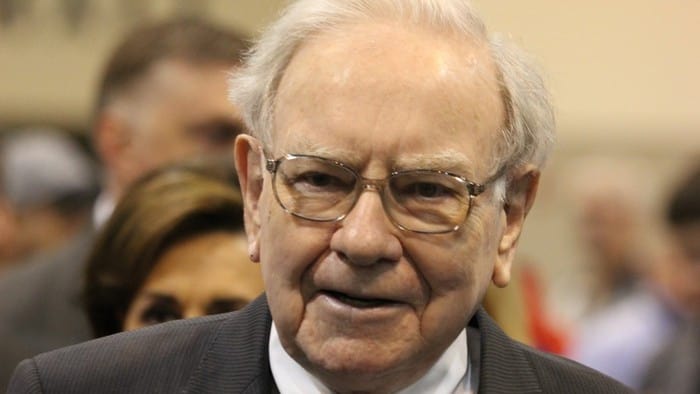
  • Warren Buffett, weeks before his retirement, has a warning for Wall Street. History says this may happen in 2026.

    Legendary share market investing expert, and owner of Berkshire Hathaway, Warren Buffett.

    This article was originally published on Fool.com. All figures quoted in US dollars unless otherwise stated.

    Key Points

    • Investing legend Warren Buffett has made moves that may suggest what’s next for the stock market.
    • Buffett, at the helm of Berkshire Hathaway, has delivered decades of market-beating results.

    Warren Buffett has become an investing legend, and that’s thanks to his ability to generate market-beating returns over time. The billionaire, leading Berkshire Hathaway for nearly 60 years, has over that time delivered a compounded annual gain of almost 20% — that’s compared to the S&P 500‘s compounded annual increase of about 10% over the period.

    Buffett has done this by investing in the same manner throughout all market environments: identifying quality companies with strong competitive advantages and getting in on these players for the right price. The famous investor doesn’t follow market trends or get caught up in euphoria or despair; instead, he keeps his cool and searches for opportunity.

    In recent years, though, opportunity hasn’t been as readily available as he would have liked. “Often, nothing looks compelling; very infrequently, we find ourselves knee-deep in opportunities,” he wrote in a recent letter to shareholders. And actions Buffett has taken in the quarters leading up to his retirement, set for the end of this year, may be seen as a warning for Wall Street. Let’s take a closer look — and see what history says may happen in 2026.

    Buffett’s transition

    So, first, a quick note about Buffett’s retirement. Don’t worry: The top investor isn’t completely disappearing from the investing scene. He will carry on as chairman of Berkshire Hathaway, but as of Jan. 1, he’s turning his role of chief executive officer over to Greg Abel, currently the holding company’s vice-chairman of non-insurance operations. Abel will then lead Berkshire Hathaway investment decisions.

    In Buffett’s final few years as CEO, it doesn’t look like he’s been “knee-deep” in opportunities because he’s been a net seller of stocks for the past 12 consecutive quarters. This means that his stock sales surpassed his equity purchases during each three-month period.

    And this brings me to the subject of Buffett’s warning to Wall Street. As Buffett favored selling stocks over buying them in recent years, he’s also built up a record cash position — and this continued in the third quarter, with Berkshire Hathaway’s cash level reaching $381 billion. So, Buffett has preferred setting aside cash for investing at a later time than allocating it to purchases today.

    A trend that Buffett may not like

    The investing giant hasn’t offered us exact reasons for his decision, but since we do know that he favors buying stocks for a good price, it’s fair to say that one key element may be holding him back. And this is valuation.

    A look at the S&P 500 Shiller CAPE ratio shows us that stocks are at one of their most expensive levels ever. The metric, a measure of stock price in relation to earnings over a 10-year period, recently climbed to 40, a level it’s only reached once before since the S&P 500’s formation as a 500-company benchmark.

    S&P 500 Shiller CAPE Ratio data by YCharts

    Now, let’s consider what history has to say about what may happen in 2026. At times when Berkshire Hathaway’s cash levels have been on the rise and reached a peak, the S&P 500 then has taken a dip, as you can see in the chart below, particularly in early 2016 and then toward 2017. The S&P 500 Shiller CAPE ratio also has been on the rise prior to these stock market dips, suggesting valuation may play a role in this trend.

    BRK.B Cash and Short Term Investments (Quarterly) data by YCharts

    The most important point

    This historical pattern suggests we may see a dip in stocks in 2026 — but this doesn’t necessarily mean that the year will finish in the negative. Stock market declines that have followed Buffett’s increases in cash levels generally have been short-lived, and most important of all, the S&P 500’s declines always have resulted in recovery and gains in the years to follow.

    So, what does all of this mean for investors? Buffett’s actions imply opportunities aren’t overly abundant right now — and that could start weighing on demand for stocks. This “warning” means investors should pay close attention to valuations and avoid buying stocks that are overpriced or have questionable long-term prospects.

    Fortunately, though, if stocks do slip in 2026, history shows us these periods aren’t long lasting — and that’s why investing for a number of years has been a winning strategy for Warren Buffett and could be a winning strategy for you too. 

    This article was originally published on Fool.com. All figures quoted in US dollars unless otherwise stated.

    The post Warren Buffett, weeks before his retirement, has a warning for Wall Street. History says this may happen in 2026. appeared first on The Motley Fool Australia.

    This article was originally published on Fool.com. All figures quoted in US dollars unless otherwise stated.

    Should you invest $1,000 in Berkshire Hathaway Inc. right now?

    Before you buy Berkshire Hathaway Inc. shares, consider this:

    Motley Fool investing expert Scott Phillips just revealed what he believes are the 5 best stocks for investors to buy right now… and Berkshire Hathaway Inc. wasn’t one of them.

    The online investing service he’s run for over a decade, Motley Fool Share Advisor, has provided thousands of paying members with stock picks that have doubled, tripled or even more.*

    And right now, Scott thinks there are 5 stocks that may be better buys…

    * Returns as of 18 November 2025

    .custom-cta-button p { margin-bottom: 0 !important; }

    This article was originally published on Fool.com. All figures quoted in US dollars unless otherwise stated.

    More reading

    Adria Cimino has no position in any of the stocks mentioned. The Motley Fool Australia’s parent company Motley Fool Holdings Inc. has positions in and has recommended Berkshire Hathaway. The Motley Fool Australia has recommended Berkshire Hathaway. The Motley Fool has a disclosure policy. This article contains general investment advice only (under AFSL 400691). Authorised by Scott Phillips.

  • This ASX mining stock is up 350% in 2025 and its gold hunt just hit hyper speed

    gold, gold miner, gold discovery, gold nugget, gold price,

    Not many investors are acquainted with Many Peaks Minerals Ltd (ASX: MPK), despite the company’s remarkable share price performance in recent months.

    At the start of the year, shares in this ASX mining stock were changing hands at $0.20 apiece.

    As of Friday’s close, they had surged to $0.90 per share.

    This represents a stunning 350% return in less than a year.

    For context, the broader All Ordinaries Index (ASX: XAO) has risen by about 5.5% over the same period.

    So, what’s behind the spectacular rally for this little-known ASX mining stock?

    It appears much of the excitement is centred on the company’s promising gold exploration results in Côte d’Ivoire.

    Let’s take a closer look at the latest developments.

    High-grade gold hunt

    In 2025, Many Peaks reported a series of broad and high-grade gold hits from exploration drilling at its Ferké gold project.

    In particular, drilling at the Ouarigue prospect returned a swarm of notable intercepts, such as 84.8 metres at 3.01 grams per tonne gold.

    Other significant hits included 45m at 8.58g/t gold and 230m at 1.20g/t gold.

    These results seem to point to the potential of a significant mineralised system at Ferké.

    And last week, Many Peaks kicked off a major new drilling campaign aimed at uncovering additional gold zones across the project.

    New exploration blitz

    The 2025-26 field season will comprise at least 15,000 metres of drilling.

    Initially it will focus on extending known mineralisation near Ouarigue, with further drilling planned at other high-priority regional targets at Ferké.

    In parallel, Many Peaks has also commenced a series of target definition works at both Ferké and its second gold project in Côte d’Ivoire known as Odienné.

    These works are designed to generate new exploration targets for the ASX mining stock to test with follow-up drilling.

    Many Peaks managing director, Travis Schwertfeger, stated:

    Our company’s rapid success in Côte d’Ivoire has resulted from steady acceleration of exploration activity over the past year, yielding resource potential with multiple high-grade gold intercepts at Ferké and delineation of extensive trends of gold mineralisation ready for follow-up work at Odienné.

    Initial assays from the drill programme are anticipated in January.

    Results from further drilling and other field work is expected to follow in regular intervals over the following six months.

    Many Peaks share price in focus

    The renewed exploration momentum has not gone unnoticed by the market.

    In the past week alone, shares in the ASX mining stock have climbed from $0.72 to $0.90 per share.

    This equates to a 25% return for shareholders in just five trading sessions.

    The post This ASX mining stock is up 350% in 2025 and its gold hunt just hit hyper speed appeared first on The Motley Fool Australia.

    Should you invest $1,000 in Many Peaks Minerals right now?

    Before you buy Many Peaks Minerals shares, consider this:

    Motley Fool investing expert Scott Phillips just revealed what he believes are the 5 best stocks for investors to buy right now… and Many Peaks Minerals wasn’t one of them.

    The online investing service he’s run for over a decade, Motley Fool Share Advisor, has provided thousands of paying members with stock picks that have doubled, tripled or even more.*

    And right now, Scott thinks there are 5 stocks that may be better buys…

    * Returns as of 18 November 2025

    .custom-cta-button p {
    margin-bottom: 0 !important;
    }

    More reading

    Motley Fool contributor Bart Bogacz has no position in any of the stocks mentioned. The Motley Fool Australia’s parent company Motley Fool Holdings Inc. has no position in any of the stocks mentioned. The Motley Fool Australia has no position in any of the stocks mentioned. The Motley Fool has a disclosure policy. This article contains general investment advice only (under AFSL 400691). Authorised by Scott Phillips.

  • Up 300% in 6 months! This soaring ASX lithium stock just took a major step to production

    A green fully charged battery symbol surrounded by green charge lights representing the surging Vulcan share price today

    Lithium stocks have been on a tear over the past few months.

    For instance, take leading ASX 200 lithium miner Pilbara Minerals Ltd (ASX: PLS).

    Shares in the company have jumped by 181% since early June, climbing to $3.80 per share at Friday’s close.

    And during the same period, fellow ASX 200 mining heavyweight Mineral Resources Ltd (ASX: MIN) has seen its share price more-than-double.

    But a lesser-known lithium player has outperformed both mining behemoths.

    That company is Global Lithium Resources Ltd (ASX: GL1), an exploration business aiming to bring its wholly owned Manna lithium project to production.

    Global Lithium shares have surged by 300% over the past six months, reaching $0.60 apiece at the close of business on Friday.

    And this week, the group took a major step to realising its goals of becoming Australia’s newest lithium miner.

    Significant lithium project

    Manna lies about 100 kilometres east of Kalgoorlie in the globally renowned and infrastructure-rich Goldfields region of Western Australia.

    It boasts a mineral resource consisting of 51.6 million tonnes grading 1.0% lithium.

    And management believes Manna to be the third largest lithium resource in the Kalgoorlie lithium province.

    Earlier this year, Global Lithium notched up two key milestones in its efforts to move the project to production.

    In August, it sealed a Native Title Mining Agreement whilst also securing a mining lease from the Western Australian government.

    And just this week, the ASX lithium stock took another major step on its path to production.

    What happened?

    Over the past nine months, Global Lithium has been running a Definitive Feasibility Study (DFS) to gauge the merits of building a mine at Manna.

    And on Thursday, it unveiled the results.

    According to the company, the study confirmed Manna as a long-life and economically robust lithium asset.

    It forecast an initial mining operation spanning 14.3 years, with a payback period of 3.5 years.

    The study also envisaged a post-tax free cashflow of about $1.15 billion for the duration of the mine.

    Global Lithium managing director, Dr Dianmin Chen, commented:

    This DFS underscores the potential for Manna to both create shareholder value and contribute to the world’s lithium supply chain through its robust economics, significant long-life potential and Company’s commitment to invest in and develop projects in Western Australia.

    What next for this ASX lithium stock?

    Global Lithium will now focus on securing the funding required to build a mine.

    Here, the DFS projected capital costs to total nearly $440 million.

    It will also look to nail down remaining regulatory approvals ahead of a final investment decision planned for next year.

    The post Up 300% in 6 months! This soaring ASX lithium stock just took a major step to production appeared first on The Motley Fool Australia.

    Should you invest $1,000 in Global Lithium Resources Limited right now?

    Before you buy Global Lithium Resources Limited shares, consider this:

    Motley Fool investing expert Scott Phillips just revealed what he believes are the 5 best stocks for investors to buy right now… and Global Lithium Resources Limited wasn’t one of them.

    The online investing service he’s run for over a decade, Motley Fool Share Advisor, has provided thousands of paying members with stock picks that have doubled, tripled or even more.*

    And right now, Scott thinks there are 5 stocks that may be better buys…

    * Returns as of 18 November 2025

    .custom-cta-button p {
    margin-bottom: 0 !important;
    }

    More reading

    Motley Fool contributor Bart Bogacz has no position in any of the stocks mentioned. The Motley Fool Australia’s parent company Motley Fool Holdings Inc. has no position in any of the stocks mentioned. The Motley Fool Australia has no position in any of the stocks mentioned. The Motley Fool has a disclosure policy. This article contains general investment advice only (under AFSL 400691). Authorised by Scott Phillips.

  • Forecast: Here’s what $10,000 invested in Wesfarmers shares could be worth next year

    A woman looks at a tablet device while in the aisles of a hardware style store amid stacked boxes on shelves representing Bunnings and the Wesfarmers share price

    The Wesfarmers Ltd (ASX: WES) share price has risen by more than 60% in the past five years, which is a solid result for shareholders. It’s worthwhile asking what could happen over the next 12 months for the ASX blue-chip share.

    The business has delivered excellent profitable growth at Kmart and Bunnings. Other businesses are also a slice of the Wesfarmers pie including Officeworks, Target, Priceline, InstantScripts, other healthcare businesses, Wesfarmers chemicals, energy and fertilisers (WesCEF), and an industrial and safety division.

    Share price gains are not guaranteed, so let’s take a look at whether experts believe the business can deliver capital growth for investors if they invested $10,000.

    Wesfarmers share price target

    A number of different experts have views on where they think the Wesfarmers share price will go in the coming months.

    A price target is where the analysts think the share price will be in 12 months from the time of the investment call.

    The broker UBS currently has a price target of $90 on the business, implying a possible rise of just over 10%, at the time of writing. That would turn $10,000 into around $11,000.

    According to CMC Markets, of six recent ratings on the business, the average analyst price target is $84.89, suggesting a possible rise of more than 4% in the next 12 months. That would add an extra $400 to a $10,000 investment, becoming $10,400.

    There are a few ratings that imply a pleasing rise. For example, one Wesfarmers share price target is $92.6, implying a possible rise of 14% from where it is at the time of writing. However, there are a couple of recent ratings that suggest the business could drop by just over 10% in the next year, from where it is today.

    What are experts seeing with the retail giant?

    UBS recently commented on the company after it delivered its AGM update. The broker commented on the divisions of the business, each of which has a part to play for the Wesfarmers share price:

    Consumer demand remains positive but cost of living pressures are a challenge for some consumers & businesses (weighing on demand & investment). WES divisions continue to invest in productivity initiatives to offset higher costs & maintain competitive prices. WES retail divisions well positioned given value credentials & broad ranges.

    …Bunnings enjoys growth options across category, channel & customer, with these capital light and hence expanding ROC [return on capital].

    Kmart expected to continue to benefit from rising customer numbers, transaction frequency & category participation. UBS [is] confident the Kmart value credentials and Anko product development capabilities can support sales in different consumer environments.

    Officeworks: As part of a reset, WES announced A$15-25m in one-off costs due to lower operating margins and costs associated with an operating model reset & ERP replacement programme. This is expected to drive cost savings to help Officeworks better execute its EDLP offering and increase focus on the technology category.

    WesCEF: Covalent Lithium refinery continues. As per FY25 results, Chemicals & Energy EBT to be impacted by higher natural gas costs and lower LPG content.

    Health: Priceline is delivering strong network sales growth due to improved retail execution, network expansion, price reductions and new ranges. Wholesale improving yet competitive.

    Ultimately, UBS is projecting a possible net profit of $2.79 billion from the company in FY26, with potential further profit growth in the coming years, which is a tailwind for the Wesfarmers share price in the longer-term.

    The post Forecast: Here’s what $10,000 invested in Wesfarmers shares could be worth next year appeared first on The Motley Fool Australia.

    Should you invest $1,000 in Wesfarmers Limited right now?

    Before you buy Wesfarmers Limited shares, consider this:

    Motley Fool investing expert Scott Phillips just revealed what he believes are the 5 best stocks for investors to buy right now… and Wesfarmers Limited wasn’t one of them.

    The online investing service he’s run for over a decade, Motley Fool Share Advisor, has provided thousands of paying members with stock picks that have doubled, tripled or even more.*

    And right now, Scott thinks there are 5 stocks that may be better buys…

    * Returns as of 18 November 2025

    .custom-cta-button p {
    margin-bottom: 0 !important;
    }

    More reading

    Motley Fool contributor Tristan Harrison has no position in any of the stocks mentioned. The Motley Fool Australia’s parent company Motley Fool Holdings Inc. has positions in and has recommended Wesfarmers. The Motley Fool Australia has recommended Wesfarmers. The Motley Fool has a disclosure policy. This article contains general investment advice only (under AFSL 400691). Authorised by Scott Phillips.

  • 3 high-quality ASX ETFs to buy in December

    Young Female investor gazes out window at cityscape

    Whether you’re preparing for 2026 or looking to position yourself ahead of the next market cycle, a focus on quality stocks remains one of the most reliable long-term strategies.

    With that in mind, let’s take a look at three high-quality ASX exchange traded funds (ETFs) that analysts at Betashares have recommended to investors recently. Here’s what you need to know about them:

    Betashares Global Quality Leaders ETF (ASX: QLTY)

    The Betashares Global Quality Leaders ETF is designed to give investors exposure to some of the highest-quality companies in the world.

    It screens global stocks for strong earnings stability, high returns on equity, and low financial leverage. Companies that boast these characteristics tend to hold up well during periods of market stress.

    Inside this ASX ETF, you will find big names such as Johnson & Johnson (NYSE: JNJ), Microsoft (NASDAQ: MSFT), and ASML Holding (NASDAQ: ASML). These are businesses with long histories of consistent profitability, wide economic moats, and strong cash generation.

    What makes the fund particularly attractive in December is the market’s renewed focus on financial strength and earnings durability. When volatility strikes, quality tends to outperform, and this ASX ETF provides a simple way to gain exposure to it.

    Betashares Australian Quality ETF (ASX: AQLT)

    While the Betashares Global Quality Leaders ETF looks globally, the Betashares Australian Quality ETF applies a similar quality-focused approach to the Australian share market.

    It selects local stocks based on return on equity, earnings stability, and low debt levels. This means the ASX ETF tends to favour companies with strong competitive advantages.

    Key holdings include Wesfarmers Ltd (ASX: WES), CSL Ltd (ASX: CSL), and ResMed Inc. (ASX: RMD), which are all businesses known for dependable earnings and world-class management.

    One standout is CSL. It remains one of Australia’s strongest global healthcare businesses. Its plasma division, R&D pipeline, and expanding manufacturing footprint provide a long-term growth story that fits perfectly inside a quality-focused ETF.

    For investors wanting exposure to strong Australian companies without trying to handpick winners, this fund could be an excellent choice.

    BetaShares India Quality ETF (ASX: IIND)

    India is one of the world’s fastest-growing major economies, and the BetaShares India Quality ETF gives investors targeted exposure to the highest-quality companies within that market.

    As with the others, the fund screens Indian stocks for strong profitability, low debt, and consistent earnings. This creates a portfolio of businesses positioned to benefit from India’s structural economic expansion.

    Holdings include Infosys (NYSE: INFY), Reliance Industries (NSEI: RELIANCE), and Tata Consultancy Services (NSEI: TCS). These companies are leaders in software services, telecommunications, and industrial growth, which are sectors that are expected to thrive as India’s middle class expands and digital adoption accelerates.

    With global investors increasingly recognising India’s long-term potential, the BetaShares India Quality ETF offers a straightforward way to participate in what could be one of the strongest economic stories of the next decade.

    The post 3 high-quality ASX ETFs to buy in December appeared first on The Motley Fool Australia.

    Should you invest $1,000 in BetaShares Australian Quality ETF right now?

    Before you buy BetaShares Australian Quality ETF shares, consider this:

    Motley Fool investing expert Scott Phillips just revealed what he believes are the 5 best stocks for investors to buy right now… and BetaShares Australian Quality ETF wasn’t one of them.

    The online investing service he’s run for over a decade, Motley Fool Share Advisor, has provided thousands of paying members with stock picks that have doubled, tripled or even more.*

    And right now, Scott thinks there are 5 stocks that may be better buys…

    * Returns as of 18 November 2025

    .custom-cta-button p {
    margin-bottom: 0 !important;
    }

    More reading

    Motley Fool contributor James Mickleboro has positions in CSL. The Motley Fool Australia’s parent company Motley Fool Holdings Inc. has positions in and has recommended ASML, CSL, Microsoft, and Wesfarmers. The Motley Fool Australia’s parent company Motley Fool Holdings Inc. has recommended Johnson & Johnson and has recommended the following options: long January 2026 $395 calls on Microsoft and short January 2026 $405 calls on Microsoft. The Motley Fool Australia has recommended ASML, CSL, Microsoft, and Wesfarmers. The Motley Fool has a disclosure policy. This article contains general investment advice only (under AFSL 400691). Authorised by Scott Phillips.

  • Prediction: This will be the world’s largest company by year-end 2026 (Hint: It’s not Nvidia)

    AI written in blue on a digital chip.

    This article was originally published on Fool.com. All figures quoted in US dollars unless otherwise stated.

    Key Points

    • Alphabet is the world’s most profitable tech company, but only the third-largest by market cap.
    • Its also the cheapest megacap tech stock on a trailing P/E basis.
    • The company’s vertically integrated AI stack gives it an advantage that should begin to draw more investor interest in the name.

    Nvidia (NASDAQ: NVDA) is currently the world’s largest company with a market cap nearing $4.4 trillion, followed by Apple (NASDAQ: AAPL) at around $4.2 billion, as of this writing. However, I think Alphabet (NASDAQ: GOOGL) (NASDAQ: GOOG) will take the top spot by the end of 2026.

    Alphabet is currently the world’s third-largest company with a market cap of around $3.9 trillion, just ahead of Microsoft (NASDAQ: MSFT) at $3.6 trillion. They are the only four companies with market caps above $3 trillion.

    Let’s dig into why Alphabet is poised to become the world’s largest company by the end of next year. 

    Alphabet is a market leader

    Alphabet is actually already the world’s most profitable tech company. Its trailing 12-month earnings of $124.5 billion and quarterly earnings of $35 billion are both tops among megacap tech names. From a trailing price-to-earnings (P/E) basis, it’s also the cheapest of the group.

    Data by YCharts.

    However, stock prices are often about the future, and Alphabet has one of the brightest futures in big tech. What is so exciting about Alphabet is that it’s the company that developed the best artificial intelligence (AI) tech stack. The company has taken a vertically integrated approach, which gives it an advantage that should only grow wider in the future.

    Alphabet’s big edge is that it has developed both its own top-tier custom AI chips and a world-class foundational large language model (LLM). No other company has a tech stock in these areas that is as far along as Alphabet.

    In addition, it also has a top machine learning software platform in Vertex AI that helps create, train, and deploy custom AI models, usually based on its Gemini model, although it also supports third-party open-source models like Meta Platforms‘ Llama. It’s also a storage and data analytics leader with Colossus and BigQuery, and it even has its own fiber network to reduce latency. Its pending acquisition of cloud security leader Wiz will only add to its full-stack solution.

    The company’s biggest advantage, though, is its custom AI chips, called tensor processing units (TPUs), which entered development more than a decade ago, and they are now in their seventh generation. The chips were optimized for Google Cloud’s TensorFlow framework, and have been battle-tested running Alphabet’s internal workloads. Having its own custom AI ASICs (application-specific integrated circuits) gives Alphabet a huge cost advantage both over rival cloud computing and AI model companies like OpenAI. It can just train models and run inference more cost-effectively both for itself and for customers.

    This all helps Alphabet achieve a better return on its capital expenditure (capex) than competitors, who depend on Nvidia’s more expensive graphics processing units (GPUs) to train their LLMs, creating a virtuous cycle. Lower costs and a better ROI (return on investment) lead to better products and solutions, which allow it to invest more into them, continuing to make them better.

    Meanwhile, by developing its own world-class AI model, Alphabet captures a larger portion of the revenue and can integrate it into other products like Google Search. Today, AI-powered features, such as AI Mode and AI Overviews, are helping drive queries and search revenue growth. At the same time, with its massive ad network, few companies are as capable as monetizing search and AI discovery.

    On top of that, Alphabet has other huge advantages. First and foremost is the huge distribution advantage the company has through its ownership of the Chrome browser and Android smartphone operating system, which both have over 70% market share. Throw in its revenue-sharing deal to be the default search engine on Apple devices, and Google is essentially the gateway to the internet for most people. It also has a data advantage, given its decades of search queries and YouTube video uploads.

    The road to becoming the world’s largest company

    Alphabet is already the world’s most profitable tech company, and as more investors start to recognize its position as the AI company to beat, the stock should have strong upside from here. Its valuation is reasonable, and it should be able to outpace its growth expectations next year.

    That should help propel it to become the world’s largest company by next year.

    This article was originally published on Fool.com. All figures quoted in US dollars unless otherwise stated.

    The post Prediction: This will be the world’s largest company by year-end 2026 (Hint: It’s not Nvidia) appeared first on The Motley Fool Australia.

    This article was originally published on Fool.com. All figures quoted in US dollars unless otherwise stated.

    Should you invest $1,000 in Alphabet right now?

    Before you buy Alphabet shares, consider this:

    Motley Fool investing expert Scott Phillips just revealed what he believes are the 5 best stocks for investors to buy right now… and Alphabet wasn’t one of them.

    The online investing service he’s run for over a decade, Motley Fool Share Advisor, has provided thousands of paying members with stock picks that have doubled, tripled or even more.*

    And right now, Scott thinks there are 5 stocks that may be better buys…

    * Returns as of 18 November 2025

    .custom-cta-button p { margin-bottom: 0 !important; }

    This article was originally published on Fool.com. All figures quoted in US dollars unless otherwise stated.

    More reading

    Geoffrey Seiler has positions in Alphabet. The Motley Fool Australia’s parent company Motley Fool Holdings Inc. has positions in and has recommended Alphabet, Apple, Meta Platforms, Microsoft, and Nvidia. The Motley Fool Australia’s parent company Motley Fool Holdings Inc. has recommended the following options: long January 2026 $395 calls on Microsoft and short January 2026 $405 calls on Microsoft. The Motley Fool Australia has recommended Alphabet, Apple, Meta Platforms, Microsoft, and Nvidia. The Motley Fool has a disclosure policy. This article contains general investment advice only (under AFSL 400691). Authorised by Scott Phillips.

  • Cost of a comfortable retirement rises to record high: ASFA

    a man in a business suit has a stern look on his face as he leans forward and peers over his glasses.

    The cost of a comfortable retirement has hit a record high, according to the Association of Superannuation Funds of Australia (ASFA).

    For homeowners aged 65 and over, a comfortable retirement now costs $76,505 per annum for couples and $54,240 for singles.

    ASFA says this represents a 3.5% increase for couples and 3.6% for singles over the past 12 months.

    By comparison, consumer inflation has lifted by 3.2%, indicating retirees have borne a greater increase in expenses than non-retirees.

    ASFA said:

    This underscores that retirees are experiencing stronger price pressures than the general population because they spend more of their budget on essential items that have risen the most.

    ASFA defines a comfortable lifestyle as enough money to cover the basics plus top level private health insurance, many exercise and leisure activities, occasional restaurant meals, a domestic holiday every year, and an international trip every seven years.

    ASFA created the Retirement Standard, which is Australia’s definitive retirement budgeting guide, in 2004.

    The Retirement Standard is updated every quarter for inflation.

    Last week, ASFA released its September quarter estimates of how much retirement costs in Australia.

    ASFA also publishes expense estimates for a modest lifestyle for both homeowners and renters.

    ASFA defines a modest retirement as having basic private health insurance, a cheaper car, basic internet and mobile phone, infrequent exercise and leisure activities, few restaurant meals, and one Australian holiday per year.

    According to the September quarter update, a modest retirement now costs $50,866 per year for couple homeowners.

    For single homeowners, a modest lifestyle now costs $35,199 per annum.

    For renters, a modest retirement now costs $67,125 annually for couples and $49,676 for singles.

    Retirement is more expensive for renters because their housing costs are higher.

    Why have retirement costs jumped to record levels?

    ASFA CEO Mary Delahunty said prices for essential items have risen faster than other categories, creating a greater impact for retirees.

    Retirees might be feeling the squeeze this Christmas because prices have risen fastest in the things they spend most on, like food, energy and health. Some older people may cut back on pricier gifts, travel and social occasions to stay on top of the basics.

    However, thanks to superannuation, most Australian retirees are living with additional income beyond the Age Pension each month, which makes them more financially resilient, including at financially stressful times of the year like Christmas.

    In the September quarter, the cost of eating out or ordering takeaway rose by 1.3%.

    Property rates rose 6.3% and electricity prices increased 9%.

    Domestic holidays and accommodation lifted 5.2% and audio, visual, and media services rose 9.3%.

    What about superannuation?

    The superannuation savings required to fund a comfortable retirement remained the same in the September quarter.

    Homeowner couples need $690,000 in super and singles need $595,000 by age 67 to fund a comfortable lifestyle.

    A modest retirement for homeowners requires just $100,000 in super for both couples and singles.

    Renters need $385,000 (couples) or $340,000 (singles) in superannuation savings to fund a modest lifestyle.

    As we reported in October, more Australian retirees are living mainly off their superannuation instead of the pension.

    In its Retirement and Retirement Intentions report, the Australian Bureau of Statistics said:

    Between 2014-15 and 2024-25, the proportion of retired people with superannuation as their main source of income has increased from 20% to 28%.

    Australians born on or after 1 January 1957 become eligible for the pension at age 67.

    The full pension, including both supplements, is $1,777 per fortnight (combined) for couples and $1,178.70 per fortnight for singles.

    There are 4.5 million retirees aged over 45 in Australia today.

    The post Cost of a comfortable retirement rises to record high: ASFA appeared first on The Motley Fool Australia.

    Wondering where you should invest $1,000 right now?

    When investing expert Scott Phillips has a stock tip, it can pay to listen. After all, the flagship Motley Fool Share Advisor newsletter he has run for over ten years has provided thousands of paying members with stock picks that have doubled, tripled or even more.*

    Scott just revealed what he believes could be the ‘five best ASX stocks’ for investors to buy right now. We believe these stocks are trading at attractive prices and Scott thinks they could be great buys right now…

    * Returns as of 18 November 2025

    .custom-cta-button p {
    margin-bottom: 0 !important;
    }

    More reading

    Motley Fool contributor Bronwyn Allen has no position in any of the stocks mentioned. The Motley Fool Australia’s parent company Motley Fool Holdings Inc. has no position in any of the stocks mentioned. The Motley Fool Australia has no position in any of the stocks mentioned. The Motley Fool has a disclosure policy. This article contains general investment advice only (under AFSL 400691). Authorised by Scott Phillips.