
Category: Stock Market

  • Invest $10,000 in this ASX dividend stock for $1,200 in passive income

    Man holding a calculator with Australian dollar notes, symbolising dividends.

    If you are searching for passive income in this low interest rate environment, then look no further than the ASX dividend stock in this article.

    That’s because it has one of the most generous dividend yields around and has been tipped to rise materially from current levels.

    Which ASX dividend stock?

    The stock that could be a great pick for passive income is GQG Partners Inc (ASX: GQG).

    GQG Partners is a boutique investment management company that manages global and emerging market equity portfolios for institutions, advisors, and individuals worldwide.

    It is a majority employee-owned company that is headquartered in Fort Lauderdale, Florida, with offices around the world.

    The company notes that it “strives for excellence at all levels within the organization through a commitment to independent thinking, continual growth, cultural integrity, and a deep knowledge of the markets.”

    The strategy the investment management company uses is called Forward Looking Quality. It notes that this concept ignores the traditional investment constraints associated with growth and value and instead focuses on investing in companies that it believes are going to be successful over the next five years and beyond.

    At the last count, it reported that it had US$163.7 billion of assets under management (AUM).

    Undervalued

    The team at Macquarie Group Ltd (ASX: MQG) thinks the ASX dividend stock is undervalued at current levels.

    A recent note reveals that the broker has an outperform rating and $2.50 price target on its shares.

    Based on its current share price of $1.85, this implies potential upside of 35% for investors over the next 12 months.

    To put that into context, a $10,000 investment would turn into approximately $13,500 by this time next year if Macquarie is on the money with its recommendation.

    But the returns won’t stop there!

    What about passive income?

    GQG Partners is being tipped to provide investors with some very big dividend yields in the near term.

    According to Macquarie’s note, it expects the ASX dividend stock to reward its shareholders with the equivalent of 22.6 Australian cents per share in FY 2025 and then 22.9 Australian cents per share in FY 2026.

    This means that if you were to buy its shares at current prices, you would be looking at dividend yields of 12.2% and 12.4%, respectively.

    This equates to passive income of $1,220 and $1,240, respectively, from a $10,000 investment in GQG Partners’ shares.

    The post Invest $10,000 in this ASX dividend stock for $1,200 in passive income appeared first on The Motley Fool Australia.

    Should you invest $1,000 in GQG Partners Inc. right now?

    Before you buy GQG Partners Inc. shares, consider this:

    Motley Fool investing expert Scott Phillips just revealed what he believes are the 5 best stocks for investors to buy right now… and GQG Partners Inc. wasn’t one of them.

    The online investing service he’s run for over a decade, Motley Fool Share Advisor, has provided thousands of paying members with stock picks that have doubled, tripled or even more.*

    And right now, Scott thinks there are 5 stocks that may be better buys…

    * Returns as of 18 November 2025

    .custom-cta-button p {
    margin-bottom: 0 !important;
    }

    More reading

    Motley Fool contributor James Mickleboro has positions in Gqg Partners. The Motley Fool Australia’s parent company Motley Fool Holdings Inc. has positions in and has recommended Macquarie Group. The Motley Fool Australia has positions in and has recommended Macquarie Group. The Motley Fool Australia has recommended Gqg Partners. The Motley Fool has a disclosure policy. This article contains general investment advice only (under AFSL 400691). Authorised by Scott Phillips.


  • Ranking the best “Magnificent Seven” stocks to buy for 2026. Here’s my No. 5 pick.

    a man wearing spectacles has a satisfied look on his face as he appears within a graphic image of graphs, computer code and technology related symbols while he concentrates on a computer screen

    This article was originally published on Fool.com. All figures quoted in US dollars unless otherwise stated.

    Key Points

    • Amazon isn’t as well-rounded as other “Magnificent Seven” names.

    • But it’s a mistake to underestimate AWS.

    • Amazon dilutes shareholders because stock-based compensation exceeds stock buybacks.

    Nvidia (NASDAQ: NVDA), Apple (NASDAQ: AAPL), Alphabet (NASDAQ: GOOG) (NASDAQ: GOOGL), Microsoft (NASDAQ: MSFT), Amazon (NASDAQ: AMZN), Meta Platforms (NASDAQ: META), and Tesla (NASDAQ: TSLA) are part of a group of leading technology-focused growth stocks known as the “Magnificent Seven.” All seven stocks have been long-term winners. But at the time of this writing, only two of them are outperforming the S&P 500 (SNPINDEX: ^GSPC) so far in 2025 — Nvidia and Alphabet.


    This is part three of a seven-article series in which I rank the best Magnificent Seven stocks to buy for 2026 (in reverse order). Tesla came in last place, followed by Apple in the sixth spot — as both stocks are not worth buying right now.

    Amazon marks a turning point. Although it’s my fifth pick, I would categorize Amazon as a decent, but not a high-conviction buy for 2026. Here’s why.

    AWS or bust

    Amazon soared after its latest earnings report, as its cloud computing services segment — Amazon Web Services (AWS) — delivered impeccable results. This was a sigh of relief, as AWS had been growing slower than peers like Microsoft Azure and Google Cloud.

    Amazon began by selling books online and eventually became the world’s largest online retailer. But today, AWS is the company’s crown jewel. The segment continues to drive Amazon’s cash flow and overall profitability, making up for what can be lackluster results in its other segments.

    Amazon’s dependence on AWS is a key reason why the stock isn’t higher on my list. While AWS is more valuable than any other cloud service, Amazon as a whole is less balanced than Microsoft and Alphabet.

    If cloud computing growth slows, Microsoft can rely on its highly profitable software business, growing gaming portfolio, and other strengths. Microsoft is monetizing AI across its business segments, driving sustainable, high-margin growth.

    Similarly, Alphabet’s Google Search is its centerpiece, but the company is rapidly expanding its Gemini AI assistant app. Despite rival AI-first information resources like ChatGPT, Google Search continues to grow at a solid rate — fueled by embedding AI overviews powered by Gemini into Google Search queries. Aside from Google Cloud and Google Search — YouTube, Android, and Google Other Bets, which include Waymo and Google Quantum AI — round out Alphabet as a balanced, yet high-octane growth stock.

    Amazon loves spending money

    Another factor that sets Amazon apart from the other Magnificent Seven stocks is its lack of stock buybacks and dividend payments. Amazon hasn’t repurchased stock for years. And because it rewards many employees with hefty stock-based compensation packages, Amazon’s share count has increased over time, diluting existing shareholders.

    By comparison, Apple spends a boatload of cash on buybacks, and Microsoft also actively repurchases stock and pays more dividends than any other U.S. company.

    Meta Platforms and Alphabet have been ramping up their buyback programs in recent years and instituted their first-ever dividends last year. And even Nvidia is now buying back significantly more stock than it issues in stock-based compensation, making the stock a better value.

    Pouring excess cash back into the business instead of repurchasing stock can accelerate earnings growth. But the strategy is aggressive and risky. Because if Amazon fails to deliver or AWS loses market share, investors will question the capital allocation strategy.

    Amazon is an OK buy for 2026

    Amazon is a decent buy on the strength of AWS alone. But it’s not as compelling as Nvidia, Microsoft, Meta Platforms, or Alphabet.

    Find out how I rank those four Magnificent Seven names in my upcoming rankings.

    This article was originally published on Fool.com. All figures quoted in US dollars unless otherwise stated.

    The post Ranking the best “Magnificent Seven” stocks to buy for 2026. Here’s my No. 5 pick. appeared first on The Motley Fool Australia.

    This article was originally published on Fool.com. All figures quoted in US dollars unless otherwise stated.

    Should you invest $1,000 in Amazon right now?

    Before you buy Amazon shares, consider this:

    Motley Fool investing expert Scott Phillips just revealed what he believes are the 5 best stocks for investors to buy right now… and Amazon wasn’t one of them.

    The online investing service he’s run for over a decade, Motley Fool Share Advisor, has provided thousands of paying members with stock picks that have doubled, tripled or even more.*

    And right now, Scott thinks there are 5 stocks that may be better buys…

    * Returns as of 18 November 2025

    .custom-cta-button p { margin-bottom: 0 !important; }

    This article was originally published on Fool.com. All figures quoted in US dollars unless otherwise stated.

    More reading

    Daniel Foelber has positions in Nvidia. The Motley Fool Australia’s parent company Motley Fool Holdings Inc. has positions in and has recommended Alphabet, Amazon, Apple, Meta Platforms, Microsoft, Nvidia, and Tesla. The Motley Fool Australia’s parent company Motley Fool Holdings Inc. has recommended the following options: long January 2026 $395 calls on Microsoft and short January 2026 $405 calls on Microsoft. The Motley Fool Australia has recommended Alphabet, Amazon, Apple, Meta Platforms, Microsoft, and Nvidia. The Motley Fool has a disclosure policy. This article contains general investment advice only (under AFSL 400691). Authorised by Scott Phillips.

  • Where to invest $10,000 in ASX ETFs this December

    A young well-dressed couple at a luxury resort celebrate successful life choices.

    Not a fan of stock picking but want to put money into the market in December? There’s a way!

    Rather than trying to pick individual winners, exchange-traded funds (ETFs) offer an easy, low-stress way to spread risk while still tapping into some of the most powerful investment themes of the decade.

    If you are putting $10,000 to work this December, here are three ASX ETFs to look at very closely:

    iShares S&P 500 ETF (ASX: IVV)

    For broad-based, dependable growth, it is hard to beat the iShares S&P 500 ETF. It tracks the S&P 500 index, giving investors exposure to the biggest and strongest companies in the United States.

    Its top holdings include Berkshire Hathaway (NYSE: BRK.B), Broadcom (NASDAQ: AVGO), and Eli Lilly (NYSE: LLY). These are three giants that weren’t in the spotlight a decade ago but have become major drivers of index returns. Alongside them sit the familiar megacap tech leaders that have powered US markets for years.

    For long-term investors, this fund remains one of the simplest and most effective core holdings available on the ASX.

    Betashares Cloud Computing ETF (ASX: CLDD)

    Cloud computing is still in the early stages of a decades-long growth curve, and the Betashares Cloud Computing ETF gives investors targeted exposure to companies that are building the digital backbone of the modern world.

    Its holdings include Snowflake (NYSE: SNOW), ServiceNow (NYSE: NOW), and Shopify (NASDAQ: SHOP). All three play critical roles in cloud storage, workflow software, and online shopping.

    A holding worth spotlighting is ServiceNow. Its digital workflow and automation platform has become essential for large organisations managing complex operations across multiple systems.

    With cloud adoption still gaining momentum across industries and governments, this fund offers investors a direct line into a megatrend with significant growth potential. It is no wonder then that Betashares’ analysts recently recommended this fund.

    Betashares Global Robotics and Artificial Intelligence ETF (ASX: RBTZ)

    The Betashares Global Robotics and Artificial Intelligence ETF targets one of the most powerful megatrends of this generation: automation and AI.

    It holds global leaders such as Keyence Corporation (FRA: KEE), Fanuc (FRA: FUC) and ABB Ltd (SWX: ABBN). These are companies building the robots, sensors, and industrial intelligence systems driving the next wave of productivity.

    Fanuc is worth spotlighting. It has been a world leader in industrial robotics for decades and continues to dominate in manufacturing automation. With factories worldwide racing to modernise, Fanuc sits at the heart of a long-term global investment cycle that shows no signs of slowing.

    Overall, the Betashares Global Robotics and Artificial Intelligence ETF gives investors a smart, diversified way to harness the rise of automation without betting on a single company. This fund was also recently recommended by analysts at Betashares.

    The post Where to invest $10,000 in ASX ETFs this December appeared first on The Motley Fool Australia.

    Should you invest $1,000 in BetaShares Cloud Computing ETF right now?

    Before you buy BetaShares Cloud Computing ETF shares, consider this:

    Motley Fool investing expert Scott Phillips just revealed what he believes are the 5 best stocks for investors to buy right now… and BetaShares Cloud Computing ETF wasn’t one of them.

    The online investing service he’s run for over a decade, Motley Fool Share Advisor, has provided thousands of paying members with stock picks that have doubled, tripled or even more.*

    And right now, Scott thinks there are 5 stocks that may be better buys…

    * Returns as of 18 November 2025

    .custom-cta-button p {
    margin-bottom: 0 !important;
    }

    More reading

    Motley Fool contributor James Mickleboro has no position in any of the stocks mentioned. The Motley Fool Australia’s parent company Motley Fool Holdings Inc. has positions in and has recommended Abb, Berkshire Hathaway, Shopify, Snowflake, and iShares S&P 500 ETF. The Motley Fool Australia’s parent company Motley Fool Holdings Inc. has recommended Broadcom and Fanuc. The Motley Fool Australia has recommended Berkshire Hathaway, Shopify, and iShares S&P 500 ETF. The Motley Fool has a disclosure policy. This article contains general investment advice only (under AFSL 400691). Authorised by Scott Phillips.

  • Top brokers name 3 ASX shares to buy next week

    A businessman looking at his digital tablet or strategy planning in hotel conference lobby. He is happy at achieving financial goals.

    It was another busy week for Australia’s top brokers. This has led to the release of a number of broker notes.

    Three broker buy ratings that you might want to know more about are summarised below. Here’s why brokers think these ASX shares are in the buy zone:

    Electro Optic Systems Holdings Ltd (ASX: EOS)

    According to a note out of Bell Potter, its analysts retained their buy rating on this defence company’s shares with a reduced price target of $8.10. This followed the completion of the acquisition of the MARSS Group’s drone interceptor business for $10 million last week. Bell Potter notes that interceptor drones are an emerging hard-kill counter-unmanned aerial systems (C-UAS) technology that is expected to grow in demand in the coming years. Although it will be 12 to 24 months until EOS has developed a commercial product, Bell Potter thinks it will be worth the wait. It is estimating that interceptor revenue will come in at $6 million in 2027 then consistently grow in the double digits in the years that follow. In addition, it once again highlights that EOS is positioned as a market leader in C-UAS solutions and is leveraged to increasing budget allocations to C-UAS technologies. The EOS share price ended the week at $4.55.

    Lovisa Holdings Ltd (ASX: LOV)

    A note out of Morgans revealed that its analysts upgraded this fashion jewellery retailer’s shares to a buy rating with a trimmed price target of $40.00. This followed the release of a trading update from Lovisa for the first 20 weeks of FY 2026. Morgans notes that the company’s sales and store growth have slowed over the past three months. However, given that Lovisa is still growing sales at 20%+, which is impressive given the challenging retail trading conditions, it remains very positive. Especially with the recent pullback in its share price, which Morgans thinks has created an opportunity to buy a high quality retailer with a global store rollout strategy. It also highlights that its shares are trading back around their average 10-year forward earnings multiple despite offering ~20% earnings per share compound annual growth over the next 3 years. The Lovisa share price was fetching $32.13 at Friday’s close.

    WiseTech Global Ltd (ASX: WTC)

    Another note out of Bell Potter revealed that its analysts retained their buy rating on this logistics solutions software provider’s shares with a trimmed price target of $100.00. The broker was pleased to see management reiterate its FY 2026 guidance at its annual general meeting this month. It believes this was the first hurdle cleared by management and is now looking forward to its investor day event next week. Bell Potter is expecting an update on its new commercial model and the launch of its Container Transport Optimisation (CTO) offering. The WiseTech Global share price ended the week at $73.02.

    The post Top brokers name 3 ASX shares to buy next week appeared first on The Motley Fool Australia.

    Should you invest $1,000 in Electro Optic Systems Holdings Limited right now?

    Before you buy Electro Optic Systems Holdings Limited shares, consider this:

    Motley Fool investing expert Scott Phillips just revealed what he believes are the 5 best stocks for investors to buy right now… and Electro Optic Systems Holdings Limited wasn’t one of them.

    The online investing service he’s run for over a decade, Motley Fool Share Advisor, has provided thousands of paying members with stock picks that have doubled, tripled or even more.*

    And right now, Scott thinks there are 5 stocks that may be better buys…

    * Returns as of 18 November 2025

    .custom-cta-button p {
    margin-bottom: 0 !important;
    }

    More reading

    Motley Fool contributor James Mickleboro has positions in Lovisa and WiseTech Global. The Motley Fool Australia’s parent company Motley Fool Holdings Inc. has positions in and has recommended Electro Optic Systems, Lovisa, and WiseTech Global. The Motley Fool Australia has positions in and has recommended WiseTech Global. The Motley Fool Australia has recommended Lovisa. The Motley Fool has a disclosure policy. This article contains general investment advice only (under AFSL 400691). Authorised by Scott Phillips.

  • How much of my portfolio should Vanguard Australian Shares Index ETF (VAS) be?

    Hand with Australian dollar notes symbolising ex-dividend date.

    There are few ways to get as cheap exposure to the ASX share market as the Vanguard Australian Shares Index ETF (ASX: VAS). What’s not to love about a low management fee and plenty of diversification?

    Impressively, the VAS ETF has an annual cost of 0.07% per year, which is very close to zero. Investors can hold this fund and be charged very little, while plenty of fund managers may charge 1% or more of the net assets of the fund. That’s pleasing for net returns.

    Another strength of the investment is the number of holdings it has. The fund tracks the S&P/ASX 300 Index (ASX: XKO), which is an index of 300 of the biggest businesses on the ASX. That certainly helps diversification.

    How much of an investor’s portfolio should the VAS ETF comprise?

    There isn’t a ‘right’ answer of course – it depends on what an investor is looking for.

    For an investor wanting a passive investment that can provide a solid dividend yield, this ASX ETF certainly ticks the box and could play a key role. At the end of October 2025, it had a dividend yield of 3.1% (with franking credits being a bonus on top of that).

    But I think we’d be missing out on other appealing investments if the VAS ETF were to be 100% of our portfolio.

    Some of the most respected and diversified investment options in Australia have a minority weighting in ASX shares.

    For example, the Vanguard Diversified High Growth Index ETF (ASX: VDHG) is invested in a variety of assets, including ASX shares, international shares, emerging market shares, and bonds. The VDHG ETF has a target allocation of 36% to Australian shares.

    Meanwhile, AustralianSuper’s ‘high growth’ investment option has a current allocation of 32.2% to Australian shares.

    So, for Australian-based, diversified juggernauts, they have around a third of their portfolios invested in Australian shares. I think that’s a very reasonable allocation for Australians who are considering the VAS ETF.

    However, we should keep in mind that the ASX accounts for only around 2% of the global share market; we shouldn’t ignore the excellent opportunities overseas.  

    My own portfolio

    Currently, none of my portfolio is invested in the VAS ETF for two key reasons.

    Firstly, the fund is heavily weighted to the largest ASX blue-chip shares – around 45% of the portfolio is invested in the biggest ten positions. That makes the Vanguard Australian Shares Index ETF seem a bit less appealing on the diversification side of things than at first glance.

    I also believe that there are plenty of investments on the ASX that can grow faster than the VAS ETF, which is why I allocate money to the best opportunities I can see every chance I get.

    The post How much of my portfolio should Vanguard Australian Shares Index ETF (VAS) be? appeared first on The Motley Fool Australia.

    Should you invest $1,000 in Vanguard Australian Shares Index ETF right now?

    Before you buy Vanguard Australian Shares Index ETF shares, consider this:

    Motley Fool investing expert Scott Phillips just revealed what he believes are the 5 best stocks for investors to buy right now… and Vanguard Australian Shares Index ETF wasn’t one of them.

    The online investing service he’s run for over a decade, Motley Fool Share Advisor, has provided thousands of paying members with stock picks that have doubled, tripled or even more.*

    And right now, Scott thinks there are 5 stocks that may be better buys…

    * Returns as of 18 November 2025

    .custom-cta-button p {
    margin-bottom: 0 !important;
    }

    More reading

    Motley Fool contributor Tristan Harrison has no position in any of the stocks mentioned. The Motley Fool Australia’s parent company Motley Fool Holdings Inc. has no position in any of the stocks mentioned. The Motley Fool Australia has no position in any of the stocks mentioned. The Motley Fool has a disclosure policy. This article contains general investment advice only (under AFSL 400691). Authorised by Scott Phillips.

  • Why today’s cheap ASX shares could double my money during the next bull market

    Excited couple celebrating success while looking at smartphone.

    The market may be close to record levels, but plenty of high-quality ASX shares are still sitting well below their recent highs.

    Short-term uncertainty, from interest rates to weak consumer confidence to sector-specific issues, has created rare pockets of value, even as the broader market edges into bullish territory.

    History shows that buying quality ASX shares at depressed prices can be one of the most effective ways to capitalise on a bull market.

    And with several elite ASX names currently trading at significant discounts, this could be the moment long-term investors look back on as a major turning point.

    Buying undervalued ASX shares

    Purchasing strong ASX shares when their share prices are temporarily depressed can dramatically improve long-term returns. When sentiment sours, prices often fall far more than fundamentals justify, and this disconnect can set the stage for powerful rebounds once confidence returns.

    Many ASX leaders are in that position right now.

    For example, CSL Ltd (ASX: CSL) is trading miles below historical valuation multiples due to temporary margin and regulatory concerns. REA Group Ltd (ASX: REA) has been dragged down by market volatility despite maintaining unrivalled pricing power. Treasury Wine Estates Ltd (ASX: TWE) has tumbled as premium wine demand softens due to consumer spending weakness, even though its brand strength and Asian strategy remain intact.

    Meanwhile, market darlings like WiseTech Global Ltd (ASX: WTC) and Xero Ltd (ASX: XRO) have suffered heavy selloffs after investors rotated out of growth.

    These companies may look out of favour now, but structurally, their long-term outlooks remain extremely compelling.

    Not all cheap shares are equal

    A falling share price doesn’t automatically make a stock a bargain. Some ASX shares trade at low valuations because their earnings outlook is deteriorating or their competitive positions are weakening.

    That’s why focusing on businesses with strong balance sheets, sustainable competitive advantages, and clear long-term growth drivers is crucial.

    CSL controls a global network of plasma centres that would take competitors decades to replicate. REA dominates Australia’s online real estate sector with enormous brand power. WiseTech owns mission-critical software deeply embedded in global supply chains. Xero continues to expand into a vast global market of small businesses. Treasury Wine holds some of the most recognised premium labels in the wine industry.

    These are exactly the kinds of companies that can recover and thrive in a long bull market.

    Doubling an investment faster

    Even matching the long-term market returns of around 10% per year could double an investment in seven years. But buying high-quality businesses while they are undervalued can accelerate that timeline significantly.

    When the bull market fully takes hold, sentiment often swings sharply. Companies that were punished during downturns frequently become some of the strongest performers on the way back up, especially when their fundamentals remain intact.

    Given the scale of recent declines, CSL, REA, Treasury Wine, WiseTech and Xero could be among the ASX names that rebound the hardest once conditions stabilise. As a result, owning them at today’s prices may offer the kind of upside that long-term investors dream of.

    The post Why today’s cheap ASX shares could double my money during the next bull market appeared first on The Motley Fool Australia.

    Should you invest $1,000 in CSL right now?

    Before you buy CSL shares, consider this:

    Motley Fool investing expert Scott Phillips just revealed what he believes are the 5 best stocks for investors to buy right now… and CSL wasn’t one of them.

    The online investing service he’s run for over a decade, Motley Fool Share Advisor, has provided thousands of paying members with stock picks that have doubled, tripled or even more.*

    And right now, Scott thinks there are 5 stocks that may be better buys…

    * Returns as of 18 November 2025

    .custom-cta-button p {
    margin-bottom: 0 !important;
    }

    More reading

    Motley Fool contributor James Mickleboro has positions in CSL, REA Group, Treasury Wine Estates, WiseTech Global, and Xero. The Motley Fool Australia’s parent company Motley Fool Holdings Inc. has positions in and has recommended CSL, Treasury Wine Estates, WiseTech Global, and Xero. The Motley Fool Australia has positions in and has recommended Treasury Wine Estates, WiseTech Global, and Xero. The Motley Fool Australia has recommended CSL. The Motley Fool has a disclosure policy. This article contains general investment advice only (under AFSL 400691). Authorised by Scott Phillips.
  • Billionaire Peter Thiel just sold Nvidia and Tesla for these other two “Magnificent Seven” stocks

    A woman sits at her computer with her chin resting on her hand as she contemplates her next potential investment.

    This article was originally published on Fool.com. All figures quoted in US dollars unless otherwise stated.

    Key Points

    • Nvidia and Tesla had impressive gains during Q3.
    • Thiel purchased Microsoft and Apple shares during Q3.

    Peter Thiel is a legendary personality in the tech space. He’s a cofounder of PayPal and Palantir, and was one of Facebook’s (now Meta Platforms) first outside investors. That’s an impressive resume, and makes following his investment moves a wise idea.

    During Q3, Thiel’s fund made two surprising moves: It sold a ton of Tesla (NASDAQ: TSLA) stock and completely exited its Nvidia (NASDAQ: NVDA) position. In its place, he purchased Apple (NASDAQ: AAPL) and Microsoft (NASDAQ: MSFT). 

    Those are some interesting moves, but are they the right ones? Let’s find out. 

    Peter Thiel is sitting on a large pile of cash after Q3

    There are many reasons why someone might sell a stock. The most obvious is that they’ve lost faith in a position or feel that a stock has gotten overvalued, and it’s time to move on. Another possibility for someone like Peter Thiel is that he may have found something else more lucrative to invest in. Lastly, Thiel could be making a substantial purchase and just wants the money to fund that.

    However, there’s only one reason why Thiel is purchasing stocks like Microsoft and Apple: He thinks they will go up.

    To determine if he rolled the money from Tesla and Nvidia into Microsoft and Apple, let’s look at the sales and buys and see if it was a direct transfer or if he’s sitting on a big pile of cash. Determining exactly when Thiel sold the stocks isn’t possible, so we need to make a few assumptions.

    During Q3 2025, Tesla’s stock traded at a low of $294, an average of $347, and a high of $445. Nvidia’s stock traded at a low of $153, an average of $174, and a high of $187. That’s a wide range of prices Thiel could have sold at, so we’ll use the average to determine the total dollar figure of the sales.

    Thiel sold nearly 208,000 shares of Tesla during Q3, which works out to about $72 million worth of Tesla stock. He sold 538,000 shares of Nvidia in Q3, which is $94 million worth of Nvidia stock.

    Switching gears to Microsoft and Apple, he owned zero shares of each during Q2, so it’s easy to figure out the average value of these investments. With Thiel owning 49,000 shares of Microsoft and 79,000 shares of Apple, these two positions would have cost him about $25 billion for the Microsoft purchase and $18 billion for the Apple purchase.

    That is nowhere near the amount of money he cleared from the Tesla and Nvidia sales, so it’s fairly obvious that Thiel is sitting on a big pile of cash after his Q3 transactions. He may use that to invest in an exciting artificial intelligence (AI) or even a quantum computing start-up, or he could be getting worried about the valuation of the market.

    Either way, the move from Nvidia and Tesla conveys that he’s de-risking his portfolio. Microsoft and Apple are much safer stocks than Tesla or Nvidia, so this move is clearly a defensive one. However, I don’t think one of the moves was correct.

    The move to sell Nvidia and buy Apple is questionable

    While I have no problem selling Tesla to buy Microsoft, the biggest question for me is: Why would he sell Nvidia to buy Apple? Apple is growing at an incredibly slow pace, with revenue rising at less than 10% for multiple years. Contrast that with Nvidia, which has delivered explosive growth for several years and isn’t slated to slow anytime soon due to massive data center buildouts.

    NVDA Revenue (Quarterly YoY Growth) data by YCharts

    Despite this massive growth mismatch, Apple and Nvidia trade for nearly the same valuation when next year’s forward earnings are considered.

    NVDA PE Ratio (Forward 1y) data by YCharts

    To me, Nvidia looks like the much better stock to buy and hold, but Peter Thiel also has a longer and far more legendary track record than I do. This mismatch of ideas is what makes the market, and investors need to do their own research and thinking to determine if a move like selling Nvidia and buying Apple is right for them. 

    This article was originally published on Fool.com. All figures quoted in US dollars unless otherwise stated.

    The post Billionaire Peter Thiel just sold Nvidia and Tesla for these other two “Magnificent Seven” stocks appeared first on The Motley Fool Australia.

    This article was originally published on Fool.com. All figures quoted in US dollars unless otherwise stated.

    Should you invest $1,000 in Apple right now?

    Before you buy Apple shares, consider this:

    Motley Fool investing expert Scott Phillips just revealed what he believes are the 5 best stocks for investors to buy right now… and Apple wasn’t one of them.

    The online investing service he’s run for over a decade, Motley Fool Share Advisor, has provided thousands of paying members with stock picks that have doubled, tripled or even more.*

    And right now, Scott thinks there are 5 stocks that may be better buys…

    * Returns as of 18 November 2025

    .custom-cta-button p { margin-bottom: 0 !important; }

    This article was originally published on Fool.com. All figures quoted in US dollars unless otherwise stated.

    More reading

    Keithen Drury has positions in Meta Platforms, Nvidia, PayPal, and Tesla. The Motley Fool Australia’s parent company Motley Fool Holdings Inc. has positions in and has recommended Apple, Meta Platforms, Microsoft, Nvidia, Palantir Technologies, PayPal, and Tesla. The Motley Fool Australia’s parent company Motley Fool Holdings Inc. has recommended the following options: long January 2026 $395 calls on Microsoft, long January 2027 $42.50 calls on PayPal, short December 2025 $75 calls on PayPal, and short January 2026 $405 calls on Microsoft. The Motley Fool Australia has recommended Apple, Meta Platforms, Microsoft, Nvidia, and PayPal. The Motley Fool has a disclosure policy. This article contains general investment advice only (under AFSL 400691). Authorised by Scott Phillips.

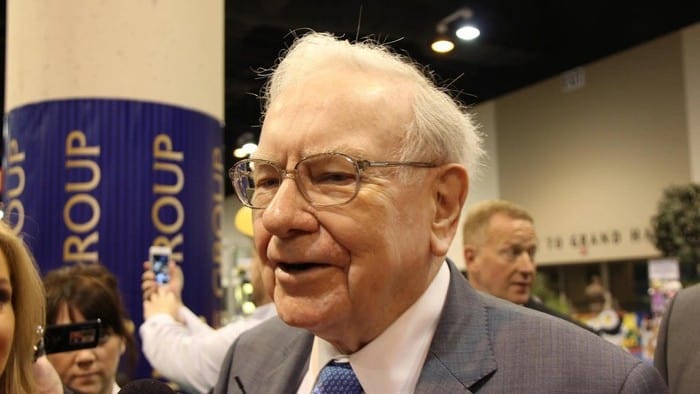
  • Buffett’s retirement imminent: Should you sell Berkshire Hathaway stock?

    Warren Buffett

    Like many investors around the world, I own Berkshire Hathaway Inc (NYSE: BRK.A)(NYSE: BRK.B) shares in my investing portfolio. And, like I suspect all of those shareholders, I am not looking forward to the imminent retirement of Berkshire’s CEO, and patron saint, Warren Buffett.

    Earlier this year, Buffett surprised investors (to the extent that a 95-year-old can) with the announcement of his retirement at the end of 2025. Buffett is set to step down as CEO of Berkshire on 1 January 2026, to be replaced by long-time lieutenant Greg Abel.

    It’s a momentous changing of the guard at Berkshire, which cannot be understated. Buffett has been CEO at the sprawling conglomerate since the early 1960s. Over that time, he rebuilt Berkshire Hathaway, with the help of the late Charlie Munger, from a failing textiles company to the US$1.1 trillion company it is today. That success was enabled by a compounded rate of return that is estimated to be about 20% per annum over those many decades – an unrivalled achievement in financial history.

    Almost every person who has bought Berkshire Hathaway stock in living memory has probably done so to try and hitch their financial wagons to that of Buffett. That includes this writer. After all, the track record has been there for all to see.

    But this spectacular era of American capitalism is sadly drawing towards its inevitable conclusion. Sure, Buffett has promised to remain as chairman of Berkshire. But no one can deny that this is the dawning of a new era for Berkshire.

    So, as we approach the final month of Buffett’s decades-long stint as Berkshire’s CEO, is it a good time to sell out of the company that he built?

    With Buffett retiring, is it time to sell Berkshire stock?

    Well, I don’t think so. I personally don’t plan to offload my shares anytime soon, anyway.

    There are two reasons why I will continue to hold Berkshire in my portfolio.

    The first is its nature. Although Buffett is stepping down from the top of Berkshire, his investments will remain. Warren Buffett has built his success on picking the very best businesses for Berkshire’s portfolio, and holding them indefinitely. They famously include Coca-Cola Co (NYSE: KO), American Express Co (NYSE: AXP), Apple Inc (NASDAQ: AAPL), and more recently, Alphabet Inc (NASDAQ: GOOG)(NASDAQ: GOOGL). But those are just some of the public ones. In addition, Berkshire owns a bevy of private companies outright. These include Duracell, Dairy Queen, See’s Candies, BNSF Railway, and Geico.

    Buffett picked these companies for a reason, and on the assumption that they will continue to pour ever-rising profits into Berkshire’s coffers. This is Buffett’s legacy that I think will continue to deliver long after he steps off the stage.

    Secondly, it’s my view that Buffett has set the company up well for success. The succession plan has been in the works for years and has the legendary investor’s full approval (and influence). Although I’d wager every shareholder would be keen to see Buffett remain at the helm until Judgement Day, this is the next-best option in my view.

    Here’s some of what Buffett has said on the succession himself:

    I would leave the capital allocation to Greg and he understands businesses extremely well. If you understand businesses, you’ll understand common stocks… I think the prospects of Berkshire will be better under Greg’s management than mine.

    Abel has also stated that:

    It’s really the investment philosophy and how Warren and the team have allocated capital for the past 60 years. Really, it will not change. And it’s the approach we’ll take as we go forward.

    Although I am sad to see Buffett step away from the company he built from almost nothing, I am confident that its future is rosy. As such, I won’t be selling my shares anytime soon.

    The post Buffett’s retirement imminent: Should you sell Berkshire Hathaway stock? appeared first on The Motley Fool Australia.

    Should you invest $1,000 in Berkshire Hathaway Inc. right now?

    Before you buy Berkshire Hathaway Inc. shares, consider this:

    Motley Fool investing expert Scott Phillips just revealed what he believes are the 5 best stocks for investors to buy right now… and Berkshire Hathaway Inc. wasn’t one of them.

    The online investing service he’s run for over a decade, Motley Fool Share Advisor, has provided thousands of paying members with stock picks that have doubled, tripled or even more.*

    And right now, Scott thinks there are 5 stocks that may be better buys…

    * Returns as of 18 November 2025

    .custom-cta-button p {
    margin-bottom: 0 !important;
    }

    More reading

    American Express is an advertising partner of Motley Fool Money. Motley Fool contributor Sebastian Bowen has positions in Alphabet, American Express, Apple, Berkshire Hathaway, and Coca-Cola. The Motley Fool Australia’s parent company Motley Fool Holdings Inc. has positions in and has recommended Alphabet, Apple, and Berkshire Hathaway. The Motley Fool Australia has recommended Alphabet, Apple, and Berkshire Hathaway. The Motley Fool has a disclosure policy. This article contains general investment advice only (under AFSL 400691). Authorised by Scott Phillips.

  • The 10-year wealth plan: how to turn small savings into life-changing results

    A businessman compares the growth trajectory of property versus shares.

    Most people assume you need a huge salary, an early inheritance or perfect market timing to build real wealth.

    The truth is far from that. With the right plan, even modest weekly savings can compound into something genuinely life-changing over a decade.

    The key is consistency, smart asset selection and giving compounding the time it needs to quietly work in your favour.

    Here’s how a small savings strategy can transform your financial future over the next 10 years.

    Start small

    You don’t need to invest thousands at a time. Even $100 a week can make a big difference. What matters most is being consistent.

    At a 10% average annual return (not guaranteed, but historically achievable for a diversified ASX share portfolio), investing $100 a week over 10 years could grow to more than $85,000. That’s from saving small amounts most people barely notice leaving their bank account.

    The magic doesn’t come from one big contribution, it comes from hundreds of small ones compounding quietly in the background.

    Focus on long-term growth

    To build real wealth, your money needs to work where long-term growth is most likely. For Australian investors, this usually means blending a mix of blue-chip ASX shares, global growth leaders, and ETFs for diversification.

    A simple and effective small savings portfolio could include the likes of the Vanguard Australian Shares Index ETF (ASX: VAS), the iShares S&P 500 ETF (ASX: IVV), and perhaps a thematic booster such as the Betashares Asia Technology Tigers ETF (ASX: ASIA).

    These types of investments allow you to benefit from global economic growth, rising corporate earnings, and powerful technology trends, all without needing to pick individual stocks.

    Stick with the plan

    The next 10 years won’t be smooth. There will be corrections, recessions, elections, supply chain shocks, and headlines designed to trigger panic. The investors who achieve the best long-term outcomes are rarely the ones who react to every wobble. They stay invested.

    If anything, downturns make your plan even more powerful. Regular contributions automatically buy more units at cheaper prices, which is known as dollar-cost averaging.

    Give compounding the time it needs

    Compounding doesn’t reward the impatient. In the early years, it feels slow. But by year seven, eight, nine and ten, the curve begins to steepen and that’s when most of your gains start to appear.

    And the real breakthrough comes when you stick with the plan beyond 10 years. The difference between quitting early and letting compounding explode in the later years is enormous.

    For example, $100 a week could turn into $85,000 after 10 years, then approximately $315,000 after 10 more years.

    Foolish takeaway

    You don’t need perfect timing or large sums to build financial security, just a steady plan, the right investments and patience. Small contributions, invested consistently for a decade, can snowball into a foundation for long-term wealth.

    The post The 10-year wealth plan: how to turn small savings into life-changing results appeared first on The Motley Fool Australia.

    Should you invest $1,000 in Betashares Capital Ltd – Asia Technology Tigers Etf right now?

    Before you buy Betashares Capital Ltd – Asia Technology Tigers Etf shares, consider this:

    Motley Fool investing expert Scott Phillips just revealed what he believes are the 5 best stocks for investors to buy right now… and Betashares Capital Ltd – Asia Technology Tigers Etf wasn’t one of them.

    The online investing service he’s run for over a decade, Motley Fool Share Advisor, has provided thousands of paying members with stock picks that have doubled, tripled or even more.*

    And right now, Scott thinks there are 5 stocks that may be better buys…

    * Returns as of 18 November 2025

    .custom-cta-button p {
    margin-bottom: 0 !important;
    }

    More reading

    Motley Fool contributor James Mickleboro has positions in Betashares Capital – Asia Technology Tigers Etf. The Motley Fool Australia’s parent company Motley Fool Holdings Inc. has positions in and has recommended iShares S&P 500 ETF. The Motley Fool Australia has recommended iShares S&P 500 ETF. The Motley Fool has a disclosure policy. This article contains general investment advice only (under AFSL 400691). Authorised by Scott Phillips.

  • 2 top ASX dividend shares for retirees

    A mature aged couple dance together in their kitchen while they are preparing food in a joyful scene.

    If you’re retired, or at least approaching retirement, chances are you have different goals from other ASX investors. While those who are working can enjoy a primary stream of income from their jobs, retirees often have to depend on passive, secondary income, either from ASX dividend shares or other sources, to pay their bills.

    That makes maximising dividend income a priority for these investors, even above maximising overall returns.

    With this in mind, let’s discuss three top ASX dividend shares that retirees might like to consider buying for income today.

    Two top ASX dividend shares for a comfortable retirement

    Vanguard Australian Shares High Yield ETF (ASX: VHY)

    First up, we have this exchange-traded fund (ETF) from Vanguard. As you might know, ETFs usually hold an underlying portfolio of other shares that one buys a stake in when purchasing that ETF’s units. In this case, VHY holds about 75 ASX dividend shares that have all been selected based on both their history of paying out sizeable dividends, as well as their perceived capacity to continue to do so.

    In this ETF’s portfolio, you’ll typically find the usual suspects, ranging from the major banks to BHP Group Ltd (ASX: BHP), Telstra Group Ltd (ASX: TLS), Woodside Energy Group Ltd (ASX: WDS), and Transurban Group (ASX: TCL).

    The Vanguard Australian Shares High Yield ETF pays out a quarterly dividend distribution. At recent pricing, VHY units were trading at a trailing yield of 8.54% (although investors shouldn’t expect that to continue indefinitely).

    Coles Group Ltd (ASX: COL)

    Next up, we have what is no doubt a familiar face in Coles Group. Coles runs the second-largest network of supermarkets in the country, as well as the Liquorland bottle-shop chains. I like this ASX dividend share for income as it is able to pay out its fully franked dividends out of a highly defensive earnings base. As its stores sell items that we tend to need rather than want, it should see customers continuing to come through its doors as long as it remains competitive with its pricing.

    Coles has also spent the seven years since its ASX listing building up a strong dividend track record. It has delivered an annual dividend increase to its shareholders since 2019, including in 2025.

    This ASX dividend share has increased markedly in value over the past two years or so, which has whittled its dividend yield somewhat. Even so, the company still has a fully franked yield of just over 3% on the table.

    The post 2 top ASX dividend shares for retirees appeared first on The Motley Fool Australia.

    Should you invest $1,000 in Coles Group Limited right now?

    Before you buy Coles Group Limited shares, consider this:

    Motley Fool investing expert Scott Phillips just revealed what he believes are the 5 best stocks for investors to buy right now… and Coles Group Limited wasn’t one of them.

    The online investing service he’s run for over a decade, Motley Fool Share Advisor, has provided thousands of paying members with stock picks that have doubled, tripled or even more.*

    And right now, Scott thinks there are 5 stocks that may be better buys…

    * Returns as of 18 November 2025

    .custom-cta-button p {
    margin-bottom: 0 !important;
    }

    More reading

    Motley Fool contributor Sebastian Bowen has no position in any of the stocks mentioned. The Motley Fool Australia’s parent company Motley Fool Holdings Inc. has positions in and has recommended Transurban Group. The Motley Fool Australia has positions in and has recommended Telstra Group and Transurban Group. The Motley Fool Australia has recommended BHP Group and Vanguard Australian Shares High Yield ETF. The Motley Fool has a disclosure policy. This article contains general investment advice only (under AFSL 400691). Authorised by Scott Phillips.