Category: Stock Market

  • Buy these dirt cheap ASX dividend stocks before it’s too late

    Businessman working and using Digital Tablet new business project finance investment at coffee cafe.

    Are you looking for some new ASX dividend stocks to buy?

    If you are, then it could be worth considering the two listed below.

    They have been named as buys and are tipped to offer good dividend yields in the near term. Here’s what you need to know about them:

    Rural Funds Group (ASX: RFF)

    Bell Potter thinks that Rural Funds could be an ASX dividend stocks to buy.

    It owns a diversified portfolio of Australian agricultural assets. From these 63 properties across five states, its strategy is to generate capital growth and income from developing and leasing agricultural assets.

    The broker thinks its shares are significantly undervalued at current levels. It said:

    Our Buy rating is unchanged. The -~35% discount to market NAV remain higher than average (~6% premium since listing) and likely reflects the proportion of assets that are underearning as operating farms. With a continued improvement in most counterparty profitability indicators in recent months (i.e. cattle, almond and macadamia nut prices), resilience in farming asset values and the progress made in creating headroom in funding lines to complete the macadamia development we see this as excessive.

    As for income, Bell Potter expects dividends per share of 11.7 cents in both FY 2026 and FY 2027. Based on its current share price of $1.95, this would mean dividend yields of 6% for both years.

    The broker currently has a buy rating and $2.45 price target on its shares, which implies potential upside of 25% for investors.

    Universal Store Holdings Ltd (ASX: UNI)

    Another ASX dividend stock that Bell Potter is positive on is Universal Store.

    It is a youth fashion focused retailer behind the Universal Store, Thrills, and Perfect Stranger brands.

    The broker also thinks that its shares are being undervalued at present. Especially given how well it is executing on its rollout strategy. It said:

    Universal Store Holdings is a leading youth focused apparel, footwear and accessories retailer in Australia. UNI will continue to increase store numbers over the next few years, supporting earnings growth of 10% p.a.. Valuation looks attractive, trading on a forward P/E of ~16x. UNI is a quality small cap (ROE ~26%) that is executing on its rollout strategy.

    Bell Potter expects this to underpin fully franked dividends of 37.3 cents in FY 2026 and then 41.4 cents in FY 2027. Based on its current share price of $8.65, this represents dividend yields of 4.3% and 4.8%, respectively.

    The broker has a buy rating and $10.50 price target on its shares. This suggests that upside of 20%+ is possible from current levels.

    The post Buy these dirt cheap ASX dividend stocks before it’s too late appeared first on The Motley Fool Australia.

    Should you invest $1,000 in Rural Funds Group right now?

    Before you buy Rural Funds Group shares, consider this:

    Motley Fool investing expert Scott Phillips just revealed what he believes are the 5 best stocks for investors to buy right now… and Rural Funds Group wasn’t one of them.

    The online investing service he’s run for over a decade, Motley Fool Share Advisor, has provided thousands of paying members with stock picks that have doubled, tripled or even more.*

    And right now, Scott thinks there are 5 stocks that may be better buys…

    * Returns as of 18 November 2025

    .custom-cta-button p {
    margin-bottom: 0 !important;
    }

    More reading

    Motley Fool contributor James Mickleboro has positions in Universal Store. The Motley Fool Australia’s parent company Motley Fool Holdings Inc. has no position in any of the stocks mentioned. The Motley Fool Australia has positions in and has recommended Rural Funds Group. The Motley Fool Australia has recommended Universal Store. The Motley Fool has a disclosure policy. This article contains general investment advice only (under AFSL 400691). Authorised by Scott Phillips.


  • It’s time to buy: 1 Australian stock that hasn’t been this cheap in years

    a man sits at his desk wearing a business shirt and tie and has a hearty laugh at something on his mobile phone.

    If you’re looking for a high-quality Australian tech stock trading well below what analysts believe it is worth, Xero Ltd (ASX: XRO) may be the opportunity hiding in plain sight.

    After a bruising year for ASX technology names and widespread concern about an AI-driven selloff, Xero’s share price has cratered.

    This is a level that implies a dramatically weaker future than analysts actually expect.

    And according to a note out of Macquarie, the current price simply doesn’t reflect Xero’s long-term earnings power. In fact, the broker argues that the market is mispricing the company’s US opportunity entirely.

    Macquarie currently has an outperform rating and a $230.30 price target on Xero. Based on its current share price, this implies potential upside of 92% for investors over the next 12 months.

    Why Xero looks undervalued today

    Macquarie’s highlights that today’s share price suggests that from FY 2028 Xero will miss the Rule of 40, which is a benchmark for high-performing software stocks, until FY 2033.

    That means the market is pricing in a dramatic slowdown in growth after FY 2-28, despite evidence to the contrary.

    The broker believes that its current valuation assumes Xero’s core business slows to 12% annualised revenue growth beyond FY 2028 and never reaches the free-cash-flow margins achieved by its key competitor, Intuit (NASDAQ: INTU). Macquarie stresses that these assumptions are far too conservative.

    The US could be the game-changer

    One of the most important points that Macquarie makes is that the US market is finally showing the same conditions that historically drove Xero’s strongest growth in other regions.

    It notes that payment digitisation and cloud-accounting adoption are accelerating across the US, which has been a missing ingredient in past years. Xero’s recent Melio acquisition gives the company a powerful distribution network and access to ~18 million small businesses via syndication partners. It said:

    Management are moving quickly, with deal close 2 months earlier than expected. This coincides with Trump’s digitisation of payments gaining momentum. The IRS is phasing out paper refund checks from Sep 30 2025 and pushing customers to digital rails. Moreover, the GENIUS Act and the updating/adoption of FedNOW & FedRamp are pushing more customers to digital rails and digital tax. Historically, these are the two necessary preconditions for XRO to grow strongly in a market, and they are manifesting in the US now.

    Macquarie describes this as a “perfect storm” in Xero’s favour and highlights that there is no clear number-two competitor in the US, and Intuit’s growing focus on the mid-market leaves Xero’s core small-business segment under-served.

    Should you buy this Australian stock?

    With the stock down sharply and Macquarie forecasting significant upside as its US strategy unfolds, Xero looks like one of the most attractive opportunities on the ASX right now.

    As a result, this is one Australian stock that I would happily buy more of at the current price.

    The post It’s time to buy: 1 Australian stock that hasn’t been this cheap in years appeared first on The Motley Fool Australia.

    Should you invest $1,000 in Macquarie Group Limited right now?

    Before you buy Macquarie Group Limited shares, consider this:

    Motley Fool investing expert Scott Phillips just revealed what he believes are the 5 best stocks for investors to buy right now… and Macquarie Group Limited wasn’t one of them.

    The online investing service he’s run for over a decade, Motley Fool Share Advisor, has provided thousands of paying members with stock picks that have doubled, tripled or even more.*

    And right now, Scott thinks there are 5 stocks that may be better buys…

    * Returns as of 18 November 2025

    .custom-cta-button p {
    margin-bottom: 0 !important;
    }

    More reading

    Motley Fool contributor James Mickleboro has positions in Xero. The Motley Fool Australia’s parent company Motley Fool Holdings Inc. has positions in and has recommended Intuit, Macquarie Group, and Xero. The Motley Fool Australia has positions in and has recommended Macquarie Group and Xero. The Motley Fool has a disclosure policy. This article contains general investment advice only (under AFSL 400691). Authorised by Scott Phillips.

  • Netflix’s 10-for-1 stock split: Time to buy before it’s too late?

    Person using a remote to flick through Netflix.

    This article was originally published on Fool.com. All figures quoted in US dollars unless otherwise stated.

    Key Points

    • Netflix began trading at its post-10-for-1 stock split price last Monday.
    • The stock has gotten cheaper since its split.
    • Netflix stock today is 50x more profitable today than it was nine years ago.

    It’s been a week now since Netflix (NASDAQ: NFLX) stock split its stock 10-for-1, transforming a $1,125-per-share stock into a $112.50-per-share stock in the blink of an eye — but doing absolutely nothing to change the business. And do you know what? During that week, Netflix stock haas gotten even cheaper, falling from $112.50 to close at $110 on Monday, and continuing to fall to just $104 and change today. 

    And there’s still no substantive reason for this.

    Netflix stock just got cheaper.

    What does this mean for you, the investor? Well, let’s review. In 2016, Netflix shares cost even more than they do today — about $115 pre-split. But Netflix was earning a lot less than it is today. Full-year profit was about $187 million in 2016, or about $0.04 per share.

    Nine years later, Netflix stock once again costs just a little over $100 per share (post-split, though, so it’s really up about tenfold in price). Yet Netflix earned $39 billion last year, or $1.98 per share. That’s 50 times more profit today, on a stock that costs only 10 times more.

    So effectively, for every $1 you invest in Netflix today instead of nine years ago, you’re earning five times more profit. That sounds like a pretty good deal to me. What’s more, with the stock falling 7% in price over the past week, this deal is getting even better!

    Long story short, if you didn’t take advantage of Netflix’s bargain price after its stock split, last week, there’s still time to do so. Granted, you still need to decide for yourself whether Netflix stock is worth its valuation, currently 42.5 times trailing earnings, with a long-term expected growth rate of 25%. But if you do think Netflix stock is a “buy,” then no, it’s not “too late” to buy at all.

    Indeed, you just got rewarded for waiting… with an even better stock price.

    This article was originally published on Fool.com. All figures quoted in US dollars unless otherwise stated.

    The post Netflix’s 10-for-1 stock split: Time to buy before it’s too late? appeared first on The Motley Fool Australia.

    This article was originally published on Fool.com. All figures quoted in US dollars unless otherwise stated.

    Should you invest $1,000 in Netflix right now?

    Before you buy Netflix shares, consider this:

    Motley Fool investing expert Scott Phillips just revealed what he believes are the 5 best stocks for investors to buy right now… and Netflix wasn’t one of them.

    The online investing service he’s run for over a decade, Motley Fool Share Advisor, has provided thousands of paying members with stock picks that have doubled, tripled or even more.*

    And right now, Scott thinks there are 5 stocks that may be better buys…

    * Returns as of 18 November 2025

    .custom-cta-button p { margin-bottom: 0 !important; }

    This article was originally published on Fool.com. All figures quoted in US dollars unless otherwise stated.

    More reading

    Rich Smith has no position in any of the stocks mentioned. The Motley Fool Australia’s parent company Motley Fool Holdings Inc. has positions in and has recommended Netflix. The Motley Fool Australia has recommended Netflix. The Motley Fool has a disclosure policy. This article contains general investment advice only (under AFSL 400691). Authorised by Scott Phillips.
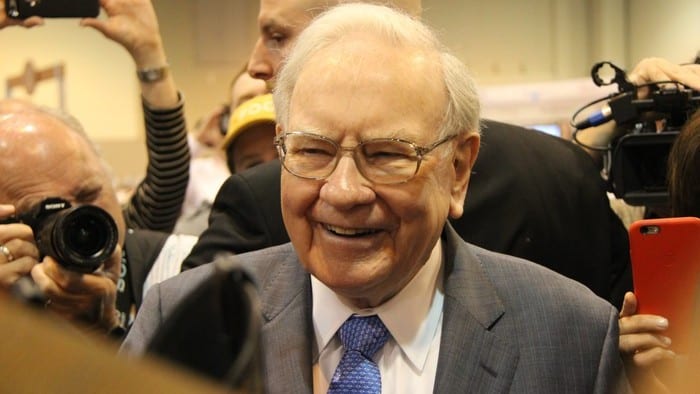
  • 5 things to watch on the ASX 200 on Thursday

    Business woman watching stocks and trends while thinking

    On Wednesday, the S&P/ASX 200 Index (ASX: XJO) had another strong session and raced higher. The benchmark index rose 0.8% to 8,606.5 points.

    Will the market be able to build on this on Thursday? Here are five things to watch:

    ASX 200 expected to rise again

    The Australian share market looks set for another positive day following a strong night on Wall Street. According to the latest SPI futures, the ASX 200 is expected to open the day 27 points or 0.3% higher this morning. In late trade in the United States, the Dow Jones is up 0.85%, the S&P 500 is up 0.85%, and the Nasdaq is 0.95% higher.

    Oil prices rise

    ASX 200 energy shares including Beach Energy Ltd (ASX: BPT) and Santos Ltd (ASX: STO) could have a good session on Thursday after oil prices pushed higher overnight. According to Bloomberg, the WTI crude oil price is up 1.1% to US$58.55 a barrel and the Brent crude oil price is up 0.85% to US$63.01 a barrel. Traders were buying oil after it hit a one-month low.

    QBE update

    All eyes will be on QBE Insurance Group Ltd (ASX: QBE) shares today when the insurance giant releases its third quarter update. Commenting on its expectations, Bell Potter said: “We anticipate a relatively benign quarter. Short bond yields have been stable, but H1 saw strong returns on risk assets. Premium rate increases remain positive but have been slowing (Q2 rates were +0.8% vs pcp) and we will be watching whether these have flattened out or continued to soften. Inflation remains present and this may be storing up problems for the combined ratio (COR), so there will be a focus on whether the company continues to expect a COR of ~92.5%.”

    Gold price rises

    It could be a good session for ASX 200 gold shares Newmont Corporation (ASX: NEM) and Northern Star Resources Ltd (ASX: NST) on Thursday after the gold price pushed higher. According to CNBC, the gold futures price is up 0.6% to US$4,164.1 an ounce. This was driven by increasing US interest rate cut hopes.

    Buy Temple & Webster shares

    Bell Potter thinks investors should be buying Temple & Webster Group Ltd (ASX: TPW) shares after they crashed on Wednesday. This morning, the broker has reaffirmed its buy rating with a reduced price target of $19.50. It said: “Our views are unchanged of TPW’s ability to outperform over the long term as market share capture in an expanded TAM is expedited with range, pricing/scale advantages, backed by a strong balance sheet (+$150m cash). Trading at ~2x EV/Sales post the ~40% correction in the share price from the recent peak, we see risk-reward heading into the Feb 1H result and continue to see a buying opportunity. Maintain BUY.”

    The post 5 things to watch on the ASX 200 on Thursday appeared first on The Motley Fool Australia.

    Should you invest $1,000 in Beach Energy Limited right now?

    Before you buy Beach Energy Limited shares, consider this:

    Motley Fool investing expert Scott Phillips just revealed what he believes are the 5 best stocks for investors to buy right now… and Beach Energy Limited wasn’t one of them.

    The online investing service he’s run for over a decade, Motley Fool Share Advisor, has provided thousands of paying members with stock picks that have doubled, tripled or even more.*

    And right now, Scott thinks there are 5 stocks that may be better buys…

    * Returns as of 18 November 2025

    .custom-cta-button p {
    margin-bottom: 0 !important;
    }

    More reading

    Motley Fool contributor James Mickleboro has positions in Temple & Webster Group. The Motley Fool Australia’s parent company Motley Fool Holdings Inc. has positions in and has recommended Temple & Webster Group. The Motley Fool Australia has recommended Temple & Webster Group. The Motley Fool has a disclosure policy. This article contains general investment advice only (under AFSL 400691). Authorised by Scott Phillips.

  • Want to build wealth? Here’s how Warren Buffett does it

    a smiling picture of legendary US investment guru Warren Buffett.

    When it comes to building wealth, few names carry more weight than Warren Buffett.

    The Oracle of Omaha has turned a modest investment partnership in the 1950s into one of the greatest fortunes ever created, largely by following a simple, disciplined approach that almost any investor can replicate.

    You don’t need millions, you don’t need special access, and you don’t need to pick the next hot tech stock.

    Buffett’s strategy is built on timeless principles that work just as well on the ASX as they do on Wall Street. Here’s how he does it, and how you can apply the same approach today with ASX shares.

    Buy wonderful businesses

    Warren Buffett learned early in his career that buying low-quality companies just because they looked cheap was a mistake. Instead, he shifted his focus toward what he famously calls wonderful businesses at fair prices.

    These are companies with strong competitive advantages, steady demand, dependable earnings and loyal customers. On the ASX, businesses like ResMed Inc. (ASX: RMD), Goodman Group (ASX: GMG) and Xero Ltd (ASX: XRO) all share similar characteristics. They have pricing power, sticky customer bases, and long runways for growth. These are the types of companies Buffett would likely gravitate toward.

    The lesson? Don’t chase what’s beaten down, chase what is durable.

    Think in decades

    One of Buffett’s most repeated lines is that “our favourite holding period is forever.”

    He doesn’t buy stocks to flip them. He buys them the way you would buy a house, to hold for the long term. That mindset allows compounding to do the heavy lifting. Just like ResMed steadily expands its addressable market or TechnologyOne Ltd (ASX: TNE) builds recurring revenue year after year, the companies you own become more valuable simply by doing what they do best.

    For everyday investors, this means resisting the urge to trade on every market wobble.

    Avoid speculation

    Warren Buffett famously avoids businesses he doesn’t fully understand, and that discipline has kept him out of more trouble than most investors realise. You don’t need to understand every industry. You just need to invest in ones where the drivers of long-term value are clear.

    In Australia, that might mean supermarkets, healthcare, infrastructure, technology, or property. You don’t have to chase crypto miners or speculative biotechs to build wealth. Buffett wouldn’t, and you don’t need to either.

    Keep it simple

    If Buffett were starting again today with a more modest sum, he has said repeatedly that he would simply buy a low-cost S&P 500 index fund and hold it for life.

    On the ASX, that’s as easy as buying an ETF like the iShares S&P 500 ETF (ASX: IVV).

    Sometimes the simplest strategy is also the best one.

    Foolish takeaway

    Buffett’s wealth wasn’t built on bold predictions, complex trading strategies, or timing the market. It was built on discipline, patience and buying high-quality businesses at sensible prices.

    Do those three things consistently and time will do the rest.

    The post Want to build wealth? Here’s how Warren Buffett does it appeared first on The Motley Fool Australia.

    Should you invest $1,000 in Goodman Group right now?

    Before you buy Goodman Group shares, consider this:

    Motley Fool investing expert Scott Phillips just revealed what he believes are the 5 best stocks for investors to buy right now… and Goodman Group wasn’t one of them.

    The online investing service he’s run for over a decade, Motley Fool Share Advisor, has provided thousands of paying members with stock picks that have doubled, tripled or even more.*

    And right now, Scott thinks there are 5 stocks that may be better buys…

    * Returns as of 18 November 2025

    .custom-cta-button p {
    margin-bottom: 0 !important;
    }

    More reading

    Motley Fool contributor James Mickleboro has positions in Goodman Group, ResMed, Technology One, and Xero. The Motley Fool Australia’s parent company Motley Fool Holdings Inc. has positions in and has recommended Goodman Group, ResMed, Technology One, Xero, and iShares S&P 500 ETF. The Motley Fool Australia has positions in and has recommended ResMed and Xero. The Motley Fool Australia has recommended Goodman Group, Technology One, and iShares S&P 500 ETF. The Motley Fool has a disclosure policy. This article contains general investment advice only (under AFSL 400691). Authorised by Scott Phillips.

  • Why I think these 2 ASX growth shares are great buys today

    Sport trainer talking to little girl who is climbing wooden ladder in gym.

    ASX growth shares can generate some of the strongest returns over time, but there can be plenty of volatility along the way. I’m going to highlight two companies that have exciting futures and whose recent valuation declines have made them appear better value.

    It’s normal for fast-growing businesses to sometimes experience a bump. There have been numerous sell-offs, for example, of Amazon and Microsoft shares over the last 30 years. Those dips were opportunities.

    I’m not expecting the following two businesses to do as well as the US tech giants, but the future looks positive for these stocks.

    Pro Medicus Ltd (ASX: PME)

    Pro Medicus is one of the most impressive ASX growth shares, in my view. It provides a full range of medical imaging software and services to hospitals, imaging centres, and healthcare groups in Australia and internationally.

    The company is winning a lot of new contracts, which is driving its earnings higher at a rapid rate. In this month alone, it has announced multiple contracts worth a total of $73 million. Large clients are clearly loving what they’re seeing with the offering.

    This new revenue is extremely valuable to the business because it has an underlying operating profit (EBIT) margin of 74% (as of FY25). That means almost three-quarters of revenue is turning into EBIT, which is a very high proportion. This is helping drive the bottom line and dividends to higher levels at a growth rate of more than 30% (in FY25).

    Its FY25 revenue rose 31.9% and it seems the company is set to deliver further strong growth for the foreseeable future.

    The ASX growth share still has a high price-to-earnings (P/E) ratio, but it appears considerably cheaper after the Pro Medicus share price declined by 20% since July, as the chart below shows.

    Temple & Webster Group Ltd (ASX: TPW)

    This company sells homewares and furniture online. The ASX growth share took a hammering yesterday after delivering a trading update that didn’t live up to expectations. I think this is a long-term buying opportunity.

    Revenue between 1 July 2025 and 20 November 2025 grew by only 18% year over year, compared to the 28% growth achieved between 1 July and 11 August 2025. It’s clear there has been a major slowdown since August.

    However, the company has a long history of delivering strong growth, so I believe this is just a temporary hit for the ASX growth share rather than a permanent situation.

    For starters, the overall Australian furniture and homewares market only recently reached 20% online penetration. In the US and UK markets, online penetration has climbed to 29% and 35%, respectively, suggesting a further increase in e-commerce adoption by shoppers.

    With 18% revenue growth for the financial year to date, the company is still gaining market share, giving it more market power and economies of scale.

    The business noted a number of other positives in its AGM update – it’s starting to ship products to New Zealand, its home improvement revenue rose over 40% year over year, and the trade and commercial revenue increased 23% year over year.

    I’m expecting the company’s revenue to be significantly higher in five years, and the profit margins should climb thanks to operating leverage and specific efforts the ASX growth share is making to improve efficiencies, leverage AI, and enhance technology across the business.

    The post Why I think these 2 ASX growth shares are great buys today appeared first on The Motley Fool Australia.

    Should you invest $1,000 in Pro Medicus right now?

    Before you buy Pro Medicus shares, consider this:

    Motley Fool investing expert Scott Phillips just revealed what he believes are the 5 best stocks for investors to buy right now… and Pro Medicus wasn’t one of them.

    The online investing service he’s run for over a decade, Motley Fool Share Advisor, has provided thousands of paying members with stock picks that have doubled, tripled or even more.*

    And right now, Scott thinks there are 5 stocks that may be better buys…

    * Returns as of 18 November 2025

    .custom-cta-button p {
    margin-bottom: 0 !important;
    }

    More reading

    Motley Fool contributor Tristan Harrison has positions in Pro Medicus and Temple & Webster Group. The Motley Fool Australia’s parent company Motley Fool Holdings Inc. has positions in and has recommended Amazon, Microsoft, and Temple & Webster Group. The Motley Fool Australia’s parent company Motley Fool Holdings Inc. has recommended Pro Medicus and has recommended the following options: long January 2026 $395 calls on Microsoft and short January 2026 $405 calls on Microsoft. The Motley Fool Australia has recommended Amazon, Microsoft, Pro Medicus, and Temple & Webster Group. The Motley Fool has a disclosure policy. This article contains general investment advice only (under AFSL 400691). Authorised by Scott Phillips.

  • 2 reasons to distance yourself from Tesla in 2025, according to Warren Buffett logic

    Electric vehicle such as Tesla being charged at charging station.

    This article was originally published on Fool.com. All figures quoted in US dollars unless otherwise stated.

    Key Points

    • Warren Buffett evaluates companies based on reputation, management, and competitive advantage.
    • The CEO is a risk to the Tesla brand and leadership.
    • Tesla is losing market share despite industry growth.

    EV company Tesla (NASDAQ: TSLA) has had a rough year. One on hand, EV sales rose in quarter three, and the energy business is growing steadily. On the other hand, EV tax credits expired in September, and the Pew Research Center has polled declining support for solar and EVs. 

    While meaningful, these may be short-term headwinds. Going deeper, we’ll look at Tesla through the lens of Warren Buffett, one of the greatest investors of all time. Warren Buffett’s partner, Charlie Munger, strongly suggested that investors “invert, always invert” when considering investments.

    Here, we’ll invert by swapping “reasons to invest in Tesla” with “reasons to distance yourself from Tesla.” In doing so, we can quickly pinpoint who might be better off investing elsewhere. 

    1. Tesla’s CEO has reputation issues and lacks focus

    Trust is crucial to any business. Warren Buffett has said, “It takes 20 years to build a reputation and five minutes to ruin it. If you think about that, you’ll do things differently.” I think Tesla has stumbled more than once here. The EV company — CEO Elon Musk in particular — has built a reputation not just for excellent cars, but for partisan politics. That’s worrying.

    People associate Tesla’s brand with Elon Musk’s politics. A 2025 study by the nonpartisan National Bureau of Economic Research suggests that Tesla sales between October 2022 and April 2025 would have been 67-83% higher (1-1.26 million more vehicles sold) had the Tesla CEO avoided polarization. If so, this may be why trailing 12-month vehicle deliveries peaked at ~1.8m in Q3 of 2023. Despite slashing Tesla prices 20% in 2023, deliveries have remained flat or down.

    Mr. Musk also poses a growing risk to management. In a 1996 Berkshire Hathaway shareholder letter, Warren Buffett says, “Loss of focus is what most worries Charlie and me when we contemplate investing in businesses that in general look outstanding. All too often, we’ve seen value stagnate in the presence of hubris or of boredom that caused the attention of managers to wander.”

    Elon Musk’s attention seems sporadic. He has founded seven companies and is actively participating in six (Tesla, SpaceX, Neuralink, xAI, X.com, The Boring Company). In 2024-2025, he spent months at the White House running the Department of Government Efficiency (DOGE). After that, he floated the idea of a third political party to X.com users.

    The risk of Elon Musk losing focus on Tesla is so high that the company’s board of directors has released a letter to the public, urging shareholders to approve a pay package that could be worth a trillion dollars, in order to prevent Elon from leaving the company. Recently, shareholders approved the package.

    While the pay package does a good job of aligning incentives, it’s no guarantee that Elon Musk will prioritize Tesla.

    2. Tesla lacks a durable competitive advantage

    Competition is something to watch. In a 1999 Fortune Magazine interview with Carol Loomis, Warren Buffett says, “The key to investing is not assessing how much an industry is going to affect society, or how much it will grow, but rather determining the competitive advantage of any given company and, above all, the durability of that advantage.” Tesla produces excellent cars, and its growing automation efforts may significantly impact society. But it seems to lack a moat that protects its share of the EV market.

    Declining EV sales isn’t a global problem; it’s a Tesla problem. Trailing 12-month deliveries of Tesla vehicles reached a peak in 2023. However, global EV sales increased from over 13 million to 17 million between 2023 and 2024. In the U.S., Tesla’s home turf, sales of EVs rose from 1.2 to 1.3 million. All this indicates stiffer competition in what should be Tesla’s strongest region (the U.S.). Unfortunately, Tesla has far from recovered. By August 2025, Tesla’s U.S. market share of EVs fell from 80% to 38%, an eight-year low.

    Global competition is already stiff and rising. Chinese groups BYD (OTC: BYDDY) and Geely (OTC: GELYY) boast the greatest market share and are growing. (Berkshire Hathaway purchased BYD shares in 2008, selling in 2025 for a tidy profit.) According to a study by SNL Research, Tesla hasn’t just lost market share in every major market. It’s the only top global EV company with a negative growth rate (-11% between January and August 2025, by deliveries).

    I think it’s worth asking whether Tesla’s current business can withstand competition in EV sales, its biggest revenue generator. It had a first-mover advantage, but Tesla’s momentum is gone.

    Risk is leadership and competition

    If I were Warren Buffett, I’d take issue with Tesla’s CEO (poor reputation, unfocused) and lack of competitive advantage. Tesla’s CEO poses a long-term risk to trust and focus, and Tesla is losing market share to competition. I’ll be holding off on adding to my Tesla position until I’m confident that Tesla’s CEO will prioritize Tesla. Until then, I’m better off investing in higher-confidence businesses. 

    This article was originally published on Fool.com. All figures quoted in US dollars unless otherwise stated.

    The post 2 reasons to distance yourself from Tesla in 2025, according to Warren Buffett logic appeared first on The Motley Fool Australia.

    This article was originally published on Fool.com. All figures quoted in US dollars unless otherwise stated.

    Should you invest $1,000 in Tesla right now?

    Before you buy Tesla shares, consider this:

    Motley Fool investing expert Scott Phillips just revealed what he believes are the 5 best stocks for investors to buy right now… and Tesla wasn’t one of them.

    The online investing service he’s run for over a decade, Motley Fool Share Advisor, has provided thousands of paying members with stock picks that have doubled, tripled or even more.*

    And right now, Scott thinks there are 5 stocks that may be better buys…

    * Returns as of 18 November 2025

    .custom-cta-button p { margin-bottom: 0 !important; }

    This article was originally published on Fool.com. All figures quoted in US dollars unless otherwise stated.

    More reading

    Cole Tretheway owns Tesla stock. The Motley Fool Australia’s parent company Motley Fool Holdings Inc. has positions in and has recommended Tesla. The Motley Fool Australia’s parent company Motley Fool Holdings Inc. has recommended BYD Company. The Motley Fool Australia has no position in any of the stocks mentioned. The Motley Fool has a disclosure policy. This article contains general investment advice only (under AFSL 400691). Authorised by Scott Phillips.
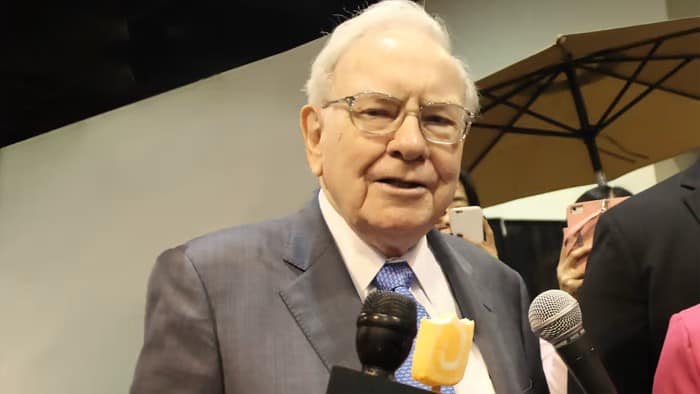
  • The most jaw-dropping number you may have missed from Nvidia’s latest earnings report

    Woman and man calculating a dividend yield.

    This article was originally published on Fool.com. All figures quoted in US dollars unless otherwise stated.

    Key Points

    • Nvidia stock surges after delivering yet another record quarter.
    • Nvidia is on its way to becoming the most profitable company in the world.
    • Nvidia’s sustained momentum depends on a handful of key customers.

    Nvidia (NASDAQ: NVDA) rocketed as much as 6.5% higher in after-hours trading on Nov. 19 after reporting third-quarter fiscal 2026 results and issuing fourth-quarter guidance.

    While some investors may have been focused on the revenue and earnings per share (EPS) beats, the most jaw-dropping number of the report was hiding in plain sight.

    Here’s what blew me away about Nvidia’s recent quarter, and why the artificial intelligence (AI) growth stock remains a great buy now.

    Nvidia’s revenue growth is mostly profit

    Nvidia grew revenue by $21.92 billion compared to the same quarter last year, but the cost of revenue grew by just $6.23 billion, and operating expenses only grew by $1.17 billion.  This means that Nvidia is converting the bulk of additional revenue into operating income.

    Despite fears that Nvidia’s margins would compress due to competition and increased research and development spending, Nvidia’s operating margin was actually higher this quarter than in Q3 of fiscal 2025. More importantly, Nvidia converted a staggering 56% of revenue into after-tax net income.

    With $31.91 billion in net income generated in the quarter, Nvidia will likely eclipse Alphabet within the next year as the most profitable U.S. company — and probably the most profitable company in the world unless oil prices, and, in turn, Saudi Aramco‘s profits surge.

    Nvidia is thriving, but risks remain

    Nvidia gets a lot of attention for its stock price, but the performance of the business is what long-term investors should continue to focus on.

    There’s simply no company in the world remotely close to Nvidia’s size that is growing earnings this quickly. The combination of industry leadership, high margins, and technology at the epicenter of AI data centers makes Nvidia a compelling long-term investment.

    As for the valuation, Nvidia is priced as if it is going to continue growing earnings by double digits quarter over quarter. For that to happen, its key customers — the hyperscalers building out data centers and training AI models — need to keep spending. These hyperscalers must continue to generate strong cloud computing growth from key customers across various sectors. But to do that, compute and AI spending need to be profitable for cloud customers. The whole value chain breaks if end user spending isn’t paying off.

    As excellent as Nvidia’s results are, it would be a mistake to overlook the double-edged sword that Nvidia holds as the undisputed leader in data center computing and networking. Nvidia is the single biggest beneficiary of increased AI capital, but it would also be one of the hardest-hit companies during a critical slowdown.

    Fortunately for long-term investors, Nvidia has $60.61 billion in cash, cash equivalents, and marketable securities on its balance sheet, compared to just $7.47 billion in long-term debt. Paired with its ultra-high margins, Nvidia is undoubtedly the best-positioned AI company to ride out a slowdown.

    Nvidia is still a buy

    Nvidia is the poster child of today’s top-heavy, premium-priced market. What separates Nvidia is that the stock’s run-up is supported by solid fundamentals, whereas other pockets of the market have valuations that are arguably overextended.

    All told, Nvidia is still a good buy for investors who believe in a sustained ramp-up in hyperscaler AI capital expenditures.

    This article was originally published on Fool.com. All figures quoted in US dollars unless otherwise stated.

    The post The most jaw-dropping number you may have missed from Nvidia’s latest earnings report appeared first on The Motley Fool Australia.

    This article was originally published on Fool.com. All figures quoted in US dollars unless otherwise stated.

    Should you invest $1,000 in Nvidia right now?

    Before you buy Nvidia shares, consider this:

    Motley Fool investing expert Scott Phillips just revealed what he believes are the 5 best stocks for investors to buy right now… and Nvidia wasn’t one of them.

    The online investing service he’s run for over a decade, Motley Fool Share Advisor, has provided thousands of paying members with stock picks that have doubled, tripled or even more.*

    And right now, Scott thinks there are 5 stocks that may be better buys…

    * Returns as of 18 November 2025

    .custom-cta-button p { margin-bottom: 0 !important; }

    This article was originally published on Fool.com. All figures quoted in US dollars unless otherwise stated.

    More reading

    Daniel Foelber has positions in Nvidia. The Motley Fool Australia’s parent company Motley Fool Holdings Inc. has positions in and has recommended Alphabet and Nvidia. The Motley Fool Australia has recommended Alphabet and Nvidia. The Motley Fool has a disclosure policy. This article contains general investment advice only (under AFSL 400691). Authorised by Scott Phillips.

  • Invest like Warren Buffett with this ASX ETF

    A head shot of legendary investor Warren Buffett speaking into a microphone at an event.

    Many ASX investors dream of investing in shares as Warren Buffett does. The legendary CEO of Berkshire Hathaway is universally regarded as one of the best stock pickers of all time, thanks to his remarkable returns over a more than 60-year career at the helm of Berkshire.

    This is obviously easier said than done, however. Although Buffett is almost impossible to emulate, thanks to his clear and irreplicable natural abilities, he has (most fortunately for fellow investors) been generous with his wisdom and guidance over the years.

    One of the traits he has consistently told investors to focus on when evaluating companies is the presence of a wide economic moat. This moat, a term Buffett himself coined, refers to an intrinsic competitive advantage a company can possess. This, like a moat around a castle, protects its profits from marauding competitors.

    There isn’t just one form of moat when it comes to stocks, though. It could be a powerful brand that inspires unswerving customer loyalty, like Apple or Nike arguably possess. It could be a price advantage that enables a company to sell goods or services at prices that its competitors cannot match, as Coles Group Ltd (ASX: COL) or Woolworths Group Ltd (ASX: WOW) do. Or it could be a product or service that a company provides that customers find difficult to stop using. Microsoft‘s Office suite or Transurban Group (ASX: TCL)’s toll roads come to mind here.

    But finding growing companies with durable moats that will stand the test of time, as well as those trading at the right price, is a hard ask. No investor has perfected the art quite like Buffett.

    Investing like Buffett with this ASX ETF

    However, one ASX exchange-traded fund (ETF) provides Australian investors with an easy path to replicate Buffett’s successful strategy. It’s the VanEck Morningstar Wide Moat ETF (ASX: MOAT).

    This ETF holds a relatively concentrated portfolio (40-60) of US stocks, whose moats have been screened and analysed by Morningstar and deemed attractive at current pricing.

    We can see this in some of its current holdings. These include Google-owner Alphabet, Adobe, Caterpillar, and Cadbury-owner Mondelez International.

    This ETF’s track record has demonstrated that its Buffett-inspired strategy is effective. Since its inception in June 2015, MOAT units have returned an average of 15.15% per annum. That doesn’t quite match Buffett’s long-term track record, but it’s an impressive figure nonetheless. And well above what the Australian market has delivered over the same timeframe.

    The VanEck Morningstar Wide Moat ETF charges a management fee of 0.49% per annum.

    The post Invest like Warren Buffett with this ASX ETF appeared first on The Motley Fool Australia.

    Should you invest $1,000 in VanEck Investments Limited – VanEck Vectors Morningstar Wide Moat ETF right now?

    Before you buy VanEck Investments Limited – VanEck Vectors Morningstar Wide Moat ETF shares, consider this:

    Motley Fool investing expert Scott Phillips just revealed what he believes are the 5 best stocks for investors to buy right now… and VanEck Investments Limited – VanEck Vectors Morningstar Wide Moat ETF wasn’t one of them.

    The online investing service he’s run for over a decade, Motley Fool Share Advisor, has provided thousands of paying members with stock picks that have doubled, tripled or even more.*

    And right now, Scott thinks there are 5 stocks that may be better buys…

    * Returns as of 18 November 2025

    .custom-cta-button p {
    margin-bottom: 0 !important;
    }

    More reading

    Motley Fool contributor Sebastian Bowen has positions in Alphabet, Apple, Caterpillar, Microsoft, Mondelez International, and VanEck Morningstar Wide Moat ETF. The Motley Fool Australia’s parent company Motley Fool Holdings Inc. has positions in and has recommended Adobe, Alphabet, Apple, Microsoft, Nike, and Transurban Group. The Motley Fool Australia’s parent company Motley Fool Holdings Inc. has recommended the following options: long January 2026 $395 calls on Microsoft, long January 2028 $330 calls on Adobe, short January 2026 $405 calls on Microsoft, and short January 2028 $340 calls on Adobe. The Motley Fool Australia has positions in and has recommended Transurban Group and Woolworths Group. The Motley Fool Australia has recommended Adobe, Alphabet, Apple, Microsoft, Nike, and VanEck Morningstar Wide Moat ETF. The Motley Fool has a disclosure policy. This article contains general investment advice only (under AFSL 400691). Authorised by Scott Phillips.

  • Is Google about to eat Nvidia’s lunch?

    iPhone with the logo and the word Google spelt multiple times in the background.

    This article was originally published on Fool.com. All figures quoted in US dollars unless otherwise stated.

    Key Points

    • Nvidia stock has soared in recent years thanks to soaring demand for its artificial intelligence (AI)-centric chips.
    • Recent reports suggest Google plans to entry the fray with a competing chip.
    • Investors should consider this news in context.
       

    Advances in the field of artificial intelligence (AI) are having a profound impact on the technology landscape. The ability of these cutting-edge algorithms to automate repetitive chores, streamline tasks, and generate original content is saving time, boosting productivity, and freeing users for higher-value work.

    One of the undisputed beneficiaries of the AI revolution has been Nvidia (NASDAQ: NVDA). The company pioneered the graphics processing units (GPUs) that have become the gold standard for AI, providing the computational horsepower necessary to run these advanced generative AI systems. Demand for these chips has fueled a meteoric rise in Nvidia’s sales and profits, driving its stock price higher.

    However, reports have emerged that Alphabet (NASDAQ: GOOGL) (NASDAQ: GOOG) wants a piece of the action and has fired a shot across Nvidia’s bow.

    A shot across the bow

    Reports emerged this week that Meta Platforms (NASDAQ: META) is in talks with Alphabet to deploy Google’s Tensor Processing Units (TPUs) to run AI models in its data centers as early as 2027. Google began designing these specialized processors in 2018 for use in its own cloud computing operations and has launched numerous upgrades to the TPUs in the ensuing years, which have since been adapted to facilitate AI. Google has never sold these processors, which have only been used in the company’s own data centers.

    However, recent reports suggest Google is considering selling TPUs to Meta, which would mark a significant shift in the company’s strategy and could spell trouble for Nvidia if true.

    Raw, number-crunching power, but at a price

    Nvidia has been the primary beneficiary of the AI revolution. This is in part due to the mass appeal of its GPUs. Not only are these chips arguably the gold standard for AI processing, but they have a distinct advantage compared to many of Nvidia’s rivals. Years ago, the company developed its CUDA architecture, a library of software tools that allowed developers to harness the raw, number-crunching power of GPUs when applying them to their own computationally intensive applications.

    This speedy processing comes at a cost, as the immense computational demands of AI tend to consume a great deal of energy in the process. On the other hand, Google’s TPUs were designed to be more specialized than GPUs, making them more energy-efficient. Until now, Google has kept these specialized chips to itself, but the company may be shifting gears as the AI revolution plays out.

    Billions of dollars at stake

    The fact that Google is considering a change to its strategy may simply come down to dollars and cents. Big tech companies have been shelling out billions of dollars on capital expenditures (capex) in order to position themselves to profit from the proliferation of AI — and that spending continues to escalate.

    • Alphabet plans to spend $92 billion on capex in 2025, up from $52 billion in 2024.
    • Amazon expects to spend $125 billion, up from $83 billion.
    • Meta plans to spend roughly $71 billion, up from $37 billion.
    • Microsoft is expected to spend $94 billion in fiscal 2026, up from $65 billion in fiscal 2025 (which ended in July).

    The year isn’t over, so the numbers could still increase. All told, big tech is expected to spend as much as $405 billion on AI capex in 2025, which helps to illustrate just how high the stakes are. If Google could capture just a small percentage of that spending, it could boost its own results at the expense of Nvidia.

    The fine print

    While the news of Google’s possible strategy shift has huge implications, it’s important to put this in context.

    While Nvidia doesn’t provide any specific details about its biggest customers, Wall Street has done some digging, and it is widely believed the list includes — you guessed it — Alphabet, Amazon, Meta, and Microsoft. Despite Alphabet developing and running its home-grown TPUs since 2018, it continues to be Nvidia’s biggest customer.

    This means that Google still needs Nvidia GPUs, used in tandem with its own TPUs, to get the combination of speed and energy efficiency it needs to compete. It further suggests that, even if the reports are true, and Google’s power-miserly chips cut into Nvidia’s business, the company will still be the dominant player in the data center GPU space.

    Current estimates put Nvidia’s market share at 92% of the data center GPU market, according to IoT Analytics. Even if Google succeeds in slicing off some share in this ever-growing market, Nvidia is well-positioned to continue to benefit from the secular tailwinds of AI.

    This article was originally published on Fool.com. All figures quoted in US dollars unless otherwise stated.

    The post Is Google about to eat Nvidia’s lunch? appeared first on The Motley Fool Australia.

    This article was originally published on Fool.com. All figures quoted in US dollars unless otherwise stated.

    Should you invest $1,000 in Alphabet right now?

    Before you buy Alphabet shares, consider this:

    Motley Fool investing expert Scott Phillips just revealed what he believes are the 5 best stocks for investors to buy right now… and Alphabet wasn’t one of them.

    The online investing service he’s run for over a decade, Motley Fool Share Advisor, has provided thousands of paying members with stock picks that have doubled, tripled or even more.*

    And right now, Scott thinks there are 5 stocks that may be better buys…

    * Returns as of 18 November 2025

    .custom-cta-button p { margin-bottom: 0 !important; }

    This article was originally published on Fool.com. All figures quoted in US dollars unless otherwise stated.

    More reading

    Danny Vena, CPA has positions in Alphabet, Amazon, Meta Platforms, Microsoft, and Nvidia. The Motley Fool Australia’s parent company Motley Fool Holdings Inc. has positions in and has recommended Alphabet, Amazon, Meta Platforms, Microsoft, and Nvidia. The Motley Fool Australia’s parent company Motley Fool Holdings Inc. has recommended the following options: long January 2026 $395 calls on Microsoft and short January 2026 $405 calls on Microsoft. The Motley Fool Australia has recommended Alphabet, Amazon, Meta Platforms, Microsoft, and Nvidia. The Motley Fool has a disclosure policy. This article contains general investment advice only (under AFSL 400691). Authorised by Scott Phillips.