
Category: Stock Market

  • Here’s the Qantas dividend forecast through to 2026

    A pilot stands in an empty passenger cabin smiling with his arms crossed looking excited

    In the past, Qantas Airways Limited (ASX: QAN) shares have been a good option for income investors.

    The airline operator regularly shared a decent portion of its profits with its shareholders each year. This often led to some attractive dividend yields.

    However, all that stopped in 2020 when the pandemic reared its ugly head and had Qantas and fellow airlines fighting for survival.

    Well, the good news is that not only has Qantas survived, but it is also arguably more profitable than ever now thanks to its post-COVID transformation.

    But what we are still yet to see is a dividend from Qantas.

    Will that change in the near future? Let’s now take a look and see what analysts are forecasting for the Qantas dividend through to 2026.

    Qantas dividend forecast

    According to a note out of Goldman Sachs, it believes that it will be a little too soon for dividends in FY 2024.

    So, if you’re on the lookout for income this year, you will be out of luck. But it certainly could be worth being patient.

    That’s because the broker is forecasting Qantas to pay a 30 cents per share dividend in FY 2025. Based on the current Qantas share price of $6.11, this will mean a dividend yield of 4.9%.

    The good news is that Goldman expects the airline operator to maintain its dividend at 30 cents per share in FY 2026. This will mean another 4.9% dividend yield for investors to look forward to receiving.

    But should you buy its shares for more than just its future dividends? Goldman thinks you should.

    Big returns

    The note reveals that the broker sees major upside potential for Qantas shares from current levels.

    Goldman has a buy rating and $8.05 price target on its shares. This implies potential upside of 32% for investors over the next 12 months.

    To put that into context, a $10,000 investment would be worth approximately $13,200 this time next year if Goldman is on the money with its recommendation.

    The broker commented:

    As a key beneficiary of the re-opening of the world post-COVID, we expect the airline’s traffic capacity to return to 95% of pre-COVID levels by FY24e, with the airline’s earnings capacity (EPS) expected to exceed that of pre-COVID levels by ~52%. We forecast a ~24% FY19-24e cumulative uplift in unit revenues (c. 4.4%pa), and ~50% drop-through of QAN’s A$1bn+ structural cost-out program. QAN’s current market capitalisation and enterprise value are 10% below and 11% below pre-COVID levels. As such, we believe QAN is not priced for a generic recovery, let alone prospects for improved earnings capacity. We continue to see upside associated with substantially improved MT earnings capacity.

    The post Here’s the Qantas dividend forecast through to 2026 appeared first on The Motley Fool Australia.

    Should you invest $1,000 in Qantas Airways Limited right now?

    Before you buy Qantas Airways Limited shares, consider this:

    Motley Fool investing expert Scott Phillips just revealed what he believes are the 5 best stocks for investors to buy right now… and Qantas Airways Limited wasn’t one of them.

    The online investing service he’s run for over a decade, Motley Fool Share Advisor, has provided thousands of paying members with stock picks that have doubled, tripled or even more.*

    And right now, Scott thinks there are 5 stocks that may be better buys…

    See The 5 Stocks
    *Returns as of 5 May 2024

    More reading

    Motley Fool contributor James Mickleboro has no position in any of the stocks mentioned. The Motley Fool Australia’s parent company Motley Fool Holdings Inc. has positions in and has recommended Goldman Sachs Group. The Motley Fool Australia has no position in any of the stocks mentioned. The Motley Fool has a disclosure policy. This article contains general investment advice only (under AFSL 400691). Authorised by Scott Phillips.


  • Should you manage your own superannuation?

    A mature age woman with a groovy short haircut and glasses, sits at her computer, pen in hand thinking about information she is seeing on the screen.

    Almost all of us would have a superannuation fund. After all, it’s a lawful requirement that any Australian citizen or permanent resident who is employed must be paid superannuation. This super in turn must be paid into a specific super fund for our retirements.

    Most Australians utilise the services of an external super fund provider for this purpose. There are hundreds of superannuation funds that manage Australians’ money on their behalf. But some of the most popular include AustralianSuper, Australian Retirement Trust, Aware Super and REST.

    However, some Australians prefer to manage their own superannuation through a self-managed super fund (SMSF). Those who choose to use an SMSF have to front up all of the (not insignificant) costs of managing their own superannuation. But in return, they get complete control over what assets their retirement savings are invested in.

    According to Australian Taxation Office (ATO) data released earlier this year, SMSFs made up 25% of all superannuation assets in Australia as of 30 June 2023. There were 610,000 SMSFs operating in Australia as of that date.

    Many ASX investors might like the sound of running their own super funds. At the end of the day, super is still our money. So today, let’s discuss who should manage their own superannuation.

    Who should manage their own superannuation with an SMSF?

    The idea of taking direct control of one’s super retirement fund might sound empowering. However, there are some important considerations to keep in mind.

    First, running your own SMSF is expensive. A super fund has to be structured as a trust, and trusts have to periodically pay expensive licensing and regulatory fees.

    It will only be cheaper to manage your own super if you’re assets are above a certain threshold. Here at the Fool, we’ve discussed how having at least $200,000 in super assets before starting an SMSF is essential. Having less than that can end up costing you more in fees compared with leaving your money in an external super fund. What’s more, you might need even more than that if you wish to match the long-term returns of your average external super fund.

    Further, since you will be responsible for your own super, you will lose important protections that other Australians enjoy, like theft or fraud protection. No one is going to bail you out if you make a poor investment decision and lose money in your super fund. Running an SMSF might also mean that your insurance regarding premature death or disability might be affected or voided.

    Finally, running your own super requires a huge amount of time. The government estimates that SMSF trustees spend more than eight hours a month (or over 100 hours a year) managing their SMSFs. That’s probably 100 times more than your average Australian.

    Foolish takeaway

    Running your own super fund with an SMSF might sound empowering or glamorous. But it requires a lot of time, money and discipline. There are also significant downsides that you should be aware of.

    So, it’s probably a good idea to seek professional financial and taxation advice before establishing your own super fund.

    The post Should you manage your own superannuation? appeared first on The Motley Fool Australia.

    Wondering where you should invest $1,000 right now?

    When investing expert Scott Phillips has a stock tip, it can pay to listen. After all, the flagship Motley Fool Share Advisor newsletter he has run for over ten years has provided thousands of paying members with stock picks that have doubled, tripled or even more.*

    Scott just revealed what he believes could be the ‘five best ASX stocks’ for investors to buy right now. We believe these stocks are trading at attractive prices and Scott thinks they could be great buys right now…

    See The 5 Stocks
    *Returns as of 5 May 2024

    More reading

    Motley Fool contributor Sebastian Bowen has no position in any of the stocks mentioned. The Motley Fool Australia’s parent company Motley Fool Holdings Inc. has no position in any of the stocks mentioned. The Motley Fool Australia has no position in any of the stocks mentioned. The Motley Fool has a disclosure policy. This article contains general investment advice only (under AFSL 400691). Authorised by Scott Phillips.
  • Buy these 4 ASX ETFs for income, growth, or mining exposure

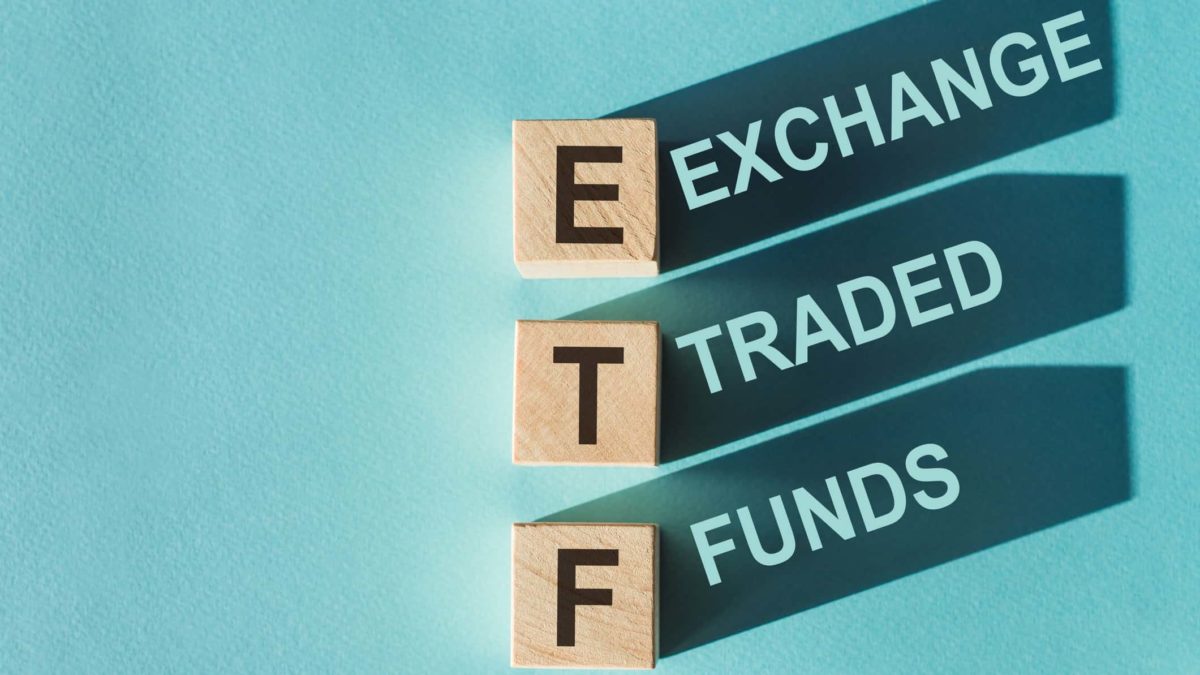
    ETF spelt out

    Due to the growing popularity of exchange traded funds (ETFs), there are now countless options out there for investors to choose from.

    For example, whether you’re looking for income, growth, or mining sector exposure, there’s an ASX ETF out there for you.

    Let’s now take a look at four ETFs that cover these areas of the market:

    BetaShares Global Cybersecurity ETF (ASX: HACK)

    The first ASX ETF we are going to look at is for growth investors. It is the BetaShares Global Cybersecurity ETF, which provides investors with exposure to the rapidly growing cybersecurity sector.

    Given how demand for cybersecurity services is expected to grow strongly over the coming decade as cybercrime becomes even more prevalent, this could be a great place to invest.

    Among the companies included in the fund are industry leaders such as Accenture, Cisco, Crowdstrike, and Palo Alto Networks.

    Betashares Global Uranium ETF (ASX: URNM)

    If you’re more interested in gaining exposure to the mining sector, then the Betashares Global Uranium ETF could be worth a look.

    It aims to track the performance of an index that provides exposure to a portfolio of leading companies in the global uranium industry.

    Betashares highlights that as nuclear power is increasingly being accepted as a safe, reliable, low-carbon energy source, demand for uranium is expected to increase materially in the future. This bodes well for the companies included in the fund such as Boss Energy Ltd (ASX: BOE) and Paladin Energy Ltd (ASX: PDN).

    ETFS Battery Tech & Lithium ETF (ASX: ACDC)

    Another option for mining sector exposure is the ETFS Battery Tech & Lithium ETF.

    It provides investors with access to companies throughout the lithium cycle. And with lithium stocks down heavily over past 12 months, now could be a good time to invest if you’re bullish on the long term demand outlook for lithium.

    Among its holdings are Mineral Resources Limited (ASX: MIN), Nissan, Pilbara Minerals Ltd (ASX: PLS), Renault, and Tesla.

    Vanguard Australian Shares High Yield ETF (ASX: VHY)

    Finally, if you are looking for a source of income, then you may want to look at the Vanguard Australian Shares High Yield ETF.

    It provides investors with easy access to many of the best ASX dividend shares on the Australian share market. Importantly, this is done with diversity in mind, limiting how much it invests in any particular industry or company.

    Among its holdings are giants such as BHP Group Ltd (ASX: BHP), Coles Group Ltd (ASX: COL), and Commonwealth Bank of Australia (ASX: CBA). At present, the ETF trades with a dividend yield of 4.9%.

    The post Buy these 4 ASX ETFs for income, growth, or mining exposure appeared first on The Motley Fool Australia.

    Should you invest $1,000 in Global X Battery Tech & Lithium Etf right now?

    Before you buy Global X Battery Tech & Lithium Etf shares, consider this:

    Motley Fool investing expert Scott Phillips just revealed what he believes are the 5 best stocks for investors to buy right now… and Global X Battery Tech & Lithium Etf wasn’t one of them.

    The online investing service he’s run for over a decade, Motley Fool Share Advisor, has provided thousands of paying members with stock picks that have doubled, tripled or even more.*

    And right now, Scott thinks there are 5 stocks that may be better buys…

    See The 5 Stocks
    *Returns as of 5 May 2024

    More reading

    Motley Fool contributor James Mickleboro has no position in any of the stocks mentioned. The Motley Fool Australia’s parent company Motley Fool Holdings Inc. has positions in and has recommended Accenture Plc, BetaShares Global Cybersecurity ETF, ETFS Battery Tech & Lithium ETF, Cisco Systems, CrowdStrike, Palo Alto Networks, and Tesla. The Motley Fool Australia’s parent company Motley Fool Holdings Inc. has recommended the following options: long January 2025 $290 calls on Accenture Plc and short January 2025 $310 calls on Accenture Plc. The Motley Fool Australia has positions in and has recommended BetaShares Global Cybersecurity ETF and Coles Group. The Motley Fool Australia has recommended Betashares Global Uranium Etf, CrowdStrike, and Vanguard Australian Shares High Yield ETF. The Motley Fool has a disclosure policy. This article contains general investment advice only (under AFSL 400691). Authorised by Scott Phillips.

  • Why this smashed ASX 200 share is a fundie’s top value pick

    a man peers through a broken brick wall to see grey clouds gathering beyond it

    ASX 200 share IDP Education Ltd (ASX: IEL) offers “stand-out value” for investors today after a 40% smashing over the past 12 months, a fundie says.

    IDP Education is an international education organisation that helps overseas students get into courses in Australia and other countries, including New Zealand, the United States, and the United Kingdom.

    The IDP Education share price has fallen by 40% over the past year to close at $16.05 on Friday.

    This compares to an 8.55% gain for the S&P/ASX 200 Index (ASX: XJO) over the same time period.

    Here’s why fundie Prasad Patkar is a fan of this ASX 200 education stock.

    Why this ASX 200 education share is a buy today

    Patkar is the head of investments at Platypus Asset Management, a Sydney-based wealth manager that oversees $5 billion in assets.

    Platypus’s Australian Equities Fund made Mercer’s top 10 list over one year after delivering a 15.71% return over the 12 months ending 30 April.

    Platypus describes the fund as a high-conviction growth fund that usually holds 25-40 ASX shares.

    It has exposure to ASX small-caps, and all of its selected stocks undergo a fundamental environmental, social, and corporate governance (ESG) analysis.

    The fund’s track record is an average 8.31% annual return since inception on 30 April 2006.

    Among the shares held within the fund today are IDP Education shares.

    Patkar reckons the ASX 200 education share is the most undervalued stock they currently hold.

    As reported in the Australian Financial Review (AFR), he puts this down to short-term regulatory challenges, and maintains that IDP is on track to gain competitive strength over the next one to two years.

    Patkar said:

    At the present time we think IDP Education is stand-out value.

    The business is facing regulatory headwinds in its key markets which we believe will dissipate over the next 12 to 24 months, and the business will emerge in a stronger position from a competitive standpoint than what it is today.

    According to CommBank, IDP Education shares are trading on a price-to-earnings (P/E) ratio of 26.77.

    Why overweight in ASX consumer discretionary stocks?

    IDP Education is an ASX 200 consumer discretionary share.

    The Australian Equities Fund is currently overweight in this sector despite high inflation and interest rates.

    Consumer discretionary stocks make up 14.35% of the fund, according to the latest fund update.

    However, the sector only comprises 7.28% of the ASX 300 Accumulation Index. (This is the index that Platypus aims to outperform (before fees and expenses) over a rolling three-year period.)

    Consumer discretionary is the third biggest sector position in the fund behind healthcare at 19.56% and materials at 18.39%.

    Patkar explains why they are overweight on ASX consumer discretionary stocks:

    If we have a high conviction in the investment case for a stock, that is the risk reward stacks up, we buy the maximum we can, subject only to liquidity constraints.

    Being overweight or underweight a sector is just an outcome.

    Other discretionary stocks held by the fund include ARB Corporation Ltd (ASX: ARB), Lovisa Holdings Ltd (ASX: LOV), Aristocrat Leisure Limited (ASX: ALL), and Domino’s Pizza Enterprises Ltd (ASX: DMP).

    Patkar said:

    We believe each of these businesses has resilience and defensive properties to withstand a moderation in consumer discretionary spending.

    The post Why this smashed ASX 200 share is a fundie’s top value pick appeared first on The Motley Fool Australia.

    Should you invest $1,000 in Idp Education right now?

    Before you buy Idp Education shares, consider this:

    Motley Fool investing expert Scott Phillips just revealed what he believes are the 5 best stocks for investors to buy right now… and Idp Education wasn’t one of them.

    The online investing service he’s run for over a decade, Motley Fool Share Advisor, has provided thousands of paying members with stock picks that have doubled, tripled or even more.*

    And right now, Scott thinks there are 5 stocks that may be better buys…

    See The 5 Stocks
    *Returns as of 5 May 2024

    More reading

    Motley Fool contributor Bronwyn Allen has positions in Domino’s Pizza Enterprises. The Motley Fool Australia’s parent company Motley Fool Holdings Inc. has positions in and has recommended ARB Corporation, Domino’s Pizza Enterprises, Idp Education, and Lovisa. The Motley Fool Australia has recommended ARB Corporation, Domino’s Pizza Enterprises, Idp Education, and Lovisa. The Motley Fool has a disclosure policy. This article contains general investment advice only (under AFSL 400691). Authorised by Scott Phillips.

  • How I plan to invest my tax cuts

    a man sits back from his laptop computer with both hands behind his head feeling happy to see the Brambles share price moving significantly higher today

    The recent Federal Budget contained some good economic news for almost all Australians. From 1 July, every single income taxpayer’s tax rate is set to fall.

    These tax cuts will mean that come the new financial year, everyone who earns income above the tax-free threshold of $18,200 per annum will have fewer dollars taken away by the taxman every paycheque.

    Chances are that most people won’t really notice these tax changes. After all, we tend not to miss what we don’t have. But we also tend to adjust to what we do have fairly easily. But I’m going to be making an effort to redirect the extra dollars I’ll be getting from these tax cuts into investments in ASX shares.

    I think investing in ASX shares is the most effective way for Australians to build additional wealth and retire earlier and more comfortably than they would by relying on their salaries, savings and superannuation.

    But ASX shares build wealth most effectively when we properly harness the power of compound interest.

    Compounding works more effectively the more time and money we give it. As such, I try and invest every spare dollar that I can, as soon as I can, into buying more ASX shares.

    So, with the financial boost of a tax cut coming our way, I’m looking forward to ramping up my investing firepower.

    Investing my tax cuts in ASX shares

    The exact ASX shares I will buy with my tax cut money all depends on what the markets are doing at the time.

    Ideally, I’d love to add to some of my favourite portfolio positions. These include Wesfarmers Ltd (ASX: WES) and Washington H. Soul Pattinson and Co Ltd (ASX: SOL). As well as the VanEck Morningstar Wide Moat ETF (ASX: MOAT) and MFF Capital Investments Ltd (ASX: MFF).

    However, as of today, most of these investments are trading pretty close to all-time highs. If this continues, I might decide that the risk-reward balance isn’t attractive enough to justify additional investments using my tax-cut money in the next few months.

    As such, I might turn to some new positions. As I outlined yesterday, these could include Infratil Ltd (ASX: IFT), or the Regal Investment Fund (ASX: RF1). Or perhaps the high-flying L1 Long Short Fund Ltd (ASX: LSF).

    If I don’t like where those investments are priced at, I would probably deploy my new tax-cut cash into simple index funds like the Vanguard Australian Shares Index ETF (ASX: VAS). I think these investments are a great choice when all else fails the valuation test.

    All in all, I expect any additional dollars I get from the tax cuts after 1 July to end up in the share market. In my view, this is the best choice for anyone wishing to build wealth as effectively as possible.

    The post How I plan to invest my tax cuts appeared first on The Motley Fool Australia.

    Should you invest $1,000 in Infratil Limited right now?

    Before you buy Infratil Limited shares, consider this:

    Motley Fool investing expert Scott Phillips just revealed what he believes are the 5 best stocks for investors to buy right now… and Infratil Limited wasn’t one of them.

    The online investing service he’s run for over a decade, Motley Fool Share Advisor, has provided thousands of paying members with stock picks that have doubled, tripled or even more.*

    And right now, Scott thinks there are 5 stocks that may be better buys…

    See The 5 Stocks
    *Returns as of 5 May 2024

    More reading

    Motley Fool contributor Sebastian Bowen has positions in Mff Capital Investments, VanEck Morningstar Wide Moat ETF, Vanguard Australian Shares Index ETF, Washington H. Soul Pattinson and Company Limited and Wesfarmers. The Motley Fool Australia’s parent company Motley Fool Holdings Inc. has positions in and has recommended Washington H. Soul Pattinson and Company Limited and Wesfarmers. The Motley Fool Australia has positions in and has recommended Washington H. Soul Pattinson and Company Limited and Wesfarmers. The Motley Fool Australia has recommended VanEck Morningstar Wide Moat ETF. The Motley Fool has a disclosure policy. This article contains general investment advice only (under AFSL 400691). Authorised by Scott Phillips.

  • 5 stellar ASX growth shares to buy for strong returns

    Two happy excited friends in euphoria mood after winning in a bet with a smartphone in hand.

    If you’re a fan of ASX growth shares, then you will be pleased to know that analysts are predicting strong returns from the five listed below.

    Here’s what you need to know about these top shares:

    Lovisa Holdings Ltd (ASX: LOV)

    The first ASX growth share to look at is Lovisa. It is a fashion jewellery retailer that is growing at a rapid rate thanks to its global expansion.

    Bell Potter is very positive on this expansion. In fact, it believes Lovisa can grow its network by 10% per annum between FY 2023 and FY 2034. This is expected to underpin strong earnings growth over the next decade.

    The broker has a buy rating and $36.00 price target on Lovisa’s shares. This implies potential upside of 13% for investors.

    NextDC Ltd (ASX: NXT)

    Another ASX growth share that has been given the thumbs up by analysts is NextDC.

    It is one of Asia’s most innovative data centre-as-a-service providers. It is building the infrastructure platform for the digital economy, delivering the critical power, security and connectivity for global cloud computing providers.

    Morgan Stanley is very positive on the company’s outlook thanks to its belief that the data centre market will grow materially over the remainder of the decade.

    The broker currently has an overweight rating and $20.00 price target on its shares. This suggests upside of 13.5% is possible over the next 12 months.

    TechnologyOne Ltd (ASX: TNE)

    Over at Goldman Sachs, its analysts think that enterprise software provider TechnologyOne could be ASX growth share to buy right now.

    It likes the company due to its attractive valuation and positive growth outlook. The latter is being underpinned by its market leadership, defensive end markets, and mission-critical systems.

    Goldman has a buy rating and $18.10 price target on Technology One’s shares. This implies 14% upside from current levels.

    Webjet Limited (ASX: WEB)

    A fourth ASX growth share for investors to consider buying is online travel booking company Webjet.

    Analysts at Morgans are bullish on the company. This is due partly to its key WebBeds B2B business and the “significant market share still up for grabs.” The broker believes this leaves the company well-positioned for the future.

    Morgans has an add rating and price target of $10.33 on Webjet’s shares. This suggests potential upside of 24% for investors.

    Xero Ltd (ASX: XRO)

    A final ASX growth share for investors to look at is Xero.

    It is a cloud accounting platform provider with an estimated global market opportunity of 100 million small to medium sized businesses.

    It is thanks partly to this huge market opportunity that Goldman Sachs is very bullish on Xero’s outlook and is tipping it as a buy. The broker has a buy rating and $156.00 price target on its shares. This implies potential upside of 29% from current levels.

    The post 5 stellar ASX growth shares to buy for strong returns appeared first on The Motley Fool Australia.

    Should you invest $1,000 in Lovisa Holdings Limited right now?

    Before you buy Lovisa Holdings Limited shares, consider this:

    Motley Fool investing expert Scott Phillips just revealed what he believes are the 5 best stocks for investors to buy right now… and Lovisa Holdings Limited wasn’t one of them.

    The online investing service he’s run for over a decade, Motley Fool Share Advisor, has provided thousands of paying members with stock picks that have doubled, tripled or even more.*

    And right now, Scott thinks there are 5 stocks that may be better buys…

    See The 5 Stocks
    *Returns as of 5 May 2024

    More reading

    Motley Fool contributor James Mickleboro has positions in Lovisa, Nextdc, Technology One, and Xero. The Motley Fool Australia’s parent company Motley Fool Holdings Inc. has positions in and has recommended Goldman Sachs Group, Lovisa, Technology One, and Xero. The Motley Fool Australia has positions in and has recommended Xero. The Motley Fool Australia has recommended Lovisa and Technology One. The Motley Fool has a disclosure policy. This article contains general investment advice only (under AFSL 400691). Authorised by Scott Phillips.

  • Here’s when Westpac says the RBA will cut interest rates

    Red percentage sign on blocks on top of each other, symbolising interest rates.

    There has been a lot of speculation recently that interest rates may need to go higher before they go lower in an effort to tame inflation.

    This would of course be very bad news for borrowers, which are already being squeezed by higher interest rates.

    The good news, though, is that Westpac Banking Corp (ASX: WBC) continues to believe that the next move by the Reserve Bank of Australia (RBA) will be to take rates lower.

    And the even better news that the first rate cut could be coming later this year and that there could be plenty more on the way.

    What is Westpac saying about interest rates?

    According to the Westpac Weekly economic report, the bank’s chief economist, Luci Ellis, hasn’t seen anything to say that inflation will be heading in the wrong direction again. She said:

    Households in Australia are collectively doing it tough. Their cash flows are being squeezed by the high cost of living, high level of interest rates and a rising tax take. Consumption per capita has fallen more than 2½% since the RBA started raising rates. Australia stands out from its peers on this front.

    At the same time, inflation is too high and the labour market is tight, though not quite as tight as late last year. The labour force data for April confirmed this gradual easing, helping to cut through the noise of the first three months of the year. And the Wage Price Index release, also this week, shows that wages growth is starting to roll over from its recent peak, as was widely expected. To be fair, these are lagging indicators. But there is nothing in these data – or more leading indicators – pointing to even higher inflation pressures down the track.

    When will rates go lower?

    As things stand, Westpac is forecasting the RBA to make its first interest rate cut in December. This will see a 25 basis points cut to 4.1% (from 4.35% today).

    After which, Westpac’s economics team believes the central bank will then move swiftly with its cuts.

    By March 2025, another 25 basis points cut to 3.85% is forecast and then by June rates are expected to fall to 3.6%.

    But that’s not where it ends. Westpac is tipping the RBA to then take interest rates to 3.35% by September 2025 and then finally 3.1% by December 2025.

    In summary:

    • Today: 4.35%
    • December 2024: 4.1%
    • March 2025: 3.85%
    • June 2025: 3.6%
    • September 2025: 3.35%
    • December 2025: 3.1%

    Overall, it seems that some relief could be on the way for borrowers in the not so distant future according to Westpac.

    The post Here’s when Westpac says the RBA will cut interest rates appeared first on The Motley Fool Australia.

    Should you invest $1,000 in Westpac Banking Corporation right now?

    Before you buy Westpac Banking Corporation shares, consider this:

    Motley Fool investing expert Scott Phillips just revealed what he believes are the 5 best stocks for investors to buy right now… and Westpac Banking Corporation wasn’t one of them.

    The online investing service he’s run for over a decade, Motley Fool Share Advisor, has provided thousands of paying members with stock picks that have doubled, tripled or even more.*

    And right now, Scott thinks there are 5 stocks that may be better buys…

    See The 5 Stocks
    *Returns as of 5 May 2024

    More reading

    Motley Fool contributor James Mickleboro has positions in Westpac Banking Corporation. The Motley Fool Australia’s parent company Motley Fool Holdings Inc. has no position in any of the stocks mentioned. The Motley Fool Australia has no position in any of the stocks mentioned. The Motley Fool has a disclosure policy. This article contains general investment advice only (under AFSL 400691). Authorised by Scott Phillips.

  • With its 8% yield, I think this undervalued ASX 200 stock is an opportunity not to miss

    a man's hand places a white egg into a basket of similar white eggs.

    The S&P/ASX 200 Index (ASX: XJO) stock Inghams Group Ltd (ASX: ING) looks like a good buy because of its dividend income and the value it offers.

    Inghams claims to be the largest integrated poultry producer in Australia and New Zealand. Its products are sold through various businesses, including fast food, food service distributors and wholesalers, and supermarkets.

    The company also has strong market positions across the Australian turkey, Australian stockfeed and New Zealand dairy feed industries.

    Why the ASX 200 stock looks cheap

    Inghams is recovering from the impacts of inflation, which significantly affected costs during that period a couple of years ago.

    The company is now getting back to good profitability – the FY24 first-half result saw group core poultry volume grow 2.2% to 240.8kt, revenue rose 8.7% to $1.64 billion, the underlying earnings before interest, tax, depreciation and amortisation (EBITDA) rose 19.9% to $252.1 million, and the underlying net profit after tax (NPAT) jumped 134.2% to $62.3 million.

    Inghams is expecting some benefit from lower key feed costs in FY25, which could help profit rise again.

    The ASX 200 stock is also investing in automation which it expects, over time, will “provide cost savings, higher yield and throughput outcomes, and improved product quality.” It’s also expected the automation investments will support increased production of value-add products and new customer opportunities.

    On top of that, Inghams’ new distribution in Hazelmere, WA, has started operations. It also opened new distribution centres in August 2022 and April 2023 in Victoria and South Australia, respectively. These new facilities can help the company’s efficiencies.

    The forecast on Commsec suggests Inghams could make earnings per share (EPS) of 33.4 cents in FY25 and 36.8 cents in FY26, putting it on a forward earnings multiple of under 12x for FY25 and under 11x for FY26.  

    While we don’t know precisely what the earnings are going to be, things look positive for Inghams shares and the trajectory of profit.

    Big dividend yield

    With the ASX 200 stock’s low price/earnings (P/E) ratio, it’s projected to have a solid dividend yield, just like before COVID-19.

    Commsec’s forecast suggests Inghams might go with a dividend payout ratio of around 66%. This could lead to a grossed-up dividend yield of 8.3% in FY25 and 8.9% in FY26.

    The prospect of rising profit, a growing dividend, and a big yield look like a compelling combination that could power tasty returns over the next two or three years.  

    The post With its 8% yield, I think this undervalued ASX 200 stock is an opportunity not to miss appeared first on The Motley Fool Australia.

    Should you invest $1,000 in Inghams Group Limited right now?

    Before you buy Inghams Group Limited shares, consider this:

    Motley Fool investing expert Scott Phillips just revealed what he believes are the 5 best stocks for investors to buy right now… and Inghams Group Limited wasn’t one of them.

    The online investing service he’s run for over a decade, Motley Fool Share Advisor, has provided thousands of paying members with stock picks that have doubled, tripled or even more.*

    And right now, Scott thinks there are 5 stocks that may be better buys…

    See The 5 Stocks
    *Returns as of 5 May 2024

    More reading

    Motley Fool contributor Tristan Harrison has no position in any of the stocks mentioned. The Motley Fool Australia’s parent company Motley Fool Holdings Inc. has no position in any of the stocks mentioned. The Motley Fool Australia has no position in any of the stocks mentioned. The Motley Fool has a disclosure policy. This article contains general investment advice only (under AFSL 400691). Authorised by Scott Phillips.

  • Top ASX dividend shares to buy in May 2024

    Smiling young parents with their daughter dream of success.

    Tuesday’s federal budget included around $5.4 billion worth of initiatives to help Australians cope with the surging cost of living.

    While this is welcome news for many, others are concerned the Government’s increased spending will create additional inflationary pressure.

    If this proves the case, we could find ourselves waiting even longer for any much-anticipated interest rate cuts from the RBA, notwithstanding the latest jobs data indicating unemployment is rising faster than expected.

    As such, even with the additional help provided in this week’s budget, we may have to get used to paying higher prices on everyday essentials for longer.

    For most of us, having access to a passive income stream generated by ASX dividend shares would be very handy right now and help further ease those cost-of-living pressures.

    So we asked our Foolish writers which ASX dividend shares they think offer the very best buying for income investors in May.

    Here is what the team came up with:

    6 best ASX dividend shares for May 2024 (smallest to largest)

    • Harvey Norman Holdings Limited (ASX: HVN), $5.38 billion
    • Sonic Healthcare Ltd (ASX: SHL) $12.79 billion
    • Coles Group Ltd (ASX: COL), $21.83 billion
    • Woolworths Group Ltd (ASX: WOW), $38.66 billion
    • Telstra Group Ltd (ASX: TLS), $42.40 billion
    • Fortescue Ltd (ASX: FMG), $82.95 billion

    (Market capitalisations as of market close 17 May 2024).

    Why our Foolish writers love these ASX passive income stocks

    Harvey Norman Holdings Limited

    What it does: Most Australians have probably made a mad dash to a Harvey Norman store at some point for a new appliance, computer, furniture item, or other consumer product – a charging adapter, in my recent case. Boasting more than 300 stores across eight countries, Harvey Norman is a retailing staple.

    By Mitchell Lawler: According to billionaire investor Bill Ackman, “The best businesses in the world are capital-light franchises which own the right to collect royalties on a compounding base of assets”. 

    Admittedly, Harvey Norman isn’t exactly a ‘capital-light’ business, though it is highly profitable thanks to its franchise model. I’ve said it before – Harvey Norman is akin to McDonald’s Corp: Buying the land, leasing it out, and charging a franchise fee. 

    Personally, I think Harvey Norman shares are undervalued. Especially after the government decided to throw $300 into the pocket of basically every Australian household via the latest federal budget. A business like Harvey Norman might see a boost from those who didn’t need the financial relief.

    This ASX dividend payer currently trades on a trailing dividend yield of 5.09%.

    Motley Fool contributor Mitchell Lawler does not own shares of Harvey Norman Holdings Limited.

    Sonic Healthcare Ltd

    What it does: Sonic Healthcare is a global pathology business with operations in Australia, the United States, Germany, Switzerland, the United Kingdom, Belgium, and New Zealand.

    By Tristan Harrison: Down 25% since this time last year, the Sonic Healthcare share price is much cheaper now than a year ago. I think this makes it great value right now for ASX income investors.

    The ASX 200 healthcare stock now trades on a trailing dividend yield of around 3.6%, excluding franking credits.

    Sonic Healthcare has grown its dividend every year since 2013 and almost every year for the past three decades. The company’s board of directors has a stated “progressive dividend policy”, making it an appealing pick for resilient passive income.

    I believe the ASX healthcare company can grow earnings thanks to a number of different tailwinds.

    A growing and ageing population can translate into more demand for Sonic’s services. It’s also investing in businesses that bring new technology to the pathology table, such as AI and microbiome testing.

    Sonic Healthcare continues to make acquisitions, which boosts its scale and allows it to achieve increased synergies. It recently announced the acquisition of Dr Risch Group, which generated around AU$156 million of revenue in Switzerland in 2023.

    Motley Fool contributor Tristan Harrison owns shares of Sonic Healthcare Ltd.

    Coles Group Ltd

    What it does: Coles is one of the big two supermarket operators in Australia with more than 840 stores across the country. The company also operates more than 950 liquor stores through brands, including First Choice and Liquorland.

    By James Mickleboro: I think Coles would be a great ASX dividend share to buy in May, particularly given its shares are now trading closer to their 52-week low than their 52-week high. 

    I believe this recent share price weakness means Coles shares are great value now, especially for a company with a market leadership position, a positive growth outlook, defensive earnings, and an attractive dividend yield.

    Speaking of the latter, the team at Morgans is forecasting fully franked dividends of 66 cents per share in FY 2024 and then 69 cents per share in FY 2025. Based on the current Coles share price of $16.20, this equates to yields of 4.1% and 4.25%, respectively.

    Morgans also sees plenty of upside for Coles shares with its add rating and $18.95 price target. The broker highlights that “the ongoing scrutiny on the supermarkets has affected short-term sentiment in the sector, which we believe creates a good buying opportunity in COL.”

    Motley Fool contributor James Mickleboro does not own shares of Coles Group Ltd.

    Woolworths Group Ltd

    What it does: Woolworths operates Australia’s largest supermarket network and also has a presence in New Zealand.

    By Bronwyn Allen: When negative market sentiment temporarily drives down the share price of a blue chip stock, the dividend yield may be temporarily enhanced.

    Woolworths shares were down 15.6% year-to-date to $31.65 at Friday’s close. Top broker Goldman Sachs is tipping dividends of $1.08 in FY24 and $1.14 in FY25. That means dividend yields of 3.4% and 3.6%, respectively.

    When you add the 100% franking, those yields move up to around 5% and 5.3%. That’s about what you’d get if you left your cash in a savings account. There’s no prospect of capital growth in cash investing, but there is with Woolworths shares.

    Goldman has a 12-month price target of $39.40 on the ASX 200 consumer staples stock, implying a potential 24.5% upside. The broker assesses the current Woolworths share price as “a value entry level for a high-quality and defensive stock”.

    Motley Fool contributor Bronwyn Allen does not own shares of Woolworths Group Ltd.

    Telstra Group Ltd

    What it does: Telstra is a stock that needs little introduction. It is the largest telecommunications provider in Australia and the market leader in mobile telephony and fixed-line broadband services.

    By Sebastian Bowen: When looking at the major ASX 200 blue chip shares right now, I think Telstra qualifies as the most oversold of the bunch. Investors have sent this telco down by around 16% since June last year. This pessimism seems to stem from Telstra’s decision not to sell off its valuable infrastructure assets. 

    However, I think this was the right decision for the telco and, as such, reckon this share price slump is a considerable buying opportunity. Retaining some of its most valuable assets in-house is not a bad thing for Telstra’s long-term future. It should bode well for Telstra’s dividends and bolster their reliability.

    Speaking of dividends, Tesltra’s share price falls have resulted in this company’s dividend yield rising to over 4.7% at recent pricing. Given that dividend yield typically comes with full franking credits attached too, I think Telstra shares are well and truly oversold this May. 

    Motley Fool contributor Sebastian Bowen owns shares of Telstra Group Ltd.

    Fortescue Ltd

    What it does: Fortescue was established in 2003 and is based in Western Australia. The company counts among the world’s biggest iron ore miners and has been leading the competition to become an integrated green technology, energy, and metals company.

    By Bernd Struben: Not only has Fortescue delivered outsized passive income over the past year, the company’s share price has also soared by 33%.

    For its half-year results, the miner reported a 21% year-on-year increase in revenue to US$9.5 billion. And net profit after tax (NPAT) increased by 41% to US$3.3 billion.

    As for that income, the ASX 200 miner has paid out $2.08 per share in fully franked dividends over the past 12 months. At the recent Fortescue share price of $26.94, that equates to a fully franked trailing yield of 7.7%.

    And I think the outlook remains strong. Despite iron ore shipments slipping in the past quarter, management reaffirmed the company’s full-year shipments and cost guidance.

    Fortescue also stands to benefit from the $6.7 billion in tax incentives for green hydrogen production contained in the new federal budget. With its investments in green hydrogen, green ammonia, and green iron, Fortescue leads its peers in this field.

    Motley Fool contributor Bernd Struben does not own shares of Fortescue Ltd.

    The post Top ASX dividend shares to buy in May 2024 appeared first on The Motley Fool Australia.

    Should you invest $1,000 in Coles Group Limited right now?

    Before you buy Coles Group Limited shares, consider this:

    Motley Fool investing expert Scott Phillips just revealed what he believes are the 5 best stocks for investors to buy right now… and Coles Group Limited wasn’t one of them.

    The online investing service he’s run for over a decade, Motley Fool Share Advisor, has provided thousands of paying members with stock picks that have doubled, tripled or even more.*

    And right now, Scott thinks there are 5 stocks that may be better buys…

    See The 5 Stocks
    *Returns as of 5 May 2024

    More reading

    The Motley Fool Australia’s parent company Motley Fool Holdings Inc. has positions in and has recommended Goldman Sachs Group. The Motley Fool Australia has positions in and has recommended Coles Group, Harvey Norman, and Telstra Group. The Motley Fool Australia has recommended Sonic Healthcare. The Motley Fool has a disclosure policy. This article contains general investment advice only (under AFSL 400691). Authorised by Scott Phillips.

  • Here are 3 reliable ASX shares I’d buy instead of the big four banks right now

    a man with a wide, eager smile on his face holds up three fingers.

    Thanks to the strong economy, the ASX bank share sector has done quite well during this period of higher interest rates. However, there are still danger signs, particularly with arrears rising.

    In the recent FY24 third-quarter update, we heard from Commonwealth Bank of Australia (ASX: CBA) how its arrears over 90 days have increased. At March 2023, home loans at least 90 days overdue were 0.44% of its loan book, but that had increased to 0.61% at March 2024.

    What could this mean for bank earnings?

    According to reporting by the Australian Financial Review, brokers Wilsons said:

    There is a broad consensus among the banks that bad debts will follow arrears higher over the medium-term amidst weakening credit quality from the still percolating impact of higher interest rates on households.

    ASX bank shares are expected to see earnings per share (EPS) decline in FY24 and FY25, according to Wilsons. It described the current valuations as “uncompelling” and said investors should stay “underweight”.

    Broker Morgan Stanley is concerned about banks’ net interest margin (NIM). According to reporting by The Australian, Morgan Stanley said:

    In our view, it will be difficult for retail bank margins to expand and profitability to improve given the ambitions of the five largest banks.

    We think this limits the potential for a strong recovery in EPS and dividend growth and an increase in sustainable returns.

    Where I’d invest in ASX shares

    I’d imagine that many investors are attracted to the ASX bank shares of CBA, Westpac Banking Corp (ASX: WBC), National Australia Bank Ltd (ASX: NAB) and ANZ Group Holdings Ltd (ASX: ANZ) partly because of the dividend yield.

    So, I’ll talk about three ASX shares that seem reliable for dividends and offer a good yield.

    Rural Funds Group (ASX: RFF) owns a variety of farmland including cattle, almonds, macadamias and vineyards. It has grown or maintained its distribution every year since it first started paying in 2014. Its rental income is benefiting from steady contracted rental increases at its farms. The business currently has a distribution yield of 5.8%.

    Medibank Private Ltd (ASX: MPL) is Australia’s largest private health insurer. Many households value having access to private health, and some high-income people are benefiting from avoiding the Medicare levy surcharge by having private health insurance. Its policyholder numbers keep growing and this is helping its underlying profit grow. Commsec forecasts suggests a grossed-up dividend yield of 6.6% in FY25.

    Telstra Group Ltd (ASX: TLS) is Australia’s largest telecommunications business, with leading 5G network coverage. The ASX share continues winning new subscribers and this is helping drive its profitability higher, as well as funding more investment across its business. It’s growing its dividend again and has a projected grossed-up dividend yield of 7.3% for FY25, according to Commsec.

    The post Here are 3 reliable ASX shares I’d buy instead of the big four banks right now appeared first on The Motley Fool Australia.

    Should you invest $1,000 in Medibank Private Limited right now?

    Before you buy Medibank Private Limited shares, consider this:

    Motley Fool investing expert Scott Phillips just revealed what he believes are the 5 best stocks for investors to buy right now… and Medibank Private Limited wasn’t one of them.

    The online investing service he’s run for over a decade, Motley Fool Share Advisor, has provided thousands of paying members with stock picks that have doubled, tripled or even more.*

    And right now, Scott thinks there are 5 stocks that may be better buys…

    See The 5 Stocks
    *Returns as of 5 May 2024

    More reading

    Motley Fool contributor Tristan Harrison has positions in Rural Funds Group. The Motley Fool Australia’s parent company Motley Fool Holdings Inc. has no position in any of the stocks mentioned. The Motley Fool Australia has positions in and has recommended Rural Funds Group and Telstra Group. The Motley Fool has a disclosure policy. This article contains general investment advice only (under AFSL 400691). Authorised by Scott Phillips.