
• 2 ASX blue-chip shares offering big dividend yields

    Elder woman typing on her laptop.

    ASX blue-chip shares can be some of the most appealing options for dividends because of the stability and sizeable dividend yield they can provide.

    But there are more blue-chips available to Australians than just the biggest names, such as BHP Group Ltd (ASX: BHP), Commonwealth Bank of Australia (ASX: CBA) and CSL Ltd (ASX: CSL).

    I think there are a few names out there that can provide a more appealing combination of dividend yield and growth than the most popular stocks like CBA and BHP, like the two below.

    Charter Hall Long WALE REIT (ASX: CLW)

    This first ASX share is a real estate investment trust (REIT) that’s invested in an array of different types of commercial property, including government entities (such as Geoscience Australia), telecommunication exchanges, data centres, service stations, hotels/pubs and others.

    No other ASX REIT can provide investors with that much diversification under a single investment.

    By investing in so many areas, it can protect investors from being too invested in one particular area, while many other REITs are focused on shopping centres, office buildings, or other areas.

    One of the main attractions of this ASX blue-chip share is that it has a very long weighted average lease expiry (WALE), meaning the rental income is locked in for a long time. Currently, the REIT has a WALE of around nine years, which is a long time for the sector.

    Additionally, that income is regularly growing thanks to rental escalation built into the rental contracts. Some of the portfolio has fixed annual indexation, while the rest of the portfolio has inflation-linked rental increases. This helps support and grow distributions.

    It plans to pay a distribution of 25.5 cents per unit in FY27, equating to a distribution yield of 7.4%. That’s a great starting yield, in my view.

    Australian United Investment Company Ltd (ASX: AUI)

    The other ASX blue-chip I want to highlight is this listed investment company (LIC) which was founded in 1953. So, it has already been going for more than 70 years.

    It aims to provide investors with exposure to a quality portfolio of ASX shares, as well as an international investment portfolio, held mainly through international-focused funds.

    The goal is to provide shareholders with a portfolio that can provide income and capital appreciation over the medium-to-long-term.

    Currently, its biggest positions include CBA, BHP, Rio Tinto Ltd (ASX: RIO), Transurban Group (ASX: TCL), ANZ Group Holdings Ltd (ASX: ANZ), Wesfarmers Ltd (ASX: WES), Westpac Banking Corp (ASX: WBC), CSL Ltd (ASX: CSL) and Washington H. Soul Pattinson and Co. Ltd (ASX: SOL).

    It’s also invested in multiple Vanguard funds that give it exposure to the global share market, which I think is a useful factor.

    With an annual management expense ratio (MER) of just 0.10%, which I’d describe as one of the cheapest ASX share investment portfolios on the ASX.

    The ASX blue-chip share has steadily grown its dividend payout over the long-term and maintained the dividend when it hasn’t hiked the payout.

    It has paid an annual dividend per share of 45 cents in recent financial years, which translates into a grossed-up dividend yield of 5.3%, including franking credits.

    The post 2 ASX blue-chip shares offering big dividend yields appeared first on The Motley Fool Australia.

    Should you invest $1,000 in Charter Hall Long Wale REIT right now?

    Before you buy Charter Hall Long Wale REIT shares, consider this:

    Motley Fool investing expert Scott Phillips just revealed what he believes are the 5 best stocks for investors to buy right now… and Charter Hall Long Wale REIT wasn’t one of them.

    The online investing service he’s run for over a decade, Motley Fool Share Advisor, has provided thousands of paying members with stock picks that have doubled, tripled or even more.*

    And right now, Scott thinks there are 5 stocks that may be better buys…

    * Returns as of 1 August 2026

    .custom-cta-button p {
    margin-bottom: 0 !important;
    }

    More reading

    Motley Fool contributor Tristan Harrison has positions in Washington H. Soul Pattinson and Company Limited. The Motley Fool Australia’s parent company Motley Fool Holdings Inc. has positions in and has recommended CSL, Transurban Group, Washington H. Soul Pattinson and Company Limited, and Wesfarmers. The Motley Fool Australia has positions in and has recommended Transurban Group and Washington H. Soul Pattinson and Company Limited. The Motley Fool Australia has recommended BHP Group, CSL, and Wesfarmers. The Motley Fool has a disclosure policy. This article contains general investment advice only (under AFSL 400691). Authorised by Scott Phillips.

  • $10,000 invested in BHP and CBA shares three years ago is now worth…

    A business person directs a pointed finger upwards on a rising arrow on a bar graph.

    The rivalry between BHP Group Ltd (ASX: BHP) and Commonwealth Bank of Australia (ASX: CBA) shares has been on clear display this year.

    This came as the two mega-cap stocks traded places (several times) as the biggest company on the ASX by market cap.

    As 2026 progressed, BHP shares pulled ahead of CBA shares to cement that lead.

    At least for now.

    But if you’d invested $10,000 in both CommBank and BHP three years ago, which would have been the better investment?

    (To put the below performances in some perspective, the ASX 200 has gained 25% in three years, as of intraday trade on Tuesday.)

    Investing $10,000 in CBA shares

    Turning back the clock to September 8 2023, you could have picked up CBA stock for $100.81 a share.

    Meaning you could have bought 99 CBA shares for $10,000.

    Those same shares were recently trading at $160.16 apiece, representing a 59% gain.

    But we shouldn’t forget the passive income CBA has paid out over this time.

    If you’d own the ASX 200 bank stock for the past three years, you would have received (or shortly will) the past six fully franked dividend payments totalling $14.55 a share.

    So if we add that back into the recent share price, then the accumulated value of the CommBank shares you bought three years ago comes out to $174.71 apiece.

    That’s a gain of 73%.

    And it would have seen your $10,000 investment in those 99 CBA shares grow to $17,296 today.

    Buying $10,000 worth of BHP shares

    So, how would the same investment in BHP stack up to the returns from CBA shares?

    Well, on September 8 2023, BHP shares closed the day trading for $43.19. Meaning you could have picked yup 231 BHP shares for $10,000.

    On Tuesday, shares in the ASX 200 mining stock were swapping hands for $62.52. That’s a gain of 45% over three years.

    Of course, BHP also pays two fully franked dividends a year.

    If you’d owned the stock for three years, you’d have received (or shortly will) the past six passive income payouts. Those total (a rounded) $6.35 a share.

    Adding that back into the recent share price, then the accumulated value of those BHP shares you bought in September 2023 is now worth $68.87.

    That’s a gain of 60%.

    And those 231 BHP shares you picked up for $10,000 three years ago would be worth $15,909 today.

    The winner is…

    While BHP shares have strongly outperformed over the past year, CBA shares are the clear winner over the last three years, gaining 73% to BHP’s 60%, inclusive of those dividends.

    The post $10,000 invested in BHP and CBA shares three years ago is now worth… appeared first on The Motley Fool Australia.

    Should you invest $1,000 in BHP Group right now?

    Before you buy BHP Group shares, consider this:

    Motley Fool investing expert Scott Phillips just revealed what he believes are the 5 best stocks for investors to buy right now… and BHP Group wasn’t one of them.

    The online investing service he’s run for over a decade, Motley Fool Share Advisor, has provided thousands of paying members with stock picks that have doubled, tripled or even more.*

    And right now, Scott thinks there are 5 stocks that may be better buys…

    * Returns as of 1 August 2026

    .custom-cta-button p {
    margin-bottom: 0 !important;
    }

    More reading

    Motley Fool contributor Bernd Struben has no position in any of the stocks mentioned. The Motley Fool Australia’s parent company Motley Fool Holdings Inc. has no position in any of the stocks mentioned. The Motley Fool Australia has recommended BHP Group. The Motley Fool has a disclosure policy. This article contains general investment advice only (under AFSL 400691). Authorised by Scott Phillips.

  • How much passive income can I earn off a $750,000 superannuation balance?

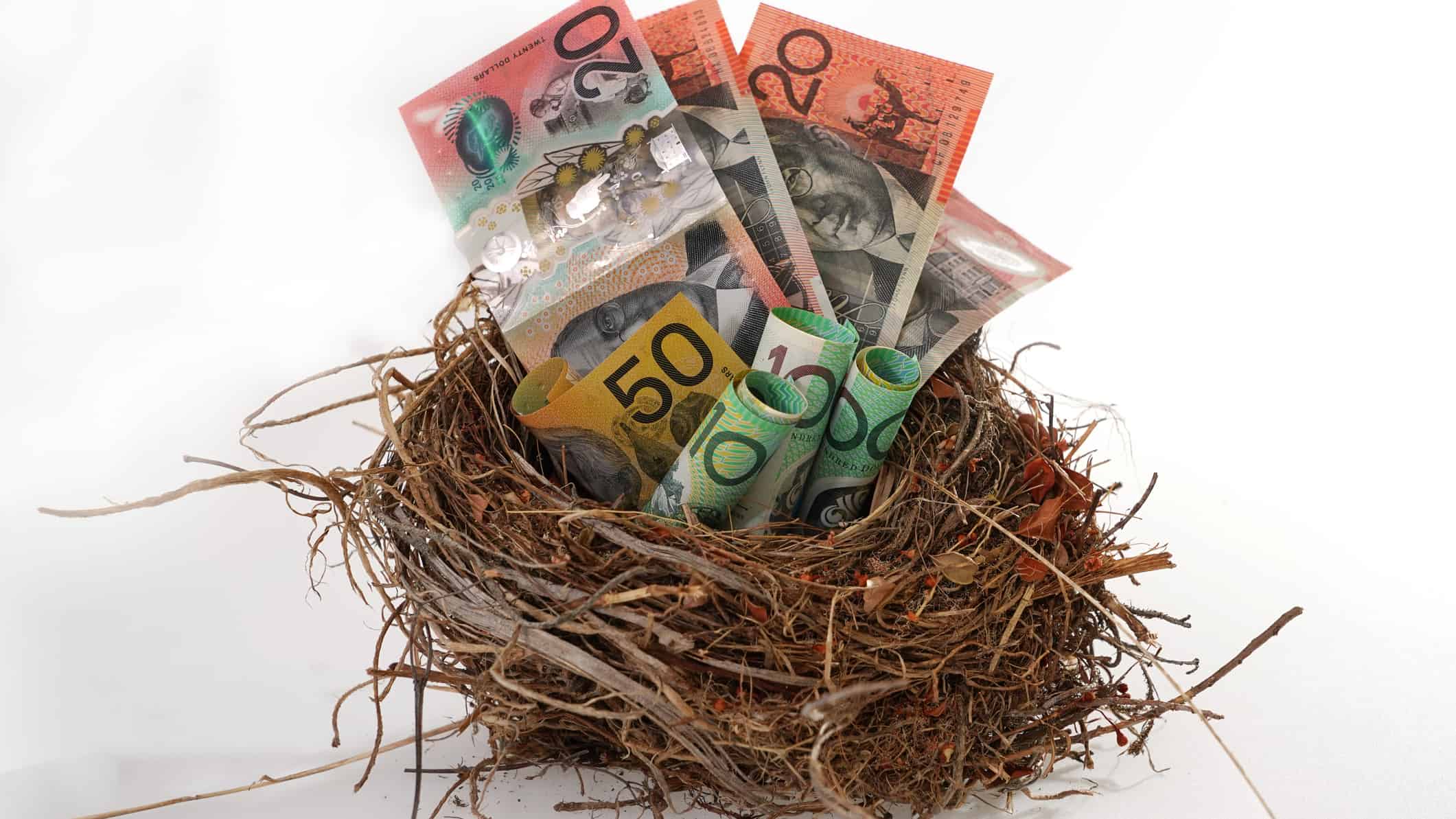
    Australian dollar notes in a nest, symbolising a nest egg.

    If you’re ready to hang up your hat and enjoy your golden years with a $750,000 superannuation balance, how much passive income could you expect to earn each year?

    The answer will, of course, depend on the yield you can earn from those super savings.

    Now, in my opinion, investing in the right selection of ASX dividend shares is the best path to achieving a reliable passive income stream in retirement.

    And what we’ll look at below is the annual passive income that you can earn from your superannuation without drawing down that $750,000 balance.

    We’re also aiming for share price gains and higher annual dividends from those ASX shares over time to at least offset the eroding forces of inflation. This way your real passive income stream remains steady, or ideally increases, over the years as well.

    A few important points

    While we’ll look at three quality ASX dividend stocks that I believe are a suitable superannuation investment below, a properly diversified passive income portfolio will contain a lot more than just three. There’s no magic number. But 15 or so is a decent ballpark figure.

    Ideally these companies will operate in various sectors and locations. This will reduce the risk of your retirement income taking a big hit if any single sector or company runs into headwinds.

    Also remember that the yields you generally see quoted are trailing yields Future yields may be higher or lower depending on a range of company specific and macroeconomic factors. Though, as mentioned above, we’ll be aiming to invest in ASX shares that will increase their passive income payouts over the years.

    With that said…

    Tapping into superannuation for retirement income

    Remember, the passive income you earn of your $750,000 superannuation balance will depend on the yield you’re getting.

    We’ll take the average yield of the three ASX 200 dividend stocks below as our benchmark.

    First up we have Bank of Queensland Ltd (ASX: BOQ).

    Over the past 12 months, the ASX 200 bank stock has paid two fully franked dividends and a special dividend totalling 55 cents a share. At the recent Bank of Queensland share price of $6.63, the stock trades on a fully franked trailing yield of 8.3%.

    Next, we have ASX 200 rail freight operator Aurizon Holdings Ltd (ASX: AZJ).

    Over the past 12 months Aurizon has paid (or shortly will) two dividends totalling 23 cents a share, 90% franked. At the recent Aurizon share price of $3.72, the stock trades on a dividend yield of 6.2%.

    And the third stock you might want to invest some of your superannuation into for passive income is Fortescue Ltd (ASX: FMG).

    Over the past 12 months, the ASX 200 mining giant has paid (or shortly will) two fully franked dividends totalling $1.08 a share. At the recent Fortescue share price of $17.42, Fortescue shares trade on a fully franked trailing yield of 6.2%.

    To the maths!

    So, if you invest an equal amount of your superannuation into each of the above ASX 200 dividend stocks, you could expect to earn a yield 6.9%.

    Meaning with a $750,000 investment, you could earn $51,750 a year in passive income without drawing down your super balance.

    The post How much passive income can I earn off a $750,000 superannuation balance? appeared first on The Motley Fool Australia.

    Should you invest $1,000 in Aurizon right now?

    Before you buy Aurizon shares, consider this:

    Motley Fool investing expert Scott Phillips just revealed what he believes are the 5 best stocks for investors to buy right now… and Aurizon wasn’t one of them.

    The online investing service he’s run for over a decade, Motley Fool Share Advisor, has provided thousands of paying members with stock picks that have doubled, tripled or even more.*

    And right now, Scott thinks there are 5 stocks that may be better buys…

    * Returns as of 1 August 2026

    .custom-cta-button p {
    margin-bottom: 0 !important;
    }

    More reading

    Motley Fool contributor Bernd Struben has no position in any of the stocks mentioned. The Motley Fool Australia’s parent company Motley Fool Holdings Inc. has no position in any of the stocks mentioned. The Motley Fool Australia has no position in any of the stocks mentioned. The Motley Fool has a disclosure policy. This article contains general investment advice only (under AFSL 400691). Authorised by Scott Phillips.

  • PFE | Pfizer and German partner BioNTech SE said Tuesday they’ve begun delivering doses of their coronavirus vaccine to US candidates with trials in Germany already underway.

  • PFE | Pfizer and German Parker BioNTech SE have begun delivering doses of their coronavirus vaccine for human testing US, trials in Germany already underway.

  • The performance outlook of tech companies.

  • Top broker urging you to buy this ASX 200 retail stock next week