
• Why are Telix Pharmaceuticals shares charging higher today?

    A scientist in a white coat and glasses puts her arms in the air in a sign of strength and success.

    Shares in Telix Pharmaceuticals Ltd (ASX: TLX) were trading more than 5% higher on Monday after the company secured a key approval from the US Food and Drug Administration.

    New drug gets the regulator’s tick

    The company said in a statement to the ASX that the FDA had approved its new drug application for Pixclara, an amino acid positron emission tomography (PET) drug for imaging gliomas (brain cancer).

    Telix shares traded as high as $17.65 before settling back to be 5.4% higher at $16.52.

    RBC Capital Markets said it was positive for the company. The broker has a $19 price target on Telix shares.

    The broker said:

    Telix has announced the FDA has approved Pixclara, the company’s imaging agent for use in characterising recurrent or progressive brain cancer (glioma). Pixclara is the first FDA-approved targeted amino acid PET imaging agent for glioma in the United States. Importantly, this demonstrates the company’s ability to overcome the initial setback from the Complete Response Letter and sets the foundation for the company’s complementary prospective therapeutic asset, TLX-101-Tx, as well as further indication expansion within brain metastases.

    RBC estimated the total addressable market for Pixclara’s current use to be US$140 to US$160 million per year.

    The broker added:

    Assuming a penetration rate of ~60% in FY35, we estimate Pixclara’s first indication would be valued at $0.56/share with further upside potential of $0.62/share if Pixclara achieves ~80% penetration. If the company is successful in securing approval to expand Pixclara’s indication to include brain metastases, we estimate this could potentially add as much as ~$3.85/share to our price target.

    Large unmet need

    Telix said gliomas were the most common form of central nervous system cancer, accounting for approximately 30% of all brain and central nervous system tumours and 80% of all malignant brain tumours.

    The company said about 24,000 new glioma cases were diagnosed each year in the US.

    Telix Precision Medicine Chief Executive Officer Kevin Richardson said:

    FDA approval of Pixclara will enable broad access in the U.S. to FET-PET imaging, which is already recognized in international clinical practice guidelines. As the first FDA-approved PET imaging drug for glioma, Pixclara will provide physicians in the U.S. with more certainty in their diagnoses and greater confidence in their treatment planning for patients.

    Pixclara is a small molecule targeting compound that is labelled with a diagnostic radioisotope, fluorine-18.

    After administration into the bloodstream, Pixclara targets membrane transport proteins known as L-type amino acid transporters 1 and 2.

    Once bound, energy emissions from the radioisotope can be detected by a PET scanner.

    Telix is valued at $5.32 billion.

    The post Why are Telix Pharmaceuticals shares charging higher today? appeared first on The Motley Fool Australia.

    Should you invest $1,000 in Telix Pharmaceuticals right now?

    Before you buy Telix Pharmaceuticals shares, consider this:

    Motley Fool investing expert Scott Phillips just revealed what he believes are the 5 best stocks for investors to buy right now… and Telix Pharmaceuticals wasn’t one of them.

    The online investing service he’s run for over a decade, Motley Fool Share Advisor, has provided thousands of paying members with stock picks that have doubled, tripled or even more.*

    And right now, Scott thinks there are 5 stocks that may be better buys…

    * Returns as of 1 August 2026

    .custom-cta-button p {
    margin-bottom: 0 !important;
    }

    More reading

    Motley Fool contributor Cameron England has positions in Telix Pharmaceuticals. The Motley Fool Australia’s parent company Motley Fool Holdings Inc. has positions in and has recommended Telix Pharmaceuticals. The Motley Fool Australia has recommended Telix Pharmaceuticals. The Motley Fool has a disclosure policy. This article contains general investment advice only (under AFSL 400691). Authorised by Scott Phillips.

  • Down almost 7% in 3 days, are BHP shares finally good value?

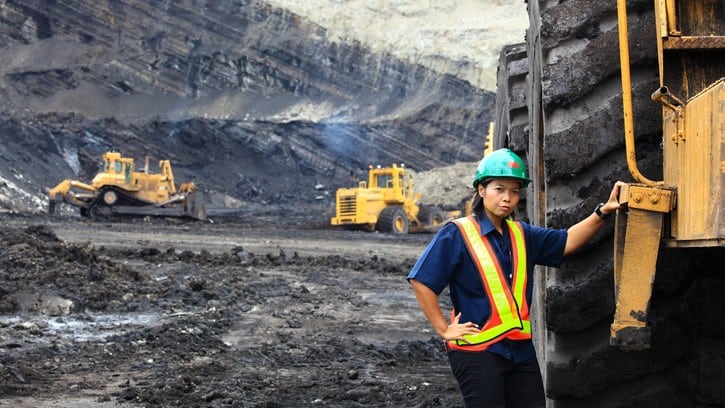
    Female miner standing next to a haul truck in a large mining operation.

    Less than 3 weeks ago, BHP Group Ltd (ASX: BHP) shares were trading at record highs.

    Now they’re heading the other way.

    The mining giant is down another 1.13% to $60.18 on Monday morning, extending a sell-off that started late last week.

    BHP closed at $64.58 last Wednesday, so the stock has dropped around 6.8% in just 3 trading sessions.

    Friday did most of the damage, with the shares dropping 4.05% as mining shares were hit by uncertainty around US copper tariffs.

    After such a quick pullback, some investors may be wondering whether BHP is starting to look cheap again.

    I’m not sure we’re there yet.

    The rally has still been huge

    The first thing I’d like to point out is just how far BHP shares have already run.

    Even after the recent fall, the stock is still up around 33% in 2026.

    It is now about 13% below its 52-week high of $68.77, reached in late August.

    So, while the 6.8% drop looks significant, BHP is coming off a very strong run.

    The business itself has also been performing well.

    FY26 revenue increased 15% to US$58.8 billion, while underlying EBITDA rose 27% to US$32.9 billion. Net debt fell to US$8.7 billion, and the full-year dividend increased to 172 US cents per share.

    Copper has become a large part of the business, generating around 54% of underlying EBITDA last year.

    Is BHP actually cheap?

    This is where I think things get more interesting.

    The average 12-month broker price target tracked by TipRanks is $59.23, around 2% below today’s share price.

    Of the 15 analysts shown, 13 have a hold rating, with only 1 buy and 1 sell.

    There’s also a wide range of views. Morgan Stanley has a $68 target, while Freedom Capital Markets is at $66. Jefferies and Bank of America are both sitting at $65.

    At the other end, Bernstein has a $44 target.

    Would I buy after the fall?

    I can see why investors might be tempted to buy after the latest decline.

    BHP is still a very profitable business, and its growing exposure to copper gives investors another reason to stay interested.

    But there are still a few things to watch, including softer iron ore prices and ongoing labour negotiations at Port Hedland.

    At $60.18, I think BHP looks more attractive than it did near $69.

    With broker targets clustered close to the current price, I’d still want BHP to fall a little further before buying.

    The post Down almost 7% in 3 days, are BHP shares finally good value? appeared first on The Motley Fool Australia.

    Should you invest $1,000 in BHP Group right now?

    Before you buy BHP Group shares, consider this:

    Motley Fool investing expert Scott Phillips just revealed what he believes are the 5 best stocks for investors to buy right now… and BHP Group wasn’t one of them.

    The online investing service he’s run for over a decade, Motley Fool Share Advisor, has provided thousands of paying members with stock picks that have doubled, tripled or even more.*

    And right now, Scott thinks there are 5 stocks that may be better buys…

    * Returns as of 1 August 2026

    .custom-cta-button p {
    margin-bottom: 0 !important;
    }

    More reading

    Bank of America is an advertising partner of Motley Fool Money. Motley Fool contributor Aaron Teboneras has no position in any of the stocks mentioned. The Motley Fool Australia’s parent company Motley Fool Holdings Inc. has positions in and has recommended Jefferies Financial Group. The Motley Fool Australia has recommended BHP Group. The Motley Fool has a disclosure policy. This article contains general investment advice only (under AFSL 400691). Authorised by Scott Phillips.

  • Did this $3.4 billion Black Swan event just put your superannuation at risk?

    Retirement plan written on a chalkboard with increasing bar graphs and dollar signs on top.

    “Could the next financial crisis already be sitting inside your superannuation account?” Wealth Within chief analyst and founder Dale Gillham posited over the weekend.

    “It sounds alarmist, but regulators are increasingly asking it as Australia’s private credit market has grown to around $250 billion,” he added.

    That compares to Australia’s total super assets of around $4.4 trillion.

    What new crisis is brewing for superannuation accounts?

    The crisis Gillham is talking about is the recent collapse of residential property developer Bathla Group.

    Amid slumping property sales, high interest rates, and rising labour and material costs, Bathla entered into voluntary administration in August. The company has around $3.4 billion in liabilities, which are largely held by private credit lenders.

    Gillham said the collapse has exposed dangerous cracks in Australia’s private credit market, putting millions of superannuation accounts at risk amid ongoing elevated interest rates.

    The level of that risk will depend, to some extent, on how soon you plan to retire, and in which asset classes you’ve invested your superannuation.

    “ASIC has repeatedly highlighted the growing connection between private credit and the super sector, warning investors to better understand the risks involved,” Gillham said.

    He noted:

    What was once a niche corner of finance has become one of the country’s fastest-growing sources of funding. Most Australians have probably never heard of private credit. Yet many could already have exposure through their superannuation.

    The bigger picture

    Gillham said that Bathla’s collapse wasn’t the real story behind the growing risk to millions of superannuation accounts. However, the property developer’s insolvency had “thrust those risks into the spotlight”.

    He said, “The real issue is that many of the conditions that could place pressure on private credit are already emerging.”

    Gillham explained:

    Interest rates remain elevated, inflation has proven more persistent than many expected, construction costs remain significantly higher than before the pandemic and parts of the property market are beginning to soften.

    At the same time, developers who borrowed heavily during years of ultra-low interest rates are being forced to refinance at much higher borrowing costs.

    Which would seem to make Bathla a bit of a canary in a coal mine situation.

    Indeed, Gillham noted, “Pressure then begins to build across the entire system, and that is where the risk to superannuation begins.”

    He added:

    If several major developers fail within a short period, fund managers may be forced to write down the value of their loans. Those write-downs could then trigger redemption requests from investors seeking to reduce their exposure.

    Gillham concluded, “The real risk is that Bathla won’t be remembered as an isolated collapse, but as the first domino to fall.”

    The post Did this $3.4 billion Black Swan event just put your superannuation at risk? appeared first on The Motley Fool Australia.

    Wondering where you should invest $1,000 right now?

    When investing expert Scott Phillips has a stock tip, it can pay to listen. After all, the flagship Motley Fool Share Advisor newsletter he has run for over ten years has provided thousands of paying members with stock picks that have doubled, tripled or even more.*

    Scott just revealed what he believes could be the ‘five best ASX stocks’ for investors to buy right now. We believe these stocks are trading at attractive prices and Scott thinks they could be great buys right now…

    * Returns as of 1 August 2026

    .custom-cta-button p {
    margin-bottom: 0 !important;
    }

    More reading

    Motley Fool contributor Bernd Struben has no position in any of the stocks mentioned. The Motley Fool Australia’s parent company Motley Fool Holdings Inc. has no position in any of the stocks mentioned. The Motley Fool Australia has no position in any of the stocks mentioned. The Motley Fool has a disclosure policy. This article contains general investment advice only (under AFSL 400691). Authorised by Scott Phillips.

  • OrganiGram Holdings Inc. (TSE:OGI) Consensus Forecasts Have Become A Little Darker Since Its Latest Report

  • The Independent Director of FedEx Corporation (NYSE:FDX), Marvin Ellison, Just Bought 100% More Shares

  • Intel’s Delay of New 7-Nanometer Chip Raises Concerns; Target Price $45 in a Worst-Case Scenario

  • IBM Credit LLC — Moody’s announces completion of a periodic review of ratings of IBM Credit LLC