
• Why did the Bitcoin price just plunge 6%?

    Panicked man with his hand on his head with a red Bitcoin symbol and arrow going down.

    Following a strong finish to August and start to September, the Bitcoin (CRYPTO: BTC) price went into sharp reverse over the past day.

    On Tuesday, the world’s first and biggest crypto reached highs of US$79,419, which saw it up more than 25% in a month.

    But then the bottom fell out, and the Bitcoin price plunged 5.7% to US$74,910.

    At the time of writing on Wednesday morning, it’s recovered some of those losses, trading for US$75,796.

    Taking a step back, that leaves the world’s top crypto down 34.2% since this time last year and down 40% from its all-time high of US$126,198, notched on 7 October 2025.

    It’s been a similar story with the world’s second biggest crypto by market cap, Ethereum (CRYPTO: ETH). On Tuesday, the Ethereum price reached US$2,598 before crashing 8.2% to US$2,358 overnight.

    Ethereum is currently trading for US$2,399.

    Ethereum hit its own record highs on 25 August 2025, when the token reached US$4,954. It’s now down 51.6% from that high water mark.

    So, why have crypto investors suddenly favoured their sell buttons?

    Why is the Bitcoin price under pressure?

    The Bitcoin price is catching headwinds on several fronts.

    First, crypto investors the world over had been hoping to see the United States Senate pass the Clarity Act on Tuesday.

    If you’re not familiar with this bill, it’s intended to give the US SEC and the CFTC departments oversight into crypto trading. If passed, it could fully open the door to trading in cryptos like Bitcoin and Ethereum in US stock markets.

    But it did not pass yesterday, failing to get the required 60 vote majority.

    Commenting on the fallout from the bill’s stalled passage, Ayesha Kiani, chief operating officer at Monarq Asset Management, said (quoted by Bloomberg):

    The failure to advance the Clarity Act prolongs a regulatory gap that has real consequences for where companies build, where capital is deployed, and how quickly institutional adoption moves in the US.

    And crypto investors will likely now have to wait until at least 2027 before the bill is revisited.

    “Market structure legislation is done for 2026, and the next realistic window is a new Congress,” Jasper De Maere, an over-the-counter trader at Wintermute, noted.

    What else has got crypto investors jittery?

    The Ethereum and Bitcoin prices are also facing headwinds from high US inflation, leading to increasing expectations of an interest rate hike from the US Federal Reserve.

    Like most risk assets, Bitcoin has proven to be very sensitive to interest rate levels.

    Commenting on the impact of the inflationary pressure and interest rate outlook on Bitcoin, Nischal Shetty, founder of WazirX, said (quoted by Moneycontrol):

    These factors can restrict liquidity and reduce risk appetite across crypto markets. However, Bitcoin’s relative stability suggests underlying demand remains resilient. Overall, macro conditions remain restrictive, but crypto continues to absorb external pressure without a broader breakdown.

    The post Why did the Bitcoin price just plunge 6%? appeared first on The Motley Fool Australia.

    Should you invest $1,000 in Bitcoin right now?

    Before you buy Bitcoin shares, consider this:

    Motley Fool investing expert Scott Phillips just revealed what he believes are the 5 best stocks for investors to buy right now… and Bitcoin wasn’t one of them.

    The online investing service he’s run for over a decade, Motley Fool Share Advisor, has provided thousands of paying members with stock picks that have doubled, tripled or even more.*

    And right now, Scott thinks there are 5 stocks that may be better buys…

    * Returns as of 1 August 2026

    .custom-cta-button p {
    margin-bottom: 0 !important;
    }

    More reading

    Motley Fool contributor Bernd Struben has no position in any of the stocks mentioned. The Motley Fool Australia’s parent company Motley Fool Holdings Inc. has positions in and has recommended Bitcoin and Ethereum. The Motley Fool Australia has positions in and has recommended Bitcoin and Ethereum. The Motley Fool has a disclosure policy. This article contains general investment advice only (under AFSL 400691). Authorised by Scott Phillips.

  • How much passive income could I earn from a $650,000 superannuation balance?

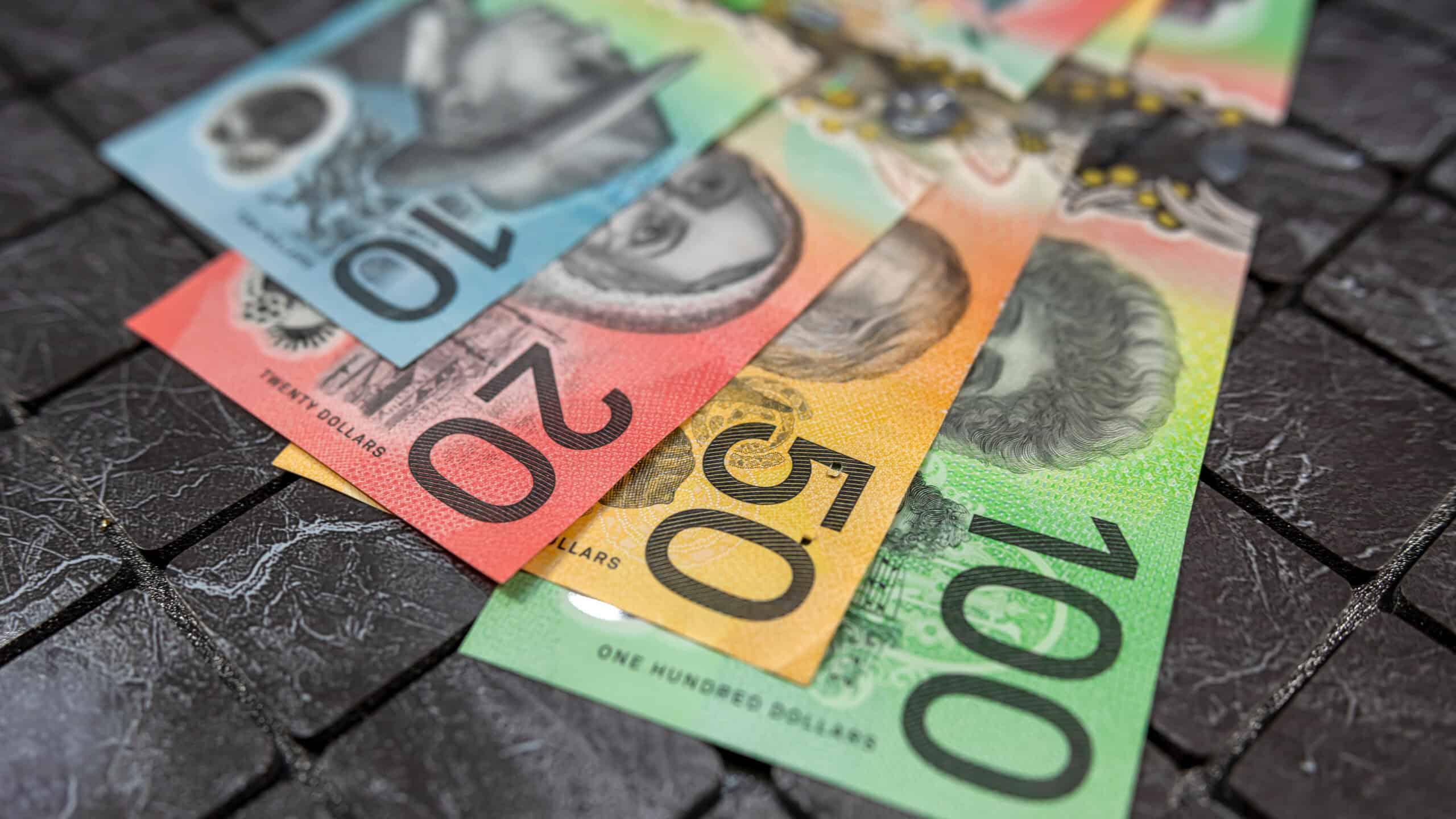
    Numerous Australian dollar notes laid out.

    A $650,000 superannuation balance is slightly above the current benchmark for a comfortable retirement.

    It’s the type of nest egg that many Aussies aspire to have. They focus hard on building their superannuation balance, ensuring the fund is performing well, and adding extra voluntary contributions wherever they can.

    It’s a solid plan. But did you know that if you invest your superannuation wisely, you could also generate a passive income to live off when it’s time to retire?

    But how much passive income could a $650,000 balance realistically generate each month?

    Let’s break it down.

    What passive income can I earn off a $650,000 superannuation balance?

    The math is simple. 

    To calculate your potential passive income, you simply need to multiply your total superannuation balance by the overall dividend yield of your portfolio.

    But the problem is that the answer varies widely depending on what that dividend yield is.

    For example, $650,000 x 3% = $19,500 per year in dividend payments.

    But if your portfolio has a slightly higher dividend yield of around 4%, your passive income will be higher. That’s because $650,000 x 4% = $26,000 per year in dividend payments. 

    If your superannuation portfolio yields closer to 5%, you could earn $32,500 every year in dividend payments off the same superannuation balance ($650,000 x 5% = $32,500).

    Then, at a 6% yield, you could earn an annual passive income of around $39,000, and at 7%, it could be even higher, at around $45,500.

    And so on… 

    As your dividend yield increases, the passive income you can earn from your $650,000 superannuation balance also increases.

    Note too that these figures are based on cash dividends before any tax or franking credit benefits.

    Give me some ideas of what ASX shares I can invest my superannuation in

    There is a huge range of shares out there, and their dividend yields vary significantly.

    Some of my top picks would be defensive stocks. These are companies whose earnings tend to remain relatively steady throughout times of economic instability. They typically operate in “non-discretionary” industries where demand remains relatively stable even when consumer confidence dips. 

    Their stable nature means they can help reduce the volatility of an overall investment portfolio. This is particularly valuable during times when geopolitical tensions are ongoing and inflation is stubbornly high.

    These can be supermarket, telecommunications, or infrastructure stocks. Demand for food items and essential services is generally stable throughout all sections of the economic cycle. Think Coles Group Ltd (ASX: COL), TPG Telecom Ltd (ASX: TPG), and Chorus Ltd (ASX: CNU). These shares yield between 3% and 6%.

    Major blue chips like Wesfarmers Ltd (ASX: WES) and BHP Group Ltd (ASX: BHP) are generally considered cyclical stocks but with strong defensive qualities (rather than pure defensive stocks). These types of shares are highly regarded for their dominant market position and stable dividends. At the time of writing, the shares yield around 3% to 4%.

    Diversify your portfolio

    Remember that if you want to aim for, say, a 5% yielding portfolio, not every stock in that portfolio has to yield 5%. You should aim for a diversified range of shares yielding varying amounts, which combined total 5%.

    It’s also best to focus on a diverse range of high-quality businesses with strong balance sheets and stable earnings. Ideally, you want to focus on stocks that are most likely to stand the test of time.

    And you don’t need to invest the whole sum in one go. Start with regular monthly investments and let compounding do some of the hard work for you.

    The post How much passive income could I earn from a $650,000 superannuation balance? appeared first on The Motley Fool Australia.

    Should you invest $1,000 in BHP Group right now?

    Before you buy BHP Group shares, consider this:

    Motley Fool investing expert Scott Phillips just revealed what he believes are the 5 best stocks for investors to buy right now… and BHP Group wasn’t one of them.

    The online investing service he’s run for over a decade, Motley Fool Share Advisor, has provided thousands of paying members with stock picks that have doubled, tripled or even more.*

    And right now, Scott thinks there are 5 stocks that may be better buys…

    * Returns as of 1 August 2026

    .custom-cta-button p {
    margin-bottom: 0 !important;
    }

    More reading

    Motley Fool contributor Samantha Menzies has positions in BHP Group. The Motley Fool Australia’s parent company Motley Fool Holdings Inc. has positions in and has recommended Wesfarmers. The Motley Fool Australia has recommended BHP Group and Wesfarmers. The Motley Fool has a disclosure policy. This article contains general investment advice only (under AFSL 400691). Authorised by Scott Phillips.

  • Down 6% today: What’s going on with the James Hardie share price?

    Scared, wide-eyed man in pink t-shirt with hands covering mouth.

    The James Hardie Industries plc (ASX: JHX) share price has crashed 6% in early morning trade on Wednesday. 

    At the time of writing, the shares are changing hands at $37 a piece.

    Despite the tumble, the shares are still up around 20% year to date and 24% higher than a year ago.

    The decline comes off the back of the company’s Investor Day presentation, which was posted to the ASX ahead of the market open this morning.

    What did James Hardie announce?

    The cement manufacturer said it is seeing consistent demand for its products and is executing well in the areas it can control.

    As a result, management is able to reaffirm the company’s second quarter and FY27 sales and adjusted EBITDA guidance (excluding Europe), and raise its FY27 free cash flow guidance to more than US$600 million, up from US$500 million+ previously. This is despite a continued challenging macro backdrop.

    The company also revealed that it is targeting annual organic growth of 4% to 7% above market, with compounding earnings. 

    Elsewhere, James Hardie said that it is accelerating the integration with AZEK, achieving faster-than-expected cost synergy targets. It now expects to complete the US$125 million cost synergy target a full year ahead of schedule, while revenue synergies are progressing as planned.

    James Hardie is also pressing ahead with the divestment of its European operations for about US$980 million. The proceeds of which are already earmarked to pay down debt and fund share buybacks.

    The announcement looks good on paper, so why are investors selling up?

    What is spooking investors today?

    The James Hardie share price had rallied strongly through June to August, reaching a 52-week high of $44.12 early last month. So it’s likely that investor expectations were already incredibly high. 

    Investors may also have been disappointed that management reaffirmed its FY27 sales and adjusted EBITDA guidance rather than increasing it. 

    It’s also possible that there is still some uncertainty about how quickly cost and revenue synergies from the AZEK acquisition can translate into earnings and cash flow.

    What’s ahead for the James Hardie share price?

    I expect we might see analysts and brokers revise or reaffirm their outlook for James Hardie shares in the coming days, following this morning’s announcement.

    But at the time of writing, sentiment looks mostly very positive.

    Market Index data shows brokers are currently split between a buy and hold rating. But the $39.20 average target price implies around a 5% upside, at the time of writing.

    Analysts on TradingView are much more bullish. Of 25 analysts, 19 have a buy/strong buy rating, and another 6 rate the stock as a hold. 

    But they all agree there will be some element of upside ahead. At the time of writing, the average $47.59 target price implies a potential 28% upside ahead. Whereas some are even more confident and forecast the shares to climb 50% higher to $56.05 each.

    The post Down 6% today: What’s going on with the James Hardie share price? appeared first on The Motley Fool Australia.

    Should you invest $1,000 in James Hardie Industries Plc right now?

    Before you buy James Hardie Industries Plc shares, consider this:

    Motley Fool investing expert Scott Phillips just revealed what he believes are the 5 best stocks for investors to buy right now… and James Hardie Industries Plc wasn’t one of them.

    The online investing service he’s run for over a decade, Motley Fool Share Advisor, has provided thousands of paying members with stock picks that have doubled, tripled or even more.*

    And right now, Scott thinks there are 5 stocks that may be better buys…

    * Returns as of 1 August 2026

    .custom-cta-button p {
    margin-bottom: 0 !important;
    }

    More reading

    Motley Fool contributor Samantha Menzies has no position in any of the stocks mentioned. The Motley Fool Australia’s parent company Motley Fool Holdings Inc. has no position in any of the stocks mentioned. The Motley Fool Australia has no position in any of the stocks mentioned. The Motley Fool has a disclosure policy. This article contains general investment advice only (under AFSL 400691). Authorised by Scott Phillips.

  • Edited Transcript of ONTX earnings conference call or presentation 14-May-20 8:30pm GMT

  • Uber cuts 3,000 more jobs, shuts 45 offices over coronavirus pandemic: WSJ

  • Despite PPP aid, some small businesses are choosing to stay closed – here’s why

  • Stock market news live updates: Moderna coronavirus vaccine fuels rally; Uber braces for new layoffs