
• Betashares just launched 3 new ETFs. Here’s whether you should buy

    Happy businessman fist pumping while looking at a tablet.

    New ETFs arrive on the ASX almost every week, and very few of them grab the attention of day-to-day ASX investors.

    Betashares has just listed three that might.

    They are diversified, multi-asset funds designed to be held entirely on their own.

    Amazing, all three charge 0.19% a year.

    What the new ETFs actually hold

    The three funds are at different points on the risk spectrum.

    Betashares Diversified High Growth ETF (ASX: DVHG) runs a 90% growth and 10% defensive allocation.

    Betashares Diversified Growth ETF (ASX: DVGR) sits at 75% growth and 25% defensive.

    Betashares Diversified Balanced ETF (ASX: DVBA) is the most conservative of the three, at 60% growth and 40% defensive.

    Each fund provides exposure to roughly 2,500 Australian and global companies and 12,000 bonds.

    DVGR, to take one example, holds 28.8% in Australian equities, 28.3% in United States equities, 10.5% in developed markets outside the US, and 4.5% in emerging markets, with the remaining quarter split between Australian and international bonds.

    They join the existing Betashares Diversified All Growth ETF (ASX: DHHF), which holds equities only.

    How the new ETFs compare on fees

    This is where the launch gets interesting.

    Vanguard Diversified High Growth Index ETF (ASX: VDHG) has been the default choice for Australians wanting one-trade diversification.

    The fund charges 0.27% a year and runs a 90% growth and 10% income allocation.

    DVHG offers effectively the same asset allocation for 0.19%.

    That number may sound small. On a $100,000 balance, that is a saving of only $80 a year.

    However, compounded inside the portfolio over thirty years, the difference becomes quite more meaningful.

    Betashares describes the 0.19% figure as the lowest fee among all-in-one diversified funds currently available in Australia.

    What the fee comparison does not tell you

    Fees are the easiest thing to compare, yet are rarely the most important.

    VDHG has a long track record, returning 10.42% over the year to 31 July 2026 and 8.72% a year across five years.

    The Betashares funds have no performance history at all, because they only listed this week.

    There are two other practical differences worth knowing.

    VDHG holds an allocation to hedged international shares, which changes how the fund behaves when the Australian dollar moves.

    Liquidity will also be thinner in a brand new fund, so bid-ask spreads may be wider until the funds build scale.

    Should you switch?

    Probably not, if you already hold VDHG in a taxable account.

    Selling to save 0.08% a year would trigger a capital gains tax event that could take many years to recover.

    The question is entirely different if you are looking at a new allocation.

    If you are starting a portfolio or making your next contribution, the cheaper fund with the same allocation is the rational default.

    Foolish takeaway

    These new ETFs are an improvement on what was already available, though only marginally so.

    The important decision is still which risk profile suits you.

    DVHG suits an investor with decades still ahead of them, while DVBA suits someone who needs the ride to be smoother.

    All in all, fee competition among diversified funds is unambiguously good news for Australian investors.

    The post Betashares just launched 3 new ETFs. Here’s whether you should buy appeared first on The Motley Fool Australia.

    Wondering where you should invest $1,000 right now?

    When investing expert Scott Phillips has a stock tip, it can pay to listen. After all, the flagship Motley Fool Share Advisor newsletter he has run for over ten years has provided thousands of paying members with stock picks that have doubled, tripled or even more.*

    Scott just revealed what he believes could be the ‘five best ASX stocks’ for investors to buy right now. We believe these stocks are trading at attractive prices and Scott thinks they could be great buys right now…

    * Returns as of 1 August 2026

    .custom-cta-button p {
    margin-bottom: 0 !important;
    }

    More reading

    Motley Fool contributor Mark Verhoeven has no position in any of the stocks mentioned. The Motley Fool Australia’s parent company Motley Fool Holdings Inc. has no position in any of the stocks mentioned. The Motley Fool Australia has no position in any of the stocks mentioned. The Motley Fool has a disclosure policy. This article contains general investment advice only (under AFSL 400691). Authorised by Scott Phillips.

  • How much is needed in superannuation for $1,500 in weekly passive income?

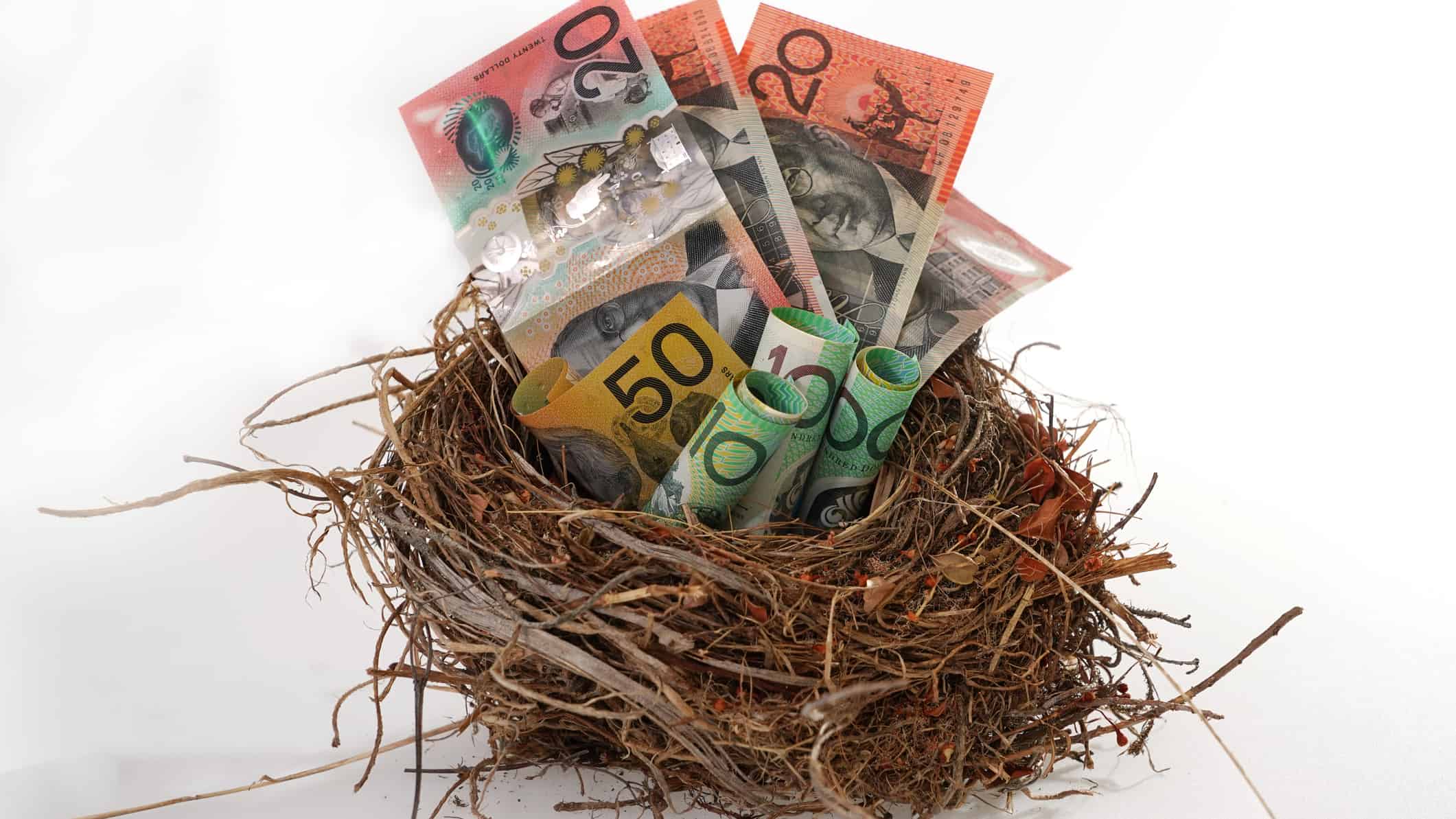
    Australian dollar notes in a nest, symbolising a nest egg.

    Knowing with reasonable certainty how much income you can expect to draw from your superannuation in retirement makes it possible to approach this major life change with confidence.

    Having a goal in mind and planning to hit that goal is essential, and the earlier you start, the better.

    Aiming for $1,500 per week in retirement income will provide a comfortable retirement, at least as measured by the Association of Superannuation Funds of Australia, which estimates that singles will need $55,923 per year to fund a comfortable retirement.

    This so-called retirement standard assumes you own your own home and will draw a part pension when you become eligible at age 67.

    How much do you need in superannuation to hit the $1,500 target?

    But let’s assume for the sake of argument that you are aiming to generate $1500 per week, or $78,000 per year, in retirement income from dividends alone, without drawing down on your invested capital.

    How much you’ll need invested to achieve this target depends on how much you can reliably expect to generate in terms of dividend yield.

    If you are generating 10% a year – a lofty ambition and likely unsustainable – you’d need $780,000 in retirement savings.

    If you were generating just 5% a year, you would need double this amount, or $1.56 million.

    Considering that retirees get the benefit of franking credits on top of the base dividend yield from a share, as long as the share is franked, I’d argue that 5% is very much on the low side.

    A goal of 7.5% is likely quite achievable and would require a superannuation savings amount of $1.04 million.

    Which shares can generate sufficient returns?

    There are a lot of shares you might consider that pay healthy dividends.

    Infrastructure companies such as toll road owner Atlas Arteria Ltd (ASX: ALX) often pay strong dividends, with Atlas forecast by Macquarie to pay a yield of better than 8% out to FY28.

    Rail freight operator Aurizon Holdings Ltd (ASX: AZJ) also pays a good dividend, currently running at 6.28%.

    Real estate investment trusts also often have steady long-term businesses, with Waypoint REIT (ASX: WPR) paying a 7.19% dividend yield and HomeCo Daily Needs REIT (ASX: HDN) paying 7.78%.

    And among the banks, Westpac Banking Corp (ASX: WBC) is paying 4.45% fully franked, while Bank of Queensland Ltd (ASX: BOQ) is paying 6.12% also fully franked.

    How to boost your superannuation balance

    If you’re a bit low on your superannuation at the moment, consider either salary sacrificing into your super or making a concessional contribution.

    This year, the concessional contributions cap has increased to $32,500, meaning you can contribute up to this amount and pay only 15% tax. However, keep in mind that the $32,500 level includes any contributions made by your employer and any salary sacrifice amounts.

    The post How much is needed in superannuation for $1,500 in weekly passive income? appeared first on The Motley Fool Australia.

    Should you invest $1,000 in Atlas Arteria right now?

    Before you buy Atlas Arteria shares, consider this:

    Motley Fool investing expert Scott Phillips just revealed what he believes are the 5 best stocks for investors to buy right now… and Atlas Arteria wasn’t one of them.

    The online investing service he’s run for over a decade, Motley Fool Share Advisor, has provided thousands of paying members with stock picks that have doubled, tripled or even more.*

    And right now, Scott thinks there are 5 stocks that may be better buys…

    * Returns as of 1 August 2026

    .custom-cta-button p {
    margin-bottom: 0 !important;
    }

    More reading

    Motley Fool contributor Cameron England has no position in any of the stocks mentioned. The Motley Fool Australia’s parent company Motley Fool Holdings Inc. has positions in and has recommended Macquarie Group. The Motley Fool Australia has recommended HomeCo Daily Needs REIT and Macquarie Group. The Motley Fool has a disclosure policy. This article contains general investment advice only (under AFSL 400691). Authorised by Scott Phillips.

  • Down 15%: Is it a good time to buy Wesfarmers shares?

    Woman with her kitten on a laptop in her home office.

    Wesfarmers Ltd (ASX: WES) shares have fallen around 15% over the past month.

    At roughly $77.08, they are now much closer to their 52-week low than their recent peak.

    I think the pullback has created a better opportunity to buy one of the ASX’s highest-quality businesses.

    The businesses are still the main attraction

    Wesfarmers owns a collection of market-leading businesses, including Bunnings, Kmart, Officeworks, and Priceline through Wesfarmers Health.

    For me, Bunnings remains the standout. Its scale, store network, brand recognition, and relationships with suppliers have taken decades to build. Home improvement spending can move around with economic conditions, but Australians will continue repairing, renovating, and maintaining their homes over the long term.

    Kmart has also developed a strong position around affordable everyday products. Its ability to source and develop its own ranges gives consumers a clear reason to keep returning.

    I like owning a company with several established businesses capable of producing cash while management continues looking for new areas to invest.

    Wesfarmers shares have pulled back

    Wesfarmers has rarely looked cheap, and it still does not today.

    According to consensus estimates, earnings per share are forecast to rise from $2.72 in FY27 to $2.90 in FY28 and $3.11 in FY29.

    At $77.08, that puts the shares on a PE ratio of roughly 28 times forecast FY27 earnings, falling to around 25 times FY29 earnings.

    That is still a premium valuation. But consider where investors were only recently. At the 52-week high of $94.70, the same FY27 earnings forecast would have put Wesfarmers on almost 35 times earnings.

    I find the current price much easier to justify. Quality businesses rarely spend much time trading at obviously cheap valuations. I am more interested in whether the price gives me a reasonable chance to benefit from years of earnings growth.

    I think it does now.

    There is income along the way

    The dividend outlook also moves in the right direction.

    Consensus forecasts point to dividends per share of $2.34 in FY27, $2.49 in FY28, and $2.71 in FY29.

    At today’s price, that starts with a forecast dividend yield of around 3%, with the potential for income to rise if those estimates are achieved.

    I would not buy Wesfarmers primarily for the dividend, but steadily increasing payments can add to the long-term return.

    Foolish takeaway

    The 15% fall has made Wesfarmers shares considerably more interesting to me.

    I am still paying a premium, so this is not a bargain-hunting exercise. I am paying for strong businesses, capable management, and an earnings outlook that points higher over the next few years.

    At around $77.08, I think the balance between quality and price has improved enough to make Wesfarmers a buy.

    The post Down 15%: Is it a good time to buy Wesfarmers shares? appeared first on The Motley Fool Australia.

    Should you invest $1,000 in Wesfarmers right now?

    Before you buy Wesfarmers shares, consider this:

    Motley Fool investing expert Scott Phillips just revealed what he believes are the 5 best stocks for investors to buy right now… and Wesfarmers wasn’t one of them.

    The online investing service he’s run for over a decade, Motley Fool Share Advisor, has provided thousands of paying members with stock picks that have doubled, tripled or even more.*

    And right now, Scott thinks there are 5 stocks that may be better buys…

    * Returns as of 1 August 2026

    .custom-cta-button p {
    margin-bottom: 0 !important;
    }

    More reading

    Motley Fool contributor Grace Alvino has positions in Wesfarmers. The Motley Fool Australia’s parent company Motley Fool Holdings Inc. has positions in and has recommended Wesfarmers. The Motley Fool Australia has recommended Wesfarmers. The Motley Fool has a disclosure policy. This article contains general investment advice only (under AFSL 400691). Authorised by Scott Phillips.

Sorry, but nothing was found. Please try a search with different keywords.