
• Buying Santos shares? Here’s why the company is celebrating this production milestone

    Engineer in the oilfield wearing red helmet and work clothes, with pumpjack and wellhead in the background.

    Santos Ltd (ASX: STO) shares are edging lower today.

    Shares in the S&P/ASX 200 Index (ASX: XJO) energy stock closed yesterday trading for $8.31. In morning trade on Thursday, shares are changing hands for $8.29 apiece, down 0.2%.

    For some context, the ASX 200 is just about flat at this same time, while the S&P/ASX 200 Energy Index (ASX: XEJ) is down 1.2%.

    Now, here’s what’s happening with Santos’ growth outlook.

    Santos shares in focus amid major project progress

    In news that could support Santos shares over the longer-term, the company announced a “significant milestone” at its Pikka oil project, located on Alaska’s North Slope.

    Pikka is one of Santos’ two major growth projects that could help the ASX 200 oil and gas stock increase its production by up to 30% in the second half of the year (H2 2026) compared to H1.

    And Pikka is fast progressing to full production, with Santos reporting the successful commencement of seawater injection at the Nanushuk Drillsite-B (NDB) within the project.

    Continuous production at Pikka commenced in June.

    The project is now delivering around 40,000 barrels of oil per day (gross). And Santos shares could catch further tailwinds, with management reporting the company plans to bring additional wells online over the coming weeks now that the water injection is also online.

    The company said that water export from the seawater treatment plant began on 18 August via a 75-kilometre seawater pipeline that connects the Beaufort Sea to the Pikka project site.

    With injection into the reservoir having started on 26 August, Santos said the water injection milestone testing has since been successfully completed. The current water injection was reported to be around 40,000 barrels per day.

    Why is Santos injecting seawater?

    The company explained:

    Seawater injection provides pressure support to the reservoir, a key enabler of the production ramp-up targeting plateau production of approximately 80,000 barrels of oil per day (gross) at the end of the third quarter of 2026.

    What did management say?

    Commenting on the progress at Pikka that could provide long-term support for Santos shares, managing director and CEO Kevin Gallagher said:

    Seawater injection is a critical step in unlocking Pikka’s production capacity. With pressure support now established and wells coming online progressively, we continue to target plateau production rates at the end of the third quarter of 2026.

    Pikka is a world-class asset and seawater injection, together with continued efficient drilling and operations, keeps us firmly on track to deliver its full potential.

    Santos share price snapshot

    With today’s intraday moves factored in, shares in the ASX 200 energy stock are up 34.8% in 2026, well ahead of the 2.9% year to date gains posted by the benchmark index.

    The post Buying Santos shares? Here’s why the company is celebrating this production milestone appeared first on The Motley Fool Australia.

    Should you invest $1,000 in Santos right now?

    Before you buy Santos shares, consider this:

    Motley Fool investing expert Scott Phillips just revealed what he believes are the 5 best stocks for investors to buy right now… and Santos wasn’t one of them.

    The online investing service he’s run for over a decade, Motley Fool Share Advisor, has provided thousands of paying members with stock picks that have doubled, tripled or even more.*

    And right now, Scott thinks there are 5 stocks that may be better buys…

    * Returns as of 1 August 2026

    .custom-cta-button p {
    margin-bottom: 0 !important;
    }

    More reading

    Motley Fool contributor Bernd Struben has no position in any of the stocks mentioned. The Motley Fool Australia’s parent company Motley Fool Holdings Inc. has no position in any of the stocks mentioned. The Motley Fool Australia has no position in any of the stocks mentioned. The Motley Fool has a disclosure policy. This article contains general investment advice only (under AFSL 400691). Authorised by Scott Phillips.

  • Australian bond yields are back at 2011 levels. What does this mean for ASX shares?

    A woman looks questioning as she puts a coin into a piggy bank.

    Bond yields just hit their highest points since 2011, with Australia’s 10-year government bond yield reaching roughly 5.19%.

    The US 10-year Treasury has climbed to 4.79%, its highest level since October 2023.

    When the risk-free rate moves this far, the valuation of the market typically moves with it.

    What the bond market is saying

    June quarter GDP grew 0.4% and annual growth reached 2.1%, both faster than economists expected.

    Meanwhile, trimmed mean inflation remains at 3.6%, comfortably above the Reserve Bank’s target band.

    Traders now put a 60% probability on a rate rise at the 29 September meeting, up from 52% before the GDP release.

    The three-year bond yield has pushed to 4.82%, which tells you the market expects higher rates to persist.

    Why higher yields hurt some ASX shares more than others

    The mechanism is simple arithmetic.

    A company’s value is its future cash flows discounted back to today. By raising the discount rate, distant cash flows lose more value in today’s terms.

    Businesses whose earnings are decades away, or which carry heavy debt, therefore suffer twice.

    The result is a wholesale repricing of ASX shares.

    Partly as a result of this, the S&P/ASX 200 (ASX:XJO) had its worst day in three months even as the growth data improved.

    Transurban is the best example

    Transurban Group (ASX: TCL) owns toll roads with concession periods running for decades.

    The shares closed at $13.76 on Wednesday, down 1.43%, and now are close to a 52-week low of $13.25.

    The distribution yield is 5.01%, which is almost exactly what the 10-year government bond pays.

    That’s part of the problem. An investor can now earn a similar income from a government guarantee, without accepting traffic risk or $23 billion of debt.

    The offset is that Transurban’s tolls escalate with inflation, so its cash flows grow while a bond coupon does not.

    Higher inflation is typically good for the revenue line and typically bad for the discount rate applied to it.

    Goodman Group is another exposed ASX share

    Goodman Group (ASX: GMG) exhibits the same pressure as Transurban group

    The company’s shares trade near $27.50 against a 52-week high of $34.78, on a price-to-earnings ratio of 20.87.

    Despite this, the company’s results were strong. FY26 operating profit rose 15.7% to $2,675 million, with operating earnings per security up 10.1% to 129.9 cents.

    Data centres now represent roughly $15.4 billion of work in progress, or 78% of the total.

    Higher yields raise its cost of capital and lower the value of the assets it builds, which is a direct headwind.

    The counterweight for the company is a 6.4 gigawatt power bank across 16 cities and FY27 guidance for 9% earnings growth.

    Foolish takeaway

    Higher yields are not a reason to abandon long-duration ASX shares.

    But they could potentially offer more attractive entry points for long-term investors.

    Transurban is closer to fair value than it has been for years, though its yield no longer looks that special beside a government bond.

    Goodman still has the better growth story and is priced accordingly.

    The mistake would be assuming the market has finished adjusting, because the bond market clearly has not.

    The post Australian bond yields are back at 2011 levels. What does this mean for ASX shares? appeared first on The Motley Fool Australia.

    Should you invest $1,000 in Goodman Group right now?

    Before you buy Goodman Group shares, consider this:

    Motley Fool investing expert Scott Phillips just revealed what he believes are the 5 best stocks for investors to buy right now… and Goodman Group wasn’t one of them.

    The online investing service he’s run for over a decade, Motley Fool Share Advisor, has provided thousands of paying members with stock picks that have doubled, tripled or even more.*

    And right now, Scott thinks there are 5 stocks that may be better buys…

    * Returns as of 1 August 2026

    .custom-cta-button p {
    margin-bottom: 0 !important;
    }

    More reading

    Motley Fool contributor Mark Verhoeven has no position in any of the stocks mentioned. The Motley Fool Australia’s parent company Motley Fool Holdings Inc. has positions in and has recommended Goodman Group and Transurban Group. The Motley Fool Australia has positions in and has recommended Transurban Group. The Motley Fool Australia has recommended Goodman Group. The Motley Fool has a disclosure policy. This article contains general investment advice only (under AFSL 400691). Authorised by Scott Phillips.

  • This ASX copper explorer is up 390% since its May IPO. Is it still a buy?

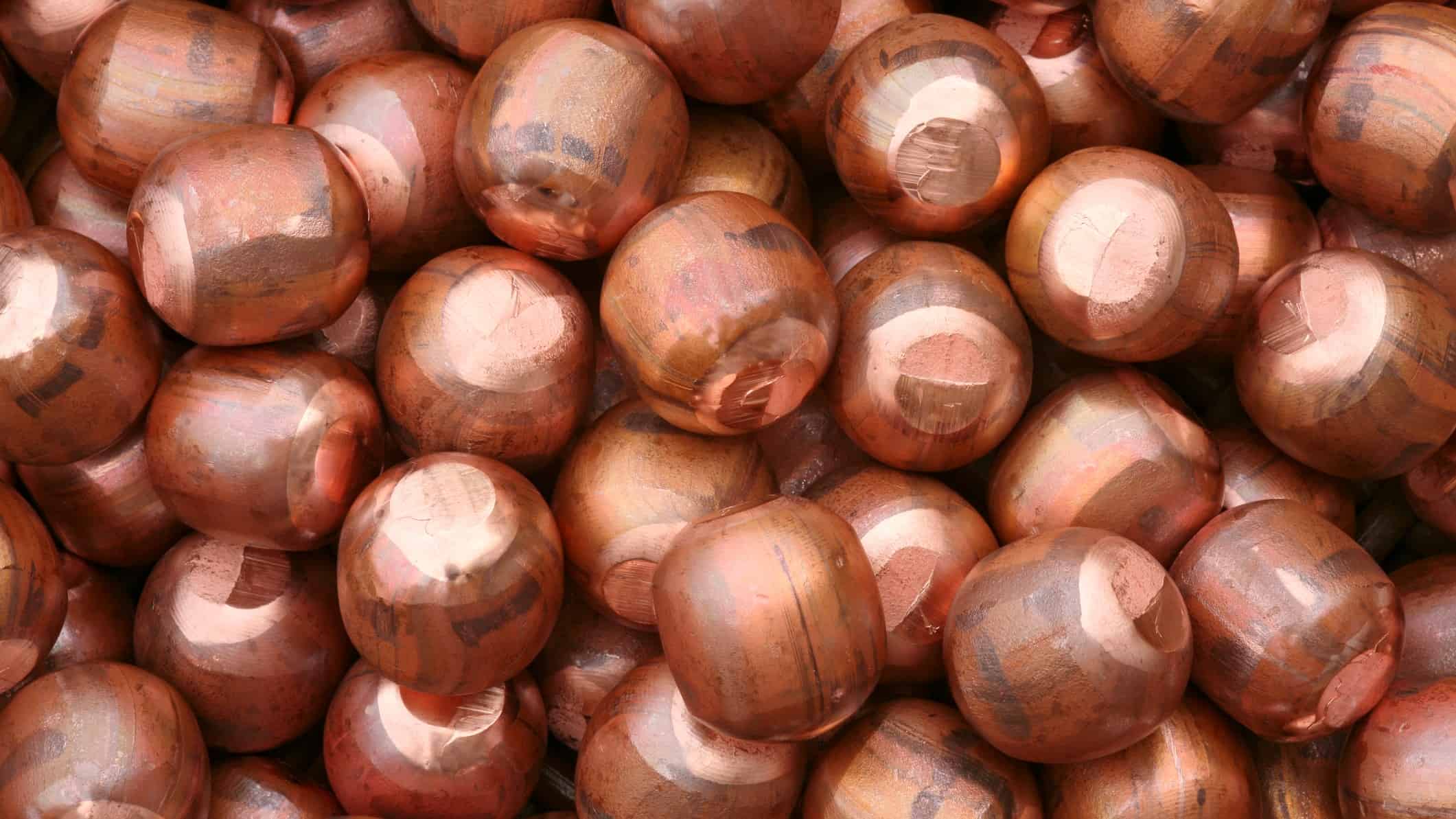
    Copper balls.

    ASX copper explorers don’t often move like this, and Kaoko Metals Ltd (ASX: KAO) had one of the great sessions on Wednesday.

    The shares closed at $1.85 after gaining 151.7%.

    They touched $2.28 during the day.

    That is a long way from the 20 cent offer price at which the company raised roughly $6.5 million earlier this year.

    As a result of all of this, the company’s market capitalisation now sits near $66 million.

    What this ASX copper explorer announced

    The news came from the Chalkos Copper-Silver Project in northwestern Namibia.

    Two drill holes from the maiden campaign intersected broad zones of visible copper mineralisation.

    One returned 60.25 metres of mineralisation, including a stronger 32.36 metre zone within it.

    Kaoko describes the ground as sitting in the Damara Belt, which management considers geologically comparable to the Central African copper systems.

    The company also holds the Karibib copper, gold and tungsten project in central Namibia, where it has an 85% earn-in.

    Both assets were the reason for the float, and both were described as drill-ready at listing.

    Here is what was missing from the announcement

    However, some key bits of information were left out.

    Visible mineralisation is what a geologist can see in the core, not what a laboratory has measured.

    No assay results have been reported, and as such nobody yet knows the copper grade.

    Those results are expected within four to six weeks.

    Until they arrive, the entire 151% remains quite speculative.

    The ASX noticed the same thing and issued a price and volume query, the so-called speeding ticket.

    The speeding ticket is a routine request, and asks whether the company is aware of anything explaining the move.

    Why ASX copper is suddenly interesting

    The backdrop around copper helps explain the enthusiasm.

    Copper prices rose 3.7% across August while iron ore fell 2%, which is an unusual split for a market as iron ore heavy as ours.

    Additionally, BHP Group Ltd (ASX: BHP) specifically credited copper for driving its record FY26 result.

    Electrification demand keeps growing while new discoveries have become scarce, which is why exploration success is being rewarded this aggressively.

    That is why this ASX copper discovery is drawing this much attention right now.

    Investors who missed the move in the large producers have been hunting further down the market for exposure.

    What has to happen next

    Three things determine whether this can continue for Kaoko Metals.

    First, the assays need to confirm commercial grades.

    Second, the zones need enough width and continuity.

    And finally the company needs to fund the follow-up drilling, which almost certainly means raising capital at some point.

    A share price near $1.85 makes that raising far less dilutive than it would have been in July, which is one of the benefits of a move like this.

    Foolish takeaway

    Buying an ASX copper explorer before its assays is a speculative bet on geology.

    The odds are not in the buyer’s favour, because most exploration campaigns disappoint.

    A $66 million market capitalisation is not demanding if Chalkos turns out to be a true discovery, but it is far too high if the grades are disappointing.

    The post This ASX copper explorer is up 390% since its May IPO. Is it still a buy? appeared first on The Motley Fool Australia.

    Should you invest $1,000 in Kaoko Metals right now?

    Before you buy Kaoko Metals shares, consider this:

    Motley Fool investing expert Scott Phillips just revealed what he believes are the 5 best stocks for investors to buy right now… and Kaoko Metals wasn’t one of them.

    The online investing service he’s run for over a decade, Motley Fool Share Advisor, has provided thousands of paying members with stock picks that have doubled, tripled or even more.*

    And right now, Scott thinks there are 5 stocks that may be better buys…

    * Returns as of 1 August 2026

    .custom-cta-button p {
    margin-bottom: 0 !important;
    }

    More reading

    Motley Fool contributor Mark Verhoeven has no position in any of the stocks mentioned. The Motley Fool Australia’s parent company Motley Fool Holdings Inc. has no position in any of the stocks mentioned. The Motley Fool Australia has recommended BHP Group. The Motley Fool has a disclosure policy. This article contains general investment advice only (under AFSL 400691). Authorised by Scott Phillips.

  • Is the Woolworths share price a buy?

  • Cloudflare Sees Uptick in Cyber Attacks as Internet Usage Increases

  • SpringWorks (SWTX): A Rare Cancer Biotech with Potentially >50% Upside. Recommending BUY.

  • Which markets or industries do you see perform best in the next decades (geographic vs. industry focus vs. cap size)? How do you build this into a strategy and portfolio to maximize expected risk-adjusted future returns?