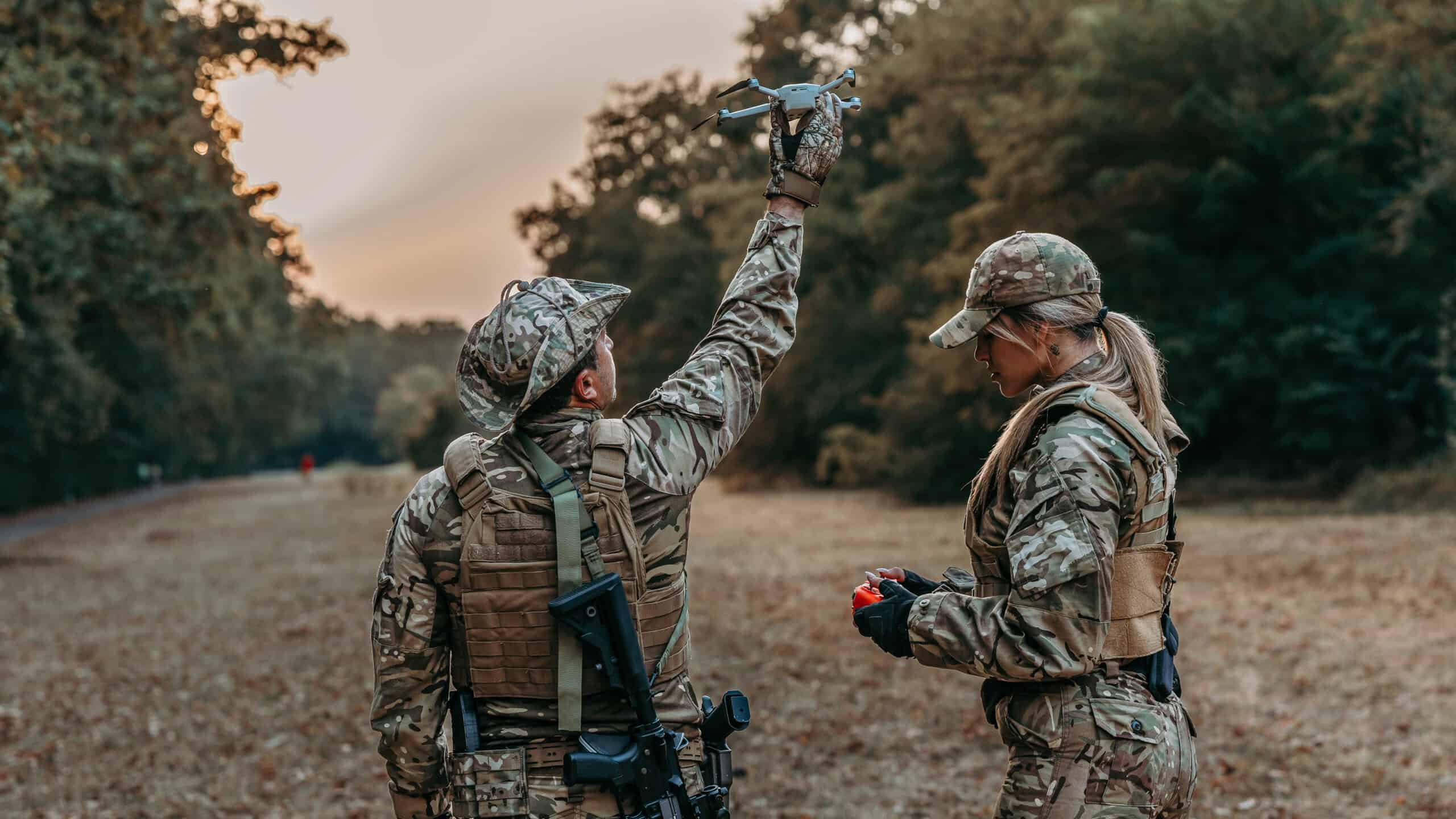
DroneShield Ltd (ASX: DRO) shares are in freefall, and investors are starting to ask an uncomfortable question.
The counter-drone technology company closed at $1.60 on Monday, a fresh 52-week low, leaving the share price a staggering 76% below its previous high of $6.70, reached at the end of October last year.
When a stock falls that hard, the temptation to call a bottom gets stronger. But is the risk-reward actually tempting enough to buy? Or is this a falling knife dressed up as a bargain?
The demand story hasn’t gone anywhere
The numbers tell a grim story. DroneShield shares are down 20% over the past month and 49% over the past year. For a stock that was once one of the ASX’s hottest momentum plays, this is a stunning reversal of fortune.
DroneShield is actually converting that demand into hard revenue. Its latest update showed FY26 committed revenue had reached $251 million, with a further $46 million already committed for FY27 and beyond. First-half revenue surged 74% to $125.8 million, while recurring revenue rocketed 229% to $11.5 million â a sign the business is shifting from one-off sales toward something stickier.
The company also landed its first order for its new RfRecon product from an existing Western European military customer. It’s not financially material yet, but it’s early validation for another product in an expanding range.
The catch: this is still a loss-making bet
None of that changes the fact that DroneShield is bleeding cash. First-half underlying EBITDA was $12.4 million in the red, and the statutory loss came in at $32.2 million.
DroneShield shares remain one of the highest-risk stocks on the ASX. Defence contracts don’t arrive on a neat schedule, so revenue can be lumpy and unpredictable.
The company is scaling fast, but investors still need proof that bigger revenue eventually turns into sustainable profit, not just bigger losses. And as governments pour more money into counter-drone systems, larger, better-funded defence contractors could pile into the same opportunity, squeezing DroneShield’s edge.
What are the brokers saying?
TradingView data shows just four analysts cover the stock â split evenly, with two buys and two sells.
The average 12-month price target for DroneShield shares sits at $1.99, roughly 24% above the current share price. Bell Potter is the most bullish at $2.40, with Canaccord Genuity close behind at $2.60.
Foolish takeaway
DroneShield isn’t a stock for the faint-hearted. The growth numbers are genuinely exciting, but the losses, volatility and competitive threats are just as real.
For risk-tolerant investors who believe in the counter-drone thematic, this pullback might be the entry point they’ve been waiting for. For everyone else, this is one to watch from the sidelines.
The post DroneShield shares just hit a new low. Is the only way up from here? appeared first on The Motley Fool Australia.
Should you invest $1,000 in DroneShield right now?
Before you buy DroneShield shares, consider this:
Motley Fool investing expert Scott Phillips just revealed what he believes are the 5 best stocks for investors to buy right now… and DroneShield wasn’t one of them.
The online investing service he’s run for over a decade, Motley Fool Share Advisor, has provided thousands of paying members with stock picks that have doubled, tripled or even more.*
And right now, Scott thinks there are 5 stocks that may be better buys…
* Returns as of 1 August 2026
.custom-cta-button p {
margin-bottom: 0 !important;
}
More reading
- DroneShield shares have crashed 51% in a year. Here’s why I’d buy them today
- Are DroneShield shares a buy at their 52-week low?
- These are the 10 most shorted ASX shares
- $10,000 invested in DroneShield and Core Lithium shares 3 years ago is now worthâ¦
- DroneShield shares are down 75%. Could this huge short bet backfire?
Motley Fool contributor Marc Van Dinther has no position in any of the stocks mentioned. The Motley Fool Australia’s parent company Motley Fool Holdings Inc. has positions in and has recommended DroneShield. The Motley Fool Australia has no position in any of the stocks mentioned. The Motley Fool has a disclosure policy. This article contains general investment advice only (under AFSL 400691). Authorised by Scott Phillips.