
• Why it could be time to shift from growth to income: Expert

    Two friends giving each other a high five at the top pf a hill.

    A new report from Betashares has shed light on the changing dynamics of investing. 

    For much of the past two decades, Australian investors were rewarded for prioritising capital growth. 

    However several headwinds are now changing this landscape. 

    High valuations, a shifting interest rate environment and recent tax changes are all impacting the potential of growth investing. 

    Why growth was king

    According to the report, In the decade to 2026, the economy enjoyed an average RBA cash rate of 1.8%, less than half of the 4.6% average since 1990. 

    This meant debt was cheap, and businesses and investors alike were awash with cash to invest and expand.

    While growth benefited from low interest rates, income suffered. Savings accounts paid lower interest, and Australian government 10-year treasury bonds paid an average of just 2.7%.

    On top of this, the 50% capital gains tax (CGT) discount effectively halved the amount of CGT paid by investors since 1999, as long as the asset being sold had been held for over a year. This encouraged investing for capital growth.

    What’s changing?

    Betashares said that three factors are pushing income back into focus.

    Firstly, interest rates have raised the floor for income. 

    Higher rates mean savings accounts and government bonds can now offer attractive yields, making income investments more competitive.

    Secondly, tax changes have narrowed growth’s advantage. 

    Changes to capital gains tax from 2027 will reduce some of the tax benefits of growth investing, narrowing the gap between growth and income strategies.

    Finally, higher valuations raise the bar for future growth. 

    ASX 200 valuations are well above pre-pandemic levels, meaning investors are paying more for each dollar of earnings and future growth may be harder to achieve.

    In short, with income yields higher, growth’s tax advantage reduced, and valuations elevated, income investing is looking increasingly attractive relative to growth investing.

    You don’t have to pick one or the other

    It’s important for investors to understand this doesn’t mean you need to abandon growth equities and only focus on income. 

    The more useful question is not whether to be a growth investor or an income investor, but whether you are being deliberate about where your returns come from. A portfolio that earns income through dividends, bonds or high-yield savings alongside capital growth is no longer a conservative retreat, but a considered response to a landscape that looks meaningfully different to the one we navigated for the past decade.

    For investors looking to target high-yield companies, there are several ASX ETFs to consider. 

    Income focussed funds include: 

    • Betashares S&P Australian Shares High Yield ETF (ASX: HYLD)
    • Betashares Australian Dividend Harvester Fund (ASX: HVST)
    • BetaShares Australian Top 20 Equities Yield Maximiser Complex ETF (ASX: YMAX).

    The post Why it could be time to shift from growth to income: Expert appeared first on The Motley Fool Australia.

    Should you invest $1,000 in Betashares S&P Australian Shares High Yield Etf right now?

    Before you buy Betashares S&P Australian Shares High Yield Etf shares, consider this:

    Motley Fool investing expert Scott Phillips just revealed what he believes are the 5 best stocks for investors to buy right now… and Betashares S&P Australian Shares High Yield Etf wasn’t one of them.

    The online investing service he’s run for over a decade, Motley Fool Share Advisor, has provided thousands of paying members with stock picks that have doubled, tripled or even more.*

    And right now, Scott thinks there are 5 stocks that may be better buys…

    * Returns as of 1 August 2026

    .custom-cta-button p {
    margin-bottom: 0 !important;
    }

    More reading

    Motley Fool contributor Aaron Bell has no position in any of the stocks mentioned. The Motley Fool Australia’s parent company Motley Fool Holdings Inc. has no position in any of the stocks mentioned. The Motley Fool Australia has no position in any of the stocks mentioned. The Motley Fool has a disclosure policy. This article contains general investment advice only (under AFSL 400691). Authorised by Scott Phillips.

  • 33 ASX shares going ex-dividend next week

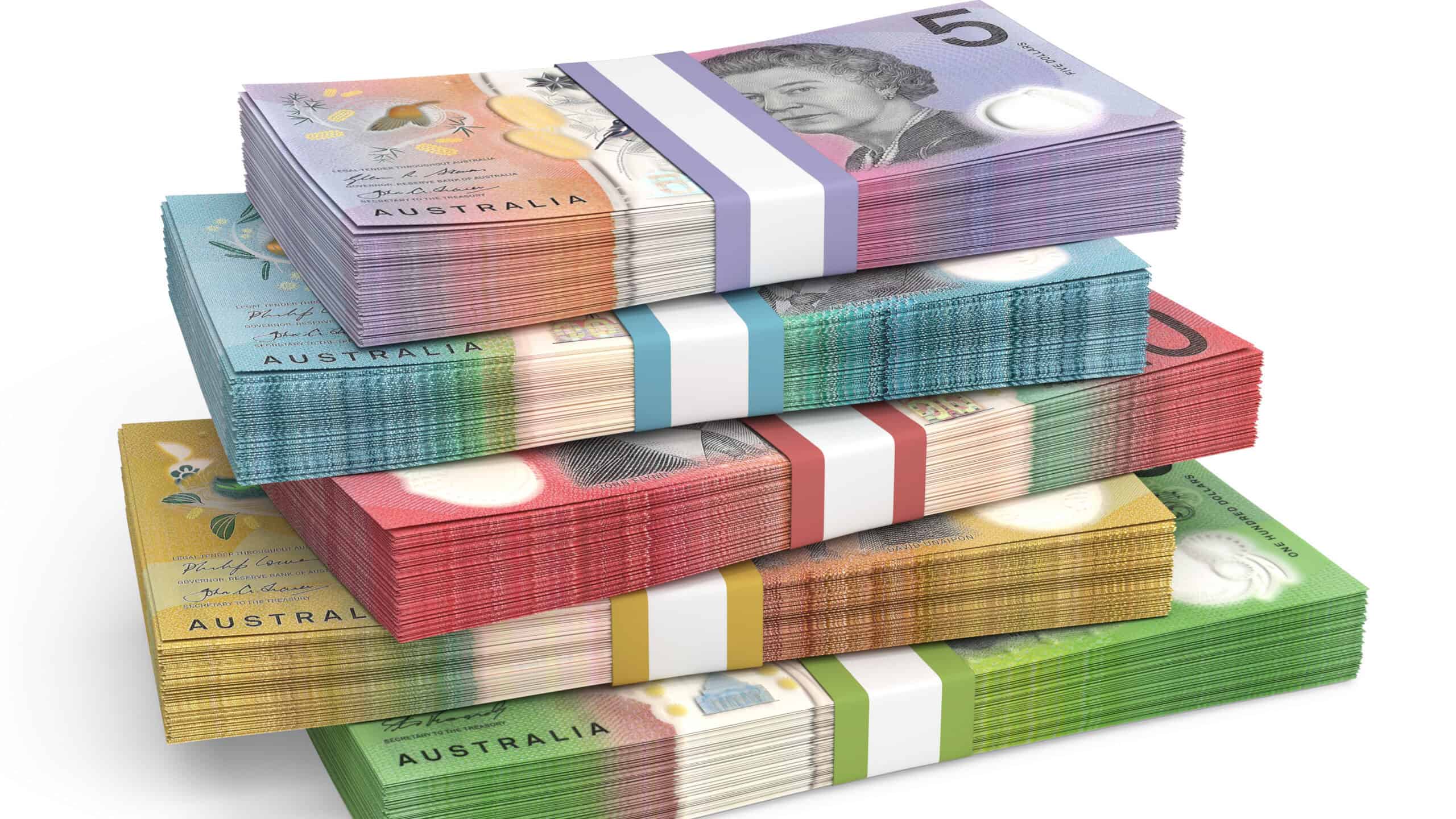
    Stacks of Australian dollar currency banknotes.

    S&P/ASX All Ords Index (ASX: XAO) shares are paying out dividends left, right, and centre following the August earnings season.

    We’re helping you monitor ex-dividend dates with an article every Friday.

    Here are some of the ASX shares due to trade ex-dividend next week.

    To be eligible for the dividend, you must own the ASX share before its ex-dividend date.

    ASX shares going ex-dividend next week

    ASX share Ex-div date Dividend Payday
    Virgin Australian Holdings Ltd (ASX: VGN) 14 September 7.6 cents per share 15 October
    Credit Corp Ltd (ASX: CCP) 14 September 45.5 cents per share 25 September
    WCM Global Growth Ltd (ASX: WQG) 14 September 2.4 cents per share 30 September
    Chorus Ltd (ASX: CNU) 14 September 25.6 cents per share 6 October
    Kelsian Group Ltd (ASX: KLS) 14 September 10 cents per share 21 October
    Westgold Resources Ltd (ASX: WGX) 15 September 10 cents per share 8 October
    Ramelius Resources Ltd (ASX: RMS) 15 September 3 cents per share 13 October
    Guzman Y Gomez Ltd (ASX: GYG) 15 September 40.6 cents per share 30 September
    Data#3 Ltd (ASX: DTL) 15 September 18.2 cents per share 30 September
    Neuren Pharmaceuticals Ltd (ASX: NEU) 15 September 15 cents per share 7 October
    Qantas Airways Ltd (ASX: QAN) 15 September 19.8 cents per share 14 October
    Lovisa Holdings Ltd (ASX: LOV) 15 September 33 cents per share 15 October
    Duratec Ltd (ASX: DUR) 15 September 2.5 cents per share 14 October
    Red Hill Minerals Ltd (ASX: RHI) 15 September 10.8 cents per share 30 September
    IMDEX Ltd (ASX: IMD) 16 September 1.8 cents per share 1 October
    Service Stream Ltd (ASX: SSM) 16 September 3.5 cents per share 2 October
    Servcorp Ltd (ASX: SRV) 16 September 16 cents per share 7 October
    PWR Holdings Ltd (ASX: PWH) 16 September 5 cents per share 24 September
    Auckland International Airport Ltd (ASX: AIA) 16 September 5.6 cents per share 2 October
    Inghams Group Ltd (ASX: ING) 16 September 6.1 cents per share 12 October
    BKI Investment Company Ltd (ASX: BKI) 16 September 2 cents per share 30 September
    Capricorn Metals Ltd (ASX: CMM) 16 September 5 cents per share 9 October
    Aurelia Metals Ltd (ASX: AMI) 16 September 1 cents per share 8 October
    A2 Milk Company Ltd (ASX: A2M) 17 September 6.7 cents per share 2 October
    SKS Technologies Ltd (ASX: SKS) 17 September 6.5 cents per share 16 October
    Lycopodium Ltd (ASX: LYL) 17 September 37 cents per share 2 October
    South32 Ltd (ASX: S32) 17 September 7.5 cents per share 15 October
    Flight Centre Travel Group Ltd (ASX: FLT) 17 September 30 cents per share 16 October
    Supply Network Ltd (ASX: SNL) 17 September 44 cents per share 2 October
    Vita Life Sciences Ltd (ASX: VLS) 18 September 5 cents per share 2 October
    Adrad Holdings Ltd (ASX: AHL) 18 September 2.6 cents per share 21 October
    Macmahon Holdings Ltd (ASX: MAH) 18 September 1.3 cents per share 12 October
    Centrepoint Alliance Ltd (CAF) 18 September 1.8 cents per share 6 October

    Check out which ASX shares go ex-dividend today.

    The post 33 ASX shares going ex-dividend next week appeared first on The Motley Fool Australia.

    Should you invest $1,000 in S&P/ASX All Ordinaries Index Total Return Gross (AUD) right now?

    Before you buy S&P/ASX All Ordinaries Index Total Return Gross (AUD) shares, consider this:

    Motley Fool investing expert Scott Phillips just revealed what he believes are the 5 best stocks for investors to buy right now… and S&P/ASX All Ordinaries Index Total Return Gross (AUD) wasn’t one of them.

    The online investing service he’s run for over a decade, Motley Fool Share Advisor, has provided thousands of paying members with stock picks that have doubled, tripled or even more.*

    And right now, Scott thinks there are 5 stocks that may be better buys…

    * Returns as of 1 August 2026

    .custom-cta-button p {
    margin-bottom: 0 !important;
    }

    More reading

    Motley Fool contributor Bronwyn Allen has no position in any of the stocks mentioned. The Motley Fool Australia’s parent company Motley Fool Holdings Inc. has positions in and has recommended Lovisa, PWR Holdings, and Supply Network Ltd. The Motley Fool Australia has positions in and has recommended PWR Holdings and Servcorp. The Motley Fool Australia has recommended Data#3, Flight Centre Travel Group, Lovisa, Lycopodium, Sks Technologies Group, and Supply Network Ltd. The Motley Fool has a disclosure policy. This article contains general investment advice only (under AFSL 400691). Authorised by Scott Phillips.

  • How much do I need to invest in ASX shares to retire with an extra $1 million on top of my superannuation?

    Person holding alarm clock with work and retire written.

    Australia’s compulsory Superannuation Guarantee means that your employer needs to contribute 12% of your earnings into super.

    Regardless of the ongoing political debates over that guarantee, this should mean most Aussies will have built up enough in superannuation to live comfortably in retirement.

    But if your goal is to be more than just comfortable during those golden years, you may not want to hang your hat solely on those super savings.

    Now there are a number of ways you can build extra wealth. In my opinion, buying quality ASX shares and holding them over the long-term tops that list.

    But how much do you need to invest in ASX shares to reach that $1 million milestone?

    I’m glad you asked!

    Investing in ASX shares to bolster your superannuation savings

    If you take a look at the S&P/ASX 200 Gross Total Return Index (ASX: XJT) – which includes all cash dividends reinvested on the ex-dividend date – you’ll see it’s returned 43.1% over the past five years (as of afternoon trade on Thursday).

    This equates to an annualised return of approximately 7.5%.

    Now, atop this benchmark yield, how much you need to invest in ASX shares for an extra $1 million in addition to your superannuation will depend on how many years you plan on investing.

    The sooner you start, the longer you have to build up your ASX share portfolio. And the sooner you can tap into the magic of compounding.

    Here’s what I mean.

    If you’re 40 years old and looking to retire at 67, then you’ll have 27 years to buy ASX shares.

    If you started today and invested $1,000 each month, here’s what you’d have on top of your superannuation:

    • $180,042 in 10 years
    • $558,192 in 20 years
    • $1,146,198 in 27 years

    So, if you have 27 years to achieve your $1 million goal, you should be able to get there by investing just $1,000 a month in ASX shares.

    Now, if you’re 50 and want to retire at 67, you’ll need to materially increase those monthly investments to get there in only 17 years.

    According to my trusty compound interest calculator, if you invest $2,450 in ASX shares every month, you should have $1,014,029 on top of your superannuation in 17 years.

    Which ASX shares should I buy?

    Over time, you may want to build up a diversified ASX share portfolio.

    But to get the ball rolling in building that superannuation boosting wealth, you could start with the Vanguard Australian Shares Index ETF (ASX: VAS), which is intended to track the ASX 300 index.

    Over the past five years, the exchange traded fund has delivered an annualised return of 7.6%.

    The ASX ETF’s top four holdings are BHP Group Ltd (ASX: BHP), Commonwealth Bank of Australia (ASX: CBA), Westpac Banking Corp (ASX: WBC), and National Australia Bank Ltd (ASX: NAB).

    The post How much do I need to invest in ASX shares to retire with an extra $1 million on top of my superannuation? appeared first on The Motley Fool Australia.

    Should you invest $1,000 in Vanguard Australian Shares Index ETF right now?

    Before you buy Vanguard Australian Shares Index ETF shares, consider this:

    Motley Fool investing expert Scott Phillips just revealed what he believes are the 5 best stocks for investors to buy right now… and Vanguard Australian Shares Index ETF wasn’t one of them.

    The online investing service he’s run for over a decade, Motley Fool Share Advisor, has provided thousands of paying members with stock picks that have doubled, tripled or even more.*

    And right now, Scott thinks there are 5 stocks that may be better buys…

    * Returns as of 1 August 2026

    .custom-cta-button p {
    margin-bottom: 0 !important;
    }

    More reading

    Motley Fool contributor Bernd Struben has no position in any of the stocks mentioned. The Motley Fool Australia’s parent company Motley Fool Holdings Inc. has no position in any of the stocks mentioned. The Motley Fool Australia has recommended BHP Group. The Motley Fool has a disclosure policy. This article contains general investment advice only (under AFSL 400691). Authorised by Scott Phillips.

  • ImagineAR Announces That Major North American Sports & Entertainment Company Is Moving Forward With Augmented Reality Solution; Contract Is Imminent

  • Why a president Joe Biden wouldn’t send the stock market into an ugly tailspin

  • Exclusive: Goldman revamps employee reviews, opening door to greater job cuts

  • Market Cool On Taylor Morrison Home Corporation’s (NYSE:TMHC) Earnings