
• ASX 200 dives to a 6-week low. What’s behind today’s sell-off?

    Woman looking at stock market numbers.

    The S&P/ASX 200 Index (ASX: XJO) is having a rough Thursday.

    At the time of writing, the benchmark index is down 1.68% to 8,762 points, pushing it to its lowest level in around 6 weeks.

    The fall also leaves the ASX 200 roughly 5.7% below its record high of 9,296 points reached in early August. Over the past month alone, the index has fallen more than 5%.

    The selling is also spread right across the market. At the latest check, 153 shares are falling, 36 are rising and 11 are unchanged.

    If the current decline holds into the close, it would also be the ASX 200’s worst session in around 3 months.

    Oil above US$100 rattles investors

    One of the biggest concerns today is the jump in oil prices.

    Brent crude is currently at US$101.60 a barrel, as tensions involving the US and Iran continued to push energy prices higher.

    Higher oil prices are adding to inflation concerns, which is pushing bond yields higher and making the outlook for interest rates less comfortable.

    The US 10-year Treasury yield climbed to around 4.84% overnight, its highest level since 2023, while Australian bond yields have also moved higher.

    Markets are now pricing around a 70% chance of another Reserve Bank of Australia rate hike at its 29 September meeting.

    Heavyweights are getting hit

    The weakness is spread across the market, with every sector trading lower earlier on Thursday.

    Mining stocks are doing plenty of damage after iron ore slipped back below US$100 a tonne.

    BHP Group Ltd (ASX: BHP) shares are down 2.81% to $62.77, while Rio Tinto Ltd (ASX: RIO) shares have fallen 3.03% to $173.90.

    The banks are also lower, with Commonwealth Bank of Australia (ASX: CBA) shares down 1.71% to $152.60 and National Australia Bank Ltd (ASX: NAB) shares falling 1.91% to $37.54.

    What should investors watch now?

    One level worth watching is the ASX 200’s 200-day moving average, which was sitting around 8,816 points before the market opened.

    The index has now dropped below that level, which could put more attention on the 8,800 area after the strong breakout above 9,000 in August failed to hold.

    The next few sessions are likely to depend heavily on oil prices, bond yields and the upcoming US inflation data.

    The ASX 200 is still slightly higher in 2026, so I wouldn’t call this a major correction yet.

    But with the index now 5% below its August record high, investors should expect more short-term volatility.

    The post ASX 200 dives to a 6-week low. What’s behind today’s sell-off? appeared first on The Motley Fool Australia.

    Wondering where you should invest $1,000 right now?

    When investing expert Scott Phillips has a stock tip, it can pay to listen. After all, the flagship Motley Fool Share Advisor newsletter he has run for over ten years has provided thousands of paying members with stock picks that have doubled, tripled or even more.*

    Scott just revealed what he believes could be the ‘five best ASX stocks’ for investors to buy right now. We believe these stocks are trading at attractive prices and Scott thinks they could be great buys right now…

    * Returns as of 1 August 2026

    .custom-cta-button p {
    margin-bottom: 0 !important;
    }

    More reading

    Motley Fool contributor Aaron Teboneras has no position in any of the stocks mentioned. The Motley Fool Australia’s parent company Motley Fool Holdings Inc. has no position in any of the stocks mentioned. The Motley Fool Australia has recommended BHP Group. The Motley Fool has a disclosure policy. This article contains general investment advice only (under AFSL 400691). Authorised by Scott Phillips.

  • 2 ASX dividend shares yielding 9.5% (or even more)

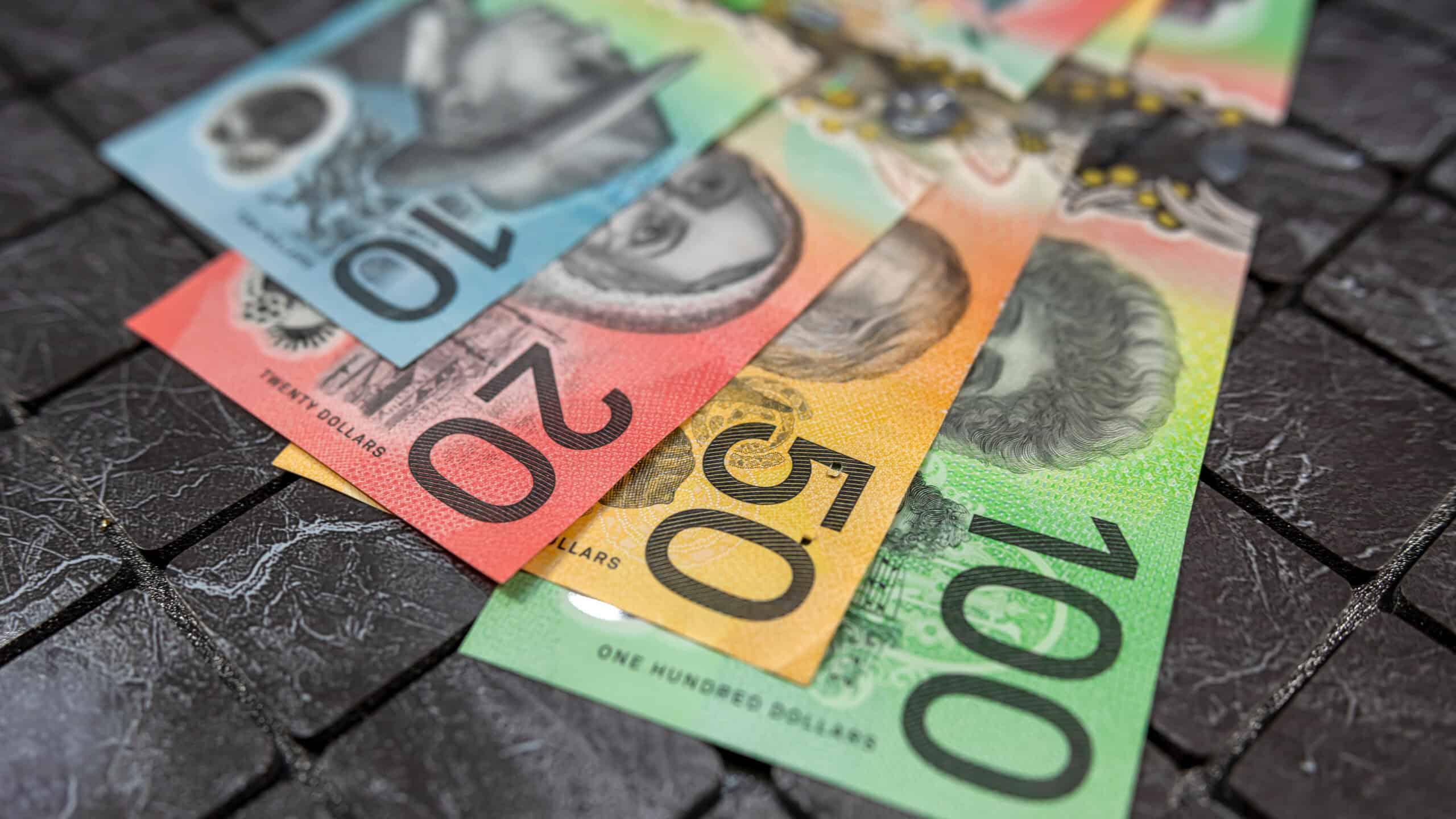
    Numerous Australian dollar notes laid out.

    If you like the idea of earning an easy passive income, then ASX dividend shares are for you.

    There are a huge range of ASX shares on the market which pay out dividends to shareholders every six months, or perhaps even more frequently.

    But the hardest part is picking the best ones for your portfolio.

    Here are two of my top high-yield ASX dividend picks. And these shares both pay a huge dividend of 10% or more.

    BetaShares Australian Top 20 Equities Yield Maximiser Complex ETF (ASX: YMAX)

    YMAX is an ASX-listed exchange-traded fund (ETF) that gives its shareholders exposure to Australia’s 20 largest blue-chip shares, rather than just one individual company.

    I like the stock because it invests in a range of large Australian companies, which means it can provide greater diversification and reduce the risk of relying on the performance of one individual company. 

    This makes it a more stable option for investors looking for regular passive income, while still giving them exposure to some of Australia’s biggest businesses.

    The fund is heavily weighted into the financial sector, which accounts for 43.2% of its allocation at the time of writing. The materials sector is second, accounting for 24.8% of its allocation. 

    Elsewhere, it also invests into the consumer discretionary, consumer staples, energy, industrials, real estate, communications, and healthcare sectors. 

    YMAX also differs from a lot of other ASX dividend stocks because it pays its shareholders on a monthly basis.

    As of the 31th of August, YMAX has a 12-month gross distribution yield of 9.5%, and a net yield of 8.1%. The total franking level is 41.4%.

    The ASX dividend share is due to pay its next dividend ( 5 cents per unit) to shareholders next week. It has paid between 3.5 cents and 5 cents per share since it moved to monthly payouts in February this year.

    Nine Entertainment Co. Holdings Ltd (ASX: NEC)

    Nine Entertainment is another attractive passive income option. The business has a large and established position in Australia’s media industry, combined with a long history of paying reliable and consistent dividends to its shareholders.

    Australian media giant Nine Entertainment underwent a strategic reshape of its business in the first half of FY26. This included a broad portfolio restructure, acquisitions and asset sales, and enhancements to its digital and streaming revenue.

    The ASX dividend company acquired QMS Media, sold Nine Radio, and restructured its NBN and Darwin TV operations. It also sold its controlling stake in property platform Domain. 

    The $1.4 billion Domain deal allowed Nine to reduce debt and boost its balance sheet. It also meant it was able to return roughly $777 million (paying a special dividend at a rate of 49 cents per share) to investors in late-2025. 

    Just last month, the ASX company announced its FY26 results, including a 3% increase in revenue, a 17% increase in EBITDA, and a final 3 cent per share dividend for FY26.

    Combined with its 4.5 cent interim unfranked dividend paid in April, the total FY26 dividend comes to 7.5 cents. At the time of writing, this translates to a dividend yield of around 9.9%.

    The post 2 ASX dividend shares yielding 9.5% (or even more) appeared first on The Motley Fool Australia.

    Should you invest $1,000 in Nine Entertainment right now?

    Before you buy Nine Entertainment shares, consider this:

    Motley Fool investing expert Scott Phillips just revealed what he believes are the 5 best stocks for investors to buy right now… and Nine Entertainment wasn’t one of them.

    The online investing service he’s run for over a decade, Motley Fool Share Advisor, has provided thousands of paying members with stock picks that have doubled, tripled or even more.*

    And right now, Scott thinks there are 5 stocks that may be better buys…

    * Returns as of 1 August 2026

    .custom-cta-button p {
    margin-bottom: 0 !important;
    }

    More reading

    Motley Fool contributor Samantha Menzies has no position in any of the stocks mentioned. The Motley Fool Australia’s parent company Motley Fool Holdings Inc. has no position in any of the stocks mentioned. The Motley Fool Australia has recommended Nine Entertainment. The Motley Fool has a disclosure policy. This article contains general investment advice only (under AFSL 400691). Authorised by Scott Phillips.

  • NEXTDC shares are falling despite $1.1 billion funding boost. Here’s why

    Server racks in a data centre.

    NEXTDC Ltd (ASX: NXT) shares are under pressure despite the data centre operator securing $1.1 billion in fresh funding. The stock fell 3% to $12.41 during Thursday morning trading, taking its monthly decline to around 14% and its 12-month loss to roughly 25%.

    The paradox is striking. NEXTDC is raising billions to capitalise on booming AI demand, yet investors appear increasingly concerned about how much it will cost to turn that demand into profits.

    AI opportunity comes with a huge bill

    The funding solves one problem, but highlights another.

    NEXTDC is seeing customers reserve enormous amounts of data centre capacity well before the infrastructure is ready to generate revenue. At the end of FY26, contracted utilisation had reached 740.1MW, but only 175MW was already billing.

    That leaves a substantial gap between capacity customers have committed to and infrastructure actually generating revenue.

    Earlier this year, NEXTDC estimated its existing contracted utilisation could eventually generate more than $1 billion of EBITDA once delivered, without assuming any additional customer wins.

    That sounds compelling. The catch is that delivering all that capacity requires an extraordinary amount of capital.

    NEXTDC has been tapping equity, debt, and hybrid funding to accelerate construction, while its major developments require access to land, power, equipment, and skilled workers.

    That makes execution critical for NEXTDC shares. Any delays, cost overruns, financing pressures, or slowdown in AI infrastructure spending could reduce the returns investors ultimately receive.

    There can also be a lengthy lag between signing a customer and bringing new capacity online and generating revenue.

    Investors are focusing on capital intensity

    The scale of NEXTDC’s spending plans helps explain the market’s caution.

    The company expects to spend between $5.25 billion and $5.75 billion in FY27, representing roughly 55% to 70% growth from FY26, as it races to build capacity for AI and cloud customers.

    The latest $1.1 billion convertible notes issue is also NEXTDC’s third capital raising in just over four months.

    For investors in NEXTDC shares, that reinforces an uncomfortable reality: the AI data centre boom may create enormous demand, but meeting that demand requires enormous upfront investment.

    And higher interest rates make capital-intensive infrastructure businesses particularly sensitive to financing costs.

    That’s why NEXTDC shares have fallen roughly 14% over the past month even as contracted utilisation has surged to about 740MW and the company carries a 565MW forward order book.

    Foolish takeaway

    The market isn’t necessarily questioning whether customers want NEXTDC’s infrastructure.

    It’s questioning how much capital NEXTDC needs to spend before those megawatts translate into sustainable revenue and cash flow.

    For shareholders, that’s the key tension behind the recent sell-off of NEXTDC shares.

    The post NEXTDC shares are falling despite $1.1 billion funding boost. Here’s why appeared first on The Motley Fool Australia.

    Should you invest $1,000 in Nextdc right now?

    Before you buy Nextdc shares, consider this:

    Motley Fool investing expert Scott Phillips just revealed what he believes are the 5 best stocks for investors to buy right now… and Nextdc wasn’t one of them.

    The online investing service he’s run for over a decade, Motley Fool Share Advisor, has provided thousands of paying members with stock picks that have doubled, tripled or even more.*

    And right now, Scott thinks there are 5 stocks that may be better buys…

    * Returns as of 1 August 2026

    .custom-cta-button p {
    margin-bottom: 0 !important;
    }

    More reading

    Motley Fool contributor Marc Van Dinther has no position in any of the stocks mentioned. The Motley Fool Australia’s parent company Motley Fool Holdings Inc. has no position in any of the stocks mentioned. The Motley Fool Australia has no position in any of the stocks mentioned. The Motley Fool has a disclosure policy. This article contains general investment advice only (under AFSL 400691). Authorised by Scott Phillips.

  • Hongkong and Shanghai Banking Corp. Ltd (The) — Moody’s announces completion of a periodic review of ratings of Hongkong and Shanghai Banking Corp. Ltd (The)

  • Akebia Initiates Vadadustat Study In Covid-19 Patients

  • Asia’s Richest Man Plots a Technology Future After Luring Google

  • Positive news on Oxford/AstraZeneca COVID-19 vaccine could come on Thursday – ITV