
• How much passive income can I earn off a $550,000 superannuation balance?

    An older couple use a calculator to work out what money they have to spend.

    A $550,000 superannuation balance sits well above the typical Australian average for retirees, but it falls short of what you need for a comfortable retirement lifestyle. 

    It’s the middle ground which can act as a solid base, but it’s not quite enough to live off.

    But what if you didn’t need to live off your superannuation balance alone? What if your superannuation generated enough passive income to partially, or even fully, support you when you quit work?

    So, how much passive income could a $550,000 super balance realistically generate each month?

    Let’s take a look.

    What passive income can I earn off a $550,000 superannuation balance?

    To calculate your passive income, you need to multiply your total superannuation balance by the overall dividend yield of your portfolio.

    The tricky part is that the answer varies widely depending on what dividend yield you pick.

    So, as your dividend yield increases, the passive income you can earn off your $550,000 superannuation balance also goes up.  

    Also note, the figures are based on cash dividends before any tax or franking credit benefits.

    What can I earn off a 2% to 3% yielding portfolio?

    If your portfolio yields 2% or 3%, you’ll earn around $11,000 or $16,500, respectively.

    That’s because $550,000 x 2% = $11,000 per year in dividend payments, and $550,000 x 3% = $16,500 in dividends.

    Around this level, you could invest in major long-standing ASX blue-chip companies like Commonwealth Bank of Australia (ASX: CBA), Wesfarmers Ltd (ASX: WES), CSL Ltd (ASX: CSL), or Macquarie Group Ltd (ASX: MQG). These all yield around the 2% to 3% level at the time of writing.

    What can I earn if my portfolio yields around 4% or 5%?

    If your portfolio has a slightly higher dividend yield, closer to 4% or 5%, you could earn a much higher dividend income of around $22,000 or $27,500, respectively.

    There are still plenty of good-quality stocks yielding around this level. For example, mining giants BHP Group Ltd (ASX: BHP) and Rio Tinto Ltd (ASX: RIO). Major banks National Australia Bank Ltd (ASX: NAB) and Westpac Banking Corp (ASX: WBC) also yield around the 4% to 5% range. As do energy majors Woodside Energy Group Ltd (ASX: WDS) and APA Group (ASX: APA). 

    What if I want to invest my superannuation in high-yielding shares around 10% or even higher?

    If you have the stomach to withstand the volatility and elevated risk, you could earn a much higher passive income from high-yielding stocks.

    At a 10% yield, a $550,000 balance could earn about $55,000.

    And there are still several options paying around this level too. If you’re after a single stock, then GQG Partners Inc (ASX: GQG) and IPH Ltd (ASX: IPH) both yield above 11% at the time of writing.

    Another option is to invest your super into an ETF like the BetaShares Australian Top 20 Equities Yield Maximiser Complex ETF (ASX: YMAX), the BetaShares Global Cybersecurity ETF (ASX: HACK), or the iShares S&P 500 ETF (ASX: IVV). These all yield 10% or higher at the time of writing.

    The post How much passive income can I earn off a $550,000 superannuation balance? appeared first on The Motley Fool Australia.

    Should you invest $1,000 in BetaShares Australian Top 20 Equities Yield Maximiser Complex ETF right now?

    Before you buy BetaShares Australian Top 20 Equities Yield Maximiser Complex ETF shares, consider this:

    Motley Fool investing expert Scott Phillips just revealed what he believes are the 5 best stocks for investors to buy right now… and BetaShares Australian Top 20 Equities Yield Maximiser Complex ETF wasn’t one of them.

    The online investing service he’s run for over a decade, Motley Fool Share Advisor, has provided thousands of paying members with stock picks that have doubled, tripled or even more.*

    And right now, Scott thinks there are 5 stocks that may be better buys…

    * Returns as of 1 August 2026

    .custom-cta-button p {
    margin-bottom: 0 !important;
    }

    More reading

    Motley Fool contributor Samantha Menzies has positions in BHP Group. The Motley Fool Australia’s parent company Motley Fool Holdings Inc. has positions in and has recommended BetaShares Global Cybersecurity ETF, CSL, Macquarie Group, Wesfarmers, and iShares S&P 500 ETF. The Motley Fool Australia has positions in and has recommended Apa Group. The Motley Fool Australia has recommended BHP Group, CSL, Gqg Partners, IPH Ltd , Macquarie Group, Wesfarmers, and iShares S&P 500 ETF. The Motley Fool has a disclosure policy. This article contains general investment advice only (under AFSL 400691). Authorised by Scott Phillips.
  • Is the Santos share price still good value after rising 37% in 2026?

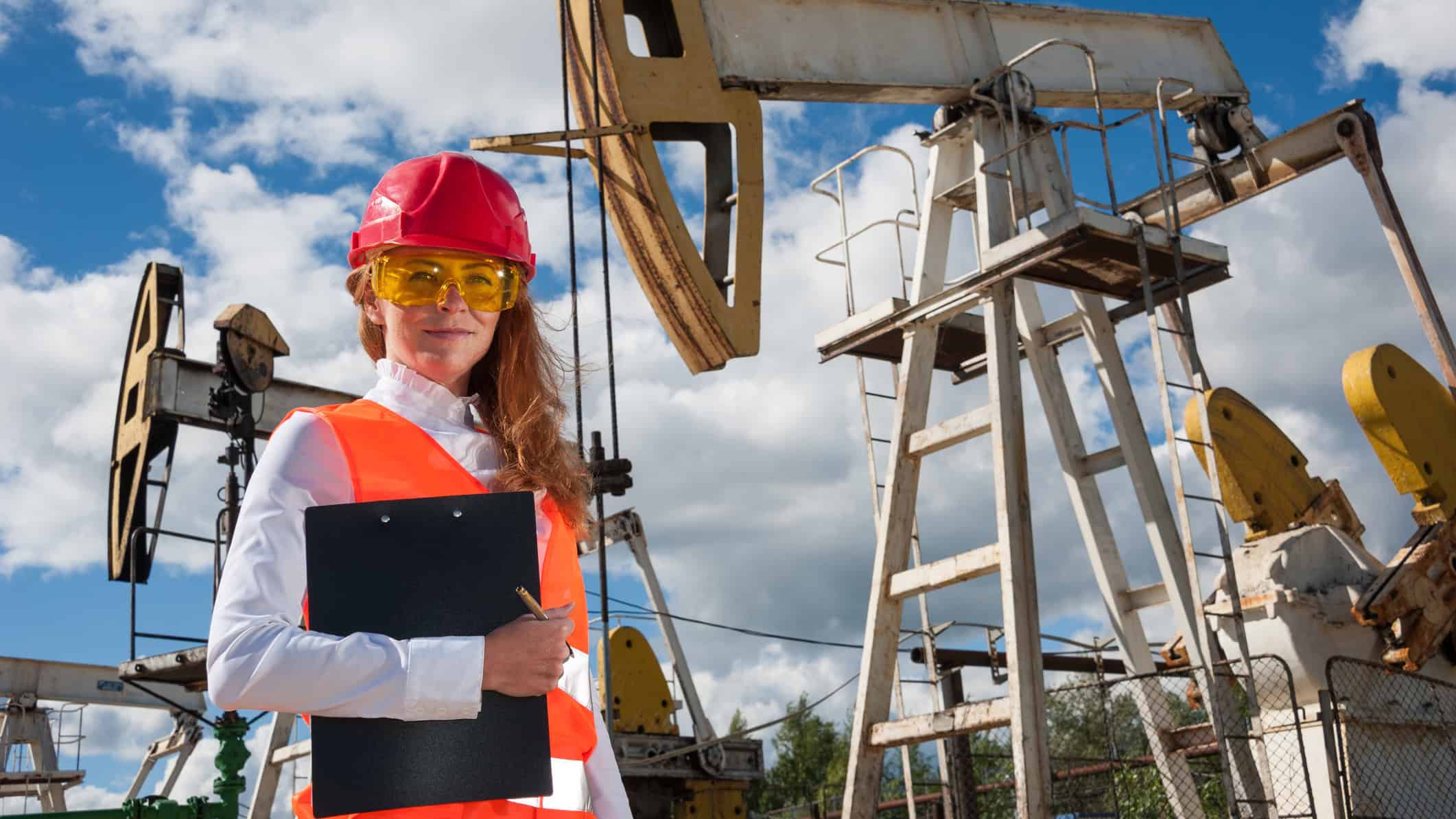
    Engineer in the oilfield wearing red helmet and work clothes, with pumpjack and wellhead in the background.

    The Santos Ltd (ASX: STO) share price has rewarded investors handsomely so far in 2026.

    The energy producer’s shares have climbed around 37% since the beginning of the year and are now trading at approximately $8.41, close to a 52-week high.

    After such a strong run, I think it is worth asking whether there is still enough value left for investors buying today.

    Earnings could move higher

    The first thing I would look at is where Santos’ earnings are expected to go from here.

    Santos has substantial exposure to natural gas and liquefied natural gas (LNG), which gives the business opportunities to benefit from continued energy demand across Australia and Asia.

    According to consensus estimates, earnings per share are forecast to come in at 60.2 cents in FY26 before increasing to 75.3 cents in FY27 and 77.9 cents in FY28.

    Of course, earnings from an energy producer will never be completely predictable. Commodity prices can move quickly, while large projects bring execution and cost risks.

    Still, if analysts are close to the mark, the earnings outlook makes today’s share price considerably easier to justify.

    What are investors paying?

    At $8.41, Santos shares are trading on a P/E ratio of roughly 14 times forecast FY26 earnings.

    The valuation drops to around 11 times FY27 earnings and remains close to that level based on the FY28 forecast.

    I think that looks quite reasonable.

    Santos is a cyclical energy producer, so I would not expect it to command the type of earnings multiple investors might pay for a highly predictable defensive or technology business.

    But an earnings multiple of around 11 times does not look demanding if profits rise as currently expected.

    Dividends add to the case

    There could also be a meaningful income stream for shareholders.

    Consensus forecasts point to dividends per share of 41.7 cents in FY26, 49.4 cents in FY27, and 64.4 cents in FY28.

    At today’s share price, those estimates imply forward dividend yields of roughly 5%, 5.9%, and 7.7%, respectively.

    I would be cautious about assuming the FY28 payment will definitely arrive. Energy earnings can change significantly with commodity prices, and dividends can move with them.

    Even so, the forecasts suggest investors may receive a substantial amount of cash while they wait for the longer-term investment case to play out.

    What could go wrong?

    There is genuine uncertainty to consider.

    Oil and LNG prices can weaken, development projects can cost more than expected, and Santos operates in a capital-intensive industry where investment decisions can have consequences for many years.

    That means I would want a margin of safety rather than buying the shares purely because forecast earnings are rising.

    At around 11 times FY27 earnings, I think there is still one.

    Foolish takeaway

    The Santos share price has already had an excellent 2026, but I do not think the rally has exhausted the opportunity.

    At $8.41, I would describe the shares as good value rather than obviously cheap.

    Forecast earnings growth brings the forward valuation down quickly, while the potential dividend income adds another reason to be interested.

    For investors comfortable with commodity-price volatility and the risks that come with large energy projects, I think Santos shares are still a buy at current levels.

    The post Is the Santos share price still good value after rising 37% in 2026? appeared first on The Motley Fool Australia.

    Should you invest $1,000 in Santos right now?

    Before you buy Santos shares, consider this:

    Motley Fool investing expert Scott Phillips just revealed what he believes are the 5 best stocks for investors to buy right now… and Santos wasn’t one of them.

    The online investing service he’s run for over a decade, Motley Fool Share Advisor, has provided thousands of paying members with stock picks that have doubled, tripled or even more.*

    And right now, Scott thinks there are 5 stocks that may be better buys…

    * Returns as of 1 August 2026

    .custom-cta-button p {
    margin-bottom: 0 !important;
    }

    More reading

    Motley Fool contributor Grace Alvino has no position in any of the stocks mentioned. The Motley Fool Australia’s parent company Motley Fool Holdings Inc. has no position in any of the stocks mentioned. The Motley Fool Australia has no position in any of the stocks mentioned. The Motley Fool has a disclosure policy. This article contains general investment advice only (under AFSL 400691). Authorised by Scott Phillips.

  • Copper prices just hit a record high. What does this mean for ASX copper shares?

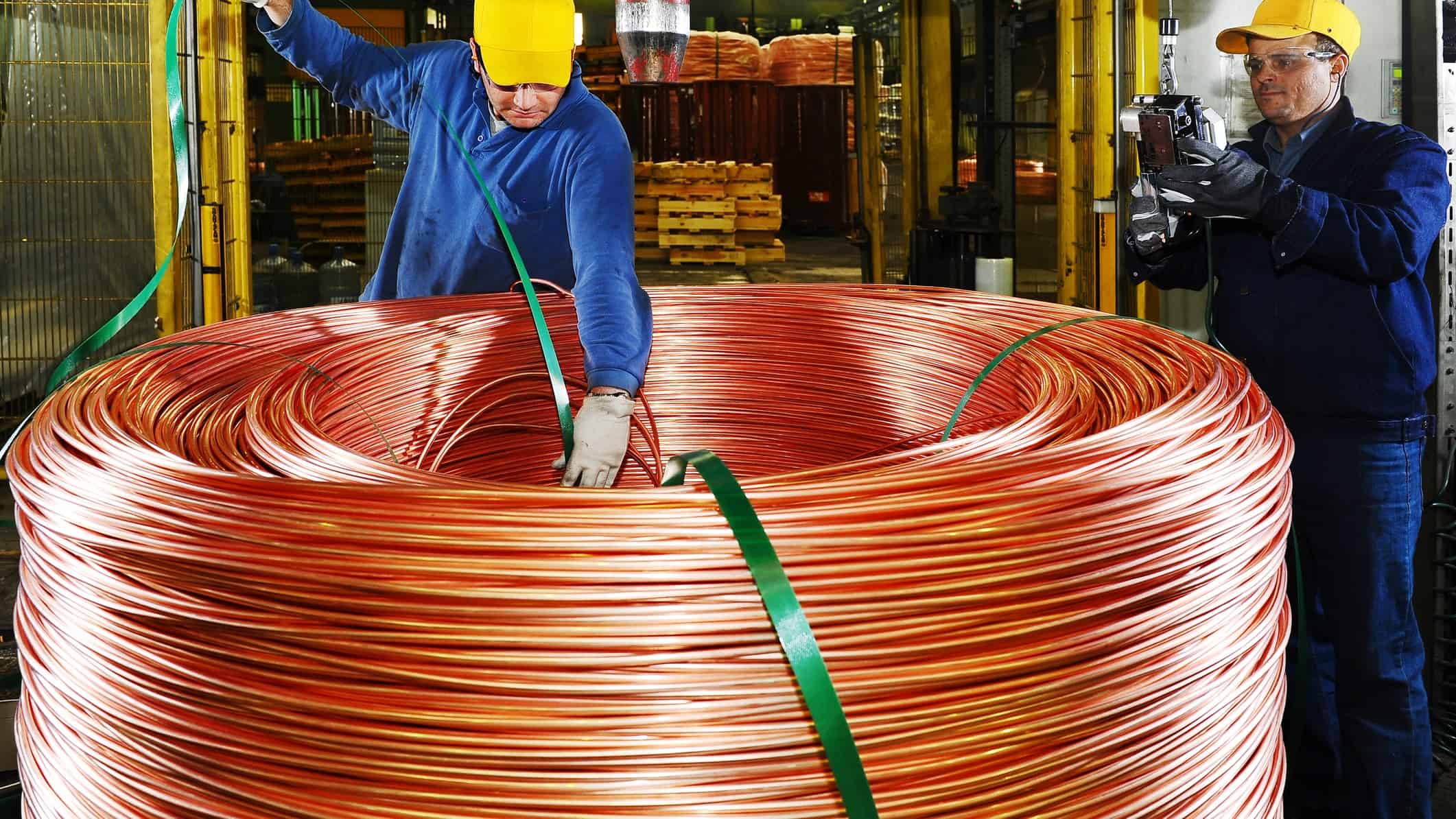
    Two workers working with a large copper coil in a factory.

    ASX copper shares finally have the copper price support the bulls have promised for years.

    Copper set an all-time high in London this week.

    The London Metal Exchange three-month price closed at US$14,415.50 a tonne on Monday, a gain of 0.57%.

    The metal has advanced roughly 17% over the past year.

    Why the copper price matters for ASX copper shares

    Copper is unique among commodities because demand is structural in today’s world.

    Electricity grids, data centres, and renewable generation all consume enormous volumes of it.

    Supply is the harder half, because new mines take a decade to build.

    BHP has been transparent about where it sees the opportunity, describing copper as the engine driving the company’s growth.

    The company has a project pipeline across Chile, Australia, and Argentina that it believes can lift copper production by around 40% by FY35.

    Copper climbed to record levels on Tuesday while most of the market fell.

    The important point for investors is that a record price does not lift every producer equally.

    Costs, grades, and operational reliability decide who converts the price into cash.

    1. Sandfire Resources Ltd (ASX: SFR)

    Sandfire Resources is the purest copper exposure on the ASX and the clearest winner of the three.

    Shares closed at $22.50 and are up 82.93% over twelve months.

    FY26 was a transformational year, capped by record sales and a much stronger balance sheet.

    Revenue rose 41% to US$1,654 million and underlying EBITDA rose 64% to US$867 million.

    Net profit jumped 282% to US$354 million on production of 154.2 thousand tonnes of copper equivalent.

    The company moved into a net cash position and declared a 35 cent fully-franked final dividend, its first since 2022.

    FY27 guidance calls for 150 to 166 thousand tonnes of copper equivalent.

    Managing director Brendan Harris had this to say:

    We have the right team, we have the right strategy, and we’re producing the commodities the world needs to decarbonise.

    2. 29Metals Ltd (ASX: 29M)

    29Metals is the cautionary tale in this group.

    The shares are down 4.65% over twelve months.

    The half-year result showed precisely why a high copper price is not enough on its own.

    Revenue rose 12% to $304.9 million, yet the company swung to a net loss of $34.8 million from a $35.3 million profit.

    EBITDA collapsed from $112.6 million to $30.5 million and no interim dividend was declared.

    The problems are linked to operational events.

    Seismic events at Xantho Extended forced a temporary exclusion zone and gutted zinc production at Golden Grove.

    Capricorn Copper remains suspended while tailings approvals work through the system.

    Finally, a $150 million entitlement offer lifted liquidity to $202.1 million, which buys management time rather than solving anything.

    3. BHP Group Ltd (ASX: BHP)

    BHP is a diversified way to buy into the copper thematic.

    FY26 was the year copper overtook iron ore inside the business.

    BHP produced roughly two million tonnes of copper for a second consecutive year.

    Copper contributed more than half of group underlying EBITDA for the first time, out of a group total near US$33 billion.

    Net debt finished below US$9 billion and the final dividend was 99 US cents per share, the largest in four years.

    The trade-off is dilution of the theme.

    Iron ore still matters enormously to BHP, and it is not at a record price.

    Foolish takeaway

    The copper price is doing what the long-term bulls said it would.

    However, the difference in fortunes between Sandfire and 29Metals this year proves not every miner is a buy.

    I would rather pay up for a producer already converting a record price into cash than buy the cheapest option on the market.

    ASX copper shares have rarely had a better backdrop, and the risk now sits with the companies rather than the commodity.

    The post Copper prices just hit a record high. What does this mean for ASX copper shares? appeared first on The Motley Fool Australia.

    Should you invest $1,000 in BHP Group right now?

    Before you buy BHP Group shares, consider this:

    Motley Fool investing expert Scott Phillips just revealed what he believes are the 5 best stocks for investors to buy right now… and BHP Group wasn’t one of them.

    The online investing service he’s run for over a decade, Motley Fool Share Advisor, has provided thousands of paying members with stock picks that have doubled, tripled or even more.*

    And right now, Scott thinks there are 5 stocks that may be better buys…

    * Returns as of 1 August 2026

    .custom-cta-button p {
    margin-bottom: 0 !important;
    }

    More reading

    Motley Fool contributor Mark Verhoeven has no position in any of the stocks mentioned. The Motley Fool Australia’s parent company Motley Fool Holdings Inc. has no position in any of the stocks mentioned. The Motley Fool Australia has recommended BHP Group. The Motley Fool has a disclosure policy. This article contains general investment advice only (under AFSL 400691). Authorised by Scott Phillips.

  • Exxon Mobil Corporation’s (NYSE:XOM) Dismal Stock Performance Reflects Weak Fundamentals

  • Did Hedge Funds Make The Right Call On Leidos Holdings Inc (LDOS) ?

  • New on the move: Kelly Preston dies of breast cancer at 57, Washington Redskins confirm name change, 21 people sent to hospital after U.S. Navy ship fire

  • A $21 Billion Chip Deal Messes With Texas Instruments