• The Star Entertainment share price falls on FY26 earnings

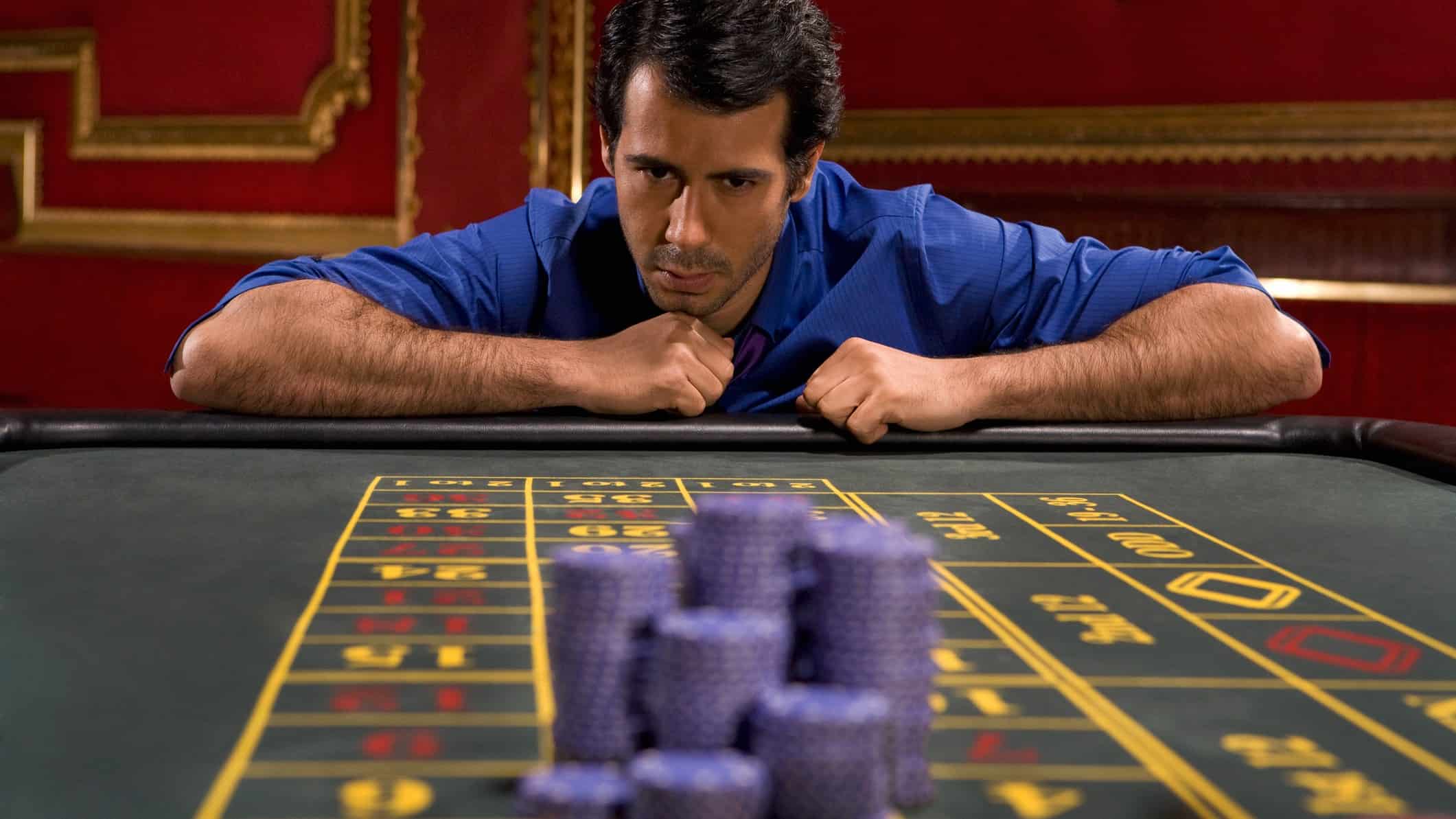
    A gambler at a casino bets a pile of chips on one number.

    The Star Entertainment Group Ltd (ASX: SGR) share price is falling almost 4% on Monday after the company reported a net loss of $307 million for FY26 alongside a stabilisation in property revenues and signs of cash flow improvement.

    What did The Star Entertainment Group report?

    • Normalised revenue was $1,101 million, down 2% from FY25
    • Normalised EBITDA loss before significant items improved to $16.1 million (FY25: $76.2 million loss)
    • Statutory net loss after tax was $307.3 million
    • Corporate costs were reduced by $75 million in FY26, with ongoing savings targeted
    • Cash and cash equivalents at year-end were $267 million
    • No dividend was declared for FY26

    What else do investors need to know?

    The Star completed a $300 million equity investment from Bally’s Corporation and Investment Holdings, and finished the first stage of the JVP Transaction which removed the company’s $700 million guarantee on DBC debt. New leadership joined the Board and executive team in December 2025, driving operational changes and cost reductions.

    Revenues at operating properties stabilised in the last quarter after nearly two years of declines. Positive signs continued into July 2026, with combined revenue up 6% year-on-year as improved customer engagement and increased marketing spend began to pay off.

    What did The Star Entertainment Group management say?

    The company’s CEO and Managing Director, Bruce Mathieson Jnr, commented:

    We have moved to a more accountable, property-led operating model and a renewed focus on performance, customers, and responsible operations… The Group has successfully refinanced its corporate debt and continued the work of strengthening its balance sheet with a strong liquidity position. These achievements have provided greater stability and a stronger foundation for the future. Returning to suitability remains critical to our future, and the work required to achieve that objective has and is being increasingly embedded in how we operate every day.

    What’s next for The Star Entertainment Group?

    Looking ahead, The Star is focused on regaining suitability for its casino licences in New South Wales and Queensland—a key factor for future growth and access to capital. The company expects to keep improving earnings in FY27, with ongoing cost reductions, operational changes, and a new direct attribution approach for corporate costs.

    The second stage of The Star’s JVP Transaction is planned for completion by March 2027. Management remains cautious given material uncertainties around regulatory outcomes, profitability, and the restoration of casino licences, but the business expects to build cash reserves and continue its recovery.

    The Star Entertainment Group share price snapshot

    Compared to the S&P/ASX 200 index (ASX: XJO), The Star Entertainment Group share price has outperformed over the past year with a gain of around 13%.

    View Original Announcement

    The post The Star Entertainment share price falls on FY26 earnings appeared first on The Motley Fool Australia.

    Should you invest $1,000 in Star Entertainment Group right now?

    Before you buy Star Entertainment Group shares, consider this:

    Motley Fool investing expert Scott Phillips just revealed what he believes are the 5 best stocks for investors to buy right now… and Star Entertainment Group wasn’t one of them.

    The online investing service he’s run for over a decade, Motley Fool Share Advisor, has provided thousands of paying members with stock picks that have doubled, tripled or even more.*

    And right now, Scott thinks there are 5 stocks that may be better buys…

    * Returns as of 1 August 2026

    .custom-cta-button p {
    margin-bottom: 0 !important;
    }

    More reading

    Motley Fool contributor James Mickleboro has no position in any of the stocks mentioned. The Motley Fool Australia’s parent company Motley Fool Holdings Inc. has no position in any of the stocks mentioned. The Motley Fool Australia has no position in any of the stocks mentioned. The Motley Fool has a disclosure policy. This article contains general investment advice only (under AFSL 400691). Authorised by Scott Phillips. This article was prepared with the assistance of Large Language Model (LLM) tools for the initial summary of the company announcement. Any content assisted by AI is subject to our robust human-in-the-loop quality control framework, involving thorough review, substantial editing, and fact-checking by our experienced writers and editors holding appropriate credentials. The Motley Fool Australia stands behind the work of our editorial team and takes ultimate responsibility for the content published by The Motley Fool Australia.

  • Is NAB a good passive income stock?

    Woman looking at her computer and pondering something.

    National Australia Bank Ltd (ASX: NAB) has long been a popular choice among Australian income investors.

    With a large banking franchise, fully franked dividends, and a solid earnings outlook, I think there is still plenty to like for investors seeking passive income.

    Here is why.

    The dividend looks attractive

    NAB shares are currently trading around $38.29.

    According to CommSec, consensus forecasts point to fully franked dividends per share of $1.70 in FY26 and $1.72 in FY27.

    At today’s share price, that represents a forward dividend yield of around 4.4% in FY26, rising slightly to 4.5% in FY27 before franking credits.

    I think that is a solid level of income from one of Australia’s largest banks.

    The expected growth in the dividend is modest, but I would rather see a payment that looks well supported than rely on an unusually high yield that could prove difficult to maintain.

    Earnings should provide support

    The outlook for profits gives me further confidence.

    Consensus estimates are for NAB to generate earnings per share of $2.38 in FY26 and $2.54 in FY27.

    That would represent earnings growth of around 7% in FY27 while the dividend is forecast to rise only slightly.

    If those forecasts prove accurate, NAB would be retaining a greater proportion of its earnings rather than needing all of the growth to fund higher distributions.

    I think that leaves the bank in a sensible position to continue rewarding shareholders while maintaining capital for the business.

    Of course, bank earnings can be affected by bad debts, competition, interest rates, and economic conditions. Dividends are never guaranteed.

    But the current forecasts give me confidence that NAB’s income outlook remains healthy.

    I like the business behind the dividend

    For me, a passive income investment still needs a business I would be comfortable owning.

    One of NAB’s biggest strengths is its position in Australian business banking.

    Companies need loans, transaction accounts, deposits, payments, and other financial services as they operate and expand. These relationships can become increasingly valuable as successful customers grow.

    NAB also has a substantial personal banking franchise, giving it exposure to millions of households alongside its position with Australian businesses.

    I think that combination gives the bank several sources of earnings to support future shareholder returns.

    Foolish takeaway

    I believe NAB is a good passive income stock at around $38.29.

    A forecast yield of roughly 4.5%, full franking, and expected earnings growth make the income outlook attractive to me.

    There will always be risks with owning a bank, but I think NAB has a strong enough underlying business to make it a worthwhile option for investors hoping to generate regular income from ASX shares.

    The post Is NAB a good passive income stock? appeared first on The Motley Fool Australia.

    Should you invest $1,000 in National Australia Bank right now?

    Before you buy National Australia Bank shares, consider this:

    Motley Fool investing expert Scott Phillips just revealed what he believes are the 5 best stocks for investors to buy right now… and National Australia Bank wasn’t one of them.

    The online investing service he’s run for over a decade, Motley Fool Share Advisor, has provided thousands of paying members with stock picks that have doubled, tripled or even more.*

    And right now, Scott thinks there are 5 stocks that may be better buys…

    * Returns as of 1 August 2026

    .custom-cta-button p {
    margin-bottom: 0 !important;
    }

    More reading

    Motley Fool contributor Grace Alvino has no position in any of the stocks mentioned. The Motley Fool Australia’s parent company Motley Fool Holdings Inc. has no position in any of the stocks mentioned. The Motley Fool Australia has no position in any of the stocks mentioned. The Motley Fool has a disclosure policy. This article contains general investment advice only (under AFSL 400691). Authorised by Scott Phillips.

  • The world’s best investor turns 96

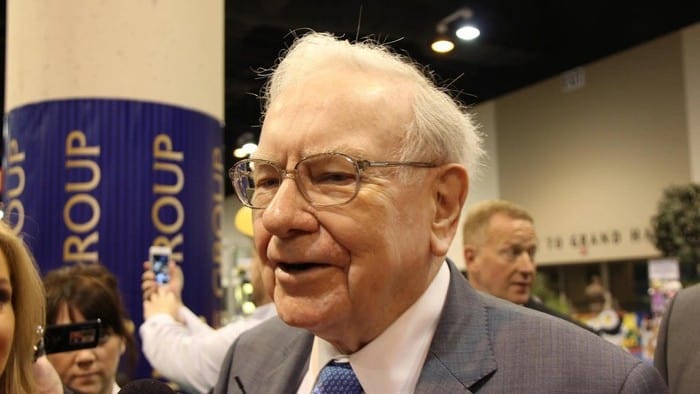
    Warren Buffett.

    Warren Buffett turns 96 today.

    Many of us have referred to him affectionately as “Uncle Warren” for years. Not because we’re related, sadly (though I continue to hope that Ancestry.com uncovers an as-yet unknown branch of the Phillips/Buffett family tree!) but because he’s probably the closest thing the investing world has to that wise older relative who has been around forever, has seen pretty much everything, and usually has something sensible to say.

    (Before you write in, yes his birthday is August 30… but that’s ‘today’ in the US, where he lives!)

    Yep, I’m an unabashed Buffett fan.

    Not because he’s perfect. He isn’t. Buffett has made plenty of mistakes, and has spent a fair chunk of his annual letters telling us about them.

    But if you were going to choose someone from whom to learn about investing, his record is pretty hard – essentially impossible – to beat.

    So, on his birthday, let’s do that.

    When Buffett took control of Berkshire Hathaway (I own – B class – shares, for the record) in 1965, it was a struggling textile company. What followed was one of the great business and investment stories of all time.

    And the numbers are almost silly.

    Berkshire compounded at roughly 20% a year for decades. The US sharemarket itself did very well over that time, but Berkshire did much, much better.

    The difference between 10% and 20% in any one year doesn’t look life-changing.

    Give it a few decades, though, and you get a very different answer.

    Which, actually, is probably the first Buffett lesson: compounding needs time.

    People spend an enormous amount of effort wondering what the sharemarket will do tomorrow, next month or next year. Buffett built his fortune largely by finding good places to put money and then giving them a very long time to work.

    One of my favourite Buffett lines is:

    “Price is what you pay. Value is what you get.”

    Learning the difference between those two ideas is vital for investors.

    A share price is just the price at which a buyer and seller happen to agree to transact today. It isn’t necessarily what the company is worth.

    Often the two are reasonably close. Sometimes they’re miles apart.

    And yet we tend to let the price tell us how we should feel about the investment.

    A share price rises 30% and suddenly we’re more confident about the company. It falls 30% and we start wondering what we got wrong. (You’re nodding along, aren’t you?)

    Maybe something really has changed. Often, though, it hasn’t. It’s just the market being its usual emotional, short-term, self.

    Buffett has always encouraged investors to turn that thinking around: work out what you think the business is worth, then decide whether the price makes sense.

    Which leads to another Buffett favourite:

    “Be fearful when others are greedy and greedy when others are fearful.”

    That… doesn’t mean it’s easy.

    Being greedy when others are fearful sounds terrific when you’re sitting comfortably at home and the market is behaving itself. It looks even better in hindsight, when you fantasise about buying those shares during the last crash.

    It’s harder when shares have fallen 30%, the headlines are full of doom and gloom, economists are predicting recessions, and your brain is telling you that perhaps you should wait until things become clearer.

    They will become clearer, of course.

    Thing is, shares will probably also be more expensive by then.

    You don’t get bargain prices and blue-sky headlines.

    Buffett also changed as an investor, which I think is an underappreciated part of his story.

    His early investing was heavily influenced by Benjamin Graham: buy something very cheap, ideally for less than the value of its assets, and wait.

    It worked.

    But the late, great, Charlie Munger helped persuade Buffett that there was another way.

    As Buffett later put it, “It’s far better to buy a wonderful company at a fair price than a fair company at a wonderful price.”

    That shift helped produce investments such as Coca-Cola and American Express and, eventually, the purchase of entire high-quality businesses.

    It’s also a useful reminder that even Warren Buffett had to get better at investing.

    He changed his mind.

    He learned.

    He incorporated better ideas when he found them.

    Which brings me to another Buffett idea more investors should take seriously: the circle of competence.

    You don’t have to have a view on everything.

    In fact, you really shouldn’t.

    There are businesses I don’t understand well enough to value with any confidence. There are industries whose futures are too uncertain. And there are plenty of things I might understand reasonably well but where I have no particular insight that the market doesn’t already have.

    That’s okay.

    To use a baseball metaphor that Buffett has invoked, as an investor you get to choose which pitch you swing at.

    There are thousands of listed companies. You don’t need to own all of them. You don’t need to understand all of them. You certainly don’t need to have an opinion on all of them.

    And Buffett’s preferred holding period?

    “Forever.”

    Yes, he’s sold shares, so don’t take that absolutely literally.

    The point is that when you buy shares in a company, you should be thinking about the business you’re becoming a part-owner of, not who might pay you more for the shares next week.

    In fact, that’s the thread that runs through most of Buffett’s best advice.

    Shares are businesses.

    Price and value aren’t the same thing.

    Time is your friend.

    Temperament matters hugely.

    You don’t have to swing at every pitch.

    And avoiding stupidity can be every bit as valuable as trying to be brilliant.

    None of those ideas is particularly complicated.

    Maybe that’s why people keep looking for something more sophisticated.

    But Buffett has spent more than 60 years showing what can happen when some fairly straightforward principles are applied with extraordinary discipline.

    No, you won’t make 20% annual returns. Me either. There is only one Warren Buffett.

    But I reckon we’d all be better investors if we borrowed a little more of his patience, rationality, humility and willingness to think like a business owner.

    It’s Buffett’s birthday, but we get his lifetime of wisdom as our present.

    Happy 96th birthday, Uncle Warren.

    Fool on!

    The post The world’s best investor turns 96 appeared first on The Motley Fool Australia.

    Wondering where you should invest $1,000 right now?

    When investing expert Scott Phillips has a stock tip, it can pay to listen. After all, the flagship Motley Fool Share Advisor newsletter he has run for over ten years has provided thousands of paying members with stock picks that have doubled, tripled or even more.*

    Scott just revealed what he believes could be the ‘five best ASX stocks’ for investors to buy right now. We believe these stocks are trading at attractive prices and Scott thinks they could be great buys right now…

    * Returns as of 1 August 2026

    .custom-cta-button p {
    margin-bottom: 0 !important;
    }

    More reading

    American Express is an advertising partner of Motley Fool Money. Motley Fool contributor Scott Phillips has positions in Berkshire Hathaway. The Motley Fool Australia’s parent company Motley Fool Holdings Inc. has positions in and has recommended American Express and Berkshire Hathaway. The Motley Fool Australia has recommended Berkshire Hathaway. The Motley Fool has a disclosure policy. This article contains general investment advice only (under AFSL 400691). Authorised by Scott Phillips.

  • Financial statement inaccuracy

  • PFE | Pfizer and German partner BioNTech SE said Tuesday they’ve begun delivering doses of their coronavirus vaccine to US candidates with trials in Germany already underway.

  • PFE | Pfizer and German Parker BioNTech SE have begun delivering doses of their coronavirus vaccine for human testing US, trials in Germany already underway.

  • The performance outlook of tech companies.