
• Would I buy NEXTDC shares after its strong FY26 results?

    Woman pointing to a hologram of a world map with finance graphs and related themes.

    NEXTDC Ltd (ASX: NXT) has just delivered an FY26 result that strengthens my confidence in its long-term growth story.

    The company is investing heavily to meet rising demand for data centre capacity, and artificial intelligence is giving that opportunity another powerful push.

    For me, the latest numbers support a buy.

    The forward order book is the standout

    I think the most important figure in NEXTDC’s FY26 result was not revenue or profit.

    It was the 565MW forward order book, up sharply over the year. This represents contracted capacity that has not yet started billing, and every megawatt is backed by a binding customer commitment.

    I think this gives investors much better visibility over where growth can come from next.

    NEXTDC expects 197MW of that capacity to begin billing in FY27 and another 221MW in FY28. Together, that would convert almost three-quarters of the current forward order book within two years.

    The company estimates its existing contracted utilisation could eventually generate more than $1 billion of EBITDA, without assuming any additional customer wins.

    For me, that shows just how much growth is already locked into the pipeline.

    Artificial intelligence is changing the scale of demand

    The artificial intelligence (AI) boom is a major reason I think NEXTDC can keep growing beyond those existing commitments.

    Training and running advanced AI models requires enormous amounts of computing power, which in turn creates demand for data centres capable of handling high-density workloads.

    NEXTDC says AI, cloud providers, hyperscalers, and newer specialised cloud operators are all contributing to strong demand. Its facilities are being designed for advanced computing environments, including the higher power densities and cooling requirements associated with AI infrastructure.

    This is not simply a case of hoping AI demand eventually arrives. NEXTDC’s contracted utilisation has already climbed to 740.1MW on a pro forma basis, more than triple the level a year earlier.

    I think that provides tangible evidence that customers are committing significant capital to this infrastructure now.

    FY27 could show the next step

    Management expects FY27 net revenue to rise by 52% to 58%, while underlying EBITDA is forecast to increase by 55% to 65%.

    Those are substantial growth rates for a company already operating data centres across Australia and expanding internationally.

    There are risks. NEXTDC expects to spend between $5.25 billion and $5.75 billion in FY27, making execution, financing, construction, and access to power important areas to watch.

    But much of that spending is being directed towards capacity customers have already contracted.

    Foolish takeaway

    I would buy NEXTDC shares following the FY26 result.

    The AI boom is creating enormous demand for computing infrastructure, and NEXTDC now has a record amount of contracted capacity waiting to become revenue.

    The investment will require patience as the company builds that capacity, but I think the scale of the opportunity has become much clearer.

    If NEXTDC delivers on its current pipeline and keeps winning AI-related demand, I believe it could be a considerably larger business by the end of the decade.

    The post Would I buy NEXTDC shares after its strong FY26 results? appeared first on The Motley Fool Australia.

    Should you invest $1,000 in Nextdc right now?

    Before you buy Nextdc shares, consider this:

    Motley Fool investing expert Scott Phillips just revealed what he believes are the 5 best stocks for investors to buy right now… and Nextdc wasn’t one of them.

    The online investing service he’s run for over a decade, Motley Fool Share Advisor, has provided thousands of paying members with stock picks that have doubled, tripled or even more.*

    And right now, Scott thinks there are 5 stocks that may be better buys…

    * Returns as of 1 August 2026

    .custom-cta-button p {
    margin-bottom: 0 !important;
    }

    More reading

    Motley Fool contributor Grace Alvino has no position in any of the stocks mentioned. The Motley Fool Australia’s parent company Motley Fool Holdings Inc. has no position in any of the stocks mentioned. The Motley Fool Australia has no position in any of the stocks mentioned. The Motley Fool has a disclosure policy. This article contains general investment advice only (under AFSL 400691). Authorised by Scott Phillips.

  • Why gold stocks have regained their shine: Expert

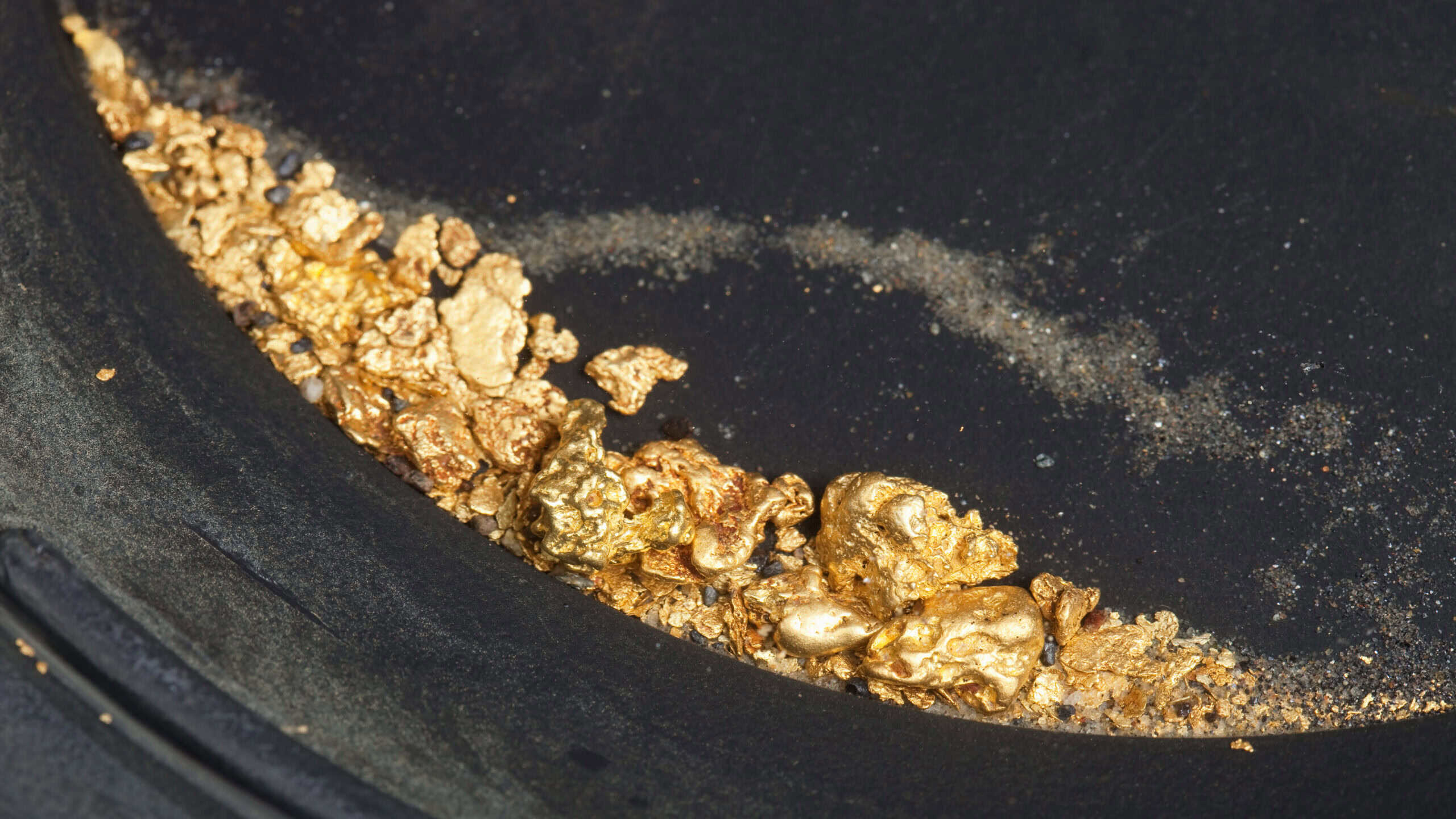
    A group of gold nuggets.

    A new report from Global X has identified that Australian investors have used gold’s recent pullback as a buying opportunity. 

    After record outflows from Australian gold-related exchange traded funds in June, local investors changed course in July. 

    Gold has long been a safe-haven asset for Australian investors, which contributed to its boom over the course of 2025 and into 2026. 

    According to the report, investors allocated a combined $334 million to gold bullion and gold miners ETFs during the month, making it the fourth-strongest month on record for the combined category.

    Why has gold rallied?

    According to Global X, the reversal suggests investors viewed the weakness as an opportunity rather than a reason to abandon gold. 

    Gold climbed above US$4,600 an ounce this week, reaching a three-month high, while Bitcoin rallied towards US$77,000. Both moves accelerated after the US Treasury announced that it would at least double the maximum size of selected buyback operations for longer-dated government securities, from US$2 billion to at least US$4 billion per operation.

    These operations allow the Treasury to repurchase older, less actively traded bonds, helping improve liquidity in the market. They are not the same as the US Federal Reserve printing money or launching quantitative easing, nor do they eliminate the government’s debt burden.

    Gold can appeal in this environment because it is scarce, globally recognised and not issued by a government.

    Not a unique situation 

    This behaviour is not unique to precious metals. 

    Australian investors have repeatedly demonstrated a willingness to invest during market weakness when they believe the long-term case remains intact. 

    A similar pattern emerged in Australian technology stocks between October 2025 and April 2026, when concerns about artificial intelligence disruption contributed to a decline of more than 40%. Investors continued adding exposure through the drawdown.

    That same “buy-the-dip” mentality now appears to be extending to gold.

    How to invest in gold?

    For investors looking to add exposure to gold in their portfolio’s, there are several options. 

    One strategy is to target specific gold miners. 

    Some popular options include: 

    • Newmont Corporation (ASX: NEM) – One of the largest gold mining companies in the world. 
    • Northern Star Resources Ltd (ASX: NST) – Large mining company with projects in Australia and the United States.

    Another option is to target ASX ETFs that track the price of physical gold. 

    One such fund is the Global X Physical Gold (ASX: GOLD) fund. 

    It aims to deliver a return mirroring the growth in the Australian dollar gold price. 

    Another option that targets miners rather than the physical gold price is the BetaShares Global Gold Miners ETF – Currency Hedged (ASX: MNRS). 

    It targets the largest global gold mining companies (ex-Australia). 

    The post Why gold stocks have regained their shine: Expert appeared first on The Motley Fool Australia.

    Should you invest $1,000 in Global X Physical Precious Metals – Global X Physical Gold right now?

    Before you buy Global X Physical Precious Metals – Global X Physical Gold shares, consider this:

    Motley Fool investing expert Scott Phillips just revealed what he believes are the 5 best stocks for investors to buy right now… and Global X Physical Precious Metals – Global X Physical Gold wasn’t one of them.

    The online investing service he’s run for over a decade, Motley Fool Share Advisor, has provided thousands of paying members with stock picks that have doubled, tripled or even more.*

    And right now, Scott thinks there are 5 stocks that may be better buys…

    * Returns as of 1 August 2026

    .custom-cta-button p {
    margin-bottom: 0 !important;
    }

    More reading

    Motley Fool contributor Aaron Bell has no position in any of the stocks mentioned. The Motley Fool Australia’s parent company Motley Fool Holdings Inc. has no position in any of the stocks mentioned. The Motley Fool Australia has no position in any of the stocks mentioned. The Motley Fool has a disclosure policy. This article contains general investment advice only (under AFSL 400691). Authorised by Scott Phillips.

  • Could ASX shares crash? 5 questions every investor should ask now

    two people sitting at a desk look on in dismay as a colleague holds a chart with diminishing green bars topped with a jagged red line representing a stock market crash.

    ASX shares could face a tougher road ahead as record US government debt adds to concerns about a potential market correction. While nobody can predict exactly when the next crash will strike, history shows that sharp sell-offs are simply part of investing.

    The good news? Investors don’t need to predict the next downturn to prepare for it. Rather than trying to time the market, investors can take a proactive approach by stress-testing their portfolios and asking whether they’re ready for a serious sell-off.

    Here are five questions worth asking now.

    Could you survive a 30% downturn?

    Market crashes are part of investing. They may feel rare when markets are rising, but sharp sell-offs happen with surprising regularity. Investors only need to look back to 2020 for a reminder: the S&P/ASX 200 Index (ASX: XJO) plunged around 30% between January and March as the COVID-19 pandemic sent markets into a tailspin.

    The next crash could look completely different, and nobody knows when it will arrive. But investors in ASX shares don’t need to predict the next downturn to prepare for it.

    Imagine opening your portfolio tomorrow and discovering it has fallen 30%. Would you panic and sell? Or would you be comfortable holding through the volatility?

    Now take it a step further. What would a 50% decline mean for your portfolio? These aren’t just theoretical questions. A major market sell-off can be brutal, and investors who aren’t prepared emotionally may make costly decisions at exactly the wrong time.

    If a 30% or 50% decline would force you to sell ASX shares, it may be worth reconsidering your portfolio’s risk level before a crash happens.

    Is your portfolio too concentrated?

    Diversification can be one of an investor’s best defences against company-specific and industry-specific shocks.

    Ask yourself: how much of your portfolio is tied to a handful of blue chips like BHP Group Ltd (ASX: BHP) or Commonwealth Bank of Australia (ASX: CBA), sectors or themes? Owning several ASX shares doesn’t necessarily mean you’re diversified if they’re all exposed to the same economic forces.

    A portfolio spread across different companies, industries and asset classes may be better positioned to withstand a downturn.

    Do you have an emergency cash buffer?

    A market crash is particularly painful if you need to sell shares to pay unexpected bills. That’s why an emergency fund can be just as important as the investments themselves.

    Having cash set aside for essential expenses could give investors the flexibility to leave their portfolios alone when markets are falling.

    Will you be ready to buy ASX shares?

    A crash isn’t only a threat. It can also create opportunities. Quality businesses can become significantly cheaper when fear takes over.

    But investors need capital available to take advantage of those opportunities. If every dollar is already invested or tied up elsewhere, it becomes much harder to act when attractive ASX shares go on sale.

    Are you prepared now?

    Nobody knows when the next market crash will arrive — or how severe it will be.

    That’s precisely why preparation matters. Investors who know their risk tolerance, maintain sensible diversification, keep an emergency cash buffer and have a plan for deploying capital may be better equipped to withstand the next downturn.

    The goal isn’t to predict the crash. It’s to make sure you’re ready when it comes.

    The post Could ASX shares crash? 5 questions every investor should ask now appeared first on The Motley Fool Australia.

    Should you invest $1,000 in BHP Group right now?

    Before you buy BHP Group shares, consider this:

    Motley Fool investing expert Scott Phillips just revealed what he believes are the 5 best stocks for investors to buy right now… and BHP Group wasn’t one of them.

    The online investing service he’s run for over a decade, Motley Fool Share Advisor, has provided thousands of paying members with stock picks that have doubled, tripled or even more.*

    And right now, Scott thinks there are 5 stocks that may be better buys…

    * Returns as of 1 August 2026

    .custom-cta-button p {
    margin-bottom: 0 !important;
    }

    More reading

    Motley Fool contributor Marc Van Dinther has positions in BHP Group. The Motley Fool Australia’s parent company Motley Fool Holdings Inc. has no position in any of the stocks mentioned. The Motley Fool Australia has recommended BHP Group. The Motley Fool has a disclosure policy. This article contains general investment advice only (under AFSL 400691). Authorised by Scott Phillips.

  • PFE | Pfizer and German Parker BioNTech SE have begun delivering doses of their coronavirus vaccine for human testing US, trials in Germany already underway.

  • The performance outlook of tech companies.

  • Top broker urging you to buy this ASX 200 retail stock next week