
• 3 reasons to buy the Vanguard MSCI Index International Shares (VGS) ETF

    Two people work with a digital map of the world, planning their logistics on a global scale.

    The Vanguard MSCI Index International Shares ETF (ASX: VGS) is an exchange-traded fund (ETF) I would be comfortable owning for a very long time.

    It provides broad exposure to international share markets in a single investment, which can make it a simple way to add global growth to a portfolio.

    Here are three reasons I think it is a buy.

    Broad global diversification

    One of the biggest attractions of the VGS ETF is just how much exposure investors get through one fund.

    It invests across developed markets outside Australia, giving investors access to companies in the United States, Japan, the United Kingdom, Europe, and other major economies.

    That means an investor is not relying on the performance of one country or a small collection of businesses.

    I think this can be particularly valuable for Australians whose other investments are already concentrated locally.

    The Australian share market has plenty of strong companies, but many of the world’s largest healthcare, industrial, technology, consumer, and financial businesses are based elsewhere.

    The Vanguard MSCI Index International Shares ETF makes it easy to participate in those opportunities without having to open an overseas brokerage account or research dozens of individual companies.

    Exposure to global leaders

    The VGS ETF owns some of the world’s most successful businesses.

    Its portfolio includes companies such as Nvidia, Microsoft, Apple, and Amazon, alongside over a thousand other businesses operating across many industries.

    I like that because investors can benefit if today’s leading companies continue expanding, without having to decide which individual stock will ultimately perform best.

    The portfolio also changes naturally over time. Companies that become more valuable can grow into larger positions in the underlying index, while businesses that lose ground become less influential.

    Over a long holding period, I think that is attractive. The fund can continue evolving alongside global markets without investors having to constantly rebuild their portfolio themselves.

    It is easy to keep adding

    The third reason I like the VGS ETF is its simplicity.

    There is no need to wait for the perfect stock idea every time new money becomes available.

    An investor can buy more units and immediately spread that money across a large collection of international businesses. That can make regular investing much easier.

    I would still expect volatility. Global share markets will go through recessions, bear markets, changing interest rates, and periods when valuations become stretched.

    Currency movements can also influence returns for Australian investors.

    But for someone investing over 10 years or longer, I think those short-term fluctuations are a reasonable price to pay for access to global economic and corporate growth.

    Foolish takeaway

    I think the VGS ETF gets a lot right without making investing unnecessarily complicated.

    It gives investors exposure to a wide range of countries and industries, includes many of the world’s strongest companies, and can be easily added to over time.

    For me, those qualities make the Vanguard MSCI Index International Shares ETF one of the ASX ETFs I would be happy to buy and hold for the long term.

    The post 3 reasons to buy the Vanguard MSCI Index International Shares (VGS) ETF appeared first on The Motley Fool Australia.

    Should you invest $1,000 in Vanguard Msci Index International Shares ETF right now?

    Before you buy Vanguard Msci Index International Shares ETF shares, consider this:

    Motley Fool investing expert Scott Phillips just revealed what he believes are the 5 best stocks for investors to buy right now… and Vanguard Msci Index International Shares ETF wasn’t one of them.

    The online investing service he’s run for over a decade, Motley Fool Share Advisor, has provided thousands of paying members with stock picks that have doubled, tripled or even more.*

    And right now, Scott thinks there are 5 stocks that may be better buys…

    * Returns as of 1 August 2026

    .custom-cta-button p {
    margin-bottom: 0 !important;
    }

    More reading

    Motley Fool contributor Grace Alvino has no position in any of the stocks mentioned. The Motley Fool Australia’s parent company Motley Fool Holdings Inc. has positions in and has recommended Amazon, Apple, Microsoft, and Nvidia. The Motley Fool Australia has recommended Amazon, Apple, Microsoft, Nvidia, and Vanguard Msci Index International Shares ETF. The Motley Fool has a disclosure policy. This article contains general investment advice only (under AFSL 400691). Authorised by Scott Phillips.

  • New Hope shares near 52-week high. Here’s what stood out in the result

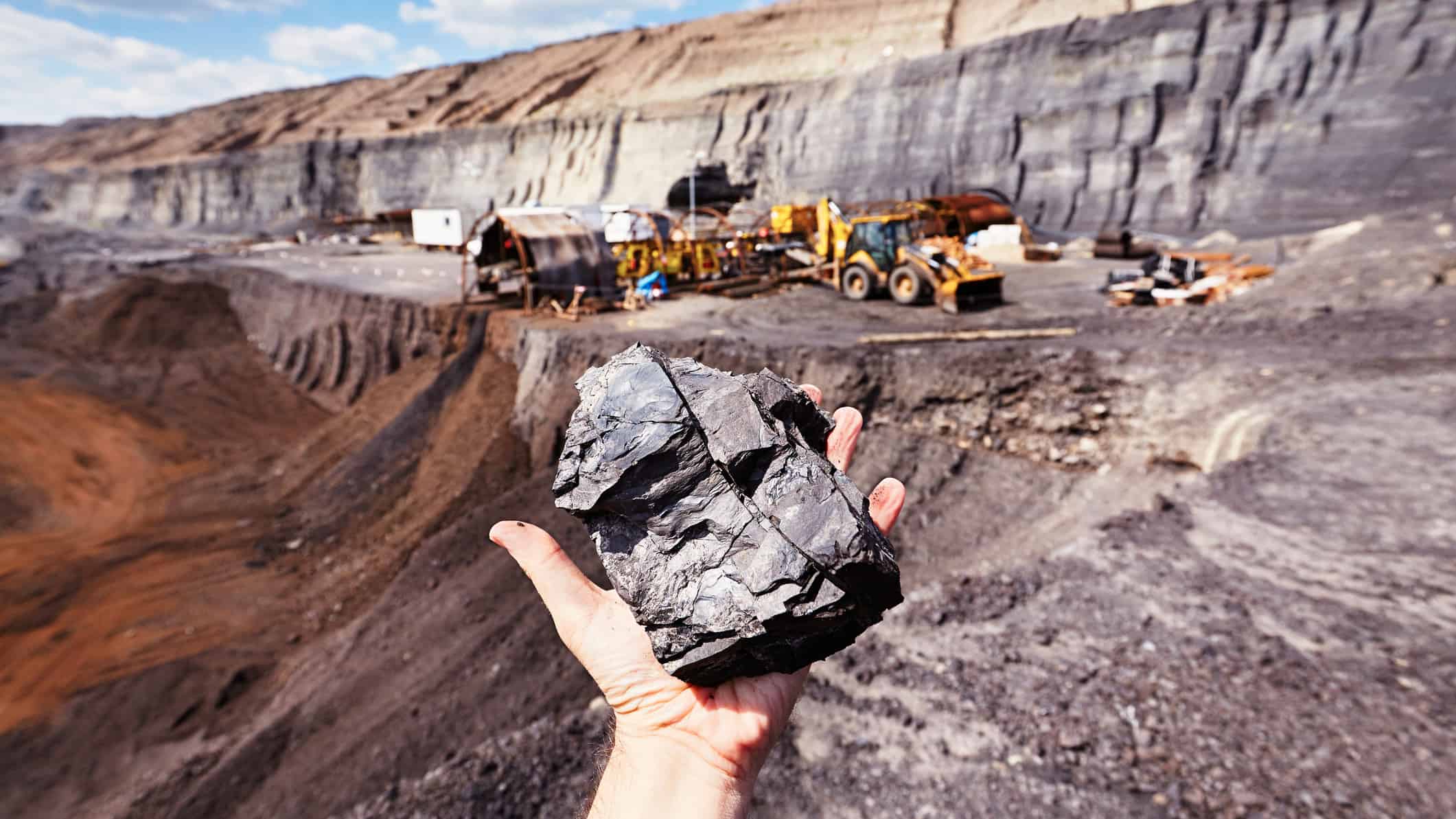
    Hand holding out coal in front of a coal mine.

    New Hope Corporation Ltd (ASX: NHC) shares are heading north after the coal miner released its FY26 results on Tuesday.

    At the time of writing, the New Hope share price is up 2.55% to $6.44, just below its 52-week high of $6.49.

    It’s been a strong run for the stock, and today’s gain has taken it even closer to a new high.

    And while profit fell from last year, there were still a few things investors seemed to like.

    So, what stood out?

    Production keeps climbing

    One of the better parts of the update was the continued lift in coal production.

    New Hope produced 11.5 million tonnes of saleable coal during FY26, up 7.6% from a year earlier.

    Coal sales rose even faster, climbing 11.8% to 11.8 million tonnes.

    Bengalla produced 8.2 million tonnes on New Hope’s 80% interest basis, while New Acland lifted production 17.3% to 3.3 million tonnes.

    But the higher volumes weren’t enough to make up for weaker coal prices.

    New Hope’s average realised coal price fell 10% to $145.20 per tonne, while group FOB cash costs increased 7.9% to $88.90 per tonne.

    That hit earnings pretty hard, with underlying EBITDA falling 32.8% to $514.3 million.

    Net profit after tax (NPAT) came in at $161 million, down 63.4% from the previous year.

    Cash is still coming in

    Even with profit down, New Hope still brought in plenty of cash.

    Operating cash flow came in at $564.1 million, while the company finished July with $778.5 million in available cash.

    And shareholders are seeing some of that cash come back their way.

    New Hope declared a fully-franked final dividend of 30 cents per share, taking total dividends for FY26 to 40 cents per share.

    That’s up from 34 cents per share in FY25, despite the big drop in profit.

    The company also has an on-market share buyback of up to $100 million in place.

    What happens next?

    New Hope still has more production to bring on.

    New Acland is working towards around 5 million tonnes of saleable coal a year, while Maxwell should contribute more as production ramps up.

    Over the longer term, New Hope is aiming for group saleable coal production of around 15 million tonnes.

    Of course, coal prices will have a big say in how earnings look.

    If coal prices hold up, having more tonnes to sell should help earnings as that extra production comes through.

    And with plenty of cash in the bank, New Hope can keep spending on growth while still paying shareholders along the way.

    The post New Hope shares near 52-week high. Here’s what stood out in the result appeared first on The Motley Fool Australia.

    Should you invest $1,000 in New Hope right now?

    Before you buy New Hope shares, consider this:

    Motley Fool investing expert Scott Phillips just revealed what he believes are the 5 best stocks for investors to buy right now… and New Hope wasn’t one of them.

    The online investing service he’s run for over a decade, Motley Fool Share Advisor, has provided thousands of paying members with stock picks that have doubled, tripled or even more.*

    And right now, Scott thinks there are 5 stocks that may be better buys…

    * Returns as of 1 August 2026

    .custom-cta-button p {
    margin-bottom: 0 !important;
    }

    More reading

    Motley Fool contributor Aaron Teboneras has no position in any of the stocks mentioned. The Motley Fool Australia’s parent company Motley Fool Holdings Inc. has no position in any of the stocks mentioned. The Motley Fool Australia has no position in any of the stocks mentioned. The Motley Fool has a disclosure policy. This article contains general investment advice only (under AFSL 400691). Authorised by Scott Phillips.

  • This ASX gold developer could jump more than 100%: Broker

    Stacked gold bricks.

    Shares in Barton Gold Holdings Ltd (ASX: BGD) have been pretty much steady over the past year, but according to the team at Canaccord Genuity, that could be about to change.

    Big things in store for this ASX gold company

    CG has initiated coverage on Barton Gold with a speculative buy rating and a bullish price target, which I’ll get to shortly.

    First, let’s look at why they like the company.

    The CG team said Barton had done a good job of building a large gold development portfolio in South Australia “through a combination of opportunistic asset acquisitions, infrastructure ownership deals and disciplined capital management”.

    They added:

    The company has consolidated a 2.2Moz Au and 3.1Moz Ag resource base across four projects, acquired strategic assets including the Wudinna Gold Project and the region’s only gold processing facility, the Central Gawler Mill (CGM), and generated more than A$13m of non-dilutive cash through asset monetisation initiatives. In our view, few junior developers have built a comparable regional platform while maintaining such a measured approach to shareholder dilution. BGD’s portfolio is underpinned by two core development assets: Tunkillia and Challenger.

    The broker believes the company’s value driver is the Tunkillia project, where Barton has delineated to date 1.6 million ounces of gold and 3.1 million ounces of silver.

    A scoping study released in May 2025 envisaged an eight-year mining plan with a capital cost of $452 million; however, recently completed resource drilling is expected to support further improvements, CG said.

    The broker added:

    We view Tunkillia as one of the more compelling undeveloped gold projects in Australia given its scale, production profile, meaningful silver credits and overall similarity to Capricorn Metals Ltd’s (ASX: CMM) Karlawinda gold mine.

    CG said Barton’s stage one strategy involved restarting the Challenger gold mine and the associated Central Gawler Mill (CGM), “creating a potential pathway to near-term producer status and an internal source of cash flow to assist Tunkillia’s development”.

    They added:

    Challenger hosts 313koz Au across tailings, open pit and underground resources, while the fully permitted 600ktpa CGM produced ~1.2Moz historically and is estimated to require only ~A$26m of refurbishment capital. A definitive feasibility study is underway evaluating an initial 3-4 year operation based largely on tailings retreatment and near-surface feed, preserving the larger underground opportunity for future development.

    Beyond Tunkillia and Challenger, Barton holds additional regional growth prospects, CG said, including the Perseverance Mine and the Tolmer silver-gold discovery.

    Shares looking cheap

    CG has a price target of $2.05 for Barton Gold shares, compared to the current $1.02.

    The post This ASX gold developer could jump more than 100%: Broker appeared first on The Motley Fool Australia.

    Should you invest $1,000 in Barton Gold right now?

    Before you buy Barton Gold shares, consider this:

    Motley Fool investing expert Scott Phillips just revealed what he believes are the 5 best stocks for investors to buy right now… and Barton Gold wasn’t one of them.

    The online investing service he’s run for over a decade, Motley Fool Share Advisor, has provided thousands of paying members with stock picks that have doubled, tripled or even more.*

    And right now, Scott thinks there are 5 stocks that may be better buys…

    * Returns as of 1 August 2026

    .custom-cta-button p {
    margin-bottom: 0 !important;
    }

    More reading

    Motley Fool contributor Cameron England has no position in any of the stocks mentioned. The Motley Fool Australia’s parent company Motley Fool Holdings Inc. has no position in any of the stocks mentioned. The Motley Fool Australia has no position in any of the stocks mentioned. The Motley Fool has a disclosure policy. This article contains general investment advice only (under AFSL 400691). Authorised by Scott Phillips.

Sorry, but nothing was found. Please try a search with different keywords.