• When to sell your ASX shares? Warren Buffett has 3 answers

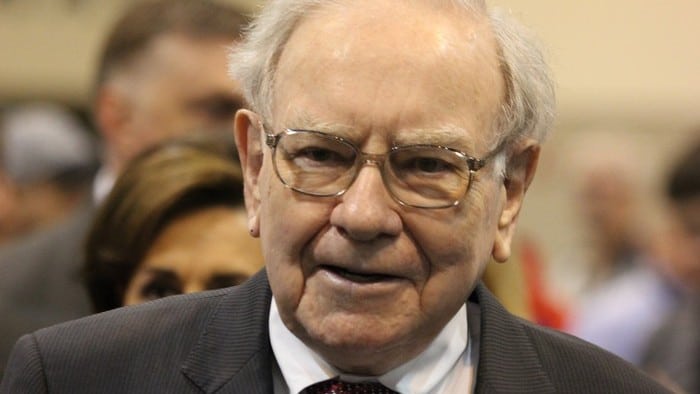
    Legendary share market investing expert and owner of Berkshire Hathaway, Warren Buffett.

    Warren Buffett is famous for buying great businesses and holding them for years, sometimes decades. But “buy and hold” doesn’t mean “buy and never sell” your ASX shares.

    Buffett has demonstrated that investors should be prepared to change their minds when the facts change. For ASX investors, there are three particularly important reasons to consider selling.

    Something better comes along

    One of Buffett’s most useful ideas is opportunity cost.

    You don’t necessarily need to think a company is bad to sell it. If you own a decent business but another high-quality blue chip offers substantially better growth prospects, stronger economics or a much more attractive valuation, switching can make sense.

    Buffett has done exactly this over the years, exiting businesses when he concluded his capital could be deployed more effectively elsewhere.

    The same principle applies to ASX shares. If you own a mature company growing earnings at 4% a year on an expensive valuation, while another excellent business offers significantly better prospects at a similar price, it may be time to reconsider where your money is working hardest.

    The economics or business proposition changes

    This is arguably the most important reason to sell one of your ASX shares. Buffett doesn’t fall in love with a stock ticker. He focuses on the underlying business.

    If the competitive advantage disappears, management changes direction, industry economics deteriorate or the company’s prospects are fundamentally different from when you bought it, the original investment thesis may no longer apply.

    ASX investors have plenty to consider right now. Banks, for example, remain some of Australia’s most important companies, but changing mortgage demand, competition and interest-rate expectations can alter the earnings outlook of say Commonwealth Bank of Australia (ASX: CBA).

    Energy companies like Woodside Energy Group Ltd (ASX: WDS) provide another example. A company can dramatically change its strategy as commodity prices, capital requirements or the global energy landscape shifts.

    The lesson is simple: don’t hold a share just because you once loved the story.

    When your position size becomes too big

    Sometimes the company hasn’t done anything wrong — you’ve simply won too much.

    Imagine buying an ASX share that doubles or triples and suddenly represents 35% of your portfolio. The business may still be fantastic, but your portfolio is now heavily dependent on one company.

    Buffett has allowed Berkshire Hathaway’s biggest investments to become enormous, but individual investors don’t have Berkshire’s capital base, diversification or financial resources.

    Taking some profits from a runaway winner can therefore be sensible risk management. Remember, you can sell a portion without abandoning the investment altogether.

    Foolish Takeaway

    The Buffett approach isn’t really “never sell”. It’s “know why you own something”.

    If a better opportunity emerges, the business proposition changes, or one holding becomes too dominant, selling your ASX shares can be just as rational as buying them in the first place.

    The post When to sell your ASX shares? Warren Buffett has 3 answers appeared first on The Motley Fool Australia.

    Should you invest $1,000 in Commonwealth Bank Of Australia right now?

    Before you buy Commonwealth Bank Of Australia shares, consider this:

    Motley Fool investing expert Scott Phillips just revealed what he believes are the 5 best stocks for investors to buy right now… and Commonwealth Bank Of Australia wasn’t one of them.

    The online investing service he’s run for over a decade, Motley Fool Share Advisor, has provided thousands of paying members with stock picks that have doubled, tripled or even more.*

    And right now, Scott thinks there are 5 stocks that may be better buys…

    * Returns as of 1 August 2026

    .custom-cta-button p {
    margin-bottom: 0 !important;
    }

    More reading

    Motley Fool contributor Marc Van Dinther has no position in any of the stocks mentioned. The Motley Fool Australia’s parent company Motley Fool Holdings Inc. has no position in any of the stocks mentioned. The Motley Fool Australia has no position in any of the stocks mentioned. The Motley Fool has a disclosure policy. This article contains general investment advice only (under AFSL 400691). Authorised by Scott Phillips.

  • Last chance to grab the supersized BHP dividend today

    Australian dollar notes in the pocket of a man's jeans, symbolising dividends.

    BHP Group Ltd (ASX: BHP) shares will trade ex-dividend tomorrow.

    That means time is running out for ASX investors who want to bank the mining giant’s supersized final dividend.

    In order to be entitled to receive a dividend, you must own the ASX share before its ex-dividend date.

    So, if you want to receive BHP’s FY26 final dividend, you’ll need to buy the ASX 200 mining share today.

    BHP shares are among 37 stocks going ex-dividend this week.

    How much is the BHP dividend?

    BHP declared a final dividend of 99 US cents for FY26, which is equivalent to A$1.38 on today’s exchange rate.

    The FY26 final BHP dividend is 65% higher than the FY25 final dividend of 91.9 AU cents.

    This is the richest final dividend for BHP shares in four years, and equates to a 72% payout ratio.

    The full-year dividend totals US$1.72 per BHP share.

    That’s a 56% increase, and the largest full-year BHP dividend in four years.

    In its FY26 report, BHP said:

    We have determined a final dividend of US$5.0 bn.

    This brings total cash returns to shareholders announced for the year to US$8.7 bn, which is US$1.72 per share fully franked, the highest in four years.

    The miner added:

    Including the FY26 final dividend determined, we will have returned >US$115 bn to shareholders since the introduction of the Capital Allocation Framework in 2016.

    The ASX 200 iron ore and copper miner is able to dish out bigger dividends this year due to stronger commodity prices.

    BHP is now the world’s biggest copper producer, and in FY26 the copper price rose 18%.

    The miner is also a major iron ore producer, and the iron ore price rose 7% in FY26.

    BHP also produces metallurgical coal, which is used in steelmaking. The coal price rose 39% in FY26.

    BHP will pay its FY26 final dividend to shareholders on 23 September.

    What did BHP report for FY26?

    BHP reported underlying earnings before interest, taxes, depreciation, and amortisation (EBITDA) of US$32.9 billion, up 27% on FY25.

    The underlying attributable profit was US$13.2 billion, up 30%.

    Net operating cash flow came in at US$21.8 billion, up 17% on FY25.

    Net debt as of 30 June was US$8.7 billion.

    BHP achieved record iron ore production in FY26, while copper accounted for 54% of group EBITDA.

    The BHP share price rose 10% during the August reporting season compared to a 1% bump for the S&P/ASX 200 Index (ASX: XJO).

    Last week, the BHP share price hit a new record of $68.77 per share.

    The post Last chance to grab the supersized BHP dividend today appeared first on The Motley Fool Australia.

    Should you invest $1,000 in BHP Group right now?

    Before you buy BHP Group shares, consider this:

    Motley Fool investing expert Scott Phillips just revealed what he believes are the 5 best stocks for investors to buy right now… and BHP Group wasn’t one of them.

    The online investing service he’s run for over a decade, Motley Fool Share Advisor, has provided thousands of paying members with stock picks that have doubled, tripled or even more.*

    And right now, Scott thinks there are 5 stocks that may be better buys…

    * Returns as of 1 August 2026

    .custom-cta-button p {
    margin-bottom: 0 !important;
    }

    More reading

    Motley Fool contributor Bronwyn Allen has no position in any of the stocks mentioned. The Motley Fool Australia’s parent company Motley Fool Holdings Inc. has no position in any of the stocks mentioned. The Motley Fool Australia has recommended BHP Group. The Motley Fool has a disclosure policy. This article contains general investment advice only (under AFSL 400691). Authorised by Scott Phillips.

  • How much passive income can I earn off a $630,000 superannuation balance

    Person with a handful of Australian dollar notes, symbolising dividends.

    A $630,000 superannuation balance is the amount the Association of Superannuation Funds of Australia (ASFA) estimates Australians need at age 67 to fund a comfortable retirement.

    It’s the type of nest egg that many strive for and one that can support a comfortable lifestyle during their retirement years. 

    Many Aussies focus hard on building their superannuation balance, ensuring the fund is performing well and adding extra contributions wherever they can.

    It’s a solid strategy. But superannuation is more than just a savings pot to draw money from when you retire.

    If invested wisely, your superannuation can also generate a passive income.

    But how much passive income could the suggested $630,000 balance realistically generate each month?

    Let’s take a look.

    What passive income can I earn off my $630,000 superannuation balance?

    To calculate your potential passive income, you need to multiply your total superannuation balance by the overall dividend yield of your portfolio.

    The tricky part is that the answer varies widely depending on what dividend yield you pick.

    For example, $630,000 x 3% = $18,900 per year in dividend payments.

    And as your dividend yield increases, the passive income you can earn off your $630,000 super balance also increases.  

    The figures are also based on cash dividends before any tax or franking credit benefits.

    Break it down for me by yield. What could I earn?

    We already know what your portfolio can generate if it yields around 3%.

    But if your portfolio has a slightly higher dividend yield of around 4%, your passive income will go up too because $630,000 x 4% = $25,200 per year in dividend payments. 

    If your superannuation portfolio yields closer to 5%, you could earn $31,500 every year in dividend payments off the same superannuation balance ($630,000 x 5% = $31,500).

    At a 6% yield, you could earn an annual passive income closer to $37,800, and at 7%, that could be even higher, at around $44,100.

    And so on… 

    Give me some options for ASX shares that yield around 4% or 5%

    A 4% or 5% yielding portfolio on a $630,000 superannuation balance will earn around $25,200 to $31,500 every year.

    That’s a decent income, and there are a lot of quality high-yield ASX shares that yield around that level.

    My top picks would be ASX blue chips like National Australia Bank Ltd (ASX: NAB), Rio Tinto Ltd (ASX: RIO), Fortescue Ltd (ASX: FMG), Woodside Energy Group Ltd (ASX: WDS), Bendigo and Adelaide Bank Ltd (ASX: BEN), or Medibank Private Ltd (ASX: MPL). These blue chips are highly reputable stocks that all pay out around 4% to 5%.

    Alternatively, defensive stocks like Telstra Group Ltd (ASX: TLS), Transurban Group (ASX: TCL), APA Group (ASX: APA), and TPG Telecom Ltd (ASX: TPG) are a good option because they are able to maintain stable earnings through each part of the economic cycle. And stable earnings translate to a stable dividend payout.

    And what about high-yield options closer to 8%?

    There are some high-yield options that could fit the bill. A yield around this level on a $630,000 superannuation balance could generate around $50,400 in annual passive income, but it comes with additional risk.

    If high-yielding shares are still what you’re after, these would be my top picks.

    Your best bet would be to go for an ETF like the BetaShares Australian Top 20 Equities Yield Maximiser Complex ETF (ASX: YMAX), BetaShares Global Cybersecurity ETF (ASX: HACK), or the iShares S&P 500 ETF (ASX: IVV). 

    If you’re after a single stock, then GQG Partners Inc (ASX: GQG) and IPH Ltd (ASX: IPH) both yield above 8% at the time of writing.

    The post How much passive income can I earn off a $630,000 superannuation balance appeared first on The Motley Fool Australia.

    Should you invest $1,000 in Apa Group right now?

    Before you buy Apa Group shares, consider this:

    Motley Fool investing expert Scott Phillips just revealed what he believes are the 5 best stocks for investors to buy right now… and Apa Group wasn’t one of them.

    The online investing service he’s run for over a decade, Motley Fool Share Advisor, has provided thousands of paying members with stock picks that have doubled, tripled or even more.*

    And right now, Scott thinks there are 5 stocks that may be better buys…

    * Returns as of 1 August 2026

    .custom-cta-button p {
    margin-bottom: 0 !important;
    }

    More reading

    Motley Fool contributor Samantha Menzies has no position in any of the stocks mentioned. The Motley Fool Australia’s parent company Motley Fool Holdings Inc. has positions in and has recommended BetaShares Global Cybersecurity ETF, Transurban Group, and iShares S&P 500 ETF. The Motley Fool Australia has positions in and has recommended Apa Group, Bendigo And Adelaide Bank, Telstra Group, and Transurban Group. The Motley Fool Australia has recommended Gqg Partners, IPH Ltd , and iShares S&P 500 ETF. The Motley Fool has a disclosure policy. This article contains general investment advice only (under AFSL 400691). Authorised by Scott Phillips.