
Tag: Fool

  • 2 ASX investments I think all retirees should have

    Smiling elderly couple looking at their superannuation account, symbolising retirement.

    For a stable and secure retirement, I think retirees need a few different assets to help things go smoothly.

    Our golden years will hopefully be the best years of our lives, and our nest egg is probably one of the most important elements for funding our living expenses after we stop working.

    The ASX share market is regularly volatile, so that shouldn’t come as a surprise to anyone. However, real-life downturns and recessions can occasionally happen.

    The retirement phase may last decades, so it’s crucial to be well-prepared for whatever may happen and how long we may live.

    An emergency fund can protect retirees

    I believe every adult in Australia should have an emergency fund. We never know when an emergency will happen, so having that financial foundation can be useful if an issue arises. For young Aussies, I’d suggest having at least $1,000 in a high-interest savings account, and for the breadwinners of a family, I’d suggest having three to six months of living expenses as cash.

    Retirees need to have cash saved to ride out a downturn. Selling assets such as ASX shares during a period of falling share prices could be very detrimental to the nest egg fund.

    Financial planners can help figure out how much a retiree should have as cash set aside, but I’d suggest an amount equivalent to at least a year of living expenses, perhaps up to two years, if the savings account is earning a good interest rate.

    On the ASX, there is an exchange-traded fund (ETF) called Betashares Australian High Interest Cash ETF (ASX: AAA). This ETF allocates money into deposit accounts with selected banks in Australia. It pays interest monthly at a rate that’s competitive with ‘at call’ bank deposits. However, an investment in this ETF does not have any government guarantee. The current interest rate on the AAA ETF is 4.45%. This ETF may appeal to investors with significant cash balances or non-individual entities.

    Growing investments

    The other ASX investment that I think every retiree should have is investments that are growing.

    We may need our portfolios to last a really long time, perhaps three or four decades. In the last three years, we’ve seen how inflation can degrade the value of a dollar, and the costs of various products and services have jumped significantly. Protecting against long-term inflation is a good idea.

    I like the idea of investing in assets that can deliver long-term growth without us having to worry about or monitor them, which is often why diversified ETFs can be so appealing. However, some ETFs don’t offer an adequate level of passive income due to their dividend yield or dividend growth.

    Some of my favourite investments for dividend and earnings growth are Washington H. Soul Pattinson and Co. Ltd (ASX: SOL), Brickworks Limited (ASX: BKW), and Collins Foods Ltd (ASX: CKF).

    Of course, ETFs like Betashares Global Quality Leaders ETF (ASX: QLTY) and VanEck MSCI International Quality ETF (ASX: QUAL) can be very effective, too; they just don’t have large dividend yields.

    The post 2 ASX investments I think all retirees should have appeared first on The Motley Fool Australia.

    Should you invest $1,000 in Betashares Australian High Interest Cash Etf right now?

    Before you buy Betashares Australian High Interest Cash Etf shares, consider this:

    Motley Fool investing expert Scott Phillips just revealed what he believes are the 5 best stocks for investors to buy right now… and Betashares Australian High Interest Cash Etf wasn’t one of them.

    The online investing service he’s run for over a decade, Motley Fool Share Advisor, has provided thousands of paying members with stock picks that have doubled, tripled or even more.*

    And right now, Scott thinks there are 5 stocks that may be better buys…

    See The 5 Stocks
    *Returns as of 24 June 2024

    More reading

    Motley Fool contributor Tristan Harrison has positions in Brickworks, Collins Foods, and Washington H. Soul Pattinson and Company Limited. The Motley Fool Australia’s parent company Motley Fool Holdings Inc. has positions in and has recommended Brickworks and Washington H. Soul Pattinson and Company Limited. The Motley Fool Australia has positions in and has recommended Brickworks and Washington H. Soul Pattinson and Company Limited. The Motley Fool Australia has recommended Collins Foods. The Motley Fool has a disclosure policy. This article contains general investment advice only (under AFSL 400691). Authorised by Scott Phillips.

  • Here are the top 10 ASX 200 shares today

    Fancy font saying top ten surrounded by gold leaf set against a dark background of glittering stars.

    It was a middling start to the week’s trading for the S&P/ASX 200 Index (ASX: XJO) and most ASX shares this Monday. After ending last week on a bit of a sour note, the bears were back at it today.

    By the time trading wrapped by, the ASX 200 had declined by a painful 0.76%, leaving the index at 7,763.2 points.

    This Garfield-esque start to the ASX’s week comes after a much more upbeat conclusion to the American trading week in the early hours of Saturday morning (our time).

    The Dow Jones Industrial Average Index (DJX: DJI) had a decent showing, rising by 0.17%

    But it was the Nasdaq Composite Index (NASDAQ: .IXIC) that was really on fire, shooting up 0.9%.

    Let’s get back to ASX shares and this week now, examining what the various ASX sectors were doing today.

    Winners and losers

    It was almost all frowns on the Australian stock market this Monday, with only a handful of sectors coming out with a win.

    But first, the losers. The worst place to be today was in mining shares. The S&P/ASX 200 Materials Index (ASX: XMJ) had a shocker today, cratering by a nasty 1.8%.

    Energy stocks weren’t too far in front of that, with the S&P/ASX 200 Energy Index (ASX: XEJ) plunging 1.45%.

    Real estate investment trusts (REITs) also had a horrid day. The S&P/ASX 200 A-REIT Index (ASX: XPJ) tanked 1.06%.

    It was a rough session for ASX healthcare shares too. The S&P/ASX 200 Healthcare Index (ASX: XHJ) was slapped down 1.04%.

    Communications stocks were another sore point, illustrated by the S&P/ASX 200 Communication Services Index (ASX: XTJ)’s 0.86% loss.

    Utilities shares came next. The S&P/ASX 200 Utilities Index (ASX: XUJ) was on the receiving end of a 0.86% shellacking this session.

    Industrial stocks weren’t riding to the rescue, as you can see from the S&P/ASX 200 Industrials Index (ASX: XNJ)’s 0.38% hit.

    Financial shares were also getting sold off. The S&P/ASX 200 Financials Index (ASX: XFJ) backtracked 0.29%.

    Our final losers were consumer staples stocks. The S&P/ASX 200 Consumer Staples Index (ASX: XSJ) had 0.14% wiped from its score today.

    Turning now to the far less numerous winners, gold shares took out today’s crown as the place to be. This session, the All Ordinaries Gold Index (ASX: XGD) enjoyed a 0.96% boom.

    Consumer discretionary shares were saving investors’ bacon too, with the S&P/ASX 200 Consumer Discretionary Index (ASX: XDJ) rising 0.33%.

    Tech stocks were also defying the odds. The S&P/ASX 200 Information Technology Index (ASX: XIJ) managed to grow 0.29% this Monday.

    Top 10 ASX 200 shares countdown

    The best stock on the index today was gold miner Red 5 Ltd (ASX: RED). Red 5 shares rocketed a compelling 5.33% this session up to 39.5 cents each.

    This move higher comes after the company made an evidently well-received announcement this morning regarding its sales and finances.

    Here’s a look at the rest of today’s highest flyers:

    ASX-listed company Share price Price change
    Red 5 Ltd (ASX: RED) $0.395 5.33%
    Emerald Resources N.L. (ASX: EMR) $3.82 4.09%
    Coronado Global Resources Inc (ASX: CRN) $1.405 4.07%
    Pro Medicus Limited (ASX: PME) $134.27 2.59%
    Evolution Mining Ltd (ASX: EVN) $3.73 2.47%
    Lovisa Holdings Ltd (ASX: LOV) $32.00 2.30%
    Johns Lyng Group Ltd (ASX: JLG) $5.84 2.10%
    Audinate Group Ltd (ASX: AD8) $15.99 1.98%
    NEXTDC Ltd (ASX: NXT) $18.14 1.97%
    Ramelius Resources Ltd (ASX: RMS) $1.945 1.83%

    Our top 10 shares countdown is a recurring end-of-day summary to let you know which companies were making big moves on the day. Check in at Fool.com.au after the weekday market closes to see which stocks make the countdown.

    The post Here are the top 10 ASX 200 shares today appeared first on The Motley Fool Australia.

    Should you invest $1,000 in Audinate Group Limited right now?

    Before you buy Audinate Group Limited shares, consider this:

    Motley Fool investing expert Scott Phillips just revealed what he believes are the 5 best stocks for investors to buy right now… and Audinate Group Limited wasn’t one of them.

    The online investing service he’s run for over a decade, Motley Fool Share Advisor, has provided thousands of paying members with stock picks that have doubled, tripled or even more.*

    And right now, Scott thinks there are 5 stocks that may be better buys…

    See The 5 Stocks
    *Returns as of 24 June 2024

    More reading

    Motley Fool contributor Sebastian Bowen has no position in any of the stocks mentioned. The Motley Fool Australia’s parent company Motley Fool Holdings Inc. has positions in and has recommended Audinate Group, Johns Lyng Group, Lovisa, and Pro Medicus. The Motley Fool Australia has positions in and has recommended Audinate Group. The Motley Fool Australia has recommended Johns Lyng Group, Lovisa, and Pro Medicus. The Motley Fool has a disclosure policy. This article contains general investment advice only (under AFSL 400691). Authorised by Scott Phillips.

  • Time to buy Brickworks shares on Australia’s world-beating stat?

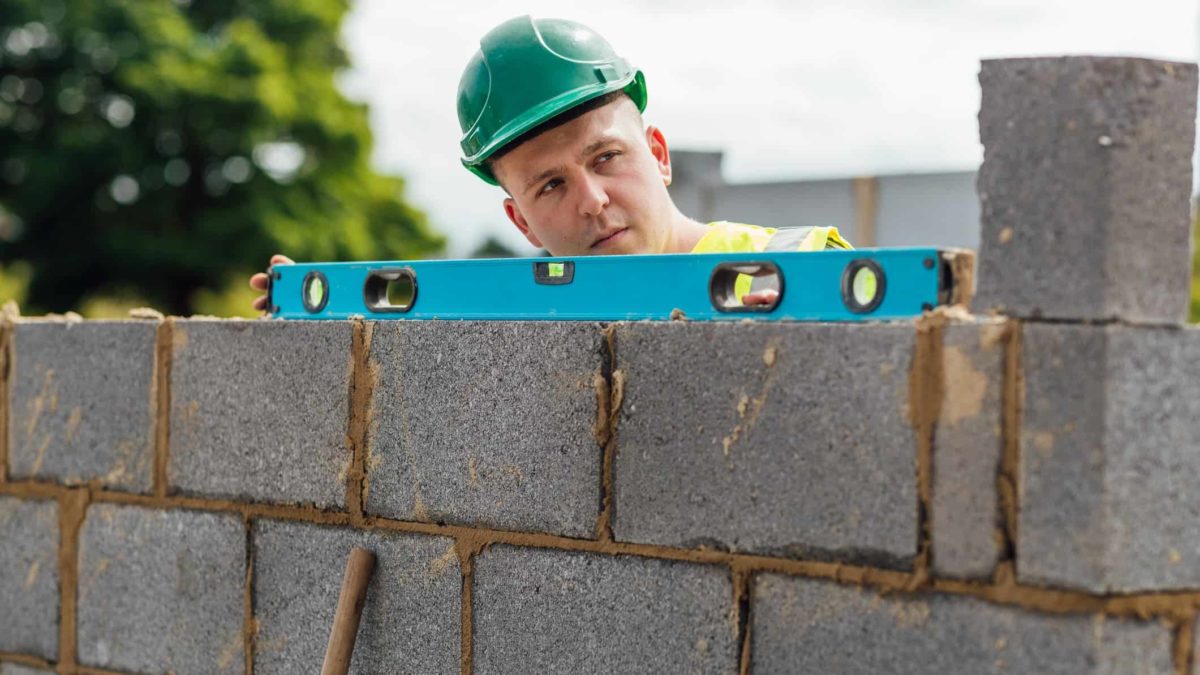
    a bricklayer peers over the top of a brick wall he is laying with a level measuring tool on top and looks critically at the work he is carrying out.

    The Brickworks Limited (ASX: BKW) share price went nowhere over the last six months.

    Brickworks owns a significant portfolio of investment assets, including a 26.1% stake in Washington H Soul Pattinson Ltd (ASX: SOL) and property development ventures, partnering with Goodman Group (ASX: GMG).

    During the same period, its business partner Goodman Group (ASX: GMG) saw its share price gain nearly 50%.

    In this article, I will explore recent developments in Australia’s industrial property market, with a focus on Sydney, and what they mean for Brickworks shares.

    Australia’s industrial property vacancy is the lowest level globally

    Last week, CBRE Group released its property market review report for the six months ending 30 June 2024. In this report, the property group emphasised that although there was an increase in the nation’s industrial property vacancy, it remains among the lowest globally. According to CBRE:

    The national vacancy rate has increased to 1.9% for H1 2024, with upward movement recorded for most major markets across Australia. This rate is still the lowest level globally.

    Despite the rise in space availability, we still do not expect to see the national average vacancy rate to surpass 4% in 2024.

    Super prime grade stock is still being readily absorbed in the market at strong rental levels, and we do not anticipate demand for good quality assets in core locations to fall.

    The vacancy rate in Sydney, where Brickworks is developing its land holdings with Goodman Group, rose from 0.5% six months ago to 2% in 1H CY24.

    While it was disappointing to see the upward movement, the CBRE report highlights that this is still below the equilibrium rate of 4% and pre-pandemic level of above 5%.

    As the shortage in the industrial property market continues, the current pre-commitment rate for the new supply is strong at 75%.

    What does it mean for Brickworks shares?

    The high pre-commitment rate for industrial properties is one of many reasons Bell Potter remains positive on Brickworks shares. The analysts at the broker said:

    Despite some recent normalisation in market rent growth and vacancies, near-term supply in BKW’s precincts continues to remain heavily pre-committed.

    BKW has recently secured DA approval for Oakdale East 2 (250k sqm GLA) and last month announced Amazon (58k sqm GLA) as its anchor tenant, providing the group with strong optionality and, in our view, an effective 12 to 18 month lead on most incoming local supply.

    Brickworks appears undervalued compared to the company’s own estimation of its net asset value (NAV). In its May 2024 trading update, the company estimated its NAV at around $5.6 billion or $36.68 per share. This is far above its share price of $26.84 today.

    In the same update in May, the company highlighted its current rent is well below the market. This indicates there’s room for further income growth from its property ventures as rental terms come into effect. Management said:

    Theses structural trends, along with land supply issues, have driven up rent for prime industrial property in western Sydney by 55% in the past two years. We estimate that the current passing rent within the Industrial JV Trust of $147/m2 is now 35% below average market rent of $225/m2.

    The Brickworks share price is flat today at $26.84.

    The post Time to buy Brickworks shares on Australia’s world-beating stat? appeared first on The Motley Fool Australia.

    Should you invest $1,000 in Brickworks Limited right now?

    Before you buy Brickworks Limited shares, consider this:

    Motley Fool investing expert Scott Phillips just revealed what he believes are the 5 best stocks for investors to buy right now… and Brickworks Limited wasn’t one of them.

    The online investing service he’s run for over a decade, Motley Fool Share Advisor, has provided thousands of paying members with stock picks that have doubled, tripled or even more.*

    And right now, Scott thinks there are 5 stocks that may be better buys…

    See The 5 Stocks
    *Returns as of 24 June 2024

    More reading

    John Mackey, former CEO of Whole Foods Market, an Amazon subsidiary, is a member of The Motley Fool’s board of directors. Motley Fool contributor Kate Lee has positions in Brickworks. The Motley Fool Australia’s parent company Motley Fool Holdings Inc. has positions in and has recommended Amazon, Brickworks, and Goodman Group. The Motley Fool Australia has positions in and has recommended Brickworks. The Motley Fool Australia has recommended Amazon and Goodman Group. The Motley Fool has a disclosure policy. This article contains general investment advice only (under AFSL 400691). Authorised by Scott Phillips.
  • I’d buy this ASX growth share in a heartbeat

    a person holds a cardboard box with a recycling symbol containing plastic packaging material.

    I’m excited by the potential of certain ASX growth shares that are expanding globally. Businesses that are growing beyond Australia’s shores have the potential to unlock larger addressable markets.

    Australia is a great country that ranks well on measurements like per-person wealth and income. However, there are fewer than 30 million people in this sunburnt country. Thus, if a company can successfully expand into North America or Europe, it could be a winner.

    In this article, I’ll discuss the ASX small-cap share, Close The Loop Ltd (ASX: CLG), as a potential market-beating opportunity.

    Two of the main things I look for in an ASX growth share are whether it has a compelling future and whether it’s trading at an appealing price to buy. I think Close The Loop ticks both boxes.

    Exciting potential

    The ASX growth share describes its activities as collecting and repurposing products through takeback programs across its resource recovery division. It also provides sustainable packaging products through its packaging division, which enables “greater recoverability and recyclability”.

    The world wants to be more sustainable over the long term, and Close The Loop is one of the businesses that could enable that change.

    One of Close The Loop’s key clients is HP, which aims to achieve 75% circularity for its products and packaging by 2030. HP ships around 40 million PCs every year, and there are approximately 300 million HP PCs in the market right now, not including HP printers and other products.

    The ASX growth share is the first provider to be appointed as an ‘HP platinum global certified renew partner’. ‘HP renew solutions’ is a global and strategic positioning to “insert HP into the refurbishing and resale of the company’s returned products.” Close The Loop is pursuing a global product takeback programme as a “strategic priority”.

    Over the next 12 months, the company expects to establish new facilities in the US, Europe and Middle East to better serve its global clients in those regions.

    The company also recently mentioned it is opening a new IT refurbishment in Mexico.

    I think the business is capable of delivering ongoing organic growth, synergies with the ISP Tek Services acquisitions and it could potentially make more add-on acquisitions in the future.

    In the FY24 first-half result, Close The Loop’s revenue rose 76%, the gross profit margin improved by 3.4 percentage points to 36.2% and underlying net profit after tax (NPAT) increased by 164% to $13.25 million.

    Attractive valuation of the ASX growth share

    How much is this promising ASX growth share valued at?

    According to the forecast on Commsec, the Close The Loop share price is valued at 7x FY24’s estimated earnings, 6x FY25’s estimated earnings and under 6x FY26’s estimated earnings.

    Considering the exciting appeal of the business, I think the earnings multiple of under 8 times is very appealing.

    The post I’d buy this ASX growth share in a heartbeat appeared first on The Motley Fool Australia.

    Should you invest $1,000 in Close The Loop Ltd right now?

    Before you buy Close The Loop Ltd shares, consider this:

    Motley Fool investing expert Scott Phillips just revealed what he believes are the 5 best stocks for investors to buy right now… and Close The Loop Ltd wasn’t one of them.

    The online investing service he’s run for over a decade, Motley Fool Share Advisor, has provided thousands of paying members with stock picks that have doubled, tripled or even more.*

    And right now, Scott thinks there are 5 stocks that may be better buys…

    See The 5 Stocks
    *Returns as of 24 June 2024

    More reading

    Motley Fool contributor Tristan Harrison has positions in Close The Loop. The Motley Fool Australia’s parent company Motley Fool Holdings Inc. has positions in and has recommended Close The Loop. The Motley Fool Australia has recommended Close The Loop. The Motley Fool has a disclosure policy. This article contains general investment advice only (under AFSL 400691). Authorised by Scott Phillips.

  • Leading brokers name 3 ASX shares to buy today

    With so many shares to choose from on the Australian share market, it can be difficult to decide which ones to buy. The good news is that brokers across the country are doing a lot of the hard work for you.

    Three top ASX shares that leading brokers have named as buys this week are listed below. Here’s why they are bullish on them:

    Premier Investments Limited (ASX: PMV)

    According to a note out of Citi, its analysts have retained their buy rating and $36.00 price target on this retail conglomerate’s shares. The broker has been looking at the potential merger of Premier Investments’ apparel brands with Myer Holdings Ltd (ASX: MYR). It is feeling positive about the proposal and believes it could support margin expansion for the latter company and sees potential for significant synergies from the combination. In addition, the broker has previously spoken positively about the proposed spinoff of the Peter Alexander and Smiggle brands, which are expanding internationally. In light of this, the broker thinks that buying Premier Investments gives investors an opportunity to gain exposure to both growth opportunities. The Premier Investments share price is trading at $29.66 on Monday.

    REA Group Ltd (ASX: REA)

    A note out of Macquarie reveals that its analysts have upgraded this online property listings company’s shares to an outperform rating with an improved price target of $212.00. The broker made the move after increasing its earnings estimates and target multiples for the realestate.com.au owner. This is being underpinned by strong demand for its depth products and a better than expected performance in India. And ahead of its full year results next month, Macquarie is tipping REA to deliver a strong result with yields ahead of guidance. The REA Group share price is fetching $193.57 on Monday afternoon.

    Suncorp Group Ltd (ASX: SUN)

    Analysts at Goldman Sachs have retained their buy rating on this insurance giant’s shares with an improved price target of $18.00. This follows the release of an update on its reinsurance renewal and perils allowance last week. Goldman believes the update is neutral to FY 2025 margins. In light of this, it remains very positive on the company. This is due to tailwinds that exist in the general insurance market, such as very strong renewal premium rate increases and the benefit of higher investment yields. In addition, it believes the strong rate momentum that Suncorp is getting should offset any volume pressures. The Suncorp share price is trading at $16.38 at the time of writing.

    The post Leading brokers name 3 ASX shares to buy today appeared first on The Motley Fool Australia.

    Should you invest $1,000 in Myer Holdings Limited right now?

    Before you buy Myer Holdings Limited shares, consider this:

    Motley Fool investing expert Scott Phillips just revealed what he believes are the 5 best stocks for investors to buy right now… and Myer Holdings Limited wasn’t one of them.

    The online investing service he’s run for over a decade, Motley Fool Share Advisor, has provided thousands of paying members with stock picks that have doubled, tripled or even more.*

    And right now, Scott thinks there are 5 stocks that may be better buys…

    See The 5 Stocks
    *Returns as of 24 June 2024

    More reading

    Citigroup is an advertising partner of The Ascent, a Motley Fool company. Motley Fool contributor James Mickleboro has no position in any of the stocks mentioned. The Motley Fool Australia’s parent company Motley Fool Holdings Inc. has positions in and has recommended Goldman Sachs Group and REA Group. The Motley Fool Australia has recommended Premier Investments and REA Group. The Motley Fool has a disclosure policy. This article contains general investment advice only (under AFSL 400691). Authorised by Scott Phillips.

  • 45% of Warren Buffett’s $398 billion portfolio is invested in 3 artificial intelligence (AI) stocks

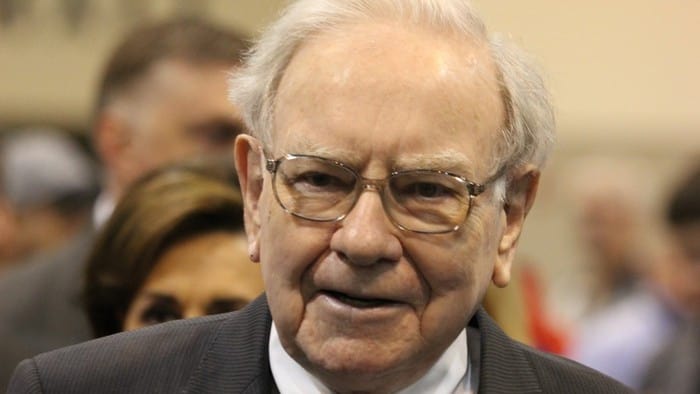
    Legendary share market investing expert and owner of Berkshire Hathaway Warren Buffett

    This article was originally published on Fool.com. All figures quoted in US dollars unless otherwise stated.

    Warren Buffett led the Berkshire Hathaway (NYSE: BRK.A)(NYSE: BRK.B) holding company since 1965. He likes to invest in companies with steady growth, reliable profitability, strong management teams, and shareholder-friendly initiatives like dividend payments and stock buyback programs.

    That strategy is working: Berkshire delivered a 4,384,748% return between 1965 and 2023. That translates to a compound annual gain of 19.8%, which is nearly double the 10.2% annual return of the benchmark S&P 500 index over the same period. In dollar terms, an investment of $1,000 in Berkshire Hathaway stock in 1965 would have grown to over $43 million, whereas the same investment in the S&P 500, with dividends reinvested, would be worth just $312,333.

    Buffett isn’t the type of investor who chases the latest stock market trends, so you won’t find him piling into red-hot artificial intelligence (AI) stocks today. But three stocks Berkshire already owns are set to benefit tremendously from AI, and they account for more than 45% of the conglomerate’s entire $398.7 billion portfolio of publicly traded securities.

    1. Snowflake: 0.2% of Berkshire Hathaway’s portfolio

    Snowflake (NYSE: SNOW) developed its Data Cloud to help businesses aggregate their critical data onto one platform, where it can be analyzed more effectively to extract its maximum value. The service was designed for use by large, complex organizations that work with multiple cloud providers (like Microsoft Azure and Alphabet‘s Google Cloud), a situation that often leads to the creation of data silos.

    Then last year, Snowflake launched its Cortex AI platform, which allows businesses to combine ready-made large language models (LLMs) with their own data to create generative AI applications. Cortex also comes with a suite of AI tools such as Document AI, which allows businesses to extract valuable data from unstructured sources like invoices or contracts, and Snowflake’s Copilot virtual assistant, which can be prompted using natural language to provide valuable insights across the Snowflake platform.

    In the company’s fiscal 2025 first quarter, which ended April 30, Snowflake’s product revenue came in at $789.6 million, a 34% increase from the year-ago period. That’s a robust growth rate at face value, but it continued a trend of deceleration from prior quarters. Though Snowflake continues to invest heavily in growth initiatives like marketing and research and development, it is acquiring new customers at a slowing rate, and its existing customers are expanding their spending with it more slowly.

    Berkshire Hathaway bought its stake in Snowflake around the time of the data cloud specialist’s initial public offering in 2020, so it likely paid around $120 per share. The stock soared to as high as $392 in 2021, but it has since declined by 63% from that level and now trades at $142. Unfortunately, due to the company’s slowing growth, the stock still appears to be quite expensive, so this is one Berkshire pick investors might want to avoid (for now).

    2. Amazon: 0.5% of Berkshire Hathaway’s portfolio

    Berkshire bought Amazon (NASDAQ: AMZN) stock in 2019, and Buffett has often expressed regret that he didn’t spot the opportunity sooner. Amazon was founded as an e-commerce company, but it expanded into cloud computing, streaming, digital advertising, and now, AI.

    Its Amazon Web Services (AWS) cloud division designed its own data center chips which can be up to 50% cheaper for AI developers to use compared to its other infrastructure powered by Nvidia‘s chips. Plus, the Amazon Bedrock platform offers developers a library of ready-made LLMs from some of the industry’s leading start-ups, in addition to a family of LLMs called Titan that Amazon built in-house.

    In essence, AWS wants to become the go-to destination for developers looking to create their own AI applications. Various Wall Street forecasts suggest AI will add anywhere from $7 trillion to $200 trillion to the global economy in the coming decade, potentially making it Amazon’s largest opportunity ever.

    Berkshire Hathaway owns a $2 billion stake in Amazon, representing just 0.5% of the conglomerate’s stock portfolio. AI could drive substantial growth for the company over the long term, so if Buffett wished that position was larger before, he might be kicking himself for not adding to it sooner after this next chapter unfolds.

    3. Apple: 44.5% of Berkshire Hathaway’s portfolio

    Apple (NASDAQ: AAPL) is Berkshire Hathaway’s largest position by far. The conglomerate has spent around $38 billion accumulating shares starting in 2016, and its position is now worth $177.6 billion — even after it sold 13% of its stake (for tax reasons) earlier this year. Apple makes some of the world’s most popular devices including the iPhone, iPad, Apple Watch, AirPods, and the Mac line of computers.

    The company is entering the world of AI with its new Apple Intelligence software, which will be released alongside the iOS 18 operating system in September. It was developed in partnership with OpenAI, and it’s set to transform the user experience for Apple’s devices. Its Siri voice assistant will lean on the capabilities of ChatGPT, as will its writing tools like Notes, Mail, and iMessage, to help users rapidly craft content.

    There are more than 2.2 billion active Apple devices worldwide, meaning this company could soon become the largest distributor of AI to consumers. The upcoming iPhone 16 could drive a significant upgrade cycle, because it is expected to come with a powerful new chip capable of processing AI workloads on-device.

    Apple ticks all of Buffett’s boxes for a stock pick. It has grown steadily since Berkshire first invested in 2016, it’s consistently profitable, it has a resolute leader in CEO Tim Cook, and it returns truckloads of money to shareholders through dividends and stock buybacks. In fact, Apple just announced a new buyback program worth $110 billion — the largest in the history of corporate America.

    This article was originally published on Fool.com. All figures quoted in US dollars unless otherwise stated.

    The post 45% of Warren Buffett’s $398 billion portfolio is invested in 3 artificial intelligence (AI) stocks appeared first on The Motley Fool Australia.

    Should you invest $1,000 in Apple right now?

    Before you buy Apple shares, consider this:

    Motley Fool investing expert Scott Phillips just revealed what he believes are the 5 best stocks for investors to buy right now… and Apple wasn’t one of them.

    The online investing service he’s run for over a decade, Motley Fool Share Advisor, has provided thousands of paying members with stock picks that have doubled, tripled or even more.*

    And right now, Scott thinks there are 5 stocks that may be better buys…

    See The 5 Stocks
    *Returns as of 24 June 2024

    More reading

    Suzanne Frey, an executive at Alphabet, is a member of The Motley Fool’s board of directors. John Mackey, former CEO of Whole Foods Market, an Amazon subsidiary, is a member of The Motley Fool’s board of directors. Anthony Di Pizio has no position in any of the stocks mentioned. The Motley Fool Australia’s parent company Motley Fool Holdings Inc. has positions in and has recommended Alphabet, Amazon, Apple, Berkshire Hathaway, Microsoft, Nvidia, and Snowflake. The Motley Fool Australia’s parent company Motley Fool Holdings Inc. has recommended the following options: long January 2026 $395 calls on Microsoft and short January 2026 $405 calls on Microsoft. The Motley Fool Australia has recommended Alphabet, Amazon, Apple, Berkshire Hathaway, Microsoft, and Nvidia. The Motley Fool has a disclosure policy. This article contains general investment advice only (under AFSL 400691). Authorised by Scott Phillips.

  • Why Bowen Coking Coal, Clinuvel, Meteoric Resources, and Pilbara Minerals shares are falling

    a woman holds her hands to her temples as she sits in front of a computer screen with a concerned look on her face.

    The S&P/ASX 200 Index (ASX: XJO) has started the week in a disappointing fashion. In afternoon trade, the benchmark index is down 0.65% to 7,771.1 points.

    Four ASX shares that are falling more than most today are listed below. Here’s why they are dropping:

    Bowen Coking Coal Ltd (ASX: BCB)

    The Bowen Coking Coal share price is down almost 11% to 5 cents. Investors haven’t responded positively to news that the company has completed the sale of a 10% interest in the Broadmeadow East Mine. Nevertheless, Bowen Coking Coal’s CEO, Daryl Edwards, was pleased. He said: “The unification of ownership and operating structures for the Broadmeadow East Mine, the Burton Mine and the planned Lenton Coal Project provides BCB and MPC with significant operational flexibilities and efficiencies. It is satisfying to see this transaction successfully concluded.”

    Clinuvel Pharmaceuticals Limited (ASX: CUV)

    The Clinuvel Pharmaceuticals share price is down 10% to $15.57. This may have been driven by profit taking after a very strong gain from this pharmaceuticals company’s shares on Friday. That gain was driven by the release of an update on its CUV151 study, which is evaluating the DNA-repair capacity of afamelanotide on skin of healthy volunteers exposed to ultraviolet (UV) radiation. Chief scientific officer, Dr Dennis Wright, commented: “The results from RNA sequencing complement the earlier results we saw from immunohistochemistry, in that afamelanotide consistently seems to assist repair of UV-damaged DNA in the skin.”

    Meteoric Resources NL (ASX: MEI)

    The Meteoric Resources share price is down 11% to 16 cents. This follows the release of the scoping study results for its 100%-owned Caldeira Rare Earth Ionic Clay Project in Brazil. That scoping study demonstrated a pre-tax net present value (8%) of US$1,235 million and a payback of 2.2 years. The market may have not responded positively to the study results, but its CEO, Nick Holthouse, was very pleased. He said: “These outcomes demonstrate that the Caldeira Project is disruptive to the global rare earth mining industry in the true sense of the word.”

    Pilbara Minerals Ltd (ASX: PLS)

    The Pilbara Minerals share price is down 2% to $2.93. This is despite there being no news out of the lithium miner on Monday. However, it is worth highlighting that most ASX lithium stocks are under pressure today. This follows another bleak night of trade for lithium miners on Wall Street amid concerns over falling lithium prices. Following today’s decline, Pilbara Minerals’ shares are at a new 52-week low and down by 40% since this time last year.

    The post Why Bowen Coking Coal, Clinuvel, Meteoric Resources, and Pilbara Minerals shares are falling appeared first on The Motley Fool Australia.

    Should you invest $1,000 in Bowen Coking Coal Limited right now?

    Before you buy Bowen Coking Coal Limited shares, consider this:

    Motley Fool investing expert Scott Phillips just revealed what he believes are the 5 best stocks for investors to buy right now… and Bowen Coking Coal Limited wasn’t one of them.

    The online investing service he’s run for over a decade, Motley Fool Share Advisor, has provided thousands of paying members with stock picks that have doubled, tripled or even more.*

    And right now, Scott thinks there are 5 stocks that may be better buys…

    See The 5 Stocks
    *Returns as of 24 June 2024

    More reading

    Motley Fool contributor James Mickleboro has no position in any of the stocks mentioned. The Motley Fool Australia’s parent company Motley Fool Holdings Inc. has no position in any of the stocks mentioned. The Motley Fool Australia has no position in any of the stocks mentioned. The Motley Fool has a disclosure policy. This article contains general investment advice only (under AFSL 400691). Authorised by Scott Phillips.

  • Why did Coles shares underperform the ASX 200 so much in FY24?

    A female Woolworths customer leans on her shopping trolley as she rests her chin in her hand thinking about what to buy for dinner while also wondering why the Woolworths share price isn't doing as well as Coles recently

    Coles Group Ltd (ASX: COL) shares significantly underperformed the S&P/ASX 200 Index (ASX: XJO) during the 12 months to 30 June 2024. Coles shares fell by 7.5%, while the ASX 200 rose by 7.8%, which means there was underperformance of more than 15%.

    It may be surprising to see a performance like this because Coles’ supermarket earnings are generally seen as defensive. But, it didn’t play out like that.

    As the chart below shows, the Coles share price declined significantly last year following its FY23 update, its FY24 outlook commentary, and the Ocado update.

    What happened to Coles shares?

    In mid-August 2023, Coles said it had received notification from Ocado that the handover of the Victorian customer fulfilment centre (CFC) would be delayed.

    Additional works were required to rectify construction issues with the grid identified during quality control processes for the Victorian CFC. Ramp-up is now expected to start in mid-FY25.

    The NSW CFC being built by Ocado was expected to be commissioned at the end of FY24 rather than during the second half of FY24.

    Impacts of those delays are expected to increase the project capital and operating expenditure by approximately $70 million and $50 million respectively.

    When Coles talked about its FY24 outlook commentary, it noted that headline inflation was moderating (which reduces sales growth). It also said stock loss (theft) was elevated and it was taking action to rectify this.

    Latest update

    Coles hasn’t released its FY24 result yet, so the latest shareholders information that can be used to analyse Coles shares is the FY24 third-quarter update.

    For the 12 weeks to 24 March 2024, supermarket revenue rose by 5.1% year over year to $9.06 billion, and total sales rose 3.4% to $10 billion. Supermarket e-commerce sales jumped 34.9%, but total liquor sales declined 1.9%.

    In the early part of the fourth quarter, the ASX share said that its supermarket volumes had remained “positive”, helped by its “value campaigns and strong execution of trade plans.”

    Coles has continued to see deflation in fresh produce and meat, with moderation in inflation across its broader packaged categories. The company said this was pleasing “given the current economic environment.”

    The business has also made “good progress” on addressing its loss, which is expected to continue in the fourth quarter.

    However, in liquor, discretionary spending was expected to remain “subdued”, with sales in the early part of the fourth quarter “broadly in line” with the third quarter.

    Coles expects its new Kemps Creek automated distribution centre and two CFCs to help improve efficiencies and differentiate its offer.

    Profit estimates for Coles shares

    Broker UBS thinks Coles will generate $43.8 billion in sales and $1.07 billion in net profit in FY24. The broker also forecasts that Coles shareholders could receive an annual dividend per share of 72 cents.  

    The post Why did Coles shares underperform the ASX 200 so much in FY24? appeared first on The Motley Fool Australia.

    Should you invest $1,000 in Coles Group Limited right now?

    Before you buy Coles Group Limited shares, consider this:

    Motley Fool investing expert Scott Phillips just revealed what he believes are the 5 best stocks for investors to buy right now… and Coles Group Limited wasn’t one of them.

    The online investing service he’s run for over a decade, Motley Fool Share Advisor, has provided thousands of paying members with stock picks that have doubled, tripled or even more.*

    And right now, Scott thinks there are 5 stocks that may be better buys…

    See The 5 Stocks
    *Returns as of 24 June 2024

    More reading

    Motley Fool contributor Tristan Harrison has no position in any of the stocks mentioned. The Motley Fool Australia’s parent company Motley Fool Holdings Inc. has no position in any of the stocks mentioned. The Motley Fool Australia has positions in and has recommended Coles Group. The Motley Fool has a disclosure policy. This article contains general investment advice only (under AFSL 400691). Authorised by Scott Phillips.

  • Up 160% in a month, is ASX defence stock AML3D profitable?

    A young man goes over his finances and investment portfolio at home.

    Shares of AML3D Ltd (ASX: AL3) have skyrocketed in the last month, prompting many to wonder what’s behind the rapid ascent.

    At the time of writing, shares in the emerging ASX defence player are swapping hands at 18.5 cents apiece, a rise of more than 160% in the last month.

    Stock prices are typically based on fundamentals, such as a company’s sales or earnings. But we do know that from time to time, stocks can fly on other catalysts, such as market-sensitive announcements.

    With this meteoric rise in such a short time, many are asking, is AML3D profitable? Here’s a look.

    Why the sudden interest in AML3D shares?

    This Adelaide-based company, which specialises in metal 3D printing for the defence sector, has made several announcements in recent months, which have resulted in enormous growth in the value of AML3D shares.

    The company has been busy in the last year, securing a series of lucrative contracts. It most recently sold its 2600 Edition ARCEMY system to Laser Welding Solutions, which supports the US Navy, for $1.1 million.

    This builds on another US Department of Defense contract for $1.5 million it secured earlier in the year.

    Moreover, the company recently received a $1.12 million grant from the South Australian Economic Recovery Fund to advance its proprietary metal 3D printing technology

    Arguably, these developments further cement its reputation in this highly specialised field.

    But while these updates are great for AML3D shares, what does it mean for the actual business’s profitability?

    The company reported more than 935% sales growth in its half-year results. Revenues grew to $1.5 million, up from just $147,115 the year prior.

    Gross profit – which is considered sales minus costs of goods sold – came to $714,000 for the half. But stock prices aren’t sensitive to gross profits. It’s the after-tax earnings that matter.

    After all costs and operating expenses, AL3MD’s net loss after tax was $3.4 million, or 1.4 cents per share, versus negative 1.3 cents per share in H1 FY23.

    As such, ALM3D is not currently profitable.

    Financials and future outlook

    Looking ahead, there could be reasons to be optimistic about AML3D shares, particularly through its expansion into the US defence sector and ongoing technological advancements.

    The company is focused on expanding its footprint with the US Navy and military. ALM3D CEO Sean Ebert said there were many opportunities to do this.

    He said “continuing momentum” was driving the company’s US growth. As such, it is looking at opportunities in “the Navy’s submarine industrial base, but also across US-based, global Tier 1 Oil & Gas, Marine and Aerospace companies”.

    Foolish takeaway

    Investors intrigued by AML3D’s recent performance and its moves in the defence sector might view the stock as a speculative growth opportunity.

    However, it’s crucial to stay aware of the inherent risks. This is especially true for companies like ALM3D, which are still navigating their path to profitability.

    As always, consider your personal investment strategy and consult with a financial advisor if needed.

    The post Up 160% in a month, is ASX defence stock AML3D profitable? appeared first on The Motley Fool Australia.

    Should you invest $1,000 in Aml3d Limited right now?

    Before you buy Aml3d Limited shares, consider this:

    Motley Fool investing expert Scott Phillips just revealed what he believes are the 5 best stocks for investors to buy right now… and Aml3d Limited wasn’t one of them.

    The online investing service he’s run for over a decade, Motley Fool Share Advisor, has provided thousands of paying members with stock picks that have doubled, tripled or even more.*

    And right now, Scott thinks there are 5 stocks that may be better buys…

    See The 5 Stocks
    *Returns as of 24 June 2024

    More reading

    Motley Fool contributor Zach Bristow has no position in any of the stocks mentioned. The Motley Fool Australia’s parent company Motley Fool Holdings Inc. has no position in any of the stocks mentioned. The Motley Fool Australia has no position in any of the stocks mentioned. The Motley Fool has a disclosure policy. This article contains general investment advice only (under AFSL 400691). Authorised by Scott Phillips.

  • These 5 ASX dividend shares had the highest yields in FY24

    We’re now into the second week of the 2025 financial year for ASX shares, and it’s been a fairly decent start to FY25 for the stock market and most ASX shares. Since the end of FY24, the All Ordinaries Index (ASX: XAO) has risen by around 0.3%.

    But given that we’re still very much in the transition zone from FY24 to FY25, it’s still a good time to look back and check out some of the best, worst, and most interesting shares of FY24. So, with that in mind, today, we’ll be doing the latter and looking at the ASX’s highest-yielding dividend shares over the financial year just gone.

    For simplicity’s sake, we’ll stick to the All Ords shares with market capitalisations above $1 billion. So, without further ado, here are the five highest-yielding ASX dividend shares of FY24.

    The five highest-yielding ASX dividend shares of FY24

    Our first ASX dividend share worth discussing is the real estate investment trust (REIT) Charter Hall Long WALE REIT (ASX: CLW). This REIT specialises in holding property assets with long weighted average lease expiries (WALEs).

    Long WALE REIT units doled out four quarterly dividend distributions over FY24, which were all worth an unfranked 6.5 cents per share. At the closing FY24 unit price of $3.25, this REIT had a trailing yield of 8%.

    Next up we have the financial services company Insignia Financial Ltd (ASX: IFL). Insignia shares paid out a total of 18.6 cents per share in unfranked dividends over the past 12 months.

    At the end of FY24, Insignia shares were worth $2.29 each. At this pricing, the company was on a trailing dividend yield of 8.12%.

    Then we have the famous ASX iron ore stock Fortescue Ltd (ASX: FMG). Andrew Forrest’s iron ore giant once again brought home the dividend bacon in FY24. The company dispensed a final dividend of $1 per share last September, followed by an interim dividend of $1.08 back in March. Both of these payments came fully franked.

    These two dividends resulted in Fortescue shares exiting FY24 at a dividend yield of 9.72% as of 28 June’s closing price of $21.41.

    Next up is ASX coal stock Yancoal Australia Ltd (ASX: YAL). Over the past 12 months, Yancoal delighted its investors with two large and fully franked dividend payments. The company’s September interim dividend was worth 37 cents per share, while the final dividend from April came in at 32.5 cents per share.

    Put together, those two dividends gave Yancoal shares a trailing dividend yield of 10.5% at FY24’s closing share price of $6.62.

    Our final ASX dividend share is listed investment company (LIC) WAM Capital Ltd (ASX: WAM).

    As it has been doing for more than five years now, WAM doled out an annual total of 15.5 cents per share in fully franked dividends over the past 12 months. At WAM Capital’s last share price of $1.43 in FY24, this LIC had a trailing yield of 10.84%.

    Are these high-yield ASX dividend shares worth buying?

    So, we’ve established that these five ASX dividend shares paid out huge sums of dividend income over FY24. But does this mean they are automatically good buys for FY25 and beyond?

    Well, no, in a word. Just because an ASX dividend share trades on a high dividend yield doesn’t mean it’s a good buy.

    Remember, a share’s dividend yield reflects the past, not the future. And no share is under any obligation to pay out the same level of dividends it funded over one year in another.

    It could even be argued that a high dividend yield is a red flag that requires additional homework to be done on our part to ensure that we’re not making an investing mistake.

    Everyone loves a dividend on the ASX. So when the market allows a share to trade with a high dividend yield, it usually indicates that the markets don’t view the previous level of income the company provided as sustainable going forward.

    Otherwise, investors of all stripes would rush to lock in that 7%, 9% or 10% yield and push up the price of the shares (thus lowering the dividend yield).

    Looking at the shares above, we can see that they are not ideal candidates for dividend stability. Yancoal and Fortescue, for example, are mining companies whose profits are highly dependent on the prices of the commodities they mine. If coal or iron ore prices collapse, dividends from these companies will probably dry up quickly.

    Spotting a dividend trap

    The Charter Hall Long WALE REIT doesn’t have this problem of course. Its dividend distributions have been remarkably stable in recent years. However, REITs are highly influenced by interest rates. And the current uncertainty over what the Reserve Bank of Australia RBA) will do next when it comes to rates is probably keeping some investors away from this dividend stock right now.

    Insignia Financial is arguably more of a case of a classic dividend trap. This company’s shares, and dividends, have been on a downward trajectory for years. Sure, there’s a chance this company can turn things around. But the market clearly isn’t betting it will do so. Hence the high yield currently on display.

    It might be a similar story for WAM Capital. This company’s shares have also been in a downward spiral for years – investors have taken a 32% hit since this time in 2019. WAM Capital currently doesn’t even have enough cash to cover its dividend for the next 12 months, so it’s clear what the market is pricing in on this one as well.

    Foolish takeaway

    When investigating a high-yield ASX dividend share, it’s important to delve deeper into understanding why the market is offering such a high dividend yield.

    The market rarely makes mistakes with these things, so unless you’re absolutely sure you know something that other investors don’t, it’s worth exercising high vigilance if you’re considering a buy.

    The post These 5 ASX dividend shares had the highest yields in FY24 appeared first on The Motley Fool Australia.

    Should you invest $1,000 in Charter Hall Long Wale Reit right now?

    Before you buy Charter Hall Long Wale Reit shares, consider this:

    Motley Fool investing expert Scott Phillips just revealed what he believes are the 5 best stocks for investors to buy right now… and Charter Hall Long Wale Reit wasn’t one of them.

    The online investing service he’s run for over a decade, Motley Fool Share Advisor, has provided thousands of paying members with stock picks that have doubled, tripled or even more.*

    And right now, Scott thinks there are 5 stocks that may be better buys…

    See The 5 Stocks
    *Returns as of 24 June 2024

    More reading

    Motley Fool contributor Sebastian Bowen has no position in any of the stocks mentioned. The Motley Fool Australia’s parent company Motley Fool Holdings Inc. has no position in any of the stocks mentioned. The Motley Fool Australia has no position in any of the stocks mentioned. The Motley Fool has a disclosure policy. This article contains general investment advice only (under AFSL 400691). Authorised by Scott Phillips.