Tag: Motley Fool

  • 3 beaten down ASX All Ords tech shares that are printing cash

    A mature aged man with grey hair and glasses holds a fan of Australian hundred dollar bills up against his mouth and looks skywards with his eyes as though he is thinking what he might do with the cash.A mature aged man with grey hair and glasses holds a fan of Australian hundred dollar bills up against his mouth and looks skywards with his eyes as though he is thinking what he might do with the cash.

    All Ordinaries (ASX: XAO) shares have certainly had a rough 12 months, with the index down 11% over the past year.

    No doubt the technology sector has played some role — tech is the worst performing sector in that time. The S&P/ASX 200 All Technology Index (ASX: XTX) is down 35.3% while the S&P/ASX 200 Info Technology Index (ASX: XIJ) is even lower, down 38.6% over the past 12 months.

    Clearly, the rotation out of tech stocks has hit the sector hard although it’s also delineated clear “earners and burners”, according to one fund manager.

    Pie Funds portfolio manager Chris Bainbridge told the Australian Financial Review:

    We believe this correction is one of the best things that could have happened for a number of tech companies because it enforces a financial discipline that hasn’t been there for the last few years. There are now depressed valuations for companies with demonstrably better earnings than anyone was projecting six months ago, and that’s something the market is missing. The caveat is you have to find the right stocks. Buying the index won’t work.

    So, here’s a list of some of those earners flying above their peers that may present good buying opportunities.

    Codan Ltd (ASX: CDA)

    Codan reported $162 million in earnings before interest, taxes, depreciation, amortisation (EBITDA) and a record net profit after tax (NPAT) of $100.5 million for FY22.

    Revenues also saw a 16% increase year over year (yoy) to $506.1 million.

    Codan produces”rugged” communications equipment such as transceivers and mining technology. It notes that it will likely record further growth in FY23. This will be supported by a strong order book of $149 million and further opportunities in the pipeline.

    Codan’s shares are down 34% year to date.

    Hansen Technologies Ltd (ASX: HSN)

    Hansen is another profitable tech company although its earnings for FY22 were in a slump. NPAT finished at $41.9 million, down 27%, with EBITDA of $99.9 million, down 16% yoy.

    Revenues were also down to $296.5 million, 4% lower yoy.

    Hansen is a software development company that creates billing systems, mostly for companies in the energy and telecommunications sector. It noted in its outlook that it’s looking to expand into additional markets.

    Hansen shares are down 13.97% year to date.

    Dicker Data Ltd (ASX: DDR)

    Finally, Dicker Data reported growth in its top and bottom lines for HYFY22. Total revenue surged 36.5% yoy to $1,459.4 million. NPAT grew 7% yoy to $34.3 million, while EBITDA grew 19.5% to $61.2 million.

    Dicker Data is a distributor of both software and hardware. It provided outlook for the rest of its reporting period, stating it sees additional opportunities in the cybersecurity industry with its Hills Security and SIT division.

    Dicker Data’s shares are down 30% year to date.

    The post 3 beaten down ASX All Ords tech shares that are printing cash appeared first on The Motley Fool Australia.

    Wondering where you should invest $1,000 right now?

    When investing expert Scott Phillips has a stock tip, it can pay to listen. After all, the flagship Motley Fool Share Advisor newsletter he has run for over ten years has provided thousands of paying members with stock picks that have doubled, tripled or even more.* Scott just revealed what he believes could be the “five best ASX stocks” for investors to buy right now. These stocks are trading at near dirt-cheap prices and Scott thinks they could be great buys right now

    See The 5 Stocks
    *Returns as of August 4 2022

    (function() {
    function setButtonColorDefaults(param, property, defaultValue) {
    if( !param || !param.includes(‘#’)) {
    var button = document.getElementsByClassName(“pitch-snippet”)[0].getElementsByClassName(“pitch-button”)[0];
    button.style[property] = defaultValue;
    }
    }

    setButtonColorDefaults(“#0095C8”, ‘background’, ‘#5FA85D’);
    setButtonColorDefaults(“#0095C8”, ‘border-color’, ‘#43A24A’);
    setButtonColorDefaults(“#fff”, ‘color’, ‘#fff’);
    })()

    More reading

    Motley Fool contributor Matthew Farley has no positions in the stocks mentioned. The Motley Fool Australia’s parent company Motley Fool Holdings Inc. has positions in and has recommended Dicker Data Limited. The Motley Fool Australia has positions in and has recommended Dicker Data Limited. The Motley Fool has a disclosure policy. This article contains general investment advice only (under AFSL 400691). Authorised by Scott Phillips.

    from The Motley Fool Australia https://ift.tt/6RlFktA

  • Worst month of the year? The Pilbara Minerals share price has already hit 2 all-time highs in September

    A young women pumps her fists in excitement after seeing some good news on her laptop.A young women pumps her fists in excitement after seeing some good news on her laptop.

    The Pilbara Minerals Ltd (ASX: PLS) share price has been an outperformer in recent weeks having secured a more-than-tidy gain since the June bounce in equity markets.

    Over the past month of trade, Pilbara shares have clipped a 38% gain. In doing so, they have thrust past two previous all-time highs. At the time of writing, the Pilbara share price is climbing at $3.98.

    The surge in the Pilbara share price means it has outpaced all benchmarks. In particular, the S&P/ASX 300 Metals and Mining Index (ASX: XMM), which is down 1.5% this past month, and 10.4% this year to date.

    Compare the Pilbara share price with the metals and mining index on the chart below for this year to date.

    TradingView Chart

    What’s up with the Pilbara share price?

    Chief to the upside in recent months are the results from Pilbara’s recent auctions held on its Battery Material Exchange (BMX).

    This was supported by the company’s FY22 results. Herein, it exhibited the strength of the BMX and current lithium pricing in its business model.

    In fact, Pilbara’s record-setting 577% jump in revenue to $1.2 billion and $561 million in reported after-tax profit for FY22 were enough to signal a frenzy of buying activity in the ASX lithium basket. The Pilbara share price led the charge, gaining 22% since the results release on 23 August.

    Such a strong result demonstrates the probability that lithium supply and demand forces will keep the price of the battery metal buoyant for some time to come.

    Analysts at JP Morgan recently echoed this sentiment. They revised their forecasts for lithium carbonate and spodumene upwards by 20% and 25% respectively in a research note.

    The broker has identified numerous gaps within the supply chain from mine-to-metal for lithium. Not to mention the end-product of batteries and electric mobility.

    This mismatch in supply and demand is likely to create a less benign pricing environment for lithium and its derivatives. JP Morgan says this will keep prices top-heavy for the foreseeable future.

    Analysts at the firm backed this up by assigning a buy rating on Pilbara shares with a $4.10 objective price.

    Notably, the update from JP Morgan is in stark contrast to rival investment bank Goldman Sachs’ apocalyptic forecast for the lithium market earlier in the year. This resulted in widespread selling activity across the ASX lithium contingent.

    Meanwhile, the Pilbara share price remains up 85% for the past 12 months of trade.

    The post Worst month of the year? The Pilbara Minerals share price has already hit 2 all-time highs in September appeared first on The Motley Fool Australia.

    Should you invest $1,000 in Pilbara Minerals Limited right now?

    Before you consider Pilbara Minerals Limited, you’ll want to hear this.

    Motley Fool Investing expert Scott Phillips just revealed what he believes are the 5 best stocks for investors to buy right now… and Pilbara Minerals Limited wasn’t one of them.

    The online investing service he’s run for over a decade, Motley Fool Share Advisor, has provided thousands of paying members with stock picks that have doubled, tripled or even more.* And right now, Scott thinks there are 5 stocks that are better buys.

    See The 5 Stocks
    *Returns as of August 4 2022

    (function() {
    function setButtonColorDefaults(param, property, defaultValue) {
    if( !param || !param.includes(‘#’)) {
    var button = document.getElementsByClassName(“pitch-snippet”)[0].getElementsByClassName(“pitch-button”)[0];
    button.style[property] = defaultValue;
    }
    }

    setButtonColorDefaults(“#0095C8”, ‘background’, ‘#5FA85D’);
    setButtonColorDefaults(“#0095C8”, ‘border-color’, ‘#43A24A’);
    setButtonColorDefaults(“#fff”, ‘color’, ‘#fff’);
    })()

    More reading

    Motley Fool contributor Zach Bristow has no position in any of the stocks mentioned. The Motley Fool Australia’s parent company Motley Fool Holdings Inc. has no position in any of the stocks mentioned. The Motley Fool Australia has no position in any of the stocks mentioned. The Motley Fool has a disclosure policy. This article contains general investment advice only (under AFSL 400691). Authorised by Scott Phillips.

    from The Motley Fool Australia https://ift.tt/VOBzXvf

  • 2 popular ETFs that could be buys for ASX investors

    The letters ETF with a man pointing at it.

    The letters ETF with a man pointing at it.

    Exchange traded funds (ETFs) can be a fantastic way to balance out your portfolio. That’s because they provide investors with easy access to a large and diverse group of shares.

    With that in mind, I have picked out two ETFs that are popular with investors right now. Here’s what you need to know about them:

    BetaShares Global Cybersecurity ETF (ASX: HACK)

    The first ETF for ASX investors to look at is the BetaShares Global Cybersecurity ETF.

    There’s no escaping from the fact that cybercrime is rising and is only going to get worse in the future. Particularly given how much infrastructure is moving online to the cloud.

    As a result of this, demand for cybersecurity services and solutions is expected to grow very strongly over the coming years. For example, Statista estimates that the global cybersecurity market will grow from US$217.9 billion in 2021 to US$345.4 billion by 2026.

    This bodes well for the companies included in the BetaShares Global Cybersecurity ETF, which are at the forefront of the industry. Among the companies you’ll be owning a slice of are Accenture, Cisco, Cloudflare, Crowdstrike, Okta, Palo Alto Networks, and Splunk.

    Betashares Global Sustainability Leaders ETF (ASX: ETHI)

    Another ETF that ASX investors might want to take a look at is the Betashares Global Sustainability Leaders ETF.

    This could be a good option for investors that are interested in investing ethically. As its name implies, this ETF gives investors exposure to large global stocks that have been passed strict ESG screens and been identified as climate leaders.

    Earlier this year, Shaw and Partners’ Felicity Thomas rated the ETF as a buy. She told Livewire: “This is one of my favourites, so it’s definitely a buy for me. I really like that they do positive carbon screening. They also pay a 5.7% [now 2.6%] distribution yield, which is great.”

    Among the shares that you will be owning through the fund are the likes of Adobe, Apple, Home Depot, Intuit, Nvidia, Paypal, Toyota, and Visa.

    The post 2 popular ETFs that could be buys for ASX investors appeared first on The Motley Fool Australia.

    Wondering where you should invest $1,000 right now?

    When investing expert Scott Phillips has a stock tip, it can pay to listen. After all, the flagship Motley Fool Share Advisor newsletter he has run for over ten years has provided thousands of paying members with stock picks that have doubled, tripled or even more.* Scott just revealed what he believes could be the “five best ASX stocks” for investors to buy right now. These stocks are trading at near dirt-cheap prices and Scott thinks they could be great buys right now

    See The 5 Stocks
    *Returns as of August 4 2022

    (function() {
    function setButtonColorDefaults(param, property, defaultValue) {
    if( !param || !param.includes(‘#’)) {
    var button = document.getElementsByClassName(“pitch-snippet”)[0].getElementsByClassName(“pitch-button”)[0];
    button.style[property] = defaultValue;
    }
    }

    setButtonColorDefaults(“#43B02A”, ‘background’, ‘#5FA85D’);
    setButtonColorDefaults(“#43B02A”, ‘border-color’, ‘#43A24A’);
    setButtonColorDefaults(“#fff”, ‘color’, ‘#fff’);
    })()

    More reading

    Motley Fool contributor James Mickleboro has no position in any of the stocks mentioned. The Motley Fool Australia’s parent company Motley Fool Holdings Inc. has positions in and has recommended BETA CYBER ETF UNITS. The Motley Fool Australia has positions in and has recommended BETA CYBER ETF UNITS. The Motley Fool has a disclosure policy. This article contains general investment advice only (under AFSL 400691). Authorised by Scott Phillips.

    from The Motley Fool Australia https://ift.tt/VXGcdrs

  • Rates up… and more to come. Here’s the real tragedy

    A businesswoman holding a briefcase rests her head against the glass wall of a city building, she's not having a good day.A businesswoman holding a briefcase rests her head against the glass wall of a city building, she's not having a good day.

    So, the Reserve Bank of Australia (RBA) put rates up for the fifth consecutive month in a row yesterday.

    Yes, I know you know that — as do the hundreds of thousands of borrowers across the country.

    But it’s a helluva thing.

    From 0.1% in early May to 2.35% just four short months later.

    And that’s the ‘official cash rate’ – you can add a couple of percentage points when it comes to the rate we pay on our mortgages.

    Worse, the RBA isn’t done. Not, in all probability, by a long shot.

    They’ve said before that ‘neutral’ is between 2% and 3%. Yes, we’re there… but they’re not aiming for neutral at this point.

    They want to push rates above neutral to pull more spending out of the economy.

    They — and most other central banks around the world — want to kill inflation, dead.

    And rates are their tool of choice. Because it’s the only tool they have.

    Why raise rates when people are already struggling with high prices?

    Because they’re trying to stop those prices going even higher – something that’ll almost certainly happen if they do nothing.

    And while temporarily higher mortgage rates are painful, they’re the ‘least worst’ option between that and permanently higher prices.

    How so?

    Try this:

    Inflation in the UK is over 10%. With no action here at home, we’d likely see the same thing (and we still might, anyway).

    Now, let’s assume central banks do nothing, and it stays at double digits for three years.

    By 2025, everything would be 33% more expensive (inflation, like interest, compounds!).

    And there is no way wage growth could keep up with that.

    So, in three short years, your standard of living would be – permanently – one-third lower.

    That would be an economic and social disaster.

    And one that might take the best part of a generation to resolve.

    Kinda makes higher rates look good, at least by comparison, right?

    Which is precisely why the RBA is going hard.

    They don’t want to do it. No one at Reserve Bank HQ is enjoying this or is blind to the very real consequences for some people.

    They just have two bad options and are choosing the least-worst.

    Such is the economic situation, sometimes.

    We just have to hope they get on top of inflation quickly. 

    Because the quicker they do, the sooner rates can start to come down.

    And they will.

    No, not to the lows of the last few years – they were ‘emergency levels’. But down from the highs we haven’t yet reached.

    There is light at the end of the tunnel, but it could be a long tunnel. We’ll need to buckle up.

    Speaking of which, attention is turning to whether or not the current situation needed to be so painful.

    We probably couldn’t have avoided inflation. 

    And higher rates are probably the only (and almost certainly the best) solution.

    But the pain might have been less.

    Perhaps.

    I shared a longish thread on Twitter this morning, which got some positive feedback.

    I was thinking through the implications of lower rates on house prices which, when the interest rate worm turned (as it was always going to) has become a millstone around the neck of some borrowers.

    Here’s a summary:

    The period between 2010 and 2021 resulted in an explosion in prices, and household indebtedness, thanks to lower rates.

    Rate reductions were required, especially post-GFC, but the requirement was, in part, because the government did too little, leaving the RBA to carry the can.

    And now it’s time to pay the piper for policy failures and straight-out mistakes, some of which were more avoidable than others. Here’s what they were, in rough chronological order:

    The overarching policy failure: the federal government was gutless, leaving the RBA, too often, as the only adults in the room.

    Once a month, they take stock of the data and the policy settings and, like a soccer goalie, try to plug the gaps and clean up the mess

    Rates were too low pre-COVID. In part because of that government gutlessness/politicking, and in part because everyone was scared of pushing us back into recession.

    Governments wouldn’t restore budget structural balance. The RBA wouldn’t get back to neutral rates.

    And, in 2019, the banking regulator, APRA, inexplicably cut the lending buffer (which requires banks to use a higher-than-current interest rate to qualify borrowers and work out how much they can afford to borrow)!

    Then, when rates went down — appropriately, if from too low a level — when COVID hit, government and regulators made the problem worse by not recognising the new low rates were going to suck people in and push prices up.

    Or, less generously, not caring (enough).

    The RBA’s second-biggest mistake was in not seeing inflation coming, even when the signs were clear, overseas. Assuming we were somehow special/immune was frankly silly but, moreover, imprudent when caution was required. An understandable mistake, perhaps, but a bad one.

    The bigger mistake? The RBA was very clear in its statement that it didn’t intend to raise rates until necessary, and it forecast that those conditions would prevail in 2024.

    But… It never promised or said that it wouldn’t raise until then. That was a media shorthand mistake, which most people read as gospel.

    That said, the RBA failed in its subsequent communications. It had every opportunity to use any and all communication channels to make the point more clearly but chose not to. That meant borrowers were misinformed.

    But it wasn’t the only body — government or regulator — who could (should!) have acted, by word or deed, to limit the financial risks that homebuyers were unwittingly taking.

    Speaking of which, APRA, the banking regulator, finally acted in October last year, increasing the lending buffer by a tiny amount.

    It was way too little. And way too late. 

    The ‘buffer’ should be used counter-cyclically to dampen house price movements in both directions while letting rate changes impact spending (rather than asset prices). 

    It truly is a very, very simple solution and would be incredibly effective. Government should have insisted on it. APRA should have implemented it. I don’t know what, if any, conversations were had at the time, but they both whiffed it, and borrowers are – quite literally – paying the price.

    (A simple example? House prices went up 24% last year. Without that, the young couple with an $800,000 mortgage which is quickly getting much more expensive, would have had a $640,000 mortgage.)

    So…

    — Government was MIA on policy, and worse was cheerleading the housing boom.

    — The RBA missed the opportunities to increase rates pre-COVID, to increase them more quickly as the economy recovered from the COVID shock, and to communicate more clearly.

    — APRA made things worse in 2019, then was asleep at the wheel in 2020 and 2021, when borrowers took out seven-figure mortgages at 2% interest rates (and when prices rose 24% in 2021 alone!)

    — Banks were happily writing (some) loans that they – and their shareholders may well rue.

    Yes, borrowers share the responsibility to some degree. But given the information/sophistication asymmetry, the primary responsibility (and most of the blame) should sit with those who have the regulatory and legislative responsibility to act… and didn’t.

    But a reminder: The RBA’s role is NOT to manage house prices other than as an input into economic growth, inflation and employment.

    That responsibility is with government.

    And the responsibility for prudent lending is with APRA.

    The RBA absolutely should reckon with itself for its failures and mistakes over the past eight or so years.

    But if we make that the sole/major focus of review, we not only let others off scot-free, but we don’t learn the most important lessons (and will repeat the failures).

    In the meantime?

    The bad news is that the RBA isn’t finished. Probably not by a long shot. Rates could go up another 1% — 1.5%. And, in a worst-case scenario for both inflation and borrowers, perhaps even more.

    That will still be better – believe it or not – than letting inflation get away from us.

    But much of the damage will have been preventable – and there are many in the halls of power (legislative and regulatory) who should shoulder much of the blame.

    The post Rates up… and more to come. Here’s the real tragedy appeared first on The Motley Fool Australia.

    Wondering where you should invest $1,000 right now?

    When investing expert Scott Phillips has a stock tip, it can pay to listen. After all, the flagship Motley Fool Share Advisor newsletter he has run for over ten years has provided thousands of paying members with stock picks that have doubled, tripled or even more.* Scott just revealed what he believes could be the “five best ASX stocks” for investors to buy right now. These stocks are trading at near dirt-cheap prices and Scott thinks they could be great buys right now

    See The 5 Stocks
    *Returns as of August 4 2022

    (function() {
    function setButtonColorDefaults(param, property, defaultValue) {
    if( !param || !param.includes(‘#’)) {
    var button = document.getElementsByClassName(“pitch-snippet”)[0].getElementsByClassName(“pitch-button”)[0];
    button.style[property] = defaultValue;
    }
    }

    setButtonColorDefaults(“#43B02A”, ‘background’, ‘#5FA85D’);
    setButtonColorDefaults(“#43B02A”, ‘border-color’, ‘#43A24A’);
    setButtonColorDefaults(“#fff”, ‘color’, ‘#fff’);
    })()

    More reading

    Motley Fool contributor Scott Phillips has no position in any of the stocks mentioned. The Motley Fool Australia’s parent company Motley Fool Holdings Inc. has no position in any of the stocks mentioned. The Motley Fool Australia has no position in any of the stocks mentioned. The Motley Fool has a disclosure policy. This article contains general investment advice only (under AFSL 400691). Authorised by Scott Phillips.

    from The Motley Fool Australia https://ift.tt/co4BO7x

  • Why Amazon stock stumbled today

    This article was originally published on Fool.com. All figures quoted in US dollars unless otherwise stated.

    A businessman slips and spills his coffee.

    This article was originally published on Fool.com. All figures quoted in US dollars unless otherwise stated.

    What happened

    Monster retailer Amazon (NASDAQ: AMZN) doesn’t often lose, so shareholders get discouraged when the company doesn’t come in first in a contest. That was the situation on Tuesday, when a rival’s bid was selected for a big healthcare asset that was in play. As a result, Amazon’s share price closed the day over 1% lower, a steeper fall than that of the S&P 500 index.

    So what

    Amazon was vying for healthcare services company Signify Health, but the nod ended up going to CVS Health, whose bid was worth roughly $8 billion. Other companies participating in the effort to acquire Signify were UnitedHealth Group and Option Care Health.

    Among that crowd, Amazon was a bit of an outlier. UnitedHealth and Option Care are pure-play healthcare companies. Amazon, which has always aimed to be a retailer of any product or service imaginable, is still considered by many to be more of a giant online shopping outlet than a provider of healthcare services.

    In Signify’s press release announcing its selection of CVS, CEO Kyle Armbrester said that “we determined that CVS Health is the ideal partner, given its focus on expanding access to health services and helping consumers navigate to the best sites of care.”

    While Amazon has indisputably made strides in its medical business efforts — witness its $3.9 billion deal for primary care provider 1Life Healthcare earlier this year — it still isn’t readily identified with that sector. It wouldn’t be surprising if this made the company a dark horse candidate, at best, in the Signify bidding.

    Now what

    Amazon isn’t known for setbacks and management probably isn’t too fond of them, so we can expect the company to make fresh bids for other healthcare businesses that come into play. But other entities with deep pockets will also be looking to buy, so Signify might not be the last of its defeats in the sector.

    This article was originally published on Fool.com. All figures quoted in US dollars unless otherwise stated.

    The post Why Amazon stock stumbled today appeared first on The Motley Fool Australia.

    Wondering where you should invest $1,000 right now?

    When investing expert Scott Phillips has a stock tip, it can pay to listen. After all, the flagship Motley Fool Share Advisor newsletter he has run for over ten years has provided thousands of paying members with stock picks that have doubled, tripled or even more.* Scott just revealed what he believes could be the “five best ASX stocks” for investors to buy right now. These stocks are trading at near dirt-cheap prices and Scott thinks they could be great buys right now

    See The 5 Stocks *Returns as of August 4 2022

    (function() { function setButtonColorDefaults(param, property, defaultValue) { if( !param || !param.includes(‘#’)) { var button = document.getElementsByClassName(“pitch-snippet”)[0].getElementsByClassName(“pitch-button”)[0]; button.style[property] = defaultValue; } } setButtonColorDefaults(“#0095C8”, ‘background’, ‘#5FA85D’); setButtonColorDefaults(“#0095C8”, ‘border-color’, ‘#43A24A’); setButtonColorDefaults(“#fff”, ‘color’, ‘#fff’); })()

    More reading

    John Mackey, CEO of Whole Foods Market, an Amazon subsidiary, is a member of The Motley Fool’s board of directors. Eric Volkman has no position in any of the stocks mentioned. The Motley Fool Australia’s parent company Motley Fool Holdings Inc. has positions in and has recommended Amazon. The Motley Fool Australia has recommended Amazon. The Motley Fool has a disclosure policy. This article contains general investment advice only (under AFSL 400691). Authorised by Scott Phillips.

    This article was originally published on Fool.com. All figures quoted in US dollars unless otherwise stated.


    from The Motley Fool Australia https://ift.tt/esMjlqu
  • ‘Sweet spot’: Citi names 2 ASX 200 shares that are ‘inexpensive’ right now

    A mature woman holds a plate of cake and licks her thumb.A mature woman holds a plate of cake and licks her thumb.

    Investors looking for S&P/ASX 200 Index (ASX: XJO) shares operating in a “sweet spot” may want to run their slide rules over the health insurance sector.

    That’s according to Nigel Pittaway, managing director, insurance and diversified financials research at Citigroup.

    While many companies are coming under pressure with soaring inflation, Pittaway says Aussie insurers are managing the consumer price rises well.

    Two ASX 200 shares that are inexpensive right now

    As The Australian reports, QBE Insurance Group Ltd (ASX: QBE) is Pittaway’s favoured pick.

    He said that while the insurance giant will likely only see a gradual improvement in its performance, the company has made good progress in improving its top line and margins.

    Analysing the ASX 200 share, Pittaway said:

    While we are slightly wary about its US expansion plans, it seems to be taking a sensible approach, and we recognise the CEO’s previous experience in this market. On our estimates, the stock continues to look inexpensive especially on FY23E [financial year 2023 estimated] earnings and FY24E earnings.

    Health insurers broadly “continue to be in a sweet spot with seemingly not much likely to derail this near term,” he said.

    Another ASX 200 share Pittaway singled out is Medibank Private Ltd (ASX: MPL). He said Medibank looks to be a stronger play than some of its competitors due to its better capital position and the likely relative trajectory of private health insurance margins.

    How have QBE and Medibank been tracking?

    Both ASX 200 shares are also sought out for their dividend payouts.

    QBE pays a current trailing dividend yield of 2.4%, fully franked. And Medibank pays a 3.6% fully-franked trailing yield.

    Both insurers have also bucked the wider selling trend this year.

    The QBE share price is up 1.85% in 2022 so far. While Medibank shares have gained 3.8% since the opening bell of the trading year. That compares to a 10% year-to-date loss posted by the ASX 200.

    The post ‘Sweet spot’: Citi names 2 ASX 200 shares that are ‘inexpensive’ right now appeared first on The Motley Fool Australia.

    Wondering where you should invest $1,000 right now?

    When investing expert Scott Phillips has a stock tip, it can pay to listen. After all, the flagship Motley Fool Share Advisor newsletter he has run for over ten years has provided thousands of paying members with stock picks that have doubled, tripled or even more.* Scott just revealed what he believes could be the “five best ASX stocks” for investors to buy right now. These stocks are trading at near dirt-cheap prices and Scott thinks they could be great buys right now

    See The 5 Stocks
    *Returns as of August 4 2022

    (function() {
    function setButtonColorDefaults(param, property, defaultValue) {
    if( !param || !param.includes(‘#’)) {
    var button = document.getElementsByClassName(“pitch-snippet”)[0].getElementsByClassName(“pitch-button”)[0];
    button.style[property] = defaultValue;
    }
    }

    setButtonColorDefaults(“#43B02A”, ‘background’, ‘#5FA85D’);
    setButtonColorDefaults(“#43B02A”, ‘border-color’, ‘#43A24A’);
    setButtonColorDefaults(“#fff”, ‘color’, ‘#fff’);
    })()

    More reading

    Motley Fool contributor Bernd Struben has no position in any of the stocks mentioned. The Motley Fool Australia’s parent company Motley Fool Holdings Inc. has no position in any of the stocks mentioned. The Motley Fool Australia has no position in any of the stocks mentioned. The Motley Fool has a disclosure policy. This article contains general investment advice only (under AFSL 400691). Authorised by Scott Phillips.

    from The Motley Fool Australia https://ift.tt/gmrE3fe

  • Are ‘cracks starting to show’ for ASX 200 retail shares?

    a woman produces her phone and shows it to the attendant at a shop counter as they appear to be in friendly conversation in a fashion boutique with clothes and accessories.

    a woman produces her phone and shows it to the attendant at a shop counter as they appear to be in friendly conversation in a fashion boutique with clothes and accessories.

    S&P/ASX 200 Index (ASX: XJO) retail shares are in focus as households get to grips with inflation and higher interest rates.

    There has been much volatility on the ASX in 2022.

    Certainly, a number of ASX retail shares are trading considerably lower year to date:

    The Wesfarmers Ltd (ASX: WES) share price is down 23%.

    The Harvey Norman Holdings Limited (ASX: HVN) share price is down 17%.

    The JB Hi-Fi Limited (ASX: JBH) share price is down 19%.

    The Premier Investments Limited (ASX: PMV) share price is down 30%.

    The Super Retail Group Ltd (ASX: SUL) share price is down by 24%.

    What is happening in the retail sector?

    Reporting by The Australian has revealed households are now spending more on services than goods.   

    A report by Deloitte Access Economics says that this is a “turning point” and it’s being driven by faster price growth. This means that product prices are driving sales growth, rather than volume growth. Historically, volume growth has been more important.

    It’s tricky for ASX 200 retail shares because not only are they charging customers more for products when those customers are facing pressures in their budgets, but the retailers are dealing with higher rent and wage costs.

    The Australian quoted Deloitte Access Economics partner and principal report author David Rumbens:

    But cracks are starting to show as the economy faces a number of challenges.

    Domestically, there has been broad based price growth, especially in retail, fuelled by global supply chain disruptions and supply shortages. There are also higher interest rates to deal with and service capacity constraints in some areas of the economy.

    Retail prices increased 4.8% through the year to the June quarter, with the largest price rises seen in food and household goods – the categories where consumers are reining in their spending.

    Indeed on a quarterly basis the turning point for overall retail price growth to exceed sales volume growth has already been reached. This occurred in both the March and June quarters of 2022.

    What next for ASX 200 retail shares?

    Rumbens said that retail price growth is expected to be 5.9% for the year to December 2022, while volume growth is only expected to be 3%.

    The strong employment situation in Australia is essentially a double-edged sword, according to Rumbens. Almost everyone who wants a job has a job, which has been good for retail spending. But, at the same time, it means that retailers are finding it hard to get staff.

    Since May 2019, retail job vacancies have reportedly doubled. But, with lower margins, retailers reportedly aren’t able to afford large wage rises.

    Will the staffing situation be resolved soon? Rumbens doesn’t think so:

    Importantly, the industry is missing a key component of its workforce, being migrants and especially international students.

    Even with this being a key focus of the federal government’s jobs and skills summit last week, it’s unclear if, and when, international students will return to their pre-pandemic levels.

    The higher share of casual and part time workers in the retail workforce is likely also weighing on the industry’s ability to retain workers.

    With fewer entitlements binding these workers to retail jobs and high transferability of skills between retail jobs, workers are more likely to shift between employment.

    The Reserve Bank of Australia (RBA) is determined to bring down inflation and lower economic activity with higher interest rates, so it’ll be interesting to see what happens next with retail product prices and ASX 200 retail shares.

    The post Are ‘cracks starting to show’ for ASX 200 retail shares? appeared first on The Motley Fool Australia.

    Wondering where you should invest $1,000 right now?

    When investing expert Scott Phillips has a stock tip, it can pay to listen. After all, the flagship Motley Fool Share Advisor newsletter he has run for over ten years has provided thousands of paying members with stock picks that have doubled, tripled or even more.* Scott just revealed what he believes could be the “five best ASX stocks” for investors to buy right now. These stocks are trading at near dirt-cheap prices and Scott thinks they could be great buys right now

    See The 5 Stocks
    *Returns as of August 4 2022

    (function() {
    function setButtonColorDefaults(param, property, defaultValue) {
    if( !param || !param.includes(‘#’)) {
    var button = document.getElementsByClassName(“pitch-snippet”)[0].getElementsByClassName(“pitch-button”)[0];
    button.style[property] = defaultValue;
    }
    }

    setButtonColorDefaults(“#43B02A”, ‘background’, ‘#5FA85D’);
    setButtonColorDefaults(“#43B02A”, ‘border-color’, ‘#43A24A’);
    setButtonColorDefaults(“#fff”, ‘color’, ‘#fff’);
    })()

    More reading

    Motley Fool contributor Tristan Harrison has no position in any of the stocks mentioned. The Motley Fool Australia’s parent company Motley Fool Holdings Inc. has positions in and has recommended Harvey Norman Holdings Ltd. and Super Retail Group Limited. The Motley Fool Australia has positions in and has recommended Harvey Norman Holdings Ltd., Super Retail Group Limited, and Wesfarmers Limited. The Motley Fool Australia has recommended JB Hi-Fi Limited and Premier Investments Limited. The Motley Fool has a disclosure policy. This article contains general investment advice only (under AFSL 400691). Authorised by Scott Phillips.

    from The Motley Fool Australia https://ift.tt/5jMf9ip

  • Rates go up, and CBA beefs up its business cred. Scott Phillips on Nine’s Late News

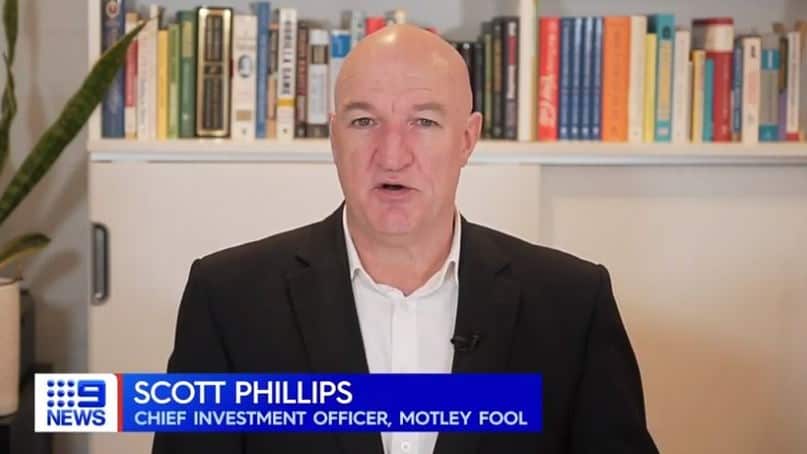
    Motley Fool Chief Investment Officer Scott Phillips on nine newsMotley Fool Chief Investment Officer Scott Phillips on nine news

    Motley Fool Australia Chief Investment Officer Scott Phillips joined Michael Thomson for Nine’s Late News on Tuesday night to discuss the Reserve Bank’s 0.5% rate hike, plus a new business banker on the Commonwealth Bank of Australia (ASX: CBA) board and the outlook for markets.

    [youtube https://www.youtube.com/watch?v=joS0hOTMgv0?feature=oembed&w=500&h=281]

    The post Rates go up, and CBA beefs up its business cred. Scott Phillips on Nine’s Late News appeared first on The Motley Fool Australia.

    Should you invest $1,000 in Commonwealth Bank Of Australia right now?

    Before you consider Commonwealth Bank Of Australia, you’ll want to hear this.

    Motley Fool Investing expert Scott Phillips just revealed what he believes are the 5 best stocks for investors to buy right now… and Commonwealth Bank Of Australia wasn’t one of them.

    The online investing service he’s run for over a decade, Motley Fool Share Advisor, has provided thousands of paying members with stock picks that have doubled, tripled or even more.* And right now, Scott thinks there are 5 stocks that are better buys.

    See The 5 Stocks
    *Returns as of August 4 2022

    (function() {
    function setButtonColorDefaults(param, property, defaultValue) {
    if( !param || !param.includes(‘#’)) {
    var button = document.getElementsByClassName(“pitch-snippet”)[0].getElementsByClassName(“pitch-button”)[0];
    button.style[property] = defaultValue;
    }
    }

    setButtonColorDefaults(“#0095C8”, ‘background’, ‘#5FA85D’);
    setButtonColorDefaults(“#0095C8”, ‘border-color’, ‘#43A24A’);
    setButtonColorDefaults(“#fff”, ‘color’, ‘#fff’);
    })()

    More reading

    Motley Fool contributor Scott Phillips has no position in any of the stocks mentioned. The Motley Fool Australia’s parent company Motley Fool Holdings Inc. has no position in any of the stocks mentioned. The Motley Fool Australia has recommended Westpac Banking Corporation. The Motley Fool has a disclosure policy. This article contains general investment advice only (under AFSL 400691). Authorised by Scott Phillips.

    from The Motley Fool Australia https://ift.tt/FLqVwhz

  • How I’d invest for retirement using just 3 ASX ETFs

    Retired couple reclining on couch with eyes closed

    Retired couple reclining on couch with eyes closed

    What investors do with their money in retirement could be just as important as how they build up wealth to get there. Exchange-traded funds (ETFs) on the ASX could be a way for investors to do things simply.

    ETFs enable investors to buy into a portfolio of shares or assets with just one trade.

    It would certainly be possible for investors to buy into a broad ETF which just follows an index like BetaShares Australia 200 ETF (ASX: A200) and Vanguard Australian Shares Index ETF (ASX: VAS).

    But, I think there are some specialised ETFs that can provide more focused investments for retiree investors. A mixture of dividends and growth could be attractive.

    VanEck Morningstar Australian Moat Income ETF (ASX: DVDY)

    This fund is about creating a diversified portfolio of dividend-paying quality ASX-listed companies, chosen by Morningstar. It intends to capture the performance of the 25 highest dividend-paying ASX-listed shares, excluding real estate investment trusts (REITs), that meet Morningstar’s required criteria. This combines a share’s ‘economic moat’ and ‘distance to default’ qualities.

    An economic moat refers to a company’s ability to maintain its competitive advantages and defend its long-term profitability, such as intangible assets (like brand recognition and patents) or cost advantages.

    The distance to default measure is used to predict the likelihood of bankruptcy which, the fund says, has “also proven an effective predictor of dividend cuts”.

    I think a portfolio of quality ASX dividend-paying shares can be a solid ETF choice for a retirement portfolio.

    Some of the names in the portfolio include Ansell Limited (ASX: ANN), IPH Ltd (ASX: IPH), AUB Group Ltd (ASX: AUB), National Australia Bank Ltd (ASX: NAB), Iress Ltd (ASX: IRE), and Wesfarmers Ltd (ASX: WES).

    Over the year to 31 July 2022, the income part of the return was 5.65%.

    Vanguard Global Infrastructure Index ETF (ASX: VBLD)

    Another area that could fit well into a retirement portfolio is infrastructure.

    Infrastructure can be a good investment because of its typically consistent, and perhaps growing, earnings and distributions.

    One of the advantages of this portfolio from Vanguard is that it’s globally based. While just over two-thirds of the ETF is invested in the US, there are multiple other countries that have a weighting of more than 0.5% — Canada (14.6%), Japan (3.6%), UK (3.2%), Spain (2.2%), Australia (2.1%), Hong Kong (1.9%), Italy (1.6%), and France (0.7%).

    In terms of sector allocation, at 31 July 2022, ‘conventional electricity’ made up 34% of the ETF, ‘railroads’ were 19.6% of the portfolio, ‘pipelines’ were 14% of the portfolio, ‘multi-utilities’ were 10.7% of the portfolio, and infrastructure REITs were 9.7% of the portfolio. Other smaller sectors include transportation services, water, telecommunication services, and telecommunications equipment.

    According to Vanguard, the equity yield is 2.9%. That’s not a bad starting yield.

    VanEck Morningstar Wide Moat ETF (ASX: MOAT)

    The first ETF I wrote about was focused on dividends from Australian businesses.

    However, the VanEck Morningstar Wide Moat ETF is invested in a portfolio of US shares that are viewed as strong, long-term businesses with wide economic moats.

    The Morningstar investment team only choose shares that are seen as good value compared to how much they think the business is actually worth.

    For a company to earn the status of having a wide economic moat, according to Morningstar, excess normalised profit must, with near certainty, be positive a decade from now. On top of that, excess normalised profit must, more likely than not, be positive 20 years from now. In other words, chosen investments could be solid picks for at least 20 years. But, the portfolio may move on from those holdings, depending on factors like valuation changes.

    While this ETF isn’t likely to pay much of a dividend, the total returns have been good in my opinion. The VanEck Morningstar Wide Moat ETF has made an average return per annum of 15.1% since June 2015. But, of course, past performance is no guarantee of future performance.

    The post How I’d invest for retirement using just 3 ASX ETFs appeared first on The Motley Fool Australia.

    Wondering where you should invest $1,000 right now?

    When investing expert Scott Phillips has a stock tip, it can pay to listen. After all, the flagship Motley Fool Share Advisor newsletter he has run for over ten years has provided thousands of paying members with stock picks that have doubled, tripled or even more.* Scott just revealed what he believes could be the “five best ASX stocks” for investors to buy right now. These stocks are trading at near dirt-cheap prices and Scott thinks they could be great buys right now

    See The 5 Stocks
    *Returns as of August 4 2022

    (function() {
    function setButtonColorDefaults(param, property, defaultValue) {
    if( !param || !param.includes(‘#’)) {
    var button = document.getElementsByClassName(“pitch-snippet”)[0].getElementsByClassName(“pitch-button”)[0];
    button.style[property] = defaultValue;
    }
    }

    setButtonColorDefaults(“#0095C8”, ‘background’, ‘#5FA85D’);
    setButtonColorDefaults(“#0095C8”, ‘border-color’, ‘#43A24A’);
    setButtonColorDefaults(“#fff”, ‘color’, ‘#fff’);
    })()

    More reading

    Motley Fool contributor Tristan Harrison has no position in any of the stocks mentioned. The Motley Fool Australia’s parent company Motley Fool Holdings Inc. has recommended IPH Ltd. The Motley Fool Australia has positions in and has recommended Wesfarmers Limited. The Motley Fool Australia has recommended Ansell Ltd., Austbrokers Holdings Limited, IPH Ltd, and VanEck Vectors Morningstar Wide Moat ETF. The Motley Fool has a disclosure policy. This article contains general investment advice only (under AFSL 400691). Authorised by Scott Phillips.

    from The Motley Fool Australia https://ift.tt/muNJSKU

  • Why has the Paladin Energy share price rocketed 20% in a month?

    A boy is about to rocket from a copper-coloured field of hay into the sky.A boy is about to rocket from a copper-coloured field of hay into the sky.

    The Paladin Energy Ltd (ASX: PDN) share price has outperformed its benchmarks over the past month.

    In opening trade on Wednesday, the Paladin share price is dropping 0.56% to 89.5 cents. Although it secured a substantial 7.78% gain in yesterday’s session.

    That helped take the Paladin Energy share price gain to more than 20% in one month.

    In broad market moves, the S&P/ASX 200 Energy Index (ASX: XEJ) has spiked 13% in the past month as well.

    What’s up with the Paladin share price?

    Given the recent calamity in global energy markets, uranium shares have caught a bid as various nations are now looking inward at domestic energy production.

    Uranium itself has curled up from recent lows and is now back above its May 2022 levels at US$52/Lbs. This in itself is around some of the highest prices in the past 10 years.

    As seen below, this has been a net positive for Paladin, whose share price tracks the price of uranium with striking similarity. Price returns for each are plotted for a year.

    TradingView Chart

    Chief to the volatility in uranium has been the looming energy crisis emerging in various nations, Europe in particular. Note that uranium is key in the production of nuclear energy.

    “[T]he uncertainty of energy supplies worldwide drove governments to double down in alternative energy sources,” in early September, Trading Economics says.

    “[M]ajor [nuclear] producer France stated it will restart all of their nuclear reactors by the winter to offset Europe’s energy crunch, after corrosion issues and drying rivers that were vital for reactor cooling led to the suspension of various power plants,” it added.

    With further uncertainty of energy storage supplies heading into winter, it makes sense that alternative sources such as uranium will remain in hot contention for the time being.

    What that means for the Paladin share price we can only find out.

    Meanwhile, four out of five brokers rate Paladin a buy right now, according to Refinitiv Eikon data. The consensus price target is $1.09.

    In the past 12 months, the Paladin share price has clipped a 7% gain.

    The post Why has the Paladin Energy share price rocketed 20% in a month? appeared first on The Motley Fool Australia.

    Wondering where you should invest $1,000 right now?

    When investing expert Scott Phillips has a stock tip, it can pay to listen. After all, the flagship Motley Fool Share Advisor newsletter he has run for over ten years has provided thousands of paying members with stock picks that have doubled, tripled or even more.* Scott just revealed what he believes could be the “five best ASX stocks” for investors to buy right now. These stocks are trading at near dirt-cheap prices and Scott thinks they could be great buys right now

    See The 5 Stocks
    *Returns as of August 4 2022

    (function() {
    function setButtonColorDefaults(param, property, defaultValue) {
    if( !param || !param.includes(‘#’)) {
    var button = document.getElementsByClassName(“pitch-snippet”)[0].getElementsByClassName(“pitch-button”)[0];
    button.style[property] = defaultValue;
    }
    }

    setButtonColorDefaults(“#0095C8”, ‘background’, ‘#5FA85D’);
    setButtonColorDefaults(“#0095C8”, ‘border-color’, ‘#43A24A’);
    setButtonColorDefaults(“#fff”, ‘color’, ‘#fff’);
    })()

    More reading

    Motley Fool contributor Zach Bristow has no position in any of the stocks mentioned. The Motley Fool Australia’s parent company Motley Fool Holdings Inc. has no position in any of the stocks mentioned. The Motley Fool Australia has no position in any of the stocks mentioned. The Motley Fool has a disclosure policy. This article contains general investment advice only (under AFSL 400691). Authorised by Scott Phillips.

    from The Motley Fool Australia https://ift.tt/QOefZjw