Tag: Motley Fool

  • 3 excellent ASX ETFs to buy in March

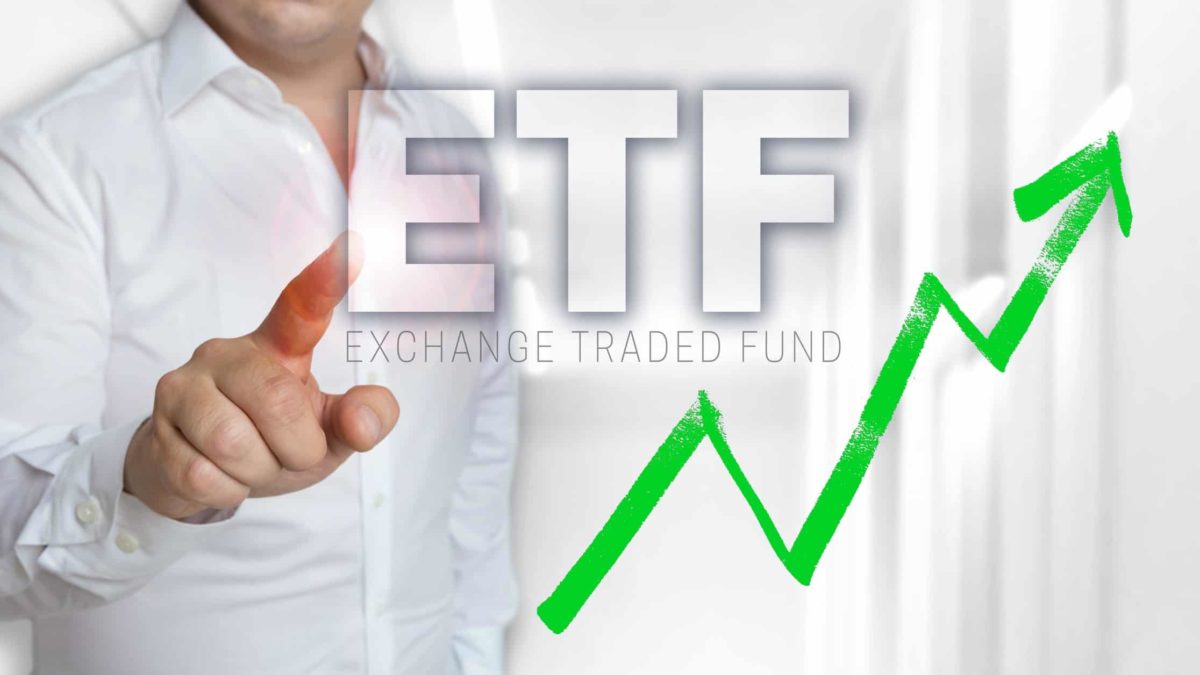
    ETF spelt out with a rising green arrow.

    ETF spelt out with a rising green arrow.

    If you’re interested in adding some ASX exchange traded funds (ETFs) to your portfolio in March, then it could be worth getting better acquainted with the three listed below.

    Here’s what sort of companies you will be investing in if you buy these ETFs:

    ETFS Battery Tech & Lithium ETF (ASX: ACDC)

    If you’re confident on the outlook of electric vehicles and lithium, then the ETFS Battery Tech & Lithium ETF could be the one for you. Rather than having to decide which ASX lithium share to buy, you can own a group of them in one fell swoop. This ETF invests in companies throughout the lithium cycle, including mining, refinement and battery production.

    Vanguard Australian Shares Index ETF (ASX: VAS)

    If you want an easy way to invest in the Australian share market, then the Vanguard Australian Shares Index ETF could help you do it. It is a low-cost, diversified, index-based exchange-traded fund that aims to track the ASX 300 index. This means you’ll be buying a diverse group of 300 shares such as footwear retailer Accent Group Ltd (ASX: AX1), miner BHP Group Ltd (ASX: BHP), and banking giant Commonwealth Bank of Australia (ASX: CBA).

    Vanguard MSCI Index International Shares ETF (ASX: VGS)

    Alternatively, if you want to invest globally, then the Vanguard MSCI Index International Shares ETF could be the answer. This popular ETF gives investors easy access to approximately 1,500 of the world’s largest listed companies from major developed countries. This allows you to gain exposure to global economic growth. It also means you can almost instantly diversify a portfolio. That’s because among its holdings are companies from sectors ranging from technology to financials and healthcare to energy.

    The post 3 excellent ASX ETFs to buy in March appeared first on The Motley Fool Australia.

    Wondering where you should invest $1,000 right now?

    When investing expert Scott Phillips has a stock tip, it can pay to listen. After all, the flagship Motley Fool Share Advisor newsletter he has run for over ten years has provided thousands of paying members with stock picks that have doubled, tripled or even more.*

    Scott just revealed what he believes could be the ‘five best ASX stocks’ for investors to buy right now. We believe these stocks are trading at attractive prices and Scott thinks they could be great buys right now…

    See The 5 Stocks
    *Returns as of 1 February 2024

    (function() {
    function setButtonColorDefaults(param, property, defaultValue) {
    if( !param || !param.includes(‘#’)) {
    var button = document.getElementsByClassName(“pitch-snippet”)[0].getElementsByClassName(“pitch-button”)[0];
    button.style[property] = defaultValue;
    }
    }

    setButtonColorDefaults(“#0095C8”, ‘background’, ‘#5FA85D’);
    setButtonColorDefaults(“#0095C8”, ‘border-color’, ‘#43A24A’);
    setButtonColorDefaults(“#fff”, ‘color’, ‘#fff’);
    })()

    More reading

    Motley Fool contributor James Mickleboro has no position in any of the stocks mentioned. The Motley Fool Australia’s parent company Motley Fool Holdings Inc. has positions in and has recommended Global X Battery Tech & Lithium ETF. The Motley Fool Australia has recommended Accent Group, Global X Battery Tech & Lithium ETF, and Vanguard Msci Index International Shares ETF. The Motley Fool has a disclosure policy. This article contains general investment advice only (under AFSL 400691). Authorised by Scott Phillips.

    from The Motley Fool Australia https://ift.tt/CtJI1nB

  • If I invest $10,000 in Qantas shares, how much passive income will I receive in 2024?

    A woman ponders a question as she puts money into a piggy bank with a model plane and suitcase nearby.

    A woman ponders a question as she puts money into a piggy bank with a model plane and suitcase nearby.

    In the past, Qantas Airways Limited (ASX: QAN) shares were a popular option for passive income investors.

    Unfortunately, that hasn’t been the case in recent years, with the airline operator suspending its dividend since the pandemic.

    But with the company now generating bumper profits, could Qantas become a top option for passive income soon?

    Let’s see what is on the cards for 2024 and beyond.

    Should you buy Qantas shares for passive income?

    I have good news and bad news for you.

    The bad news is that most brokers believe that FY 2024 may be a year too soon for a return to dividend payments.

    While there is a broker predicting a small final dividend in August, that’s not going to move the needle much with a $10,000 investment.

    But hang in there, because the Flying Kangaroo could reward shareholders handsomely in FY 2025.

    Investing $10,000

    Firstly, if you were to invest $10,000 in Qantas shares, you would end up owning 1,934 units.

    What sort of passive income could these shares generate?

    Well, according to a note out of Goldman Sachs, it believes that the company will pay a 30 cents per share dividend next year.

    Based on its current share price of $5.17, this will mean a very attractive 5.8% dividend yield for investors.

    It will also mean that your 1,934 Qantas shares generate approximately $580 of passive income.

    And with Goldman expecting another 30 cents per share dividend in FY 2026, you can expect to receive the same amount of income that year.

    But it gets better.

    With Goldman putting a buy rating and $8.05 price target on its shares, your 1,934 units would have a market value of $15,568.70 if they rose to that level.

    That’s a return of $5,568.70, which may just make up for the lack of dividends this year.

    The post If I invest $10,000 in Qantas shares, how much passive income will I receive in 2024? appeared first on The Motley Fool Australia.

    Wondering where you should invest $1,000 right now?

    When investing expert Scott Phillips has a stock tip, it can pay to listen. After all, the flagship Motley Fool Share Advisor newsletter he has run for over ten years has provided thousands of paying members with stock picks that have doubled, tripled or even more.*

    Scott just revealed what he believes could be the ‘five best ASX stocks’ for investors to buy right now. We believe these stocks are trading at attractive prices and Scott thinks they could be great buys right now…

    See The 5 Stocks
    *Returns as of 1 February 2024

    (function() {
    function setButtonColorDefaults(param, property, defaultValue) {
    if( !param || !param.includes(‘#’)) {
    var button = document.getElementsByClassName(“pitch-snippet”)[0].getElementsByClassName(“pitch-button”)[0];
    button.style[property] = defaultValue;
    }
    }

    setButtonColorDefaults(“#0095C8”, ‘background’, ‘#5FA85D’);
    setButtonColorDefaults(“#0095C8”, ‘border-color’, ‘#43A24A’);
    setButtonColorDefaults(“#fff”, ‘color’, ‘#fff’);
    })()

    More reading

    Motley Fool contributor James Mickleboro has no position in any of the stocks mentioned. The Motley Fool Australia’s parent company Motley Fool Holdings Inc. has positions in and has recommended Goldman Sachs Group. The Motley Fool Australia has no position in any of the stocks mentioned. The Motley Fool has a disclosure policy. This article contains general investment advice only (under AFSL 400691). Authorised by Scott Phillips.

    from The Motley Fool Australia https://ift.tt/xnZtT5i

  • How to invest in the magnificent seven stocks on the ASX

    a man smiles broadly as he holds up five fingers on one hand and two fingers on the other hand.

    a man smiles broadly as he holds up five fingers on one hand and two fingers on the other hand.

    Interest in the ‘magnificent seven’ stocks here on the ASX has arguably never been as strong as it is today.

    The likes of Apple Inc (NASDAQ: AAPL), Amazon.com Inc (NASDAQ: AMZN), Alphabet Inc (NASDAQ: GOOG) (NASDAQ: GOOGL), Meta Platforms Inc (NASDAQ: META) and Netflix Inc (NASDAQ: NFLX) have long dominated ASX investor interest.

    These US tech shares have been growing at jaw-dropping rates for decades now. ASX investors are probably familiar with the old ‘FAANG’ acronym (now defunct thanks to various name changes) that these companies used to be grouped under.

    But thanks to the rise of other tech giants, namely Tesla Inc (NASDAQ: TSLA), Microsoft Corporation (NASDAQ: MSFT) and (especially) NVIDIA Corporation (NASDAQ: NVDA), FAANG has been replaced with ‘the magnificent seven’.

    It’s not really clear why Netflix has been dropped as a star stock here. I suppose the ‘magnificent eight’ doesn’t have the same ring to it. Nor the same connection to old Hollywood.

    As you’ll no doubt be aware, it’s impossible to directly invest in these seven stocks here on the ASX. Given they are all US-listed companies and all.

    However, that doesn’t mean ASX investors who want a slice of the ‘magnificent’ action but don’t want to directly buy US shares, are out of luck. There are a few ways ASX investors can invest in these companies from the comfort of their own markets.

    How to invest in the magnificent seven on the ASX

    So the most direct way to invest in the magnificent seven on the ASX is arguably through exchange-traded funds (ETFs).

    The ETF that gives investors the purest access is probably the Global X FANG+ ETF (ASX: FANG).

    This ETF holds just ten underlying holdings. Seven of which, you guessed it, are the magnificent seven. The other three are Broadcom Inc (NASDAQ: AVGO), Snowflake Inc (NYSE: SNOW) and our old friend Netflix.

    Each of these ten stocks currently commands a FANG portfolio weighting of between 7.21% (Tesla) and 13.79% (Nvidia).

    This means that if one invests $100 into this ETF, almost $70 will be invested across the magnificent seven.

    That’s about as close as you can get to directly investing in these companies yourself on the ASX.

    Another option is opting for a Nasdaq index fund. The magnificent seven are currently among the eight largest stocks by market capitalisation on the Nasdaq stock exchange. So an index ETF like the BetaShares NASDAQ 100 ETF (ASX: NDQ) is going to have a sizeable allocation to each of them.

    At present, if one invests $100 into NDQ units, just over $40 of that invested capital will end up in the magnificent seven. The other $60 or so will go towards other Nasdaq shares like Adobe Inc (NASDAQ: ADBE), Netflix, Starbucks Corp (NASDAQ: SBUX) and Airbnb Inc (NASDAQ: ABNB).

    So these two ASX ETFs are probably the easiest way for an Australian investor to invest in the magnificent seven stocks without leaving the ASX.

    The post How to invest in the magnificent seven stocks on the ASX appeared first on The Motley Fool Australia.

    Wondering where you should invest $1,000 right now?

    When investing expert Scott Phillips has a stock tip, it can pay to listen. After all, the flagship Motley Fool Share Advisor newsletter he has run for over ten years has provided thousands of paying members with stock picks that have doubled, tripled or even more.*

    Scott just revealed what he believes could be the ‘five best ASX stocks’ for investors to buy right now. We believe these stocks are trading at attractive prices and Scott thinks they could be great buys right now…

    See The 5 Stocks
    *Returns as of 1 February 2024

    (function() {
    function setButtonColorDefaults(param, property, defaultValue) {
    if( !param || !param.includes(‘#’)) {
    var button = document.getElementsByClassName(“pitch-snippet”)[0].getElementsByClassName(“pitch-button”)[0];
    button.style[property] = defaultValue;
    }
    }

    setButtonColorDefaults(“#0095C8”, ‘background’, ‘#5FA85D’);
    setButtonColorDefaults(“#0095C8”, ‘border-color’, ‘#43A24A’);
    setButtonColorDefaults(“#fff”, ‘color’, ‘#fff’);
    })()

    More reading

    Suzanne Frey, an executive at Alphabet, is a member of The Motley Fool’s board of directors. Randi Zuckerberg, a former director of market development and spokeswoman for Facebook and sister to Meta Platforms CEO Mark Zuckerberg, is a member of The Motley Fool’s board of directors. John Mackey, former CEO of Whole Foods Market, an Amazon subsidiary, is a member of The Motley Fool’s board of directors. Motley Fool contributor Sebastian Bowen has positions in Adobe, Airbnb, Alphabet, Amazon, Apple, Betashares Nasdaq 100 ETF – Currency Hedged, Meta Platforms, Microsoft, Starbucks, and Tesla. The Motley Fool Australia’s parent company Motley Fool Holdings Inc. has positions in and has recommended Adobe, Airbnb, Alphabet, Amazon, Apple, BetaShares Nasdaq 100 ETF, Meta Platforms, Microsoft, Nvidia, Snowflake, Starbucks, and Tesla. The Motley Fool Australia’s parent company Motley Fool Holdings Inc. has recommended Broadcom and has recommended the following options: long January 2026 $395 calls on Microsoft and short January 2026 $405 calls on Microsoft. The Motley Fool Australia has positions in and has recommended BetaShares Nasdaq 100 ETF. The Motley Fool Australia has recommended Adobe, Airbnb, Alphabet, Amazon, Apple, Betashares Nasdaq 100 ETF – Currency Hedged, Meta Platforms, Nvidia, and Starbucks. The Motley Fool has a disclosure policy. This article contains general investment advice only (under AFSL 400691). Authorised by Scott Phillips.

    from The Motley Fool Australia https://ift.tt/T2klDuV

  • These ASX 200 shares could rise 20% to 50%

    A man holding a cup of coffee puts his thumb up and smiles while at laptop.

    A man holding a cup of coffee puts his thumb up and smiles while at laptop.

    Are you looking for big returns for your investment portfolio? If you are then it could be worth checking out the ASX 200 shares listed below.

    That’s because they have been named as buys by analysts and tipped to rise strongly over the next 12 months.

    Here’s what they are predicting for these shares:

    Domino’s Pizza Enterprises Ltd (ASX: DMP)

    Morgan Stanley believes this pizza chain operator’s shares could be seriously undervalued at current levels.

    A note from last month reveals that its analysts have an overweight rating and $68.00 price target on them.

    Based on the current Domino’s share price of $44.87, this implies potential upside of approximately 51% for the ASX 200 share over the next 12 months.

    Northern Star Resources Ltd (ASX: NST)

    The team at Macquarie think that Northern Star could be a great option for investors that are looking for exposure to gold.

    Last month, following the release of a half-year result that was largely in line with its expectations, the broker retained its outperform rating and $16.00 price target on the ASX 200 gold share.

    Based on the latest Northern Star share price of $12.94, this price target would mean a 24% return for investors over the next 12 months.

    ResMed Inc. (ASX: RMD)

    Analysts at Macquarie also still see plenty of value in this ASX 200 medical device company’s shares despite a strong recent run.

    Following its quarterly update, which came in comfortably ahead of the broker’s expectations, its analysts retained their outperform rating on its shares with an improved price target of $33.45.

    Based on the current ResMed share price of $26.72, this suggests potential upside of 25% for investors between now and this time next year.

    The post These ASX 200 shares could rise 20% to 50% appeared first on The Motley Fool Australia.

    Wondering where you should invest $1,000 right now?

    When investing expert Scott Phillips has a stock tip, it can pay to listen. After all, the flagship Motley Fool Share Advisor newsletter he has run for over ten years has provided thousands of paying members with stock picks that have doubled, tripled or even more.*

    Scott just revealed what he believes could be the ‘five best ASX stocks’ for investors to buy right now. We believe these stocks are trading at attractive prices and Scott thinks they could be great buys right now…

    See The 5 Stocks
    *Returns as of 1 February 2024

    (function() {
    function setButtonColorDefaults(param, property, defaultValue) {
    if( !param || !param.includes(‘#’)) {
    var button = document.getElementsByClassName(“pitch-snippet”)[0].getElementsByClassName(“pitch-button”)[0];
    button.style[property] = defaultValue;
    }
    }

    setButtonColorDefaults(“#0095C8”, ‘background’, ‘#5FA85D’);
    setButtonColorDefaults(“#0095C8”, ‘border-color’, ‘#43A24A’);
    setButtonColorDefaults(“#fff”, ‘color’, ‘#fff’);
    })()

    More reading

    Motley Fool contributor James Mickleboro has positions in Domino’s Pizza Enterprises and ResMed. The Motley Fool Australia’s parent company Motley Fool Holdings Inc. has positions in and has recommended Domino’s Pizza Enterprises, Macquarie Group, and ResMed. The Motley Fool Australia has positions in and has recommended Macquarie Group and ResMed. The Motley Fool Australia has recommended Domino’s Pizza Enterprises. The Motley Fool has a disclosure policy. This article contains general investment advice only (under AFSL 400691). Authorised by Scott Phillips.

    from The Motley Fool Australia https://ift.tt/oqkcV2W

  • Looking for ASX value shares? Here’s 1 I’d buy and 1 I’d avoid!

    Modern accountant woman in a light business suit in modern green office with documents and laptop.Modern accountant woman in a light business suit in modern green office with documents and laptop.

    It can be tricky working out ASX value shares.

    The very definition makes identifying such stocks a subjective exercise. Different investors have varying criteria as to what they consider a bargain.

    For me, I do a simple test. Does the business have a positive outlook?

    Using this simple metric, I have picked out one that I am convinced is value right now and another that seems like a sure value trap:

    ASX value shares not slowing down for anyone

    Regis Healthcare Ltd (ASX: REG) provides aged care residences, including for clients with specialised needs such as dementia and palliative care.

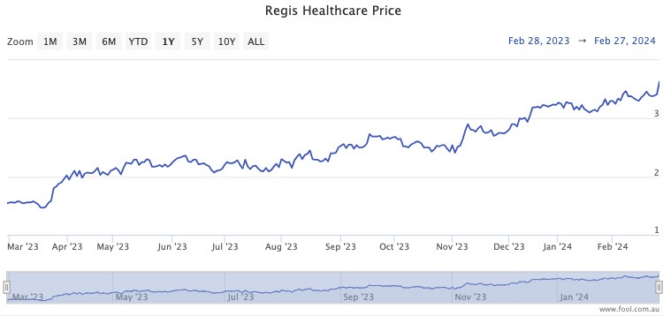
    Incredibly its share price has rocketed more than 151% since a trough in March last year.

    And the market has warmly received its contribution this reporting season, sending the share price almost 6% upwards just on Monday.

    Revenue for the first half was up 26% and net profit after tax (NPAT) before amortisation of operational places rocketed 527%.

    To top it off, Regis Healthcare is paying out a respectable 3.7% half-franked dividend yield.

    A rapidly ageing population in Australia also provides a long-term demographic tailwind for Regis and its industry.

    Professional investors are thus bullish on Regis’ future. 

    Broking platform CMC Invest currently shows five out of six analysts rating the shares for the $1.1 billion aged care provider as a buy.

    ‘A serial destroyer of shareholder value’

    Meanwhile, construction giant Lendlease Group (ASX: LLC) has sat through a much less comfortable earnings season.

    In fact, it’s been downright painful, with the shares diving 15% on the morning that its half-year numbers were revealed on 19 February.

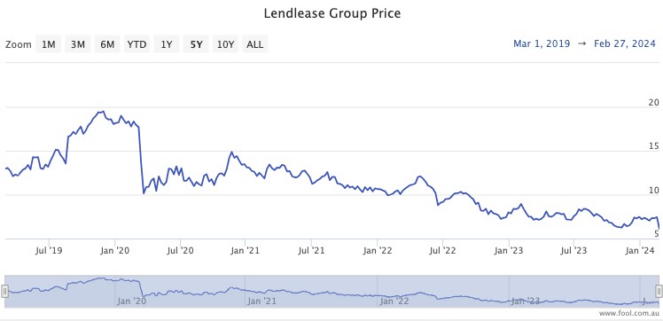
    Just before COVID-19 panic struck the ASX, LendLease shares were almost touching the $20 mark. But now, just four years later, they are only slightly above $6.

    All up it has burnt nearly 70% of value for shareholders since February 2020.

    Tanarra chief executive John Wylie, who had supported the company for a long time, finally ran out of patience.

    “This is a broken business model and the company clearly needs restructuring,” Wylie told the Financial Review after the half-year results. 

    “Lendlease has a reputation of building fine buildings, but it is also a serial destroyer of shareholder value.”

    This is why I think maybe LeadLease is one to leave on the shelf, at least for now.

    Only two out of nine analysts covering the stock currently recommend it as a buy, according to CMC Invest.

    The post Looking for ASX value shares? Here’s 1 I’d buy and 1 I’d avoid! appeared first on The Motley Fool Australia.

    Wondering where you should invest $1,000 right now?

    When investing expert Scott Phillips has a stock tip, it can pay to listen. After all, the flagship Motley Fool Share Advisor newsletter he has run for over ten years has provided thousands of paying members with stock picks that have doubled, tripled or even more.*

    Scott just revealed what he believes could be the ‘five best ASX stocks’ for investors to buy right now. We believe these stocks are trading at attractive prices and Scott thinks they could be great buys right now…

    See The 5 Stocks
    *Returns as of 1 February 2024

    (function() {
    function setButtonColorDefaults(param, property, defaultValue) {
    if( !param || !param.includes(‘#’)) {
    var button = document.getElementsByClassName(“pitch-snippet”)[0].getElementsByClassName(“pitch-button”)[0];
    button.style[property] = defaultValue;
    }
    }

    setButtonColorDefaults(“#0095C8”, ‘background’, ‘#5FA85D’);
    setButtonColorDefaults(“#0095C8”, ‘border-color’, ‘#43A24A’);
    setButtonColorDefaults(“#fff”, ‘color’, ‘#fff’);
    })()

    More reading

    Motley Fool contributor Tony Yoo has no position in any of the stocks mentioned. The Motley Fool Australia’s parent company Motley Fool Holdings Inc. has no position in any of the stocks mentioned. The Motley Fool Australia has no position in any of the stocks mentioned. The Motley Fool has a disclosure policy. This article contains general investment advice only (under AFSL 400691). Authorised by Scott Phillips.

    from The Motley Fool Australia https://ift.tt/ign5eaD

  • Will I be buying Zip shares now the company has turned a profit?

    A young girl looks up and balances a pencil on her nose, while thinking about a decision she has to make.A young girl looks up and balances a pencil on her nose, while thinking about a decision she has to make.

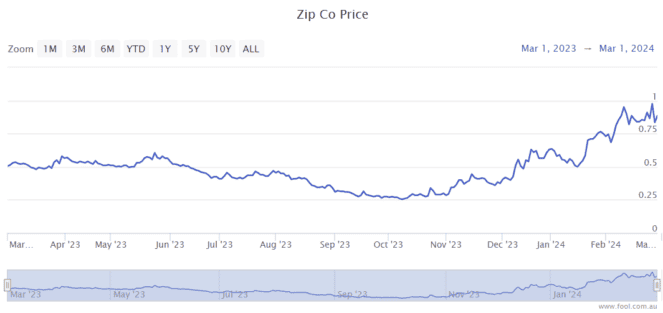
    The Zip Co Ltd (ASX: ZIP) share price has done incredibly well for shareholders this year. It just hit a 52-week high, and it has lifted by 63% in 2024 to date.

    The company reported impressive revenue growth and even stronger profit growth. Let’s quickly remind ourselves of the highlights of the result.

    Earnings recap

    Zip reported its overall revenue increased by 28.9% to $430 million, while total transaction volume (TTV) improved by 9.6% to $5 billion. How did revenue improve by so much more than TTV? The revenue margin increased 130 basis points (meaning 1.30%) to 8.5%.

    The number of merchants rose 9.3% to 76,200, and the number of active customers increased to 6.3% (up 1.6%).

    Zip Americas saw revenue rise by 40.3%, and ANZ revenue increased by 22.7%.

    The cash gross profit increased by 45.9% to $176.2 million, and Zip achieved group cash earnings before tax, depreciation and amortisation (EBTDA) of $30.8 million. This was driven by a “strong seasonal performance” with US TTV, improved margins and cost discipline.

    It reported a cash net transaction margin (NTM) of 3.5%, which was an increase of 90 basis points compared to the FY23 first-half, which the company called a “strong result” in a rising interest rate environment.

    Profit growth is key for the Zip share price from here, in my opinion.

    The company did report a net profit after tax (NPAT), but that was due to a net gain relating to its senior convertible notes, which was a one-off.

    Despite the higher interest rates, group net bad debts were only 1.9% of TTV, which was stable year over year.

    In the Australian business, it has adjusted its credit risk settings and tightened the lending criteria, which has delivered improved arrears and net bad debt performance, which is expected to continue in the second half of FY24.

    Is this a good time to invest in Zip shares?

    It clearly would have been better to buy a few weeks or months ago when the share price was cheaper.

    The buy now, pay later company has done a great job of improving its balance sheet over the last 12 months, and it has been impressive how operating profitability has increased during this period.

    I’m not expecting its margins to continue to improve, it has already seen a large ramp-up of profitability in the last couple of years. I think competition (or merchants complaining) could stop further significant revenue margin increases from here.

    Despite the years of growth and margin improvements, Zip is only just starting to make a profit, so it will need to keep growing scale to make meaningful profit from here.

    There’s a danger of arrears and bad debts rising if unemployment worsens or if the cost-of-living becomes too much for some customers to afford their instalments.

    However, a fall in interest rates could lower Zip’s costs, help customers afford their repayments, and encourage more retail spending.  

    I think the Zip share price might be higher in 12 months from now if revenue is higher and interest rates are lower, but that’s not certain.

    It’s not something that I see buying for my own portfolio, but the fact the company is now making positive EBTDA is a positive development for its sustainability. I’d call it a speculative long-term idea after its rally.

    The post Will I be buying Zip shares now the company has turned a profit? appeared first on The Motley Fool Australia.

    Wondering where you should invest $1,000 right now?

    When investing expert Scott Phillips has a stock tip, it can pay to listen. After all, the flagship Motley Fool Share Advisor newsletter he has run for over ten years has provided thousands of paying members with stock picks that have doubled, tripled or even more.*

    Scott just revealed what he believes could be the ‘five best ASX stocks’ for investors to buy right now. We believe these stocks are trading at attractive prices and Scott thinks they could be great buys right now…

    See The 5 Stocks
    *Returns as of 1 February 2024

    (function() {
    function setButtonColorDefaults(param, property, defaultValue) {
    if( !param || !param.includes(‘#’)) {
    var button = document.getElementsByClassName(“pitch-snippet”)[0].getElementsByClassName(“pitch-button”)[0];
    button.style[property] = defaultValue;
    }
    }

    setButtonColorDefaults(“#0095C8”, ‘background’, ‘#5FA85D’);
    setButtonColorDefaults(“#0095C8”, ‘border-color’, ‘#43A24A’);
    setButtonColorDefaults(“#fff”, ‘color’, ‘#fff’);
    })()

    More reading

    Motley Fool contributor Tristan Harrison has no position in any of the stocks mentioned. The Motley Fool Australia’s parent company Motley Fool Holdings Inc. has positions in and has recommended Zip Co. The Motley Fool Australia has no position in any of the stocks mentioned. The Motley Fool has a disclosure policy. This article contains general investment advice only (under AFSL 400691). Authorised by Scott Phillips.

    from The Motley Fool Australia https://ift.tt/tRJueNz

  • Which ASX shares delivered the biggest profit jumps of the earnings season?

    Hand of a woman carrying a bag of money, representing the concept of saving money or earning dividends.Hand of a woman carrying a bag of money, representing the concept of saving money or earning dividends.

    With earnings season nearing an end, we showcase 12 ASX shares that delivered some of the best profit boosts this season.

    In some cases, these mega profit gains led to significantly increased dividends for ASX investors, too.

    Which ASX shares delivered the biggest profit increases?

    Here is a selection of companies that delivered significant profit surges.

    Neuren Pharmaceuticals Ltd (ASX: NEU)

    The ASX biotech revealed a $157 million profit after tax in FY23, up from just $184,000 in FY22. Last year was a huge year for Neuren, which licenced its first drug, Daybue, to US partner Acadia Pharmaceuticals following FDA approval. The company does not pay dividends.

    Origin Energy Ltd (ASX: ORG)

    Origin Energy reported an underlying profit of $747 million in 1H FY24, up by almost 1,600% on the $44 million reported for 1H FY23. Earnings in the electricity and natural gas segments increased due to the recovery of higher wholesale costs from previous periods, plus lower fuel costs. Origin shares will pay ASX investors a fully franked interim dividend of 27.5 cents per share, up 66% on 1H FY23.

    Flight Centre Travel Group Ltd (ASX: FLT)

    Flight Centre reported a 565% lift in its underlying profit before tax to $106 million in 1H FY24. Revenge travel and historically low cost margins of just under 10% contributed to the profit surge. Flight Centre announced its first interim dividend since 2019. It will pay 10 cents per share, fully franked.

    AGL Energy Limited (ASX: AGL)

    Australia’s largest electricity generator reported $399 million in underlying profit after tax, up 358.6% for 1H FY24. AGL said a more stable market and higher wholesale electricity pricing from prior periods flowed through to the bottom line. The ASX utilities share will pay an interim dividend of 26 cents, up 225%.

    MMA Offshore Ltd (ASX: MRM)

    The marine services provider reported a massive 339% jump in underlying net profit after tax (NPAT) to $39.5 million in 1H FY24. The company said there was stronger demand for its vessels and services. No dividend will be paid.

    Inghams Group Ltd (ASX: ING)

    Poultry producer Inghams reported a 107.5% increase in underlying net profit to $69.3 million in 1H FY24, driven largely by net selling price growth and operational performance improvements. Inghams shares will pay a fully franked interim dividend of 12 cents per share, up 167%.

    Corporate Travel Management Ltd (ASX: CTD)

    The corporate travel manager reported an underlying NPAT of $57.9 million, up 162% in 1H FY24 due to new customer accounts, improved efficiency, and better cost controls. The ASX travel share will pay an interim unfranked dividend of 17 cents per share, up 183% on 1H FY23.

    Boral Ltd (ASX: BLD)

    The building materials company reported an underlying NPAT surge of 143% to $138.6 million for 1H FY24. This was driven largely by strong price realisation, higher revenue and rigorous cost management. The board decided not to pay a dividend because of the company’s low franking credit balance.

    QBE Insurance Group Ltd (ASX: QBE)

    The insurance company reported a 105% rise in adjusted cash NPAT to US$1,362 million for FY23.
    This was underpinned by strong premium growth and targeted new business growth. QBE will pay its ASX shareholders a final dividend of 48 cents per share, up 60%.

    RPM Automotive Group Ltd (ASX: RPM

    RPM Global reported a record half NPAT, up 74% to $2.2 million. The company said the change from perpetual to subscription licensing continued to provide both operating and financial leverage to the business. No dividend will be paid.

    Macquarie Technology Group Ltd (ASX: MAQ)

    The company reported an NPAT of $14.8 million, up 74% on 1H FY23. Macquarie Technology attributed the profit bump to increased earnings, lower interest costs, and lower depreciation and amortisation. No dividend will be paid by this ASX tech share.

    Australian Ethical Investment Ltd (ASX: AEF)

    The ethical funds manager reported an underlying NPAT of $8.5 million, up 71% in 1H FY24 due to increased customer numbers and net inflows. Funds under management rose 15% to $9.67 billion. Australian Ethical shares will pay an interim dividend of 3 cents per share, up 50%.

    The post Which ASX shares delivered the biggest profit jumps of the earnings season? appeared first on The Motley Fool Australia.

    Wondering where you should invest $1,000 right now?

    When investing expert Scott Phillips has a stock tip, it can pay to listen. After all, the flagship Motley Fool Share Advisor newsletter he has run for over ten years has provided thousands of paying members with stock picks that have doubled, tripled or even more.*

    Scott just revealed what he believes could be the ‘five best ASX stocks’ for investors to buy right now. We believe these stocks are trading at attractive prices and Scott thinks they could be great buys right now…

    See The 5 Stocks
    *Returns as of 1 February 2024

    (function() {
    function setButtonColorDefaults(param, property, defaultValue) {
    if( !param || !param.includes(‘#’)) {
    var button = document.getElementsByClassName(“pitch-snippet”)[0].getElementsByClassName(“pitch-button”)[0];
    button.style[property] = defaultValue;
    }
    }

    setButtonColorDefaults(“#0095C8”, ‘background’, ‘#5FA85D’);
    setButtonColorDefaults(“#0095C8”, ‘border-color’, ‘#43A24A’);
    setButtonColorDefaults(“#fff”, ‘color’, ‘#fff’);
    })()

    More reading

    Motley Fool contributor Bronwyn Allen has positions in Flight Centre Travel Group. The Motley Fool Australia’s parent company Motley Fool Holdings Inc. has positions in and has recommended Australian Ethical Investment and Corporate Travel Management. The Motley Fool Australia has recommended Australian Ethical Investment, Corporate Travel Management, Flight Centre Travel Group, and Mma Offshore. The Motley Fool has a disclosure policy. This article contains general investment advice only (under AFSL 400691). Authorised by Scott Phillips.

    from The Motley Fool Australia https://ift.tt/zBVs6Jc

  • How to become a multi-millionaire with ASX shares

    Person holding Australian dollar notes, symbolising dividends.

    History has shown that investing in ASX shares is a great way to create substantial wealth.

    However, unless you get incredibly lucky buying a microcap that rockets to mid-cap or large-cap status, your journey will take time.

    But don’t let that stop you from taking the first step. After all, your future self will undoubtedly be very thankful if you do.

    Is it possible to become a multi-millionaire with ASX shares?

    Over the years, the Australian share market has proven to be a fertile ground for investors seeking to build their wealth.

    Over the last 30 years, ASX shares have generated an average annual return of approximately 10%.

    While we cannot guarantee that this will be the case over the next three decades, we’re going to assume that it does for the purpose of this article.

    Based on this return and the magical power of compounding, it would be possible to build a multi-million dollar investment portfolio.

    For example, if you were in a position to invest $12,000 per year (the equivalent of $1,000 per month) into ASX shares, your portfolio would grow to be worth approximately $2.2 million after 30 years.

    And if you kept going for another five years, compounding would go into overdrive and take your portfolio to approximately $3.6 million, ceteris paribus.

    This then gives you a few options. You could keep going to build further wealth, you could withdraw your funds, or you could turn your focus to income.

    In respect to the latter, if you transformed your portfolio to an income focus with an average 5% dividend yield, you would be receiving $180,000 of passive income each year (and growing).

    How do you do it?

    Investors could simply invest in ASX ETFs if they’re not keen on stock-picking. But if they want to build their own portfolio, they might want to look at companies with positive long-term outlooks, sustainable competitive advantages, and strong business models.

    These are the qualities that Warren Buffett looks for when making investments for Berkshire Hathaway (NYSE: BRK.B).

    And given how the Oracle of Omaha has delivered an average return of almost 20% per annum since 1965, it certainly could pay to follow his lead.

    The main thing, though, is to be patient and stick with your plan through thick and thin. After all, the rewards could be staggering for your wealth.

    The post How to become a multi-millionaire with ASX shares appeared first on The Motley Fool Australia.

    Wondering where you should invest $1,000 right now?

    When investing expert Scott Phillips has a stock tip, it can pay to listen. After all, the flagship Motley Fool Share Advisor newsletter he has run for over ten years has provided thousands of paying members with stock picks that have doubled, tripled or even more.*

    Scott just revealed what he believes could be the ‘five best ASX stocks’ for investors to buy right now. We believe these stocks are trading at attractive prices and Scott thinks they could be great buys right now…

    See The 5 Stocks
    *Returns as of 1 February 2024

    (function() {
    function setButtonColorDefaults(param, property, defaultValue) {
    if( !param || !param.includes(‘#’)) {
    var button = document.getElementsByClassName(“pitch-snippet”)[0].getElementsByClassName(“pitch-button”)[0];
    button.style[property] = defaultValue;
    }
    }

    setButtonColorDefaults(“#0095C8”, ‘background’, ‘#5FA85D’);
    setButtonColorDefaults(“#0095C8”, ‘border-color’, ‘#43A24A’);
    setButtonColorDefaults(“#fff”, ‘color’, ‘#fff’);
    })()

    More reading

    Motley Fool contributor James Mickleboro has no position in any of the stocks mentioned. The Motley Fool Australia’s parent company Motley Fool Holdings Inc. has positions in and has recommended Berkshire Hathaway. The Motley Fool Australia has recommended Berkshire Hathaway. The Motley Fool has a disclosure policy. This article contains general investment advice only (under AFSL 400691). Authorised by Scott Phillips.

    from The Motley Fool Australia https://ift.tt/fw24KAW

  • 1 ASX dividend stock down 55% to buy right now

    a man with hands in pockets and a serious look on his face stares out of an office window onto a landscape of highrise office buildings in an urban landscapea man with hands in pockets and a serious look on his face stares out of an office window onto a landscape of highrise office buildings in an urban landscape

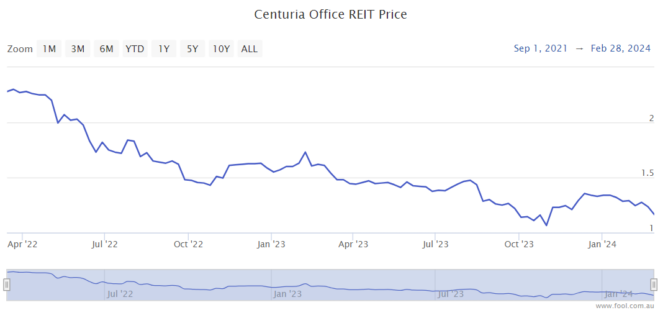
    The Centuria Office REIT (ASX: COF) share price has fallen more than 50% since September 2021. As it trades near all-time lows, I think the ASX dividend stock is an underrated buy.

    Centuria Office REIT, as the name suggests, is a real estate investment trust (REIT) that owns office properties. It is managed by the fund manager Centuria Capital Group (ASX: CNI).

    It’s understandable why the market has sent the REIT’s valuation down by double-digits in percentage terms. The flow-on effects of the COVID-19 pandemic include a rise in employees working from home and a reduction in people working in offices.

    Interest rates have also increased, which should mean an increase in debt/interest costs over time, and it also pushes down on the valuation of assets.

    However, there are a number of reasons why I think this is the right time to look at the ASX dividend stock.

    Big dividend yield

    The business’ valuation has fallen so much that it has pushed up the distribution yield to a level that can provide strong cash returns, even if the share price remains in the doldrums for some time.

    Centuria Office REIT pays quarterly, so investors are getting the annual payout in a regular manner.

    Using the projection on Commsec, the REIT is expected to pay an annual distribution per unit of around 12 cents for FY24, FY25 and FY26. This translates into a forward distribution yield of just over 10% for the current financial year and the two subsequent years.

    Strong portfolio metrics for the ASX dividend stock

    The business can’t control what’s going on with real estate values, but I think the Centuria Office REIT share price decline more than makes up for the likely decline of the property valuations.

    At December 2023, the business said it had net tangible assets (NTA) of $1.98 per unit.

    It’s hard to say exactly what the properties are worth right now, but the distribution yield and other portfolio metrics still look good.

    As of December 2023, it had portfolio occupancy of 96.2% and a weighted average lease expiry (WALE) of 4.4 years. Almost 80% of the rental income is derived from government, multinational businesses or listed businesses – in other words, these are strong tenants. I also believe they will likely continue to need office space for the foreseeable future.

    Geographic diversification

    The business does not just own Sydney and Melbourne CBD office buildings – the entire states of Victoria and NSW make up less than half of its total portfolio. Plus, with those Melbourne and Sydney market investments, it has good exposure to the fringes where there has been an increase of tenants increasing their footprint.

    I think this geographic diversification gives the REIT a good chance of it avoiding significantly bad falls for its overall portfolio.  

    Bonus reason

    Even if the ASX dividend stock were to see an ongoing decline in tenant demand across the board for office space, there’s always the potential for it to change those office buildings to residential use, which could unlock stronger rental potential in the future.

    The post 1 ASX dividend stock down 55% to buy right now appeared first on The Motley Fool Australia.

    Wondering where you should invest $1,000 right now?

    When investing expert Scott Phillips has a stock tip, it can pay to listen. After all, the flagship Motley Fool Share Advisor newsletter he has run for over ten years has provided thousands of paying members with stock picks that have doubled, tripled or even more.*

    Scott just revealed what he believes could be the ‘five best ASX stocks’ for investors to buy right now. We believe these stocks are trading at attractive prices and Scott thinks they could be great buys right now…

    See The 5 Stocks
    *Returns as of 1 February 2024

    (function() {
    function setButtonColorDefaults(param, property, defaultValue) {
    if( !param || !param.includes(‘#’)) {
    var button = document.getElementsByClassName(“pitch-snippet”)[0].getElementsByClassName(“pitch-button”)[0];
    button.style[property] = defaultValue;
    }
    }

    setButtonColorDefaults(“#0095C8”, ‘background’, ‘#5FA85D’);
    setButtonColorDefaults(“#0095C8”, ‘border-color’, ‘#43A24A’);
    setButtonColorDefaults(“#fff”, ‘color’, ‘#fff’);
    })()

    More reading

    Motley Fool contributor Tristan Harrison has no position in any of the stocks mentioned. The Motley Fool Australia’s parent company Motley Fool Holdings Inc. has no position in any of the stocks mentioned. The Motley Fool Australia has no position in any of the stocks mentioned. The Motley Fool has a disclosure policy. This article contains general investment advice only (under AFSL 400691). Authorised by Scott Phillips.

    from The Motley Fool Australia https://ift.tt/IuvyrEh

  • 3 things about CBA stock every smart investor knows

    A woman wearing yellow smiles and drinks coffee while on laptop.A woman wearing yellow smiles and drinks coffee while on laptop.

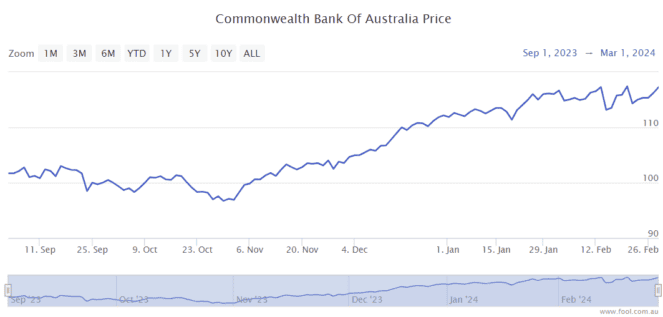
    Commonwealth Bank of Australia (ASX: CBA) stock has performed very well for shareholders in the last few months. It’s up around 15% in the past half-year period.

    Everyone already knows that CBA pays dividends. In the FY24 first-half result, it grew its interim dividend by 2% year over year to $2.15 per share. The (independent) forecast on Commsec is that owners of CBA stock could get an annual dividend per share of $4.55 in FY24, which translates into a projected grossed-up dividend yield of 5.6%.

    But, there’s a lot more to know about CBA than just its dividend if you own shares or are thinking about buying.

    Arrears are rising

    Past performance is not necessarily going to be a reliable indicator of future performance when it comes to the CBA stock price, its profit margins or its ‘normal’ arrears rate.

    The banking sector is seeing strong competition, which is putting pressure on margins. But, the biggest talk point in the 2024 calendar year could be concerns about how high arrears are going to go.

    If more borrowers struggle to make payments, that means less cash flow and less profit for the bank.

    CBA itself said it’s expecting the financial strain from higher interest rates “to continue in 2024, with an uptick” in arrears and impairments.

    At December 2022, the percentage of home loans that were overdue by at least 90 days was 0.43%, it reached 0.47% at June 2023 and had risen again to 0.52% by December 2023. I hope it doesn’t keep rising, but there’s a danger it might, which could hurt CBA stock. The recent November RBA rate rise’s impact may take a bit of time to show on CBA’s lending metrics.

    In the HY24 report, CBA increased its total impairment provisions to $6.06 billion, up from $5.95 billion as at 30 June 2023.

    Very high-quality bank

    While the lending environment may be competitive and a little more uncertain, what I know for sure is that CBA is one of the highest-quality banks. It’s a leader in Australia, and I’d call it one of the strongest in the world, though I don’t know every single bank out there.

    There are a number of metrics that show me that CBA is a great bank.

    CBA reported it made a return on equity (ROE) – on a cash basis – of 13.8%. That shows us how much profit the bank made compared to how much shareholder money is retained in the business. As a comparison, the underlying ROE for Westpac Banking Corp (ASX: WBC) in the second half of FY23 was 9.9%.

    For the FY24 first-half result, CBA reported a net interest margin (NIM) of 1.99%. While this was down from 2.10% in HY23, it shows the bank is still making a solid profit and it’s not going too hard on competing – it’s finding the right balance for shareholders.

    The bank satisfies a large portion of its funding requirements from customer deposits, which accounted for 75% of total funding, with increases primarily from retail customers. Customer deposits are considered the most stable source of funding. At December 2019, the deposit funding ratio was 71%, and it was 55% in June 2008 (at the time of the GFC).

    Very high price

    CBA is priced for its quality, some investors might say it is overpriced.

    According to the forecast on Commsec, CBA stock is valued at 20 times FY24’s estimated earnings. CBA will need to do very well over the next couple of years to justify this price. As a comparison, the Westpac share price is only valued at 14 times FY24’s estimated earnings.

    The price/earnings (P/E) ratio is expensive by itself, and high compared to other banks. Indeed, it’s one of the most expensive banks in the world. We can’t expect the P/E ratio to keep rising.

    The post 3 things about CBA stock every smart investor knows appeared first on The Motley Fool Australia.

    Wondering where you should invest $1,000 right now?

    When investing expert Scott Phillips has a stock tip, it can pay to listen. After all, the flagship Motley Fool Share Advisor newsletter he has run for over ten years has provided thousands of paying members with stock picks that have doubled, tripled or even more.*

    Scott just revealed what he believes could be the ‘five best ASX stocks’ for investors to buy right now. We believe these stocks are trading at attractive prices and Scott thinks they could be great buys right now…

    See The 5 Stocks
    *Returns as of 1 February 2024

    (function() {
    function setButtonColorDefaults(param, property, defaultValue) {
    if( !param || !param.includes(‘#’)) {
    var button = document.getElementsByClassName(“pitch-snippet”)[0].getElementsByClassName(“pitch-button”)[0];
    button.style[property] = defaultValue;
    }
    }

    setButtonColorDefaults(“#0095C8”, ‘background’, ‘#5FA85D’);
    setButtonColorDefaults(“#0095C8”, ‘border-color’, ‘#43A24A’);
    setButtonColorDefaults(“#fff”, ‘color’, ‘#fff’);
    })()

    More reading

    Motley Fool contributor Tristan Harrison has no position in any of the stocks mentioned. The Motley Fool Australia’s parent company Motley Fool Holdings Inc. has no position in any of the stocks mentioned. The Motley Fool Australia has no position in any of the stocks mentioned. The Motley Fool has a disclosure policy. This article contains general investment advice only (under AFSL 400691). Authorised by Scott Phillips.

    from The Motley Fool Australia https://ift.tt/FyiResz